
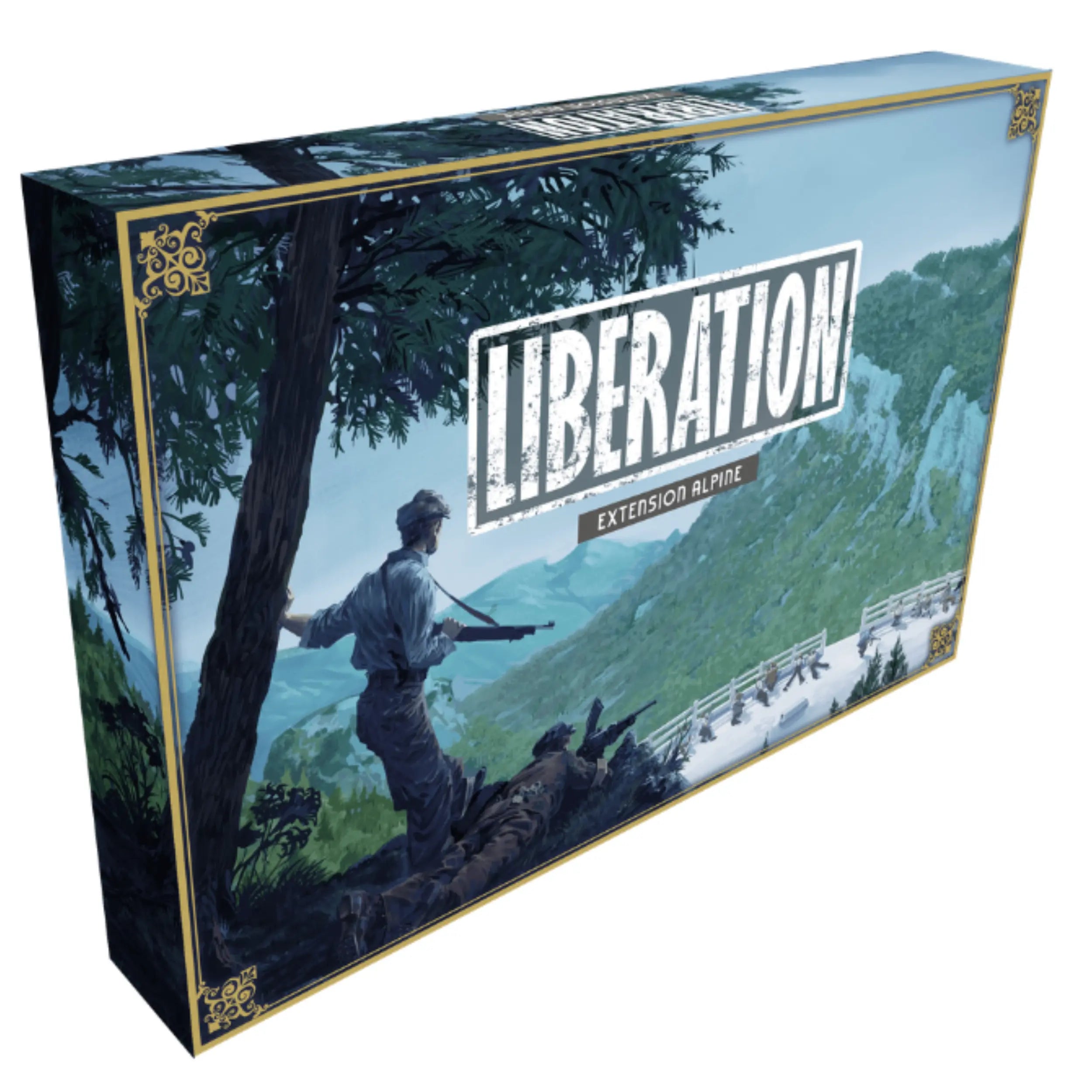
Liberation - Alpine Extension
🐸 Details from BoardGameGeek
Consiglio BGG sul numero di giocatori
Categorie
Meccaniche
Design & Art
Lingua



Si abbina bene con
FroGames — Moments You'll Remember
The circle tightens. The Germans advance from three directions, supplies are delayed, the radio transmits corrupted data. Some propose resistance, others retreat. In the end, the points transmitted to the Allied Forces win.
WHAT IT'S ABOUT
February 1944: The Montagnard Plan and the Encirclement of Savoie
Liberation: Alpine Extension takes you to Savoie, February 1944. German and Vichy forces have realized that the Resistance is recruiting on a large scale. The local maquis activate the Montagnard Plan: direct confrontation with the occupier, applying the concept of "silo-maquis" — natural fortresses that immobilize enemy troops while awaiting Allied landings. Designed by François-Gilles Ricard, author of the Liberation series, with illustrations by François Launay.
At the table, you manage partisan command, air supplies, and tactical positions as enemy forces close the circle. You must resist long enough to transmit enough victory points via radio and win "the battle of the waves." Each turn is a choice between defending, supplying, or transmitting. Encirclement is inevitable: the question is whether you will resist long enough to restore pride to the French Resistance.
What they say abroad
An expansion that transforms the Liberation system into a pure resistance scenario, where every supply counts as much as every bullet.
— FroGames
The Montagnard plan wasn't a strategy, it was a gamble. This game lets you experience it.
— FroGames

Liberation: Alpine Extension
The game includes official solo rules with an automa for the German and Vichy forces. The experience is complete: you manage partisan command, supplies, and transmissions against an opponent who advances according to an event deck. In fact, solo play is probably the most immersive way to play Alpine Extension, because the theme of isolated command holds up better without group discussion.
FrogScore · FroGames editorial rating · based on rules, international reviews, and gameplay sessionsYour Arsenal Under Siege
Key Components of Alpine Resistance
Savoie Tactical Map
Natural fortress with supply zones, defensive positions, and enemy encirclement routes. Each sector has a different strategic value.
Transmission Cards
Transmit Allied data to accumulate victory points. But every transmission exposes you: the Germans triangulate your position.
Air Supplies
Night drops with weapons, ammunition, and medicine. They arrive when the weather permits, never when they are truly needed.
Enemy Forces
Wehrmacht and Vichy troops advance from three directions. Each turn they tighten the circle. Encirclement is not a possibility: it's the plan.
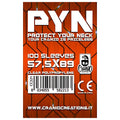
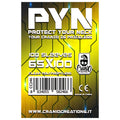
Recommended Sleeves 20 cards in 2 sizes ▼
If you play often, we recommend protecting your cards with clear sleeves to make them last a long time.
| Size | Quantity |
|---|---|
| 44 × 68 mm | 12 |
| 65 × 100 mm | 8 |
| Total cards | 20 |
In the end, you will transmit the last radio message knowing there is no escape. That's the moment you play for.
A game in five moments
What happens at the table
Not the rules. The experience.
Command Setup
Deploy the map, position partisan units in the alpine sectors. Read the historical briefing: February 1944, Montagnard plan active. Someone says "We won't last three turns." Someone replies "We just need to last long enough."
First Supplies
The first air drop arrives. Choose whether to take weapons or medicine. You'll need both, but you can only take one. The first enemy group appears on the edge of the map. It's far away, but advancing.
Radio Decision
You have enough security to transmit. You transmit Allied data, accumulating victory points. But they triangulate your position. The next turn, two enemy groups instead of one. Was it worth it? You won't know until the end.
Encirclement
The Germans are on three sides. You must decide which sector to defend and which to abandon. Someone proposes a suicidal sortie to buy time. It works, but at a cost. Supplies don't arrive due to bad weather.
Last Transmission
Have you resisted long enough? You count the transmitted points. If you've surpassed the threshold, you win: you've restored pride to the Resistance. If not, you fell without anyone knowing how much you endured. Game over. Silence.
How to play
The flow of each round
Each turn is a sequence of choices where you must balance immediate defense and long-term objectives.
Draw a supply card. If favorable, receive weapons/ammo/medicine. If not, nothing. The alpine weather is unforgiving.
Defend threatened sectors, reposition units, transmit radio data (if safe). Every action costs resources. You don't have enough for everything.
Draw enemy event cards. Wehrmacht and Vichy forces advance towards the command. If you transmit too much, they advance faster.
Count accumulated transmission points. If above the threshold and you resist for one more turn, you win. If encircled first, you lose.
Why it's different from others
Six mechanics that make the difference
Silo-maquis concept
You don't fight to win battles. You fight to immobilize enemy troops away from the Allied landing. Your tactical defeat can be a strategic victory. It's a complete reversal of classic wargames.
Radio Battle
You win by transmitting enough points to the Allies before falling. But every transmission reveals your position. The more you transmit, the faster the encirclement arrives. It's a self-induced timer.
Random Supplies
Air drops depend on alpine weather and the tactical situation. They don't arrive when you need them, they arrive when the game decides. You must plan knowing that plan A will probably fail.
Inevitable Encirclement
It's not a question of "if" but "when." Enemy forces converge from three directions. You can slow them down, but not stop them. The tension arises from knowing that every turn brings you closer to the end.
Asymmetrical Choices
Each alpine sector has a different tactical value: some provide radio coverage, others control supply routes, others defensive positions. You must decide what to sacrifice, not what to save.
Dense Historical Context
February 1944, Savoie, Montagnard plan: everything is documented. Event cards cite real operations. It's not a generic wargame dressed up as history, it's playable history.
How it ends
How to win and how to lose
Two opposite conditions: sufficient resistance or total collapse.
Partisan Victory
- Transmit enough victory points via radio to the Allies (variable threshold for difficulty)
- Resist the final encirclement for the number of turns required by the scenario
- Keep the partisan command operational until the end of the game
Defeat
- The partisan command is captured by enemy forces before enough points are transmitted
- You lose all key sectors and no longer have operational supply routes
- Game ends with transmission points below threshold: fallen without completing the mission
Alpine Extension is a wargame that lets you experience the resistance from within: not the epic, but the attrition. Every game ends with the question "Did we do enough?" and the answer only comes by counting the points. It's true history, tactical tension, and an ending you won't forget.
Frequently Asked Questions
FAQ about Liberation: Alpine Extension
Is the base game Liberation needed to play this expansion?
Yes, Alpine Extension is an expansion that requires the Liberation base game for core rules, common components, and game system. It is not standalone. It extends the Liberation system with a dedicated alpine scenario, new event cards, silo-maquis mechanic, and focus on cooperative encirclement.
Is it suitable for those unfamiliar with the history of the French Resistance?
The game includes detailed historical briefing and notes on the real operations of the Montagnard plan. You don't need to be a historian, but it helps to appreciate the theme. That said, the mechanics work even if you play only for tactical tension: encirclement and random supplies create suspense regardless of the context.
How difficult is it compared to the base Liberation?
Alpine Extension is more tense and punitive. The base game gives you more room for maneuver; here, encirclement is inevitable and supplies are less reliable. Recommended after playing at least 2-3 games of the base to master the system. Includes adjustable difficulty via different victory thresholds.
Does it work better solo than cooperatively?
Many players find solo play more thematically immersive: you are the isolated commander making desperate decisions. Cooperative play adds tactical discussion and mental load distribution, but it can break the tension if someone overanalyzes. Both modes are complete, it depends on whether you prefer concentration or sharing.
Is it available in Italian?
This edition is in English. Components include cards with text (events, supplies, transmissions) and a complete rulebook in English. The game requires fluent reading to manage events and historical scenarios. There is currently no official Italian localization.
Liberation: Alpine Extension is a cooperative wargame expansion for 1-4 players set in Savoie in February 1944. Designed by François-Gilles Ricard and published by Platypus Game, it brings the Liberation system into the historical scenario of the Montagnard plan: the maquis of the French Resistance apply the silo-maquis concept, transforming alpine fortresses into points for immobilizing Nazi troops. Games last 40 to 60 minutes for ages 10+, featuring inevitable encirclement mechanics, random supplies, and victory based on radio transmissions. Includes official solo mode with a complete enemy automa. Available on FroGames.it
Liberation - Alpine Extension
Frequently Asked Questions
The answers you're looking for, no beating around the bush.
📸Do the images match the actual product?
The photos on the website often come from BoardGameGeek and are intended to give you an idea of the game. They may vary slightly from the version you receive. The content declared by the publisher is always binding.
📦Does the content of the box match what is indicated?
We always strive to provide the correct content, but minor variations are possible due to reprints or updates. The information comes directly from the publishers. If you have any questions, please contact us!
⏳How do pre-orders work?
Pre-order the game before release, payment is immediate, and the game is reserved for you. As soon as it arrives, we'll ship it right away! If there are any delays, we'll update you promptly.
🔒Can I trust buying here?
Absolutely! Secure payments, tracked shipments, and a team that loves board games as much as you do. If something goes wrong, we'll do our best to fix it.
🛠There's a problem with my order, what should I do?
Write to us now! Whether it's a missing part, damage, or an error, we'll help you resolve it as soon as possible. Your experience truly matters to us.