
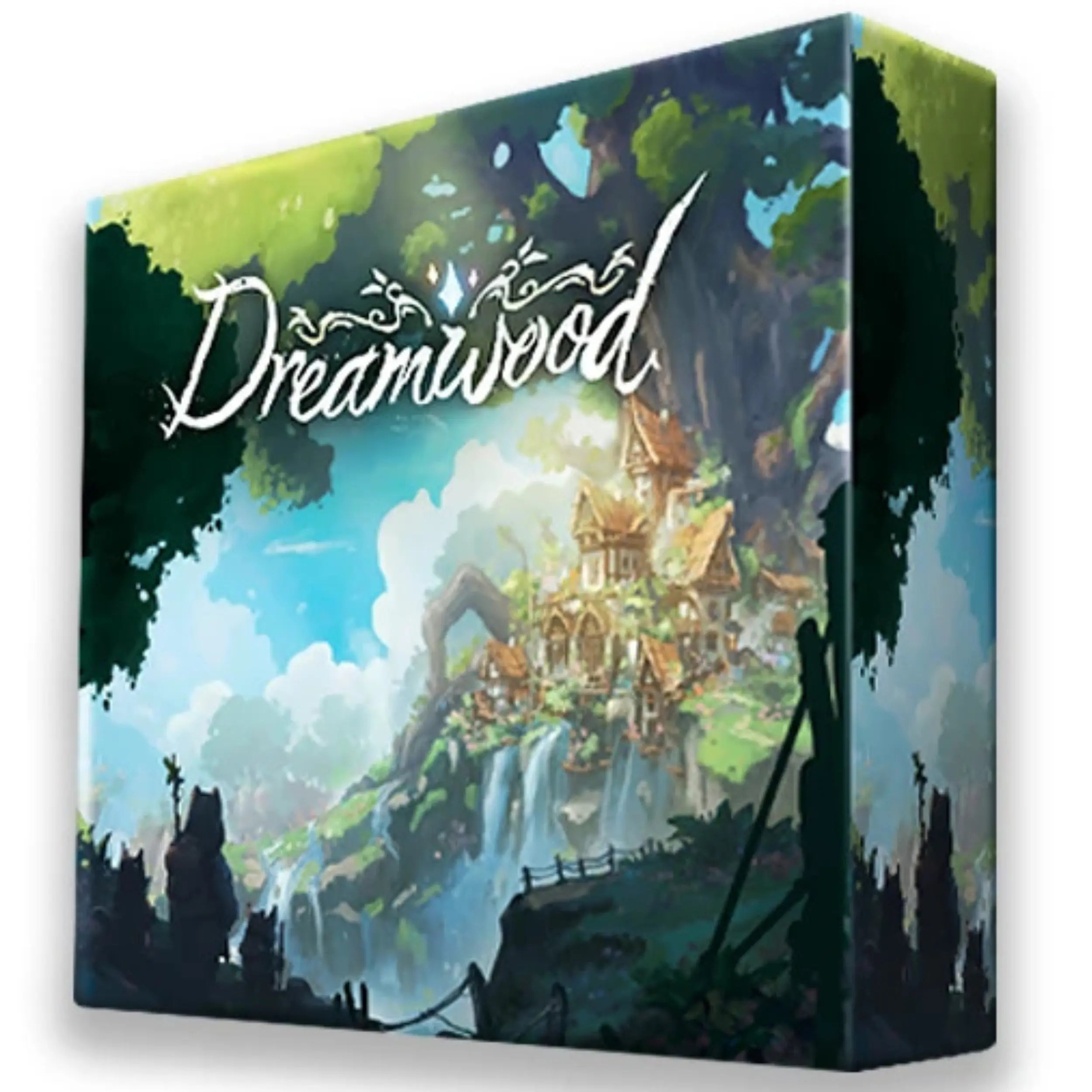
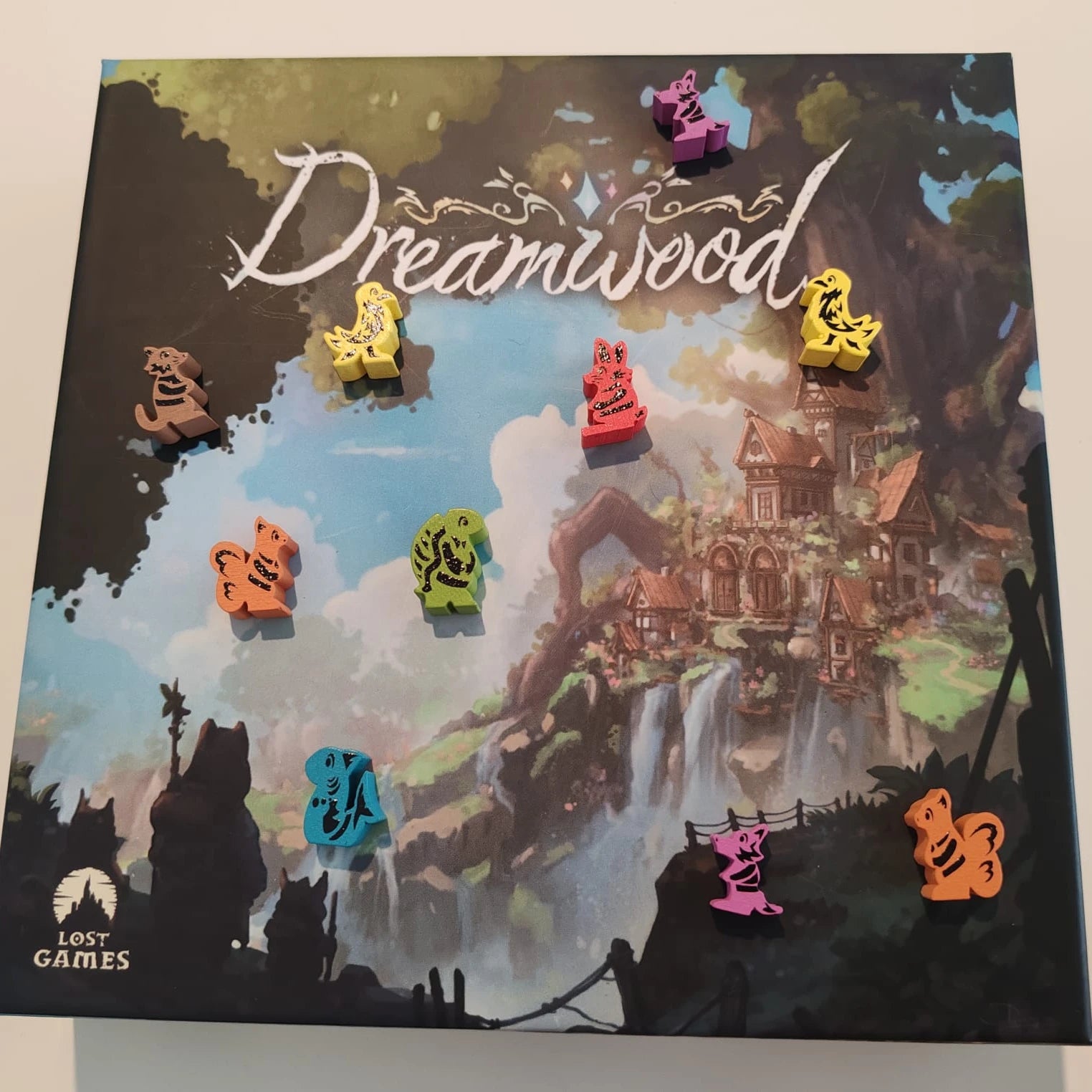
Dreamwood
🐸 Details from BoardGameGeek
Consiglio BGG sul numero di giocatori
Categorie
Meccaniche
Design & Art
Lingua
Si abbina bene con
FroGames — Moments You'll Remember
When you realize that fox went all in on the shelter and you went all in on the offspring. And that maybe — just maybe — you should have explored instead of eaten.
WHAT IT'S ABOUT
An evolutionary race where each species forges its own path
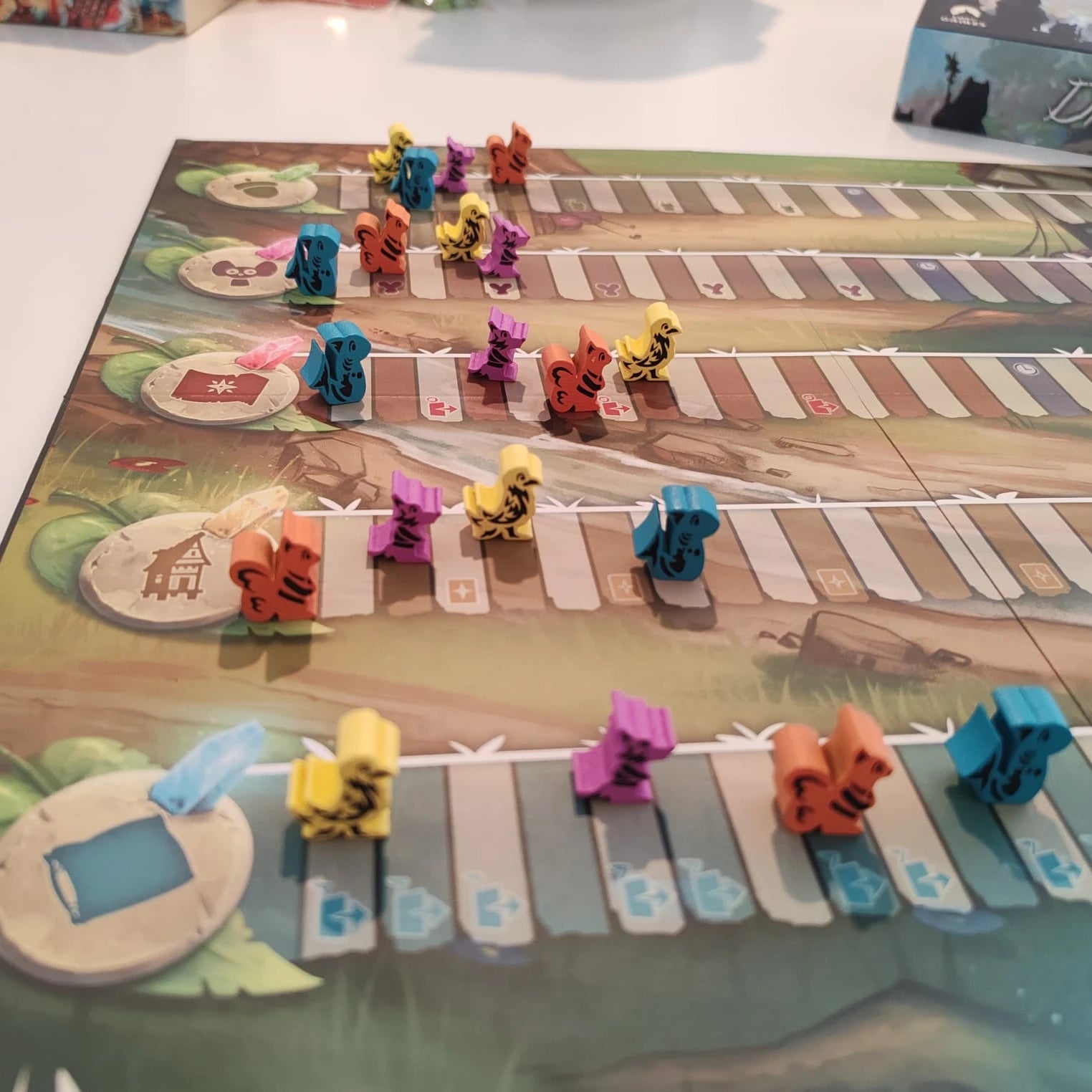
Dreamwood is the design debut of Carlos Michán Amado, with illustrations by Philipp Ach and Daniel Rosa Durán. Each player guides an animal species through five development tracks: food, offspring, exploration, shelter, and leisure. The theme is naturalistic, the approach is strategic yet fast-paced.
On your turn, you secretly place your workers on your personal board, choosing which tracks to invest in. Each track offers different bonuses: food doubles efficiency, offspring gives you new workers, exploration generates random income, shelter hides final points, leisure accelerates everything. The game ends when someone closes a track. Points are calculated based on relative positions: victory goes not to the fastest runner, but to the one who best anticipates others' choices.
What they say abroad
A worker placement game that plays in 20 minutes, without losing the tough decisions.
— FroGames
The tension lies in not knowing where others have focused. Until the reveal.
— FroGames

Dreamwood
FrogScore · FroGames editorial rating · based on rules, international reviews, and play sessionsThe five branches of development
What you build, round after round
Food
Gives you multiplier bonuses: every step forward here doubles the efficiency of your workers. Speeds everything up, but doesn't give direct points.
Offspring
Generates new workers: the more you have, the more actions you can take. This is the expansion track, the one that makes you feel unstoppable mid-game.
Exploration
Assigns you a random income each round. It's the most unpredictable track: it can give you unexpected boosts or nothing. Calculated risk.
Shelter
Hides secret end-game points. No one knows how much you're accumulating until the tally. The track of bluffing and the final surprise.
It ends when someone closes a track. And often you discover that the one who seemed behind had gone all in on the shelter.
Come si gioca
Video dimostrativo di gameplay.
A game in five moments
What happens at the table
Not the rules. The experience.
Setup and initial choices
You draw your species, study its initial bonuses, look at the event cards. Someone starts strong on food, someone on offspring. No one knows what the others will do yet. Everyone thinks they have the best plan.
The first reveal
Everyone flips their boards at the same time. You discover that three players have put everything into offspring, and you're the only one on exploration. Relative points begin to matter: being first on one track is worth more than being second on all of them.
The race forks
Someone accelerates with food multipliers. Someone else accumulates workers and starts dominating three tracks. You discover that the round's event card benefits those who have explored. Strategies crystallize, but it's still possible to change course.
The refuge moment
Someone reveals an 8-point refuge card. Everyone mentally recalculates. The one who seemed last on the track has actually accumulated secret bonuses. The visible score is not the real score. Tension rises.
End of game and scoring
Someone completes a track. Relative points are counted: first, second, third on each branch. The winner is the one who best balanced priorities, not the one who ran fastest on a single path. Often the winner surprises everyone.
How to play
The flow of each round
Each round is identical: event, secret placement, simultaneous reveal, resolution.
An event card is revealed that modifies the rules of the round or grants bonuses to those who meet certain conditions. It changes every time, forcing adaptation.
Each player places their workers on their personal board, behind a screen. No one sees the choices of others. You decide which tracks to invest in based on what you think the others are doing.
Everyone reveals their boards at the same time. You discover who invested where. The comparison is immediate: you immediately see if you are ahead or behind on each track.
Everyone advances on their chosen tracks, applies bonuses (food doubles, offspring gives workers, exploration draws random cards, refuge accumulates hidden points). The next round is prepared.
Why it's different from others
Six mechanics that make a difference
Secret placement
You don't place workers on a shared board: you place them on your personal, hidden board. The simultaneous reveal creates suspense each round. You don't know where others are investing until it's too late to change your mind.
Relative scoring
It's not about who scores the most points overall. It's about who positions themselves best relative to others on each track. Being first on two tracks is worth more than being second on five. You have to read the table, not just your board.
Five asymmetrical tracks
Each track has a different effect: food multiplies, offspring expands, exploration generates random income, refuge hides points, free time accelerates. There is no dominant track: it depends on what others are doing and the round's event.
Variable events
Each round an event card changes the conditions. Sometimes it rewards those with more workers, sometimes those who have explored, sometimes those who are behind. It forces flexibility instead of executing a pre-set plan.
Hidden victory points
The refuge track accumulates secret bonus cards. No one knows how many points you have until they are counted. The player who seems last can win at the very end. Bluffing is integrated into the mechanic.
Fast games with 3-6 players
Very few worker placements scale well to 6 and finish in 25 minutes. Here, simultaneous placement eliminates downtime. More players only make the confrontation denser, not the game longer.
How it ends
How to win and how it concludes
The game ends immediately when at least one player completes a track. Relative points are counted.
Victory
- Positioning first or second on more tracks than others
- Accumulating secret points from the refuge track
- Balancing fast development and hidden scoring
Fatal errors
- Investing everything in one track without looking at the table
- Ignoring events and always playing the same strategy
- Underestimating the hidden points of others' refuges
It's a worker placement game that lasts as long as a filler but offers real decisions. Every track counts, every round changes priorities, and the winner is only revealed at the end.
Frequently Asked Questions
Dreamwood FAQ
How complex is it to explain?
The rules can be explained in 10 minutes. Each track has a clear effect: food doubles, offspring gives workers, exploration draws cards, refuge hides points, free time accelerates. The challenge isn't understanding what to do, but deciding where to invest compared to others.
Does it work well with 6 players?
Yes, it scales very well. Placement is simultaneous, so there are no long downtimes even with 6 players. More players only make relative scoring more competitive and final surprises more frequent.
How much does luck matter?
Exploration and free time have random elements, but you control them by deciding how much to invest. Event cards change each round, but they are visible before placement. Luck exists, but you can mitigate it with tactical choices.
Is there direct interaction?
No, you don't remove resources or block others. Interaction is indirect: your points depend on your relative positions on the tracks. If everyone rushes for food, you win by focusing on refuge. It's a game of reading the table, not direct attack.
Is it available in Italian?
This Lost Games edition is in English. The components have text on event cards and tracks, but the vocabulary is limited and repetitive. With a translated reference (or after one game), it plays fluently even without fluent English.
Dreamwood is a worker placement game for 3-6 players designed by Carlos Michán Amado and published by Lost Games. Each game lasts 15-25 minutes and unfolds across five progress tracks: food, offspring, exploration, refuge, and free time. Placement is secret and simultaneous, and victory is calculated based on relative positions on the tracks. A strategic gateway game suitable for families and groups who want real decisions without investing an hour. Available on FroGames.it.
Dreamwood
Frequently Asked Questions
The answers you're looking for, no beating around the bush.
📸Do the images match the actual product?
The photos on the website often come from BoardGameGeek and are intended to give you an idea of the game. They may vary slightly from the version you receive. The content declared by the publisher is always binding.
📦Does the content of the box match what is indicated?
We always strive to provide the correct content, but minor variations are possible due to reprints or updates. The information comes directly from the publishers. If you have any questions, please contact us!
⏳How do pre-orders work?
Pre-order the game before release, payment is immediate, and the game is reserved for you. As soon as it arrives, we'll ship it right away! If there are any delays, we'll update you promptly.
🔒Can I trust buying here?
Absolutely! Secure payments, tracked shipments, and a team that loves board games as much as you do. If something goes wrong, we'll do our best to fix it.
🛠There's a problem with my order, what should I do?
Write to us now! Whether it's a missing part, damage, or an error, we'll help you resolve it as soon as possible. Your experience truly matters to us.