


Liberation
🐸 Dettagli da BoardGameGeek
Consiglio BGG sul numero di giocatori
Categorie
Meccaniche
Design & Art
Lingua



Pairs well with
FroGames — Moments You'll Remember
Someone draws a mission card. Someone else counts the remaining dice. The third checks the German trap map. And everyone knows that tonight, someone won't make it back to the hideout.
WHAT IT'S ABOUT
The French Resistance amidst impossible missions and German traps
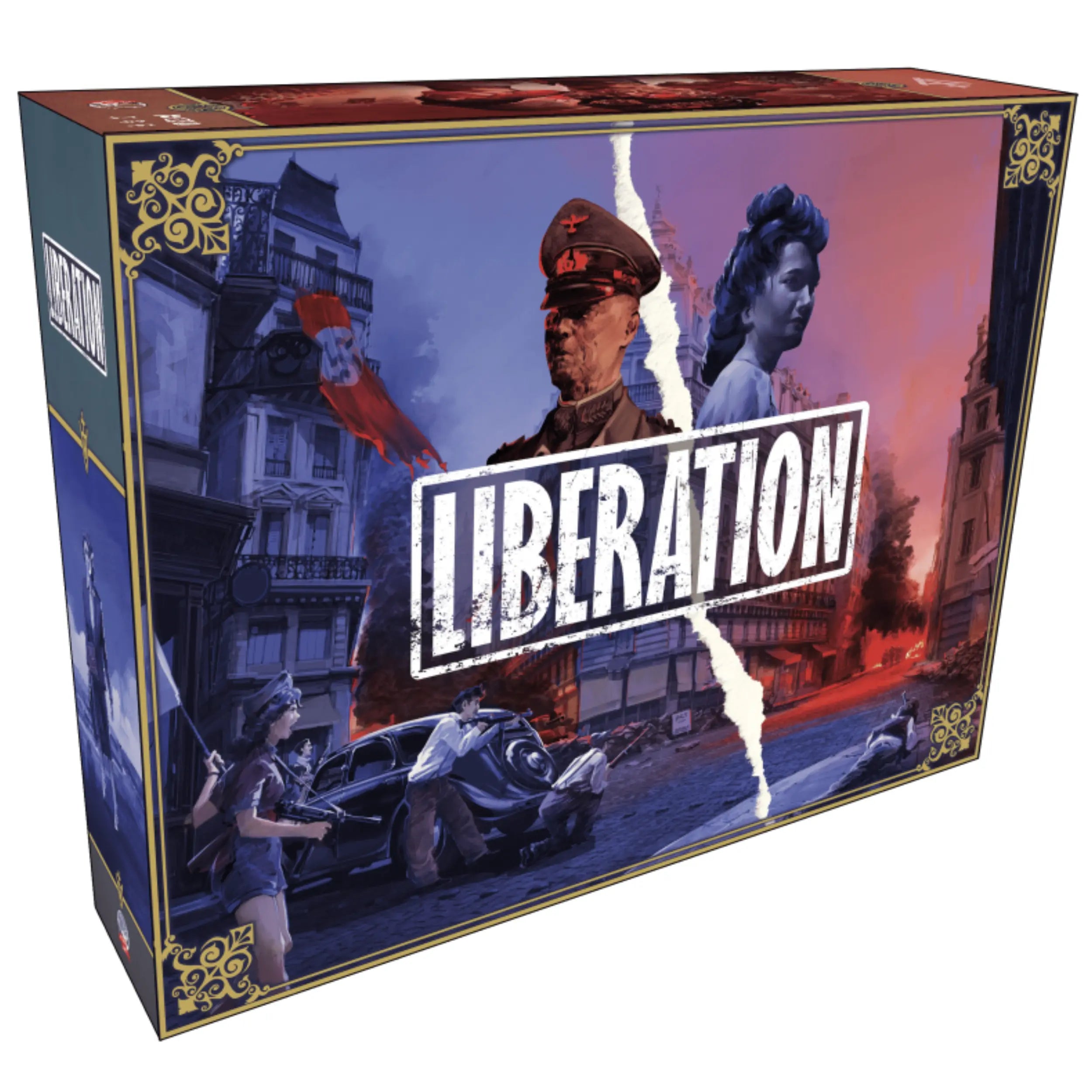
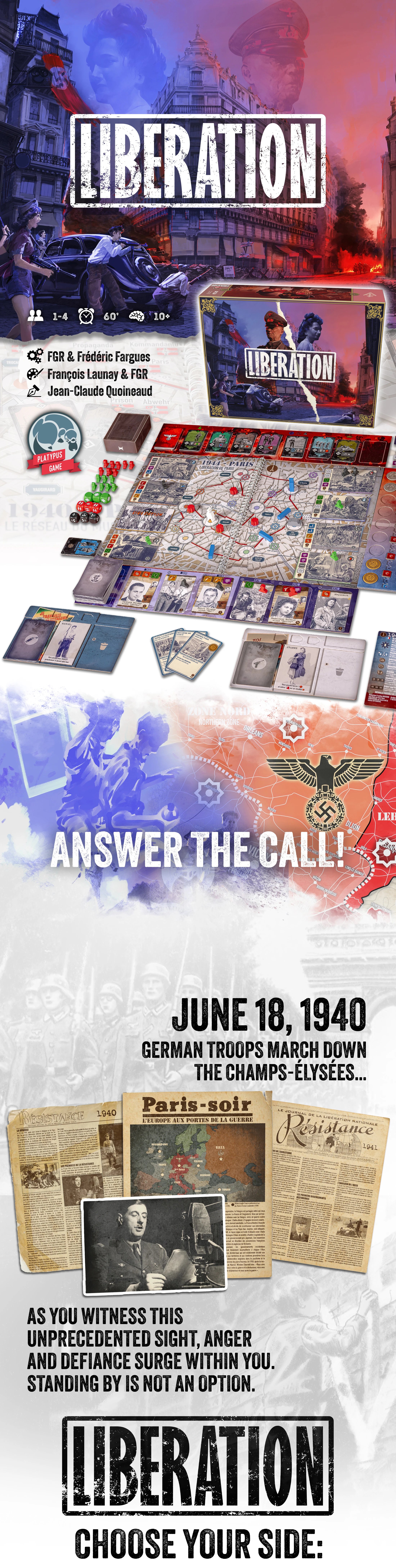
Designed by François-Gilles Ricard and illustrated by François Launay, Liberation reconstructs five years of French resistance: from the occupation in 1940 to the liberation of Paris in 1944. Each scenario tells a different chapter of the partisan struggle, with rules and objectives that change to reflect the historical evolution of the conflict. It's not a wargame, it's a cooperative survival game where every choice weighs on subsequent rounds.
At the table, each player leads a maquis (partisan cell) with a personal deck of action cards. You draw missions, build your deck, roll dice to resolve operations. The German automa responds with traps, roundups, and captures. If you cooperate well, you liberate zones and accumulate resources. If you misjudge timing or position, you lose fighters, and the game tightens. Each won or lost scenario leaves permanent consequences on the campaign.
What they say abroad
A game that makes you feel the weight of every decision, without ever letting you forget the history you are experiencing.
— FroGames
The campaign is the beating heart: each scenario changes the rules, and what you do today comes back tomorrow.
— FroGames

Liberation
The game includes a complete German automa that draws cards and manages traps, roundups, and captures credibly. The solo experience is complete and the campaign works very well, but it loses the tactical discussions of multiplayer: you decide everything yourself, so some missions become more predictable. It remains one of the best historical cooperative games for solo players.
FrogScore · FroGames editorial rating · based on rules, international reviews, and play sessionsThe tools of resistance
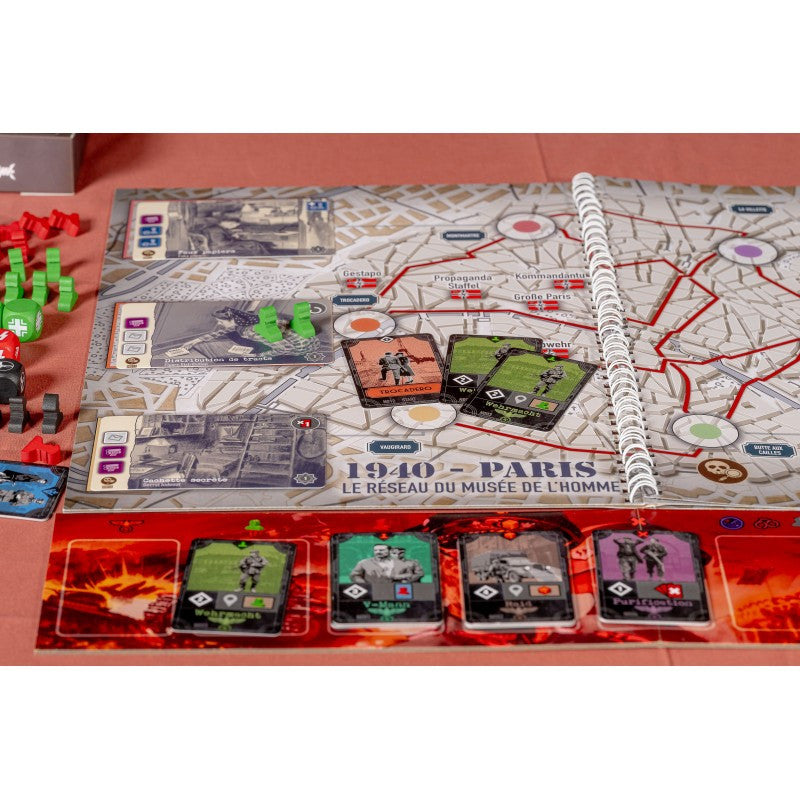
Cards, dice, and missions on the table
Maquis Decks
Each player builds their own action deck during the game. Basic cards to move and fight, advanced cards to sabotage, liberate zones, recruit. The more missions you complete, the more options you add to your maquis.
Icon Dice
Roll dice to resolve missions: each icon corresponds to a type of action (combat, stealth, support). Your deck cards modify the results, but an unlucky roll can cost you a fighter or trigger a trap.
Mission Cards
Cooperative objectives drawn from the scenario deck: liberate a depot, intercept a convoy, rescue a prisoner. Each mission has specific position, dice, and card requirements. Completing them unlocks resources and advances the campaign.
German Automa
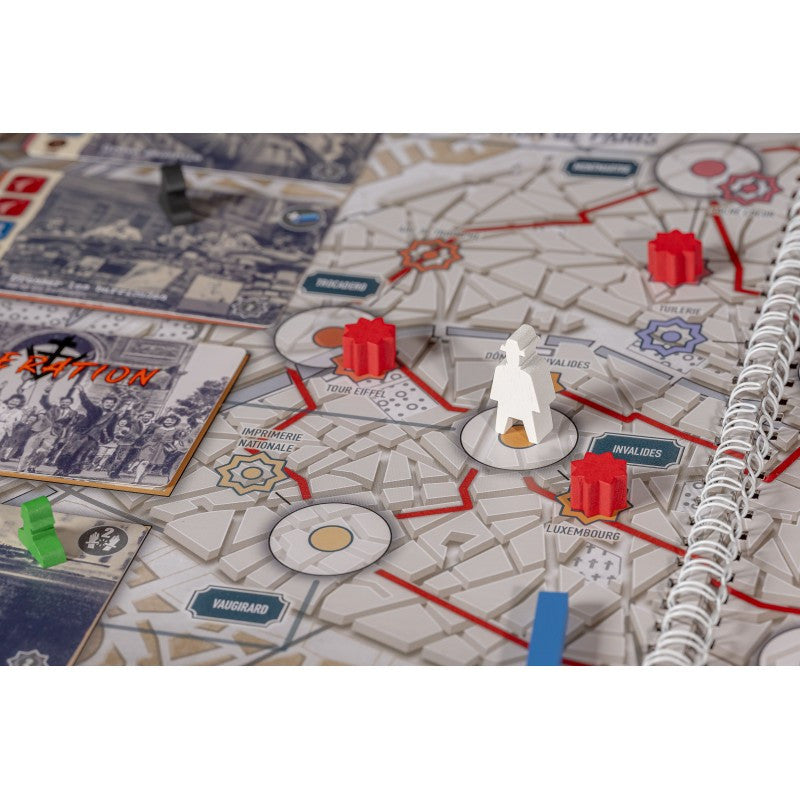
The occupant plays alone: draws trap cards, places control zones, captures partisans. It's not just a timer, it's an opponent that reacts to your moves. If you focus on one area, it places reinforcements elsewhere.
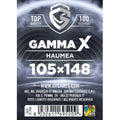
Recommended Sleeves 118 cards in 3 sizes ▼
If you play often, we recommend protecting your cards with clear sleeves to make them last longer.
| Size | Quantity |
|---|---|
| 44 × 68 mm | 79 |
| 65 × 100 mm | 29 |
| 105 × 148 mm | 10 |
| Total cards | 118 |
In an hour, you will have liberated Paris or lost half your men. In either case, you will have a story to tell.
📜 REGOLAMENTO
A game in five moments
What happens at the table
Not the rules. The experience.
The occupation begins
Choose your maquis, draw the first mission cards. The map is empty, German zones are few. It seems easy. You decide who goes where, who builds the deck for combat, who for sabotage. Someone says "let's start slow." Someone else immediately draws a risky mission.
The first trap
You complete a mission, roll the dice, everything is fine. Then the German automa draws: round-up in your zone. You must sacrifice a fighter or lose cards from your deck. Someone suggests retreating. Someone else wants to risk another turn. The discussion intensifies.
The campaign tightens
You are halfway through the scenario. The German zones increase, the dice aren't rolling, a maquis has lost half their deck. Coordination is needed: one distracts the automa, another clears the key zone. If you cooperate, you'll succeed. If everyone goes their own way, the automa will crush you one by one.
The impossible mission
You draw the final objective of the scenario: liberate Paris (or save the commander, or sabotage the bridge). It requires precise dice rolls, rare cards, perfect positioning. One of you has everything but one card. Another has it, but is trapped on the other side of the map. You decide: do you save them or move on? The choice weighs heavily.
Permanent consequences
Scenario completed or failed, record the result on the campaign sheet. If you won, you unlock new cards and advantages for the next scenario. If you lost, the automa starts stronger and some zones remain occupied. Someone asks "should we start over?". Someone else already wants to play 1941.
How to play
The flow of each round
Each round is a cycle of cooperative actions followed by an automatic response from the German automa.
Each player plays cards from their deck to move, fight, complete missions. You can collaborate: pass resources, cover each other, combine actions. Missions require dice rolls: resolve icons with cards in hand or risk failing.
The occupant draws a card from the German deck and resolves it: places traps, moves patrols, captures exposed partisans. Some cards have chain effects: if you are in the wrong zone, you lose fighters or deck cards.
Check if you have completed the scenario objectives. If yes, advance the liberation track and draw new deck cards. If no, check the defeat conditions: too many partisans lost, too much time passed, key zones occupied.
Reshuffle discard decks, adjust control zones, prepare for the next round. If the scenario continues, restart from the Maquis Phase. If it's over, update the campaign sheet and prepare for the next historical episode.
Why it's different from others
Six mechanics that make a difference
Non-legacy historical campaign
Five scenarios narrating the French Resistance from 1940 to 1944. Each scenario has its own rules and objectives: the initial occupation is different from D-Day. The consequences of one scenario affect the next (unlocked cards, lost zones, earned veterans), but no component is destroyed: you can replay the campaign as much as you want.
Icon dice with deck-building
You don't roll numeric dice: you roll dice with symbols (combat, stealth, support). Your maquis' cards modify the results, add re-rolls, convert symbols. The better you build your deck, the less you depend on luck. But a bad roll at the wrong time remains devastating.
Credible asymmetrical automa
The occupant is not a passive timer. It draws cards, places traps, reacts to your moves. If you liberate a zone, it reinforces the adjacent one. If you concentrate your maquis in the north, it strikes in the south. It's not as intelligent as a human, but it's unpredictable enough not to be exploited.
Asymmetrical cooperative missions
Each player leads a different maquis, with their own cards and abilities. Missions require concrete collaboration: one distracts, one liberates, one covers the retreat. It's not "everyone does their own thing"; it's "if you don't coordinate, you lose." And you can't tell everyone everything: time is running out.
Control zones and captures
The map is not neutral: German zones limit movement, traps trigger when you enter, round-ups capture those exposed. Losing a fighter isn't just losing a pawn: you lose cards from your deck. The maquis weakens and missions become harder.
Modular scenarios playable at will
You can play scenarios individually (40-60 minute one-shots) or in a continuous campaign. Each scenario can end in victory, partial defeat, or total defeat, and each result unlocks different consequences. It's not a legacy game where "if you mess up, you've ruined everything": you can always restart.
How it ends
How to win and how to lose
Each scenario has its own victory conditions. If you reach them, you advance in the campaign. If you fail, you record the consequences and prepare for a harder next episode.
Victory
- Complete the main objective of the scenario (liberate Paris, save the commander, sabotage the bridge)
- Liberate the required number of zones on the map before time runs out
- Survive with at least one active maquis and enough resources for the next scenario
Defeat
- Too many maquis captured or destroyed: if you lose all fighters, the resistance collapses
- Time ran out: if the automa deck runs out before you complete the objective, the occupation consolidates
- Key zones occupied: if the Germans control strategic positions at the end of the round limit, you have failed
Liberation is not a cooperative game where "you just have to try enough times." It's a game where every choice matters, every die roll counts, and the story you tell at the end is worth more than victory.
Frequently asked questions
FAQ about Liberation
Can I play a single scenario without doing the campaign?
Yes, each scenario is designed to be played as a 40-60 minute one-shot. The campaign adds consequences between scenarios (unlocked cards, persistent zones, veterans), but it is not mandatory. If you want to try the game or have little time, start with the 1940 scenario and play only that.
Is the German automa difficult to manage?
No, it is managed by a deck of cards with clear icons. You draw a card, read the effect, resolve it on the map. You don't need to keep complex states or calculations in mind: the automa does what the card says. The first two turns help you understand the rhythm, then it becomes automatic.
Is it too difficult or too easy?
Scenarios have variable difficulty: 1940 is introductory, 1944 is very tough. You can adjust the challenge by choosing how many automa cards to draw per round or how many missions to complete. The game tends to be tense: winning requires coordination and a bit of luck with the dice.
How important is the historical theme? Do I need to know the history of the French resistance?
No, historical knowledge is not required. The game tells the events through cards and objectives, but the mechanics work even without context. That said, the theme is very present: names, places, missions, dates are all historical. If you appreciate thematic games, Liberation makes you feel part of the resistance.
Is it available in Italian?
This edition is in English. The game uses text on cards (missions, actions, automa effects), so a basic understanding of English is needed. The mechanics are intermediate, not complex: once you understand the flow, the text reads quickly.
Liberation is a cooperative board game for 1-4 players set in the French Resistance from 1940 to 1944. Designed by François-Gilles Ricard and published by Platypus Game, it combines deck-building, icon dice, and an asymmetrical automa in a non-legacy campaign of five historical scenarios. Recommended age 10+, duration 40-60 minutes per scenario. Each player leads a partisan maquis, completes missions, builds their deck, and cooperates to liberate occupied zones. The German automa reacts with traps, round-ups, and captures: each won or lost scenario leaves permanent consequences on the campaign. Official solo mode included. Available on FroGames.it.
Liberation
Frequently Asked Questions
The answers you're looking for, no beating around the bush.
📸Do the images match the actual product?
The photos on the website often come from BoardGameGeek and are intended to give you an idea of the game. They may vary slightly from the version you receive. The content declared by the publisher is always binding.
📦Does the content of the box match what is indicated?
We always strive to provide the correct content, but minor variations are possible due to reprints or updates. The information comes directly from the publishers. If you have any questions, please contact us!
⏳How do pre-orders work?
Pre-order the game before release, payment is immediate, and the game is reserved for you. As soon as it arrives, we'll ship it right away! If there are any delays, we'll update you promptly.
🔒Can I trust buying here?
Absolutely! Secure payments, tracked shipments, and a team that loves board games as much as you do. If something goes wrong, we'll do our best to fix it.
🛠There's a problem with my order, what should I do?
Write to us now! Whether it's a missing part, damage, or an error, we'll help you resolve it as soon as possible. Your experience truly matters to us.