
Prestige
🐸 Dettagli da BoardGameGeek
Consiglio BGG sul numero di giocatori
Categorie
Meccaniche
Design & Art
Lingua
Pre-order - leggi i dettagli
🐸 Una rana saggia sa quando dividere l’ordine… e quando aspettare il salto giusto.
Si abbina bene con
FroGames — Moments You'll Remember
When the game ends, someone will have built a masterpiece. Others will have understood where they went wrong. And everyone will want to play again to try that strategy they saw emerge too late.
WHAT IT'S ABOUT
A Rococo palace growing amidst contracts, artisans, and perfect timing
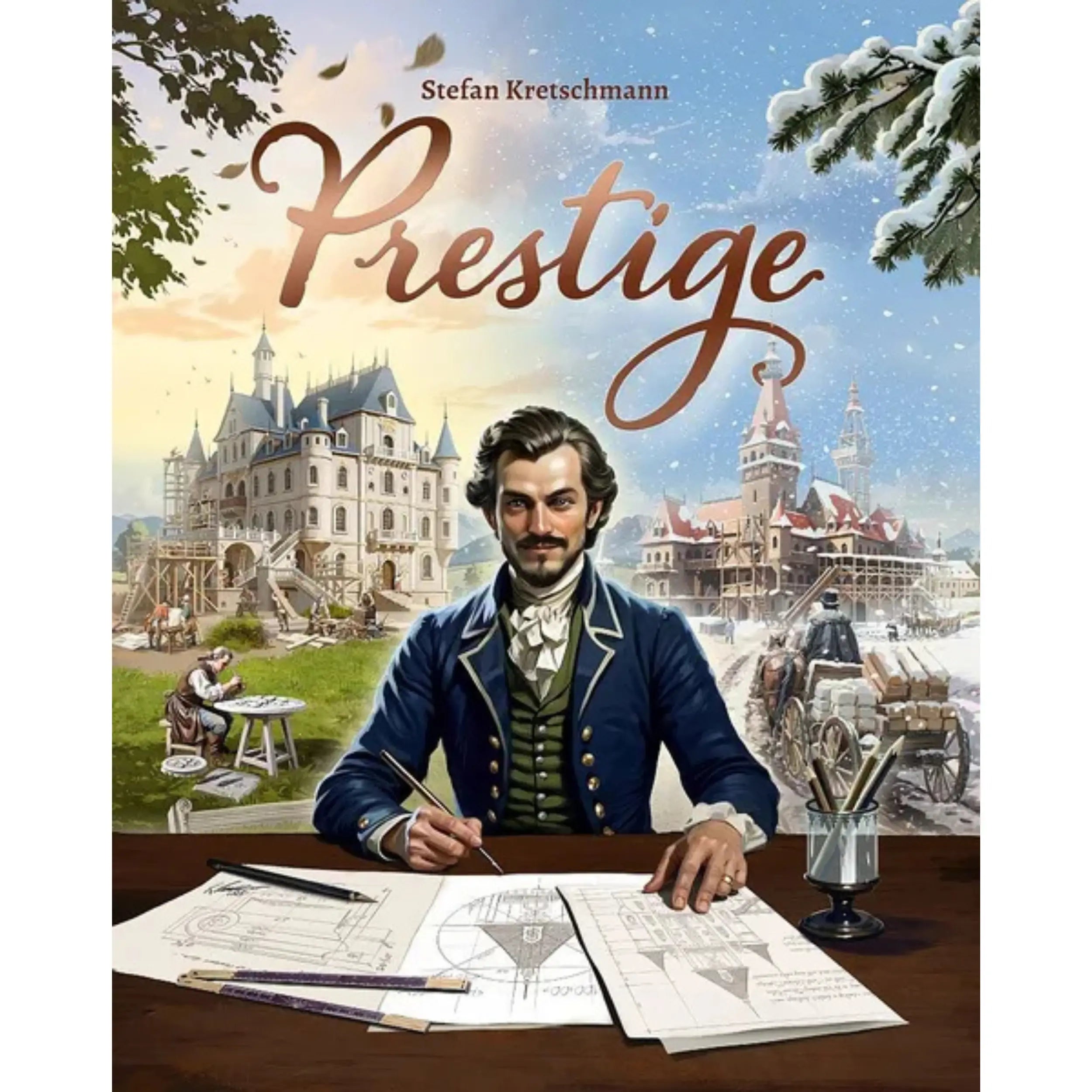
Designed by Stefan Kretschmann with illustrations by Roman Kucharski, Prestige transports you to the Rococo era, when nobility competed for prestige through the beauty of their residences. Each player is a lord of a castle who must transform a modest property into an architectural masterpiece, balancing limited resources, seasons affecting production, and rivals observing every move.
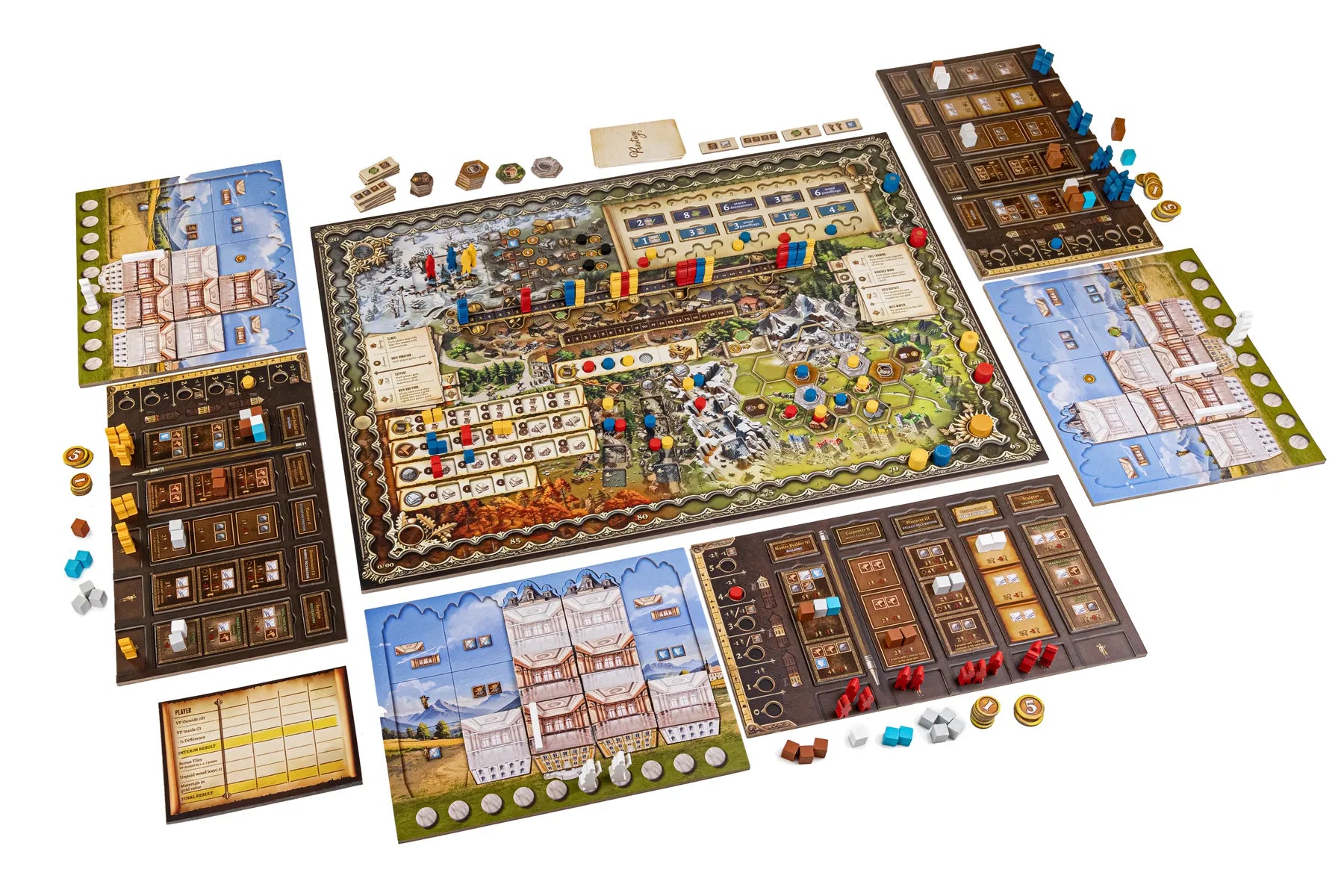
At the table, you manage 5 supervisors whom you place in different areas to acquire resources, sign construction contracts, hire specialized artisans, and recruit workers. Each choice not only determines what you do now but also the order in which you will play in the next round. Artisans gain experience, improve their skills, and become increasingly efficient in executing your projects. Seasons flow over 3 years of gameplay, each season bringing different conditions that affect construction and procurement.
What they say abroad
A game that presents itself as a layered eurogame where every choice builds the next opportunity.
— FroGames
Planning is everything: mess up the timing of a contract and you're left with resources you no longer need.
— FroGames

Prestige
FrogScore · FroGames editorial rating · based on rulebook, international reviews, and play sessionsThe Lord's Tools
What you have to build your masterpiece
5 Supervisors
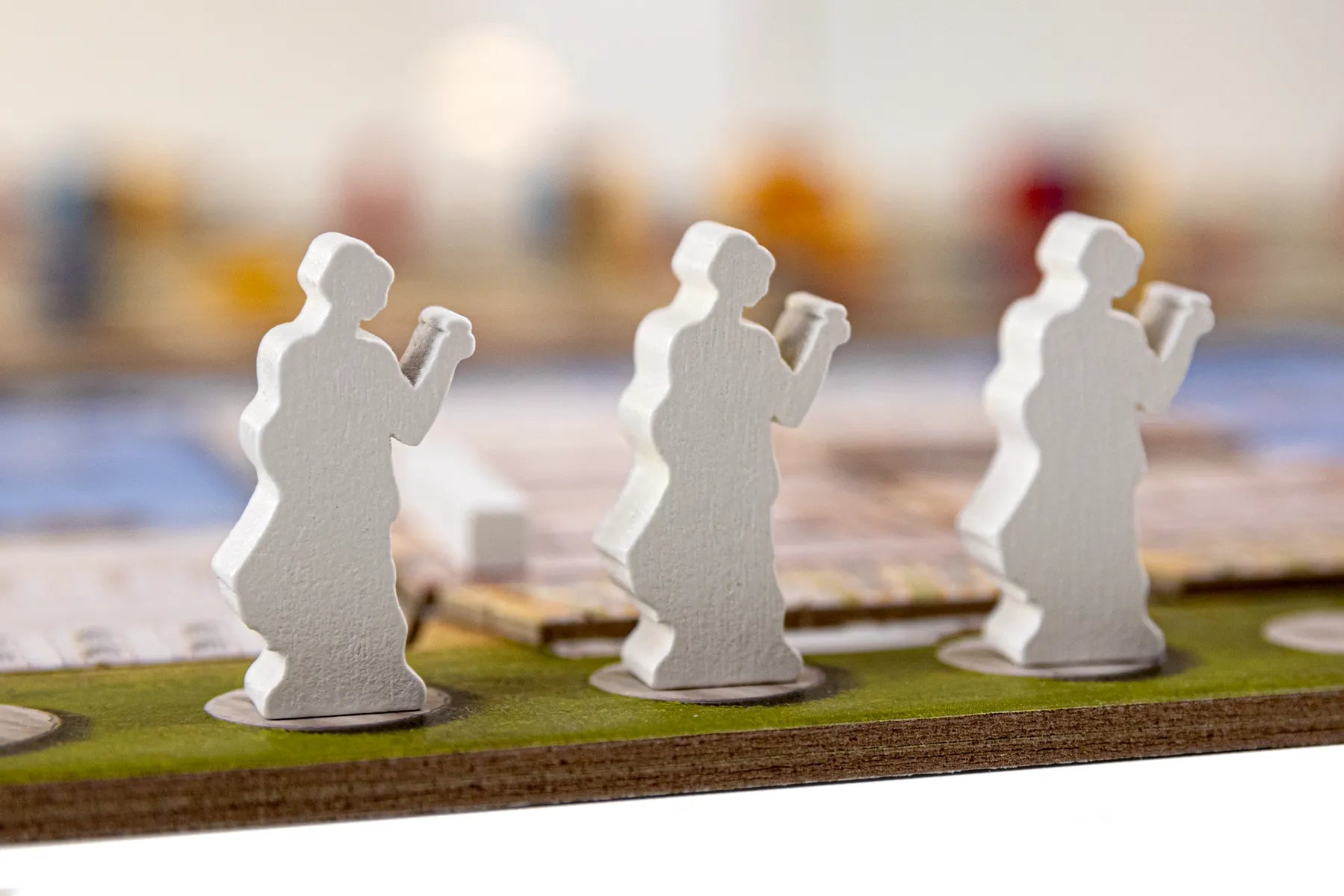
You place them to activate different actions, but where you put them determines when you will play the next turn. You can play multiple times in a row if you plan well.
Construction Contracts
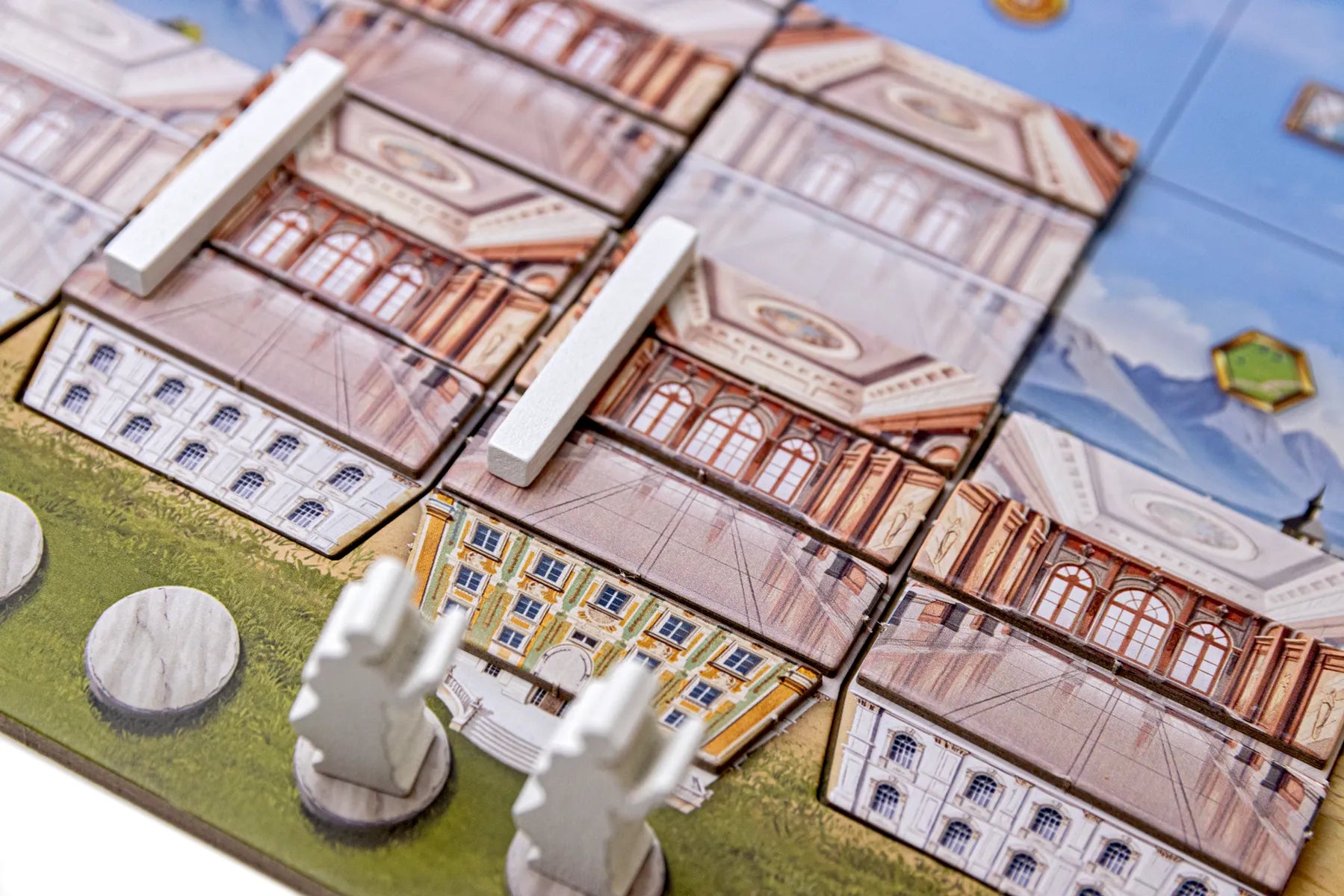
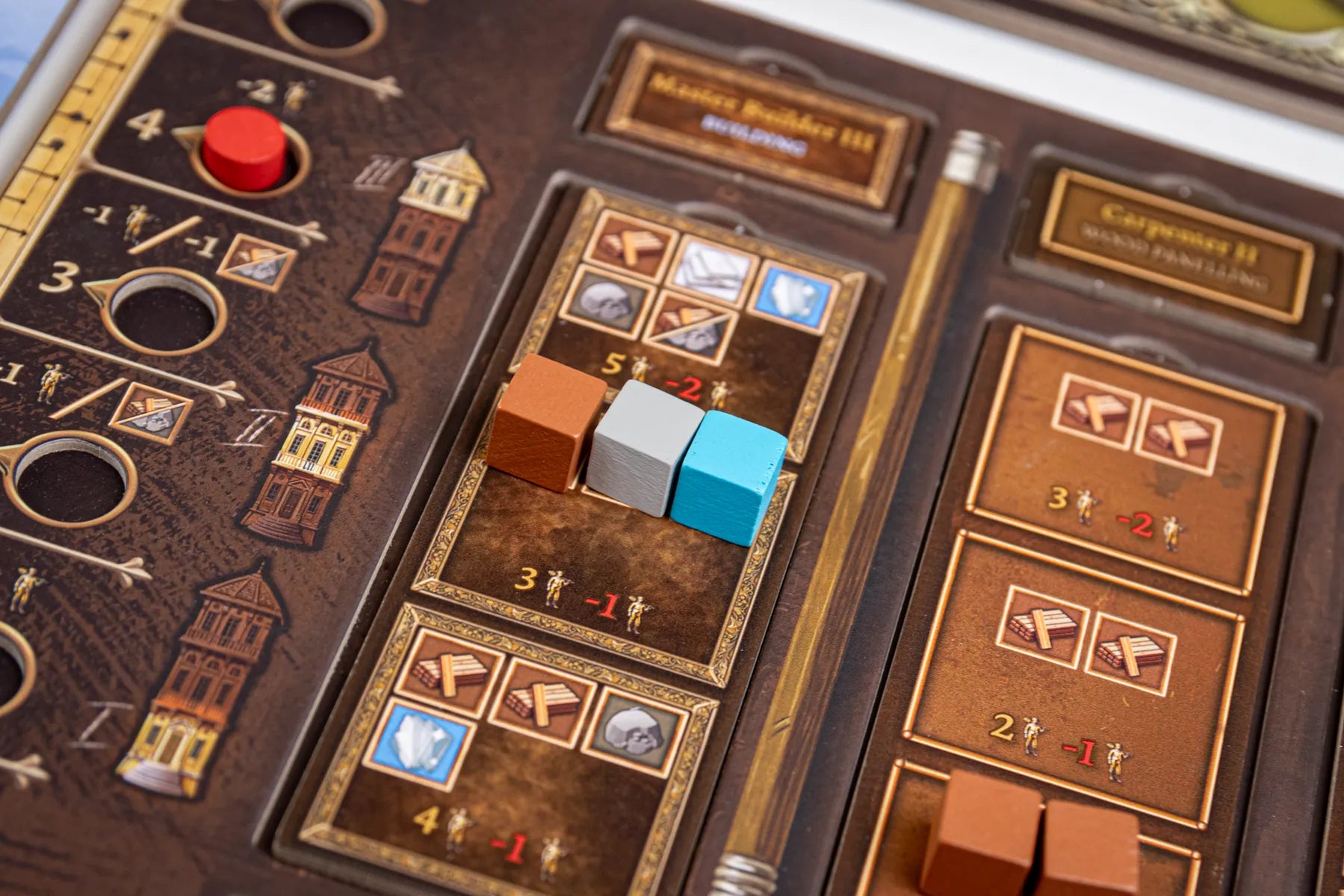
Each contract requires specific resources and artisans with adequate skills. Completing them expands the palace and unlocks new spaces to decorate.
Specialized Artisans
Hire artisans who improve with experience. An experienced artisan can perform complex contracts that a novice cannot even attempt.
Variable Seasons
Each season affects resource production and material availability. You must adapt your strategy to the calendar, not the other way around.
When you are finished, your palace will tell the story of every choice you made. And you will want to rebuild it better.
Come si gioca
Video dimostrativo di gameplay.
A game in five moments
What happens at the table
Not the rules. The experience.
Everyone looks at the same board
The first turns are cautious explorations. Someone collects resources, someone hires a craftsman, someone signs a small contract. No one knows yet which path they will take, but everyone studies what others are taking. The board seems full of options.
The first chain works
Someone completes the first important contract and their palace begins to take shape. Craftsmen gain experience, resources flow correctly, turn order allows two consecutive actions. Others realize that this strategy works and that they must accelerate their own.
Resources are never enough
Mid-game is when everyone wants to do three things but can only do one. Seasons bring different resources, contracts require specific combinations, experienced craftsmen are few and contested. Every supervisor placed is a painful renunciation.
Someone has built an engine
Towards the end of the second year, those who planned best emerge. One player has high-level craftsmen, contracts that chain together, resources that flow. Others see the palace grow and recalculate if they can still win. The table falls silent, points are counted mentally.
The last contract
Last year, last seasons. Every supervisor placed can be the last chance to close a crucial contract. Someone makes it by a whisker, someone realizes they made a mistake a season ago. The palaces are complete, the points are counted, and everyone already knows what they would do differently next time.
How to play
The flow of each season
Each season follows a precise structure: you place supervisors, resolve actions in the order determined by placement, then prepare for the next season.
In turn, each player places one of their 5 supervisors in an action area. The position also determines the turn order for the next season, so you must balance what you want to do now and when you want to play later.
Actions are resolved according to placement order: you acquire resources from the reserve, sign building contracts, buy or sell at the market, hire craftsmen, expand your land, or ensure you are first player next season.
You use craftsmen to execute signed contracts. Each craftsman has a skill level that grows with experience. Completed contracts expand the palace and generate prestige.
The game moves to the next season. Available resources change, turn order reorganizes based on previous placements. After 4 seasons, the year ends, and after 3 years, the game ends.
Why it's different from others
Six mechanics that make a difference
Dynamic turn order
Where you place your supervisor not only determines the action you take, but also when you will play next season. You can get consecutive turns if you plan well, or always be last if you miss the timing. This strategic layer transforms every placement into a long-term choice.
Growing craftsmen
Craftsmen are not simple disposable resources. Every time they complete a contract, they gain experience and improve. An experienced craftsman can undertake complex projects that a novice cannot even attempt. Hiring and growing the right team is as crucial as having resources.
Seasons that matter
Each season influences production and availability. Some resources cost less in certain seasons, some contracts are more favorable at specific times of the year. You cannot ignore the calendar: you must adapt your strategy to the natural rhythm of the game, not force the same plan in every season.
Layered building contracts
Contracts are not just cards to complete. They represent physical expansions of the palace, unlock new spaces to decorate, and generate variable prestige. Some contracts are prerequisites for others: you build a logical chain of expansions, not random projects.
Always painful choices
You have 5 supervisors and at least 6 urgent things to do each season. You want resources, you want contracts, you want craftsmen, you want to be the first player, you want to expand. You can't do everything. Every turn is a conscious sacrifice, and you learn to live with the consequences of your priorities.
Complete information, zero luck
Everything is visible. All available contracts, all resources, all craftsmen on the market, all opponents' positions. There are no card draws, no dice. If you lose, it's because you planned worse, not because the deck betrayed you. This makes every victory earned and every defeat a lesson.
How it ends
How to win and how to lose
The game ends after 3 full years (12 seasons total). The player with the most prestige accumulated through constructions, decorations, and objectives wins.
Victory
- Prestige points from completed contracts: large and decorated projects are worth more
- Points from experienced craftsmen and efficient skill combinations
- Points from land expansions and seasonal objectives achieved
How to lose ground
- Contracts signed but not completed: you spent resources without gaining prestige
- Craftsmen hired but never trained: they remain inefficient throughout the game
- Turn order ignored: you always play last and all good actions are taken from you
Prestige is for those who want a eurogame where every move has visible consequences three turns later. There are no shortcuts, no luck to save you. Only planning, adaptation, and the satisfaction of seeing a palace grow exactly as you imagined it.
Frequently asked questions
FAQ about Prestige
How complex is it compared to other worker placement games?
Prestige is explicitly expert level. If you've played Agricola or Viticulture, here you'll find an extra layer: dynamic turn order. The rules are clear but interconnected, and the first game will take at least 2 and a half hours. It's not a gateway game; it's for those seeking strategic depth.
Are the growing craftsmen really important or is it just cosmetic?
They are the heart of the game. An experienced craftsman can complete contracts that a novice cannot even attempt. Growing the right team at the right time is as important as having resources. Ignoring experience means getting stuck mid-game with impossible projects to finish.
Does the variable turn order cause downtime issues?
No, on the contrary: it creates tactical opportunities. Sometimes you play two or three times in a row if you place your supervisors intelligently. Downtime exists as in any worker placement, but here you at least have control over when you wait and when you act. Those who plan poorly wait longer; those who plan well dominate the pace.
Does it work well with two players or does it lose too much interaction?
It works well. Interaction is indirect (competition over spaces, resources, contracts) and remains significant with two players because good resources are still limited. You lose a bit of the chaos of variable turn order, but you gain in control and pure planning. If you like dense strategic duels, Prestige holds up very well with two players.
Is it available in Italian?
No, this edition is in English. The game has text on contracts, craftsmen, and season cards, so a sufficient knowledge of English is needed to read abilities and requirements. Nothing narrative or complex, but be prepared to consult the rulebook in English.
Prestige is a eurogame by Stefan Kretschmann published by Skellig Games and Queen Games, for 2-4 players, lasting 90-180 minutes, recommended age 12+. Set in the Rococo era, the game uses worker placement mechanics with dynamic turn order: each supervisor placement determines not only the current action but also when you will play in the next season. Craftsmen gain experience and improve over time, building contracts chain into long-term strategies, and seasons influence production and resource availability. Complete information, zero luck, high strategic depth. Available on FroGames.it.
Prestige
Frequently Asked Questions
The answers you're looking for, no beating around the bush.
📸Do the images match the actual product?
The photos on the website often come from BoardGameGeek and are intended to give you an idea of the game. They may vary slightly from the version you receive. The content declared by the publisher is always binding.
📦Does the content of the box match what is indicated?
We always strive to provide the correct content, but minor variations are possible due to reprints or updates. The information comes directly from the publishers. If you have any questions, please contact us!
⏳How do pre-orders work?
Pre-order the game before release, payment is immediate, and the game is reserved for you. As soon as it arrives, we'll ship it right away! If there are any delays, we'll update you promptly.
🔒Can I trust buying here?
Absolutely! Secure payments, tracked shipments, and a team that loves board games as much as you do. If something goes wrong, we'll do our best to fix it.
🛠There's a problem with my order, what should I do?
Write to us now! Whether it's a missing part, damage, or an error, we'll help you resolve it as soon as possible. Your experience truly matters to us.