
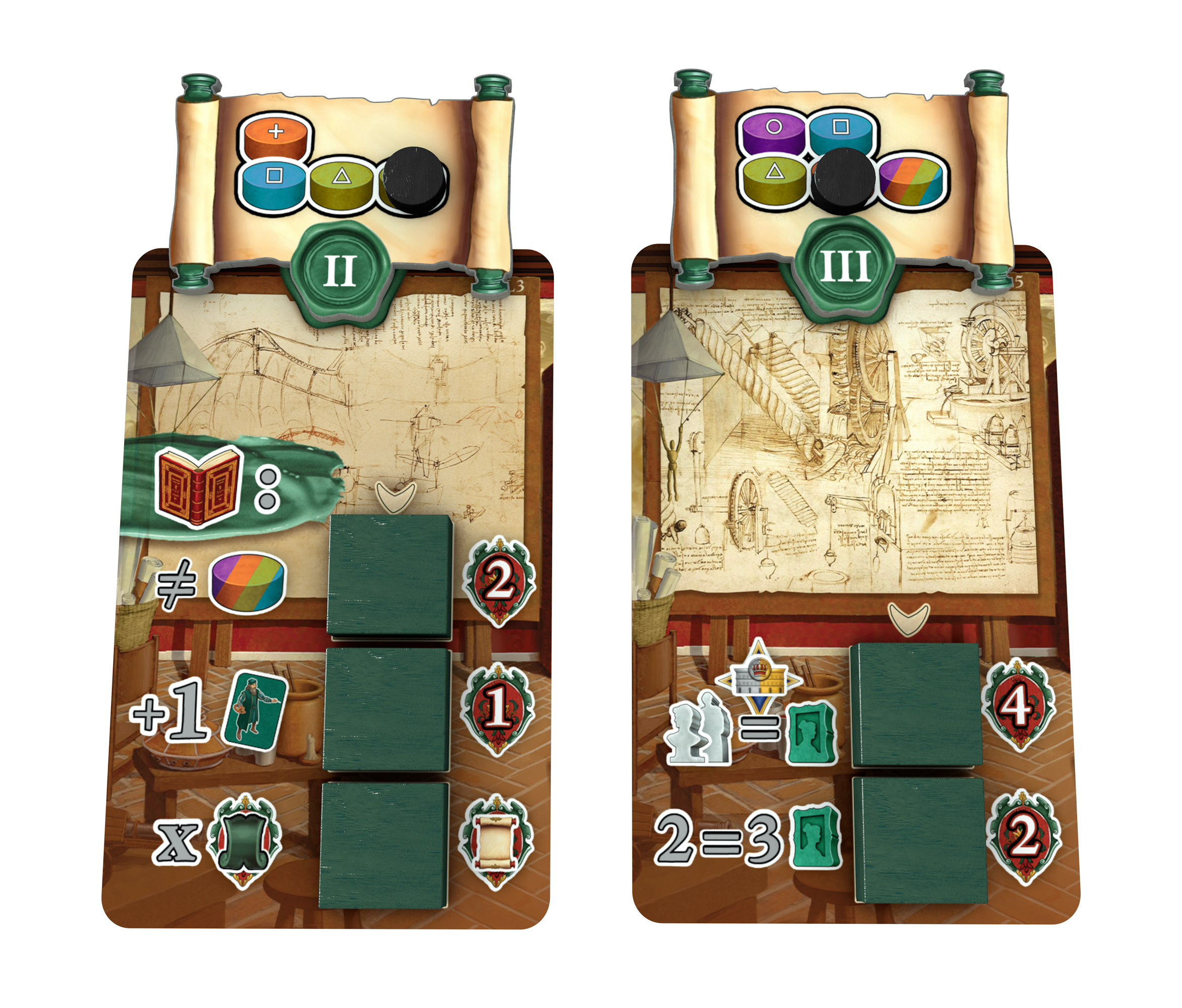
Maestro
🐸 Details from BoardGameGeek
Consiglio BGG sul numero di giocatori
Categorie
Meccaniche
Design & Art
Lingua










Si abbina bene con
The FroGames card
You have three cards in hand, two action points, and a half-finished fresco. Your opponent has just placed a statue in the gallery you needed. You have to decide: finish the work or block their influence over the Medici. Meanwhile, your teammate is watching you, hoping you've figured out the plan.
WHAT IT'S ABOUT
The war of art in the Italian Renaissance
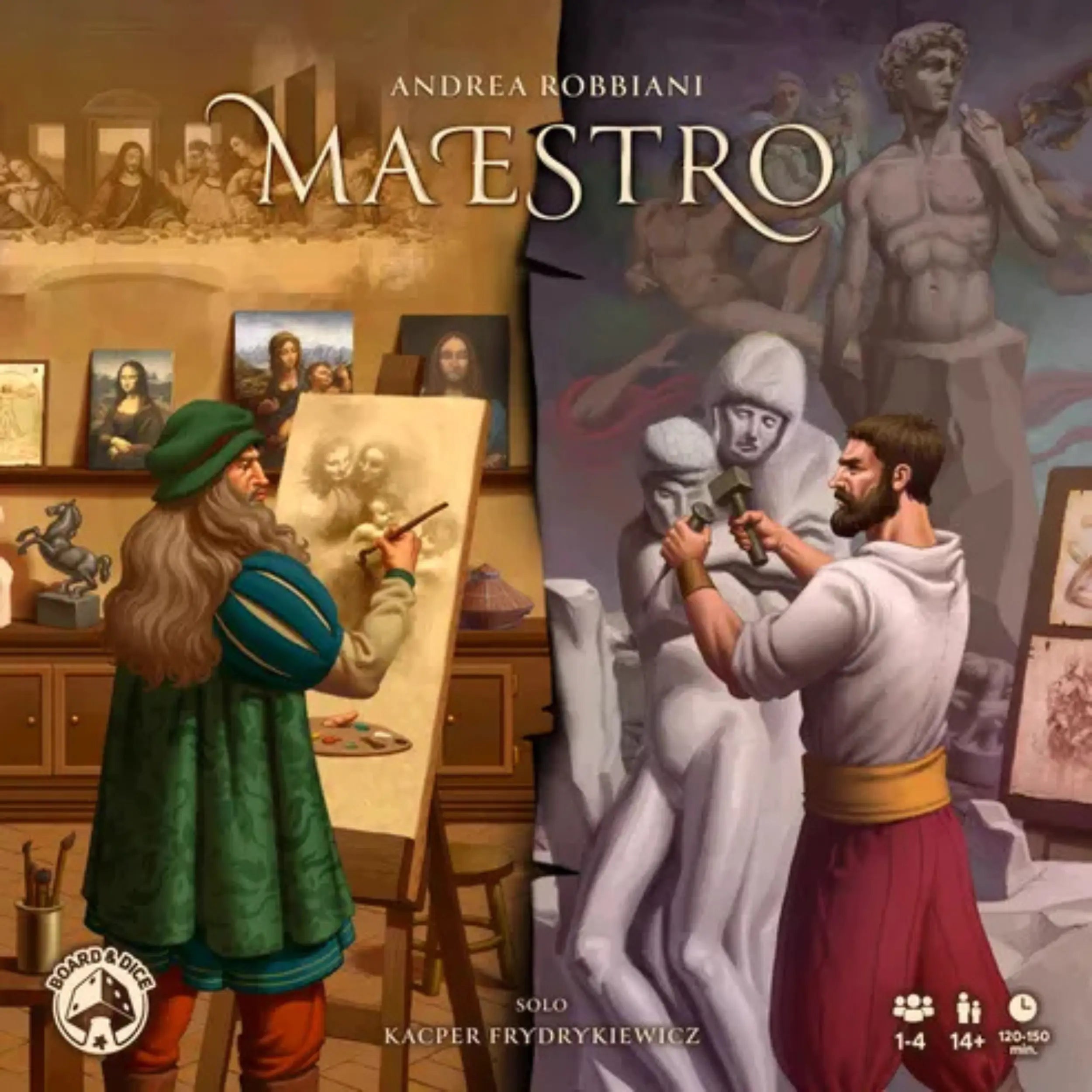
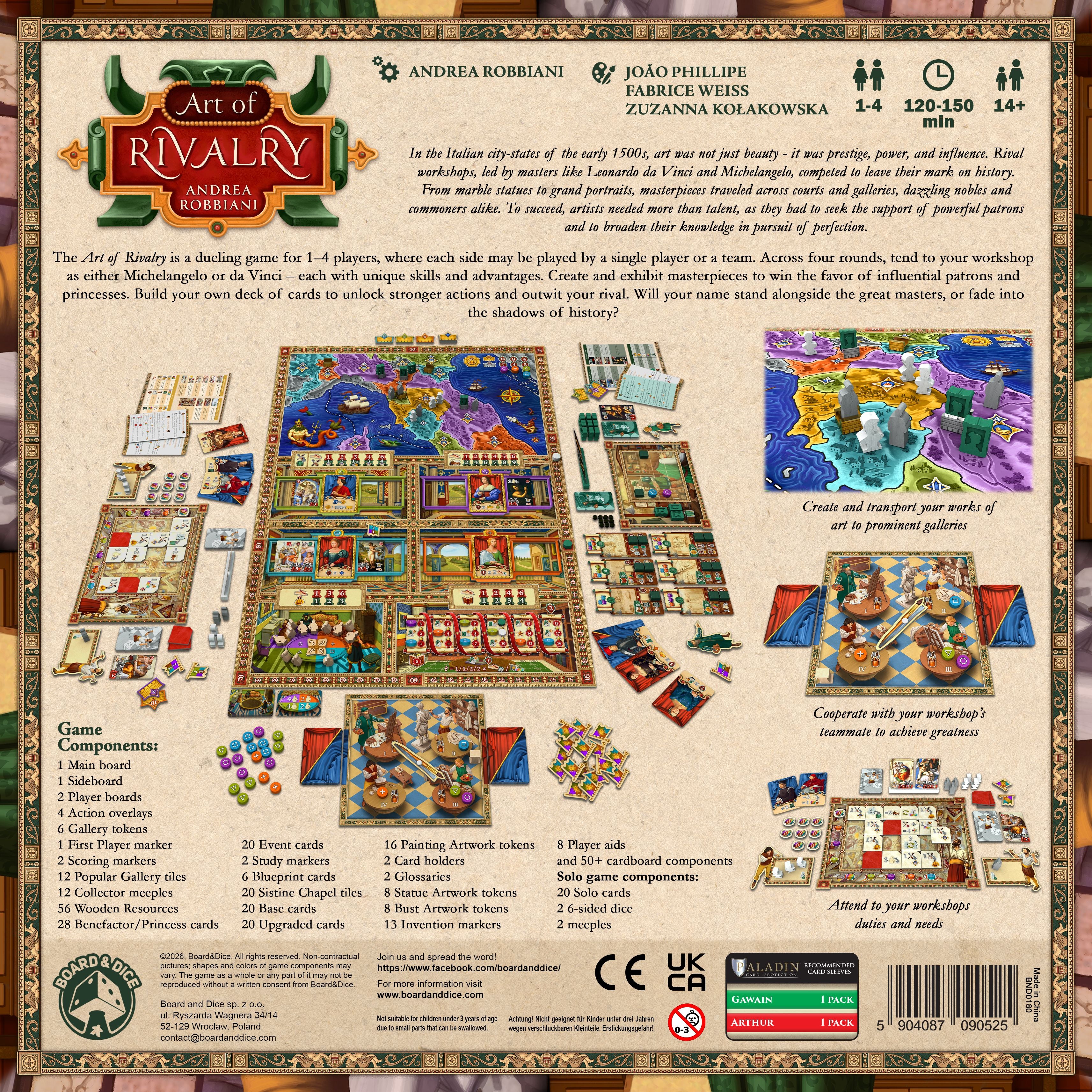
Italy, early 1500s. The workshops of Leonardo da Vinci and Michelangelo Buonarroti compete for cultural dominance over the peninsula. Designed by Andrea Robbiani and illustrated with authentic works by the two masters (along with the work of Zuzanna Kołakowska, João Phillipe, and Fabrice Weiss), Maestro turns this historical rivalry into a race for influence, prestige, and artistic creation. Every fresco, every marble statue is a political weapon as well as a masterpiece.
At the table, you build works of art by combining cards from your hand, take them around the courts and galleries of northern Italy, and compete to win the attention of the most influential Collectors. Manage limited action points, build your deck to optimize future moves, and coordinate strategies with your teammate (or play solo against an AI). The winner is whoever has accumulated the most victory points after four rounds from exhibited works, aristocratic favors, and territorial control.
What they say abroad
A game that does not yet have verifiable reviews in international publications. It promises a deep resource management and territorial influence challenge, with a historical theme rare in modern games.
— FroGames
"Maestro brings the rivalry of Leonardo and Michelangelo to life through strategic artwork creation and collector influence across Renaissance Italy."
Maestro brings the rivalry between Leonardo and Michelangelo to life through the strategic creation of works and influence over collectors in the Italian Renaissance.
— Board&Dice

Maestro
The game includes official solo rules where you control a workshop against an AI opponent. The AI draws cards and simulates placement and influence decisions. The strategic experience remains complete, but obviously lacks the silent negotiation with a teammate and the psychological reading of the human opponent.
FrogScore · FroGames editorial review · based on rules, international reviews, and play sessionsThe workshop tools
What you have in front of you during the game
Artwork Cards
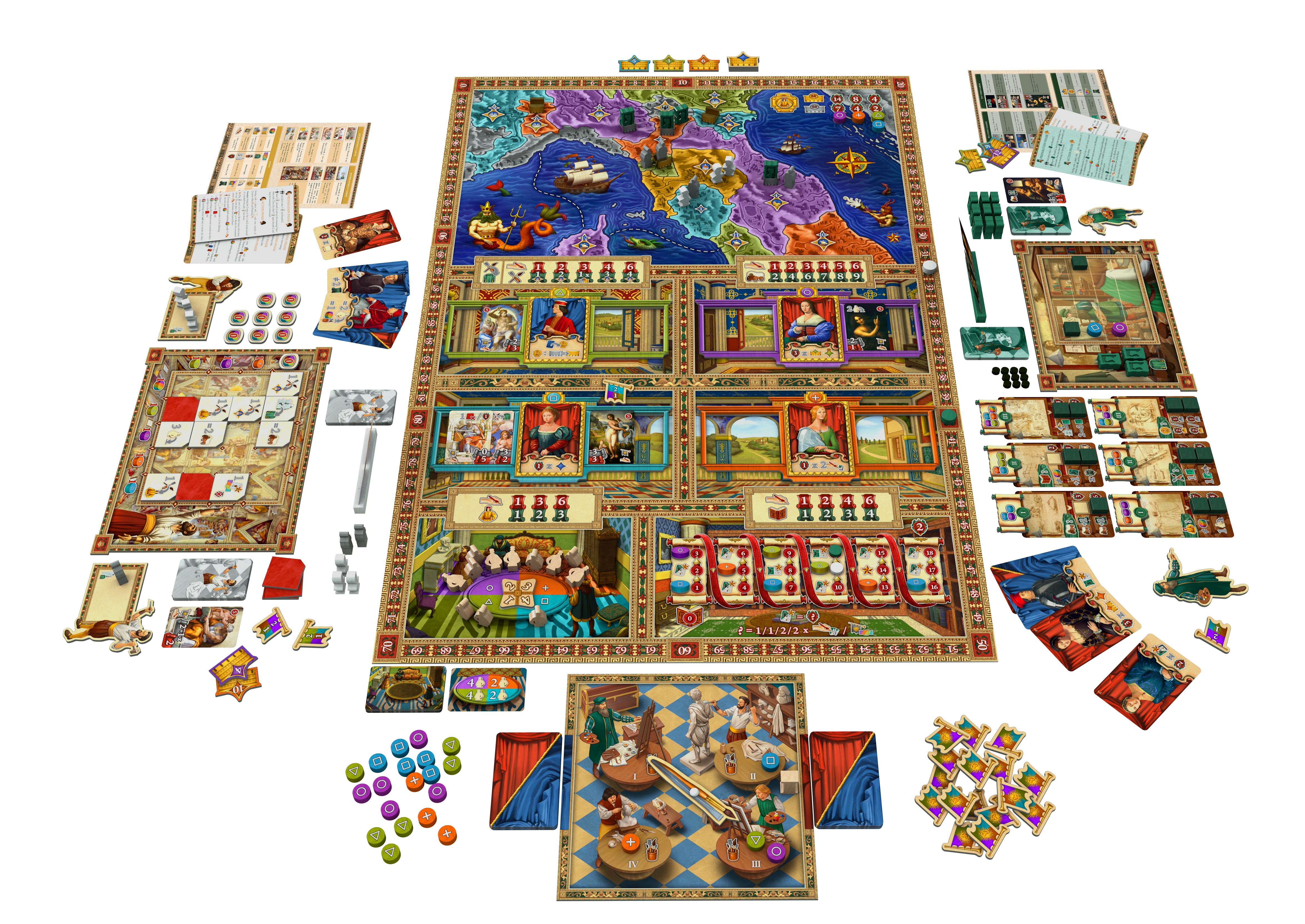
Frescoes, statues, paintings: each card represents a type of artwork. You combine them from your hand to create complete masterpieces, then take them to the galleries to earn points and influence. Some require specific resources, others unlock unique abilities of your workshop.
Collectors
Nobles, merchants, cardinals. Each Collector has precise tastes and rewards whoever shows them the right works. Winning their favor gives you victory points at the end of the game and can unlock immediate bonuses. They are the real battlefield: whoever dominates the collectors dominates the game.
Italy Board
Courts and galleries distributed among the northern provinces. Each space has a prestige value and can host a limited number of works. Controlling an area means placing more works than your opponents: territory is conquered with exhibitions, not with weapons.
Action Points
Each turn you have a limited budget of actions. Use them to draw cards, build works, move them on the map, or influence the collectors. Time management is brutal: doing everything is impossible, choosing what to sacrifice is the essence of the game.
🎯 COME SI GIOCA
Come si gioca
Video dimostrativo di gameplay.
🎲How to playThe rules in four steps▼
How to play
The flow of each round
Maestro develops in four rounds identical in structure, different in choices. Each round has three main phases.
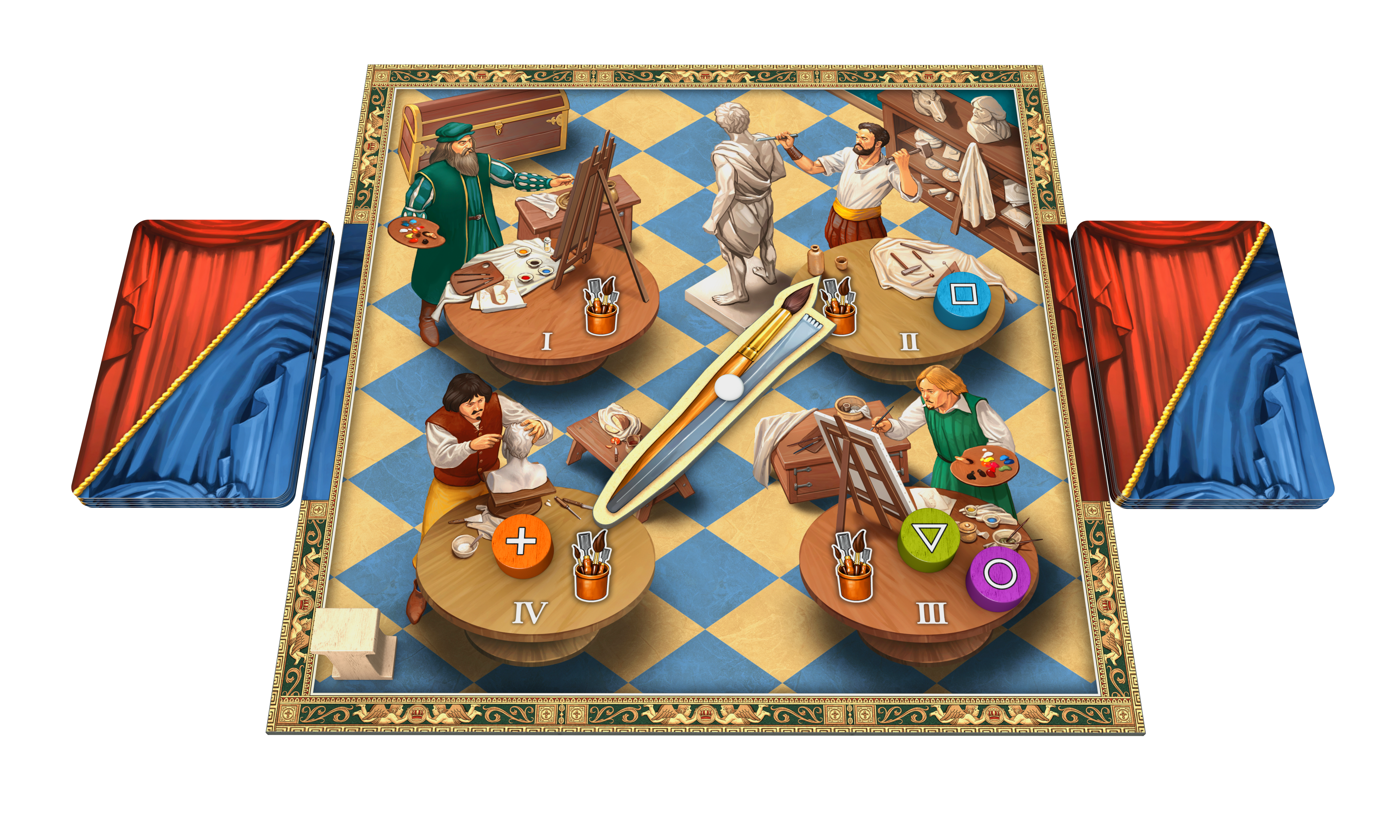
In turn, each player (or team) spends their action points to draw cards, build artworks by combining cards from their hand, place artworks on the board in the galleries, or activate special abilities of their workshop. Communication between teammates is limited by the rules: you play more with glances than with words.
After everyone has acted, influence over the Collectors present in the game is evaluated. Each Collector looks at the artworks displayed in the galleries that interest them and moves towards the workshop that best satisfies their tastes. Winning a Collector means victory points and, sometimes, immediate bonuses.
Played cards are discarded, hands are replenished according to the deck construction rules, control markers on the provinces are updated based on who has more artworks displayed. New Collectors are prepared for the next round. Everything resets, but the artworks on the board remain: conquered territory is not lost.
After the fourth round, points are summed: displayed artworks are worth points based on their prestige, each conquered Collector gives victory points, control of the provinces guarantees final bonuses. Whoever has the most points wins. In case of a tie, the one who influenced more high-ranking Collectors wins.
⏱️Your first gameThe chronicle, moment by moment▼
A game in five moments
What happens at the table
Not the rules. The experience.
Setup and first hands
Choose your workshop (Leonardo or Michelangelo), draw the initial cards and study the board. The galleries are empty, the collectors neutral. You and your companion must decide in silence who guards which province. No one speaks, but glances say it all.
First placements
Build your first artwork and place it in a strategic gallery. The opponent does the same. You start to understand their plan: are they aiming for the Medici or the Venetian merchants? Every move reveals intentions, every hesitation costs spaces on the board.
Race for the collectors
Halfway through the game. The galleries fill up, the collectors start to lean towards a workshop. You have invested in religious frescoes, but the opponent has monopolized the statues and now controls two cardinals. You must decide: change strategy or double down on your niche?
The decisive round
Third round. You have a magnificent artwork ready, but you lack the action points to place it where it really counts. Your companion passes you a card that unlocks a special ability. Do you use it immediately or keep it for the end? At that moment you understand why Maestro is not an easy game.
Final count
Last turn. Count the points from the displayed artworks, the conquered collectors, the territorial control. The game is decided by three points of difference. You realize that the missed placement in the second round cost you the victory. Someone immediately proposes a rematch.
🐸Good to know beforeThree honest things, from friends▼
Good to know before
Three things you need to know
The cards have text in English (abilities, effects, Collector conditions). You need a good knowledge of the language or someone at the table who translates in real time. It is not a game you can explain to anyone without preparation.
With players who analyze every move, turns get longer. The team mode (2vs2) reduces the problem compared to free-for-all, but if you play with perfectionists be prepared for long games over two hours.
The first game is almost only used to understand how deck construction, ability timing and collector priorities work. The game really opens from the second or third session, when you master the flow and read the opponent's moves in advance.
🏆Victory and defeatWhat the end rewards▼
How it ends
How you win and how you lose
Maestro does not eliminate anyone: you play until the end of the fourth round and count the points. Victory is built on three axes.
Victory
- Artworks displayed in the galleries: each artwork gives points based on the prestige of the province where it is placed
- Conquered Collectors: whoever has more influence over a Collector earns their victory points at the end of the game
- Territorial control: dominating a province (more artworks from the opposing workshop) guarantees additional final bonuses
How you lose ground
- Timid placements: keeping artworks in hand instead of displaying them makes you lose points and leaves spaces free for opponents
- Neglected Collectors: ignoring the tastes of the Collectors means giving victory points to the opposing workshop
- Inefficient action management: wasting actions on non-decisive moves leaves you behind in board control and deck building
Maestro is not a game for everyone. But if you are looking for deep strategy, decisions that weigh and a historical theme treated with respect, this is your evening.
💬Frequently asked questionsQuick answers before the cart▼
Frequently asked questions
FAQ on Maestro
What mechanics does Maestro use?
Deck construction (build the deck during the game by adding cards), area majority (you control provinces by placing more artworks than opponents), action points (limited action budget every turn), hand management (choose when to play cards), variable player powers (each workshop has unique abilities), team-based game (playable 2vs2 with limited communication).
How complex is it to learn?
Weight 3.4 out of 5 according to BoardGameGeek. Detailed but structured rules: the first game requires 20-30 minutes of explanation and almost serves as a tutorial. From the second game the flow is clear, but mastering ability timing and deck management requires experience. It is not a gateway game.
Does it work well in 2 players?
Yes, the 1vs1 (one workshop against the other, each managed by a player) is supported and balanced. You lose the team component and limited communication, but you gain total control and tighter times. The strategic challenge remains intact.
How long does a full game last?
90-140 minutes according to the box. With experienced players who know the cards it stays around 90-100 minutes. First game or analytical table: expect well over 2 hours, even 2 and a half hours in 4 players. The setup is quick, but thoughtful turns lengthen it.
Is it available in Italian?
No. This edition is in English. The cards have text (abilities, Collector conditions, special effects) and you need a good understanding of the language to play autonomously. There are currently no official fan translations or announced Italian editions.
The people behind the game
Who invented it, who designed it, who publishes it — and what else they have done.
Maestro is a strategic board game for 1-4 players set in the Italian Renaissance, where the workshops of Leonardo da Vinci and Michelangelo compete for fame and influence. Designed by Andrea Robbiani and published by Board&Dice, it combines deck construction, area majority and action point management in games from 90 to 140 minutes. Recommended age 14+, weight 3.4/5, supports solo mode with official automaton and 2vs2 team play with limited communication. Available on FroGames.it.

Frequently Asked Questions
The answers you're looking for, no beating around the bush.
📸Do the images match the actual product?
The photos on the website often come from BoardGameGeek and are intended to give you an idea of the game. They may vary slightly from the version you receive. The content declared by the publisher is always binding.
📦Does the content of the box match what is indicated?
We always strive to provide the correct content, but minor variations are possible due to reprints or updates. The information comes directly from the publishers. If you have any questions, please contact us!
⏳How do pre-orders work?
Pre-order the game before release, payment is immediate, and the game is reserved for you. As soon as it arrives, we'll ship it right away! If there are any delays, we'll update you promptly.
🔒Can I trust buying here?
Absolutely! Secure payments, tracked shipments, and a team that loves board games as much as you do. If something goes wrong, we'll do our best to fix it.
🛠There's a problem with my order, what should I do?
Write to us now! Whether it's a missing part, damage, or an error, we'll help you resolve it as soon as possible. Your experience truly matters to us.