
Infernal Machine - Dawn of Submarine Warfare
🐸 Details from BoardGameGeek
Consiglio BGG sul numero di giocatori
Categorie
Meccaniche
Design & Art
Lingua
Si abbina bene con

FroGames — Moments You'll Remember
You are the inventor. You are the entrepreneur. You are the captain. And the machine you built might sink you before it even reaches the enemy.
What it's about
Design, build, and lead history's first submarine into battle
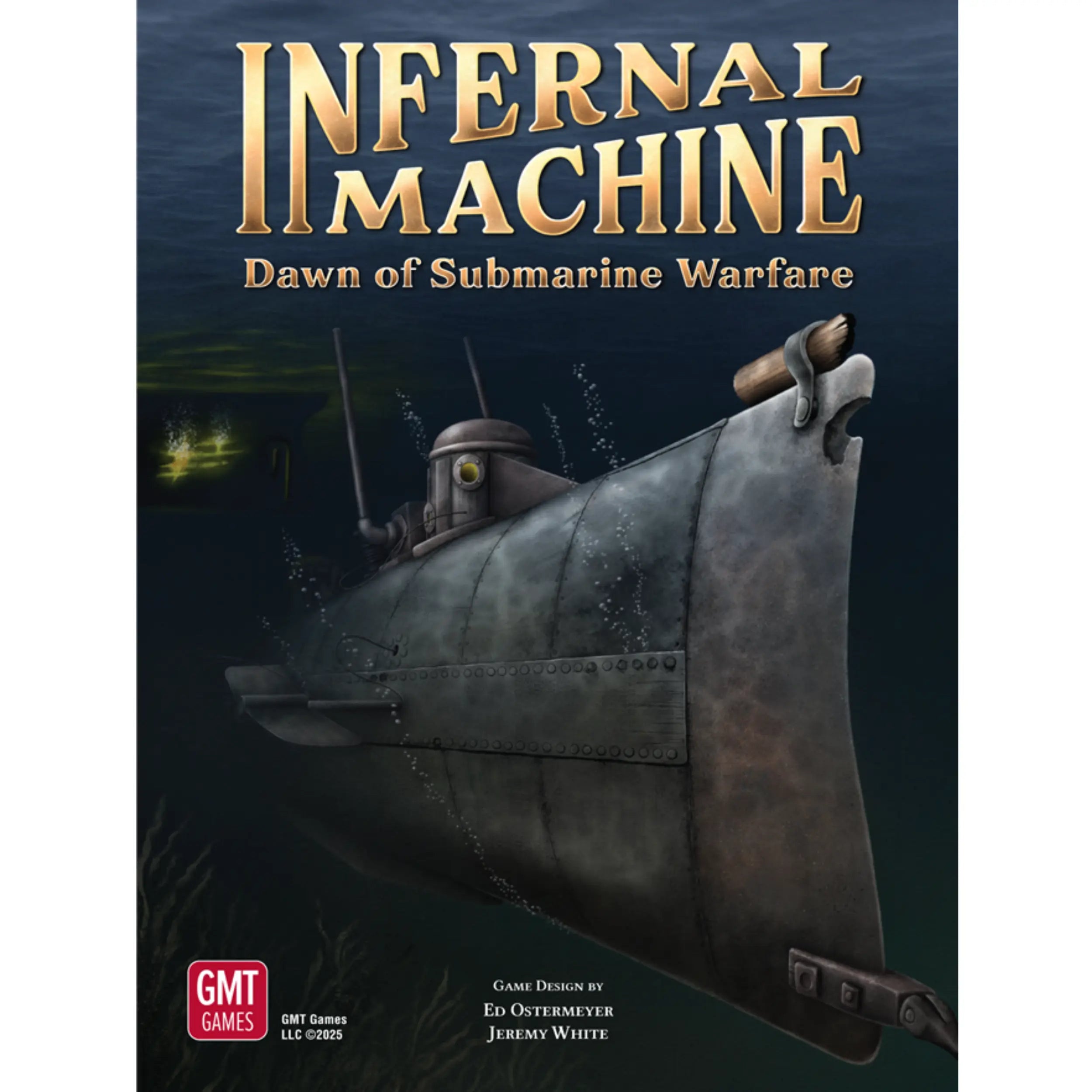
It's 1861. The American Civil War has just ignited. You are an inventor with a crazy idea: to build a submersible — a "fishboat" — and use it to turn the tide of a naval conflict that already seems decided. Ed Ostermeyer and Jeremy White, with GMT Games' tactical boards, have turned this true story into an unparalleled solo game.
It's not a traditional wargame. It's a game of wartime entrepreneurship: you recruit investors, hire mechanics, buy materials. Each month the war progresses, prices fluctuate, unexpected events can ruin the shipyard. Before even touching the water, you could already lose.
When the fishboat is finally ready, the mission begins. You assign each crew member to a specific task — maneuvering, repairing, navigating — and push the machine towards the target. History watches.
From the FroGames archive
The submarine you are building is your most powerful weapon and your most immediate danger. The machine punishes every mistake before the enemy has time to.
The secret of Infernal Machine in one line
Each game is a campaign in the fullest sense of the word — months of shipyard work, difficult economic decisions, and then that moment when the fishboat goes into the water and everything becomes real.
From the gaming experience

Infernal Machine: Dawn of Submarine Warfare
Designed entirely as a solo game — every mechanic is built around a single player carrying the weight of an entire campaign.
FrogScore · FroGames editorial rating · based on rules, international reviews, and play sessionsYour arsenal
What you control in each game
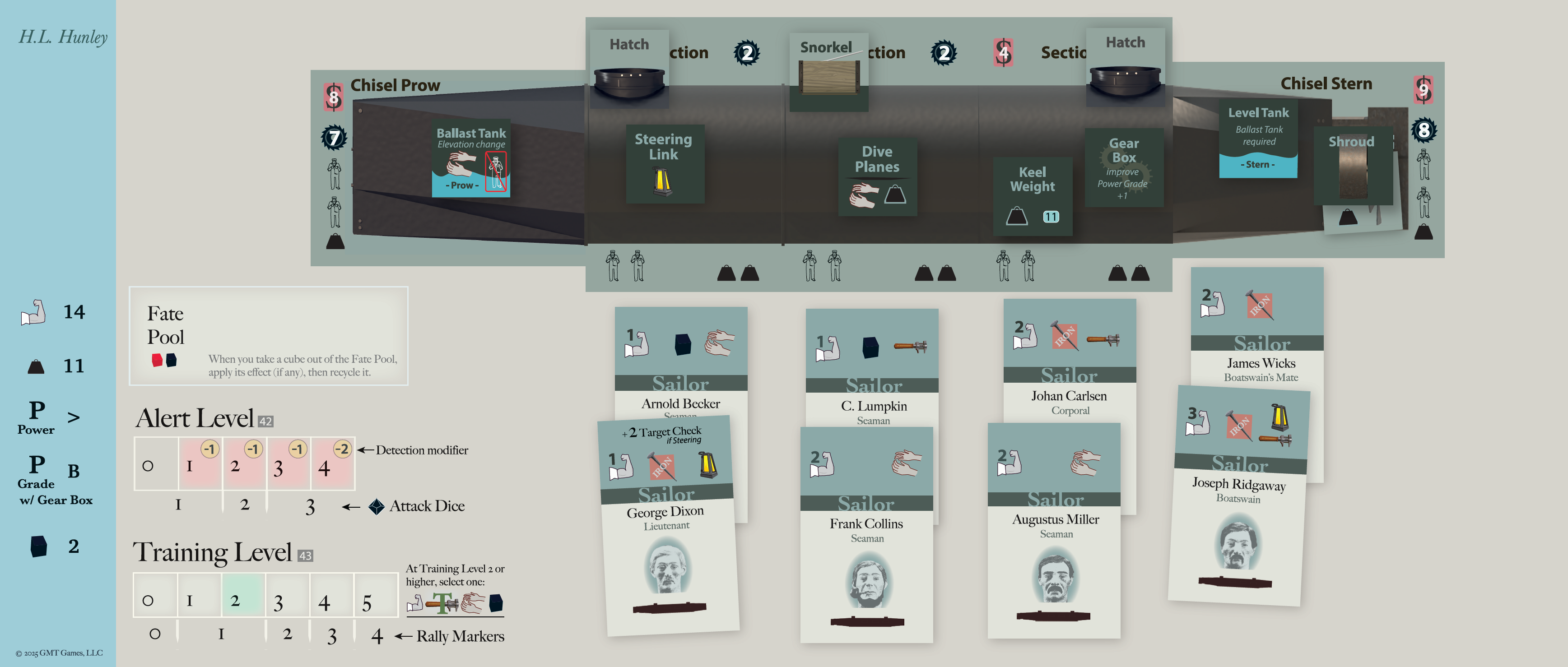
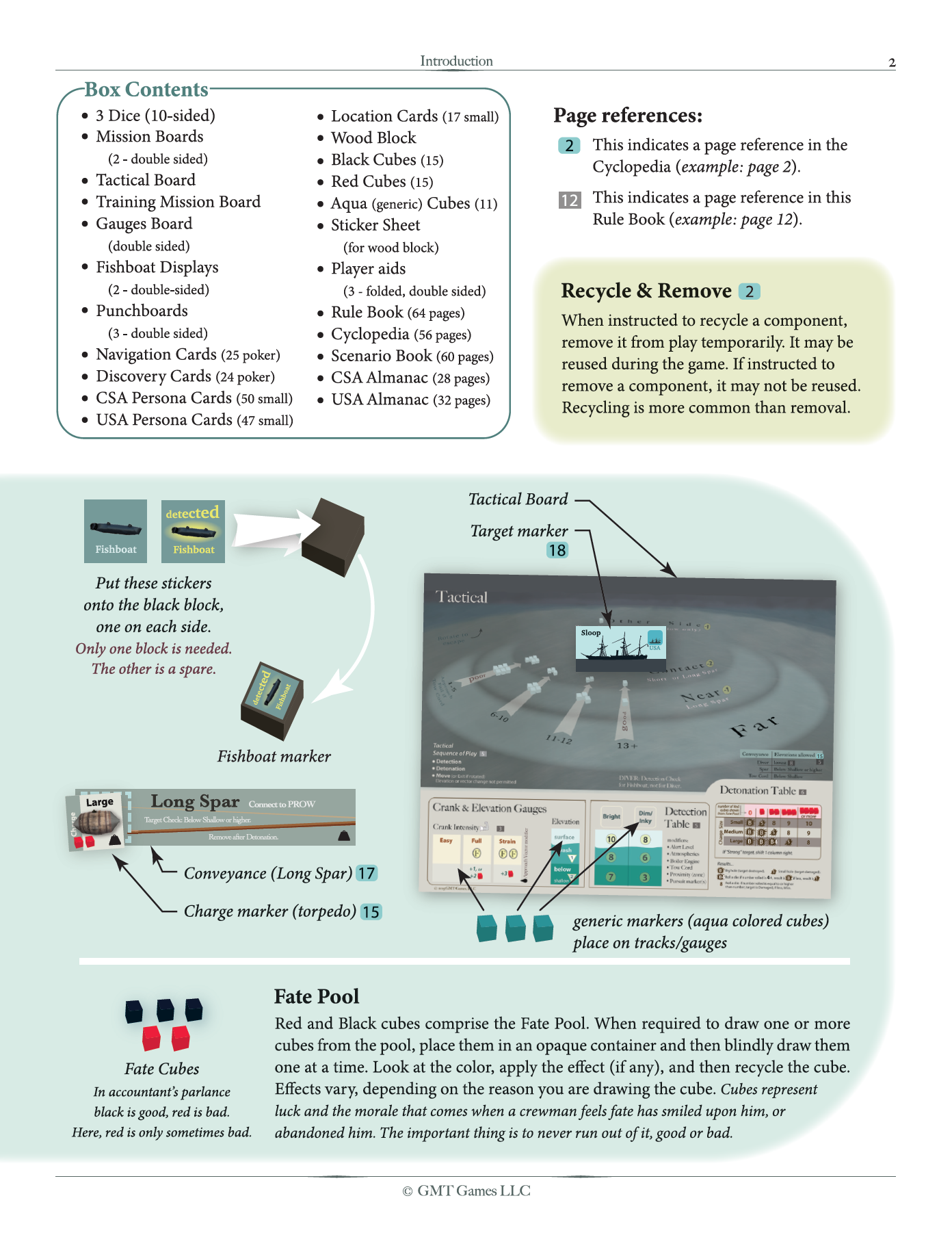
The Fishboat to design
Choose every component: hull, propulsion, weapons. Every decision builds a unique submarine — and every weakness could cost you dearly.
A crew to recruit
Investors, mechanics, sailors. Each brings advantages and complications. Those who finance might want to command. Those who are strong might be clumsy.
Four operational theaters
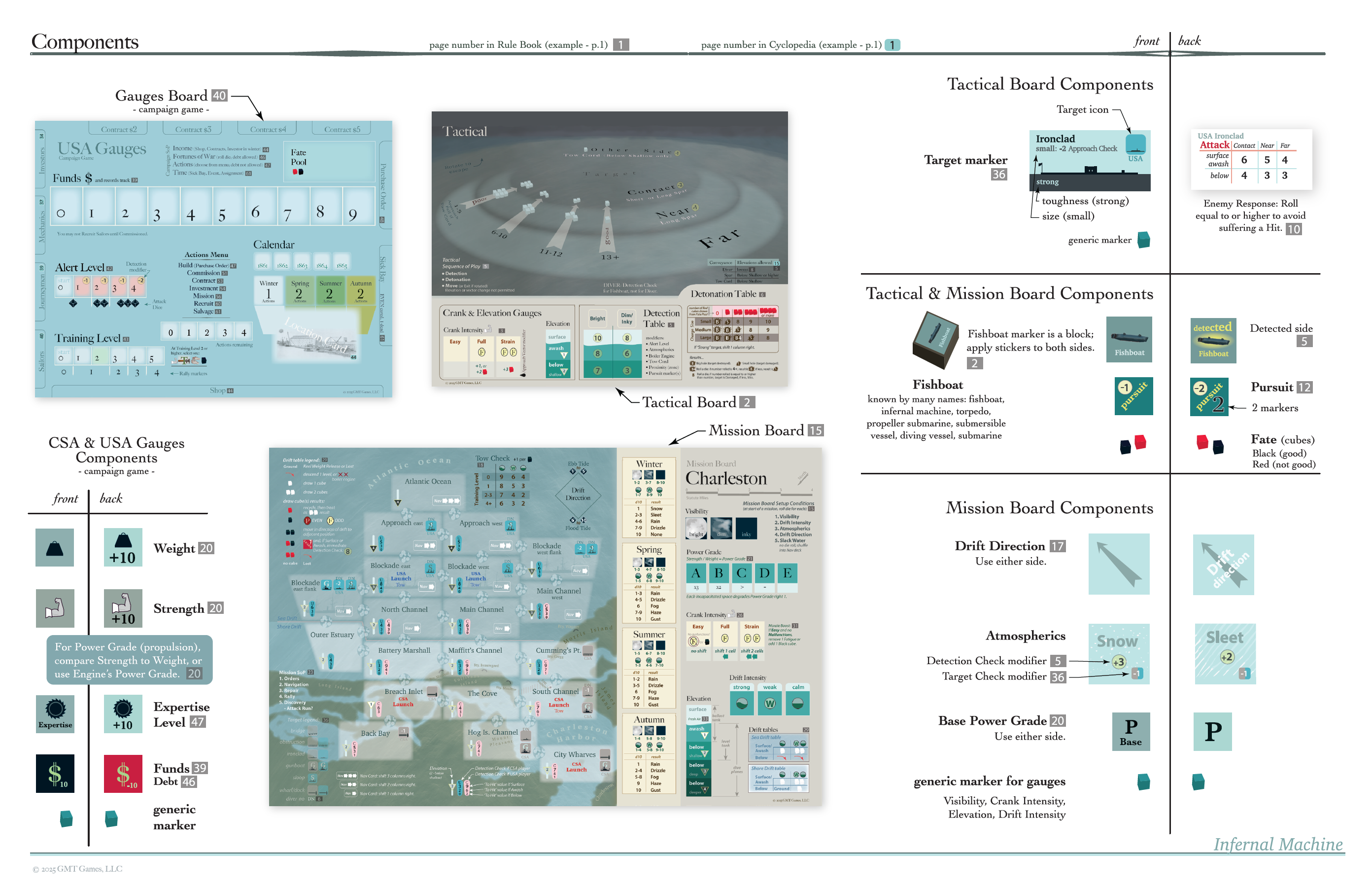
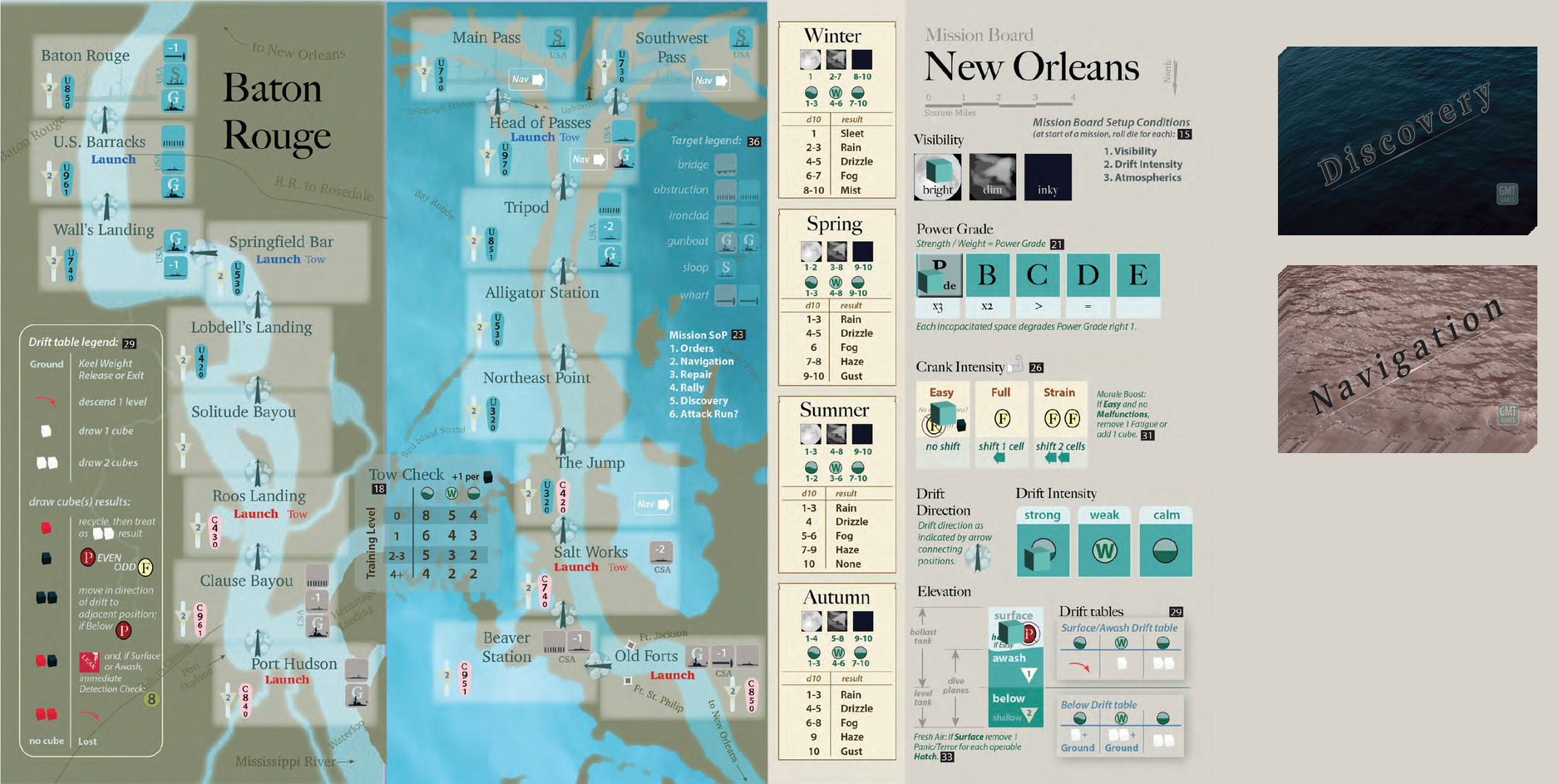
Charleston, Mobile, New Orleans, the James River. Each Action Board has its own tide, drift, and visibility conditions. No two missions are identical.
Weapons and tactics to choose
Tow mine, spar torpedo, armored ram, or saboteur raid. The choice of mission determines the risk — and the monetary reward.
When the fishboat first touches the water, you realize you've built something no one has ever seen before. And that no one really knows how it will end.
🎲Components12 types · over 200 pieces
🃏Recommended sleeves2 formats · 166 total cards
📖RulebookEnglish · Official PDF
Come si gioca
Video dimostrativo di gameplay.
A five-part campaign
What happens at the table
Not the rules. The experience.
The shipyard takes shape
You choose the city, recruit the first mechanic, lay out the fishboat plans on the table. Every decision already counts: the type of propulsion, the hull shape, the weapons. The war outside waits. The shipyard inside burns.
Money runs out sooner than expected
An investor wants to become captain. Material prices rise. A day laborer abandons the shipyard. The Fortunes of War table drew a card you didn't want to see. You have to decide: delay or push ahead with what you have?
The fishboat touches water
Finally. You assign each man to his post, check the systems, choose the mission. The weather conditions are not ideal but waiting costs time and money. The machine descends into the dark water. You hope it holds.
Contact with the enemy
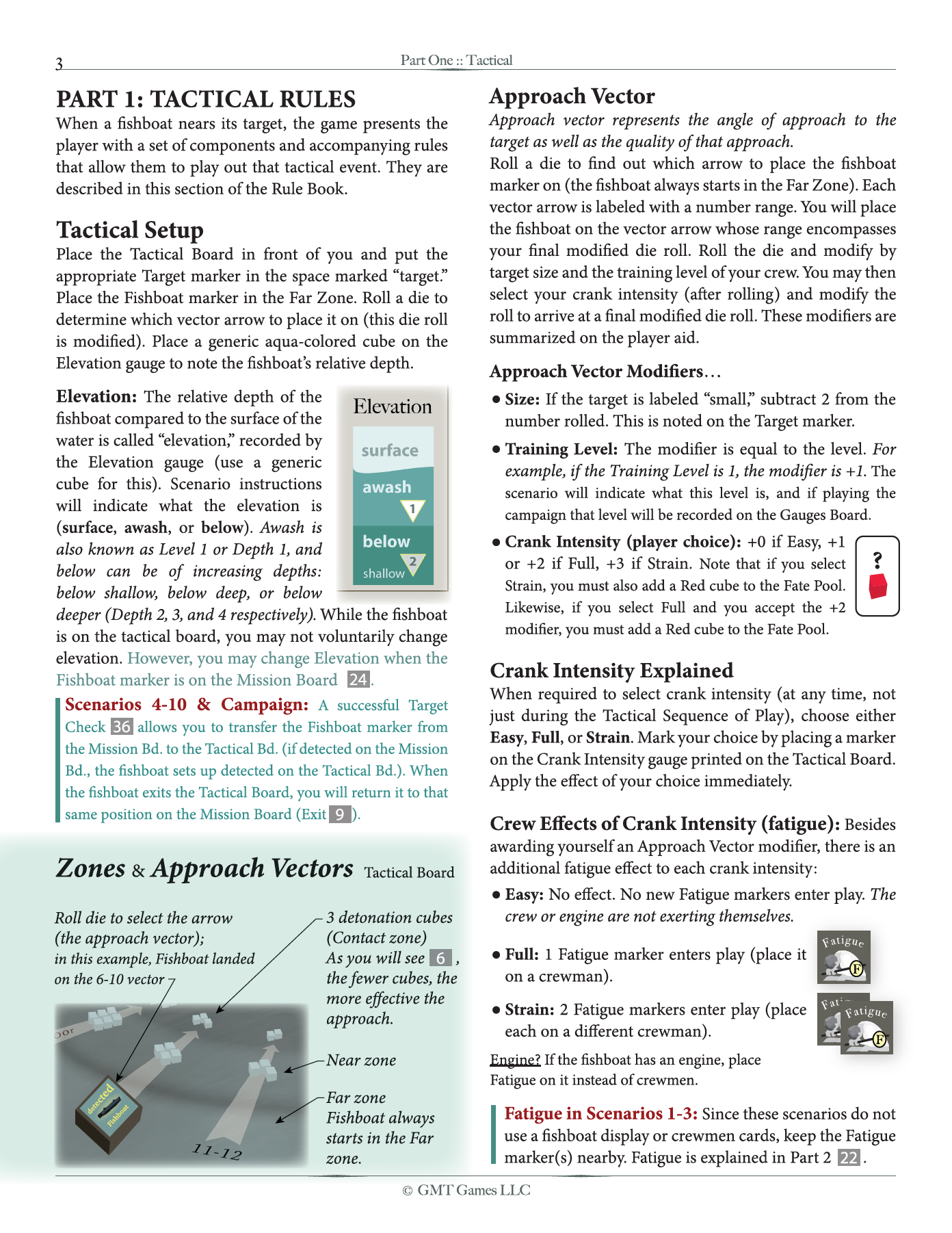
The tactical board appears. The fishboat advances towards the target, space by space. A malfunction slows the engines. A crew member loses his cool. Correct the course, maintain cover, prepare the torpedo. History watches.
The return — if there is a return
The mission is over. If the fishboat returned to port, you update the crew roster, repair damages, count the loot. If it didn't return, you add names to the Rolls of the Missing. And start building again.
How to play
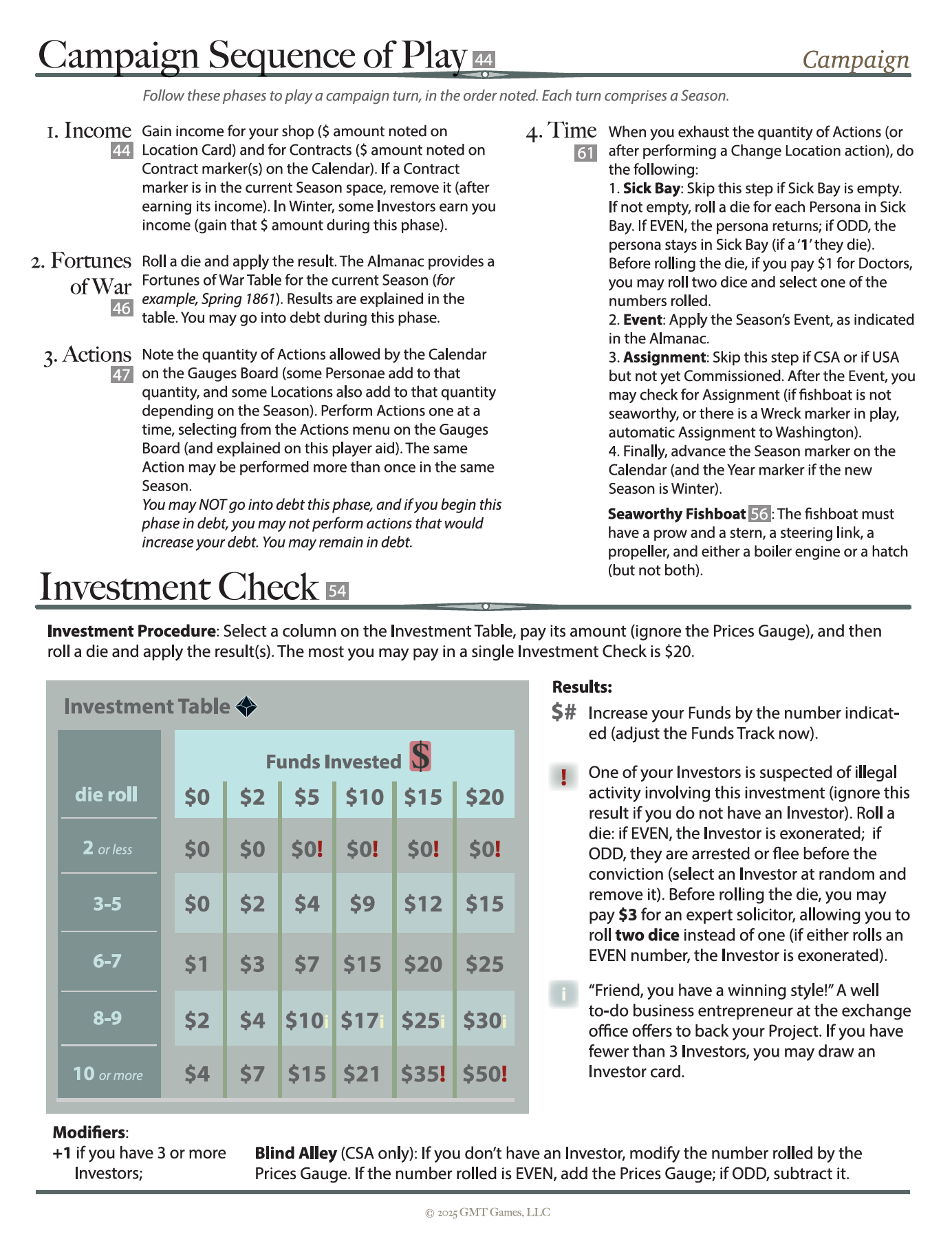
The flow of each monthly turn
Four phases that mark months of war. The campaign lasts from 1861 until the end of the conflict.
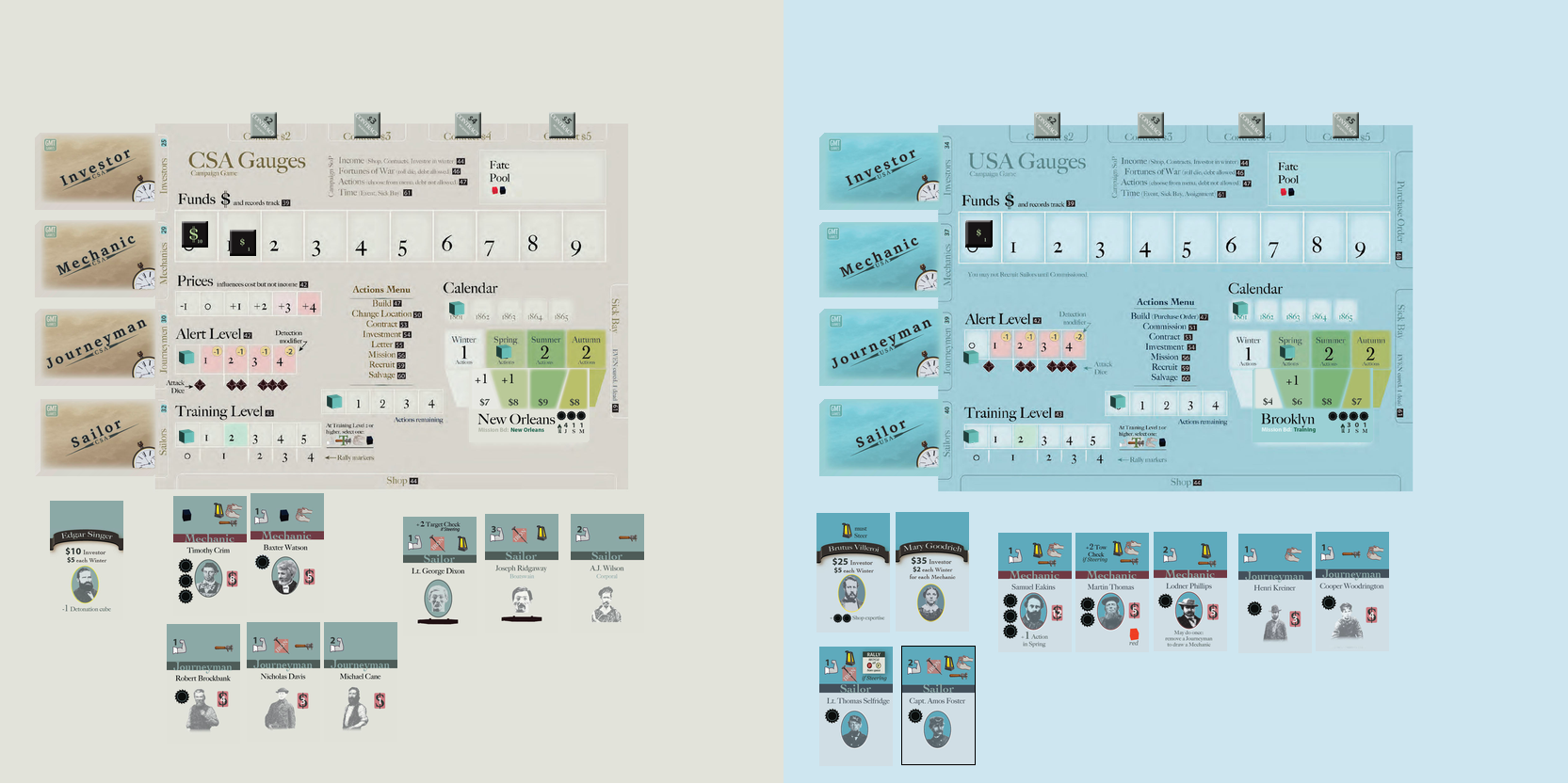
Hire personnel from the recruit deck — investors, mechanics, sailors — and purchase fishboat components. Each recruit has hidden benefits and costs. Each component requires funds and engineering skills.
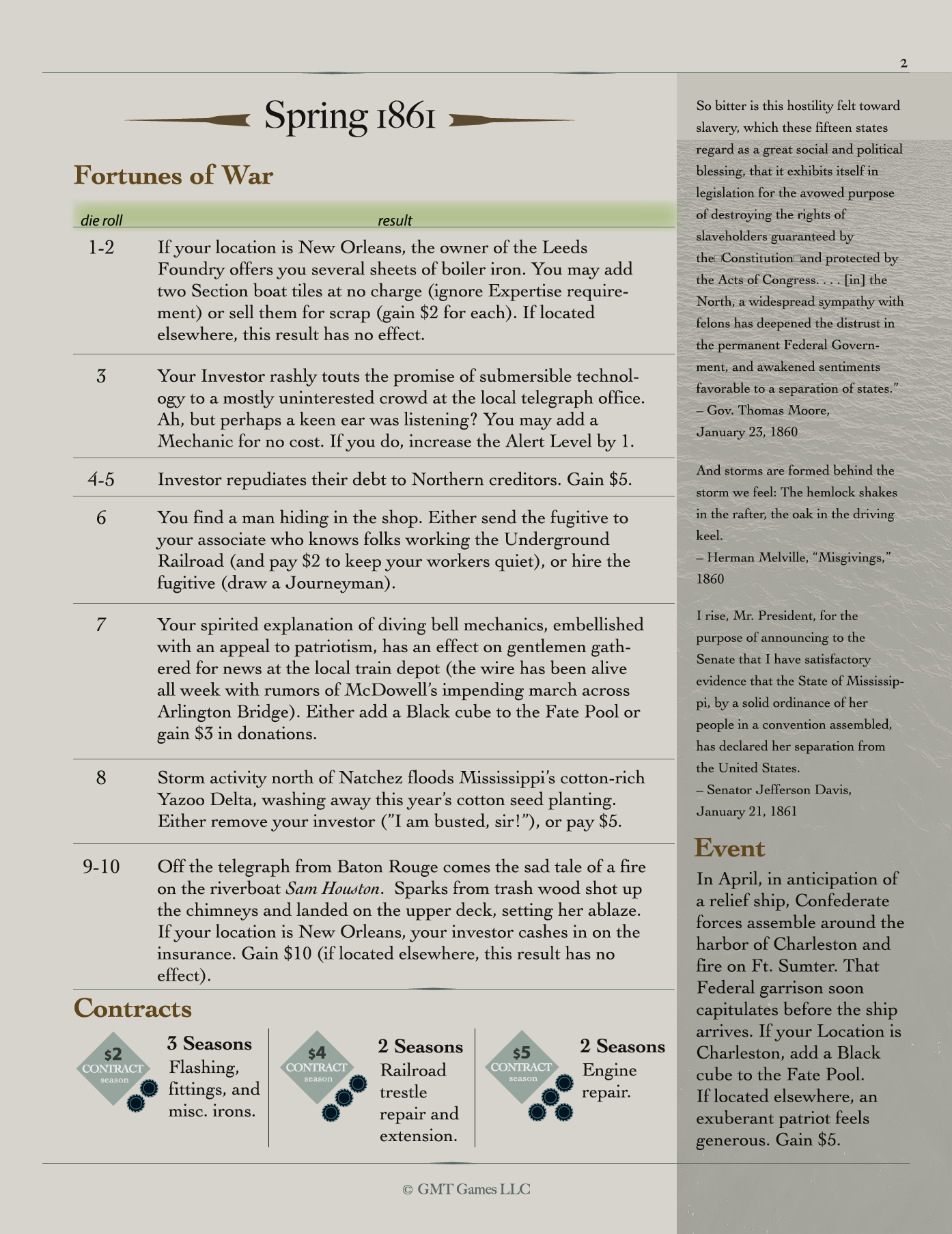
Move the marker on the calendar, pay debts, and consult the monthly event table. Each month has its specific table for Union and Confederate. The war changes your plan without asking permission.
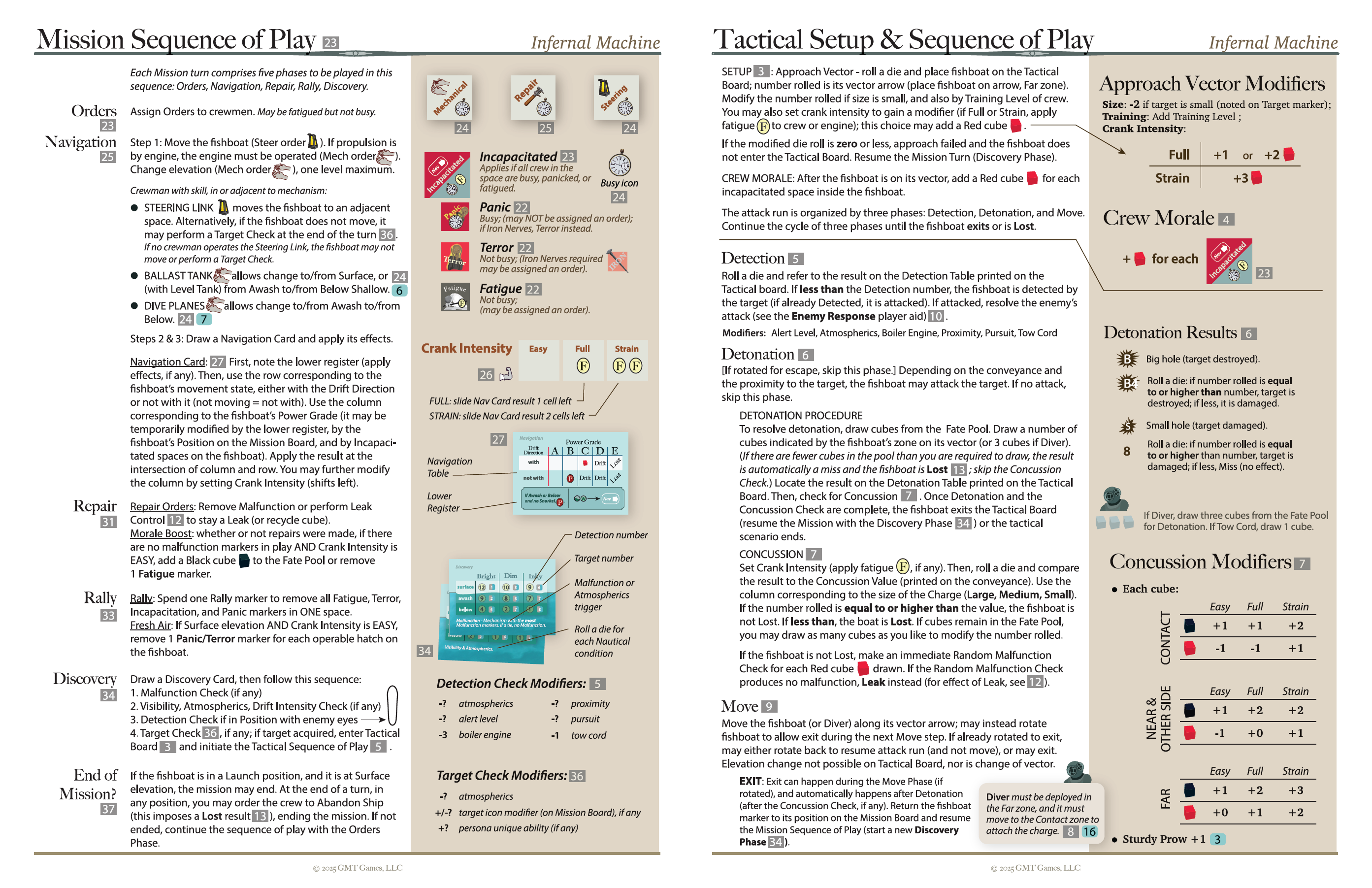
Choose the operational theater, establish weather conditions, assign roles. The fishboat moves on the Action Board space by space. Malfunctions are managed, decisions are made quickly. Contact with the enemy leads to the Tactical Board.
Once the fishboat has returned, you update the log, repair damages, and make improvements. The prize money funds the next turn. The names of the fallen remain on the table until the end of the campaign.
Why it's different from others
Six mechanics that make the difference
Modular submarine design
You don't receive a ready-made fishboat. You build it piece by piece, with tiles representing hulls, engines, weapons, and systems. Each game generates a different submarine — with different strengths and weaknesses.
Deteriorating war economy
Prices fluctuate, contracts expire, historical events intervene. Playing Confederate, you feel the South's economic spiral tightening around the shipyard. Playing Union, you have more resources but stricter military constraints.
Personnel with characteristics and flaws
Each recruit has strength, engineering competence, morale, and a possible disadvantage. A brilliant mechanic could be a spy. A brave sailor could be clumsy. Personnel choices define the campaign.
Dynamic nautical conditions
Each mission establishes drift, visibility, weather, and currents. The full moon illuminates and betrays. A strong current can send the fishboat off course before the enemy even sees it. You can delay — but the war doesn't wait.
Two scales of play — Action and Tactical
Navigation takes place on the large and strategic Action Board. When you approach the target, the game shifts to the intimate and precise Tactical Board. The change of scale physically changes the tension.
Union vs. Confederate asymmetry
The two factions are not mirrored. The South is a privateer seeking bounty, with fewer resources and more freedom. The North is quickly integrated into the Navy, with guaranteed funding but orders to follow. Two games in one.
How it ends
Mission accomplished or names in the log
Success is measured in prizes collected and objectives achieved. Failure has many faces — and some cost more than defeat.
Mission successful
- Contact with target and weapon detonation
- Return to port with intact or partial crew
- Prize money collected — funds the next turn
Rolls of the Missing
- The fishboat does not return — crew missing or lost
- Mission aborted without enemy contact
- Funds depleted before shipyard completion
Infernal Machine is the solo wargame that tells the story from within — not as a spectator, but as the man who decided to build the impossible in the midst of a war.
Frequently Asked Questions
FAQ about Infernal Machine: Dawn of Submarine Warfare
Is it really that complex or can it be learned in an evening?
It's a challenging game — it can't be learned in an hour. GMT Games has structured the material with pre-built historical scenarios (like that of the CSS Hunley) specifically designed to introduce the rules gradually. The advice is to play the scenario first, then move on to the campaign. Those accustomed to wargames will adapt in a few sessions.
Is it worth it if I'm not a Civil War history enthusiast?
Yes — history is the context, not the prerequisite. What matters at the table is the tension between economic choices, technical design, and operational mission. The setting adds authenticity and atmosphere, but you can play and struggle even without knowing anything about the CSS Hunley.
How long does a full campaign last?
A campaign covers the period 1861–1865, divided into monthly turns. In practice, it spans multiple sessions of 2–3 hours each. It's not a game to finish in one evening — it's a campaign to be carried out over time, like a book you pick up again.
What are the differences between Union and Confederate?
Substantial. The South is a private project with limited funds, a declining economy, and full operational freedom — you play as a privateer. The North is soon integrated into the Navy, with more resources but also orders to follow and bureaucratic constraints. The Confederate campaign is more difficult and more dramatic.
Are there historical scenarios or just the campaign?
Both. Historical scenarios use only part of the rules and reconstruct real events — including the famous attack of the CSS Hunley on the USS Housatonic in 1864, the first case in history where a submarine sank an enemy ship. They are also excellent for learning the game before the full campaign.
Is it available in Italian?
This is the English edition from GMT Games. The text is relevant to the game — cards, booklet, and player aid are in English. A basic knowledge of the language is required to play independently. There is currently no official Italian localization.
Infernal Machine: Dawn of Submarine Warfare is a solo wargame set in the American Civil War (1861–1865). Designed by Ed Ostermeyer and Jeremy White, published by GMT Games. The player takes on the role of inventor and entrepreneur with the task of designing, building, and deploying a submarine — the "fishboat" — during the conflict. Main mechanics: resource management, modular design, long-term campaign. Includes four operational theaters (Charleston, Mobile, New Orleans, James River), pre-built historical scenarios including the CSS Hunley, and two asymmetric factions (Union and Confederate). Scenario duration ~2 hours, multi-session campaign. Components: three countersheets, 166 cards (117 small, 49 standard), wooden cubes and blocks, tactical and mission boards, five booklets. English edition. Available at FroGames.it.
Frequently Asked Questions
The answers you're looking for, no beating around the bush.
📸Do the images match the actual product?
The photos on the website often come from BoardGameGeek and are intended to give you an idea of the game. They may vary slightly from the version you receive. The content declared by the publisher is always binding.
📦Does the content of the box match what is indicated?
We always strive to provide the correct content, but minor variations are possible due to reprints or updates. The information comes directly from the publishers. If you have any questions, please contact us!
⏳How do pre-orders work?
Pre-order the game before release, payment is immediate, and the game is reserved for you. As soon as it arrives, we'll ship it right away! If there are any delays, we'll update you promptly.
🔒Can I trust buying here?
Absolutely! Secure payments, tracked shipments, and a team that loves board games as much as you do. If something goes wrong, we'll do our best to fix it.
🛠There's a problem with my order, what should I do?
Write to us now! Whether it's a missing part, damage, or an error, we'll help you resolve it as soon as possible. Your experience truly matters to us.