
Festival of a Thousand Cats
🐸 Dettagli da BoardGameGeek
Consiglio BGG sul numero di giocatori
Categorie
Meccaniche
Design & Art
Si abbina bene con

FroGames — Moments You'll Remember
Fish to collect, Milk to not overdo, crows to avoid. And a thousand cats judging your every move.
What it's about
The most feline trick-taking game ever
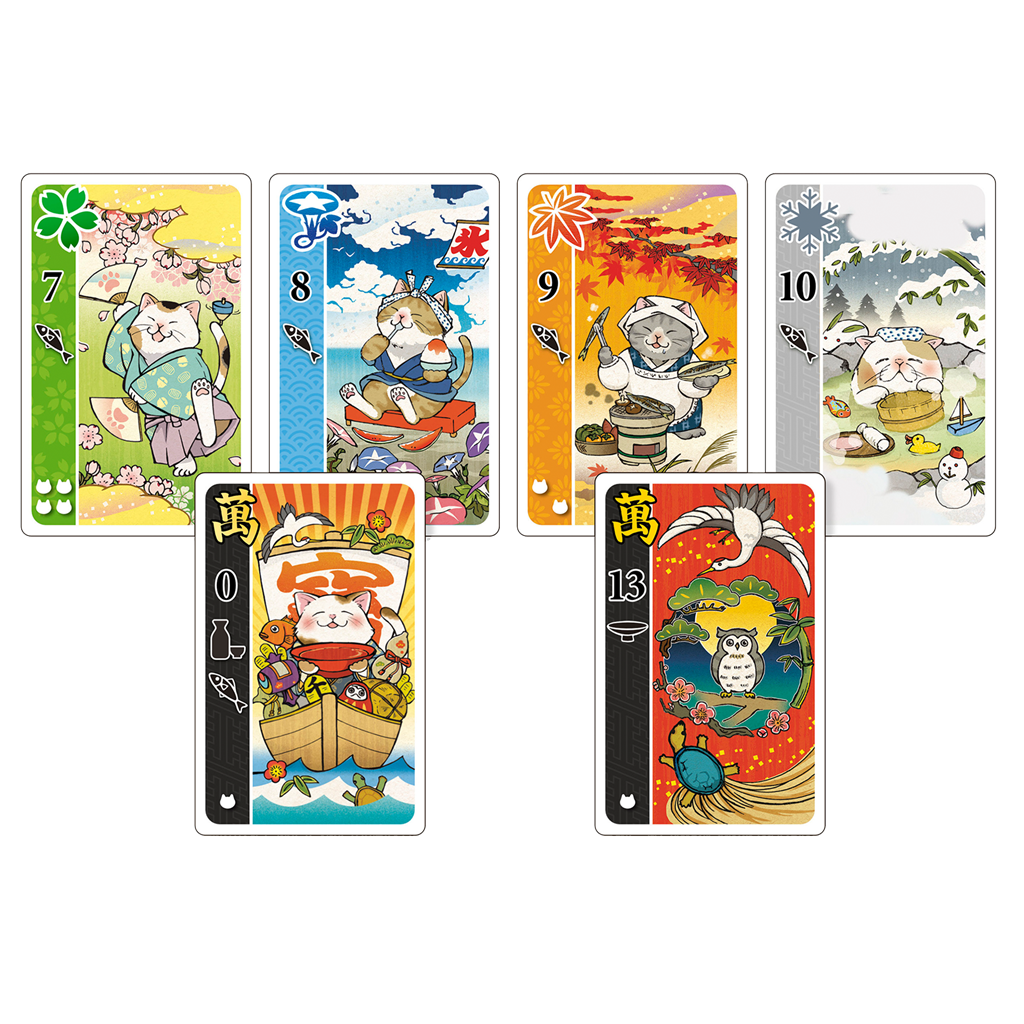
Every cat in the city has the same goal: to eat as much fish as possible at the festival. But normal trick-taking games are for dogs — here, both high and low numbers count, each season has its own card distribution, and drinking too much Milk makes you lose the fish you've already won.
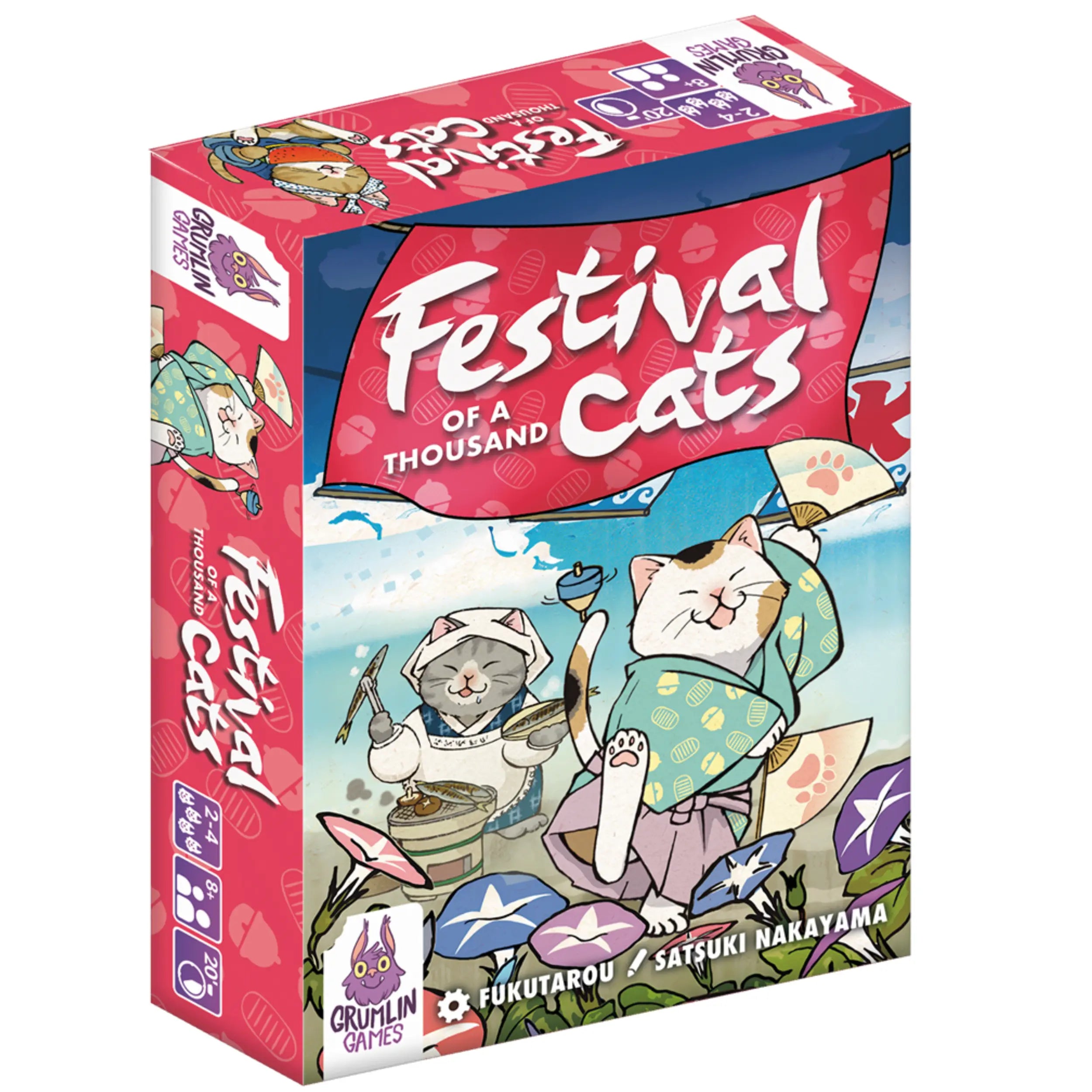
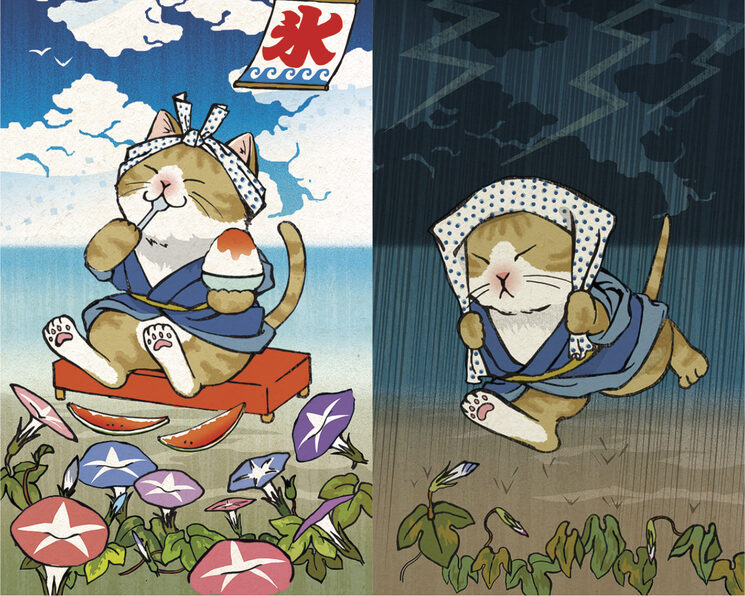
Festival of a Thousand Cats was designed by Fukutarou, with artwork by Satsuki Nakayama and Jody Henning — Japanese-style illustrations that turn every card into a character. Published by Grumlin Games, it's a small box gem that takes five minutes to learn and many games to master.
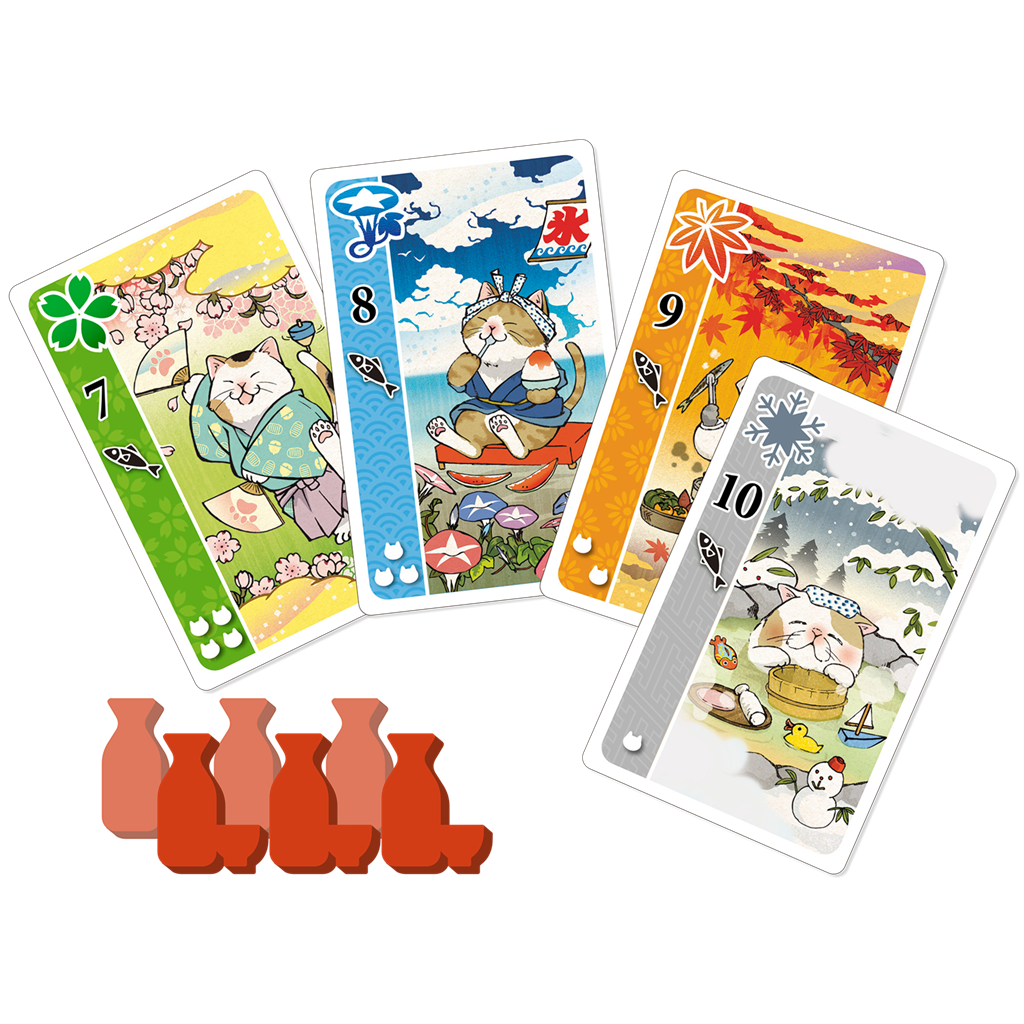
Four seasonal suits (Spring, Summer, Autumn, Winter), each with a different numerical distribution. A scoring multiplier system that makes every hand different from the last. And the crows: special cards that ruin even the best-laid plans.
The only trick-taking game where knowing how to lose a hand is as important as knowing how to win it.
The secret of Festival of a Thousand Cats in one line
The four seasons constantly change the rules of the game without actually changing the rules — that's the magic.
From the gaming experience

Festival of a Thousand Cats
FrogScore · FroGames editorial rating · based on rules, international reviews and play sessionsWhat's in your hand
The weapons of the feline festival
4 Seasonal Suits
Spring, Summer, Autumn, Winter — each with a different numerical distribution. You can't learn a deck: you have to read the season.
Fish & Milk
Collecting fish scores points. Drinking Milk makes you lose fish if you take too much. Moderation is a strategy.
The Crows
Special cards that overturn expectations. The crow is the unpredictable element that transforms every hand into a different story.
Seasonal Multipliers
Multiplier tokens change the score value each game. What was worth little yesterday could be worth a lot today.
Twenty minutes, four seasons, a thousand cats judging. And that one hand you messed up that you'll think about until the next game.
🎲Components7 types · complete set
📖RulesEnglish
A game in five acts
What happens at the table
Not the rules. The experience.
Cards are dealt. You already have a hunch.
You look at your hand. You have a good high number of Summer cards and three low Winter cards. You already know that you still don't know anything — because last week's season doesn't count. Every hand is a new enigma.
The first round of cards. And someone's already smiling.
The first card is played. Then the second. Then someone plays a number that no one expected — low, deliberately low — and takes the trick with a number that's not worth much but enough. The table looks around. Things are starting to become clear.
The crow arrives. Silent panic.
Someone plays the crow. The table pauses for a moment. Whoever holds it knows what it means — a hand that seemed planned becomes improvisation. And that extra Milké you thought you could handle now weighs twice as much.
You took too much. The fish is gone.
You overdid it with the Milké — you thought you had it under control. But three tokens at the end of the hand mean lost fish. The score on that part of the table resets. Someone laughs. You're already thinking about the next hand.
The final score. Everyone in disbelief.
The fish are counted. The seasonal multiplier amplified what seemed like an average score into something decisive. Those who thought they lost won. Those who thought they'd win look at the scoreboard in disbelief. Shuffle up and deal.
How to play
The flow of each hand
Four seasons, one goal, a thousand decisions. You'll learn in five minutes.
Shuffle the cards and deal the hand. Seasonal multiplier tokens are revealed — they determine which season is worth more this hand.
Clockwise, each player plays a card. The player with the highest number of the lead suit wins the trick — but beware: even very low numbers can be worth something.
Each trick brings fish and potentially Milké. Accumulating Milké beyond the threshold causes you to lose fish at the end of the hand. Knowing when to stop is the real skill of the game.
At the end of the hand, fish are counted, the seasonal multiplier is applied, and tokens on the board are updated. Play continues until someone reaches the winning score.
Why it's different from others
Six mechanics that make a difference
Both high and low cards count
In almost all trick-taking games, you win with the highest number. Not here. Certain contexts reward the minimum number of the suit. Every card in hand is always potentially useful.
Four seasons, four distributions
Each suit has its own numerical distribution. You can't learn the deck's structure once — each season plays out differently.
Multipliers that change everything
Seasonal multiplier tokens vary from game to game. The season that was worth little yesterday might be decisive today. Adapting is mandatory.
Milké: risk and reward
Collecting Milké can be advantageous, but exceeding the threshold makes you lose fish. It's a calibrated risk system — each extra token is a gamble.
The crow disrupts plans
Crow cards are the disruptive element of the game. You can't build an infallible plan because the crow can always change the rules of that hand.
Fast, clean, immediate replayability
A game lasts 20-40 minutes. The reset between hands is quick. When it ends, you immediately want to play again — the filler format works perfectly.
How it ends
Fish, Milké, and who survives the feast
Collecting fish is the goal. Not overdoing it with Milké is the condition. Managing both is the challenge.
Victory
- Be the first to reach the winning score on the fish board
- Maximize seasonal multipliers in your favor each hand
- Keep Milké under control — don't lose your hard-earned fish
Eliminated from the feast
- You drank too much Milké — your fish are redistributed
- Seasonal multipliers weren't in your favor and you lost your advantage
- The crow did its job at just the wrong moment
Festival of a Thousand Cats is a genuinely original trick-taking game: small in the box, big at the table. Beautiful illustrations, mechanics that surprise even genre veterans.
Frequently asked questions
FAQ about Festival of a Thousand Cats
What distinguishes it from other trick-taking card games?
The main twist is that both high and low numbers count — depending on the season and context. In classic trick-taking games, you always play for the highest number. Here, the structure changes every season, and the score multipliers mean that the same hand can be worth completely differently from game to game.
Does the Milké mechanic confuse new players?
Someone always overdoes it on the first round — it's almost inevitable and part of the game's charm. But after one hand, the mechanism is immediately clear. Milké is intuitive: you gain points but risk losing what you've already got. By the second hand, everyone correctly manages the system.
Can it be played by two players?
The game is designed for 3-4 players. With two players, it loses a good part of the trick-taking dynamics and opponent reading. It's one of those experiences that really works best with three or four — it's not suitable as a game for couples.
Is it suitable for those who have never played trick-taking games?
Yes, it's an excellent entry point into the genre. The basic rules can be explained in five minutes. The "both high and low cards count" twist is easier to understand by playing than by explaining. The recommended age of 7+ is realistic — with an adult explaining, it works very well for families too.
How long does a real game last?
Between 20 and 40 minutes, consistently. With players who know the game, it's around 20-25 minutes. With new players or more thoughtful groups, it reaches 35-40 minutes. It never tends to run over — it is structurally a filler game and respects that.
Is it available in Italian?
This is the English edition. The cards are mainly numerical, and the rules are simple — the language barrier is minimal. A player with a basic knowledge of English can explain the game at the table in a few minutes without difficulty.
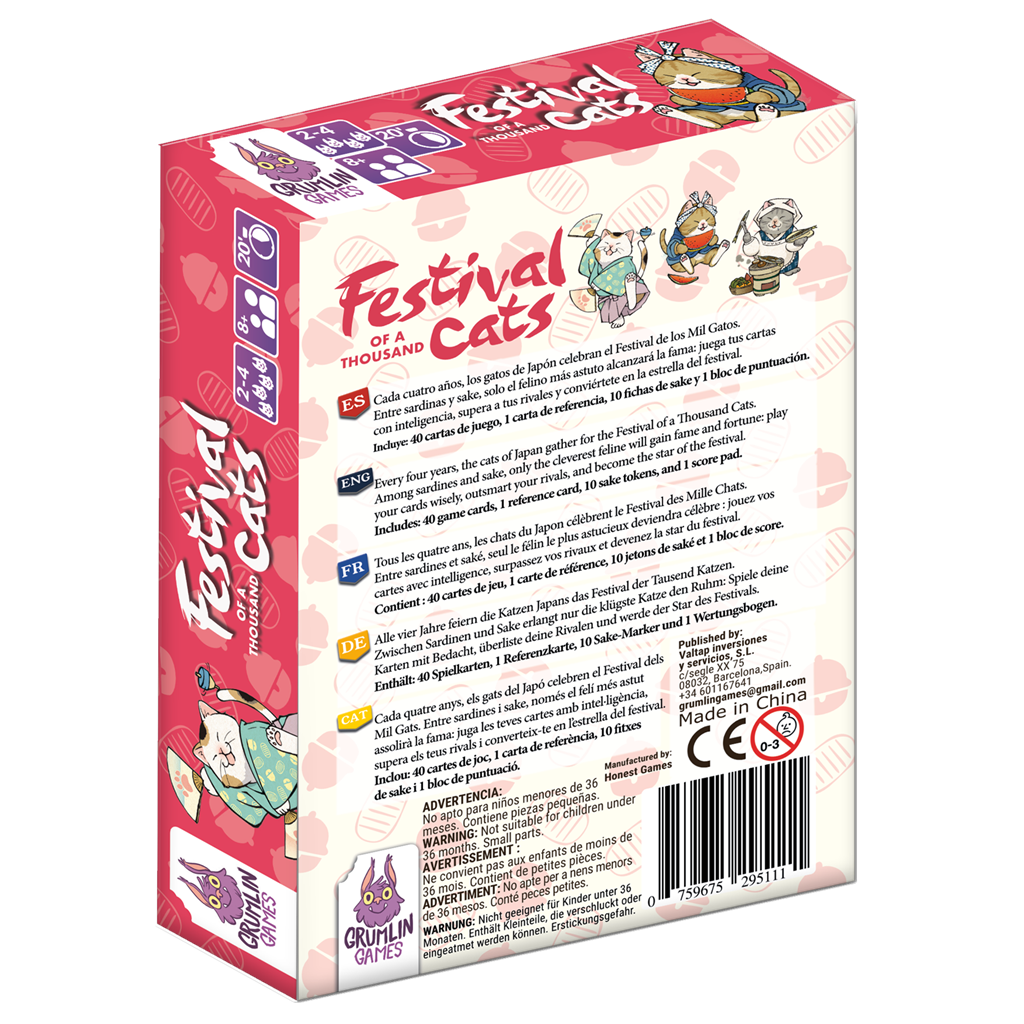
Festival of a Thousand Cats is a trick-taking card game for 3-4 players (ages 7+, duration 20-40 min). Designed by Fukutarou, artwork by Satsuki Nakayama and Jody Henning, published by Grumlin Games. Core mechanics: trick-taking, hand management, simultaneous action selection, bidding. Four seasonal suits (Spring, Summer, Autumn, Winter) with differentiated numerical distribution. Scoring system with fish and Milké — accumulating too much Milké results in lost points. Seasonal multiplier tokens vary each game. English edition. Available on FroGames.it.
Festival of a Thousand Cats
Frequently Asked Questions
The answers you're looking for, no beating around the bush.
📸Do the images match the actual product?
The photos on the website often come from BoardGameGeek and are intended to give you an idea of the game. They may vary slightly from the version you receive. The content declared by the publisher is always binding.
📦Does the content of the box match what is indicated?
We always strive to provide the correct content, but minor variations are possible due to reprints or updates. The information comes directly from the publishers. If you have any questions, please contact us!
⏳How do pre-orders work?
Pre-order the game before release, payment is immediate, and the game is reserved for you. As soon as it arrives, we'll ship it right away! If there are any delays, we'll update you promptly.
🔒Can I trust buying here?
Absolutely! Secure payments, tracked shipments, and a team that loves board games as much as you do. If something goes wrong, we'll do our best to fix it.
🛠There's a problem with my order, what should I do?
Write to us now! Whether it's a missing part, damage, or an error, we'll help you resolve it as soon as possible. Your experience truly matters to us.