
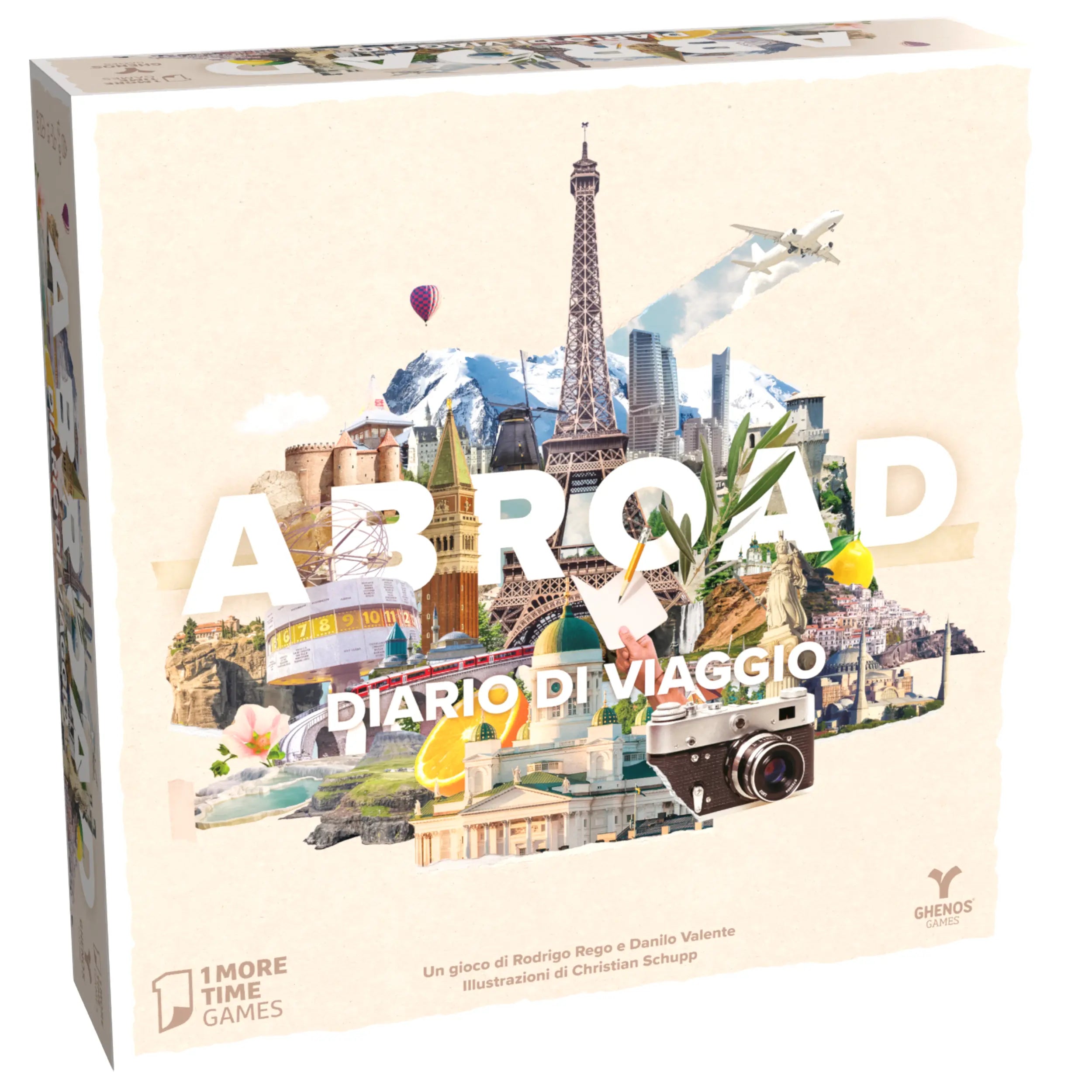
Abroad - Diario di Viaggio
🐸 Dettagli da BoardGameGeek
Consiglio BGG sul numero di giocatori
Categorie
Meccaniche
Design & Art
Lingua
Si abbina bene con
FroGames — Moments You'll Remember
Four weeks, ten regions, a suitcase full of wrong choices. Some plan everything, some improvise, some end up in Prague with no energy. In the end, only the journal remains. And the postcards.
WHAT IT'S ABOUT
A month in Europe to land the job of your dreams
Designed by Rodrigo Rego and Danilo Valente, Abroad: Travel Journal puts you in the shoes of an aspiring travel writer who must prove their worth in four weeks of travel across Europe. With a deck of 240 unique location cards and a postcard system that tracks your objectives, the game transforms travel planning into a management challenge where every choice counts. Illustrated by Christian Schupp, it captures the aesthetic of modern travel with a clean and recognizable style.
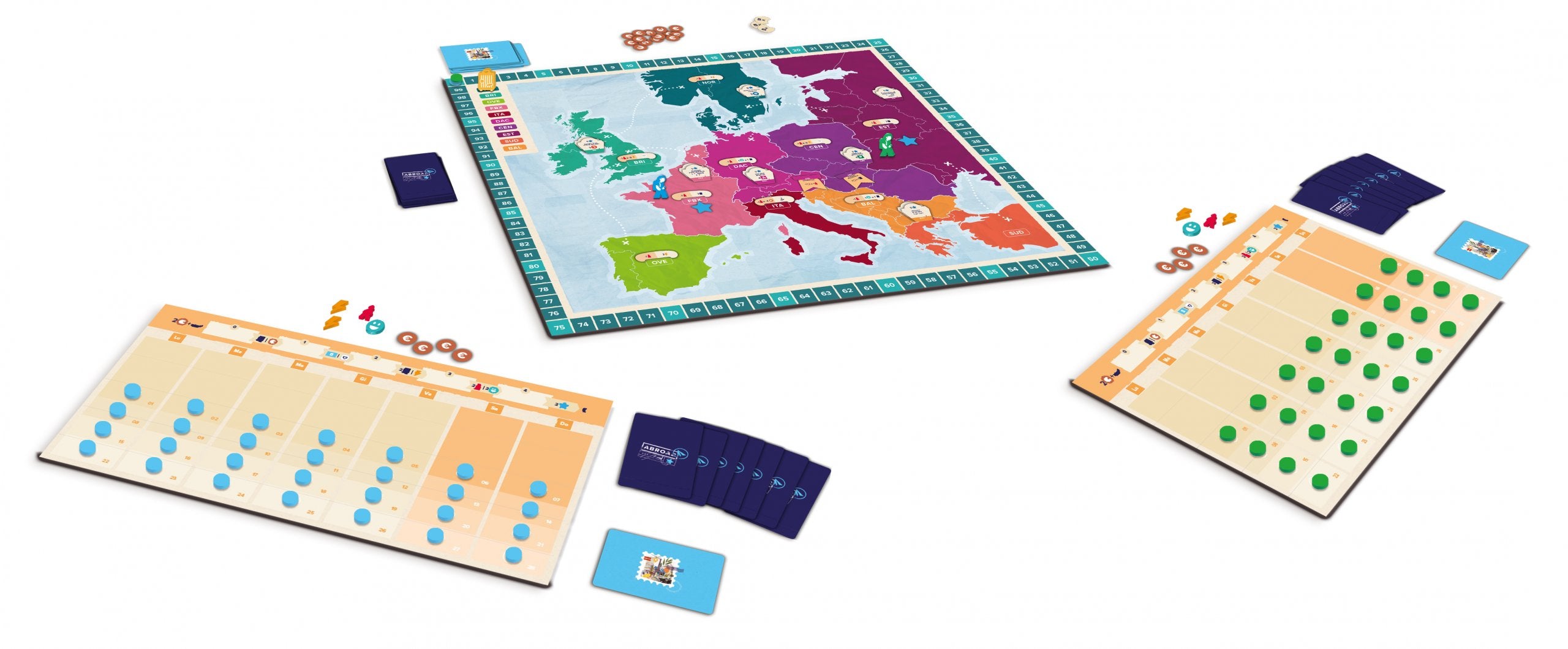
On your turn, you manage a hand of seven location cards, decide where to travel by spending money (plane) or energy (train), and choose between four activities: writing about the current location to earn coins, resting to recover energy, planning by drawing new cards, or performing a special activity of the region you are in. Each round represents a week of travel, and you only spend days when you stop to do something, never for moving. The postcards with primary and secondary objectives guide your choices, but time is short: four rounds, seven days each, then points are counted.
What they say abroad
A planning puzzle that tastes of backpacking and missed trains
— FroGames
240 location cards transform every game into a different itinerary
— FroGames

Abroad - Travel Journal
The bot always has three locations in a row that determine where it moves, and you can spend money or energy to discard them and redirect it. The experience is complete and well-balanced, only losing direct comparison on areas but maintaining the planning challenge intact. Designed to work alone, it's not a fallback option.
FrogScore · FroGames editorial rating · based on rules, international reviews and game sessionsYour travel journal
What you'll find in the box
240 Location Cards
Each card is a unique destination in one of ten European regions, with specific activities that cost days but unlock points, resources, or combos. The variety is real: you won't see the same setup twice.
Objective Postcards
You draw three postcards and keep one, with a primary objective (more points) and a secondary one (fewer points). Famous attractions, festivals, wish lists: they guide your choices without forcing you into a single path, and you can earn more during the game.
Money and Energy
Two resources, two ways to travel. The plane costs four coins and takes you to any region. The train costs one energy for each region you cross. Neither takes days away from you, but mismanaging them means getting stuck where you didn't want to be.
Four-activity system
Write (discard three cards and earn four coins), Rest (discard three cards and recover two energy), Plan (draw three cards), Activity (play a location card by paying the indicated days). Simple, but each choice closes a door.
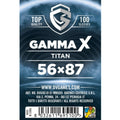
Recommended sleeves 291 cards in 1 size ▼
If you play often, we recommend protecting your cards with transparent sleeves to make them last longer.
| Size | Quantity |
|---|---|
| 56 × 87 mm | 291 |
| Total cards | 291 |
In the end, you'll have a map full of marks and a ranking that doesn't tell the story of the journey. But the journey remains.
Come si gioca
Video dimostrativo di gameplay.
A game in five moments
What happens at the table
Not the rules. The experience.
Choose where to start
Ten European regions, a free choice. Some go where they have more cards, some follow the postcard's objective, some choose randomly because "they wanted to visit Scandinavia." The first three cards played often determine the week's progress.
The first energy crisis
You've traveled too much by train, energy is at zero, and the activity you wanted to do costs three days you don't have. You begin to understand that resting is not a weak option, it's a necessity. Those who ignore it pay later.
The postcard starts to speak
Some complete their postcard's secondary objective, while others are still far from both. At the table, itineraries are compared, visited locations are counted, and it becomes clear who planned and who improvised. Regional majorities are counted at the end of each week, so halfway through the game, you've already gained or lost something twice.
The last week is a race
Seven days, ten decisions. Some burn all their cards to write everywhere and accumulate coins, others desperately chase the postcard's primary objective. Those who managed money and energy best move freely, the others struggle.
Counting postcards
You've already collected regional majorities week by week. In the end, completed postcards and leftover resources remain. Someone discovers they lost by three points because they spent one too many days resting. The ranking is tight, but no one complains: the journey was theirs.
How to play
The flow of each turn
Every day spent is a day you leave in a region. Move, choose an activity, advance. Simple until you realize that days run out.
You can stay in the current region (for free) or travel to a new one. The plane costs four coins and takes you anywhere, the train costs one energy for each region crossed. Neither takes away days: you spend those on the activity that follows.
Four options: Write at the current location (discard three cards, gain four coins), Rest (discard three cards, gain 2 energy), Plan (draw three cards), Activity (play a location card from your region, pay the indicated days, perform the effect).
If you have performed an activity that generates money, energy, or points, update your tracks. If you have completed postcard conditions, mark it. There are no instant end-of-turn effects.
Turns continue until everyone has spent their seven days of the week. Then majorities are counted, income is collected, hands are refilled to seven cards, and it starts again. After four rounds, the game ends.
Why it's different from others
Six elements that make a difference
240 locations, zero repetitions
It's not a deck of 40 cards you see three times a game. There are 240 unique destinations, each with a different name, activity, and day cost. Every game takes you to a different Europe, literally. Replayability is structural, not promised.
Money vs. Energy: two philosophies
The plane takes you anywhere immediately but empties your wallet. The train costs one energy for each region crossed, thus tying you to distances. Those who optimize poorly pay: they get stuck in Scandinavia while others accumulate points in the South.
Double-sided postcards: two paths to victory
Each postcard has a primary objective (difficult, many points) and a secondary one (accessible, few points). You can bet everything on the primary and risk it, or settle for the secondary and compensate with locations. The choice is yours, and it's worth points.
Area majority without conflict
Regional majorities are counted at the end of each week, four times a game, but there's no direct attack. Each day spent leaves a disc in the region, and whoever manages to flip one to the insider tip side overtakes those with only normal discs. It's indirect competition, decided by location.
Seven days a week: time is visible
There's no hidden countdown or deck that runs out unexpectedly. You know exactly how many days you have: seven per round, four total rounds. An activity can cost you up to four, so turns are always fewer than days. Pressure is transparent, planning is possible, regrets are yours.
Credible automa, not a fallback
The bot is not a random point tracker. It has three visible location cards, moves logically, and you can spend resources to sabotage it by discarding its cards. It's an opponent that occupies space, not a simulacrum. Solo play truly works.
How it ends
How to win and how to lose
At the end of the fourth round, points are counted. There are no alternative victory conditions or early eliminations. The player with the highest total wins by summing what they accumulated during the journey, completed postcards, and majorities already collected week by week.
Victory
- Points from locations: you played many different cards, and each one gave you points, resources, or a useful effect
- Points from postcards: you completed the primary objective (or at least the secondary), earning a significant bonus
- Points from majorities: week after week you came first or second in some region, flipping the discs at the right time
Defeat
- You traveled too much: burned money and energy on travel instead of saving it for activities
- You pursued the wrong postcard: aimed for the primary, failed, and the secondary wasn't enough to compensate
- You ignored energy: stuck in a distant region in the last turns, unable to move or write
Abroad: Travel Diary gives you the freedom to travel as you wish, but makes you pay for every wrong choice. It's not the journey that matters, it's the points. And the diary.
Frequently asked questions
FAQ about Abroad: Travel Diary
Is it a pure planning game or is there luck involved?
The initial draw of seven cards affects it: if you get all location cards from two distant regions, you waste time traveling. But you have the Plan action to draw cards, so luck can be mitigated. It's not a deterministic puzzle, but not a dice game either: those who plan best win, even with average cards.
Does it make sense to play it with five players?
It works, but downtime increases: everyone plays their turn independently. The pace is better with 3-4 players. It's excellent for solo play. With five, it's only suitable if the group tolerates downtime and enjoys simultaneous planning in their own corner.
Do the 240 locations really make a difference?
Yes, because you never see the same deck. Each game offers a subset of different destinations, activities, and costs. Variety is not cosmetic: it changes available strategies. It's not infinite replayability, but it's at least 15-20 games before you see repeated patterns.
Is it suitable for those who don't like thematic travel games?
Paradoxically, yes. The theme is applied (city names, location illustrations), but the core is hand management and resource optimization. If you appreciate games like Lost Ruins of Arnak or Concordia, Abroad has similar mechanics in a different guise. You don't need to love travel to enjoy it.
Is it available in Italian?
Yes, this is the Italian edition Abroad: Diario di Viaggio published by Ghenos Games. Rules, cards, and components are fully in Italian. The 240 locations have names of real European cities, so they are recognizable even for those who don't speak English.
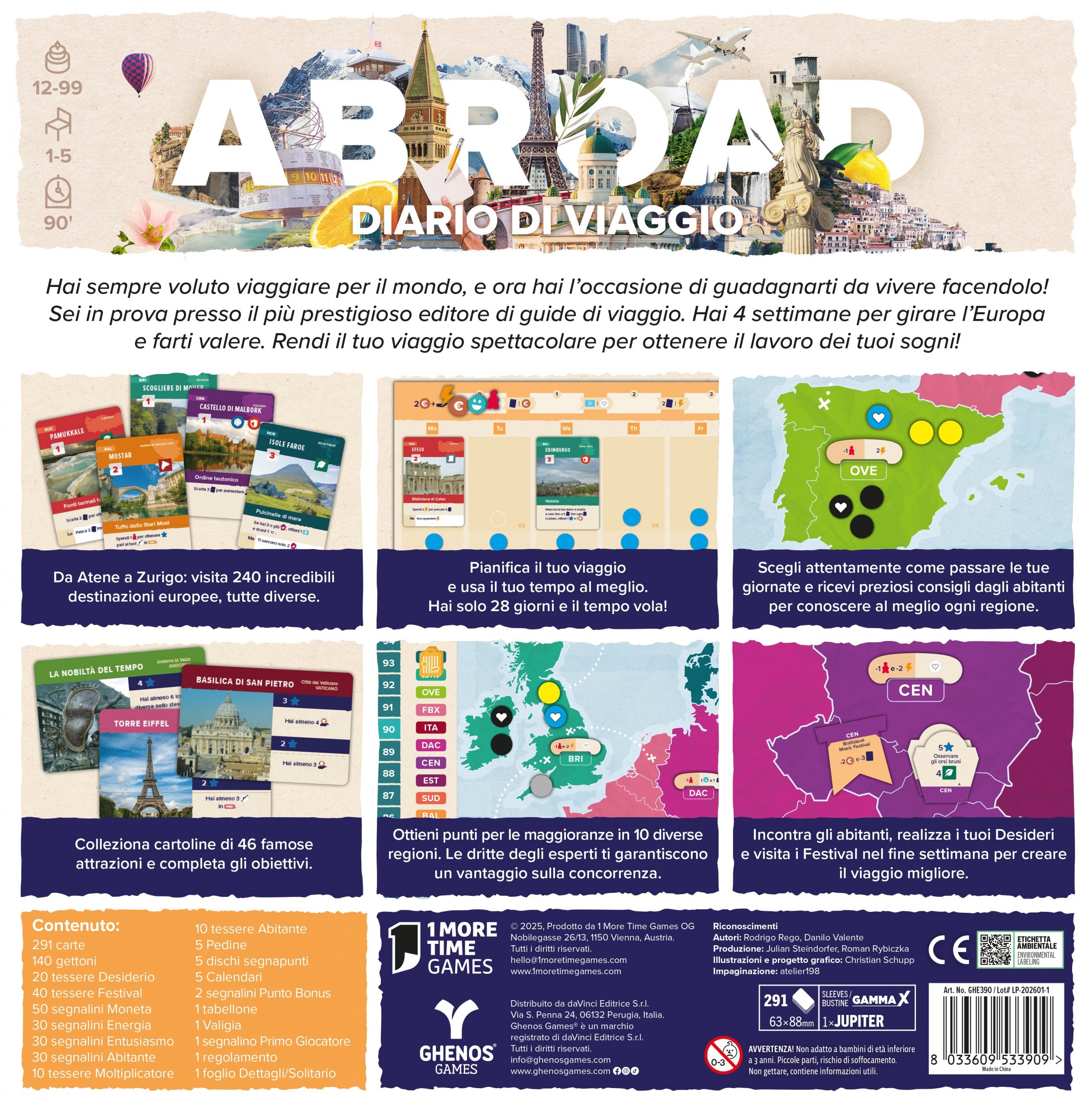
Abroad: Diario di Viaggio is a hand management and planning game for 1-5 players designed by Rodrigo Rego and Danilo Valente, published in Italian by Ghenos Games. In 90 minutes, players compete to become professional travel writers by visiting locations across Europe, managing money and energy to travel by plane or train, and completing objectives on double-sided postcards. With 240 unique location cards and an activity system that balances writing, resting, planning, and special actions, each game offers a different itinerary. The solo mode with a dedicated automa is complete and well-balanced. Suitable for players aged 12 and up, fixed duration 90 minutes, medium complexity (BGG weight 2.75). Available on FroGames.it.
Abroad - Diario di Viaggio
Frequently Asked Questions
The answers you're looking for, no beating around the bush.
📸Do the images match the actual product?
The photos on the website often come from BoardGameGeek and are intended to give you an idea of the game. They may vary slightly from the version you receive. The content declared by the publisher is always binding.
📦Does the content of the box match what is indicated?
We always strive to provide the correct content, but minor variations are possible due to reprints or updates. The information comes directly from the publishers. If you have any questions, please contact us!
⏳How do pre-orders work?
Pre-order the game before release, payment is immediate, and the game is reserved for you. As soon as it arrives, we'll ship it right away! If there are any delays, we'll update you promptly.
🔒Can I trust buying here?
Absolutely! Secure payments, tracked shipments, and a team that loves board games as much as you do. If something goes wrong, we'll do our best to fix it.
🛠There's a problem with my order, what should I do?
Write to us now! Whether it's a missing part, damage, or an error, we'll help you resolve it as soon as possible. Your experience truly matters to us.