
The Red Cathedral
🐸 Details from BoardGameGeek
Consiglio BGG sul numero di giocatori
Categorie
Meccaniche
Design & Art
Lingua


Si abbina bene con
The FroGames Review
You have three dice, five resources, four opponents, and only one cathedral. In an hour, you'll discover that the last completed contract is worth more than all previous turns combined.
WHAT IT IS
Build the Tsar's cathedral. Before everyone else.
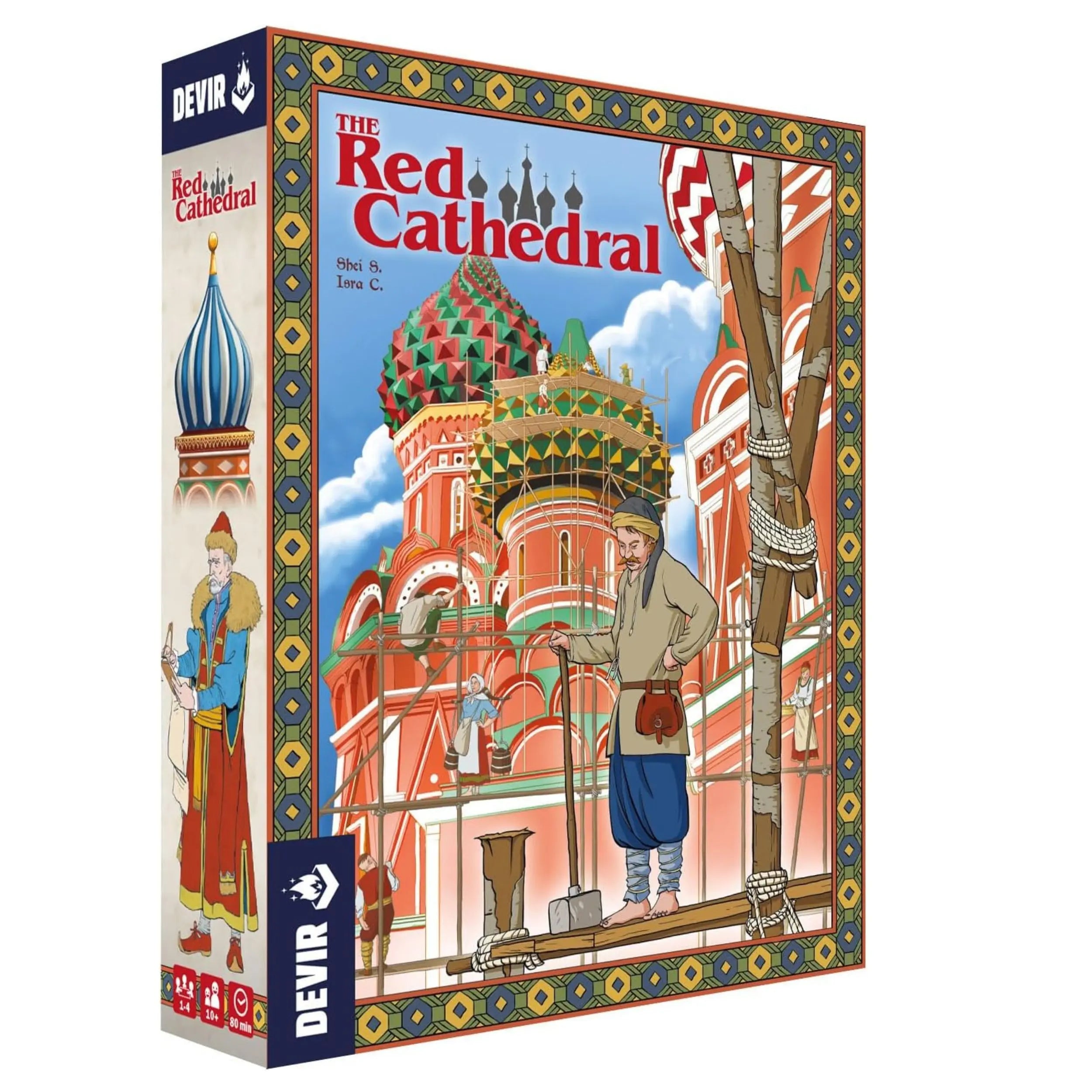
Moscow, 1555. Ivan the Terrible is emptying the treasury to erect Saint Basil's Cathedral, the wildest architectural statement ever seen in Russia. Isra C. and Shei S. (the duo Llama Dice) deliver an eurogame that revolves around a dice rondel, contracts to complete, and a ruthless race to the sixth built section. The art by Pedro Soto and Chema Román pays homage to Ivan Bilibin, a master of early 20th-century Russian illustration.
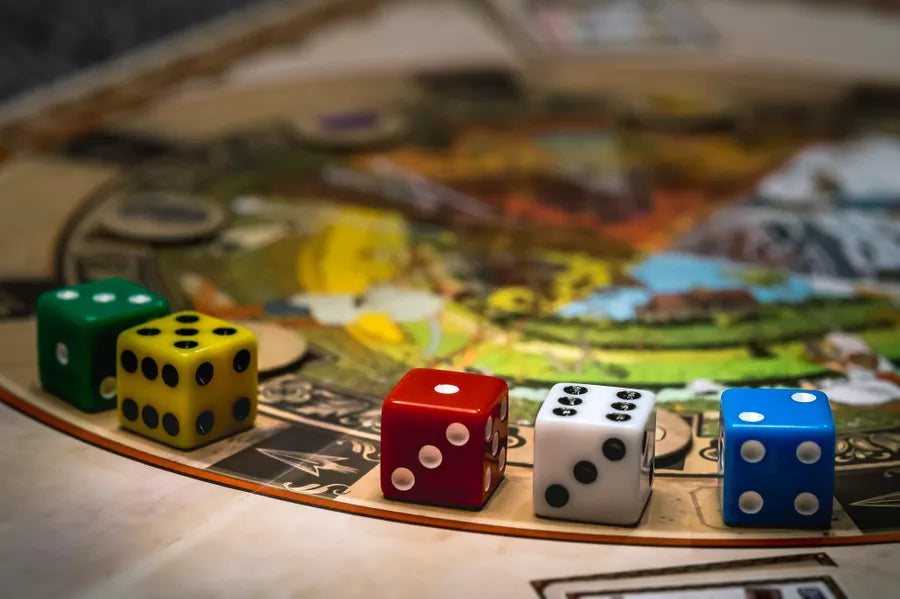
On your turn, you pick a die from the central rondel, move that number of spaces, and collect resources. With those resources, you complete the sections of the cathedral you've claimed, install decorations, and gain favors from guilds. Whoever completes the sixth section first triggers the end of the game: at that point, points, contracts, and decorations are counted. You have three actions and clear choices, but the order in which you take them and the dice you leave for others change everything.
What they say abroad
"The rondel is simple, but the decisions are anything but."
The rondel is simple, but the decisions are anything but.
— Meeple Mountain
The Red Cathedral features an elegant rondel and a completion race that never lets you breathe. Every die chosen is also a gift to your opponents.
— FroGames

The Red Cathedral
The game includes official solo rules with an automa that simulates an opponent: it drafts dice, completes sections, and challenges you on the cathedral. The experience is complete and maintains the tension of the multiplayer, but it loses the tactical element of reading others' intentions on the rondel.
FrogScore · FroGames editorial rating · based on rulebooks, international reviews, and gameplay sessionsYour arsenal
What you move to build the cathedral
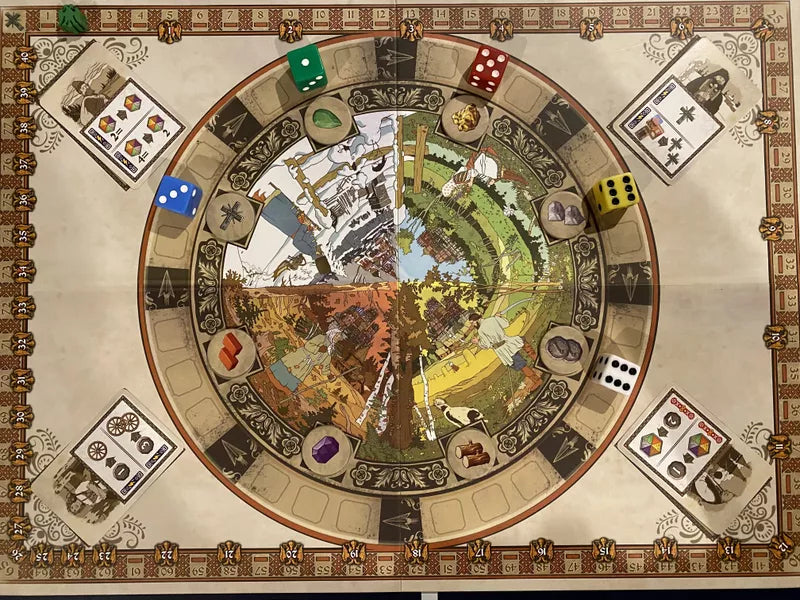
Dice rondel
Eight circular spaces with colored dice. Choose a die, advance by its value, and collect resources in the landing space. What you leave behind, others will use.
Cathedral sections
Six columns with spaces to claim and complete. Each section requires specific resources: wood, bricks, gold, silver. Whoever completes the sixth one first triggers the endgame.
Decorations
Elements to install on completed sections to earn extra points and permanent favors. They cost resources but can flip the game during final scoring.
Guild favors
Bonuses obtained by visiting the market: resource discounts, extra actions, die manipulation. Each favor can be used once per game, at the right moment.
Come si gioca
Video dimostrativo di gameplay.
🎲How to playThe rules in four steps▼
How to play
The flow of each round
Three possible actions, one per turn. No limit on rounds: you play until someone completes the sixth section.
Choose a cathedral column and claim the available spaces. Each section has a cost in specific resources and a variable score. The more sections you claim on the same column, the more bonuses you get at the end.
Spend resources from your supply to complete a section you have claimed. When you complete it, you gain points, money, and the ability to install decorations for permanent bonuses.
Choose a die from the central rondel, advance that number of spaces, and collect the indicated resources. You can also visit the market to gain guild favors: discounts, extra actions, or die manipulation. What you leave behind will be used by others.
When a player completes the sixth section, the game ends immediately. You count points from completed sections, installed decorations, public contracts, and remaining favors. Whoever has the most points wins: large sections are worth a lot, but small ones are completed quickly.
⏱️Your first gameThe chronicle, moment by moment▼
A game in five moments
What happens at the table
Not the rules. The experience.
Dividing up the sections
Everyone claims spaces on the cathedral columns. Some aim for small sections to finish them quickly, while others take the large ones for high scores. Someone notices that two adjacent sections share resources: will that be an advantage or a trap?
The first turn of the rondel
The dice spin, resources accumulate. Someone takes a high die and fills up on wood, leaving others with a low die that blocks them on the same sector. You realize it immediately: choosing a die also means choosing what to give away.
The first completed section
Someone completes the first section and immediately installs a decoration. The others realize they are behind: the game is not as slow as it seemed. You start calculating how many resources you need for the second, third, and fourth sections.
Someone reaches five sections
The table pauses for a second. One section is missing until the end. The person in the lead watches the dice, calculates their moves, and tries to close out quickly. Those behind hope for an unfavorable die, a calculation error, or a public contract that flips the score.
The final count
Sixth section completed: points are counted from sections, decorations, public contracts, and spent favors. The winner is whoever completed the right sections at the right time, not necessarily whoever completed the most. Someone discovers they lost by three points: a bad die on turn five.
🐸Know before you buyThree honest things, from friends▼
Know before you buy
Three things to consider
Starts slow, speeds up later
The first round is exploration: everyone claims, collects resources, and studies the rondel. The tension rises from the second round onwards, as sections start to be completed and the finale approaches. If you are looking for immediate rhythm, this isn't it.
The dice roll, you don't control them
You can choose which die to take, but not what rolls: if you need gold and the right die isn't there, you must adapt. Decorations and favors mitigate variance, but a lucky hand slows you down by an entire turn.
At two players, it loses its edge
The rondel works best with three or four players: more players, more competition for the dice, more indirect interaction. With two, the opponent is further away, the available dice are too many, and the tension is diluted. Playable, but not at its best.
🏆Victory and defeatWhat the finale rewards▼
How it ends
How to win and how to lose
The winner is whoever has the most points at the end of the game. The game ends when one player completes the sixth section.
Victory
- Complete large sections and install decorations to maximize points
- Fulfill the required public contracts for end-game bonuses
- Claim consecutive spaces on the same column for score multipliers
Fatal errors
- Completing small sections without decorations: few points, lost game
- Ignoring public contracts and losing 10-15 points at the final count
- Choosing high dice without calculating what you're gifting to opponents: they'll overtake you in two turns
The Red Cathedral isn't the most original rondel on the market, but it is the most honest: three actions, clear rules, zero filler. If you're looking for an accessible euro that doesn't treat you like a beginner, it's here.
💬Frequently asked questionsQuick answers before the cart▼
Frequently asked questions
FAQ about The Red Cathedral
What mechanics does The Red Cathedral use?
Rondel with die selection, resource management, contracts, area majority on the cathedral columns, and a victory point system as a resource. The interaction is indirect: you choose a die and influence others' options.
How long does a game last?
About 80 minutes, consistent. The first round is slower (claims and mental setup), subsequent rounds speed up. With two players it drops to 60 minutes, with four it reaches 90.
Is it suitable for those who have never played an eurogame?
Yes, it's a good gateway euro: rules explained in 15 minutes, intuitive actions, no obscure symbolism. Depth emerges after two games, but you don't need previous experience to understand it. Perfect for those who want to try the genre without tackling a 3.5+ weight game.
Does it work well in solitaire?
Yes. The game includes an official bot that simulates an opponent: it picks dice, completes sections, and challenges you on the cathedral. The experience is complete and balanced, but it loses the tactical element of reading others' intentions on the rondel. If you're looking for a solid euro to play alone, it works.
Is it available in English?
Yes, this Devir edition is in English: rulebook, cards, player aids. The components are language-independent (dice, resources, board), so once you've read the rules, language is no longer an issue.
The people behind the game
Who invented it, who illustrated it, who publishes it — and what else they've done.
The Red Cathedral is a strategy game for 1-4 players, 80-minute duration, recommended age 10+. Designed by Isra C. and Shei S., published by Devir, it uses a die-based rondel for resource management, contracts, and construction of Saint Basil's Cathedral under Tsar Ivan the Terrible. Main mechanics: rondel, area majority, victory points as a resource. Medium weight (2.8/5), ideal as a gateway euro for intermediate players. Supports solo play with an official bot. Available on FroGames.it.
The Red Cathedral
Frequently Asked Questions
The answers you're looking for, no beating around the bush.
📸Do the images match the actual product?
The photos on the website often come from BoardGameGeek and are intended to give you an idea of the game. They may vary slightly from the version you receive. The content declared by the publisher is always binding.
📦Does the content of the box match what is indicated?
We always strive to provide the correct content, but minor variations are possible due to reprints or updates. The information comes directly from the publishers. If you have any questions, please contact us!
⏳How do pre-orders work?
Pre-order the game before release, payment is immediate, and the game is reserved for you. As soon as it arrives, we'll ship it right away! If there are any delays, we'll update you promptly.
🔒Can I trust buying here?
Absolutely! Secure payments, tracked shipments, and a team that loves board games as much as you do. If something goes wrong, we'll do our best to fix it.
🛠There's a problem with my order, what should I do?
Write to us now! Whether it's a missing part, damage, or an error, we'll help you resolve it as soon as possible. Your experience truly matters to us.