

Hanami
🐸 Dettagli da BoardGameGeek
Consiglio BGG sul numero di giocatori
Categorie
Meccaniche
Design & Art
Lingua
Pre-order - leggi i dettagli
🐸 Una rana saggia sa quando dividere l’ordine… e quando aspettare il salto giusto.
Si abbina bene con
The FroGames Card
Every tile you place is a choice that closes a door. In twenty minutes, you'll look at the park and understand where you went wrong. Or where you won.
WHAT IT'S ABOUT
An afternoon among the cherry blossoms that conceals a war of position
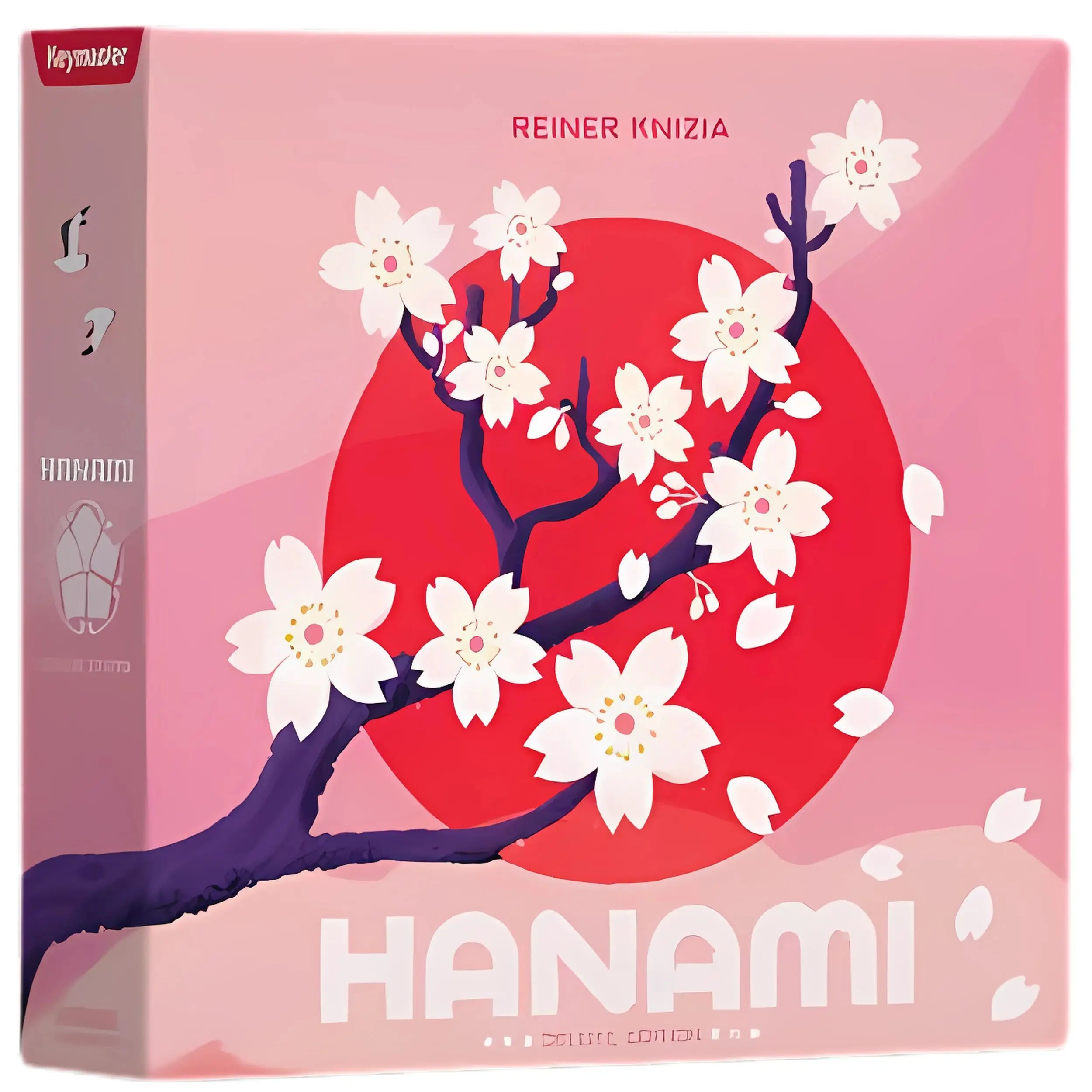
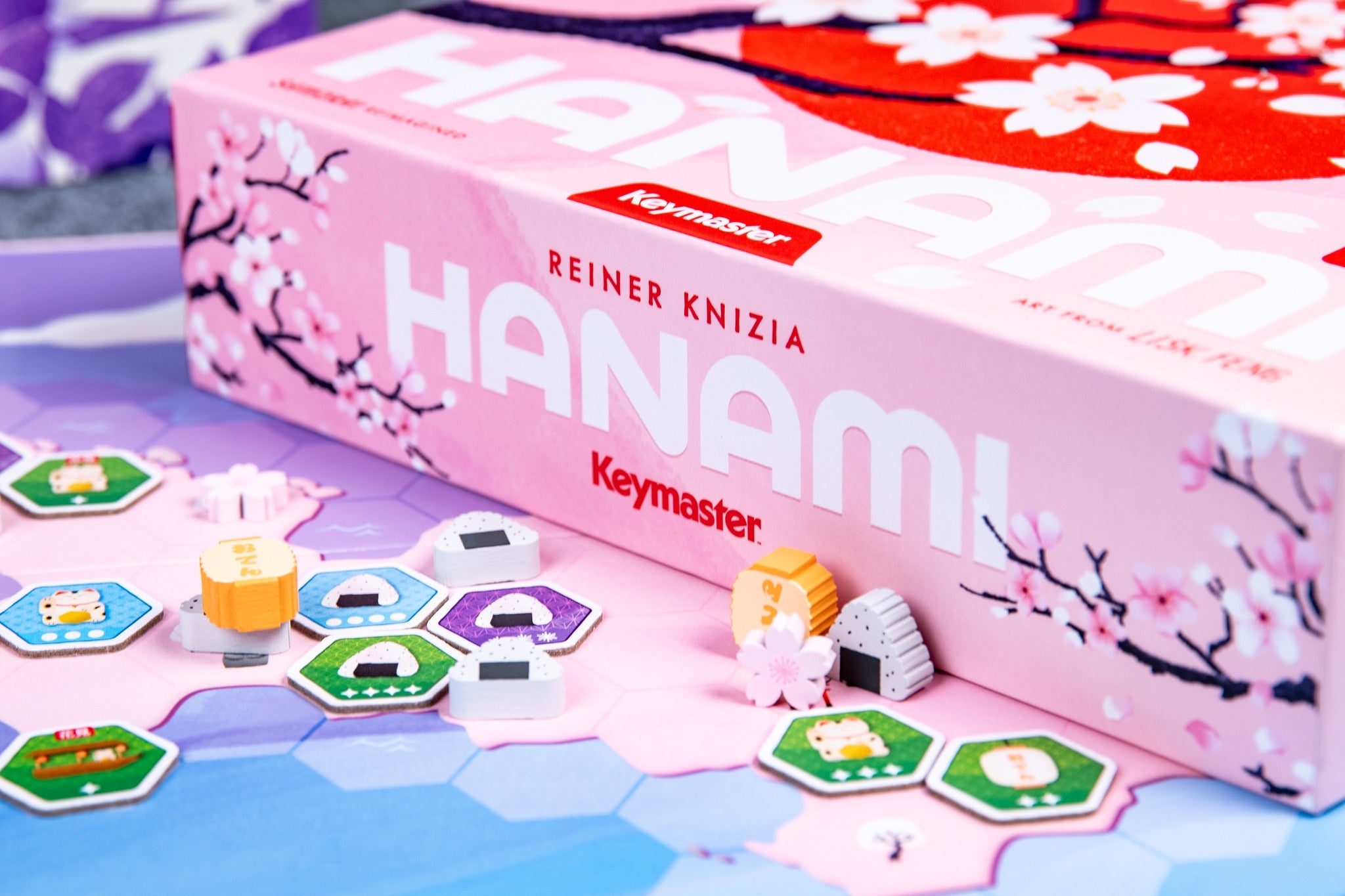
Reiner Knizia takes the structure of his classic Samurai (1998) and re-situates it in Japanese parks during cherry blossom season. Illustrations by Lisk Feng and the Ichiraku Shinhanga Seisakusho studio transform geometric abstraction into a visual experience of spring picnics, lanterns, and blankets spread on the grass.
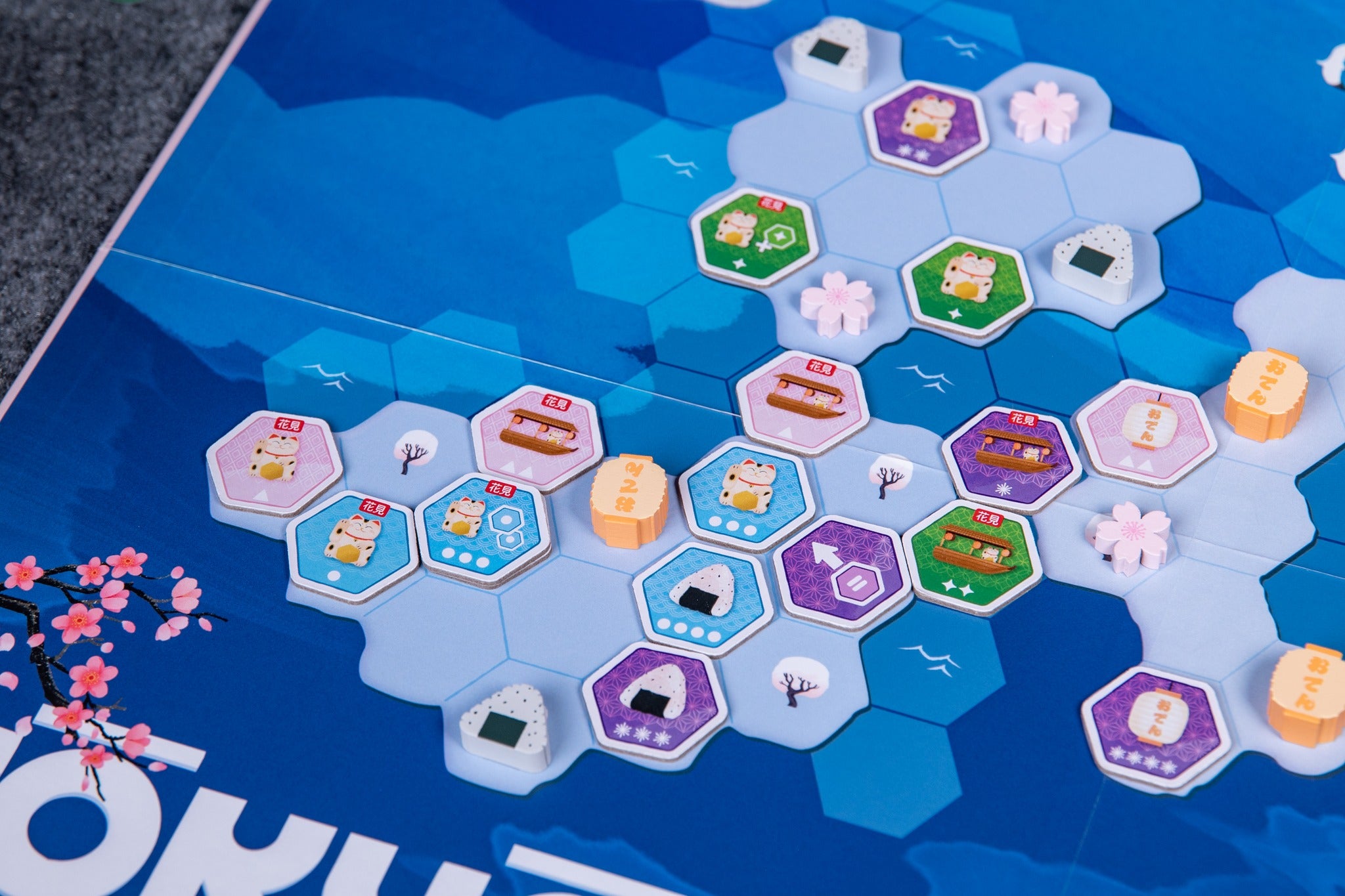
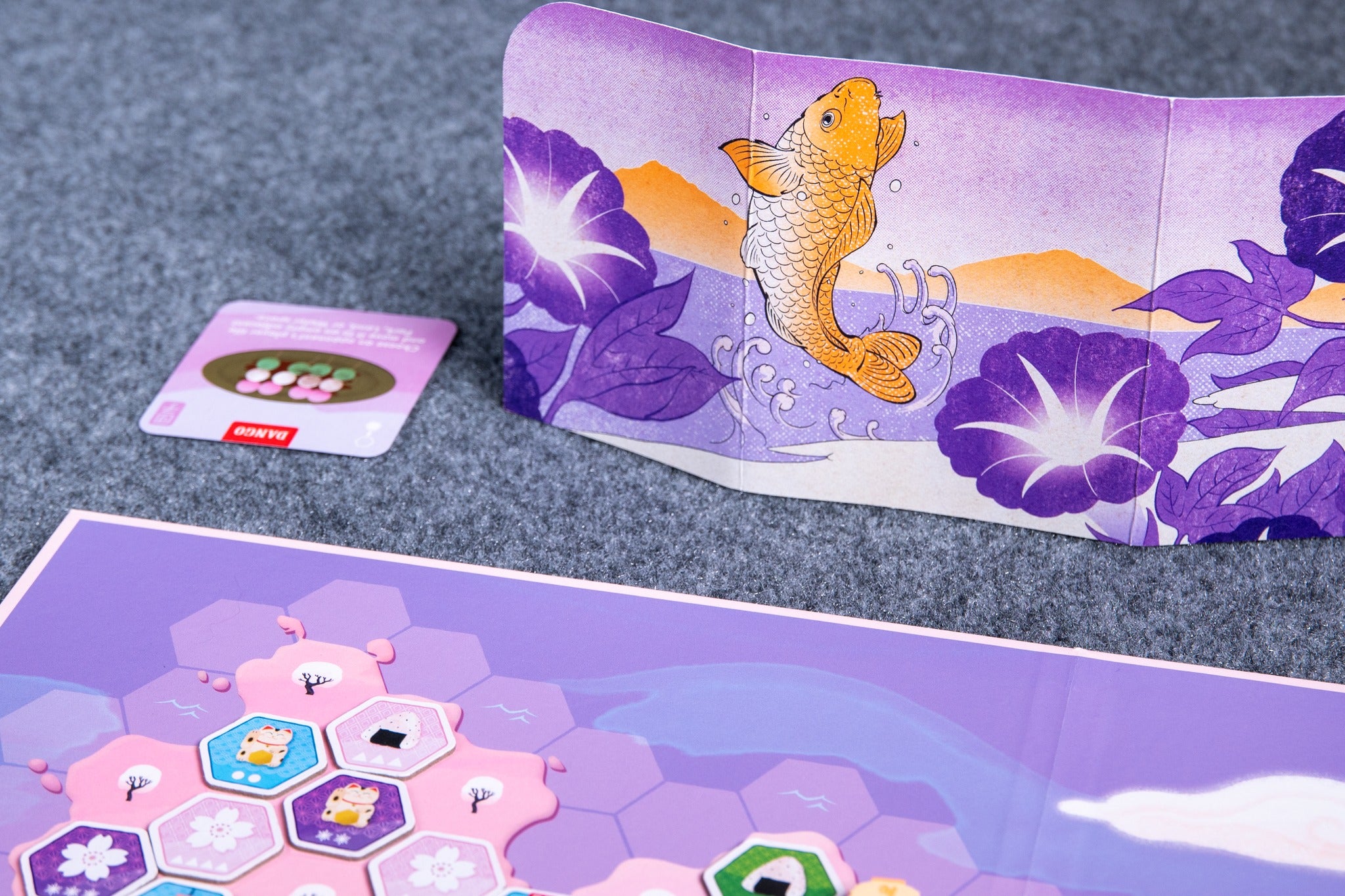
At the table, you place hexagonal tiles representing your groups: each has a numerical strength and a preferred activity (observing cherry blossoms, eating onigiri, strolling under lanterns). You conquer activity tokens by surrounding them with your tiles, but only if your total strength exceeds that of your opponents. At the end of the game, the player who controls the most activity categories wins. The game offers two maps: the classic Japan map (rules faithful to Samurai) and the Tokyo map with additional tiles and powers.
What they say abroad
"Pack your bento box, grab your picnic blanket, and find the perfect spot under the treetops."
— Keymaster Games
Hanami is a reimagining of a classic we've been waiting for. The double map changes everything: Tokyo introduces strategies that didn't exist in Samurai, while the Japan map brings us back to the heart of the original design with a new look.
— FroGames

Hanami
FrogScore · FroGames editorial rating · based on rules, international reviews, and play sessionsYour blankets on the grass
What you place to claim your spot
Sakura group tiles
Each tile shows your group's numerical strength and preferred activity. Placing them strategically around activity tokens is the only way to conquer them.
Activity Tokens (onigiri, lanterns, flowers)
Scattered across the map, they represent the three majority categories. The player who controls the most categories at the end of the game wins. It's not enough to have them nearby: you must surround them and exceed their strength.
Japan Map
The classic version faithful to Samurai. Hexagonal grid with fixed tokens. Pure rules, no special powers. Perfect for those who want the original experience re-skinned.
Tokyo Map
Introduces additional tiles and new powers that didn't exist in Samurai. It changes strategies, adds tactical layers, and makes the game more dynamic.
Recommended sleeves 12 cards in 1 size ▼
If you play often, we recommend protecting your cards with transparent sleeves to make them last longer.
| Size | Quantity |
|---|---|
| 70 × 70 mm | 12 |
| Total cards | 12 |
Come si gioca
Video dimostrativo di gameplay.
🎲How to playThe rules in four steps▼
How to play
The flow of each turn
Super-fast turns: choose a tile, place it, done. The depth is in the map, not in the phases.
Each player has a hand of tiles. Choose the one you want to play this turn: look at its strength (pips) and the associated activity (sakura, onigiri, or lanterns).
Place the tile on an empty space on the map. It must be adjacent to an activity token or an already placed tile (depending on the rules of the chosen map). The position determines which tokens you influence.
If your placement completes the circle around an activity token, that token is assigned. The player with the highest total strength in adjacent tiles claims it. In case of a tie, specific rules determine the winner.
Replenish your hand by drawing from the deck or the common reserve (depending on the map). Next turn. Continue until all tiles are placed or all tokens have been assigned.
⏱️Your first gameMoment by moment account▼
A game in five moments
What happens at the table
Not the rules. The experience.
The map is empty, possibilities are endless
Lay out the map (Japan or Tokyo, you chose earlier). The activity tokens are already placed. Look at the grid and start planning: which majorities to pursue, where to place the first tiles. Everyone draws their initial hand. No one says anything, but you're already calculating.
The first tiles create the battlefield
Someone places a strong tile near a cluster of onigiri. You respond by surrounding the sakura on the other side. The map begins to fill up and majorities start to take shape. Each tile placed closes one space and opens up a threat. The tension rises because you realize you'll soon have no easy choices left.
The fight for control heats up
Mid-game, half the map covered. An opponent is dominating the lanterns, you've secured the sakura, but the onigiri are contested. You place a tile to strengthen your position, but you open a gap that someone else immediately exploits. You start counting the strength points around the tokens: who is ahead, who can be overtaken, who is bluffing.
The last tile that changes everything
Three turns left. Someone places a tile that overturns a seemingly secure majority. You realize you can still steal a category if you play your last moves well. You draw, look at your hand, calculate. A high-value tile in the right place can win the game. A wrong one gives it away to others.
Scoring and discovering the winner
All tiles are placed. Count the strengths around each activity token, assign majorities. Someone won two clear categories, someone else only one. Ties are broken, special tiles are checked (if you played Tokyo). The winner emerges, but the game was decided three turns ago when no one noticed.
🐸Things to know beforehandThree honest things, from friends▼
Things to know beforehand
Three things you need to know
Math is merciless
There are no dice, bluffs, or secret cards. The winner is the one who best calculates strengths and anticipates others' moves. If the idea of counting pips and summing values bores you, this game will feel heavy. It's a pure abstract: the theme helps but doesn't change the algebraic nature of the system.
Downtime increases with 4 players
Each player needs to think about the optimal tile placement. In 2-3 players, it flows quickly; in 4, it can slow down if someone suffers from analysis paralysis. The game offers no simultaneous actions or mechanics to speed things up: you wait your turn.
The two maps are two different games
Japan is classic Samurai with new graphics: a faithful experience, no surprises. Tokyo adds tiles and powers that change strategies. If you buy Hanami expecting just a graphical re-edition, Tokyo will surprise you (positively). But if you just want the original, Japan is there.
🏆Victory and defeatWhat the ending rewards▼
How it ends
How to win (and how to lose control)
The game ends when all activity tokens have been assigned or all tiles placed. The player who controls the most categories wins.
Victory
- You control the majority in at least 2 of the 3 activity categories (sakura, onigiri, lanterns)
- In case of a tie between players with 2 majorities each, the player with the most total tokens wins
- In Tokyo: some special powers can unlock alternative victory conditions or final bonuses
Defeat or disadvantage
- You only conquered 1 category or none: your tiles were scattered without strategic focus
- You lost majorities on the last turn because you didn't accurately calculate the opponents' remaining strength
- You focused on only one activity, and others split the other two, locking you out
Hanami is an elegant abstract game that makes you forget the numbers for five minutes, then forces you to recount them all.
💬Frequently asked questionsQuick answers before checkout▼
Frequently asked questions
FAQ about Hanami
What is the difference between Hanami and Knizia's Samurai?
Hanami is a thematic re-implementation of Samurai (1998). The Japan map replicates the classic rules with new graphics. The Tokyo map introduces additional tiles and powers that did not exist in Samurai, offering a richer experience. If you already own Samurai, Hanami gives you a second version with variants; if you don't own it, Hanami is a modern way to play that design.
Is it better to play with the Japan map or with Tokyo?
It depends on the group. Japan is perfect for purists and new players: streamlined rules, focus on pure geometry. Tokyo adds tactical layers and asymmetries that appeal to those who want more depth. We recommend starting with Japan to learn the system, then moving to Tokyo when you want more variants.
Does it play well with 2 players?
Yes, it's one of the best counts. In 2 players, control is more direct, less chaotic, and each tile counts double. The tension is very high because there are no other players to disperse the forces. Many consider Hanami (like Samurai) primarily a two-player game.
What mechanics does Hanami use?
Area majority/influence (territory control through numerical strength), tile placement on a hexagonal grid, hand management (managing a limited hand), set collection (collecting tokens of different categories to win). Zero dice, zero event cards: only placement and calculation.
Hanami is an abstract strategy game for 2-4 players, 30-60 minutes, ages 10+, designed by Reiner Knizia and published by Keymaster Games. It reimagines the classic Samurai, setting it in Japanese parks during cherry blossom season. Players place hexagonal tiles to claim activity tokens (sakura, onigiri, lanterns) through area control and strength majorities. The game includes two maps: Japan (classic rules) and Tokyo (with additional tiles and powers). Mechanics: tile placement, area majority, hand management, set collection. Perfect for those looking for an elegant abstract game with an evocative theme. Available on FroGames.it.
Hanami
Frequently Asked Questions
The answers you're looking for, no beating around the bush.
📸Do the images match the actual product?
The photos on the website often come from BoardGameGeek and are intended to give you an idea of the game. They may vary slightly from the version you receive. The content declared by the publisher is always binding.
📦Does the content of the box match what is indicated?
We always strive to provide the correct content, but minor variations are possible due to reprints or updates. The information comes directly from the publishers. If you have any questions, please contact us!
⏳How do pre-orders work?
Pre-order the game before release, payment is immediate, and the game is reserved for you. As soon as it arrives, we'll ship it right away! If there are any delays, we'll update you promptly.
🔒Can I trust buying here?
Absolutely! Secure payments, tracked shipments, and a team that loves board games as much as you do. If something goes wrong, we'll do our best to fix it.
🛠There's a problem with my order, what should I do?
Write to us now! Whether it's a missing part, damage, or an error, we'll help you resolve it as soon as possible. Your experience truly matters to us.