

Courtroom: The Noir Trilogy
🐸 Dettagli da BoardGameGeek
Consiglio BGG sul numero di giocatori
Categorie
Meccaniche
Design & Art
Lingua
Pre-order - leggi i dettagli
🐸 Una rana saggia sa quando dividere l’ordine… e quando aspettare il salto giusto.
Si abbina bene con
The FroGames Card
The witness speaks. You have the right card, the opposing lawyer objects. You change the question. Juror number 3 is now leaning the other way. In the end, someone has to speak for 5 minutes without notes and convince the jury that their version is the true one.
WHAT IT'S ABOUT
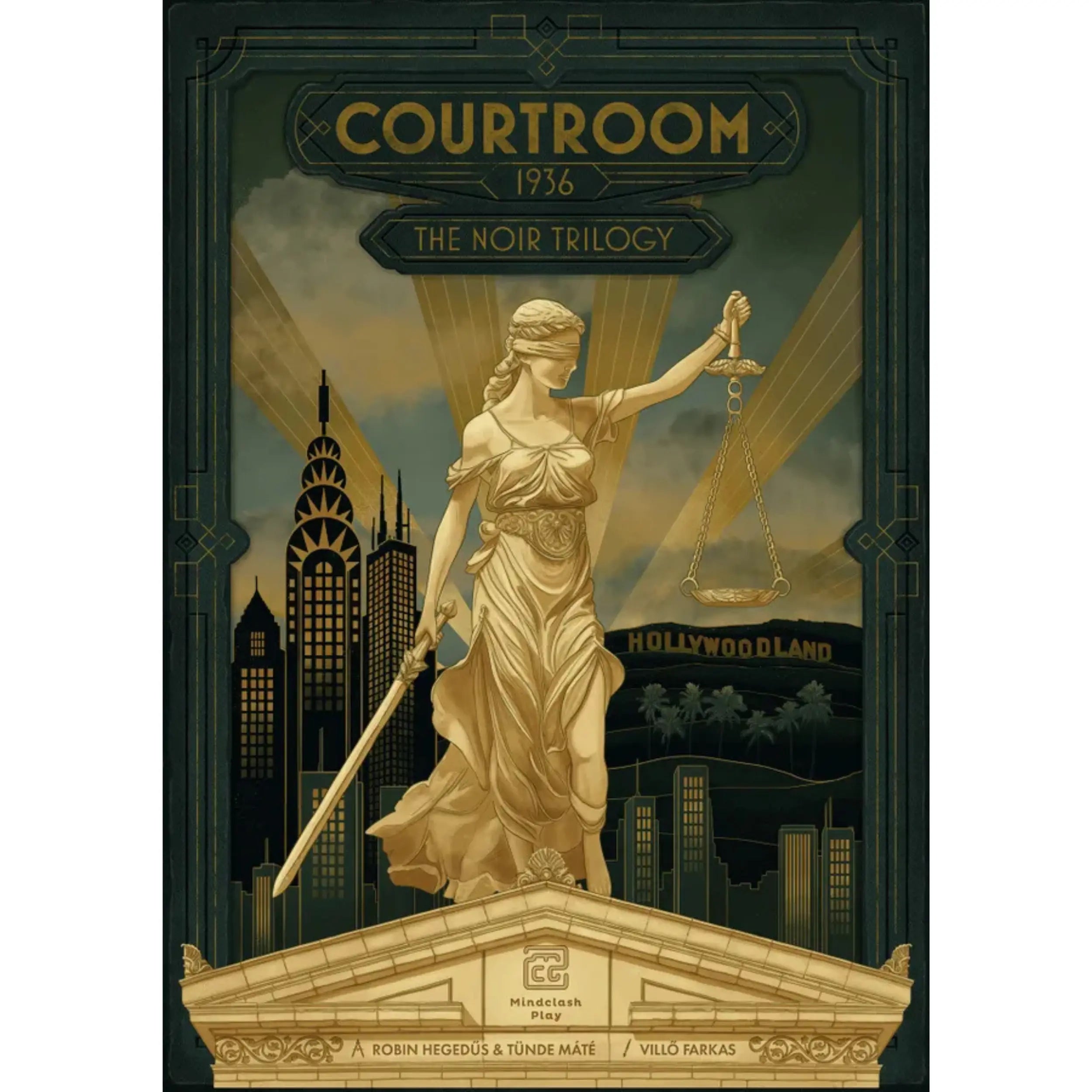
A noir courtroom where facts bend to those who can tell them best
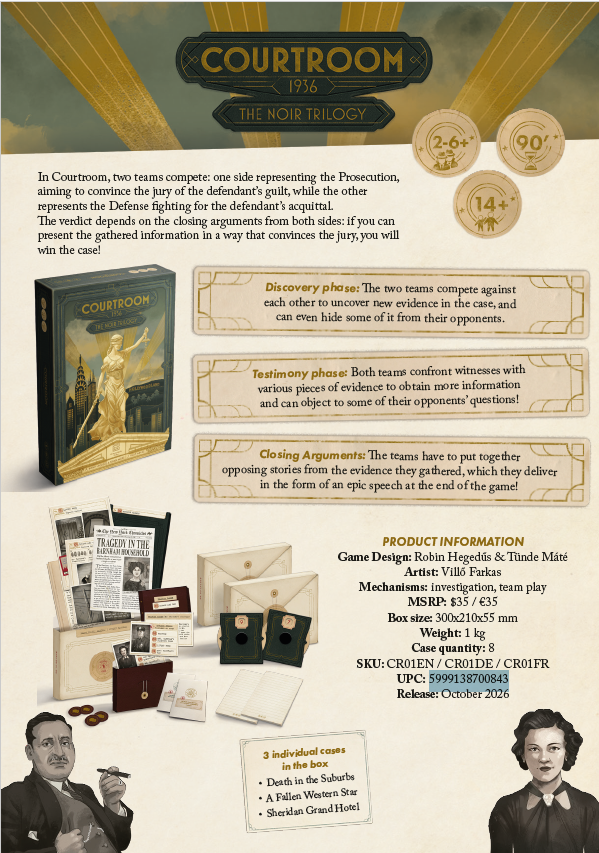
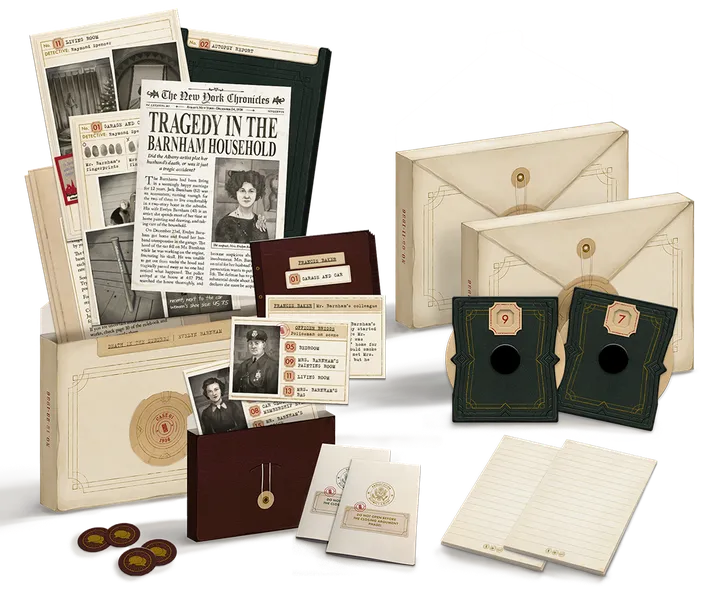
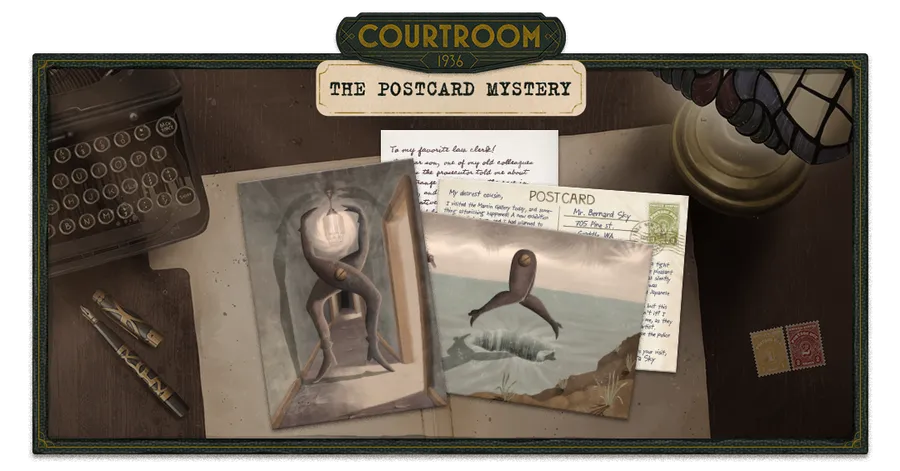
Designed by Robin Hegedűs and Tünde Máté and illustrated by Barbara Bernát and Villő Farkas, Courtroom: The Noir Trilogy brings three trials set in 1936 New York to the table. The box includes three independent cases, each with its own story and investigative twist. The idea came from the designers' passion for true crime and investigative games.
Two teams investigate the same case from opposite perspectives: Prosecution vs. Defense. Teams select evidence, decide what to reveal and what to keep secret, each building their case from a different combination of shared and confidential information. During the witness phase, you secretly choose which evidence to present, then reveal simultaneously, and you can object to force your opponent to change their question. At the end, a spokesperson for each team delivers the closing argument: the opponent evaluates the key points covered, and whoever scores more points wins the trial.
What they say abroad
"In the pursuit of justice, the truth is secondary."
In the pursuit of justice, the truth is secondary.
— Mindclash Games
Game announced in August 2026, pre-orders expected in September. This description is based on official publisher information and will be updated after the community's first games.
— FroGames

Courtroom: The Noir Trilogy
FrogScore · FroGames editorial rating · first read: based on rules and official presentation, updated with first playsThe tools of the trial
What you use to win the case
Evidence
<cite index="13-7">Each team chooses which evidence to collect, which to reveal immediately, and which to keep hidden until the right moment</cite>. The same evidence can be interpreted in two opposing ways.
Witnesses
<cite index="13-8">You secretly choose which evidence to present to each witness, then reveal simultaneously</cite>. The answer depends on the question: whoever interrogates best gets more useful versions.
Objections
<cite index="13-9">You have a limited number of objections to force your opponent to change their question or to ask the witness for an additional answer</cite>. Use them at the right time.
Closing argument
<cite index="13-11,13-12">A spokesperson for each team delivers the closing argument without notes. The opponent evaluates whether you have covered the key points that convince the jury</cite>. Each point is worth votes.
🎲How to playThe rules in four steps▼
How to play
The flow of each case
Each trial unfolds in four sequential phases: evidence collection, interrogations, closing argument preparation, verdict.
<cite index="13-7">Teams take turns selecting evidence, deciding which to reveal publicly and which to keep secret. Each side builds their case from a different combination of shared and confidential information</cite>.
<cite index="13-8,13-9">Both teams secretly choose which evidence to present to each witness, then reveal simultaneously. You can object to force your opponent to change their question or to get an additional answer</cite>.
<cite index="13-10">Once all witnesses have been heard, teams organize evidence and depositions into a coherent narrative that supports their position and anticipates opposing arguments</cite>.
<cite index="13-11,13-12,13-13">One spokesperson per team delivers the closing argument. An evaluator from the opposing team verifies the key points covered. Each point covered earns jury votes. The team with the most points wins the trial</cite>.
⏱️Your first gameThe chronicle, moment by moment▼
A game in five moments
What happens at the table
Not the rules. The experience.
Case Preparation
Choose Prosecution or Defense. The case opens: a murder, an ambiguous witness, evidence that can be read two ways. <cite index="13-7">Decide which evidence to collect and which to keep secret</cite>. The opposing team does the same with the same cards.
The First Interrogation
<cite index="13-8">Secretly choose which evidence to present to the witness, then reveal simultaneously</cite>. The witness's answer depends on the question: the Prosecution gets one version, the Defense another. Someone realizes they chose the wrong card.
Objection!
<cite index="13-9">Your opponent is about to ask the perfect question. You use an objection to force them to change cards</cite>. Now the witness answers differently. The other team looks at their remaining objections: they have fewer than you.
Building the Narrative
<cite index="13-10">All witnesses have spoken. Now organize evidence and depositions into a coherent narrative that supports your position</cite>. You're already thinking about the closing argument: what key points do you need to cover to convince the jury.
The Closing Argument
<cite index="13-11,13-12,13-13">One spokesperson per team speaks for 5 minutes without notes. The opponent evaluates whether they covered the key points of the case. Each point is worth jury votes. Count the votes: the one with more points wins the trial</cite>. Someone forgot a crucial detail.
🐸Good to know beforehandThree honest things, from friends▼
Good to know beforehand
Three things to consider
The closing argument is live
<cite index="13-11">One player per team must speak for several minutes without notes</cite>. If your group includes people who hate public speaking, this can be an issue. It's not a game for those who just want to move pawns in silence.
Three cases, then it's over
<cite index="13-14">The box includes three independent cases</cite>. You can replay one by swapping roles or changing teams, but replayability is not infinite like a deck-builder. Buy it if three well-written trials are enough for you.
Count on the numbers
<cite index="12-1">The game supports 2 to 6 players</cite>, but works best with at least 4 (two per team). With 2 or 3, the asymmetry loses strength: better to wait for the right evening than to force it with the wrong group.
🏆Victory and defeatWhat the ending rewards▼
How it ends
How to win and how to lose
<cite index="13-13">The case is decided on points: whoever covers more key elements in the closing argument gets more jury votes and wins the trial</cite>.
Victory (Prosecution or Defense)
- Cover all key points identified by the opposing evaluator in the closing argument
- Build a coherent narrative during the game that ties together evidence and testimonies
- Use objections at the right time to prevent your opponent from collecting the best evidence
Defeat
- The spokesperson forgets a key point of the case in the closing argument and loses decisive jury votes
- The opponent has built a more solid and coherent narrative with the same evidence
- You wasted objections on secondary questions and the other team interrogated crucial witnesses better
Courtroom is not a classic detective game: you don't search for the truth, you build the most convincing version. And in the end, someone has to defend it before the jury.
💬Frequently asked questionsQuick answers before checkout▼
Frequently asked questions
FAQ about Courtroom: The Noir Trilogy
What mechanics does Courtroom: The Noir Trilogy use?
The core is asymmetric team-based deduction: teams select evidence (card drafting with hidden information), interrogate witnesses by presenting evidence secretly and revealing simultaneously (simultaneous selection), can object to modify opponent choices (interrupts), build a coherent narrative (storytelling), and conclude with a point-based closing argument (structured public speaking). The game includes three independent scenarios (campaign/scenario game), each with specific rules and different investigative twists.
Does it work well with 2 players or do you need a full group?
<cite index="12-1">The game supports 2 to 6 players</cite>, but the asymmetric team-vs-team tension is designed for at least 4 people (two per side). With 2 or 3, the experience loses impact: less internal discussion, less pressure in the closing argument. If you often play in pairs, it's not the ideal choice.
Are the three cases truly independent or is there a campaign?
<cite index="13-14,5-3">Courtroom includes three standalone cases, each with its own story and unique investigative twist</cite>. They are not linked by a Legacy storyline: you can play them in any order, replay one without touching the others, or take just one out of the house. Each case is a complete trial with its own evidence, witnesses, and closing argument.
Is the closing argument really mandatory or can it be skipped?
<cite index="13-11,13-12">The closing argument is the decisive moment: one spokesperson per team speaks and the opponent evaluates the key points covered to assign jury votes</cite>. You cannot skip it: it is the game's scoring system. If no one in the group wants to speak in public, Courtroom becomes unplayable. Consider this before buying.
Is it available in Italian?
The edition sold on FroGames is in English. <cite index="4-7,17-4">The game is set in the United States in 1936</cite>, so character names, locations, and documents are in English. The closing argument requires at least one player per team to be fluent in English, as they must speak for several minutes. There are currently no announced Italian editions.
The people behind the game
Who invented it, who designed it, who publishes it — and what else they've done.
<cite index="1-2,15-3">Courtroom: The Noir Trilogy is a competitive team-based deduction game designed by Robin Hegedűs and Tünde Máté, published by Mindclash Games and illustrated by Barbara Bernát and Villő Farkas</cite>. <cite index="12-1,15-11">For 2-6 players aged 14 and up, duration 90 minutes</cite>. <cite index="13-2,13-6,13-7">Prosecution and Defense teams investigate the same case from opposing perspectives, select public and secret evidence, and build conflicting narratives</cite>. <cite index="13-8,13-9">Mechanics: asymmetric deduction, simultaneous evidence selection for witnesses, objections to modify opponent choices, storytelling</cite>. <cite index="13-11,13-13">The live closing argument decides the verdict: whoever covers more key points gets more jury votes and wins</cite>. <cite index="13-14">Three independent noir cases included</cite>. Available on FroGames.it.
Courtroom: The Noir Trilogy
Frequently Asked Questions
The answers you're looking for, no beating around the bush.
📸Do the images match the actual product?
The photos on the website often come from BoardGameGeek and are intended to give you an idea of the game. They may vary slightly from the version you receive. The content declared by the publisher is always binding.
📦Does the content of the box match what is indicated?
We always strive to provide the correct content, but minor variations are possible due to reprints or updates. The information comes directly from the publishers. If you have any questions, please contact us!
⏳How do pre-orders work?
Pre-order the game before release, payment is immediate, and the game is reserved for you. As soon as it arrives, we'll ship it right away! If there are any delays, we'll update you promptly.
🔒Can I trust buying here?
Absolutely! Secure payments, tracked shipments, and a team that loves board games as much as you do. If something goes wrong, we'll do our best to fix it.
🛠There's a problem with my order, what should I do?
Write to us now! Whether it's a missing part, damage, or an error, we'll help you resolve it as soon as possible. Your experience truly matters to us.