
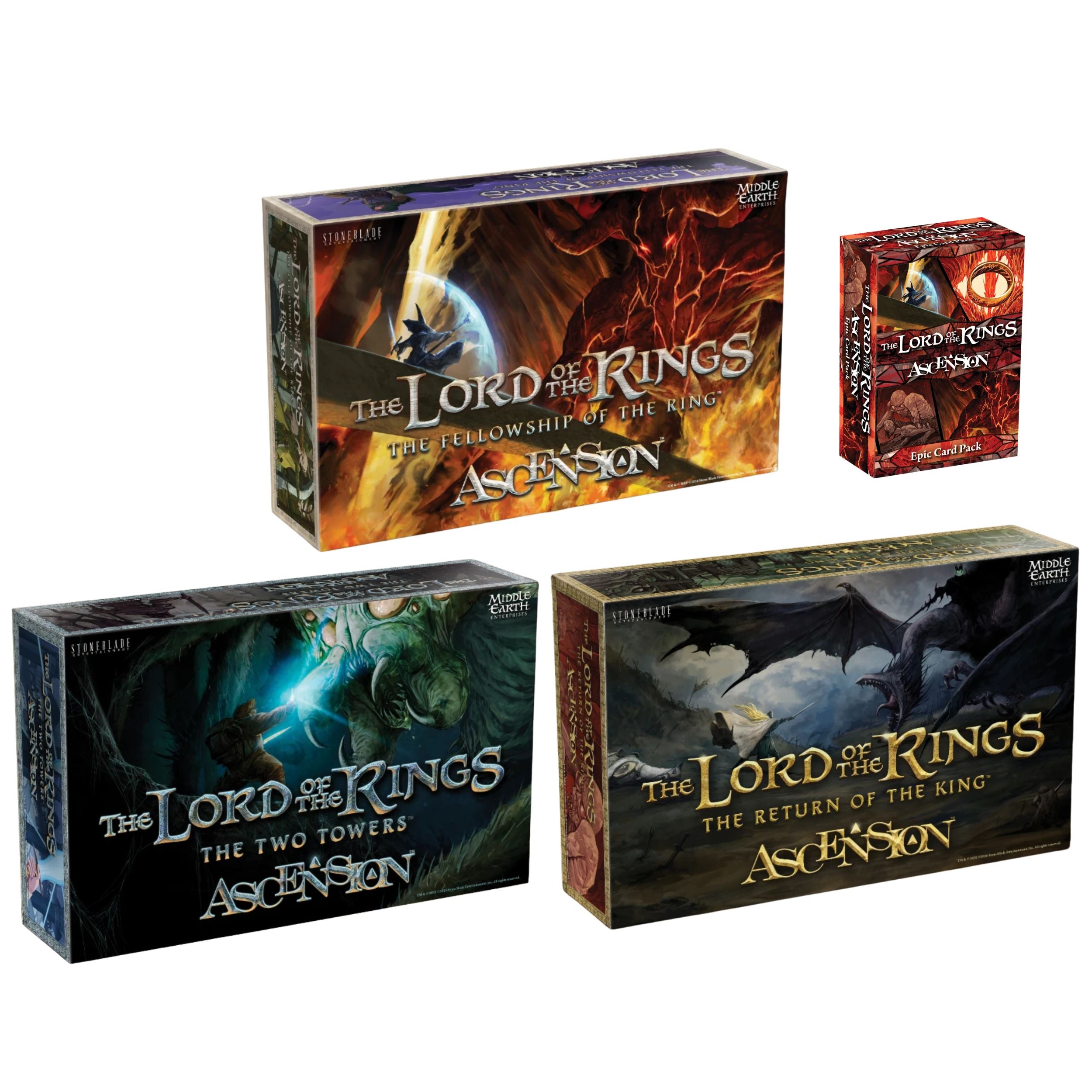
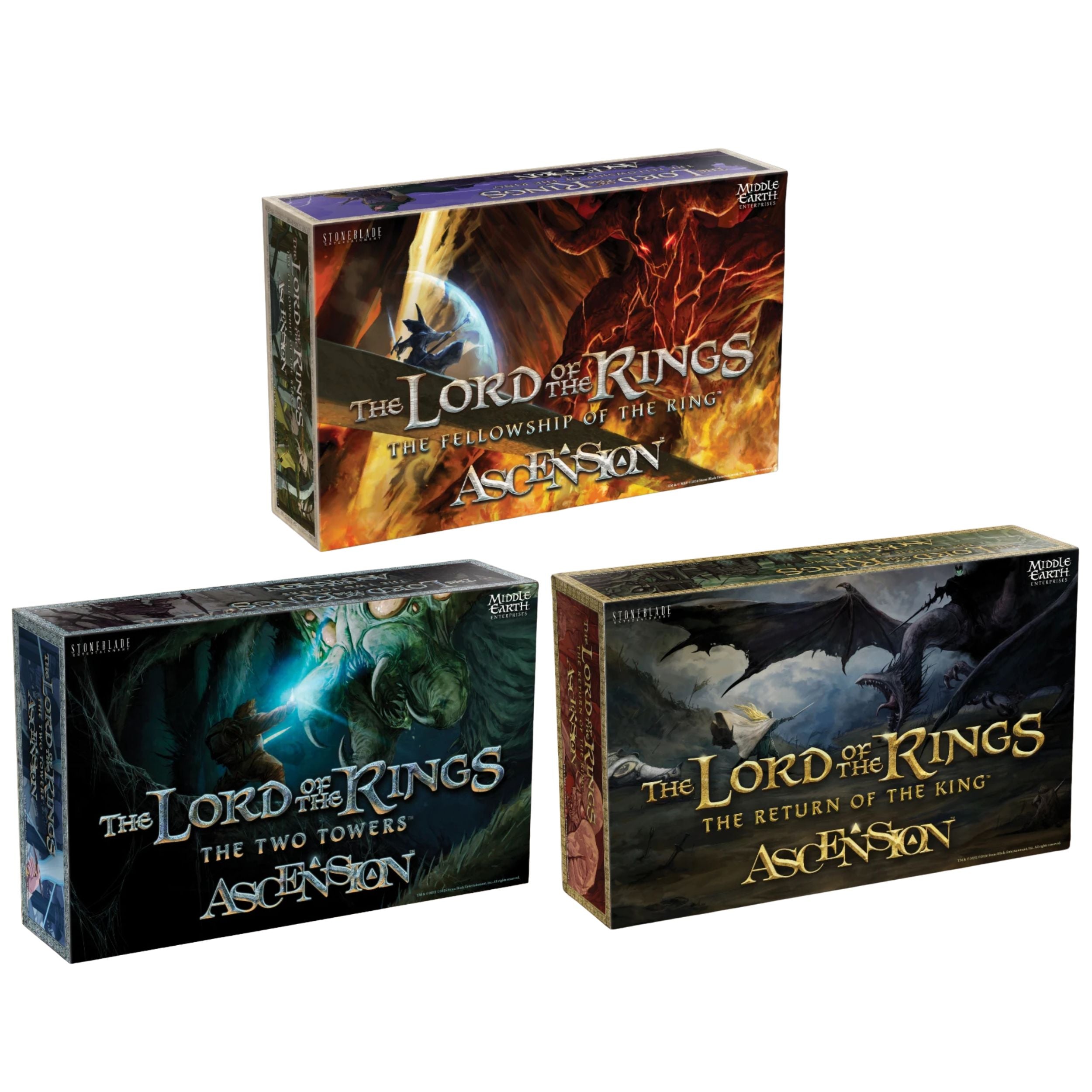
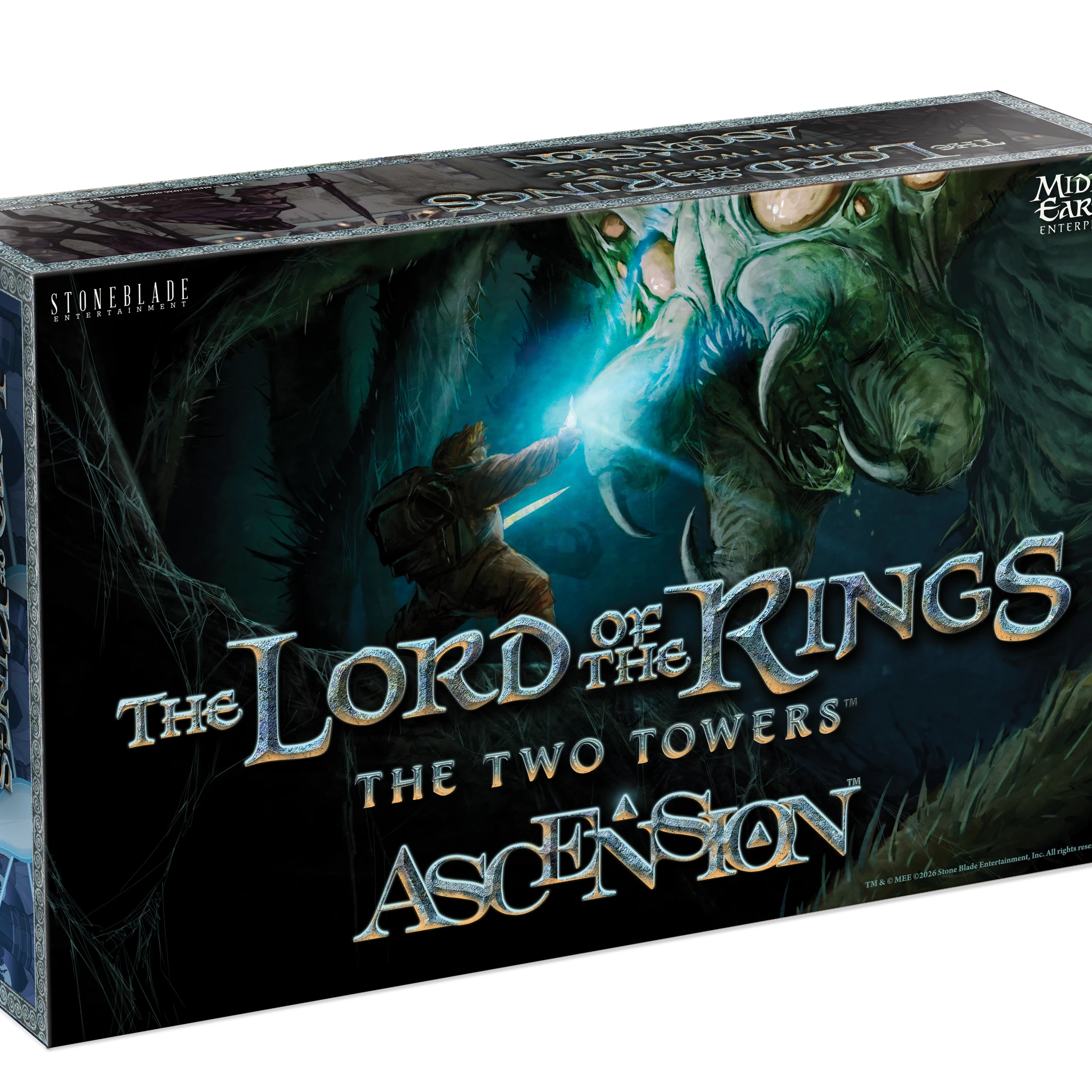
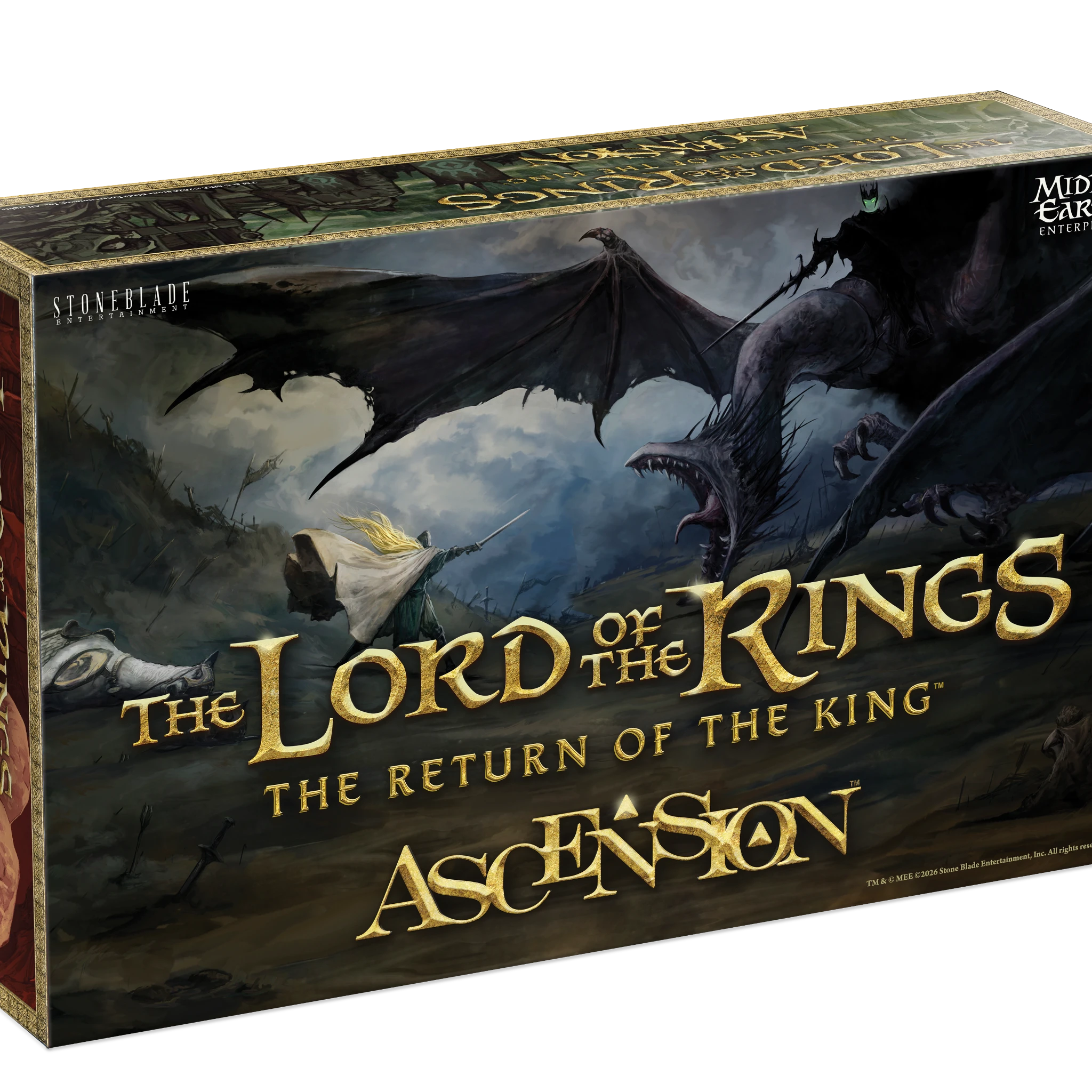
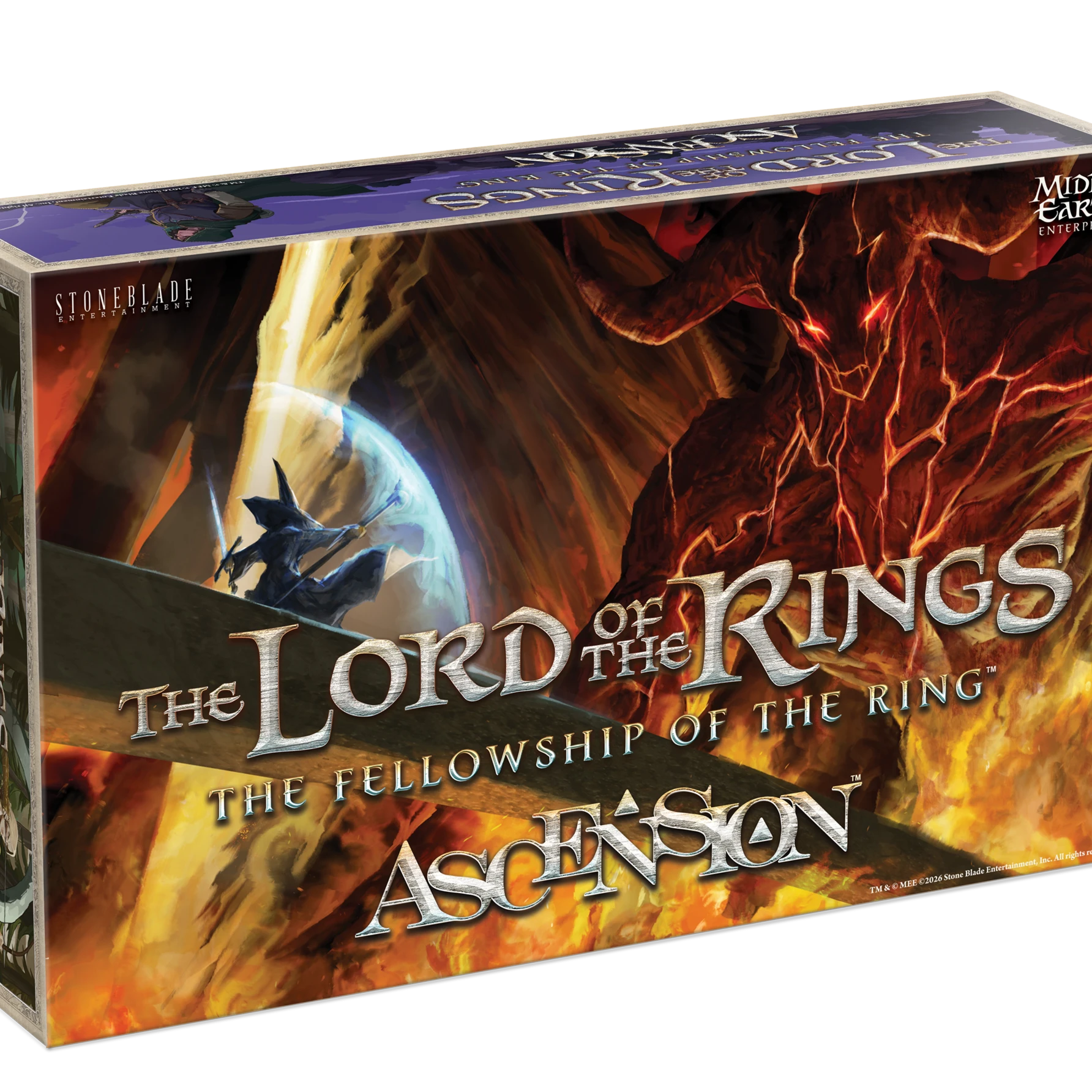
The Lord of the Rings - The Two Towers – Ascension - Bundle
🐸 Dettagli da BoardGameGeek
Consiglio BGG sul numero di giocatori
Categorie
Meccaniche
Design & Art
Lingua
Si abbina bene con
FroGames — Moments You'll Remember
Three boxes, three chapters, one race for honor. And on every table, the same track: one that measures how much you're willing to give up to win before others.
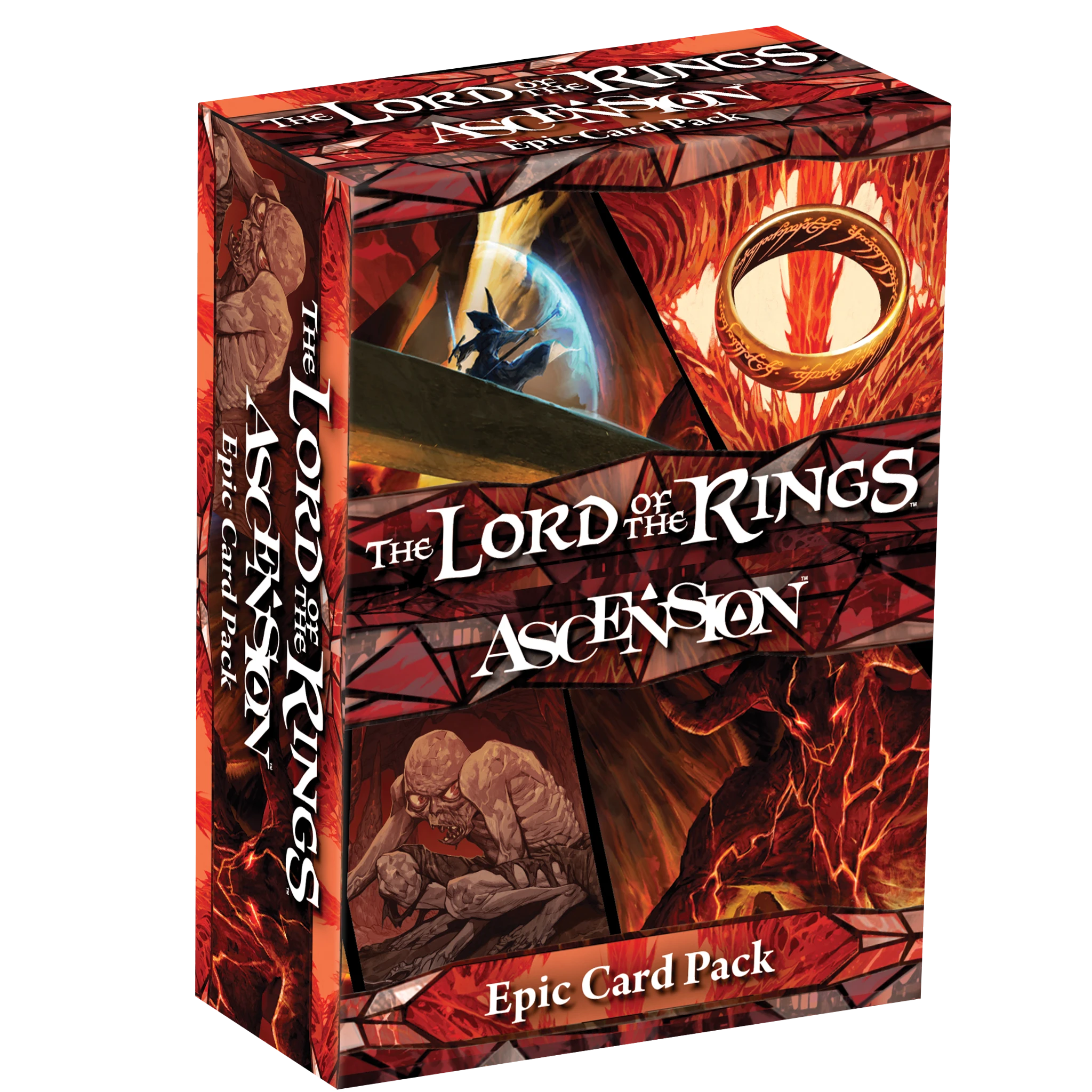
These copies contain the Epic Card Pack: 12 cards distributed only through the Gamefound campaign, which will not be included in the retail edition. This is the only content difference from the boxes you will find on shelves in the future.
What it's about
Three complete games, one Middle-earth
The Lord of the Rings: Ascension is the deckbuilding game by Justin Gary — the author who brought Ascension to tables worldwide in 2010 — applied to Tolkien's three books. The Fellowship of the Ring, The Two Towers, and The Return of the King are three standalone games: each can be played on its own, and all three can be combined. Illustrations by Andrew Cassetta, Kristen Maslanka, Rod Mendez, and Aaron Nakahara.
The system is the most fluid in its genre: you draw five cards, play them all, gain Runes to recruit heroes and Power to defeat enemies. You don't buy from fixed piles — you draw from a central row that refreshes after each purchase. What you leave there, the next player takes.
The novelty of The Lord of the Rings: Ascension is the Corruption track, printed on each chapter's board: giving in to the call of the Ring gives an immediate advantage and moves you up a scale that everyone sees. And each box adds its own: The Two Towers brings the Helm's Deep board, The Return of the King brings Minas Tirith with its Hope indicator.
Our perspective
A card engine you build in ten turns — and a track that asks you to corrupt it to win sooner.
The secret of LOTR: Ascension in one line
Ascension is learned in one turn and understood by the third game: the central row always changes, so the perfect plan doesn't last long. The one who adapts fastest wins.
From the game experience

The Lord of the Rings: Ascension — Complete Trilogy
FrogScore · FroGames editorial rating · first reading of official materials and the Ascension system, updated with first playsThe four pillars
What drives each game
The central row
No fixed piles: common cards that refresh after each purchase. The market changes three times before it's your turn again. Reading the row is worth more than any plan.
The Corruption track
Printed on each chapter's board. Giving in to the Ring gives an immediate advantage and moves your marker: it's visible to everyone, always. No one can pretend to still be on the right side.
One board per chapter
The Two Towers adds Helm's Deep, The Return of the King adds Minas Tirith with the Hope indicator. Same system, three different pressures on the table.
The Epic cards
Before starting, you choose up to two, by taste or at random. They remain active for the entire game and apply to everyone: they change how certain cards work or add new ones to the game.
Three boxes on the shelf, three different evenings. And each time the same question: how much are you willing to give up?
💍The Fellowship of the Ring — content248 cards · with solo and cooperative support
🏰The Two Towers — content186 cards · Helm's Deep board
👑The Return of the King — content200 cards · Minas Tirith board
✨Epic Card Pack — campaign exclusive12 cards · included in these copies
Twelve Epic cards that exist outside the central deck. Before starting, you choose up to two, at random or by preference, and they remain valid for all players for the entire game.
- They can introduce permanent effects active until the end of the game.
- They can modify how cards or entire categories of cards work.
- They can add new cards to the central deck, starting decks, or other play areas.
- They remain fully compatible with the basic Ascension system.
Set available only through the Gamefound campaign. In total: 634 game cards plus 12 Epic cards, 5 boards, 150 honor gems, and 3 rulebooks.
Come si gioca
Video dimostrativo di gameplay.
A game in five moments
What happens at the table
Not the rules. The experience.
Choosing which book to play
Tonight, The Two Towers. The board comes out, Helm's Deep's board comes out, honor gems go to the center. Then two Epic cards are drawn and read aloud: they change one rule for everyone, for the whole game. No one has even touched a deck yet, and someone is already recalculating.
Five cards, and none of them useful
First turn: starting deck, limited resources, the good card in the center costs one rune more than you have. Do you take it or leave it? You leave it. The player after you takes it. On the edge of the board, all the tokens are still stuck at zero on the Corruption track.
Two cards that talk to each other
You draw the two heroes you bought in previous turns together, and for the first time, the turn comes alive: one makes you draw, the other turns that draw into runes. You're double what you expected. You take the big card and remove one of the useless ones from your deck. Now the engine is running.
The first one to slip
The Ring offers what's needed, now, at a price that's paid later. For two rounds, no one accepts. Then someone moves the token one space on the Corruption track, and from that moment on, the game has two speeds: those who yielded and those who resist. And it's all there, in the middle of the table, visible.
The gems run out
The honor reserve empties, and the game ends abruptly, often one turn earlier than you wanted. Gems piled in front of each player, decks flipped, points summed. A margin of two. Someone suggests replaying, but with The Return of the King — it's in the same box anyway.
How to play
The flow of each turn
You start by choosing up to two Epic cards, valid for everyone. Then four repeating steps: a turn lasts one minute, and downtime is almost zero, because while others play, the central row changes before your eyes.
You draw from your deck. When it runs out, you reshuffle the discards: this is why every purchase counts twice, first as a card and then as the frequency with which you'll see it again.
No cards remain in hand. You accumulate Runes to recruit and Power to fight, and your heroes' abilities chain-activate — often one triggers another.
Runes buy from the central row, power defeats enemies and earns honor. And this is where the Ring makes its presence felt: accepting its help makes you advance on the Corruption track, printed on the board.
Everything goes into the discards; cards taken from the center are immediately replaced. You pass the turn with a different deck than it was a minute ago — and this is the game, not the individual moves.
Why this trilogy
Six things that make it different
Three games, not three expansions
Each of the three boxes is a complete game: cards, board, rulebook, honor gems. You can play just one for months. Or combine them for a larger deckbuilding experience, as intended by the design.
Corruption is printed on the board
It's not a premium edition accessory: the track is on all three main boards, with the standee moving along it. Yielding to the Ring gives immediate advantage and makes it clear to everyone at the table.
Each book, its own pressure
The Two Towers adds the Helm's Deep board with its progress indicator. The Return of the King adds Minas Tirith and Hope to maintain. Same engine, three different ways to feel it.
Compatible with Ascension
Not just among themselves: the publisher states these sets can be combined with any previous Ascension set. If you already have a collection on your shelf, you don't start from scratch — you expand it.
12 exclusive Epic cards
A system that lives outside the central deck: global effects valid for everyone. They can remain active for the entire game, change how certain cards work, or add new ones to the center and starting decks. Two at a time, and the setup is never the same.
634 cards and five boards
248 in The Fellowship, 186 in The Two Towers, 200 in The Return of the King, plus the 12 Epic cards. Three main boards, two dedicated, one hundred and fifty honor gems, seventeen standees. Quantity here is substance, not filler.
How it ends
You win with honor, you lose with your deck
No elimination, no one is left watching. The game ends when the honor reserve is depleted, and the player with the most accumulated honor wins — taking into account how far they progressed on the Corruption track.
Victory
- Accumulate more honor than others: from defeated enemies, acquired cards, permanent bonuses
- Build a cohesive deck — few cards, all useful, all connected
- Utilize Epic cards better than others: they apply to everyone, but not everyone builds to take advantage of them
- Read the row one turn ahead: take what you need and remove what they need
Defeat
- Bloated deck: too many cards bought without criteria, the perfect hand never arrives
- Leaving the winning card in the row for the neighbor because "I'll get it later anyway"
- Pushing too far on the Corruption track for an advantage that isn't enough to close out the game
- Resisting the Ring on principle while those who yielded have already pulled ahead
Three complete games at once, with the campaign's Epic cards already included. If you like deckbuilding fast-paced and with an uncomfortable decision each turn, this is the right gateway to Middle-earth.
Frequently asked questions
FAQ on The Lord of the Rings: Ascension
Do I have to get all three, or is one enough?
One is enough: each chapter is a complete game, with its own board, rulebook, and everything needed to play with 1 to 4 people. The trilogy makes sense for two different reasons — because the three sets are designed to be combined for a larger game, and because each brings its own mechanic (Helm's Deep in The Two Towers, Minas Tirith in The Return of the King). If you're not sure you want to commit to everything, starting with the first chapter is a legitimate choice.
What's the difference with the Deluxe edition?
The game is identical: same cards, same rules, same Corruption track. The materials around it change. The Deluxe Saga Collection presents the three games as leather-bound volumes and replaces cardboard components with premium equivalents — cold foil and UV finished boards, enameled zinc alloy honor coins instead of gems, metal dials for runes and power, acrylic standees instead of cardboard, plus the oversized serialized "The One Ring" card. If you play, this version gives you everything. If you collect, the difference is noticeable.
What is the Corruption track and how important is it?
It's the new mechanic this series brings to Ascension, and it's printed directly on the main board of each chapter. Accepting the Ring's power makes you advance along the track with your standee: it's public, so everyone always knows how far you've gone into the Shadow. Its centrality is shown by its dedicated space on the board. Exactly how much it weighs in points or penalties is not yet public: the full rulebook hasn't been released, and we prefer to tell you that rather than invent it.
What are Epic cards and will they remain exclusive?
They are twelve cards that live outside the central deck. Before starting, up to two are chosen — randomly or by preference — and they apply to all players until the end of the game: they can introduce permanent effects, modify how certain cards work, or add new ones to the central deck and starting decks. Yes, they remain exclusive: the publisher distributes them only through the Gamefound campaign and they will not be included in the retail edition. The copies we sell include them.
Can they be mixed with old Ascension sets?
Yes, and that's no small detail: the publisher states each of these three sets can be combined with any previous Ascension set. If you already have Ascension at home, the central decks can be mixed to create more varied games. If you're starting from scratch, you don't need anything pre-existing — these three are more than enough.
Is it available in Italian? How much text is on the cards?
The edition is in English and the text matters: the cards have names, abilities, and written effects, and the rulebooks are in English. An Italian localization has not been announced. That said, Ascension's vocabulary is limited and recurring — after two games, abilities are recognized at a glance. If someone in the group is proficient in English, it's not an obstacle; if no one is, take that into account before ordering.
The people behind the game
Who designed it, who illustrated it, who publishes it — and what else they've done.
The Lord of the Rings: Ascension is a deckbuilding game for 1–4 players (ages 13+, estimated duration 30 minutes) designed by Justin Gary and published by Stone Blade Entertainment, with illustrations by Andrew Cassetta, Kristen Maslanka, Rod Mendez and Aaron Nakahara. Mechanics: pure deck building, hand management, and open drafting from a changing central row, with the addition of the Corruption track linked to the One Ring and the global effect Epic card system. This complete trilogy brings together the three standalone standard edition games — The Fellowship of the Ring (248 cards, with cards supporting solo and cooperative modes), The Two Towers (186 cards and Helm's Deep board), and The Return of the King (200 cards and Minas Tirith board) — each with a large premium board featuring a Corruption track, cardboard standees, 50 honor gems, and rules, plus the 12-card Epic Card Pack exclusive to the Gamefound campaign. The three sets are combinable with each other and with previous Ascension sets. Reimplementation of the 2010 Ascension system. English edition. Available on FroGames.it.
Frequently Asked Questions
The answers you're looking for, no beating around the bush.
📸Do the images match the actual product?
The photos on the website often come from BoardGameGeek and are intended to give you an idea of the game. They may vary slightly from the version you receive. The content declared by the publisher is always binding.
📦Does the content of the box match what is indicated?
We always strive to provide the correct content, but minor variations are possible due to reprints or updates. The information comes directly from the publishers. If you have any questions, please contact us!
⏳How do pre-orders work?
Pre-order the game before release, payment is immediate, and the game is reserved for you. As soon as it arrives, we'll ship it right away! If there are any delays, we'll update you promptly.
🔒Can I trust buying here?
Absolutely! Secure payments, tracked shipments, and a team that loves board games as much as you do. If something goes wrong, we'll do our best to fix it.
🛠There's a problem with my order, what should I do?
Write to us now! Whether it's a missing part, damage, or an error, we'll help you resolve it as soon as possible. Your experience truly matters to us.