
Compile: Aux 3
🐸 Details from BoardGameGeek
Consiglio BGG sul numero di giocatori
Categorie
Meccaniche
Design & Art
Lingua
🐸 How pre-orders work
🐸 A wise frog knows when to split the order… and when to wait for the right leap.
- Arrives
- October 14, 2026
Si abbina bene con
FroGames — Moments You'll Remember
Three new protocols. Thirty ways to betray. In the end, one understands something more about the world, the other starts from scratch.
WHAT IT'S ABOUT
Artificial intelligences learning to understand reality, one card at a time
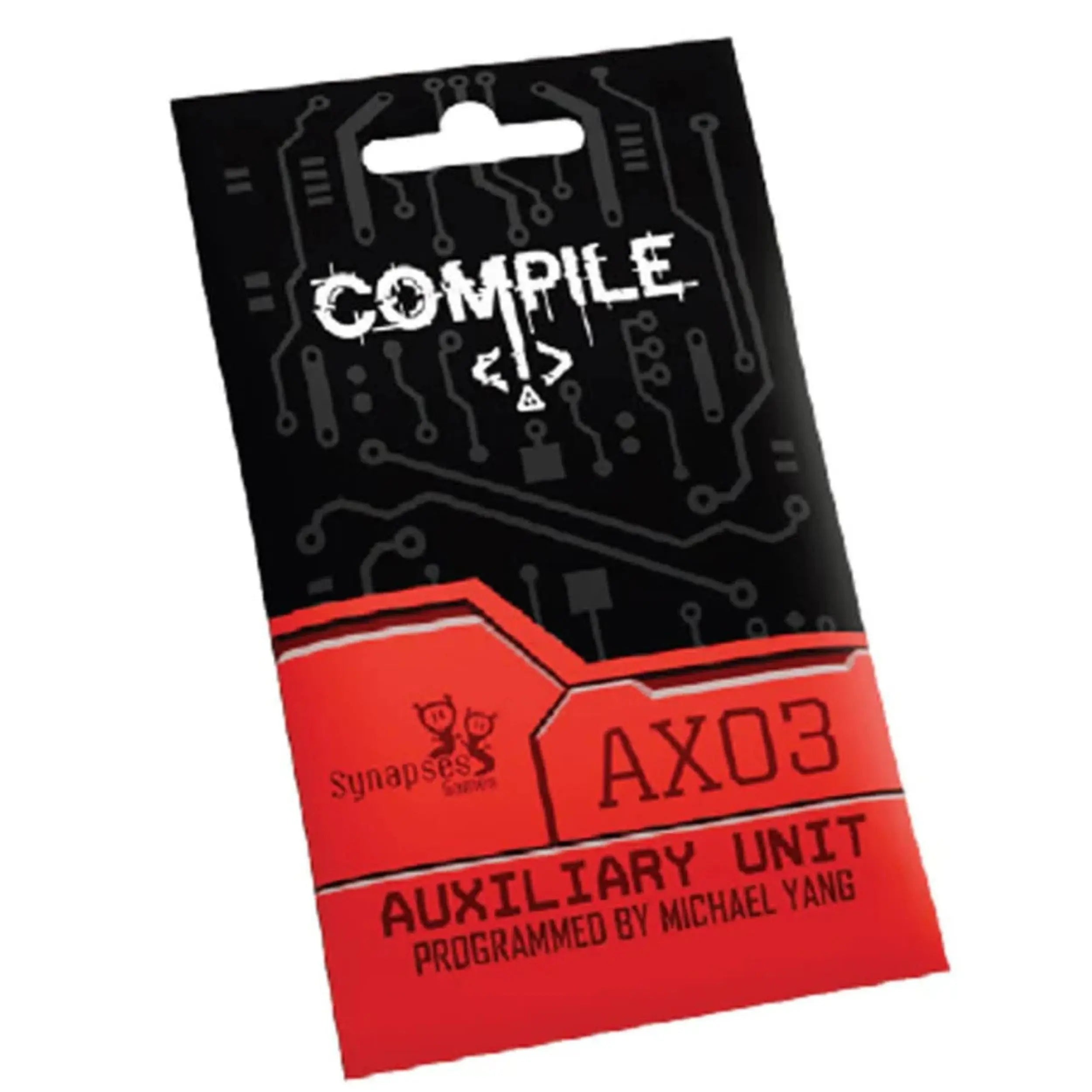
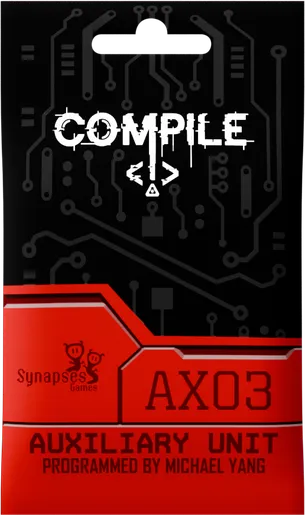
Compile: Aux 3 is the third expansion of the card game by Michael Yang, illustrated by Reza Afshar and published by Synapses Games. In Compile, two players take on the role of AIs competing to understand the world through abstract concepts like Dark, Water, Light. This expansion adds three new protocols: Flexible, Inert, Rigid, each with specific rules and different victory conditions.
At the table, you select three protocols, then play cards into command lines to reach thresholds and compile protocols before your opponent. Cards have multiple actions: you can use them to advance your protocols or sabotage your opponent's. Each protocol represents a concept to master, and the first to compile three wins the game. Flexible, Inert, and Rigid introduce tactical asymmetries that change the pace of the duel.
What they say abroad
Aux 3 brings tactical flexibility where structure was needed. The three new protocols change the pace of the core set.
— FroGames
Compile promises minimalist tension: few cards, many choices, zero mercy.
— FroGames

Compile: Aux 3
FrogScore · FroGames editorial rating · based on rules, international reviews and play sessionsThe three new protocols
Flexible, Inert, Rigid: three concepts to compile
Flexible
Adaptive protocol that changes thresholds based on context. It forces you to keep multiple lines open simultaneously, never a single strategy.
Inert
Stable protocol that resists sabotage. Once started, it's hard to stop, but slow to compile. Perfect for defensive players.
Rigid
Rigid protocol with precise conditions. If you follow the sequence, you compile fast. If you get the order wrong, everything restarts.
Command Line
The line of cards you build under each protocol. Each card played here counts towards the threshold, but can have effects that modify opponent protocols.
In half an hour, one of them will have understood something. The other will have learned where they went wrong. With Compile, it always happens.
A game in five moments
What happens at the table
Not the rules. The experience.
Protocol Draft
Each player chooses three protocols from the available pool. Those who pick Rigid know they will have to play precisely. Those who pick Flexible keep all options open. The game starts here, with a choice that impacts the next twenty minutes.
First Turns: Reading
Play cards, build command lines. No one attacks yet. You're trying to understand what the other player wants to do, which protocols they are pushing. It's a waltz of feints, but soon someone will have to show their hand.
First Protocol Compiled
One of the two compiles. The other realizes they must speed up or sabotage. The pace changes, cards start flying onto opponent protocols. It's no longer construction, it's demolition.
Final Duel
Both of you have two protocols compiled. Every card counts double. Flexible betrays you because it changes thresholds when unneeded. Rigid saves you if you played in order, otherwise everything resets. The tension is palpable.
Victory or Reset
One player compiles the third protocol. The other looks at their command line and realizes where they misprioritized. No one complains about luck: if you lost, it's because you misread. In five minutes, you play again.
How to play
The flow of each turn
Two actions per turn: build your protocols or dismantle your opponent's. Always in this order.
Draw one or more cards (depends on the number of active protocols). Look at your hand, decide which to play. Each card has two sides: one constructive, one destructive.
Place the card under one of your protocols. It counts towards the compilation threshold. If it has an action, resolve it: it can modify thresholds, block opponent protocols, or remove cards.
If a command line reaches the protocol's threshold, you compile. The protocol leaves play, and you have one less to manage. If you reach three, you win.
Pass to the other player. The cards you played remain, the effects persist. The duel continues until someone compiles three protocols.
Why it's different from others
Six mechanics that make a difference
Asymmetric protocols
Flexible, Inert, and Rigid are not interchangeable. They have different thresholds, specific effects, and opposing rhythms. Choosing the right trio is half the victory. The other half is understanding how to neutralize opponent protocols.
Multi-use cards
Every card can be played in at least two ways: to build or to sabotage. There is no wrong hand, only the wrong moment. Choosing when to do what is the heart of the game.
Inert's tactical resilience
Inert is designed to resist sabotage. Once started, it's hard to stop. Those who choose it play defensively, slowly accumulate cards, compiling when the opponent can no longer react. It's the tortoise against the hare.
Rigid's punitive rigidity
Rigid rewards you if you play in correct sequence: you compile quickly, with few cards. But if you get the order wrong or are interrupted, it resets to zero. It's the protocol for those who can read three turns ahead. Either you win easily, or you implode.
Protocol Draft
Before playing, each player chooses three protocols from a shared pool. The draft phase is quick but critical: if you pick all fast protocols, you must close quickly. If you pick defensive ones, you must withstand early rushes.
Direct control
There is no indirect interaction. You play cards that physically affect opponent protocols: remove cards, change thresholds, block compilations. You're not building your machine, you're dismantling theirs.
How it ends
How to win and how to lose
Immediate victory as soon as you compile three protocols. No draws, no half measures.
Victory
- You compile three protocols before your opponent by reaching the required thresholds
- You force your opponent to run out of deck without being able to compile
- You block all opponent protocols simultaneously, preventing legal moves
Defeat
- The opponent compiles three protocols while you have fewer
- You run out of cards without having compiled enough protocols
- You fail to manage priorities: you chase too many protocols, close none
Compile: Aux 3 is pure expansion: three protocols, zero tutorials. If you have the base game and want more asymmetry, it works. If you're looking for a standalone, start with the core set.
Frequently asked questions
FAQ about Compile: Aux 3
Is the base game required to play Compile: Aux 3?
Yes, it is mandatory. Aux 3 is an expansion: it adds three new protocols (Flexible, Inert, Rigid) but does not include the base cards, introductory rules, or necessary components to play. You must have Compile base, then integrate the new protocols into the available pool during the draft.
Can I play Aux 3 solo?
No, Compile is designed for two players. The system is based on direct control of opponent protocols and card-for-card dueling. There is no automa or unofficial solo mode.
How much does the game change compared to the core set?
The three new protocols add tactical asymmetry. Flexible introduces threshold variability, Inert resilience to sabotage, Rigid punishment/reward for correct sequence. The system remains identical, but protocol combinations change rhythm and strategy. If the core set seemed too linear, Aux 3 adds layers.
How long does a real game with Aux 3 last?
From the stated 30 to 45 minutes, but the first games with the new protocols go longer: you need to understand how Flexible and Rigid work, and the learning curve slows the pace. After three or four games, you'll be back to 30-35 minutes per duel.
Is it available in Italian?
No, this edition is in English. The cards have texts and references to concepts (Darkness, Water, etc.) in English. The rulebook is only in English.
Compile: Aux 3 is an expansion for the strategic card duel game Compile, designed by Michael Yang and published by Synapses Games. It adds three new protocols (Flexible, Inert, Rigid) to the available pool, introducing tactical asymmetry and new strategic combinations for 30-45 minute games for two players. The system is based on area majority mechanics, hand management, and multi-use cards, with direct interaction on opponent protocols. Requires the base game to function. Recommended age 14+. Available on FroGames.it.
Frequently Asked Questions
The answers you're looking for, no beating around the bush.
📸Do the images match the actual product?
The photos on the website often come from BoardGameGeek and are intended to give you an idea of the game. They may vary slightly from the version you receive. The content declared by the publisher is always binding.
📦Does the content of the box match what is indicated?
We always strive to provide the correct content, but minor variations are possible due to reprints or updates. The information comes directly from the publishers. If you have any questions, please contact us!
⏳How do pre-orders work?
Pre-order the game before release, payment is immediate, and the game is reserved for you. As soon as it arrives, we'll ship it right away! If there are any delays, we'll update you promptly.
🔒Can I trust buying here?
Absolutely! Secure payments, tracked shipments, and a team that loves board games as much as you do. If something goes wrong, we'll do our best to fix it.
🛠There's a problem with my order, what should I do?
Write to us now! Whether it's a missing part, damage, or an error, we'll help you resolve it as soon as possible. Your experience truly matters to us.