


Stonesaga
🐸 Dettagli da BoardGameGeek
Consiglio BGG sul numero di giocatori
Categorie
Meccaniche
Design & Art
Lingua
Pre-order - leggi i dettagli
🐸 Una rana saggia sa quando dividere l’ordine… e quando aspettare il salto giusto.








Pairs well with
FroGames — Moments You'll Remember
Every game is a generation. Every generation changes the valley forever. Fifty years from now, someone will open this box and find your story etched into the components.
WHAT IT'S ABOUT
A civilization that is born, survives, and is passed down through ice ages
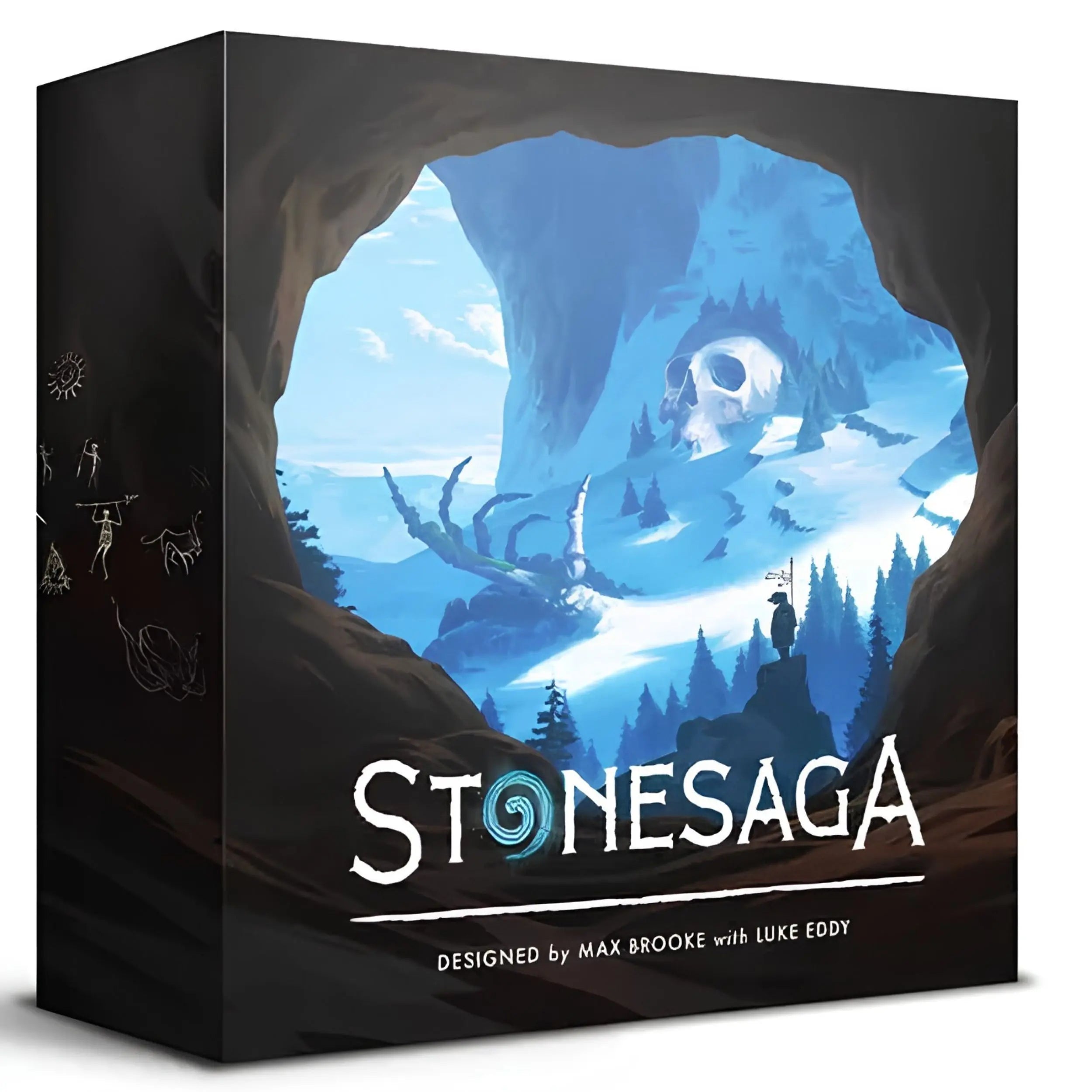
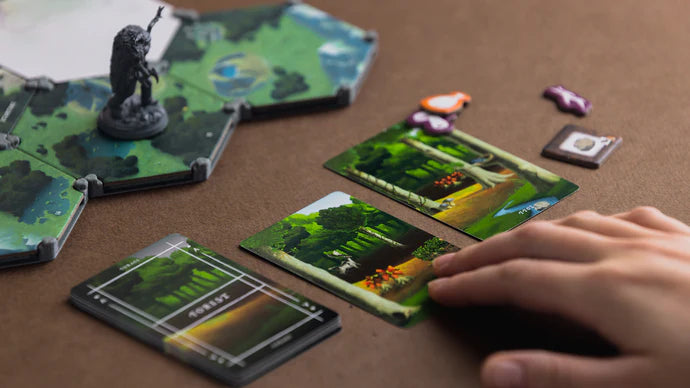
Designed by Max Brooke and Luke Eddy, Stonesaga is a cooperative legacy game set in a remote glacial valley, where you will guide generations of characters through successive eras. Each session covers one generation, and each generation leaves permanent marks on the components: buildings constructed, materials discovered, beasts encountered, choices passed down.
At the table, you create a prehistoric society that must survive crises, opportunities, and immortal creatures with their own instincts. Discover how to craft tools (do a pointed stick and a sharp stone make a spear?), build villages that grow from a tent and a bonfire into forges and libraries, and explore uncharted territories. The world responds to your actions: no two groups will experience the same story.
What they say abroad
A legacy game that celebrates discovery. Each game rewrites the rules of the valley.
— FroGames
The components change forever, but nothing is discarded. History is layered.
— FroGames

Stonesaga
The game officially supports solo play from the basic rules. The experience is complete: you manage multiple characters, confront immortal beasts, and build civilization generation after generation. It only lacks the shared discussion of long-term choices, but the persistence of the world works perfectly even alone.
FrogScore · FroGames editorial rating · based on rules, international reviews, and play sessionsYour survival tools
What you build, what you discover, what you face
Materials to discover
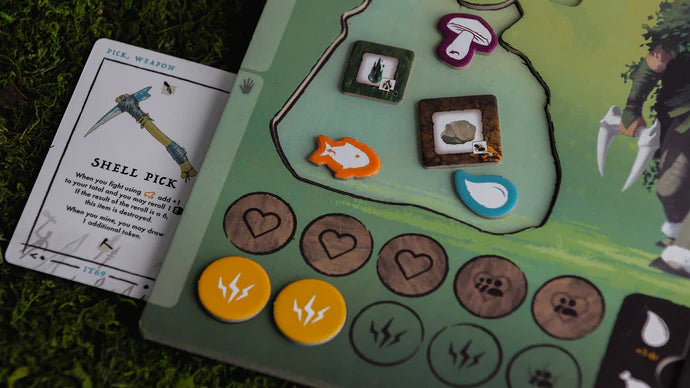
Stones, wood, fibers, bones. You don't know what can be crafted until you try. Each material has hidden properties that you discover by combining it with others. Recipes are layered session after session.
Permanent buildings
You start with a tent and a bonfire. You build forges, libraries, mills. Each building remains on the map for future generations. Society grows physically before you, component by component.
Immortal beasts
Gigantic creatures that follow their own instincts. They are not programmed enemies: they have needs that must be met. If you ignore them, they act. If you respect them, you coexist. Your choices define the relationship forever.
Generational characters
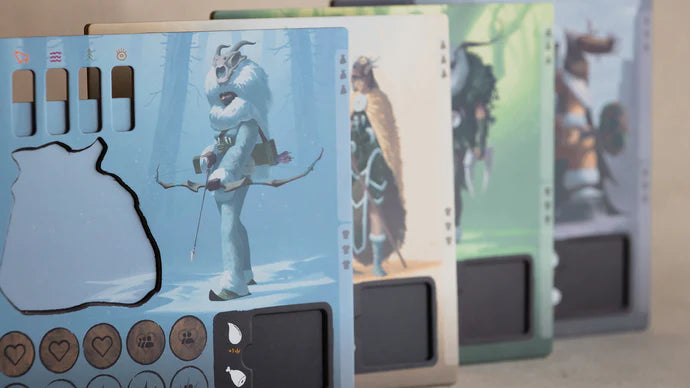
Each game is a new generation. Children inherit what their parents built. Skills are passed down, names are remembered. When a character dies, the valley remembers them.
Recommended sleeves 637 cards in 2 sizes ▼
If you play often, we recommend protecting your cards with clear sleeves to make them last a long time.
| Size | Quantity |
|---|---|
| 56 × 87 mm | 562 |
| 70 × 120 mm | 75 |
| Total cards | 637 |
A few years from now, you'll open this box and see a valley that exists in no other copy in the world. That's your story.
A game in five moments
What happens at the table
Not the rules. The experience.
The generation's need
Open the box and read the generation card. A new crisis or opportunity arises: perhaps a new building is needed, perhaps a beast has awoken. You decide together what this generation must do for the valley. The characters prepare.
The first failed crafting attempt
Someone tries to combine materials. Stone and wood? No. Stone and bone? Maybe. The system doesn't tell you what works: you discover by trying. The first invented spear will be a moment you remember. Every success is a true achievement.
The beast acts
You haven't met the needs of the immortal creature. It acts according to its instinct: it devastates a building, blocks a path, permanently changes the map. Now you must react. Future generations will inherit this wound.
Collective construction
You have gathered enough materials. You decide to build the library. The component is placed on the map, modified, marked with your generation. That piece of cardboard is now unique in the world. The next generation will start from here.
The generation concludes
Read the final event. Some choices were good, others not. Characters age, some die. Write their names on the legacy card. The valley has changed. Close the box. The next generation will start from here, in a week or a year.
How to play
The flow of each round
Each round follows a rhythm of needs, actions, and reactions. Beasts move, characters act, the world responds.
Immortal creatures act according to their instincts. They draw behavior cards, move, fulfill needs, or destroy. They are not scripted enemies: they have their own motivations.
Each character has actions based on four attributes: strength, dexterity, conviction, awareness. You explore, craft, build, fight. Actions are limited: plan well.
You combine materials to discover recipes. The game doesn't tell you what works: you try and discover. When you find a new combination, you record it for future generations. Crafting grows with you.
The valley reacts. Events, climate changes, new materials discovered. Some changes are permanent. Prepare for the next round. Time passes, history layers itself.
Why it's different from others
Six mechanics that make a difference
Real discovery crafting
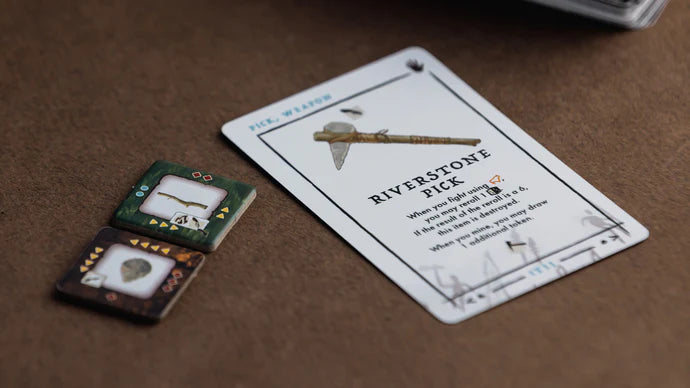
You don't have a list of recipes to unlock. You try combinations and discover what works. Do you think sharp stone + stick = spear? Use the crafting action and check. Each group will discover recipes in a different order. Crafting is true exploration, not grinding.
Persistent, layered world
Components are permanently modified but never discarded or destroyed. Building? You modify and place it. A beast devastates it? You mark it. Ten sessions from now, you'll look at the map and see the physical history of generations.
Seamless drop-in drop-out
Designed for changing groups. A player is missing? Someone else joins. The valley continues regardless of who is at the table. You can even pass the box to another group: they will inherit your choices and continue the story.
Beasts with instincts, not scripts
Immortal creatures don't follow preset enemy phases. They have needs to fulfill: hunger, territory, rest. If you ignore them, they act on their own. You can coexist, fight, or respect them. The relationship is emergent, not scripted.
Campaign without numbered envelopes
There is no linear path to follow. The campaign reacts to your choices: the events drawn depend on what you have built, which beasts you have faced, how the valley has changed. No group will experience the same sequence.
Unguided exploration
The valley has hidden areas, rare materials, secrets. They are not pointed out to you. If you're curious, you explore. If you focus only on the generational goal, you miss them. Stonesaga rewards those who look beyond the immediate mission.
How it ends
How you win and how you lose
Each generation has specific goals. But the true score is the valley you leave for future generations.
Generational Success
- You meet the needs of the generation (buildings built, crises resolved, beasts managed)
- Characters survive long enough to pass on knowledge
- Society grows: new recipes discovered, new territories explored, new permanent structures
Generational Collapse
- Too many characters die before passing on knowledge
- Beasts devastate critical buildings and society regresses
- The generation fails its main objective: future generations will inherit permanent consequences
Stonesaga doesn't end with one game. It ends when you decide to close the valley's book. Each group writes its own epic, etched into the components forever.
Frequently Asked Questions
Stonesaga FAQ
What happens if my group changes players between sessions?
Stonesaga is designed exactly for this. The drop-in drop-out system allows players to enter and exit freely: the valley continues, new characters represent members of society. You can play with a fixed group, a rotating group, or even pass the box to another group. The story remains consistent.
Are the components really modified permanently?
Yes. You build buildings, modify them, place them. You discover recipes, you write them down. Beasts damage areas, you mark them. But nothing is ever discarded or destroyed: components layer, overlap, evolve. Ten sessions from now, your box will be unique in the world.
How does discovery crafting work? Can I really try any combination?
Yes. You don't have a list of recipes to unlock. You use the crafting action, declare which materials you combine (e.g., sharp stone + stick) and check if it works according to the material rules. If it works, you discover the recipe and record it. Each group will discover things in a different order. It's true exploratory crafting.
How long does the full campaign last?
It completely depends on you. Each session is a generation (60-120 minutes). The campaign covers a narrative arc of eras, but it doesn't have a fixed number of sessions: you can play 10 generations or 50. The valley evolves until you decide to conclude the story. It's designed to last months or years.
Is it available in Italian?
This edition is in English. The game includes components with text (event cards, crafting cards, rulebook) and requires a good understanding of the language to manage discovery crafting and generational events. An official Italian edition is not currently planned.
Stonesaga is a cooperative legacy board game for 1-4 players, lasting 60-120 minutes, recommended age 13+, designed by Max Brooke and Luke Eddy for Open Owl Studios. Set in a prehistoric glacial valley, Stonesaga introduces a unique discovery crafting system: players discover recipes by trying combinations of materials, without predefined lists. The campaign is persistent: each generation of characters permanently modifies components (buildings built, territories explored, beasts faced), creating a unique story layered session after session. The game supports seamless drop-in drop-out, allowing groups to change players freely or even pass the box to other groups. No component is ever discarded: everything layers. Available on FroGames.it.
Stonesaga
Frequently Asked Questions
The answers you're looking for, no beating around the bush.
📸Do the images match the actual product?
The photos on the website often come from BoardGameGeek and are intended to give you an idea of the game. They may vary slightly from the version you receive. The content declared by the publisher is always binding.
📦Does the content of the box match what is indicated?
We always strive to provide the correct content, but minor variations are possible due to reprints or updates. The information comes directly from the publishers. If you have any questions, please contact us!
⏳How do pre-orders work?
Pre-order the game before release, payment is immediate, and the game is reserved for you. As soon as it arrives, we'll ship it right away! If there are any delays, we'll update you promptly.
🔒Can I trust buying here?
Absolutely! Secure payments, tracked shipments, and a team that loves board games as much as you do. If something goes wrong, we'll do our best to fix it.
🛠There's a problem with my order, what should I do?
Write to us now! Whether it's a missing part, damage, or an error, we'll help you resolve it as soon as possible. Your experience truly matters to us.