
Under the Leaves
🐸 Dettagli da BoardGameGeek
Consiglio BGG sul numero di giocatori
Categorie
Meccaniche
Design & Art
Lingua
Pre-order - leggi i dettagli
🐸 Una rana saggia sa quando dividere l’ordine… e quando aspettare il salto giusto.


Si abbina bene con
The FroGames Board
You place a forest tile. A chain of mushrooms forms. A bee arrives. Then a hummingbird. You flip the tile: underneath, a ladybug no one had seen. Your garden is alive.
WHAT IT IS
A garden that comes to life tile by tile
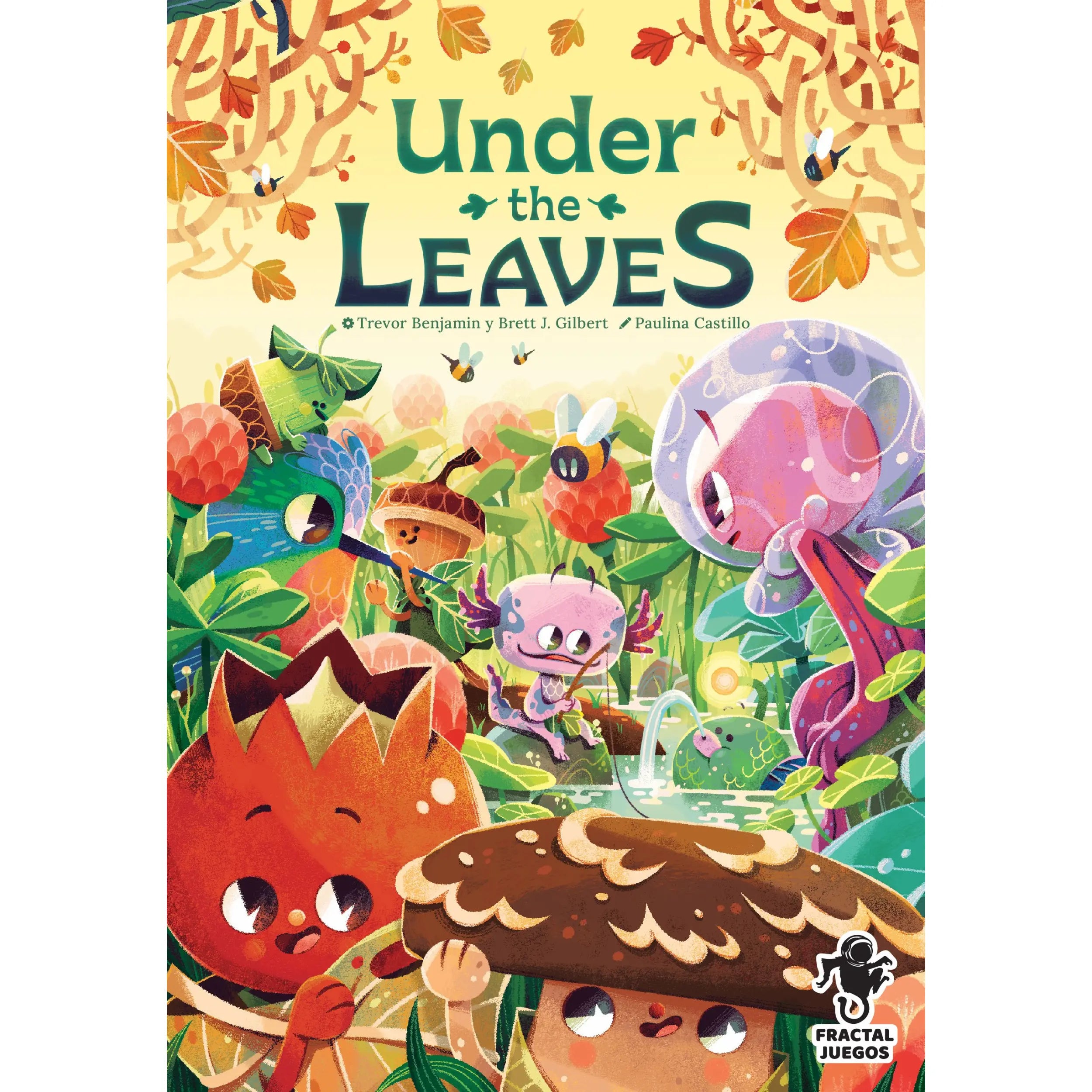
Designed by Trevor Benjamin and Brett J. Gilbert (Dinosaur Island, Junk Orbit) and illustrated by Paulina Victoria, Under the Leaves is a tile placement game that celebrates the hidden biodiversity of gardens. Published in 2025 by Fractal Juegos, the game asks you to build a living ecosystem piece by piece, observing how each element attracts new forms of life.
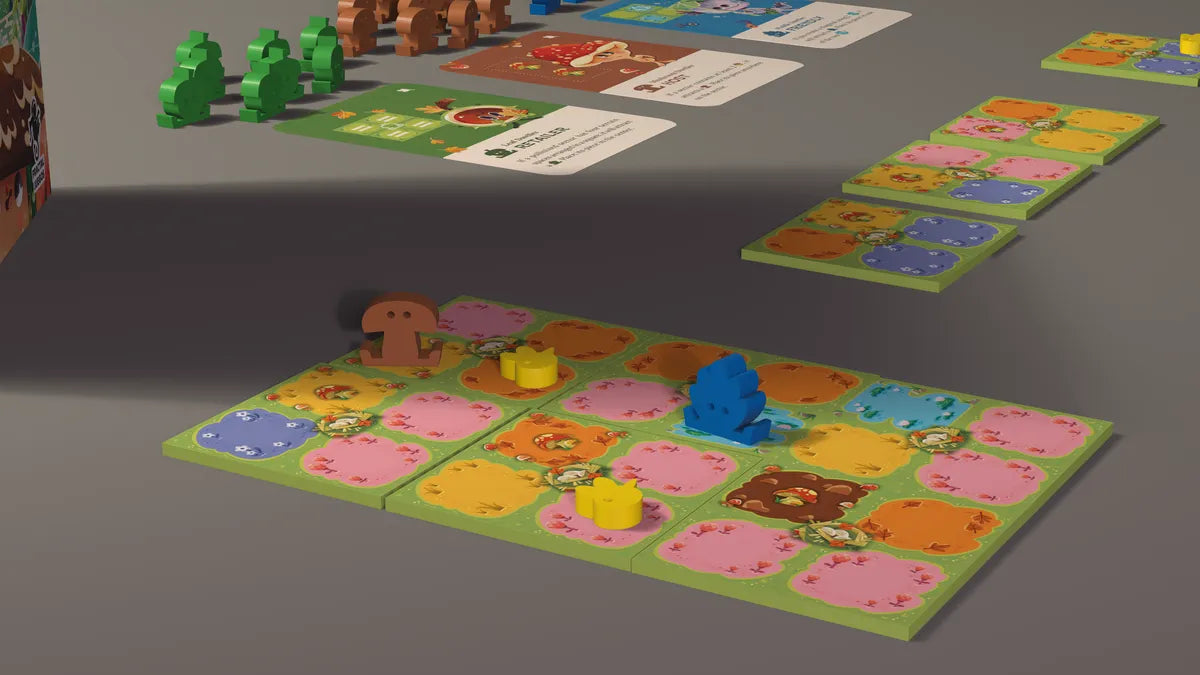
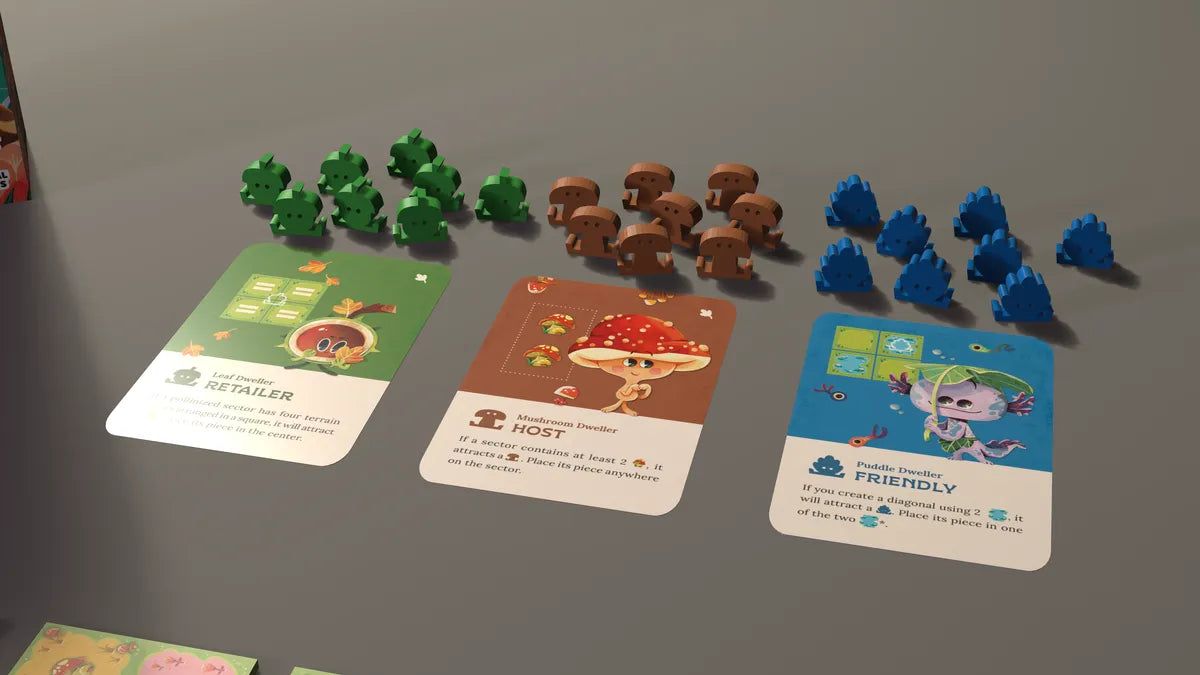
Each turn you place a garden tile, creating orthogonal chains of habitats (mushrooms, puddles, foliage). When a chain forms, new creatures arrive: hummingbirds, bees, microscopic insects living under the leaves. The player who has attracted the most living beings wins, but the scoring is not a simple sum: some inhabitants multiply each other, others only exist if you flip the tiles and look underneath.
What they say abroad
We haven't reviewed this game yet: it's a fresh 2025 release. This overview is based on the official description and declared mechanics. As soon as we've played a dozen games, we'll update with impressions from the table.
— FroGames
"If we maintain the health and diversity of our garden, it will fill up with life and become a refuge for fascinating creatures."
If we maintain the health and diversity of our garden, it will fill up with life and become a refuge for fascinating creatures.
— Fractal Juegos

Under the Leaves
FrogScore · FroGames editorial rating · based on rulebook, international reviews, and play sessionsThe inhabitants of your garden
Four types of life to attract
Hummingbirds and bees
Flying creatures arrive when you form chains of flowers or areas rich in nectar. They are visible, quick to place, give immediate points but do not multiply.
Mushrooms and puddles
Habitats that link orthogonally. The longer the chain, the more rare creatures you attract. Mushrooms host microorganisms, puddles amphibians and aquatic insects.
Hidden inhabitants
They live under the leaves: ladybugs, spiders, worms. You discover them by flipping the tiles. They are not always there, but when you find them, they are worth unexpected multipliers.
Complete ecosystem
At the end of the game, you count the total number of living beings, but some boost each other: a bee near a mushroom is worth double, a hummingbird in a garden with 3+ different habitats multiplies.
Come si gioca
Video dimostrativo di gameplay.
🎲How to playThe rules in four steps▼
How to play
The flow of each turn
Quick turns, dense choices. The game flows fast once you understand the combos.
Choose a tile from the common reserve and place it orthogonally to your personal garden. It must form chains of habitats of the same type (mushrooms with mushrooms, leaves with leaves, etc.).
If you have formed or extended a chain, take creature tokens from the reserve: hummingbirds, bees, insects. Some arrive automatically, others only if you meet specific conditions (e.g., chain of 4+ tiles).
You can flip an already placed tile to reveal any hidden inhabitants under the leaves. Not all tiles have them: it's a calculated risk. If you find something, you place it in your garden.
Replenish the common reserve with new tiles if necessary. The next player starts their turn. When the tiles run out, the final count is made, applying all ecosystem multipliers.
⏱️Your first gameThe chronicle, moment by moment▼
A game in five moments
What happens at the table
Not the rules. The experience.
First tiles, first doubts
Everyone places a garden tile in front of them. Some start with mushrooms, others with puddles. The tiles are small, colorful, beautiful. Someone asks: "How do you score points?". The answer is: attract as many creatures as possible. Simple, right? Spoiler: no.
The first chain
Someone forms the first orthogonal chain of 3 mushrooms. A bee arrives. A wooden token enters play. "Ah, so these are the points". Yes, but not only: it says that if there are flowers nearby, the bee is worth double. Everyone looks at their tiles with new eyes.
Flip tiles, discover secrets
Mid-game. Someone decides to flip a foliage tile to see if there's anything underneath. There's a hidden ladybug. They pick it up, place it. "Wait, are there others?". Everyone starts checking their already played tiles. Some find spiders, others nothing. The table gets lively.
The move that changes everything
One player places a puddle tile that completes two chains simultaneously: an amphibian and an aquatic insect arrive. Then they flip the tile: underneath, a worm. Three creatures in one turn. The others: "I hadn't seen that combo". Too late. The leading player's garden is a real ecosystem, the others are chasing.
Counting and final surprises
End of game. Count the creatures, apply the multipliers. Those who focused on biodiversity (many different types) beat those who only accumulated bees. Some discover they forgot a hidden inhabitant and lose by 2 points. Someone immediately proposes a rematch: "This time I'll start with a different strategy".
🐸Good to know beforeThree honest things, from friends▼
Good to know before
Three things you need to know
Multipliers are not intuitive
The scoring system seems simple (count the creatures), but the ecosystem multipliers require a second reading of the rulebook. Example: a bee is worth 1 base point, but 2 if it's near flowers, 3 if the garden has at least 4 different habitat types. In the first game, almost everyone miscalculates the final score.
Hidden tiles are a gamble
Flipping a tile to look for hidden inhabitants costs an action. If you find nothing, you've wasted your turn. The temptation to flip everything right away is strong, but statistically only 40% of tiles have something underneath. The winner usually only flips when they are almost sure.
With 4 players, it slows down
With 2 players, the game is fast-paced (25 real minutes). With 4, if everyone suffers from analysis paralysis, it can take up to 50 minutes. It's not a design flaw, but if your group wants quick fillers, play it with 2-3 players.
🏆Victory and defeatWhat the ending rewards▼
How it ends
How to win
The game ends when the garden tiles run out. Then the creatures are counted and multipliers are applied.
Victory
- The player with the highest total of creatures (base + multipliers) wins
- Multipliers apply for biodiversity (number of different habitat types) and synergies (specific creatures near specific habitats)
- Hidden inhabitants discovered by flipping tiles count as normal creatures but often have their own multipliers
Common mistakes that cost victory
- Focusing on only one type of habitat: biodiversity multipliers reward variety
- Flipping too many tiles too early: you waste turns looking for inhabitants that might not be there
- Ignoring flying creatures (hummingbirds, bees): they give immediate points and are more reliable than hidden inhabitants
Under the Leaves rewards those who observe, plan, and know when to take risks. Not the most aggressive player, but the one most attentive to the ecosystem.
💬Frequently asked questionsQuick answers before checkout▼
Frequently asked questions
FAQ about Under the Leaves
What mechanics does Under the Leaves use?
Orthogonal tile placement with chaining, conditional multipliers, and risk management (flipping tiles to find hidden inhabitants). The mechanics are simple, but combos require planning.
Is it suitable as a gateway game for people who never play games?
Yes, but with a clarification: the nature theme and delicate illustrations greatly help engage non-gamers, but the scoring system with multipliers requires at least one test game to be understood. It's not as immediate as Ticket to Ride, but more accessible than Carcassonne.
How much does luck factor into tile drawing?
Less than it seems. The tiles are public, so you can plan based on what's available. The real luck is in the hidden inhabitants under the tiles, but they are optional: you can win perfectly well without flipping a single one.
Does it scale well from 2 to 4 players?
With 2 players, it's tense and fast (the game it's best designed for). With 3, it maintains a good pace. With 4, it can slow down if the group tends to overthink, but the common tile reserve becomes more competitive and interesting.
Is it available in Italian?
This edition is in English. The text on the tiles is minimal (icons), the rulebook is in English but the mechanics are visual. For Italian players with school-level English, it's manageable after reading the manual.
The people behind the game
Who invented it, who designed it, who publishes it — and what else they've done.
Under the Leaves is a tile-placement board game for 2-4 players, lasting 25-40 minutes, ages 8+. Designed by Trevor Benjamin and Brett J. Gilbert (Dinosaur Island), published by Fractal Juegos in 2025. It uses chaining, orthogonal connections, and risk management mechanics to build a biodiverse garden that attracts hummingbirds, bees, insects, and hidden creatures. Medium-light weight (2/5), ideal as a strategic gateway or family game with tactical depth. Available on FroGames.it with immediate shipping.
Under the Leaves
Frequently Asked Questions
The answers you're looking for, no beating around the bush.
📸Do the images match the actual product?
The photos on the website often come from BoardGameGeek and are intended to give you an idea of the game. They may vary slightly from the version you receive. The content declared by the publisher is always binding.
📦Does the content of the box match what is indicated?
We always strive to provide the correct content, but minor variations are possible due to reprints or updates. The information comes directly from the publishers. If you have any questions, please contact us!
⏳How do pre-orders work?
Pre-order the game before release, payment is immediate, and the game is reserved for you. As soon as it arrives, we'll ship it right away! If there are any delays, we'll update you promptly.
🔒Can I trust buying here?
Absolutely! Secure payments, tracked shipments, and a team that loves board games as much as you do. If something goes wrong, we'll do our best to fix it.
🛠There's a problem with my order, what should I do?
Write to us now! Whether it's a missing part, damage, or an error, we'll help you resolve it as soon as possible. Your experience truly matters to us.