
Keep the Heroes Out!
🐸 Details from BoardGameGeek
Consiglio BGG sul numero di giocatori
Categorie
Meccaniche
Design & Art
Lingua
Si abbina bene con
The FroGames Review
The heroes are breaking through the east door. You have three cards in hand, two wounded goblins, and the main treasure is exposed. Someone at the table suggests sacrificing the north room. Someone else says no, we have a plan. You had a plan.
WHAT IT IS
The first tower defense game where you defend THE dungeon, not raid it
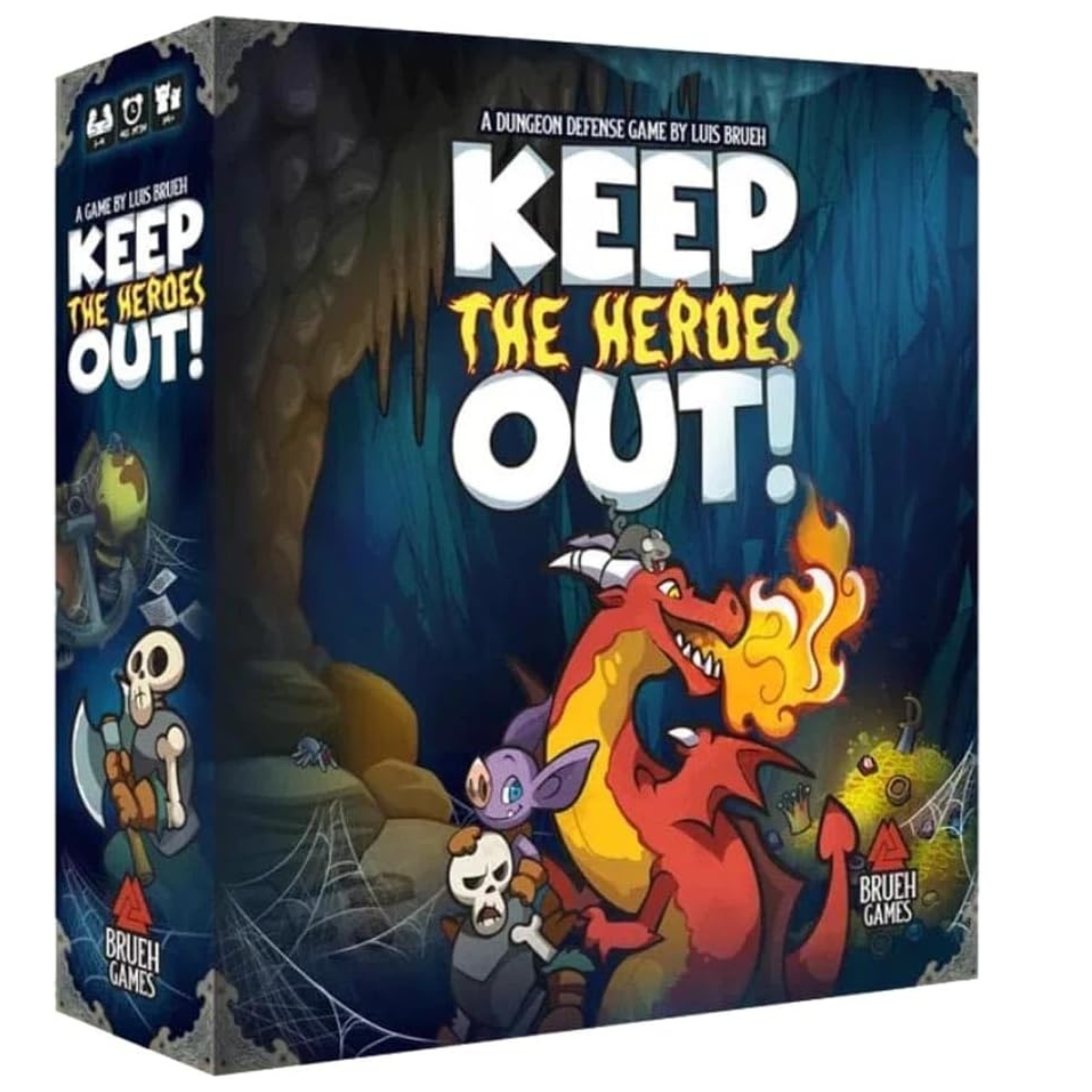
Luís Brueh (designer and artist) flips the fantasy cliché: in Keep the Heroes Out! you are the monsters, not the heroes. Your dungeon is your home, you earned those treasures through hard work, and those invaders with their shiny swords are just organized thieves. The game was released in 2022 after a successful Kickstarter and brings the structure of digital tower defense games to the table: waves, tactical positioning, and limited resources.
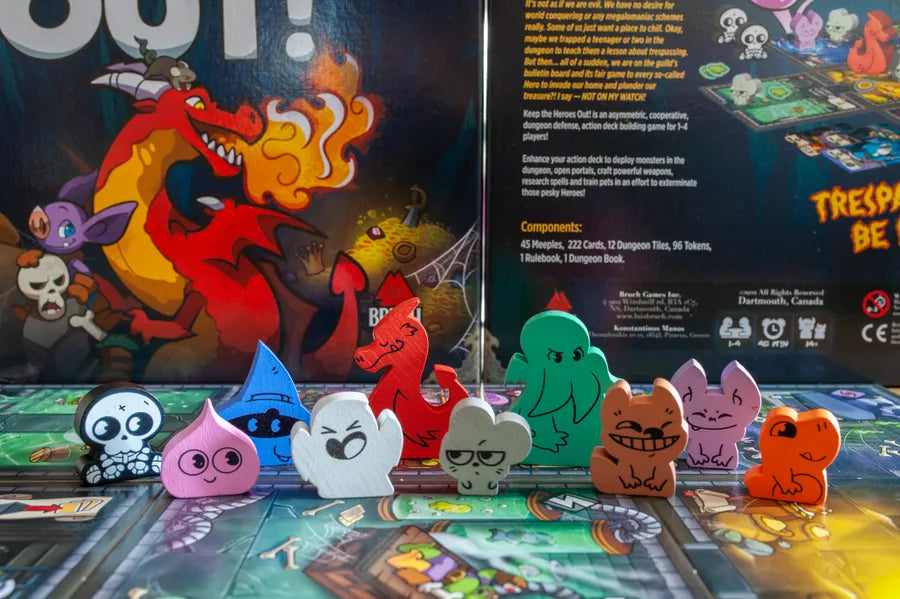
Each player chooses a monster boss with unique powers, building their own deck by drawing 5 cards per turn to move units, activate rooms, and attack heroes. Between turns, the hero deck draws and advances the invaders toward the treasures. If you protect the main treasure for two full waves, everyone wins. If it gets stolen, everyone loses. Pure cooperation with a modular board and scenarios of increasing difficulty.
What they're saying abroad
"A tower defense game where you're the monsters is a brilliant twist that actually works."
A tower defense game where you're the monster is a brilliant twist that actually works.
— Meeple Mountain
Initial approach: the game promises asymmetric cooperative defense with tactical depth. The review will be updated after in-depth testing.
— FroGames

Keep the Heroes Out!
The game officially supports solo play by controlling multiple bosses. The experience is complete: you manage multiple decks, and the tactical pressure remains high. It only misses out on the cooperative debate over which room to sacrifice, but the optimization challenge remains intact.
FrogScore · FroGames editorial review · based on rulebooks, international reviews, and gaming sessionsWhat you have in hand
Four types of action cards that keep the defense standing
Movement Cards
Move your monster units between dungeon rooms. Bad positioning means heroes running free toward the treasure; good positioning creates lethal ambushes.
Room Activation Cards
Every room on the modular board has unique powers: traps, summons, buffs. You need to be in the right room with the right monster to activate it at the right moment.
Attack Cards
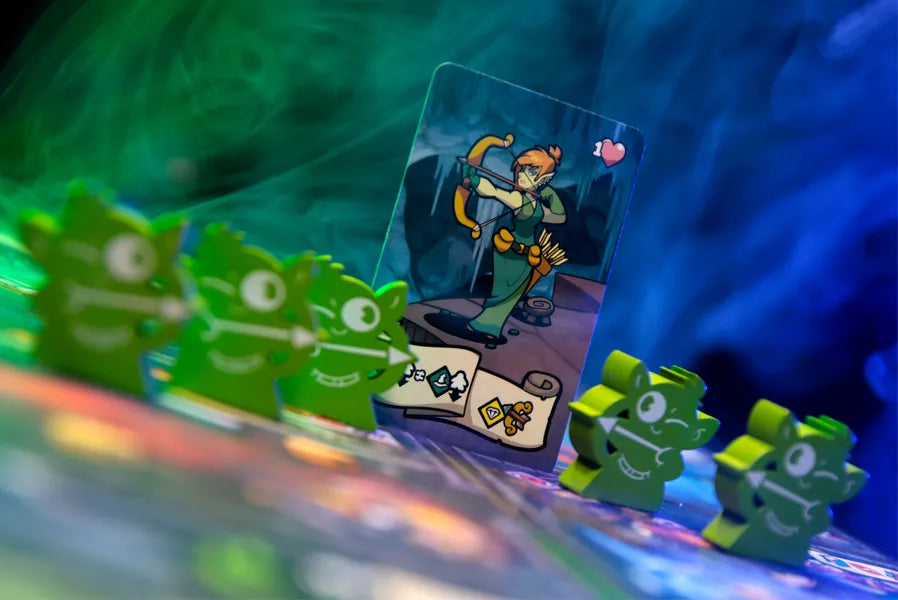
Inflict damage on invading heroes. Some heroes have armor, others heal themselves, others summon reinforcements when they die. Knowing WHO to strike first is crucial.
Deck Upgrade Cards
Cooperative deck building: add more powerful cards drawn from the common pool to your deck. Balancing specialization and versatility wins the final waves.
Come si gioca
Video dimostrativo di gameplay.
🎲How to playThe rules in four moves▼
How to play
The flow of every round
A round is a player-hero cycle repeated until the wave ends or the treasure falls.
Each player draws their own hand. The cards show available actions: movement, attack, room activation, buff. You cannot keep cards between turns; you must play them all or discard them.
Move your monster units, attack heroes in the same room, activate the powers of the rooms where you are present. Coordinate with the other players: actions can be combined. Once your turn is over, discard everything.
After each player, cards are drawn from the hero deck. The cards dictate the movement and actions of the invaders: they advance toward the treasures, attack monsters, summon reinforcements. There is no complex AI; the cards do everything.
If the main treasure is stolen (a hero reaches it and exits), you lose immediately. If you finish the second wave with the treasure still in the dungeon, you all win. Wave finished = new setup with stronger heroes.
⏱️Your first gameThe chronicle, moment by moment▼
A game in five moments
What happens at the table
Not the rules. The experience.
Setup and the illusion of control
Assemble the modular board according to the scenario, choose the monster bosses (each with a starting deck and unique powers), place the treasures. The dungeon looks safe. The heroes are still outside. You have two minutes to plan the initial defense before everything goes up in flames.
First wave: learning to lose rooms
The hero deck begins drawing. The invaders enter from three doors at once. Someone at the table says, "I'll cover East," someone else, "I'll take West." No one has enough cards to cover everything. The north room falls. It’s the first time you realize you will have to sacrifice some rooms.
Mid-game: desperate deck building
You've pushed back half a wave but your personal decks are still weak. You need to upgrade cards from the common reserve: who draws heavy attacks? Who takes mobility? Who specializes in room activations? A wrong choice here means a lost second wave.
The legendary hero arrives
End of the first wave: the boss hero with special abilities enters. They have more health, move differently, ignore traps. Everything you've learned works less. Someone burns two cards to stop them. Someone else yells, "No, wait." Too late. The boss hero advances.
Last defense or total collapse
Second wave, final turns. The main treasure has a hero two spaces away. You have one attack card each. Coordinate your final move: who activates the trap room, who blocks physically, who finishes the target. If it works, you all win. If someone messes up the order, the treasure vanishes and you lose.
🐸Know before you buyThree honest things, from friends▼
Know before you buy
Three things you won't expect
Hero drawing can be brutal
The hero deck draws randomly: in some games the invaders focus on one door, in others they spread out. Two consecutive unlucky draws can collapse a perfect defense. It is not a design flaw, it is the price of tension, but be aware: some losses will feel unfair.
First scenario is easy, then difficulty jumps
The introductory scenario can be beaten in two games. The second scenario significantly raises the difficulty: stronger heroes, more exposed treasures, less margin for error. The jump can be frustrating: the game doesn't scale gradually, it skips in steps. Prepare to lose several times before you adapt.
Asymmetric bosses, but not all equal
Each monster boss has unique powers and a different starting deck. On paper, it's full asymmetry, but in practice some bosses are objectively stronger in certain scenarios. It's not broken, but expect to discover dominant combos and weak bosses after 4-5 games.
🏆Victory and defeatWhat the ending rewards▼
How it ends
Cooperative victory or total defeat
Keep the Heroes Out! has binary conditions: either you all win or you all lose. There are no intermediate scores.
Victory (cooperative)
- Survive the complete second wave with the main treasure still in the dungeon
- Heroes in play are defeated or blocked before stealing the treasure
- Protect enough secondary treasures to prevent automatic defeat conditions (depends on the scenario)
Defeat
- A hero steals the main treasure and leaves the dungeon (immediate defeat)
- Too many secondary treasure rooms fall into the hands of the heroes (varies by scenario)
- The hero deck runs out before the wave ends (this means you slowed down too much, the heroes win by default)
It's a tower defense in reverse, where defense is desperate and cooperation is not optional. It works.
💬Frequently asked questionsQuick answers before the checkout▼
Frequently asked questions
FAQ on Keep the Heroes Out!
What mechanics does Keep the Heroes Out! use?
Cooperative deck building (each boss builds their own deck), area movement (move monster units between rooms), automatic enemy actions (the hero deck manages invaders without complex AI), modular board (each scenario sets up different rooms), asymmetric powers (each boss has unique abilities). It's a tabletop tower defense with hand management and pure cooperation.
Does it work well solo or do I need to play with others?
The solo mode is official: you control two or more bosses simultaneously. The tactical experience is complete, the pressure from the heroes remains high, the optimization challenge doesn't change. It only loses the cooperative discussion on which room to sacrifice. If you like tactical puzzles with a timer, solo works great. Rating 4/5 as a solo experience.
How long does a game really last?
40 minutes if you know the rules and play smoothly. First game 60-70 minutes including setup and reading cards. The games don't drag on much: you either win by the second wave or you lose before then. It's not a game that drags on.
Do the scenarios change the game enough?
Yes: every scenario changes the dungeon layout, hero composition, secondary objectives, and treasure placement. It's not just a higher numerical difficulty; the defense strategy changes. Scenario three requires opposite tactics to scenario one. The base game has enough content for 15-20 games before it repeats.
Is it available in Italian?
This edition is in English. Text on the cards is present (hero names, room powers, boss abilities), so reading English is required. There are currently no official Italian editions or verified fan translations. The language dependency is medium: once you learn the main cards, you play from memory.
The people behind the game
Who invented it, who designed it, who publishes it — and what else they have done.
Keep the Heroes Out! is an asymmetric cooperative game for 1-4 players (ages 10+, duration 40 minutes) designed by Luís Brueh and published by Brueh Games Inc. in 2022. Each player controls a monster boss with unique powers and defends the dungeon from invading heroes using cooperative deck building, area movement, and modular board mechanics. The game flips the fantasy cliché: you are the monsters, the heroes are the villains. The wave structure and the automatic hero deck create constant tower defense tension without the need for apps or complex artificial intelligence. Available on FroGames.it.
Keep the Heroes Out!
Frequently Asked Questions
The answers you're looking for, no beating around the bush.
📸Do the images match the actual product?
The photos on the website often come from BoardGameGeek and are intended to give you an idea of the game. They may vary slightly from the version you receive. The content declared by the publisher is always binding.
📦Does the content of the box match what is indicated?
We always strive to provide the correct content, but minor variations are possible due to reprints or updates. The information comes directly from the publishers. If you have any questions, please contact us!
⏳How do pre-orders work?
Pre-order the game before release, payment is immediate, and the game is reserved for you. As soon as it arrives, we'll ship it right away! If there are any delays, we'll update you promptly.
🔒Can I trust buying here?
Absolutely! Secure payments, tracked shipments, and a team that loves board games as much as you do. If something goes wrong, we'll do our best to fix it.
🛠There's a problem with my order, what should I do?
Write to us now! Whether it's a missing part, damage, or an error, we'll help you resolve it as soon as possible. Your experience truly matters to us.