
Brick & Mortar
🐸 Details from BoardGameGeek
Consiglio BGG sul numero di giocatori
Categorie
Meccaniche
Design & Art
Lingua

Si abbina bene con
FroGames — Moments You'll Remember
That feeling when you bought at the right time, sold at the perfect moment, and your opponent is giving you the evil eye because they just crashed the market. That's Brick & Mortar: margins, timing, and a few whispered calculations.
WHAT IT'S ABOUT
A game of unlikely shops and unlikely margins
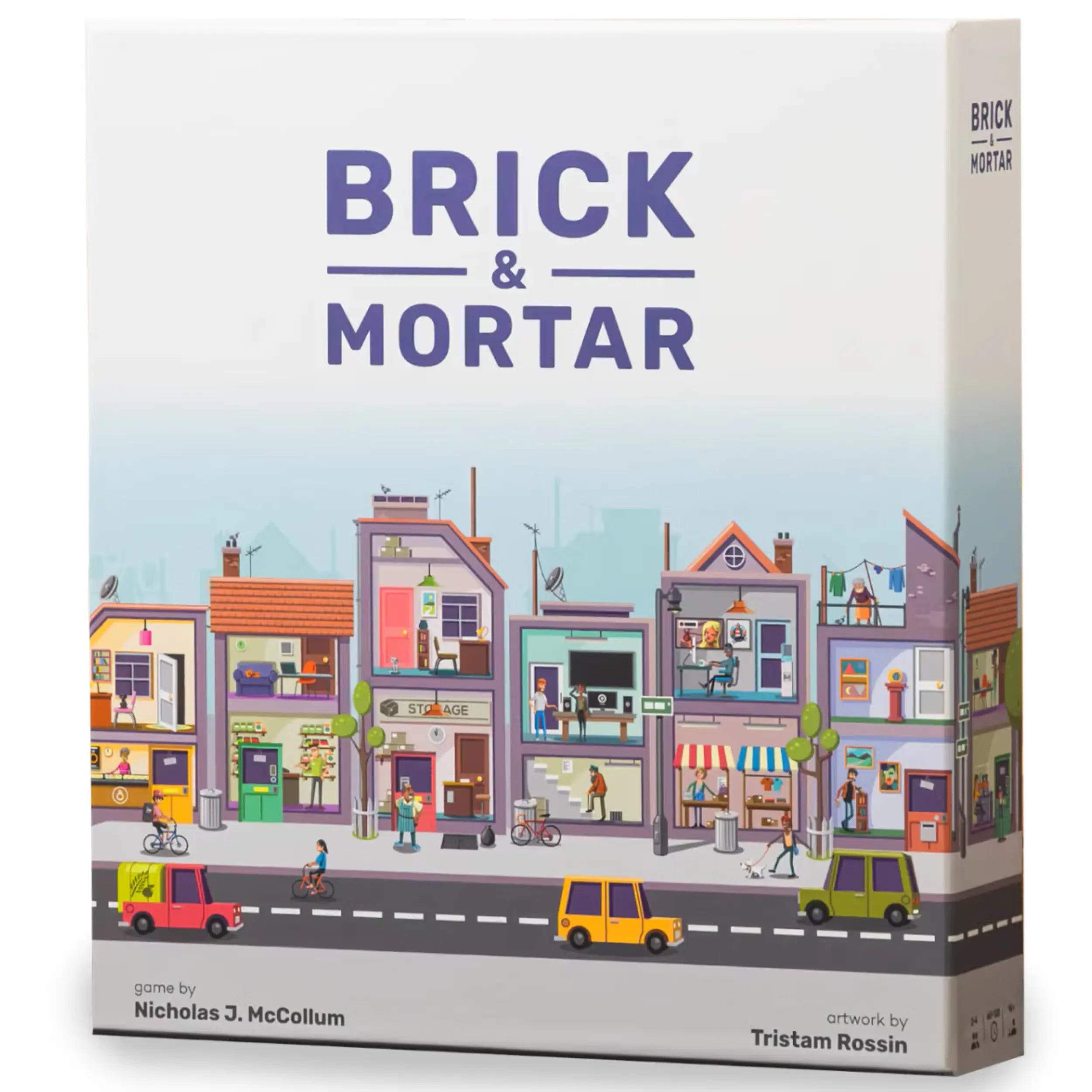
Designed by Nicholas J. McCollum with illustrations by Tristam Rossin, Brick & Mortar is an economic game where each player manages a small empire of quirky shops. Published by Octoraffe Games in 2021, the game focuses on a simple idea: buy low, sell high, and make sure others buy high and sell low.
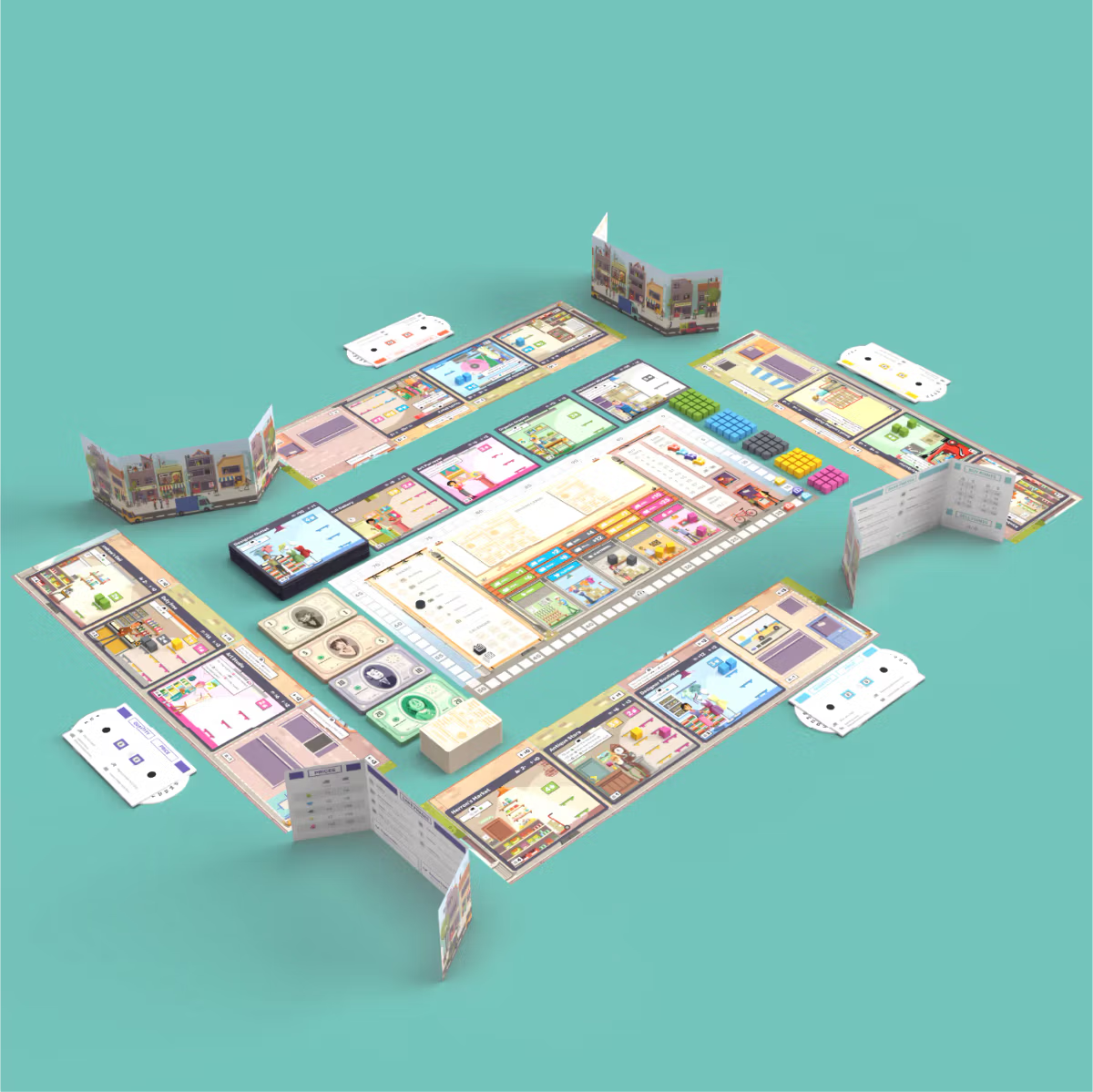
At the table, you manage a building of shops, each with unique rules and advantages. Each round, you speculate on resources, manipulate the market, sell what you can, and invest in victory points. Everything happens simultaneously: cards face down on the table, reveal, and then you count your margins while watching what everyone else did. Your choices change the market for everyone, and vice versa.
What they're saying abroad
A game designed for those who love numbers, margins, and market speculation.
— FroGames
Brick & Mortar rewards those who can read the table and anticipate others' moves. It's pure economics, no excuses.
— FroGames

Brick & Mortar
FrogScore · FroGames editorial rating · based on rules, international reviews, and play sessionsThe ingredients of your empire
Shops, resources, and the market changing beneath your feet
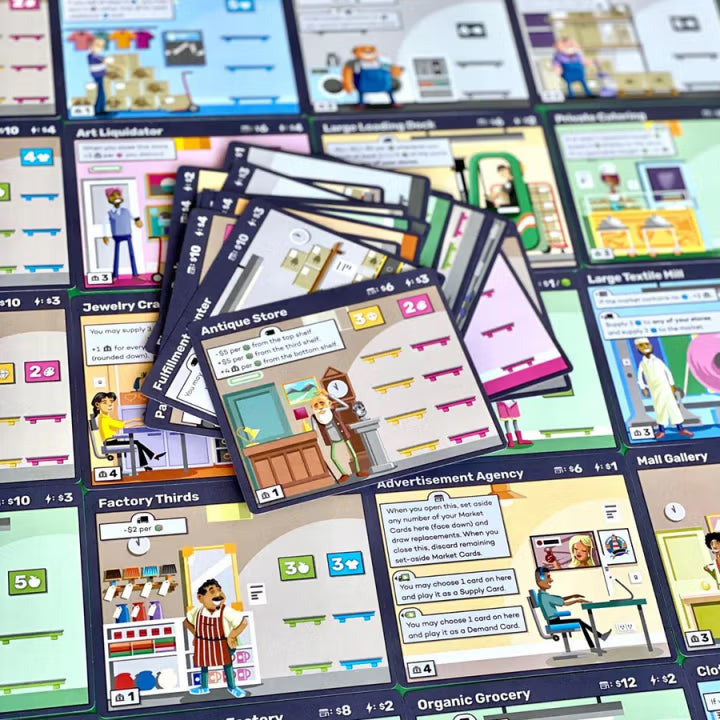
The shops
Each shop has its own rules: some only sell certain resources, others offer discounts or bonuses. The more you build, the more combos you create (and the more exceptions you have to keep in mind).
The resources
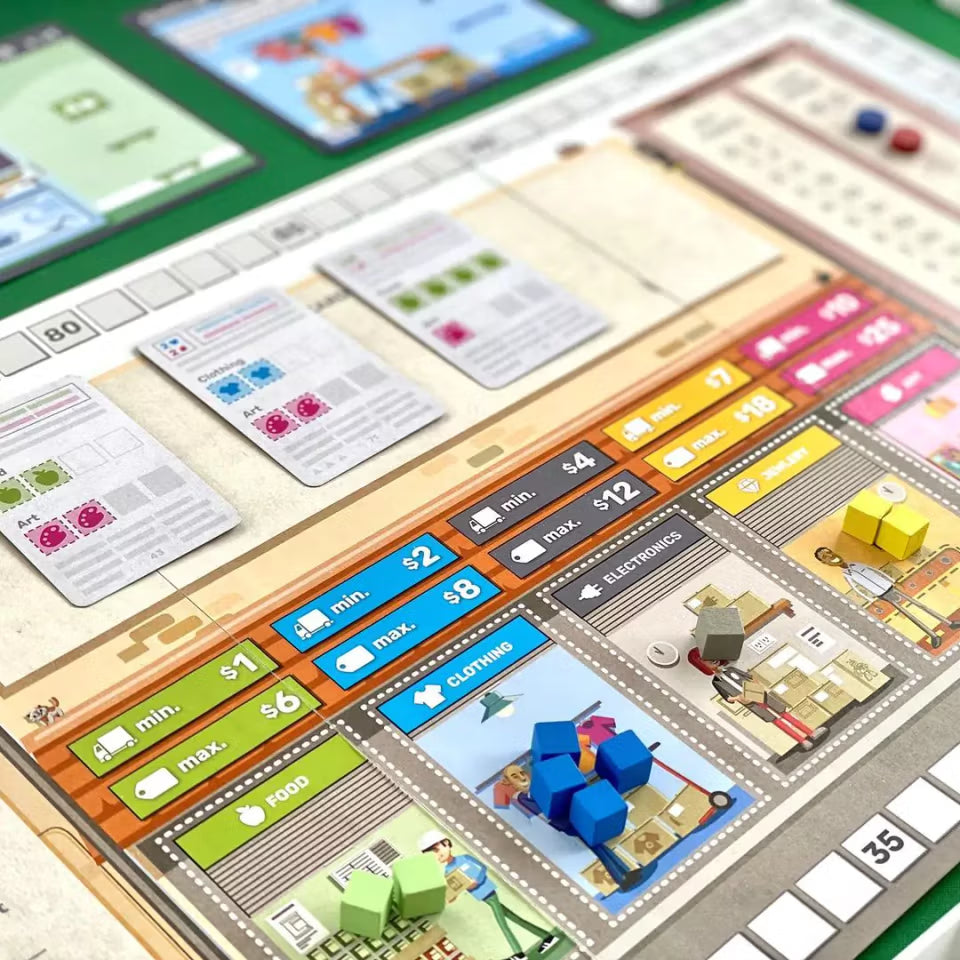
The market features four types of resources. Their value changes each round based on what players do. Buying low and selling high is the game. Mistiming is ruin.
Secret auctions
Each round you play cards face down to determine the market, speculate, and sell. Simultaneous reveal. No one knows what others will do until it's too late.
Victory points
It's not enough to make money. You have to invest it in victory points (which are a resource like any other). The player who accumulates the most equity in shops and points wins.
Recommended sleeves 84 cards in 1 size ▼
If you play often, we recommend protecting your cards with clear sleeves to make them last longer.
| Size | Quantity |
|---|---|
| 44 × 67 mm | 84 |
| Total cards | 84 |
In a few hours, you'll have done the math three times, cursed at least twice, and realized that someone at the table plays the stock market better than you do.
Come si gioca
Video dimostrativo di gameplay.
A game in five acts
What happens at the table
Not the rules. The experience.
The first store
Everyone starts with a basic store. Nobody knows yet what others are building. The first moves are cautious: you buy some resources, test the market, try to understand who is speculating on what. Silence, whispered calculations.
The market moves
After the first round, someone made a good deal. Someone else bought too expensively. The market starts to fluctuate based on everyone's choices. You realize that your actions change the price of resources for others. And vice versa.
Stores multiply
Mid-game, everyone has three or four stores. Each store has different rules: one sells only wood, another gives you a discount on metal, a third converts resources into points. You start building combos, but also forgetting some rules.
Speculation
Someone makes a move that crashes the value of a resource. Someone else rubs their hands because they had already sold everything the round before. Someone else curses. This is the moment you realize that Brick & Mortar is a game of timing, not luck.
The final count
End of game. You count victory points, sum up the equity of the stores. Someone wins by a narrow margin. Someone else discovers they invested too late. Everyone checks the counts at least twice to be sure. It's over, but already thinking about the next game.
How to play
The flow of each round
Each round is a simultaneous sequence of hidden choices, reveals, and consequences.
Everyone plays hidden cards to influence the value of resources. Simultaneous reveal. The market updates based on all cards played.
You buy resources from the market using your money. Variable prices. If you buy a lot, the price goes up. If everyone buys the same thing, it goes up even more.
Sell the resources you have in your stores (if the stores accept them). Invest money in victory points or new stores. Unsold resources remain in stock.
Build new stores, activate special abilities, reorganize your building. Each store has advantages and restrictions. The more you have, the more you need to optimize.
Why it's different from others
Six mechanics that make a difference
Secret auctions
Everyone plays hidden cards simultaneously. No one knows what others will do until they are revealed. Bluffing is possible, but risky. Timing is everything.
Dynamic market
The value of resources changes every round based on all players' choices. It's not random: it's manipulable. If you predict what others will do, you win. If you're wrong, you lose money.
Asymmetric stores
Each store has its own rules. Some sell only certain materials, others convert resources, others give bonuses. No two buildings are alike in a game.
Victory points as a resource
Victory points are not just a score: they are a resource you buy and sell like others. Investing too early depletes your liquidity. Investing too late makes you lose. A delicate balance.
Tight margins
Brick & Mortar is a game of tight margins. Every dollar counts. Every losing round hurts. It's not a game where you recover with a stroke of luck.
Variable turn order
Turn order changes based on how much money you have. Those with less go first (tactical advantage). Those with more go later (strategic advantage). Balancing the two is crucial.
How it ends
How to win and how to lose
Brick & Mortar is played for a fixed number of rounds. At the end, whoever has the most points (between victory points and store equity) wins.
Victory
- Accumulate more victory points than others by investing money during the game
- Build high-value stores (each store is worth points at the end of the game)
- Speculate on the market: buy low, sell high, and do it better than others
Defeat
- Invest too early in points and run out of liquidity to speculate
- Build too many expensive stores without selling enough to recover
- Misread the market and buy resources that then plummet in value
Brick & Mortar is a game of calculation, timing, and reading the table. It doesn't forgive mistakes, but it rewards those who can anticipate others' moves. If you love pure economic games, this is it.
Frequently asked questions
Brick & Mortar FAQ
Is it suitable for those who have never played an economic management game?
No. Brick & Mortar is a game for those already familiar with mechanics like auctions, speculation, resource management. The rules can be explained in 20 minutes, but understanding what to do requires experience. It is not a gateway game.
How long does a game last?
Between 60 and 120 minutes, depending on the number of players and the group's speed. The first games will be slower (calculations, store exceptions). From the second game onwards, it shortens.
Does it work well with two players?
Yes, but the dynamic changes. In two, the market is more predictable (less chaos, more control). In three or four, speculation becomes more unpredictable and risky. Both experiences work, but they are different.
Is there downtime between turns?
Little. Actions are simultaneous (hidden cards, then reveal). Downtime only occurs during the store management phase, but even there everyone works in parallel. It's not a game where you wait 10 minutes for someone else's turn.
Is it available in Italian?
No, this edition is in English. The text on the cards is minimal (resource names, icons), but the rulebook and store abilities require a good understanding of written English.
Brick & Mortar is an economic management board game for 2-4 players aged 12 and up, with games lasting 60 to 120 minutes. Designed by Nicholas J. McCollum and published by Octoraffe Games, the game uses mechanics of secret auctions, resource speculation, and market manipulation. Each player manages a building of asymmetric stores, buys and sells resources in a dynamic market, and invests in victory points. Brick & Mortar is a game of tight margins, perfect timing, and reading the table, ideal for those who love complex and competitive economic management games. Available on FroGames.it.
Frequently Asked Questions
The answers you're looking for, no beating around the bush.
📸Do the images match the actual product?
The photos on the website often come from BoardGameGeek and are intended to give you an idea of the game. They may vary slightly from the version you receive. The content declared by the publisher is always binding.
📦Does the content of the box match what is indicated?
We always strive to provide the correct content, but minor variations are possible due to reprints or updates. The information comes directly from the publishers. If you have any questions, please contact us!
⏳How do pre-orders work?
Pre-order the game before release, payment is immediate, and the game is reserved for you. As soon as it arrives, we'll ship it right away! If there are any delays, we'll update you promptly.
🔒Can I trust buying here?
Absolutely! Secure payments, tracked shipments, and a team that loves board games as much as you do. If something goes wrong, we'll do our best to fix it.
🛠There's a problem with my order, what should I do?
Write to us now! Whether it's a missing part, damage, or an error, we'll help you resolve it as soon as possible. Your experience truly matters to us.