
1906: San Francisco
🐸 Details from BoardGameGeek
Consiglio BGG sul numero di giocatori
Categorie
Meccaniche
Design & Art
Lingua
Si abbina bene con
The FroGames Card
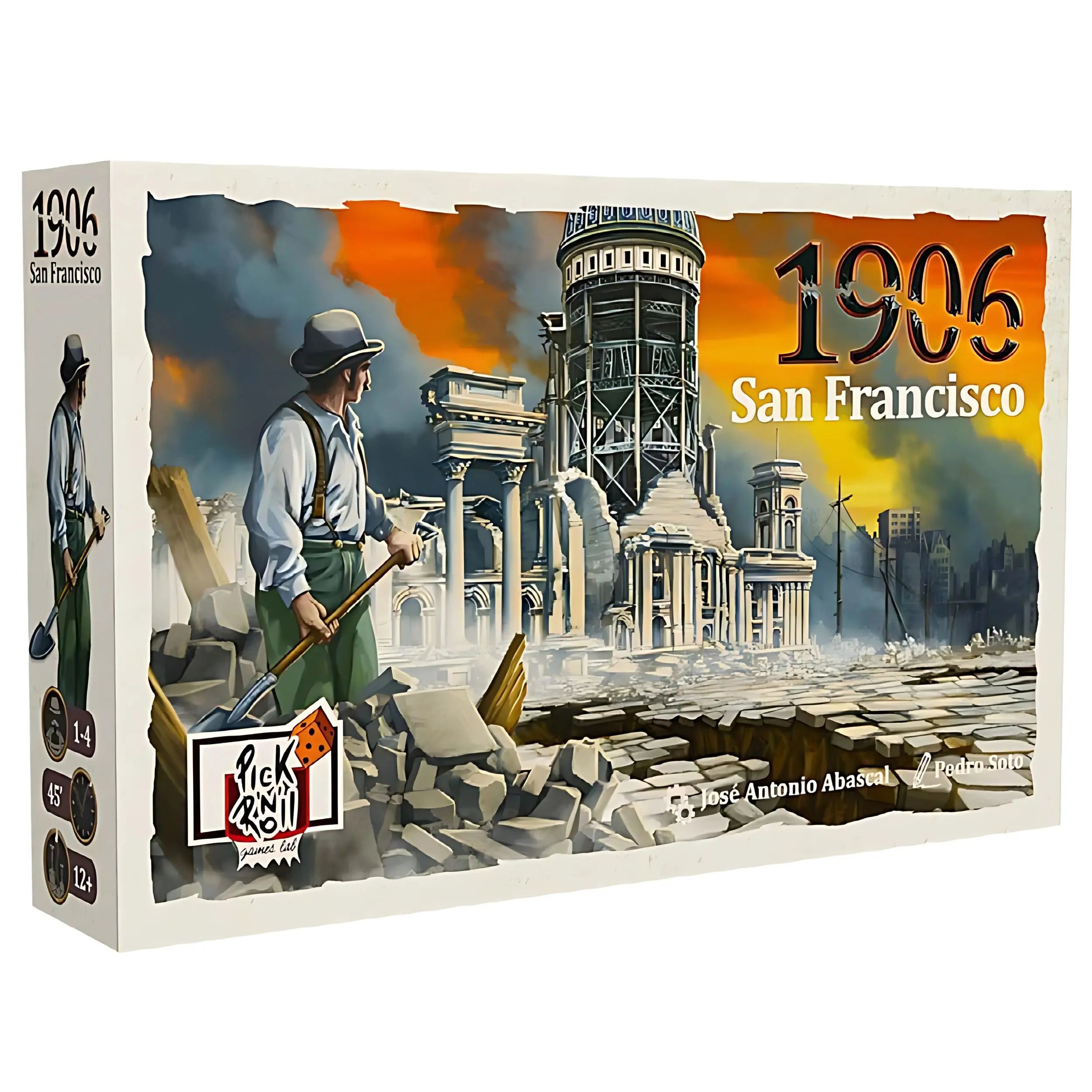
The ground still shakes, flames devour blocks, rubble blocks Market Street. You have five years to rebuild a city. Your opponents want the same lots. Some plan, some adapt, some run out of money halfway through.
WHAT IT IS ABOUT
Rebuilding a city from the ashes of 1906
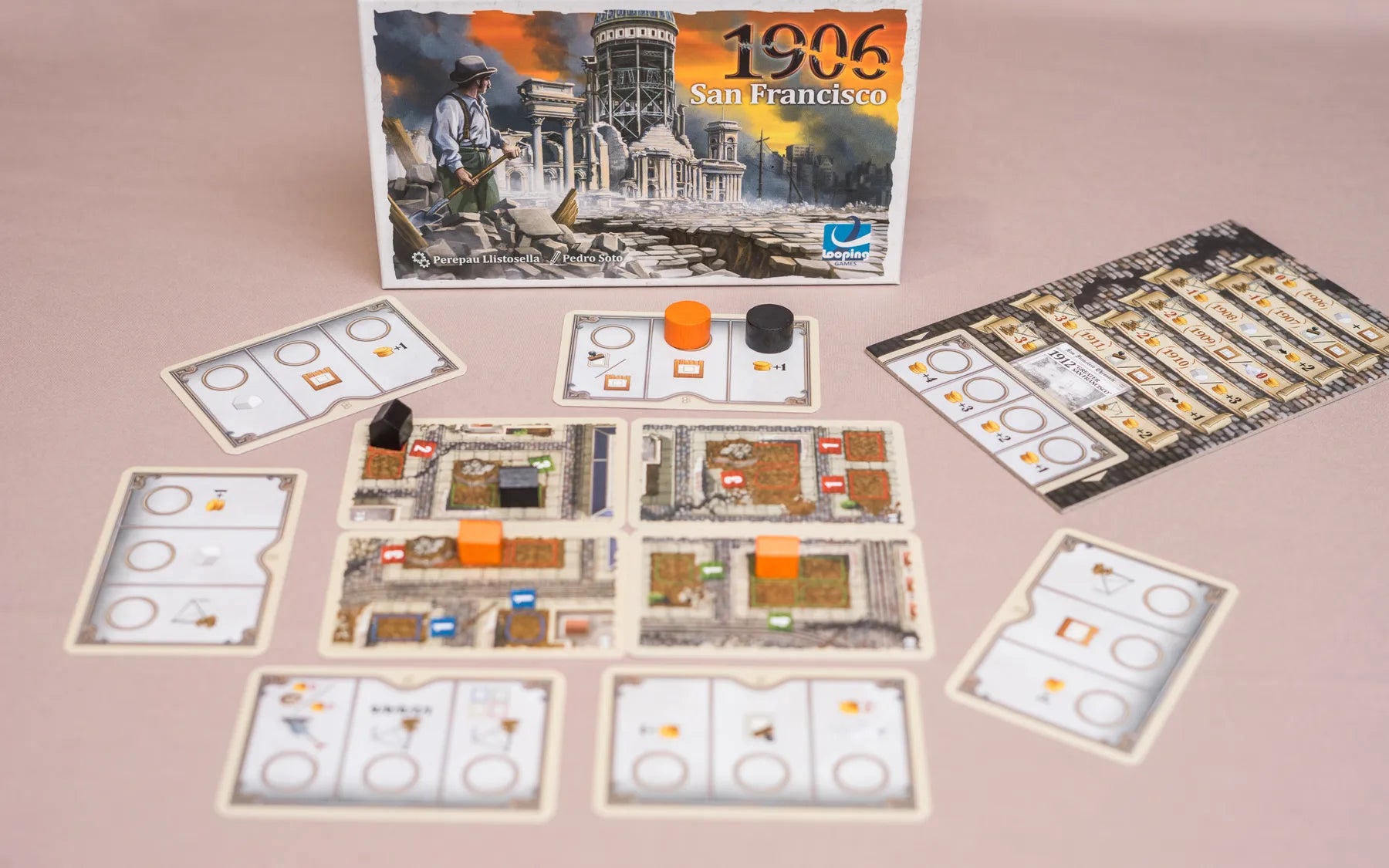
On April 18, 1906, at 5:12 AM, an 8.6 magnitude earthquake destroyed San Francisco. The fires that followed completed the destruction: over 80% of the city was in ruins. Perepau Llistosella transformed this tragedy into a game of urban planning and area control, illustrated by Pedro Soto. You are a builder during the five years of reconstruction: you buy lots, clear rubble, build new buildings and public services to modernize the city.
Each round represents a year: choose action cards to acquire land, earn money from rubble removal, construct residential or commercial buildings, plan essential infrastructure. Control of urban areas earns you points at the end of the game, but it requires resources and perfect timing: the best lots disappear quickly, and those who don't optimize risk falling behind as the city rises around them.
What they say abroad
"Early morning, 18th April 1906, the city of San Francisco awakes shaken by a massive earthquake of magnitude 8.6 on the Richter scale and by a huge fire that started afterwards."
— Looping Games
1906 San Francisco is a historical reconstruction that becomes a strategic challenge: every lot counts, every year is a race against time and opponents.
— FroGames

1906 San Francisco
The game includes official solo rules with scoring objectives to be achieved in 5 years. The experience is good for those who love to optimize, but it loses the tension of area control and lot competition: it becomes a puzzle of managerial efficiency.
FrogScore · FroGames editorial rating · based on rules, international reviews and gameplay sessionsYour tools
What you have to rebuild
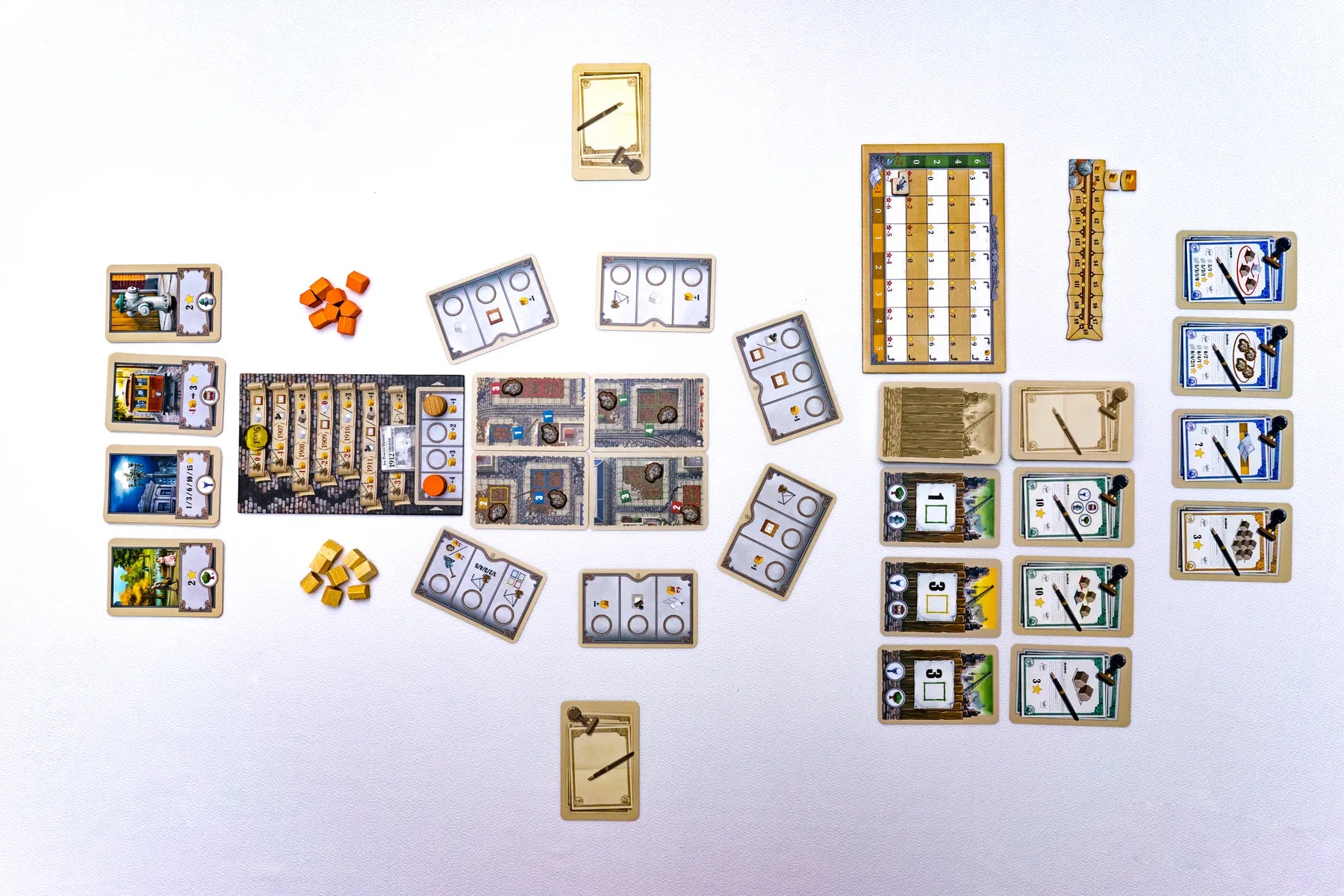
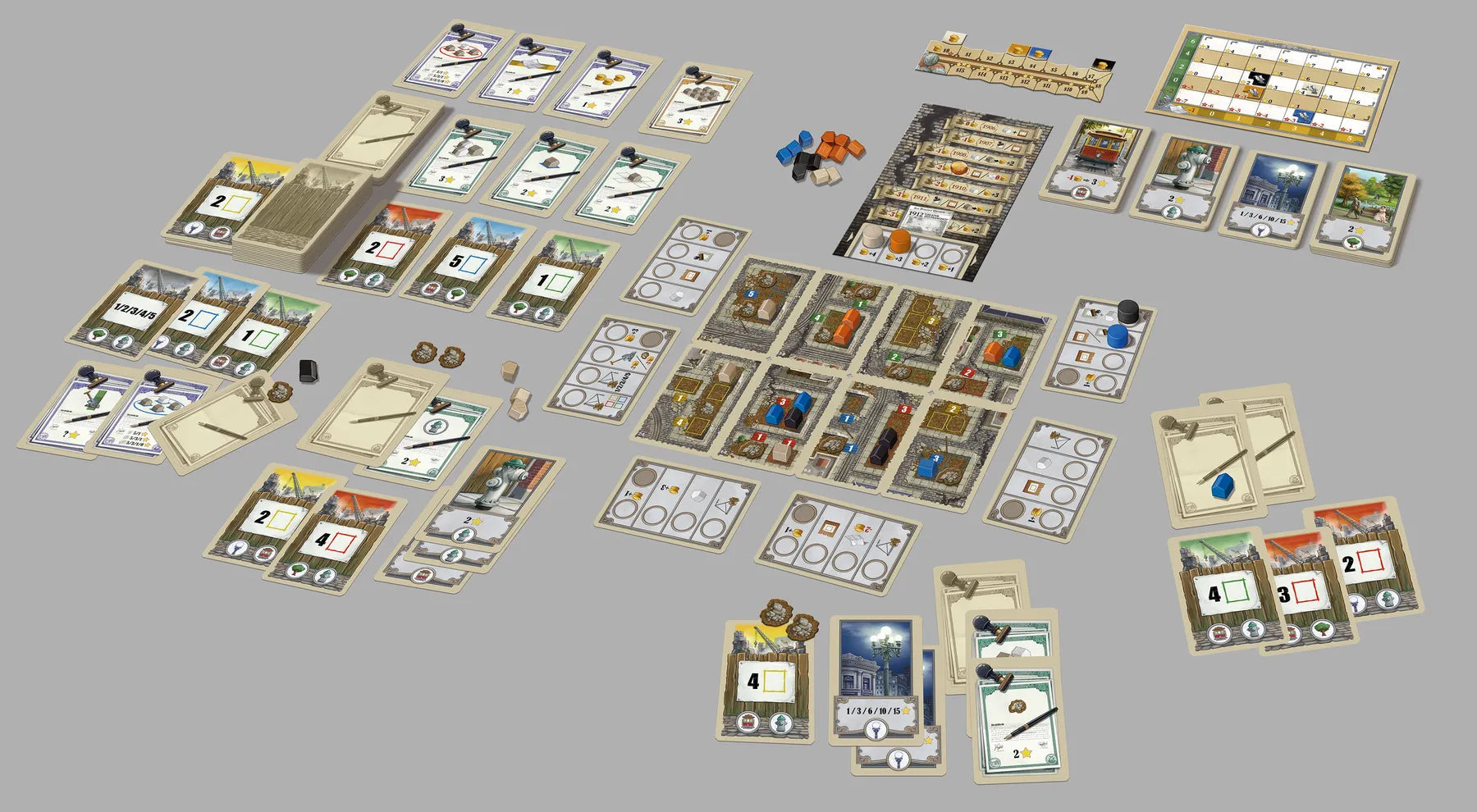
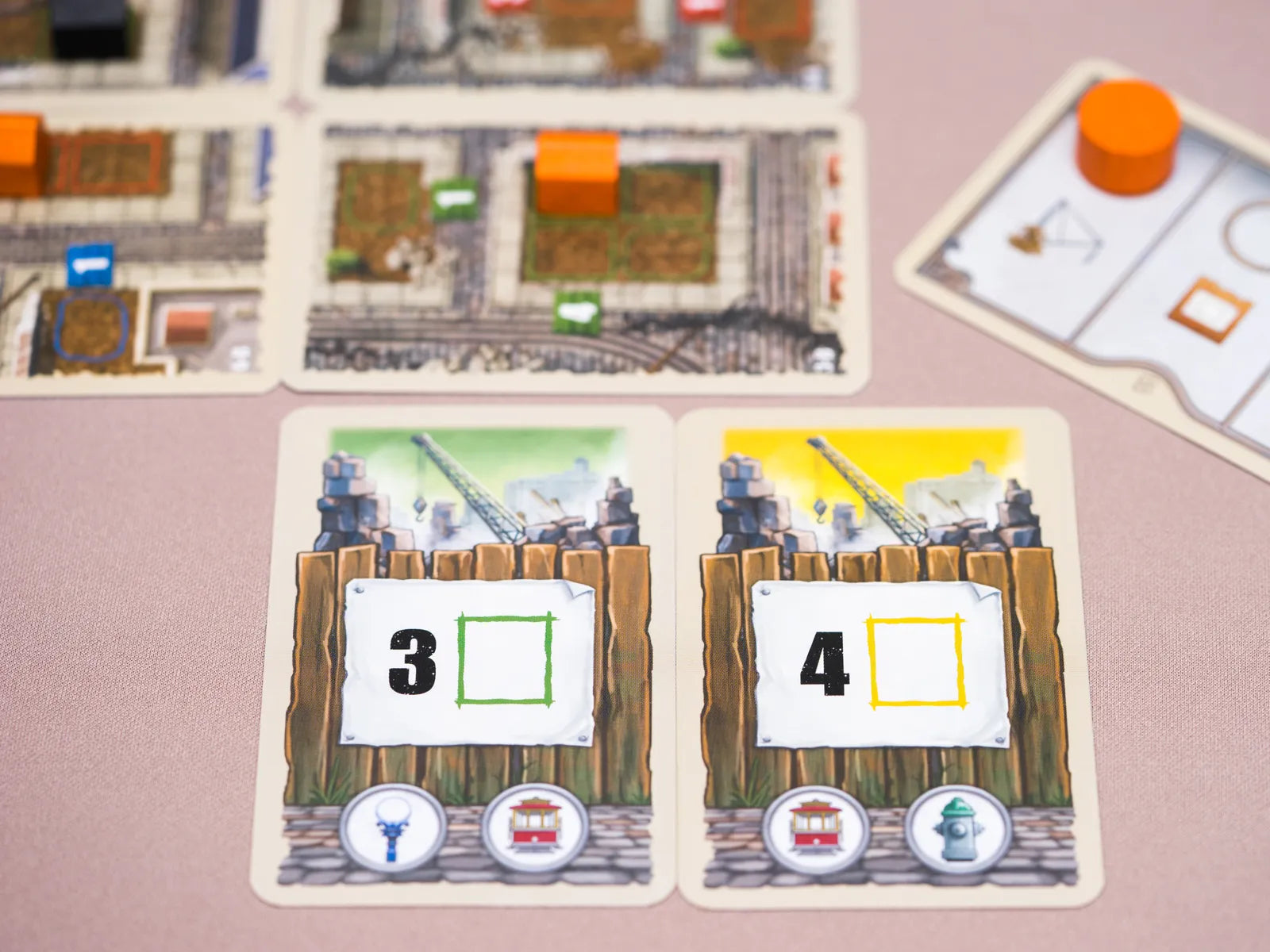
Action cards
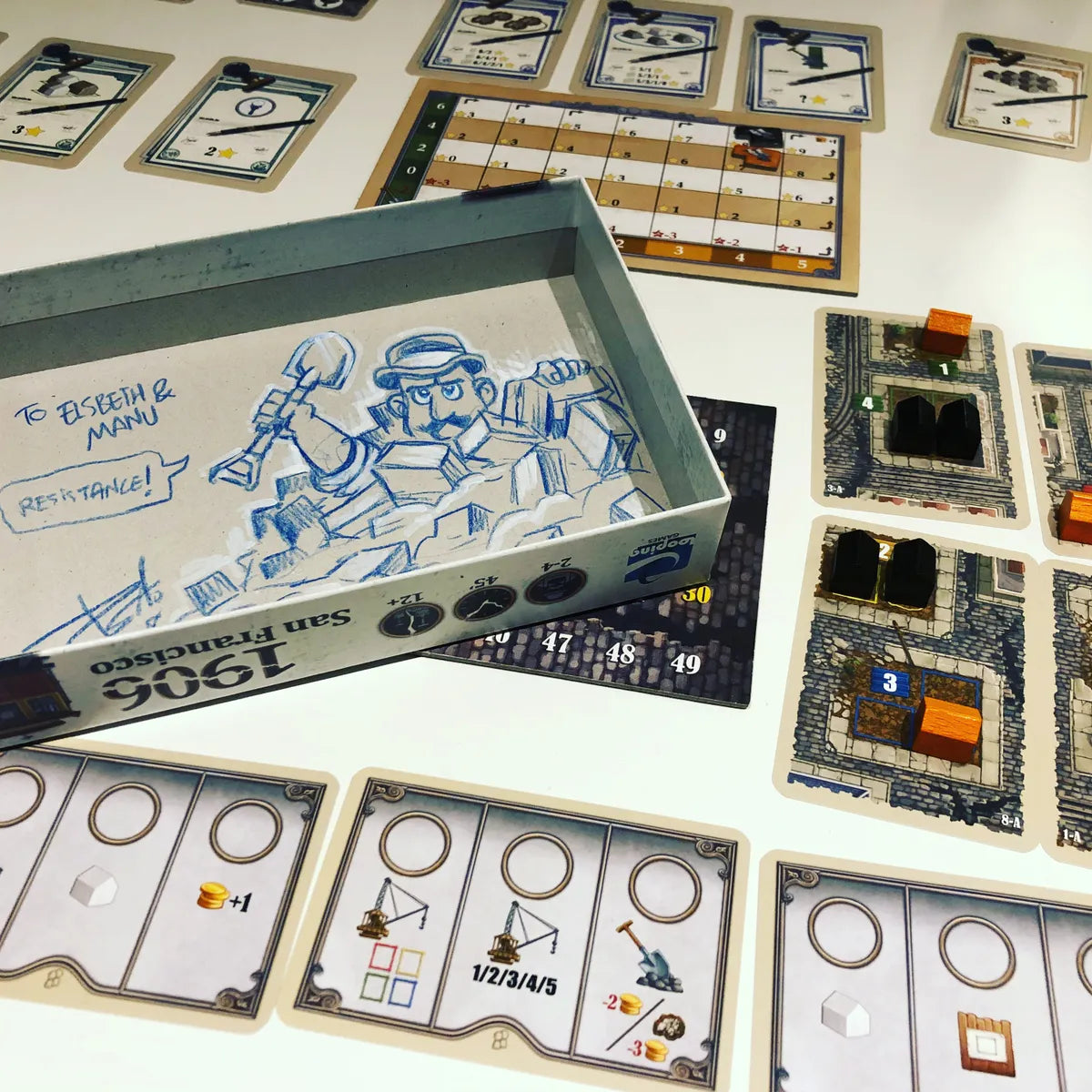
Each card represents an action: acquiring lots, clearing rubble, building structures, planning public services. You play one card per turn, choose where to act, and prepare your next moves. Sequence is everything.
Urban lots
The board is divided into areas: residential, commercial, industrial. Each lot is worth points if you control it at the end of the game. Taking them before others is a race, leaving them empty is a waste.
Money and rubble
Clearing rubble earns you money, which is needed to build structures. Those who optimize this cycle advance quickly, those who neglect it run out of funds halfway through reconstruction.
Public services
Roads, parks, and infrastructure modernize the city and give you bonuses. Planning them at the right time allows you to maximize points, ignoring them cuts you out of the most profitable strategies.
Recommended sleeves 197 cards in 2 sizes ▼
If you play often, we recommend protecting your cards with clear sleeves to make them last longer.
| Size | Quantity |
|---|---|
| 56 × 87 mm | 99 |
| 57 × 89 mm | 98 |
| Total cards | 197 |
🎲How to playThe rules in four steps▼
How to play
The flow of each year
Each round represents one year of reconstruction: choose a card, perform the action, prepare for the next turn.
Start of the year: you draw action cards from your hand or from the common deck. Each card offers a different action (acquire lots, remove rubble, build, plan services). Choose the one you need now.
Reveal the card and apply the effect: take a lot on the board, remove rubble to earn money, build a building in an area you control, or plan a public service for future bonuses.
After each construction, check who controls each urban area: whoever has more buildings in a zone dominates that neighborhood. Control constantly changes: blocking opponents is part of the game.
End of round: discard used cards, draw new options, advance the year marker. After 5 years, points are counted: area control, buildings constructed, public services completed. Whoever has optimized best wins.
⏱️Your first gameThe chronicle, moment by moment▼
A game in five moments
What happens at the table
Not the rules. The experience.
Choose your first lot
The board is full of rubble. Everyone is looking at the same areas: who gets the residential neighborhood? Who targets the port? The first action card decides where to start. Some play it safe, some bet on the long game.
The first construction
You've removed enough rubble to build your first building. Choose where: a neighborhood you already control, or a new one to block opponents? The choice seems simple, but each building changes the value of the areas. And others are making the same calculation.
Lots disappear
We are halfway through reconstruction: the best areas are occupied, money is starting to run out. Those who have optimized the rubble-construction cycle are ahead; those who spent poorly find themselves without resources at key moments. Some change strategy, some put everything into one area.
Public services make the difference
Planning infrastructure now means huge bonuses at the end of the game. But they cost precious actions: those who invest in services sacrifice expansion; those who continue to build risk losing points. Strategies diverge: some modernize, some saturate areas.
The last year, the last lot
Cards run out, areas close. You count points: area control, buildings constructed, public services completed. Someone wins by one lot, someone discovers they overlooked a decisive zone. The city is rebuilt, but only one has planned better than the others.
🐸Good to know before playingThree honest things, from friends▼
Good to know before playing
Three things to consider
The learning curve is gentle, but it takes 2-3 games
The rules can be learned in 15 minutes, but understanding which lots to take and when requires experience. The first game is exploratory: you'll see strategies you hadn't considered. First-time players are at a disadvantage against those who know the game's rhythm.
Those who fall behind in the early years struggle to catch up
Area control is established early: if opponents occupy key lots in the first 2 years, catching up becomes difficult. It's not impossible, but it requires changing strategy and leveraging public services. If you're looking for epic comebacks, this isn't the game.
With 4 players, downtime can increase
More players mean more choices to evaluate each turn: indecisive players slow everyone down. In 2 players, the pace is brisk; in 4, it can become slower between turns. If your group experiences analysis paralysis, consider 2-3 player games.
🏆Victory and defeatWhat the end rewards▼
How it ends
How to win and how to lose
After 5 years (5 rounds), points are counted. The player with the most victory points wins.
Victory
- You control more urban areas than your opponents (points for each dominated neighborhood)
- You have built residential and commercial buildings in the most profitable lots
- You have completed public services that provide bonuses and score multipliers
Defeat
- You misspent resources and found yourself without money at key moments
- Opponents blocked the areas you wanted to control
- You neglected public services and lost decisive final bonuses
1906 San Francisco is a historical reconstruction that becomes strategic competition: every lot, every building, every card counts. If you love optimization and territorial competition without excessive complexity, this is your game.
💬Frequently Asked QuestionsQuick answers before checkout▼
Frequently Asked Questions
FAQ about 1906 San Francisco
What mechanics does 1906 San Francisco use?
The game uses area majority (territory control), card-driven actions (choose a card to determine the action), resource management (money and rubble), and urban planning. The structure is linear (5 years = 5 rounds), but the choices are tactical and competitive.
Does it work well with 2 players?
Yes, with 2 players the pace is brisk and the competition for lots is direct. With 3-4 players, interaction and strategic variability increase, but so does downtime. The game scales well, but duel purists will appreciate the 2-player version.
Is it a heavy game?
No: BGG weight 2.4/5. It is a medium-light eurogame with accessible rules and tactical depth. It doesn't require hours of study but rewards those who plan. Perfect as a gateway to more complex games or for relaxed but competitive evenings.
How much does luck play a role?
Moderately: drawn cards influence available options, but you manage a hand and can plan ahead. Luck can give you better cards at the right time, but strategic choices weigh more heavily. It's not a game of dice or total chaos.
Is it available in Italian?
Yes, the edition for sale on FroGames is in Italian, published by Pick 'N' Roll Games Lab. Rulebook, cards, and components are fully localized.
The people behind the game
Who invented it, who designed it, who publishes it — and what else they've done.
1906 San Francisco is a strategy game for 1-4 players, lasting 45-60 minutes, recommended for ages 12+. Designed by Perepau Llistosella, it places you in the role of a builder during the city's reconstruction after the 1906 earthquake. It uses area majority mechanics, resource management, and urban planning to control neighborhoods, build buildings, and modernize the city. Published by Pick 'N' Roll Games Lab, it combines accessibility and tactical depth in a competitive eurogame perfect for those who love optimization without excessive complexity. Available on FroGames.it.
1906: San Francisco
Frequently Asked Questions
The answers you're looking for, no beating around the bush.
📸Do the images match the actual product?
The photos on the website often come from BoardGameGeek and are intended to give you an idea of the game. They may vary slightly from the version you receive. The content declared by the publisher is always binding.
📦Does the content of the box match what is indicated?
We always strive to provide the correct content, but minor variations are possible due to reprints or updates. The information comes directly from the publishers. If you have any questions, please contact us!
⏳How do pre-orders work?
Pre-order the game before release, payment is immediate, and the game is reserved for you. As soon as it arrives, we'll ship it right away! If there are any delays, we'll update you promptly.
🔒Can I trust buying here?
Absolutely! Secure payments, tracked shipments, and a team that loves board games as much as you do. If something goes wrong, we'll do our best to fix it.
🛠There's a problem with my order, what should I do?
Write to us now! Whether it's a missing part, damage, or an error, we'll help you resolve it as soon as possible. Your experience truly matters to us.