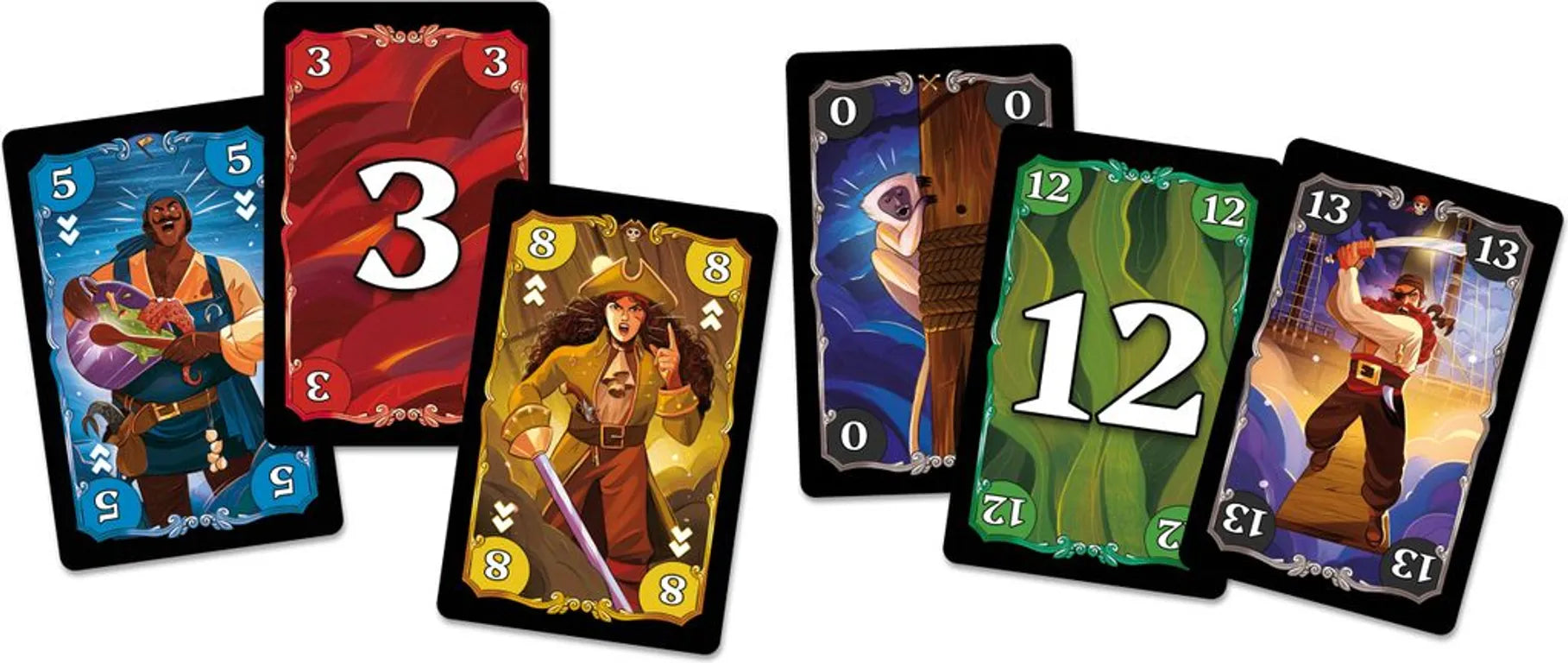
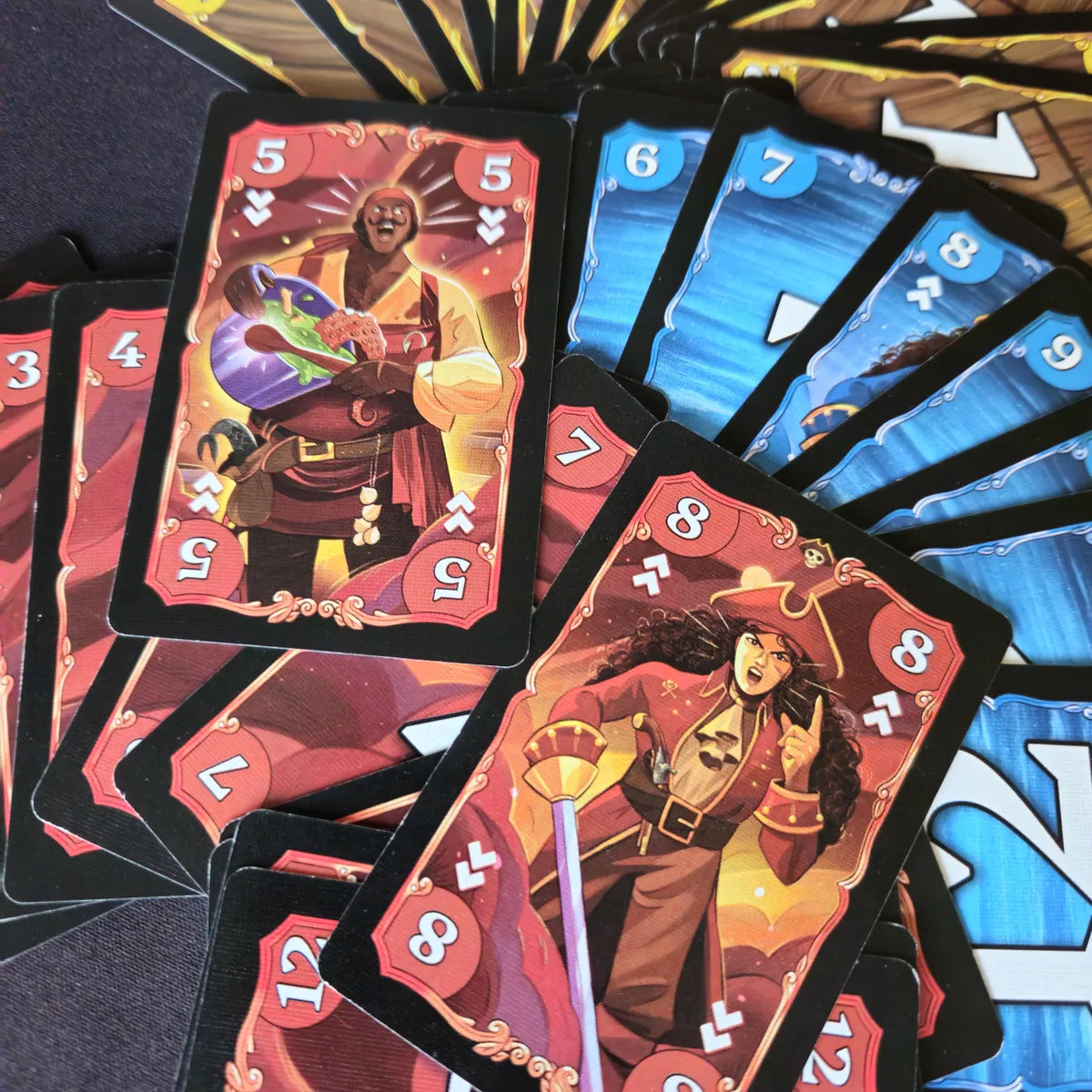
Pirate trick-taking with personal objectives and tactical placement of buccaneers.
1) You are the captain of your crew and you have to foreseeasyou will play the tricks
Before starting the hand, it is not enough to play cards to win tricks:
inSkull Queenyou have todecide which tricks you want to win and which ones you want to avoid, based on the suits and your cards.
The heart of the game isself-program your strategybefore the game actually starts.
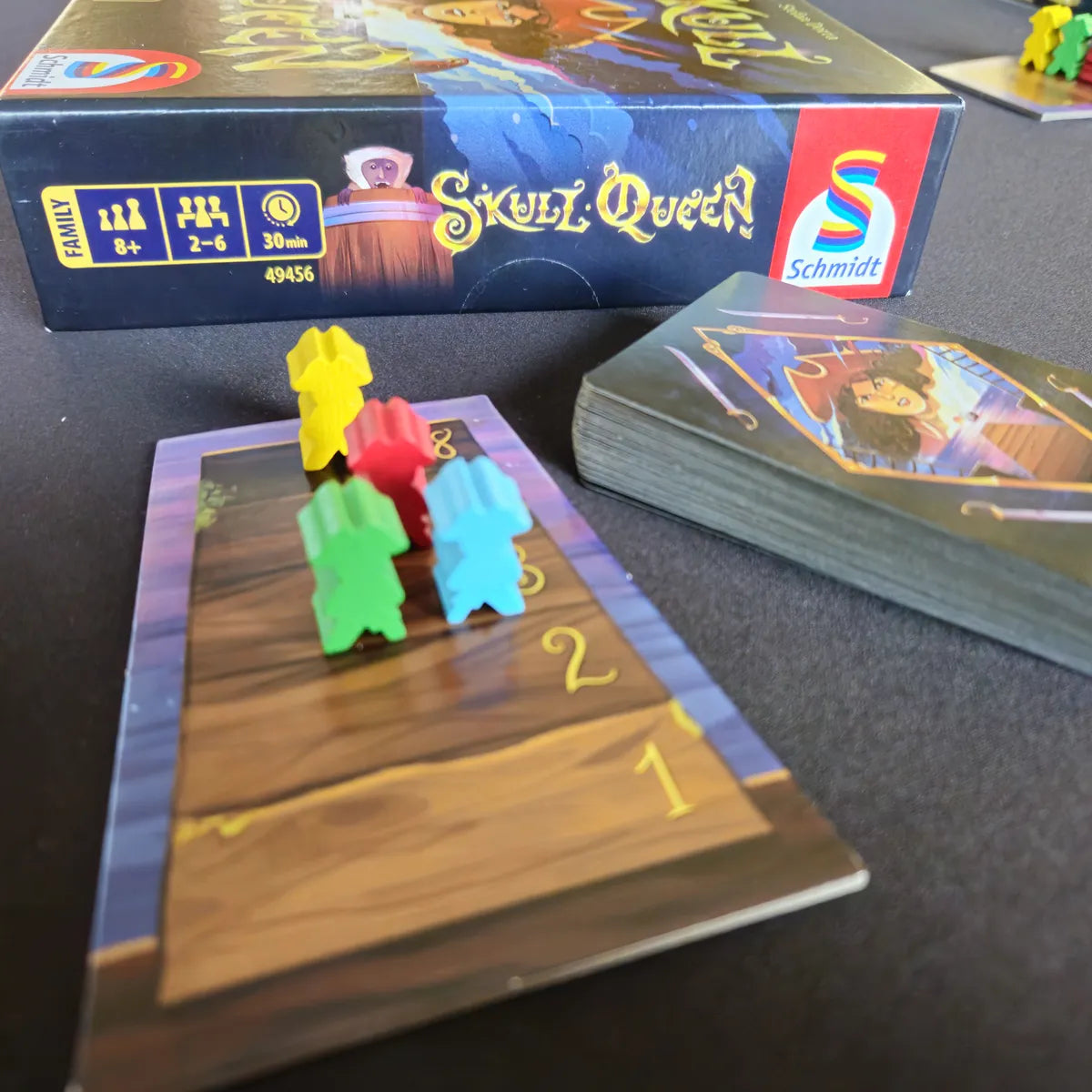
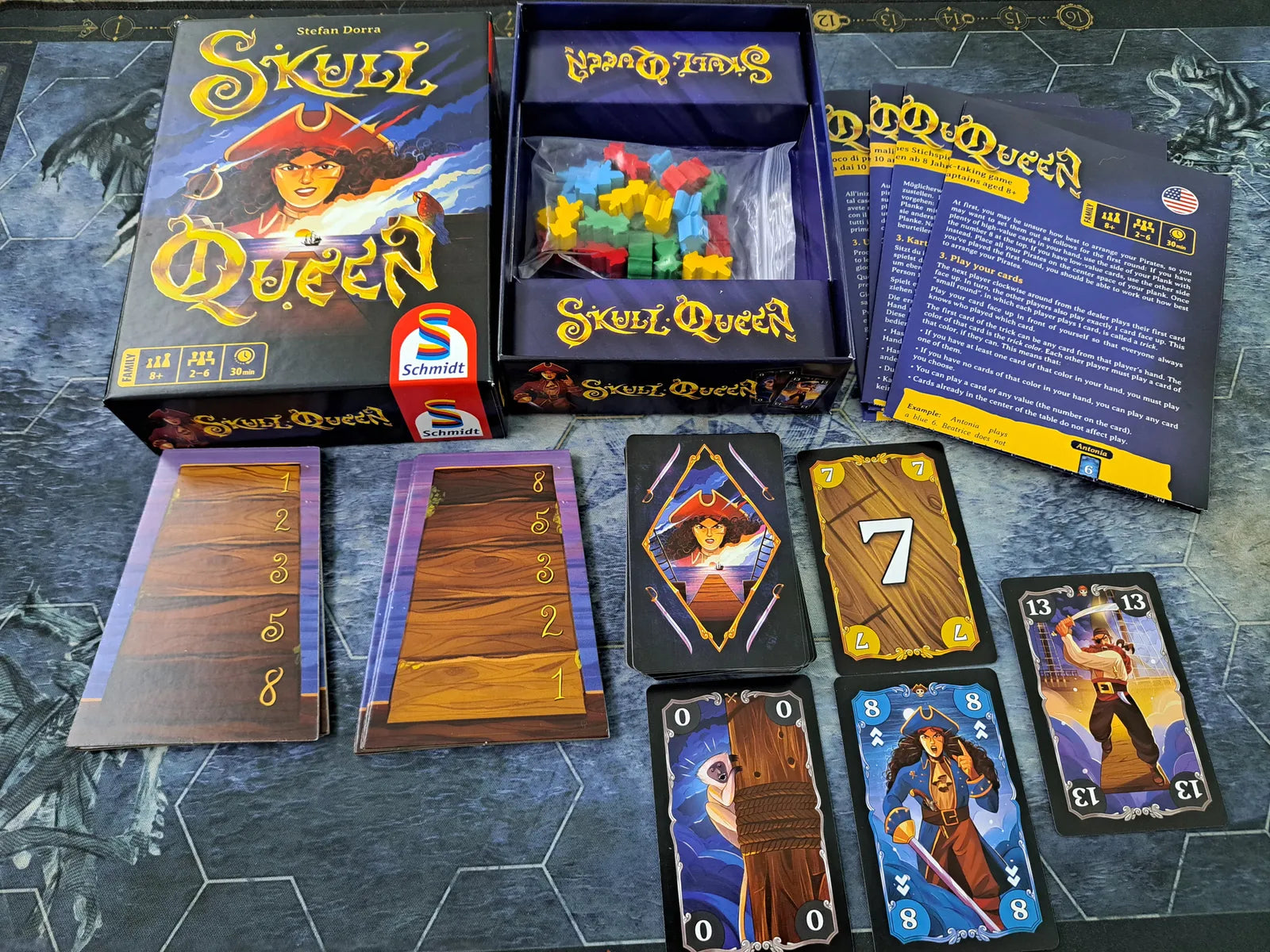
2) Each captain places his pirates on the Bridge Board
Each player has aPlank(board with 5 spaces).
At the beginning of the round you place yourpirates-tokenon any of the 5 available slots: each showsa different scorebased on the expected outcome of the tricks.
The placement isbindinguntil the end of the round: choosing it well is half the game.
3) The hand is played like a classic trick-taking… but with variable objectives
A series of tricks is played in which:
each person plays a card in turn,
follow the seed if possible,
The winner of the trick is determined according to the rules of the deck.
The point is not onlyWINoravoidtaken, butwin or lose the right tricks, consistent with your pirate placement.
4) At the end of the hand, each pirate on the Plank awards points based on the outcome obtained
When the hand ends, the following occurs for each player:
how many trickshe took,
what goalshad set in the placement phase,
what valuehad the specific pirate slot.
If the desired outcome matches,points are earnedof the space; otherwise,you might not score or even get penalized.
5) Number of rounds = number of players, and the most “clear-headed” captain wins
As many rounds as there are players are played.
At the end, all the points obtained from the various Planks are added together.
🏆Whoever gets the highest score wins, demonstrating that he planned, bluffed and managed risk better than anyone else.