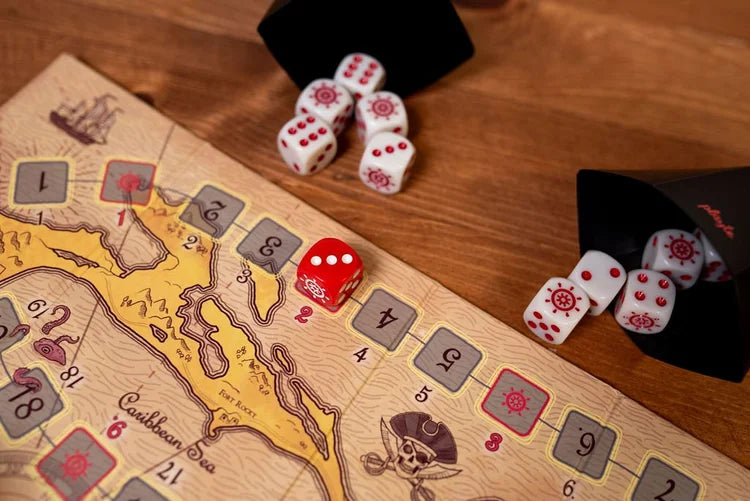
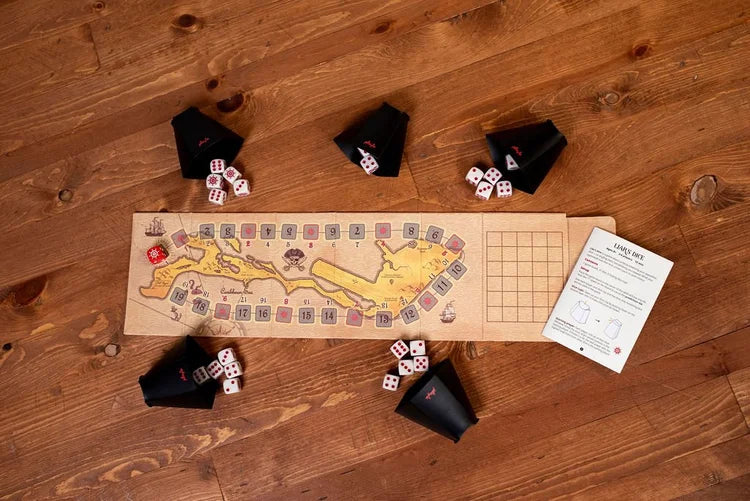
Bluff, courage, dirty math and brazen faces.
1) Each player has 5 hidden dice: your hand is secret… but everyone bets on it.
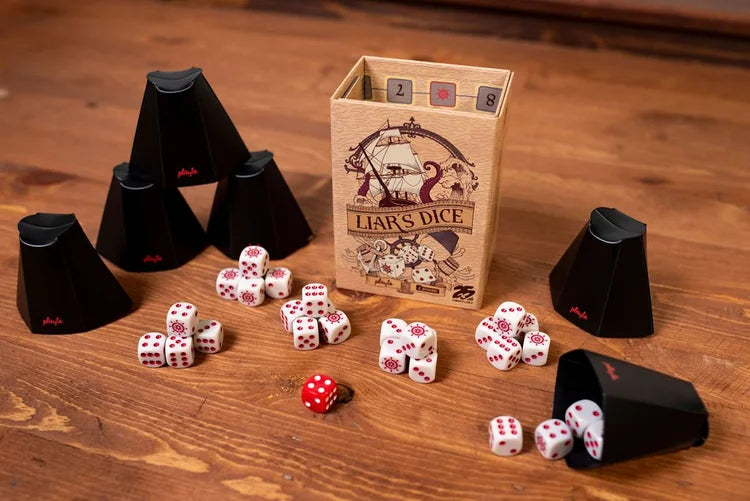
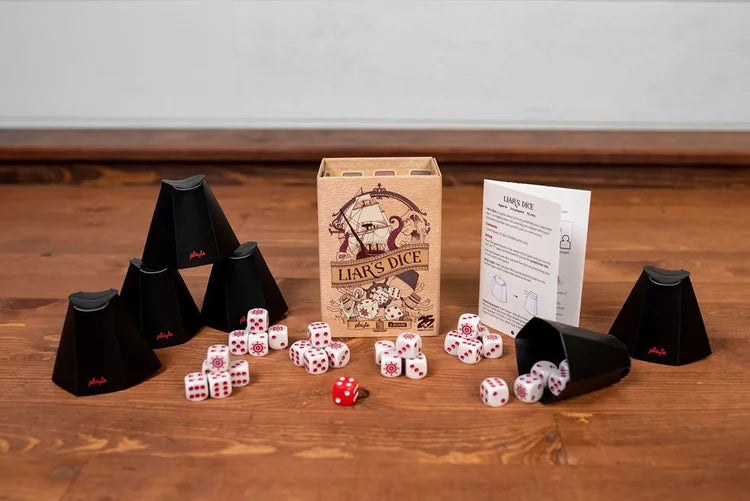
At the start of the game each player receives:
5 dice,
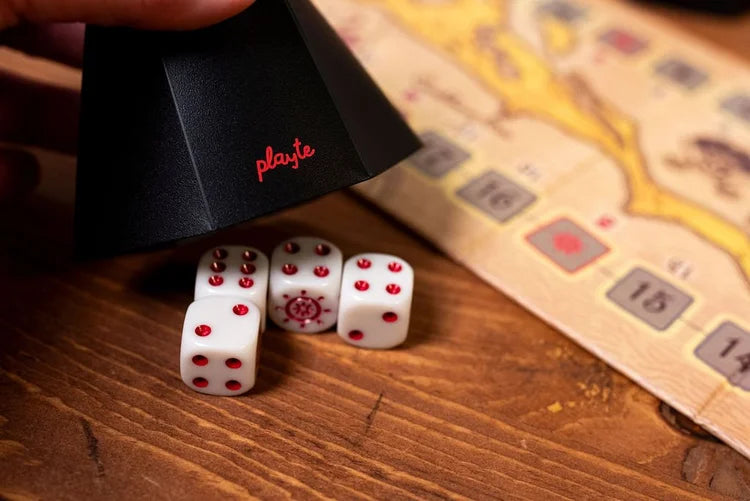
a glassto shake them and hide them.
Everyone pulls,they look at their results in secret, and the round starts with a first player who opens the bids.
The tension is immediate: only you know what you really have, but you have to imagine what they might haveall the others.
2) In turn you roll again: you must declare a quantity and a value of the dice in play.
The player whose turn it is makes a global declaration, such as:
➡️“There are at least eight 3s on the table.”
Those who come after can:
relaunch by increasingthe quantity(“nine 3”),
or increasingthe value(“eight 4”),
or change both (“ten 2”).
The point is that every statement must behigherof the previous one…
and no one can see the truth before the challenge.
3) Someone will call the bluff: “Dudo!” — and that’s where it gets hurt.
At any time, a player may challenge the declaration by saying:
👉“Dudo”(or “Perudo”, “Bluff”, “I don’t believe it”).
At that point everyone reveals their dice.
If the statement wastrue, the protester loses.
If it wasfalse, whoever declared loses.
To lose meansto lose a die…and become more vulnerable in later rounds.
4) Fewer dice = less power… but more chaos in others.
Every time you lose a die you become less precise in your estimates, but also less predictable.
With just a few dice in your hand, you can afford to take risks that the “richer” don’t want to take.
Perudo is a game of:
chance,
psychology,
intuition,
poker faces,
and statements that seem true… until someone looks you in the eye.
5) The last player left with at least one die wins.
The game continues until only one player has dice left.
The last survivor is the Perudo champion:
the one who bluffed best, read the others, and maybe… even had a little luck.