
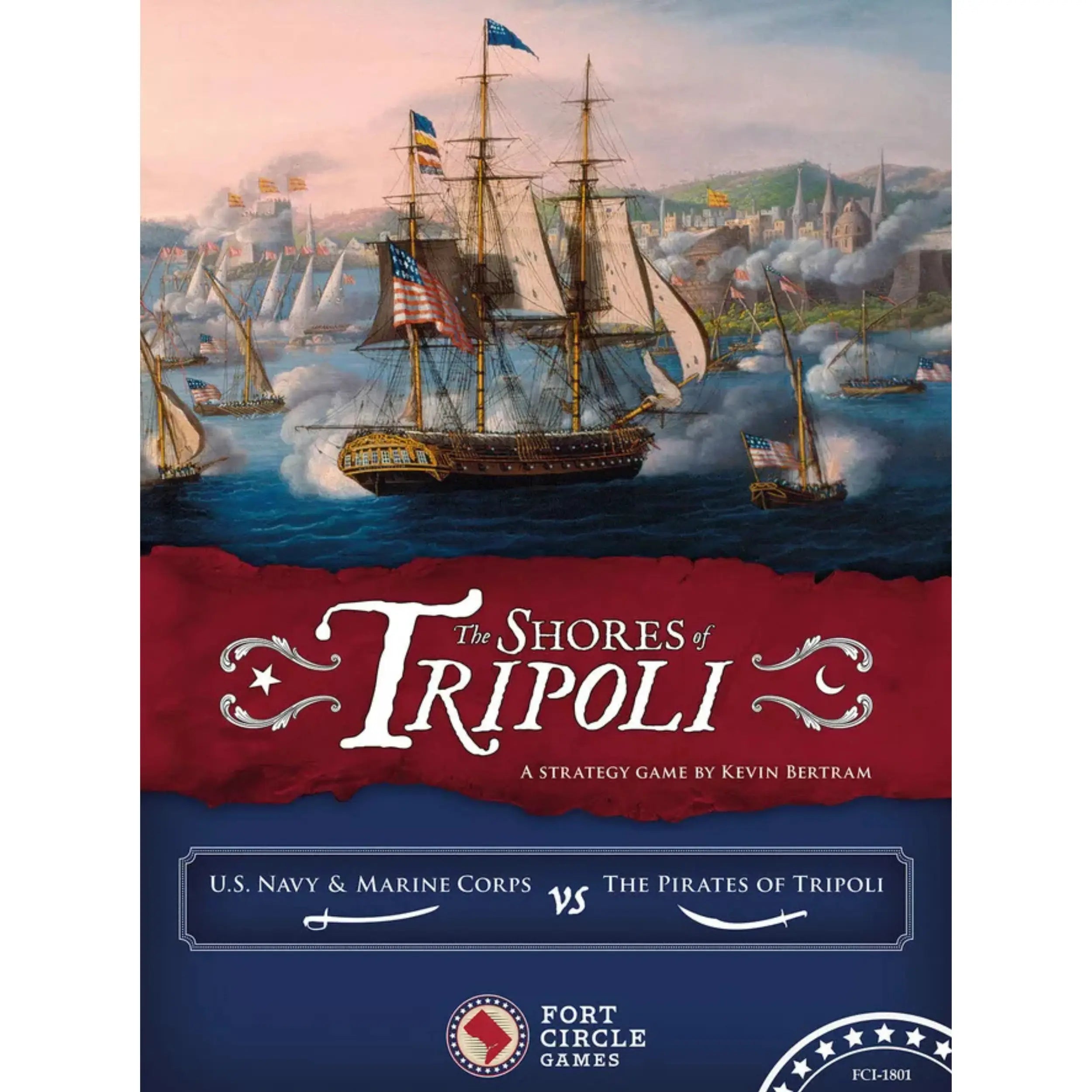

Shores of Tripoli 2nd. Printing
The Shores of Tripoli 2nd. Printing
🐸 Dettagli da BoardGameGeek
Consiglio BGG sul numero di giocatori
Categorie
Meccaniche
Design & Art
Lingua



Si abbina bene con
The FroGames Card
Tripoli has declared war. You must decide whether to send frigates or negotiate. The other player knows you only have three ships ready and that Congress doesn't want another war. The card you play now changes everything.
WHAT IT'S ABOUT
The war Jefferson didn't want to fight
1801, Mediterranean. For years, Barbary pirates preyed on American merchant ships, extorting tribute and capturing crews. Thomas Jefferson, newly elected president, sent a "squadron of observation"—but the bashaw of Tripoli declared war even before the frigates arrived in Gibraltar. Kevin Bertram reconstructs this crucial episode in American history in an asymmetric card-driven wargame where diplomacy and cannon fire are constantly intertwined.
One plays the United States, the other Tripoli. Each card represents historical events, leaders, ships, or diplomatic actions. You must decide whether to use it for the event written on it or for operations points: move fleets, attack ports, launch corsair raids, negotiate treaties, or call for reinforcements. Naval and land battles are resolved with dice, but strategic choices—where to press, when to retreat, whether to accept peace—are all in the cards you hold.
What they say abroad
"Best 2-Player Game of 2020"
Best 2-Player Game of 2020
— Meeple Mountain
A wargame that confronts you with real historical choices, not just dice rolls. Each game tells the same war in a different way, and that's exactly what a card-driven game should do.
— FroGames

The Shores of Tripoli
The game includes a bot system for Tripoli with dedicated cards that simulate the bashaw's decisions: corsair raids, fleet movements, negotiations. The experience is complete and the bot is aggressive, but it loses the psychological tension of bluffing and timing against a human opponent. Excellent for learning US strategies.
FrogScore · FroGames editorial rating · based on rules, international reviews and game sessionsCards, ships and diplomacy
What you have in hand (and on the table)
Historical event cards
57 cards with events, leaders, and actions of the war. Each card has an operations value and an event text: you must choose. Stephen Decatur, Hamet Karamanli's betrayal, the burning of the Philadelphia—they are all in the deck.
Fleets and frigates
Over 80 wooden pieces: American frigates, Tripolitan corsairs, marine troops, coastal forts. Ships move by area, attack ports, or clash at sea. Every lost frigate matters.
Dice combat
24 dice resolve naval and land battles. You roll based on strength, 5-6 hit. Simple but brutal: a lucky salvo can sink your best ship.
Diplomatic track
Tripoli wins if it keeps hostility high and wears down the US. The United States wins if it lowers tension (with military victories or diplomatic cards) and forces a favorable treaty. The war is fought outside of battles too.
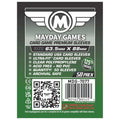
Recommended sleeves 57 cards in 1 size ▼
If you play often, we recommend protecting cards with clear sleeves to make them last longer.
| Size | Quantity |
|---|---|
| 63.5 × 88 mm | 57 |
| Total cards | 57 |
Come si gioca
Video dimostrativo di gameplay.
🎲How to PlayThe rules in four steps▼
How to Play
The flow of each round
Each round is a card played, an action taken, an opponent's reaction. Fast and ruthless.
Choose a card from your hand. You can use the event written on it (happens immediately, often in favor of the player who played it) or use operation points for generic actions: moving fleets, attacking, reinforcing, negotiating.
If you chose an event, apply the text. If you used operations, spend the points: 1 point = 1 movement or 1 battle. Battles are resolved with dice, each 5-6 is a hit. You lose ships or troops.
Now it's the other player's turn. They can play a card in reaction (if the rules allow) or suffer the consequences. Every move changes the board: a moved fleet opens a route, a lost battle raises diplomatic tension.
Check the diplomatic track: if the USA has lowered tension enough, they can force a favorable treaty and win. If Tripoli keeps hostility high and time runs out, they win by attrition. Otherwise, the game continues.
⏱️Your First GameThe chronicle, moment by moment▼
A game in five moments
What happens at the table
Not the rules. The experience.
Initial Setup
Draw initial cards, deploy fleets. The USA eyes Gibraltar and Malta, Tripoli arranges corsairs in ports. You're already thinking about which events to keep and which to burn for operations. Diplomatic tension is high: it takes little to raise it further.
First Naval Clash
American frigates enter Tripolitan waters. Tripoli plays a corsair card: raid against a merchant ship. The USA responds with a coastal bombardment. The first dice rolls: someone loses a ship, someone curses. The diplomatic track moves.
Historical Events Change Everything
Someone plays "Burning of the Philadelphia" or "Hamet Karamanli's Army." The event overturns the board: ships changing control, troops appearing out of nowhere, plans falling apart. Now you must react with the remaining cards.
Final Assault
The USA pushes towards Tripoli or Derna, Tripoli multiplies corsair raids. Every die roll counts: if you take the fort, diplomatic pressure collapses. If the assault fails, Tripoli wins by attrition. All on a roll of the dice.
Treaty or Capitulation
The diplomatic track reaches the threshold or someone runs out of options. Peace is signed — or Tripoli holds strong and wins by wearing down American will. Whoever managed cards and battles best takes home the victory. Someone will reread history afterward.
🐸Before You PlayThree honest things, from friends▼
Before You Play
Three things you need to know
Strong asymmetry, learning curve per faction
USA and Tripoli play different games. The United States must balance military pressure and diplomacy; Tripoli wears down with corsairs and keeps tension high. The first game with a faction may seem unbalanced until you understand the strategy. Replaying is needed to appreciate the balance.
Dice decide battles
You can plan the perfect attack, but if the dice betray you, you lose the ship and the game changes. Variance is mitigated by cards (you can avoid unfavorable fights), but those who hate chance in wargames will struggle. It's history-driven, not Euro.
Historical context helps but is not mandatory
Cards cite real events and characters: Preble, Eaton, Decatur, the Philadelphia, Derna. If you know the history, you'll enjoy it twice as much (and understand why certain cards are powerful). If you don't, the game still works — but you'll want to search Wikipedia afterward.
🏆Victory and DefeatWhat the ending rewards▼
How it ends
How to win and how to lose
Two ways to win, one per faction. The war ends when someone meets the conditions or the deck runs out.
Victory
- The USA wins if they lower the diplomatic track below the threshold and force a favorable treaty (through military victories or event cards)
- Tripoli wins if they keep tension high until the deck or the USA are exhausted (attrition)
- Immediate military victory if a faction captures all of the other's key objectives (rare but possible)
Defeat
- The USA loses if they run out of cards without having lowered diplomatic tension enough
- Tripoli loses if they accept an unfavorable treaty (diplomatic track too low)
- Anyone who loses all key ships or forts is out of the game (military collapse)
It's a wargame that tells true history, lasts an hour, and makes you replay as the other side right afterward. Few historical games do it this well.
💬Frequently Asked QuestionsQuick answers before checkout▼
Frequently Asked Questions
FAQ about The Shores of Tripoli
How difficult is it to learn for someone who has never played wargames?
It's one of the most accessible wargames around. The rules can be explained in 15-20 minutes, the symbols are clear, and the flow is intuitive (card → action → reaction). The complexity lies in the strategic consequences of the cards, not in the rulebook. Ideal as a first card-driven wargame.
Is it balanced, or is one faction stronger?
It's asymmetric but balanced. Tripoli seems easier the first few times (defend and wear down), but a well-played USA has powerful tools. The balance emerges after 2-3 games per faction. Someone playing only once might perceive imbalance, but BGG statistics show it is well-calibrated.
How much luck is involved? Do dice ruin games?
Dice can turn a battle around, yes. But you have room to mitigate: choose when to attack, with how many forces, whether to engage or retreat. Cards provide modifiers. Luck is present (it's history, not chess), but choices matter more than dice in the long run.
What mechanics does The Shores of Tripoli use?
Card-driven (each card has event + operation points), hand management (choose what to play and when), dice combat, area movement (fleets move between Mediterranean zones), diplomatic track (dynamic victory condition). Includes rules for official solo mode with bot.
Is it available in Italian?
No, this is the English edition (2nd printing). Cards contain text (historical events) and require language comprehension. There are no official Italian translations currently. The rulebook is in English but clear, with many illustrated examples.
The people behind the game
Who invented it, who designed it, who publishes it — and what else they've done.
The Shores of Tripoli is an asymmetric card-driven wargame for 1-2 players, set in the First Barbary War (1801-1805). Designed by Kevin Bertram and published by Fort Circle Games, it recreates the conflict between the United States and Tripoli: one plays the young American navy, the other the Barbary corsairs. Duration 45-60 minutes, recommended age 12+, light-medium complexity. Includes official solo mode with bot. Available on FroGames.it.
Frequently Asked Questions
The answers you're looking for, no beating around the bush.
📸Do the images match the actual product?
The photos on the website often come from BoardGameGeek and are intended to give you an idea of the game. They may vary slightly from the version you receive. The content declared by the publisher is always binding.
📦Does the content of the box match what is indicated?
We always strive to provide the correct content, but minor variations are possible due to reprints or updates. The information comes directly from the publishers. If you have any questions, please contact us!
⏳How do pre-orders work?
Pre-order the game before release, payment is immediate, and the game is reserved for you. As soon as it arrives, we'll ship it right away! If there are any delays, we'll update you promptly.
🔒Can I trust buying here?
Absolutely! Secure payments, tracked shipments, and a team that loves board games as much as you do. If something goes wrong, we'll do our best to fix it.
🛠There's a problem with my order, what should I do?
Write to us now! Whether it's a missing part, damage, or an error, we'll help you resolve it as soon as possible. Your experience truly matters to us.