

Yatai
🐸 Dettagli da BoardGameGeek
Consiglio BGG sul numero di giocatori
Categorie
Meccaniche
Design & Art
Lingua
Pairs well with
The FroGames Card
You have three customers in line, two ingredients, only one free stove, and the German tourist wants ramen now. Someone will wait. Someone will leave. Someone will leave a terrible review.
WHAT IT'S ABOUT
Tourist queues and hot stoves in the streets of Tokyo
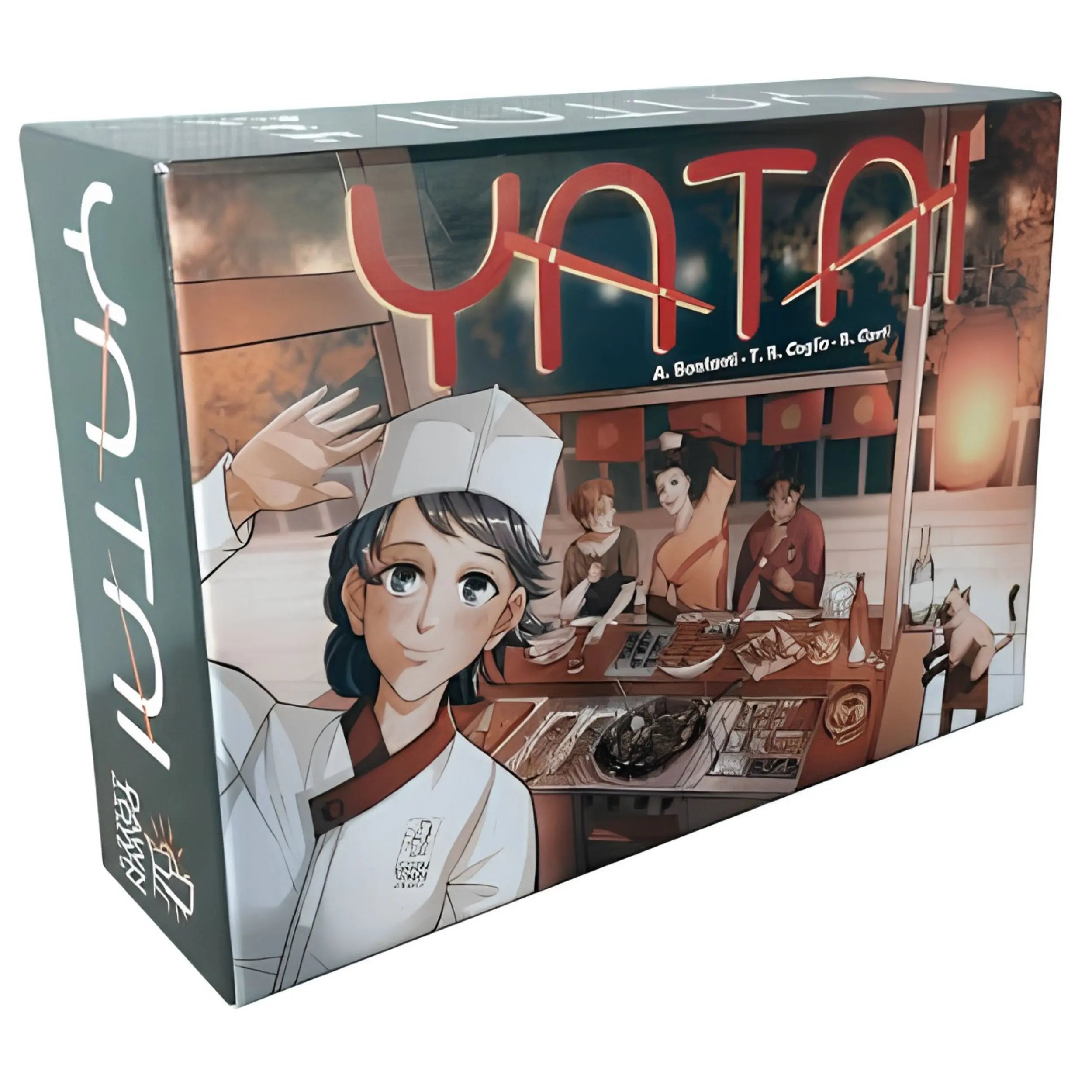
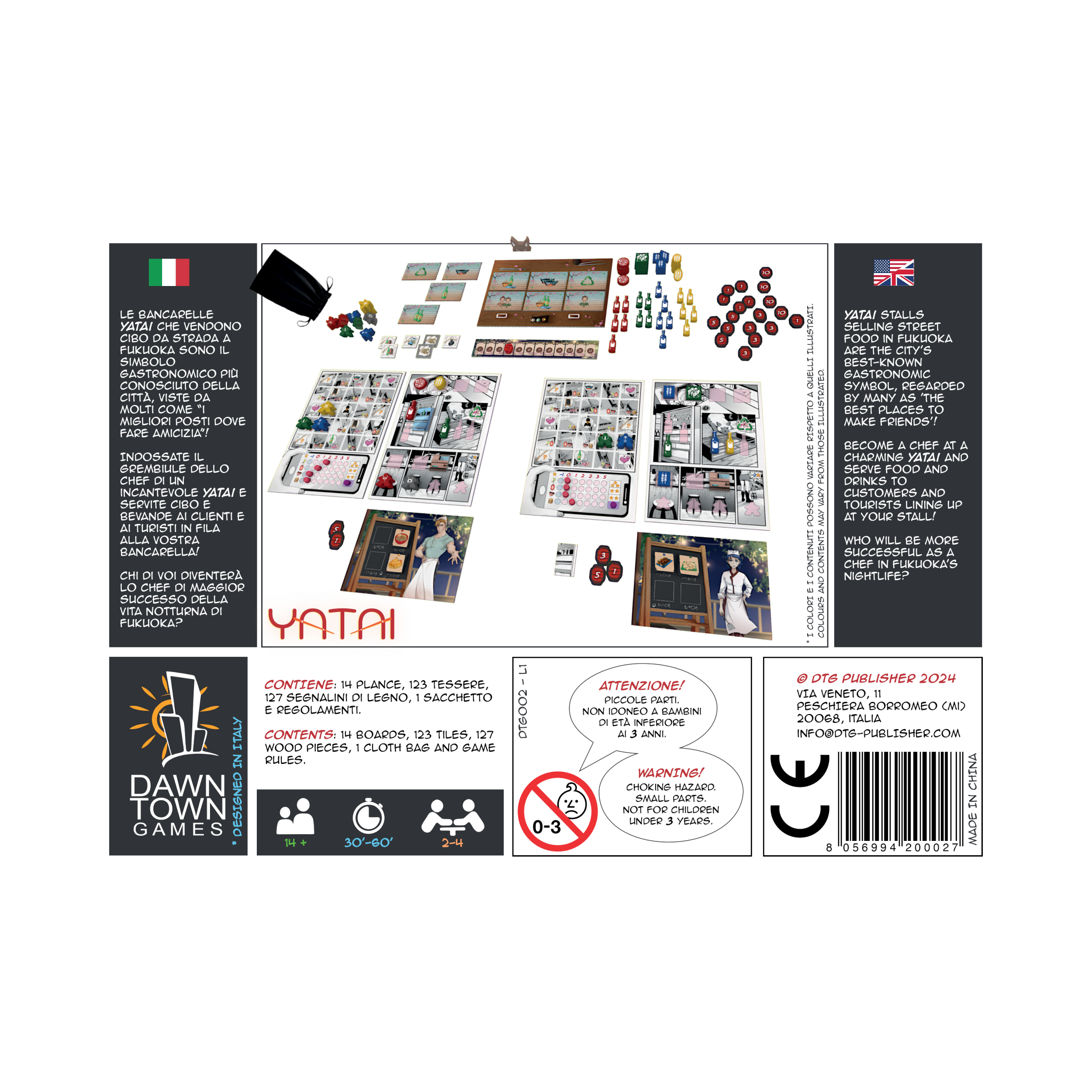
Designed by Alfonso Bonfanti, Tommaso Roberto Ceglia, and Riccardo Corti for Dawn Town Games, Yatai puts you behind the stoves of a Japanese street food stall. Customers arrive from a bag, form impatient queues in front of your kiosk, and you have to decide who to serve, what to cook, and when to send someone away before they ruin your reputation.
At the center is a 3x2 grid of action tiles: each turn you add a tile and activate an entire row. You cook ramen, restock the fridge with beers, recycle empty bottles, serve dishes. But every choice shifts the queues: customers bump into each other, some move forward, some end up in the wrong corner. Coordinating tiles and queues is the heart of the game, and every timing error costs reputation points.
What they say abroad
"Players will be busy running a Japanese street food stall."
— Dawn Town Games (DTG)
Yatai is a game of queues: customer queues, action queues, queues of choices that accumulate until everything is needed at once.
— FroGames

Yatai
FrogScore · FroGames editorial rating · based on rules, international reviews, and play sessionsWhat you manage
The four elements of your yatai
Action Tiles
Each turn you place one on the 3x2 grid and activate an entire row. Cooking, restocking, serving, recycling: everything goes through here. Placement dictates order and timing.
Customer Queues
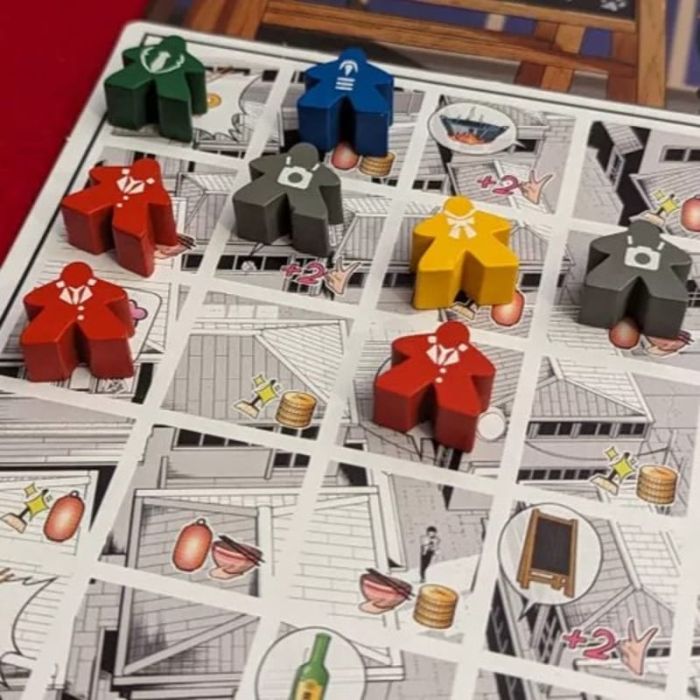
Meeple drawn from a bag form queues in front of your stall. Each customer wants a specific dish. If you serve them, they leave points and reviews. If you ignore them, they leave and you lose reputation.
Fridge and Bottles
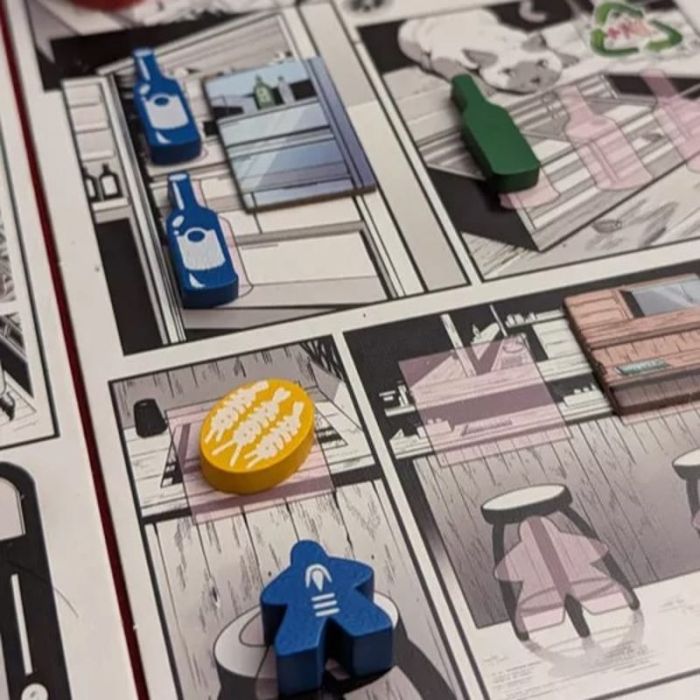
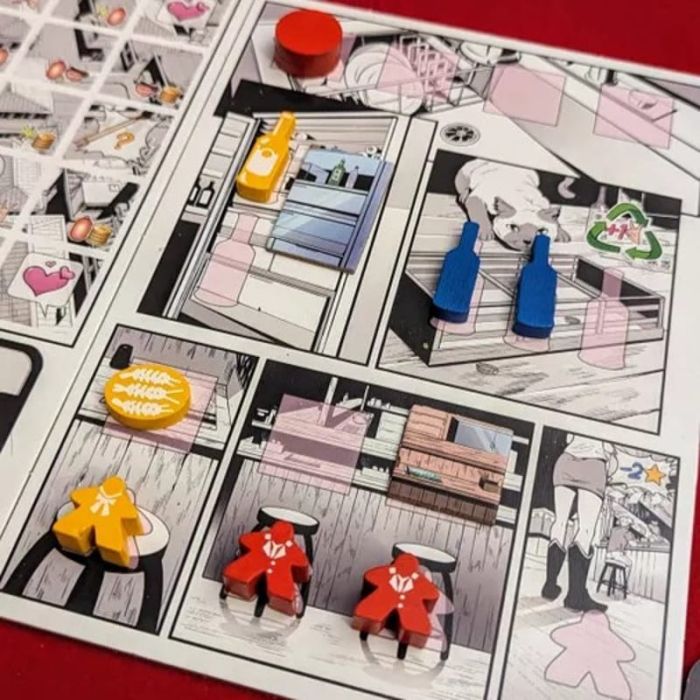
Beers must be kept cold and space is limited. Empty bottles must be recycled or they clutter the counter. Managing the fridge and recycling is as crucial as cooking: without space, you can't serve anyone.
Yatai Upgrades
During the game, you can add more cooking plates, expand the fridge, learn new recipes, or improve reviews. Each upgrade costs time but opens up different strategies.
🎲How to playThe rules in four steps▼
How to play
The flow of each turn
Each turn is a sequence of tile placement, action activation, queue management, and drawing new customers.
Choose a tile from your reserve (add customers, cook, restock fridge, serve, recycle) and place it on a free slot in the 3x2 grid. Then choose whether to activate the row or column where you placed it.
Perform all actions in the activated row or column, from left to right (or top to bottom). Each tile gives an action: cook a dish if you have ingredients, restock the fridge, serve a customer in queue, recycle empty bottles. Order matters: if you serve before cooking, that dish isn't ready.
When you add a customer, draw them from the bag and place them in the queue. When you serve one, remove them and take their review. If a customer waits too long or has no space, they can leave and cause you to lose reputation. Queues shift: meeples bump into each other and change position based on the tiles.
If you have completed an objective or accumulated reviews, you can spend resources to make upgrades: add hot plates, expand the fridge, learn new recipes, improve reviews. Then pass the turn to the next player. The game ends when the customer bag is empty or after a fixed number of rounds.
⏱️Your first gameThe chronicle, moment by moment▼
A game in five moments
What happens at the table
Not the rules. The experience.
Setup and initial queues
You place the yatai board, draw the first customer meeples from the bag and put them in the queue. Some want ramen, some want beer. The fridge is empty, the stoves are free, your action grid is a blank slate. You have to decide where to start.
First actions, first choices
You place the first action tile on the grid and activate the row or column. You cook a dish, restock the fridge, add a customer. But each tile you add moves the others: the grid fills up and you have to anticipate subsequent moves. By the second turn, you understand that cooking isn't enough: you have to manage queues.
Queues are getting longer
Halfway through the game you have four customers in line, two dishes ready, a full fridge, and no space for empty bottles. You have to serve now or someone leaves. But if you serve immediately, you lose the opportunity to recycle. Every choice is a compromise, every turn is a race against the mental clock.
Upgrades and divergent strategies
Someone at the table has expanded their fridge, someone else has added an extra hot plate to cook two dishes per turn. You have learned a new recipe. Strategies diverge and it starts to become clear who has better coordinated tiles and queues. Reviews accumulate, points separate.
Last customers, last wave
The bag is almost empty, queues are clearing. You serve the last dishes, count the positive reviews, sum the points from completed objectives. The winner is whoever managed the flow best: not who cooked the most, but who served at the right time without leaving empty bottles on the counter.
🐸What to know beforehandThree honest things, from friends▼
What to know beforehand
Three things you'll need
Steep learning curve
The rules are clear, but understanding the optimal timing between placing, activating, and serving requires at least one warm-up game. In the first few turns, you'll wonder why the queues aren't moving as you expected: it's normal, the game rewards those who anticipate two moves ahead. Don't expect to win on your first try.
Customer draw is random
Meeples come out of the bag in random order: it can happen that someone draws three easy customers and you draw three difficult ones. With 2 players it's manageable, with 4 it can create obvious imbalances. It's not a structural flaw, but if the luck of the draw bothers you, know that it's there.
Variable downtime with 4 players
With 2-3 players, the rhythm is fluid, each person plays in 30 seconds. With 4 players, turns get longer because you have to wait for everyone to resolve their activated actions. If someone suffers from analysis paralysis, games can easily exceed 60 minutes. Consider your group.
🏆Victory and defeatWhat the ending rewards▼
How it ends
How to win and how to lose
The player with the most reputation points at the end of the game wins, by summing customer reviews, completed objectives, and yatai upgrades.
Victory
- Serve the right customers at the right time, maximizing positive reviews
- Complete secret or public objectives (e.g., 'serve 5 ramen', 'recycle 10 bottles')
- Make strategic upgrades that unlock more powerful actions in the final turns
Penalties
- Dissatisfied customers leaving cause a loss of reputation points
- Unrecycled empty bottles clog the counter and block restocking actions
- Wasting turns on uncoordinated actions: cooking without serving, restocking without space
Yatai is a short and tactical management puzzle that takes less than half an hour to play but leaves you wanting to replay immediately to try a different strategy. Perfect for those who love interlocking pieces and optimization without heavy complexity.
💬Frequently Asked QuestionsQuick answers before checkout▼
Frequently Asked Questions
FAQ about Yatai
What mechanics does Yatai use?
Action drafting (you choose and place action tiles on a 3x2 grid), resource queue (you manage queues of meeple customers that move), chaining (you activate action rows in sequence). It's a placement and timing puzzle, closer to a strategic abstract game than a classic management game.
Is it better with 2 or 4 players?
With 2 players it's tighter and more tactical: the customer pool is shared but limited, games last a clear 30 minutes. With 4 it's more chaotic and the random draw has more impact, but the pace remains good if the group plays fast. It scales well, but the sweet spot is 2-3.
How long does a real game last?
The box says 30-60 minutes, in practice: 30-40 minutes with 2 players, 45-50 with 3, up to 60-70 with 4 if someone is slow. The rules are simple, but turns require a minimum of planning. It's not a 15-minute filler, but not a 90-minute heavy game either.
Can I play without knowing about Japanese street food?
Yes. The theme is cosmetic but pleasant: dishes have Japanese names (ramen, gyoza, yakitori) but the cards have clear ingredient icons. You don't need to know what a yatai is to understand that you have to cook, serve, and recycle. The setting helps immersion but the mechanics stand on their own.
Is it available in English?
Yes, this is the English edition by Dawn Town Games. Rules, objective cards, and all materials are in English. The game has very little text on the cards (only icons and dish names), so even a multilingual edition would have been playable, but here you have everything localized.
The people behind the game
Who invented it, who designed it, who publishes it — and what else they've done.
Yatai is a strategy game for 2-4 players, 30-60 minutes playtime, ages 10+, designed by Alfonso Bonfanti, Tommaso Roberto Ceglia and Riccardo Corti for Dawn Town Games. It uses action drafting, resource queue, and chaining mechanics to simulate managing a Japanese street food stall: you place action tiles on a 3x2 grid, activate rows of actions in sequence, manage queues of shifting meeple customers who ask for different dishes. English edition with localized rules, cards, and materials. Available on FroGames.it.
Yatai
Frequently Asked Questions
The answers you're looking for, no beating around the bush.
📸Do the images match the actual product?
The photos on the website often come from BoardGameGeek and are intended to give you an idea of the game. They may vary slightly from the version you receive. The content declared by the publisher is always binding.
📦Does the content of the box match what is indicated?
We always strive to provide the correct content, but minor variations are possible due to reprints or updates. The information comes directly from the publishers. If you have any questions, please contact us!
⏳How do pre-orders work?
Pre-order the game before release, payment is immediate, and the game is reserved for you. As soon as it arrives, we'll ship it right away! If there are any delays, we'll update you promptly.
🔒Can I trust buying here?
Absolutely! Secure payments, tracked shipments, and a team that loves board games as much as you do. If something goes wrong, we'll do our best to fix it.
🛠There's a problem with my order, what should I do?
Write to us now! Whether it's a missing part, damage, or an error, we'll help you resolve it as soon as possible. Your experience truly matters to us.