

Lodge
🐸 Dettagli da BoardGameGeek
Consiglio BGG sul numero di giocatori
Categorie
Meccaniche
Design & Art
Lingua
Pre-order - leggi i dettagli
🐸 Una rana saggia sa quando dividere l’ordine… e quando aspettare il salto giusto.
Pairs well with
The FroGames Card
You draw a room tile. Someone wants it, you want it, but the display is scrolling and it will be gone in a moment. Do you place it anywhere or wait for the right turn? The guest on the third floor is giving you a dirty look.
WHAT IT'S ABOUT
An alpine Tetris where every room counts
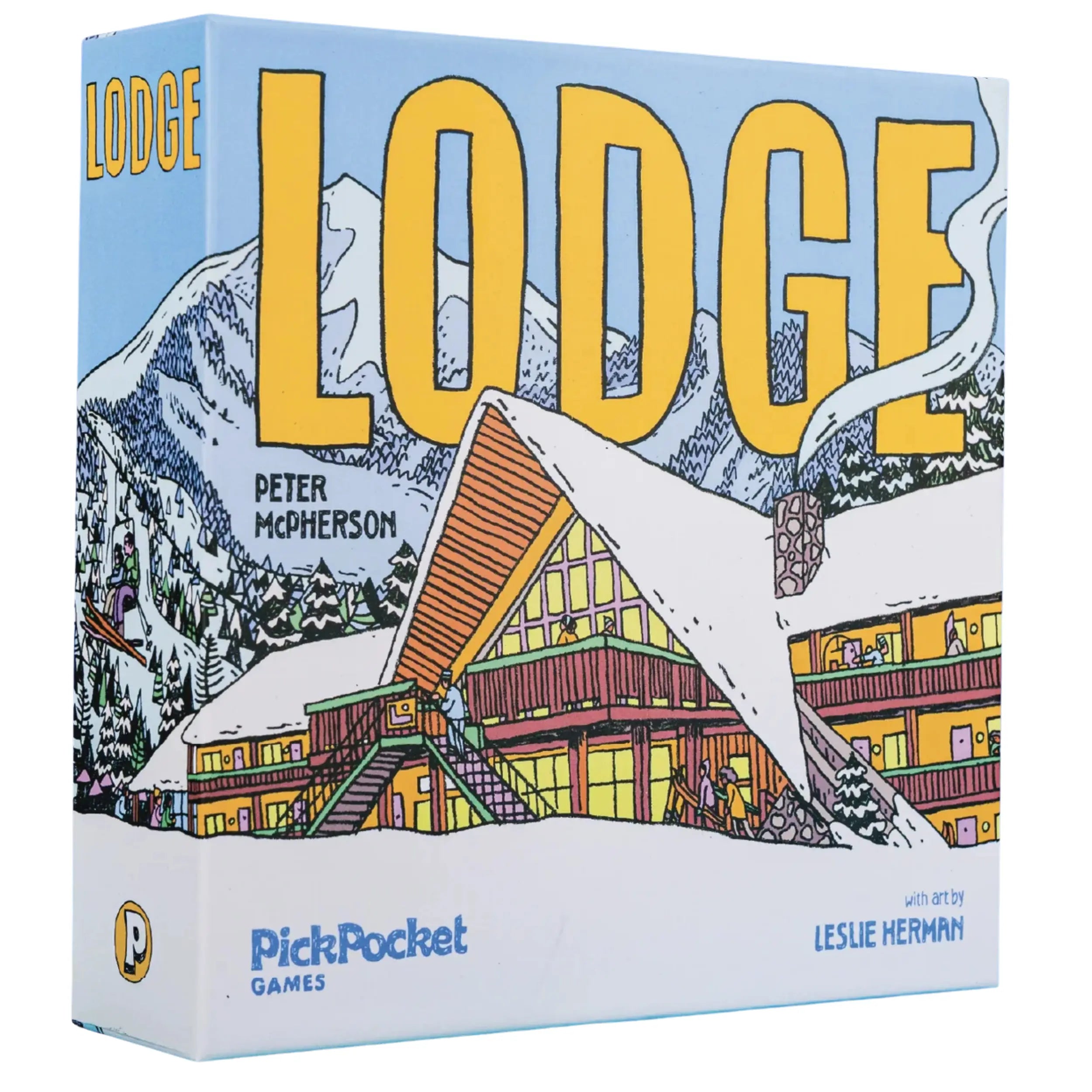
Peter McPherson (Tiny Towns, Fit To Print) brings his brand of spatial puzzles to the Swiss Alps. Leslie Herman dresses the game with minimalist illustrations that evoke wood and snow. Lodge was born from PickPocket Games and will arrive on Kickstarter in 2026, before making its way to Board Game Arena.
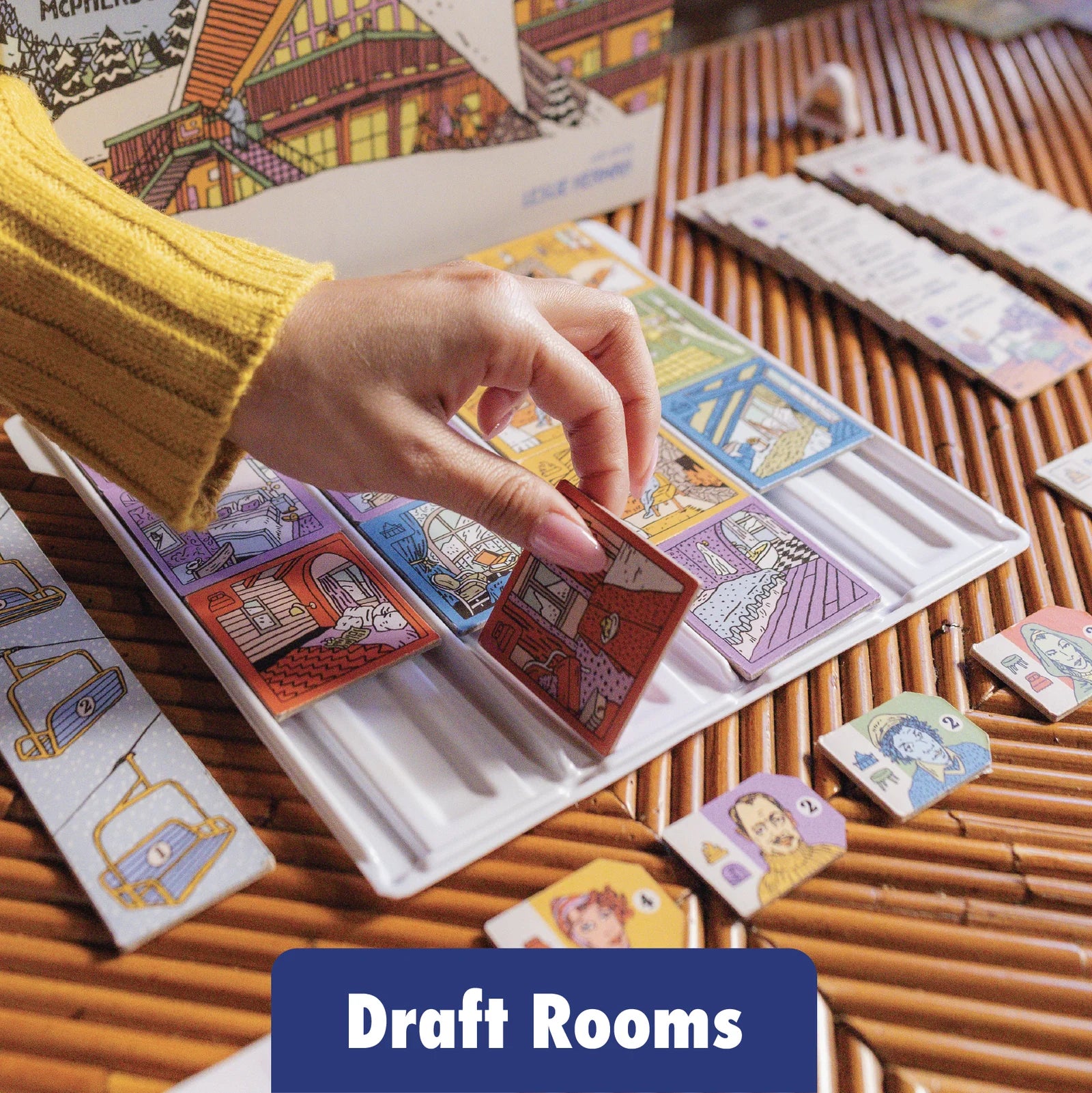
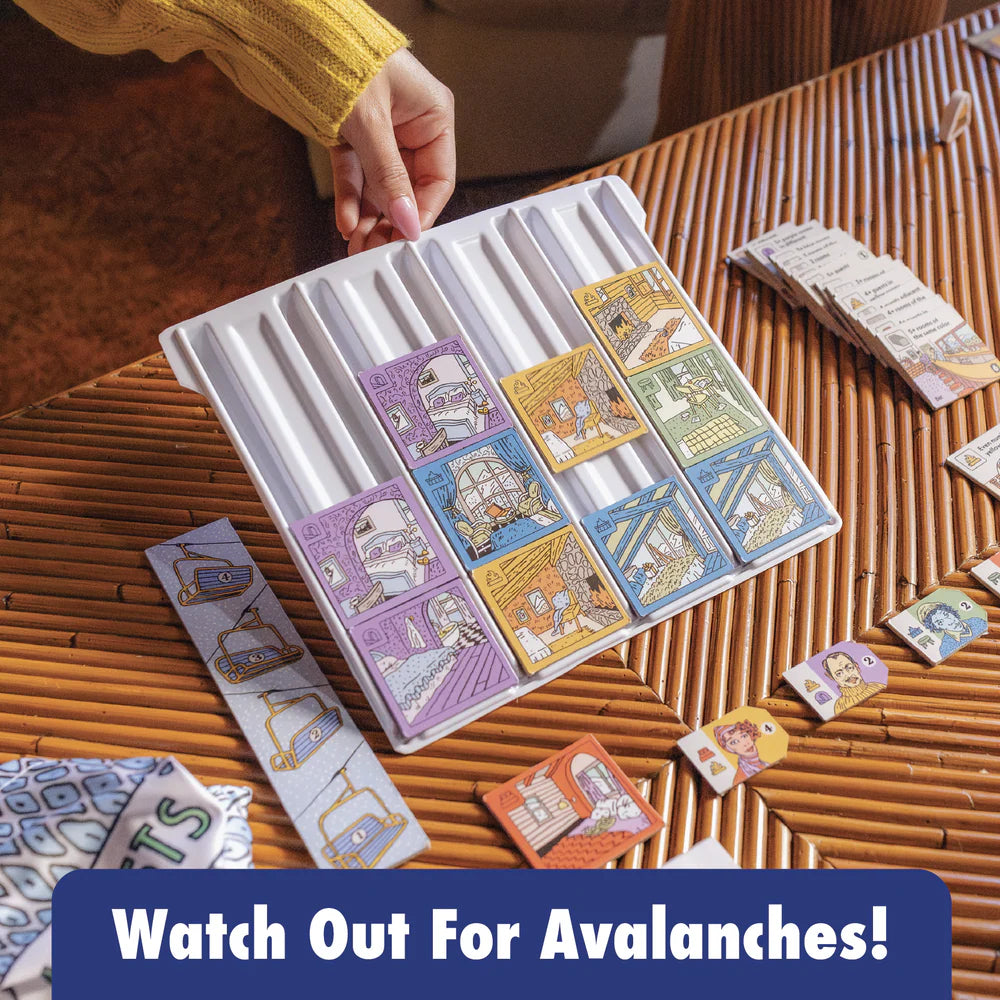
At the table, you draw room tiles from a display that scrolls each turn, placing them on the floors of your hotel, trying to match shape and function. Guests have preferences: they want the right floor, nearby amenities, a mountain view. Each well-placed tile earns points, and each satisfied guest earns more. The draft is open but the display changes quickly: you have to choose now or lose the opportunity.
What they say abroad
Lodge is a game that does not yet have established reviews. This card is an initial reading of the official materials: we will update it after the first real games.
— FroGames
"From acclaimed designer Peter McPherson comes Lodge, a spatial puzzle game set in the beautiful Swiss Alps."
From renowned designer Peter McPherson comes Lodge, a spatial puzzle set in the beautiful Swiss Alps.
— PickPocket Games

Lodge
The game includes official solo rules (min_players=1 confirmed). We don't yet know if it uses an automa or only setup/scoring variations, but McPherson has experience with solo modes (Tiny Towns has a dedicated variant). The solo mode will likely maintain the optimization puzzle but lose the tension of competitive drafting: the experience should be complete but less tense.
FrogScore · editorial rating FroGames · based on rules, international reviews and play sessionsThe puzzle pieces
What you put into play
Room tiles
Different shapes, different functions. Rooms, suites, services. Each tile has a grid configuration: you place it on the right floor or waste space. The draft scrolls: if you wait too long, it disappears.
Guests
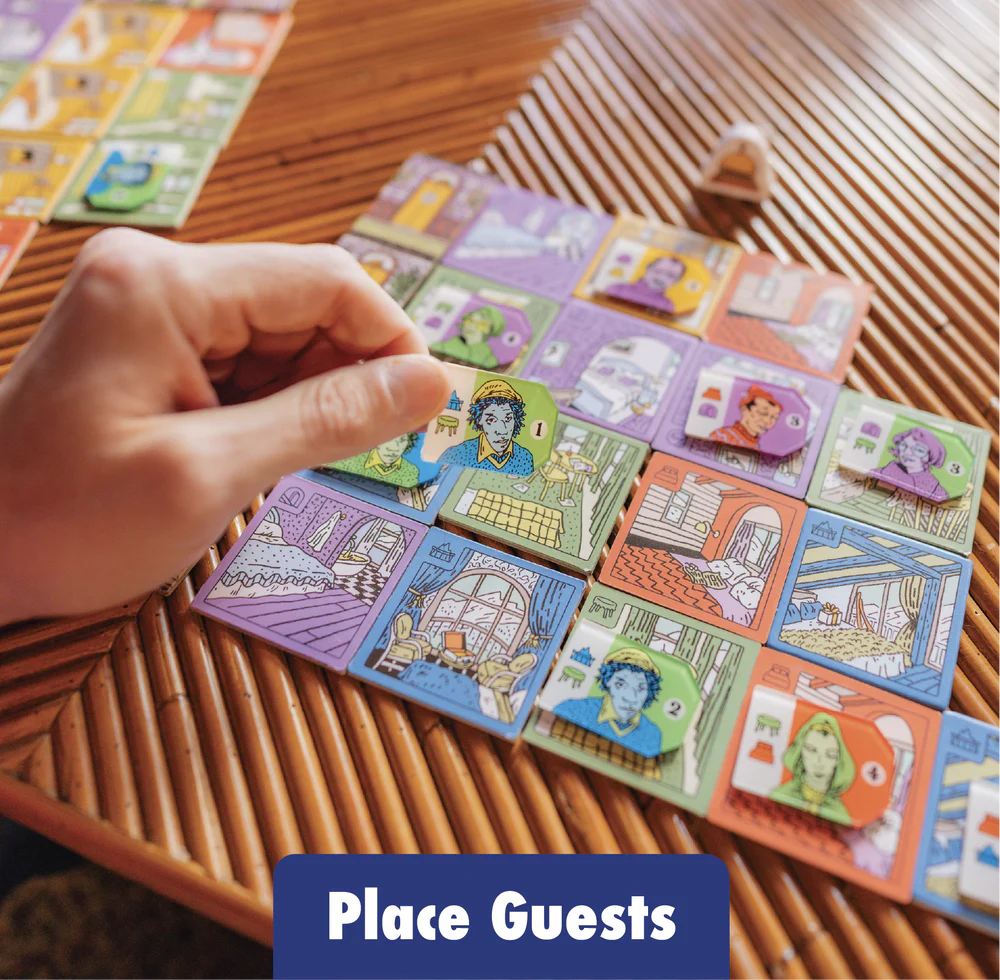
Guest cards with clear preferences: specific floor, proximity to certain services, view. Satisfying them earns bonus points. Ignoring them means losing easy points. The game rewards those who build with guests in mind, not just tiles.
Services and amenities
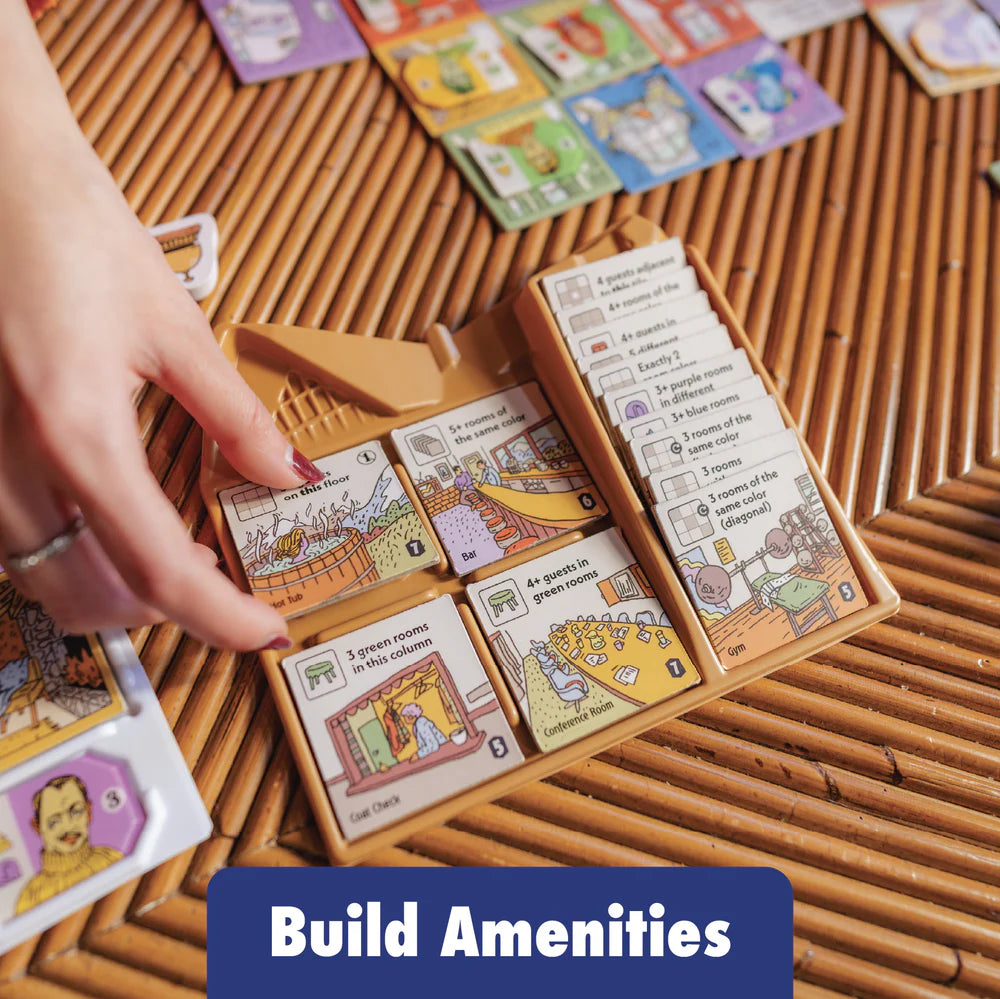
Spa, restaurant, game room. Building them unlocks points and attracts demanding guests. They take up space but pay off if positioned well. The best hotel is not the largest: it is the most functional.
Scrolling display
The heart of the draft. Tiles are in a row, visible to everyone. Each turn someone drafts and the display advances: what you see now will be gone in two turns. Anticipating what remains available is half the game.
Come si gioca
Video dimostrativo di gameplay.
🎲How to playThe rules in four steps▼
How to play
The flow of each turn
Fast turns, rich choices. Draft, place, advance. The pace is intense.
You draw a room tile from the sliding display. It's visible to everyone, so others know what you've taken. If the tile you wanted isn't there, choose between waiting or taking an alternative.
You place it on one of your floors, respecting the grid. Tiles must interlock with existing ones. You can rotate them but not overlap them. Choose the right floor if you want to satisfy guests: some want specific floors.
If you have completed a room or service, you can reveal guest cards and assign them to spaces. Guests give bonus points if their preferences are met (floor, proximity to services, view). Revealing them too early constrains future moves.
The display advances: tiles that no one has taken slide, new tiles come into play. What you see now will be gone or taken in two turns. Anticipating the display flow is crucial for planning.
⏱️Your first gameThe chronicle, moment by moment▼
A game in five moments
What happens at the table
Not the rules. The experience.
Setup and first tiles
Everyone has their empty hotel board, three floors to fill. The tile display is full, everyone sees what's there. The first choices are easy: infinite space, no pressure. Someone drafts a large suite, someone else a row of standard rooms. Plans start to take shape.
The tension of the draft
After three turns, the display has changed twice. The tile you wanted is gone, someone took it. Now you have to choose between a suboptimal tile or waiting for the next round hoping something good appears. But waiting means losing a turn. Those who draft aggressively fill up quickly, those who wait optimize but risk gaps.
Demanding guests
Someone reveals a guest card: they want the second floor, near the spa. You don't have it. You realize you built without thinking about the guests and now you have to change strategy. Those who planned collect bonus points, those who improvised bite their nails. The last turns become a race to fix mistakes.
Closing spaces
The floors are almost full. There are still awkward gaps that don't match the available tiles. Someone sacrifices points to fill them, someone else leaves them empty and hopes for small tiles. The display slides, options dwindle. Those who managed spaces well finish with satisfaction, those who improvised swear.
Counting and surprises
Hotels finished, counting begins. Points for tiles, guest bonuses, penalties for empty spaces. Someone thought they had won and discovers that dissatisfied guests cost them dearly. Those who built with objectives in mind win, those who only filled spaces fall behind. End of game in 10 minutes, immediate rematch.
🐸What to know beforehandThree honest things, from friends▼
What to know beforehand
Three things you need to know
The rules are learned in 10 minutes and the first game flows smoothly. But optimizing spaces, anticipating the draft, and satisfying guests requires multiple games. Those coming from Tiny Towns will feel at home, while newcomers to spatial puzzles might underestimate initial choices and end up with impossible gaps. It's not a party game: it requires concentration.
With 2 players, turns are very quick; with 4, someone might think too much about where to place. The open draft helps (everyone sees everything, no one waits for revelations), but if there's an analysis paralysis at the table, the game lengthens. With fast players, you're under an hour; with slow thinkers, you're close to a full 60 minutes.
The order in which tiles appear from the display is random: if all the awkward shapes come out in the first turns, whoever drafts first has an advantage. The game balances this with the open draft (you see everything, choose what to leave for others) but you can't eliminate variability. Those who hate even minimal luck might grumble. Those who accept that a puzzle can have random pieces will enjoy it.
🏆Victory and defeatWhat the end rewards▼
How it ends
How to win
Game ends when everyone has filled their floors or tiles run out. Points are counted: the one who built best wins.
Victory points
- Points for each tile placed (value printed on the tile).
- Bonus for satisfied guests (they have the preferred floor, nearby services, requested view).
- Extra points for built and activated services and amenities.
Penalties
- Penalty for empty spaces on floors (each gap costs points).
- Penalty for dissatisfied guests (revealed but with unmet preferences).
- No points for poorly placed tiles or inactive services.
Lodge is pure McPherson: elegant puzzle, dense choices, light but functional theme. If you liked Tiny Towns, you'll like this. If you're looking for narratives or strong interaction, look elsewhere.
💬Frequently Asked QuestionsQuick answers before checkout▼
Frequently Asked Questions
FAQ about Lodge
What mechanics does Lodge use?
Open drafting (open draft from a sliding display), tile placement (placing tiles on a grid), pattern building (interlocking construction), end game bonuses (final scores for objectives). It's a spatial puzzle with elements of planning and optimization, without direct attack or bluffing.
Is it suitable for those who have never played Tiny Towns?
Yes. Lodge is standalone and the rules are simpler than Tiny Towns (weight 1.8 vs 2.0). If you're looking for a first spatial puzzle, it works great. If you've already played Tiny Towns, you'll recognize the style but find different mechanics (the sliding draft changes everything).
How does it scale with different numbers of players?
1 to 4 players. The solo mode is official (included in the base rules), likely with varied setup or scoring. With 2 players it's fast and tactical, with 4 the draft is more competitive but downtime can increase. Duration varies from 30 minutes (2 fast players) to 60 minutes (4 thoughtful players).
How long does a game really last?
BGG says 30-60 minutes, but it depends on the group. With players who know the game and decide quickly, you'll be under 45 minutes even with 4 players. With beginners or someone who optimizes every move, you can easily reach 60 minutes. Setup is quick (5 minutes), final scoring too (10 minutes).
Is it available in Italian?
No, this edition is in English. The game is language-independent: the tiles are iconic, guest cards have clear symbols, text is minimal. You need to read the English rulebook once, then you can play without problems. PickPocket Games has not announced any localized editions for now.
The people behind the game
Who invented it, who designed it, who publishes it — and what else they've done.
Lodge is a board game for 1-4 players designed by Peter McPherson (Tiny Towns, Fit To Print) and published by PickPocket Games. Duration 30-60 minutes, recommended age 14+. The main mechanics are open drafting from a sliding display and tile placement on a grid. Set in the Swiss Alps, the game puts you in the shoes of a hotel manager: you draft room tiles, fit them onto floors, and try to satisfy demanding guests to earn points. Lodge combines spatial puzzling and optimization with a dynamic drafting system that keeps everyone engaged. Includes an official solo mode. Available on FroGames.it in English edition (language independent, minimal text).
Lodge
Frequently Asked Questions
The answers you're looking for, no beating around the bush.
📸Do the images match the actual product?
The photos on the website often come from BoardGameGeek and are intended to give you an idea of the game. They may vary slightly from the version you receive. The content declared by the publisher is always binding.
📦Does the content of the box match what is indicated?
We always strive to provide the correct content, but minor variations are possible due to reprints or updates. The information comes directly from the publishers. If you have any questions, please contact us!
⏳How do pre-orders work?
Pre-order the game before release, payment is immediate, and the game is reserved for you. As soon as it arrives, we'll ship it right away! If there are any delays, we'll update you promptly.
🔒Can I trust buying here?
Absolutely! Secure payments, tracked shipments, and a team that loves board games as much as you do. If something goes wrong, we'll do our best to fix it.
🛠There's a problem with my order, what should I do?
Write to us now! Whether it's a missing part, damage, or an error, we'll help you resolve it as soon as possible. Your experience truly matters to us.