
Paradox Island
🐸 Details from BoardGameGeek
Consiglio BGG sul numero di giocatori
Categorie
Meccaniche
Design & Art
Lingua
🐸 How pre-orders work
🐸 A wise frog knows when to split the order… and when to wait for the right leap.
- Arrives
- October 28, 2026
Si abbina bene con
The FroGames review
You announce the movement, you only hear a name. Take note. Every revealed tile is a piece of the puzzle. At the end of the game, there is a map on the table that no one had seen and that everyone drew together.
WHAT IT IS
An island that only one sees, and everyone must map
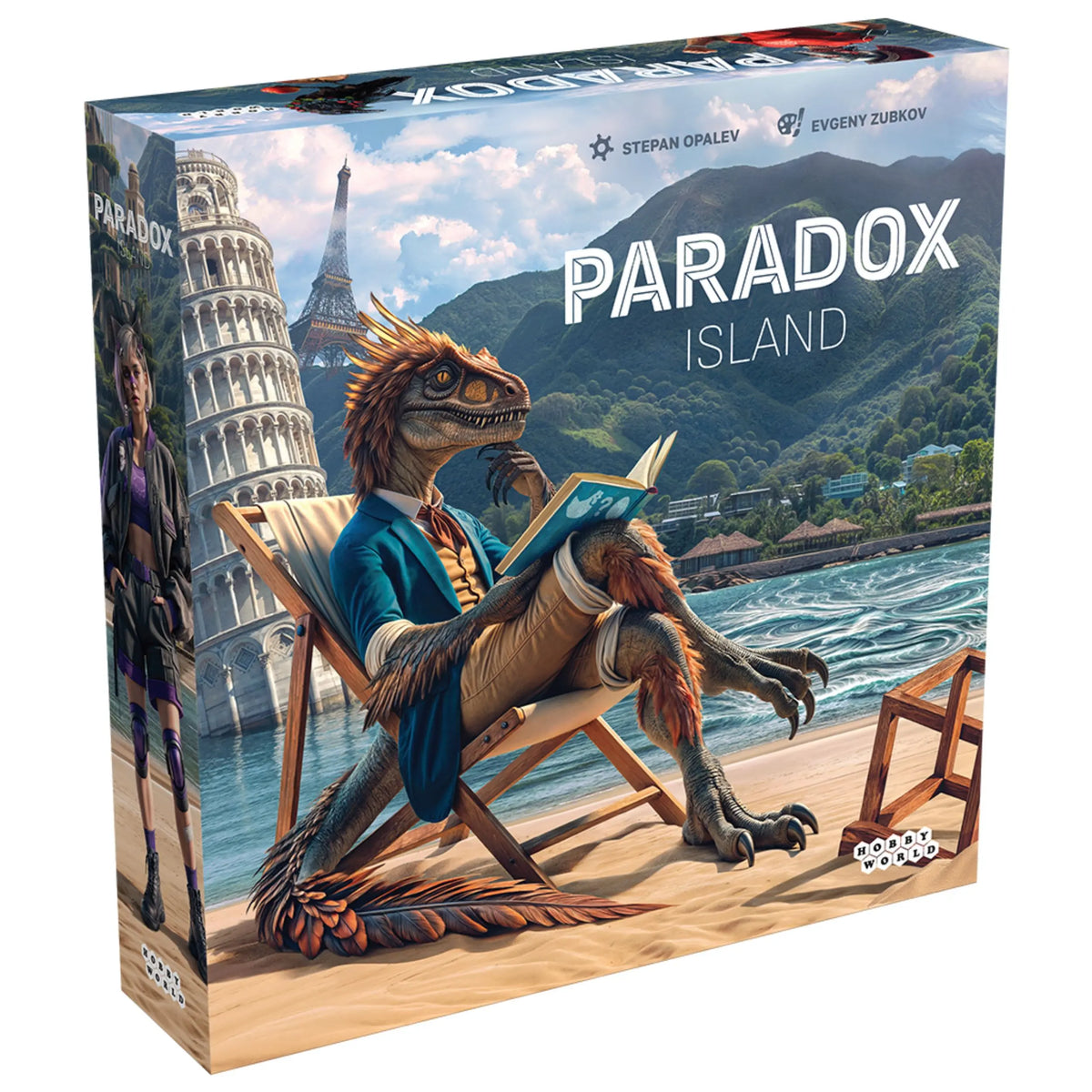
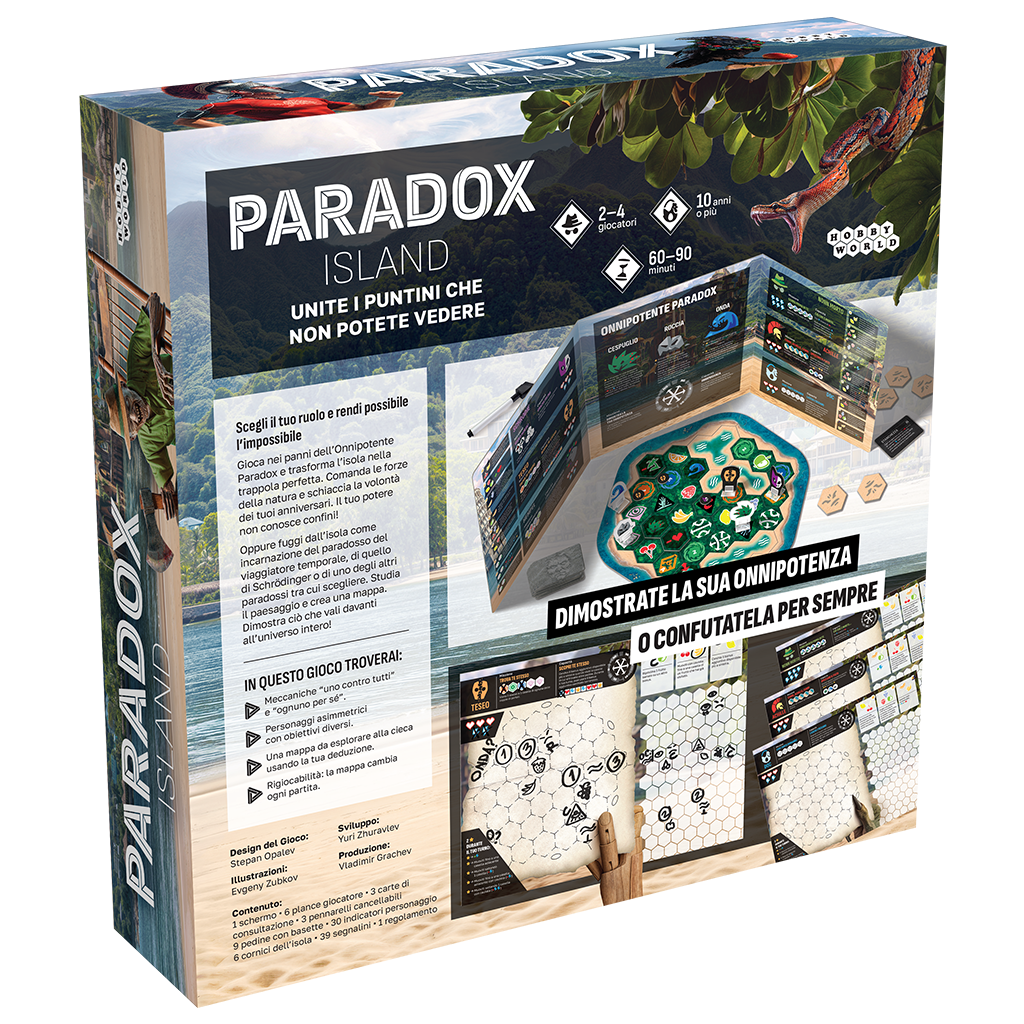
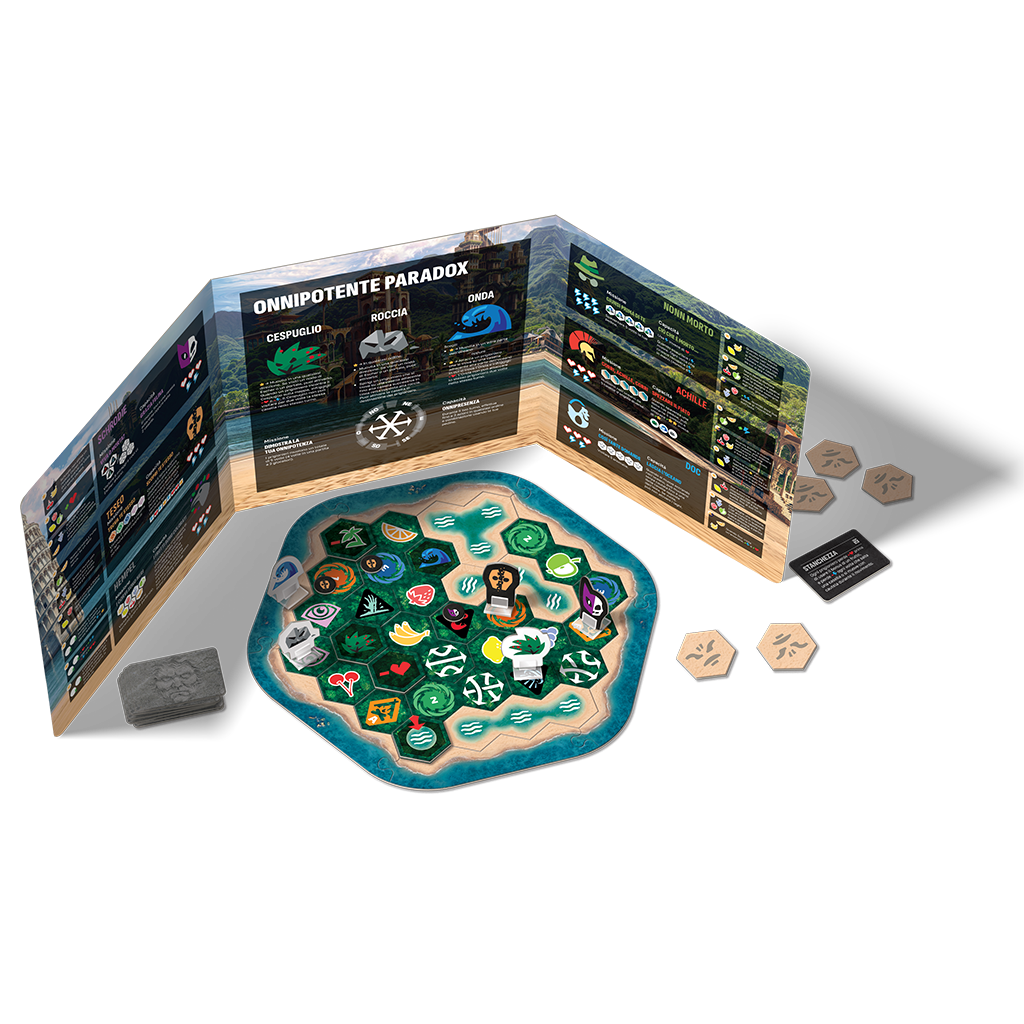
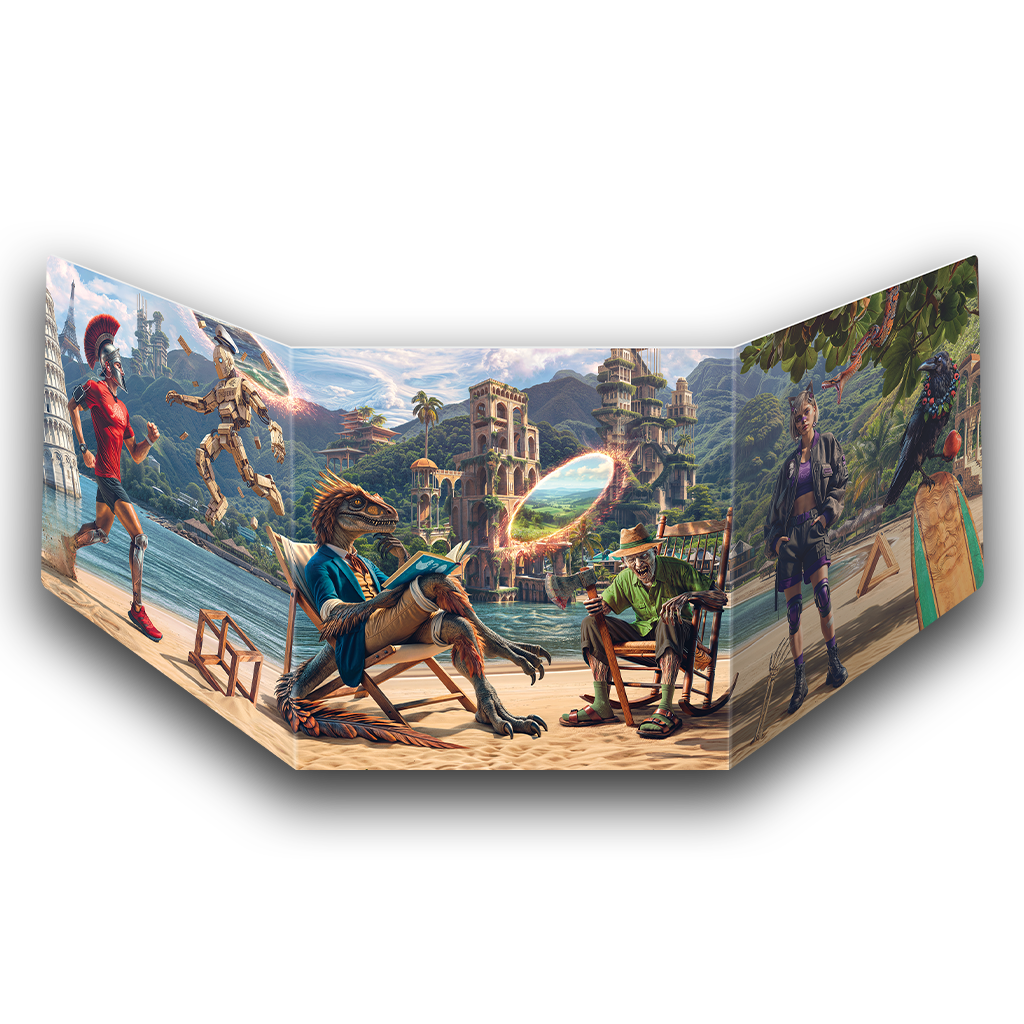
Designed by Stepan Opalev and published by Hobby World (Asmodee for the international market), Paradox Island is an asymmetrical deduction game where one player controls the island and the others try to survive by moving blindly. Evgeny Zubkov's illustrations evoke a setting suspended between adventure and mystery, where every hexagonal tile is a discovery or a trap.
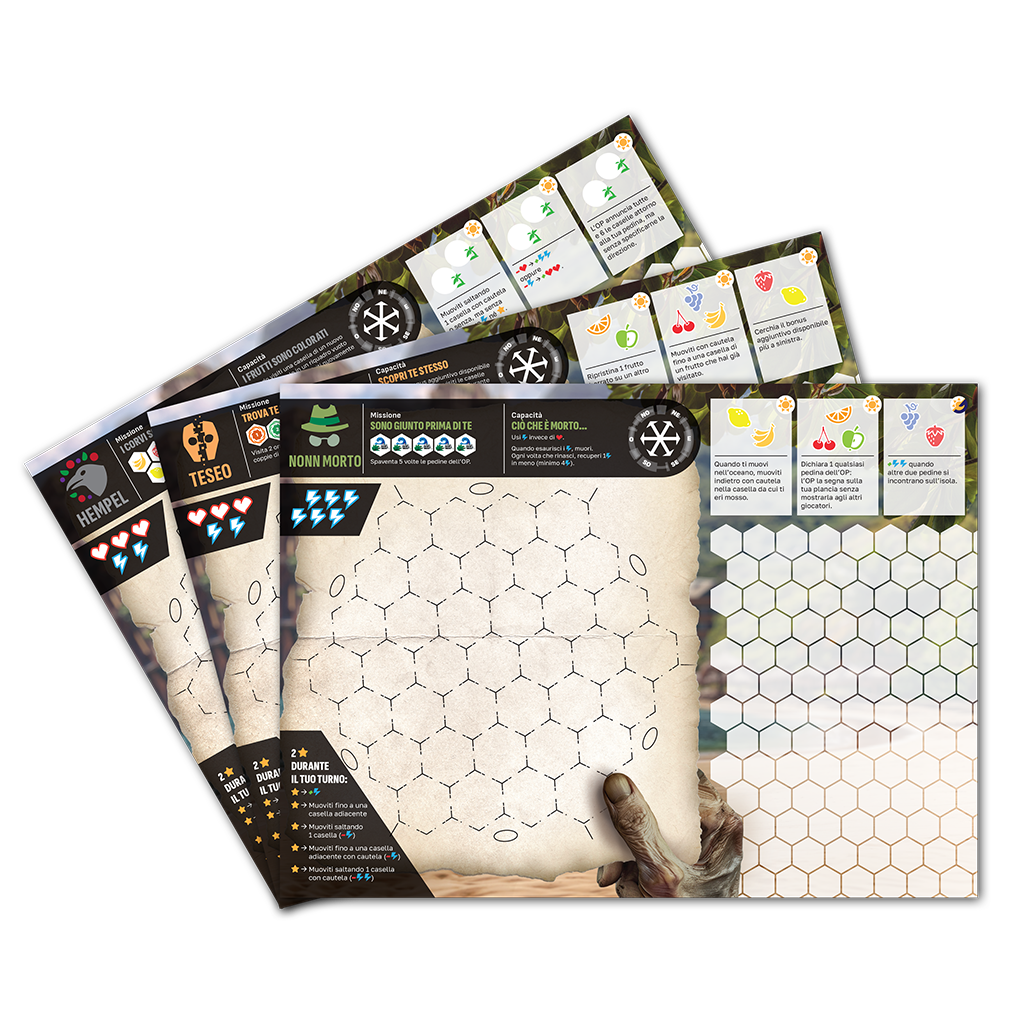
The island's prisoners declare their movements without seeing the board: the Paradox Omnipotence (PO) only says the name of the tile reached. Everyone takes notes, progressively reconstructing the map on blank sheets. Whoever completes their mission first wins; the PO wins if they eliminate the prisoners five times. Hidden movement, modular hexagonal grid, asymmetrical objectives: every game is a tactical treasure hunt against an opponent who knows everything.
What they say abroad
"Paradox Island is an adventure deduction game, in which all players except one will be exploring the island that only that one player can see."
— Hobby World
Paradox Island is a game played twice: once at the table, and once on paper, where you draw the island you have never seen.
— FroGames

Paradox Island
FrogScore · FroGames editorial rating · based on the rulebook, international reviews, and gaming sessionsWhat's on the island
Components and obstacles
Modular hexagonal grid
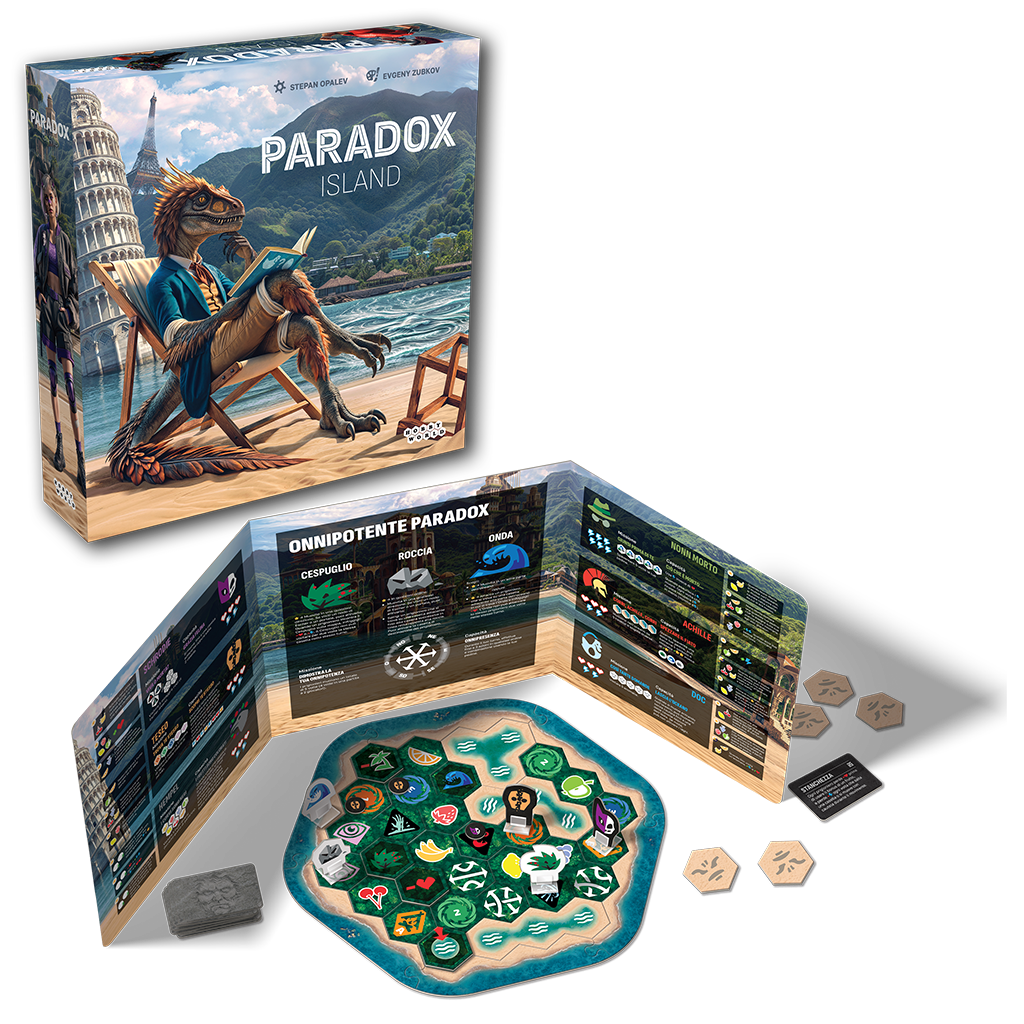
The island changes every game. The PO builds the board with hexagonal tiles: safe squares, traps, resources. The prisoners only see a blank sheet.
Energy and life
Each prisoner has energy (for special movements) and health points. Activating the wrong tile costs dearly. Manage resources or end up eliminated.
Rock, Bush, Wave
The PO controls three mobile tokens on the island. They move them on their turn to block, damage, or move the prisoners. Living obstacles that change tactics.
Asymmetrical missions
Each prisoner has secret objectives: visit specific tiles, reach zones, perform actions. Whoever completes their mission first wins.
Come si gioca
Video dimostrativo di gameplay.
🎲How to playThe rules in four steps▼
How to play
The flow of each round
Prisoners play clockwise; the OP closes the round. Each turn consists of declaring, revealing, and noting down.
Up to 2 actions: move to a space (activating it automatically) or spend 1 energy to move while ignoring the effect or jumping over. Alternatively, restore energy instead of moving.
After each move, the OP says the name of the reached space out loud (e.g., 'F7'). Everyone hears, everyone takes notes. The space's effect activates immediately, unless the player has spent energy to avoid it.
Each player updates their sheet: drawing spaces, tracing connections, marking others' movements. The map takes shape in the notes, not on the board.
The OP moves Rock, Bush, or Wave. Each piece has different effects: blocking, damaging, moving prisoners. The OP wins by eliminating prisoners 5 times in total; prisoners win by completing their mission first.
⏱️Your first gameThe chronicle, moment by moment▼
A game in five moments
What happens at the table
Not the rules. The experience.
Leap into the void
The OP builds the island behind the screen. You receive your secret mission and a blank sheet. Choose the first direction: north, south-east, west? The OP says the name of the space. Take a note. You don't know where you are yet, but you've started drawing.
First intersections
Someone announces they've reached B3. You are on C2. Wait: if they are to the north and you are to the south-west, that D4 space you heard earlier must be in between. The map begins to take shape through connections between others' movements. Each name is a point of reference.
The OP plays their cards
The OP moves the Rock to E5. It blocks a key passage. Then they move the Wave toward the player closest to the goal zone. Moving obstacles force everyone to recalculate their paths, and someone loses health on a trap space.
Someone completes a map
A player has connected all the spaces they've heard. Their map is almost complete: they know where to go to finish the mission. But the OP senses the confidence and moves the Bush right there. The race heats up.
Victory or fifth elimination
Someone declares their mission's final action. Or the OP eliminates a prisoner for the fifth time. Everyone turns over their sheets: different maps, different insights, one single island. The winner smiles, but everyone wants to see what the board was really like.
🐸Know before you goThree honest things, from friends▼
Know before you go
Three things to consider
If you hate writing during games, this isn't for you. The map only exists on the players' sheets: without precise notes, you're lost. Those who love deduction and improvised cartography will feel right at home.
The role of the Paradox Omnipotence requires experience and a sense of balance. An OP who is too aggressive crushes the prisoners; one who is too passive lets them win immediately. After 2–3 games, the balancing improves.
Every game, someone has to play the OP. If nobody in your group wants that role (or everyone does), the dynamic becomes complicated. Asymmetry is the heart of the game, but it must be accepted by everyone at the table.
🏆Victory and defeatWhat the finale rewards▼
How it ends
Victory and defeat
Two opposing victory conditions, a race against time and information.
Prisoner victory
- A prisoner is the first to complete their mission (visiting spaces, reaching zones, performing specific actions a certain number of times)
- Missions are asymmetric: everyone has different goals, but all try to deduce the map to reach them
- The winner is the one who best reconstructed the island and optimized their path
OP victory
- The OP wins if prisoners are eliminated a total of 5 times
- Each prisoner has health points: once those are gone, they are eliminated and restart (this counts as 1 elimination)
- The OP uses trap spaces and moving pieces (Rock, Bush, Wave) to damage and slow down players
It's a tactical scavenger hunt where the map is the prize, not the destination. And where the winner is the one who drew an island they've never seen better than the others.
💬Frequently asked questionsQuick answers before the cart▼
Frequently asked questions
Paradox Island FAQ
What mechanics does Paradox Island use?
Hidden movement, progressive deduction, hexagonal grid, modular setup, asymmetric powers. Each prisoner has variable actions and secret missions; the OP manages the board and three obstacle pieces.
Is it really necessary to take notes during the game?
Yes, absolutely. Prisoners cannot see the board; they must reconstruct the map by listening to the names of the spaces announced by the OP. Without noting movements and connections, it's impossible to orient yourself. Bring paper and a pencil.
Is the OP role difficult to play?
It requires attention and a sense of balance. The OP must manage the board, respond to movements, move three pieces, and calibrate the difficulty. After 1–2 practice games, the role becomes fluid. Not suitable for those who want to play distractedly.
Does it work well at all player counts?
At 2 players (1 OP + 1 prisoner), it is a pure and tense challenge. At 3–4 (1 OP + 2–3 prisoners), shared deduction increases: you hear more movements, the map forms faster, but the OP has more targets. Both configurations work, but 3 players is the sweet spot.
Is it available in Italian?
Yes, this is the Italian edition published by Asmodee. The rules, cards, and components are all in Italian.
The people behind the game
Who invented it, who designed it, who publishes it — and what else they've done.
Paradox Island is an asymmetric deduction game for 2-4 players, 60-90 minutes, ages 10+. Designed by Stepan Opalev and published by Asmodee, it uses hidden movement mechanics and a modular hexagonal grid: one player (the Paradox Omnipotence) sees the island, the others move blindly and reconstruct the map by listening to space names. Asymmetric missions, moving obstacles, progressive deduction. Available on FroGames.it.
Paradox Island
Frequently Asked Questions
The answers you're looking for, no beating around the bush.
📸Do the images match the actual product?
The photos on the website often come from BoardGameGeek and are intended to give you an idea of the game. They may vary slightly from the version you receive. The content declared by the publisher is always binding.
📦Does the content of the box match what is indicated?
We always strive to provide the correct content, but minor variations are possible due to reprints or updates. The information comes directly from the publishers. If you have any questions, please contact us!
⏳How do pre-orders work?
Pre-order the game before release, payment is immediate, and the game is reserved for you. As soon as it arrives, we'll ship it right away! If there are any delays, we'll update you promptly.
🔒Can I trust buying here?
Absolutely! Secure payments, tracked shipments, and a team that loves board games as much as you do. If something goes wrong, we'll do our best to fix it.
🛠There's a problem with my order, what should I do?
Write to us now! Whether it's a missing part, damage, or an error, we'll help you resolve it as soon as possible. Your experience truly matters to us.