Two-player version:Fugitive vs. Agent
Tension, deduction, bluffing and reading the opponent.
1) Two opposite and asymmetrical roles
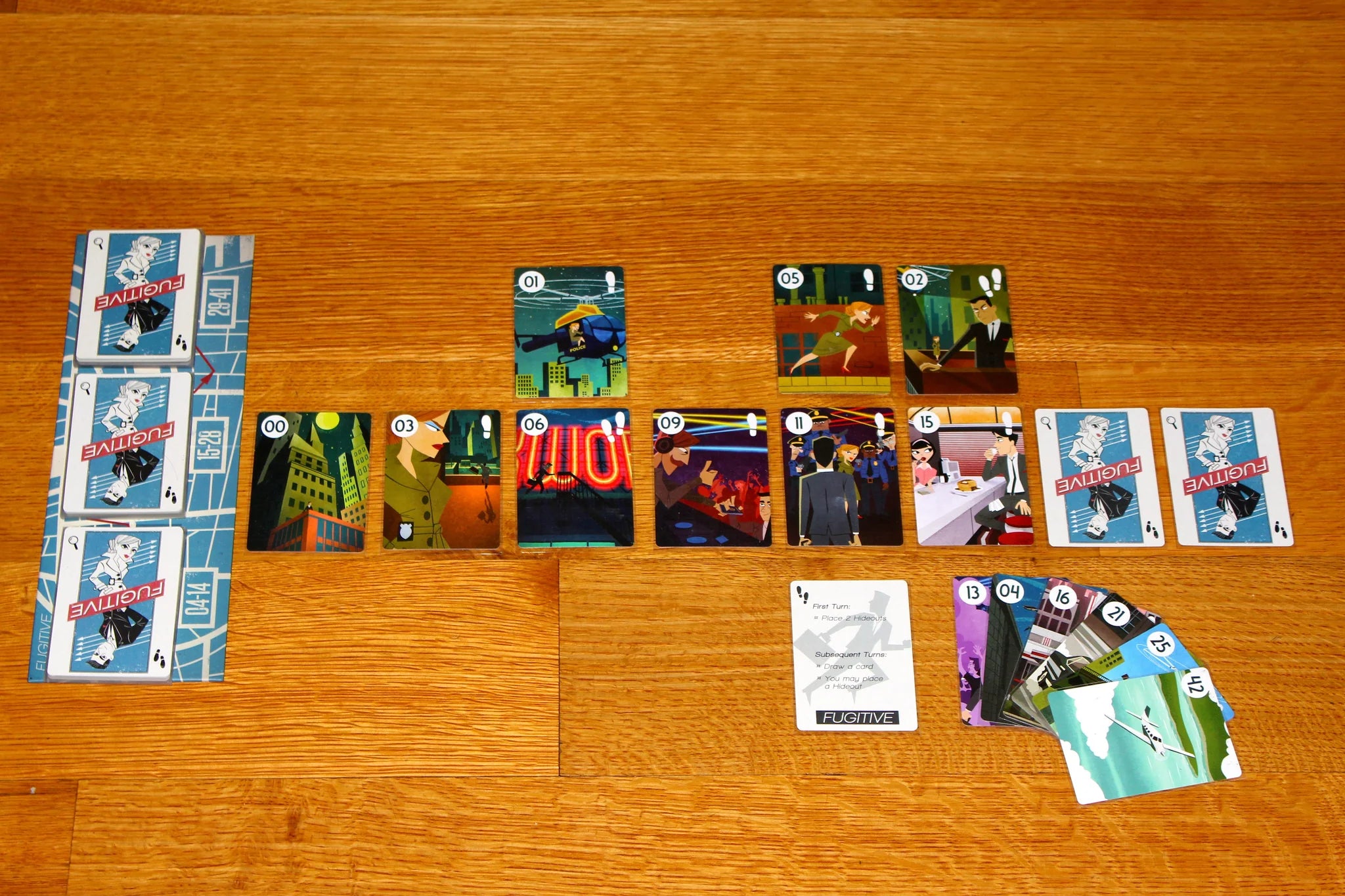
A player plays theFugitive, who wants to escape by placing hidden cards until he reaches the finish line card.
The other interprets theAgent, which attempts tofind out what cards he has laid downand stop it before it gets to the end.
2) The Fugitive plays face-down cards and must progress logically
On the table the Fugitive builds a series of cards calledHiding places.
Every new hiding place must have a valuelarger and more attainablecompared to the previous one, to simulate the escape step by step.
If he can't or won't play a new hideout,may draw an extra card from the lowest available deck(new Second Edition rule).
3) The Agent investigates and tries to guess the hidden cards
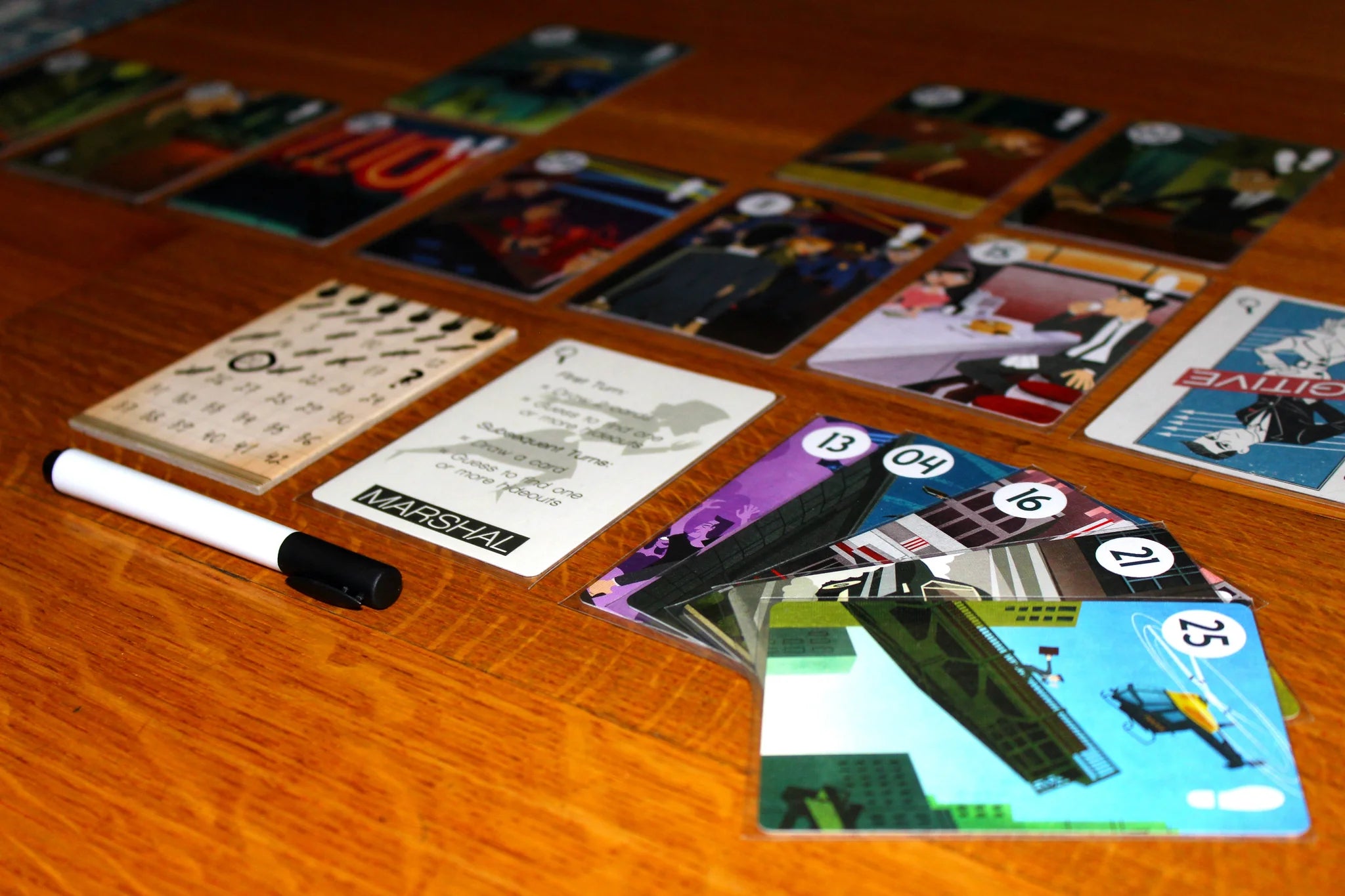
At each stage the Agent attempts todeclare the numbers of the hole cardswhich he thinks were used by the Fugitive.
If the prediction is correct,those cards are revealedand the escape narrows.
If he misses, the Fugitive remains safe for another turn.
4) If all of the Fugitive's hidden cards are revealed, he is captured.
Tension builds as the cards are drawn and the possibilities for movement become more predictable.
If the Agent succeeds inreveal all the face-down cards, the Fugitivehe is takenand the game ends immediately.
5) How each player wins
TheFugitivehe wins if he manages toreach the last valid hiding placewithout being discovered.
THE'Agenthe wins if he manages tounmask the entire movement sequencebefore the final escape.
This edition also introduces the systemSHIFT, which allows you tomodulate the difficultyand offer balanced matches between players with different experiences.