

Underwood
🐸 Dettagli da BoardGameGeek
Consiglio BGG sul numero di giocatori
Categorie
Meccaniche
Design & Art
Lingua
Pre-order - leggi i dettagli
🐸 Una rana saggia sa quando dividere l’ordine… e quando aspettare il salto giusto.
Pairs well with
The FroGames Card
Grow a mushroom, expand the grid, choke out others. Every tile you steal comes at a cost: the winner has resources to pay the debt.
WHAT IT'S ABOUT
Silent struggle in the forest undergrowth
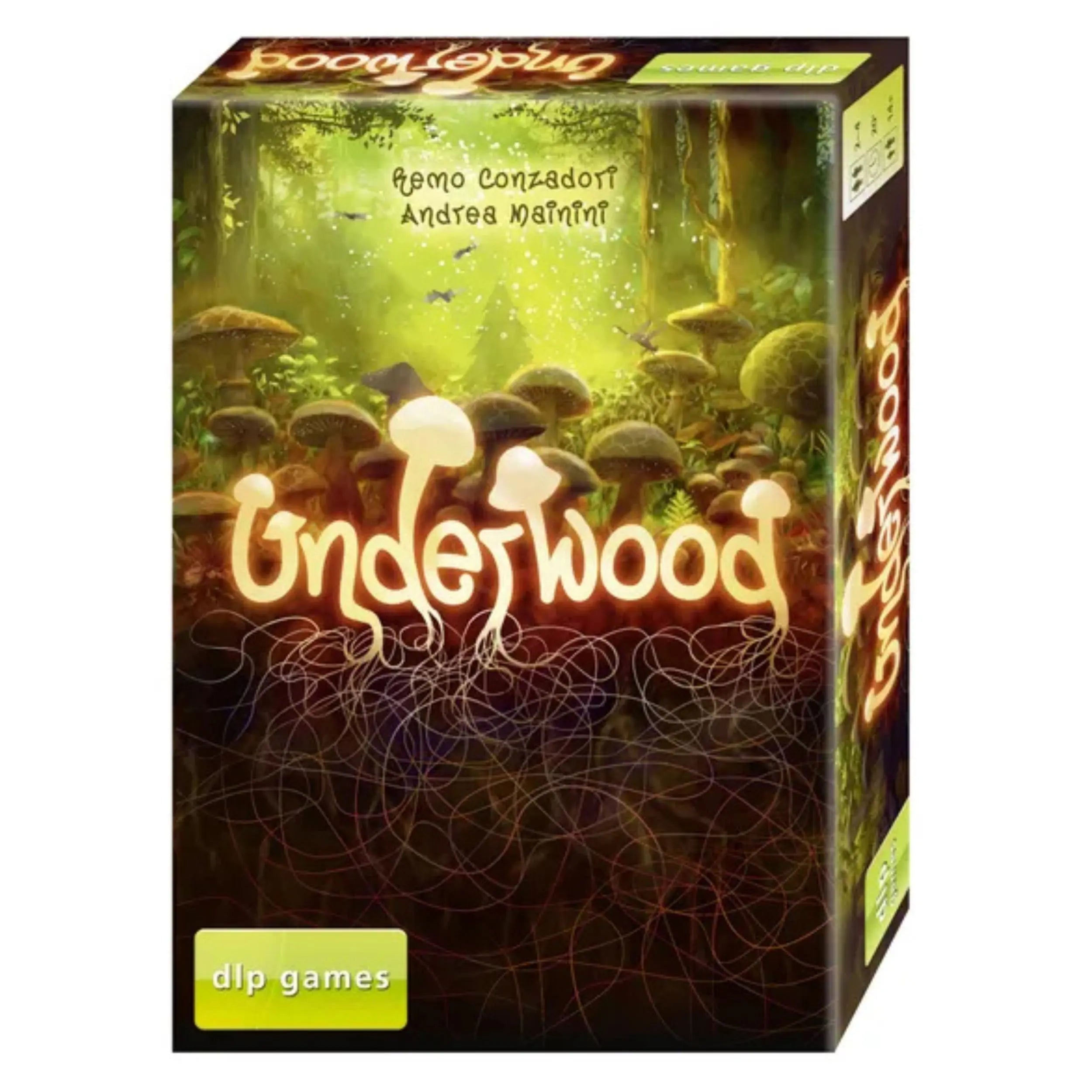
Underwood is an abstract game designed by Remo Conzadori and Andrea Mainini, published by dlp games for autumn 2026. The theme evokes mycelial networks competing for space beneath the forest surface, but the structure is pure strategy: area majorities on a hexagonal grid that changes every game.
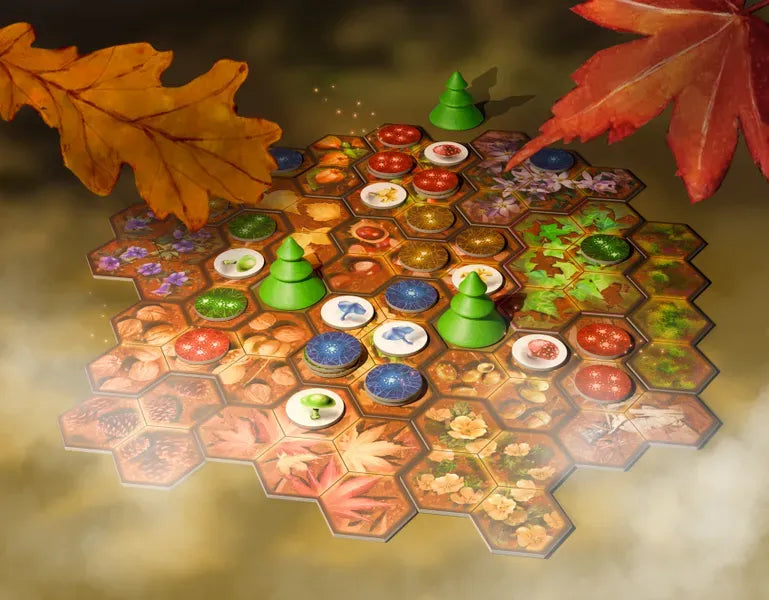
Each turn, you grow a mushroom and place new mycelium tiles around it. When you overlap other players' mycelia, you gain majorities on the undergrowth tiles, which are worth points based on their size. The dirty move comes at a cost: every time you cover an opponent, you pay them compensation. The game ends when a player can no longer grow, due to exhaustion or encirclement.
What they say abroad
"A sophisticated, strategic game for 2–4 players, featuring simple rules whose various options only become apparent upon closer inspection."
A sophisticated, strategic game for 2–4 players, featuring simple rules whose various options only become apparent upon closer inspection.
— dlp games
It's tight territory, an abstract with social costs. We want to see how deep it gets when the table gets their hands on it.
— FroGames

Underwood
FrogScore · FroGames editorial rating · first read: based on rules and official presentation, updated with initial playsThe tools of conquest
What you have in front of you during the game
Mushrooms
Your pegs on the board. Each turn you grow one and expand your network around it. Without mushrooms, you can't place mycelia.
Mycelium tiles
Your territorial extension. You place them around mushrooms to gain majorities on forest tiles. Once they're gone, you lose.
Forest tiles
The modular battlefield. Each tile is worth points based on its size. Whoever has the most mycelia on it takes control.
Compensation
The price of war. Every mycelium you overlap from rivals costs you resources. Expand poorly and you'll run out of money for the endgame.
🎲How to playThe rules in four steps▼
How to play
The flow of each turn
Underwood has a very simple structure: grow a mushroom, spread mycelium around it, pay for damages. Repeat until someone gets stuck.
Choose one of your existing positions on the board and place a new mushroom there. You now have a new pivot to expand your network.
Take new tiles from your supply and place them in the hexagons adjacent to the newly grown mushroom. You can overlap them with other players' mycelium.
For each opponent's mycelium you covered, pay them one resource. If you cannot pay, you cannot overlap.
Check the forest tiles where you placed. If you have more mycelium than anyone else on a tile, you gain control of it and accumulate victory points based on its size.
⏱️Your first gameThe chronicle, moment by moment▼
A game in five moments
What happens at the table
Not the rules. The experience.
Different setup every time
Shuffle the forest tiles, build the random board. Look at the geography: large tiles are worth more points, but are difficult to control. Each player places their first mushroom. The game begins.
First territories
Grow mushrooms, spread mycelium. For now, you avoid others: there's room for everyone. Someone goes for the large tiles, someone occupies the small ones for safety. No one has paid compensation yet.
First overlaps
Space is getting tight. The first overlap costs little but breaks the ice. Someone protests, someone responds immediately. Compensation starts to circulate. Controlling majorities becomes dirty math.
Encircling and blitzes
One player has few mycelium tiles left, everyone knows it. Someone attempts a blitz on the large tiles, pays hefty compensation, hopes the points are enough. Others block positions and await the end.
Sudden end
Someone cannot place. Game over. Count majorities, subtract paid debts. Those who spent too much to conquer lose points. Those who defended well win by a minimal margin. Laughter, arguments over a move from the fourth turn.
🐸What to know beforehandThree honest things, from friends▼
What to know beforehand
Three things to keep in mind
Compensation can turn everything around
You pay resources every time you cover an opponent. If you expand too aggressively, you might run out of capital for the final moves. Economic management is as important as territorial control.
Sudden and asymmetrical ending
The game ends when a player can no longer place tiles (either exhausted or blocked). This means someone can force the end before you're ready. Timing is critical.
Variable setup, steep learning curve
Modular forest tiles make every game geographically different. The first two games are for understanding which tiles to control and when. Reading the board is a skill to build.
🏆Victory and defeatWhat the ending rewards▼
How it ends
How to win and how to lose
Underwood ends when a player cannot grow a mushroom or has no mycelium tiles left. Points are counted based on controlled majorities.
Victory
- You have majorities on large forest tiles (worth more points)
- You paid minimal compensation to opponents during the game
- You blocked at least one rival, forcing them to run out of tiles before you
Elimination or defeat
- You ran out of mycelium tiles too early due to uncontrolled expansion
- You were encircled and cannot grow mushrooms in useful positions
- You paid too much compensation for aggressive overlaps and lost points in the final balance
It is pure abstract with an economic twist not often seen. The mushroom theme is window dressing, but the tension between conquest and cost promises interesting choices.
💬Frequently asked questionsQuick answers before checkout▼
Frequently asked questions
FAQ about Underwood
What mechanics does Underwood use?
Area Majority/Influence on a hexagonal grid, with modular setup (Variable Set-up). Each turn you place tiles to gain majorities on areas of the board. The distinctive mechanic is the mandatory compensation when overlapping opponents.
Is 20 minutes for 4 players realistic?
It depends on the group's experience. With players who know the game, the pace is fast (place and pass). For the first game with 4 players, expect 30-35 minutes, because reading majorities slows down turns.
Does it work well with 2 players?
Yes, in fact, it's probably its sweet spot. In a two-player game, territorial tension is more readable and compensation weighs more because it directly funds the only rival. Actual duration 15-20 minutes.
How much does luck count in the variable setup?
The setup is random but symmetrical: everyone sees the same forest tiles before placing their initial mushrooms. Starting position matters, but choosing it is pure tactics. Zero in-game luck: no dice, no drawing cards.
Is it available in Italian?
No. The dlp games edition for sale is German/English. The game is language-independent: no text on cards or board. Rules in English.
The people behind the game
Who invented it, who designed it, who publishes it — and what else they've done.
Underwood is an abstract board game for 2-4 players, ages 14+, duration 20 minutes. Designed by Remo Conzadori and Andrea Mainini, published by dlp games (Autumn 2026). Main mechanic: area majority on a hexagonal grid with variable setup. Each turn you grow mushrooms and expand mycelial networks by overlapping opponents, but each overlap costs compensation. The winner is the one who controls majorities on the largest forest tiles without spending too much. Available on FroGames.it.
Underwood
Frequently Asked Questions
The answers you're looking for, no beating around the bush.
📸Do the images match the actual product?
The photos on the website often come from BoardGameGeek and are intended to give you an idea of the game. They may vary slightly from the version you receive. The content declared by the publisher is always binding.
📦Does the content of the box match what is indicated?
We always strive to provide the correct content, but minor variations are possible due to reprints or updates. The information comes directly from the publishers. If you have any questions, please contact us!
⏳How do pre-orders work?
Pre-order the game before release, payment is immediate, and the game is reserved for you. As soon as it arrives, we'll ship it right away! If there are any delays, we'll update you promptly.
🔒Can I trust buying here?
Absolutely! Secure payments, tracked shipments, and a team that loves board games as much as you do. If something goes wrong, we'll do our best to fix it.
🛠There's a problem with my order, what should I do?
Write to us now! Whether it's a missing part, damage, or an error, we'll help you resolve it as soon as possible. Your experience truly matters to us.