


Pacific War 1942: Solitaire - Travel Edition
🐸 Dettagli da BoardGameGeek
Consiglio BGG sul numero di giocatori
Categorie
Meccaniche
Design & Art
Lingua
Pre-order - leggi i dettagli
🐸 Una rana saggia sa quando dividere l’ordine… e quando aspettare il salto giusto.
Pairs well with
FroGames — Moments You'll Remember
Every scenario leaves you with a question: could you have saved that fleet? Defended that island one more turn? It’s a wargame you can take with you on the train, or during your lunch break. And every time, you rethink that move.
WHAT IT'S ABOUT
The Pacific 1942 in Pocket Format — Second Edition
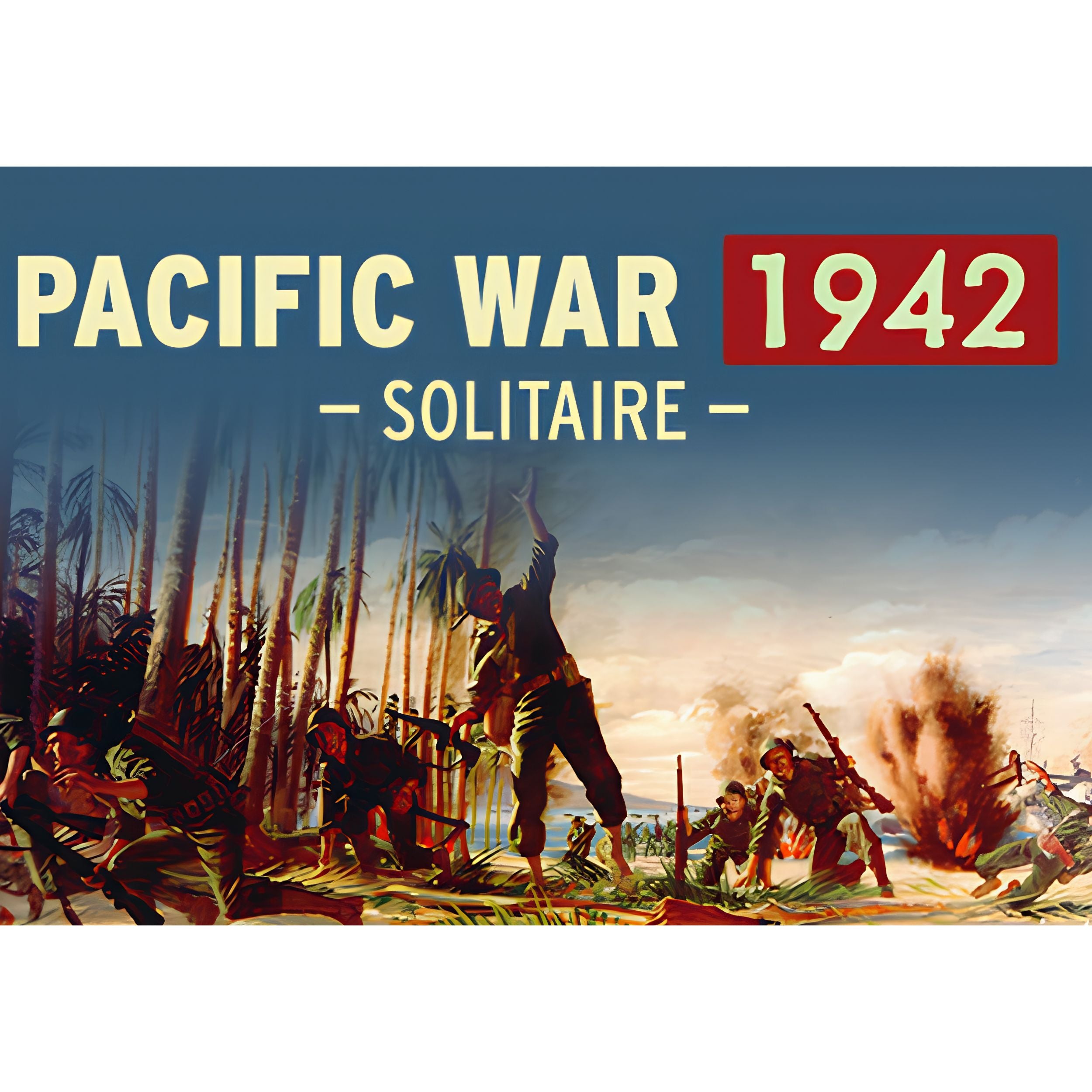
Designed by Mike and Grant Wylie for Worthington Publishing's Solitaire Travel Games series, Pacific War 1942 Solitaire puts you in command of Allied forces in the Pacific Theater during World War II. You face an autonomous Japanese player — the BOT — which, in the early turns, seeks to expand its empire and overwhelm the Allies. You must contain, resist, and then push Japan back to its homeland. It's a wargame designed to fit in a bag, with a compact map and essential components.
Manage armies and fleets across the Pacific by spending action points. Move units area by area, fight for control of strategic zones, and roll dice to resolve naval and land battles. Control of the seas directly influences land battles: losing a fleet can leave an island without supplies. This second edition replaces the old Action Chart with a deck of Japanese Action Cards, includes a rulebook, and an updated map: the BOT is less predictable and quicker to manage.
FroGames' Opinion
A wargame that respects your time without sacrificing difficult decisions. Half an hour in the Pacific, with general-level choices.
The secret of Pacific War 1942 in one line
Each scenario is a chess match against History. Lose a fleet and half the Pacific becomes unreachable.
From the game experience

Pacific War 1942 Solitaire
Designed exclusively for solitaire play. The Japanese BOT follows the new Japanese Action Cards of the second edition, which direct expansion and attacks logically but never rigidly. The experience is complete: nothing is missing, because there is no multiplayer version to start from.
FrogScore · FroGames editorial rating · based on rules, international reviews, and gameplay sessionsWhat's in the Box
Essential Components for the Pacific War
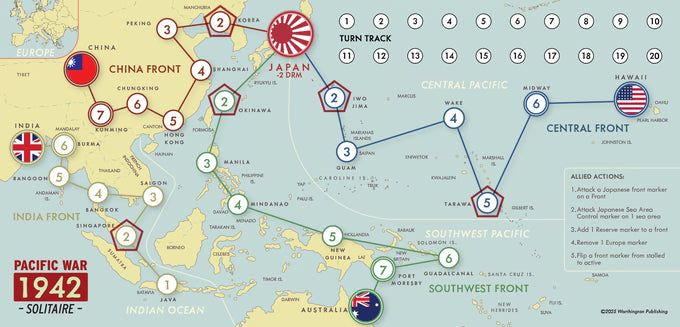
Pacific Map
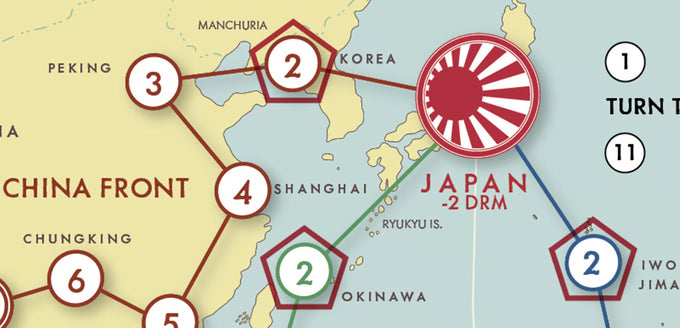
Compact format, areas connecting strategic islands, naval bases, and sea zones. In the second edition, the board shows the Australian flag over Australia. Each area has precise tactical value.
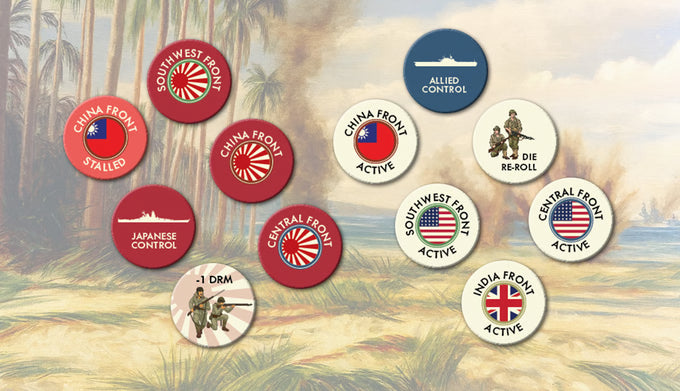
Allied and Japanese Counters
Tokens for ground armies and naval fleets. Few components, but each one counts: losing an aircraft carrier is not just a number; it's an entire area of the Pacific that becomes unreachable.
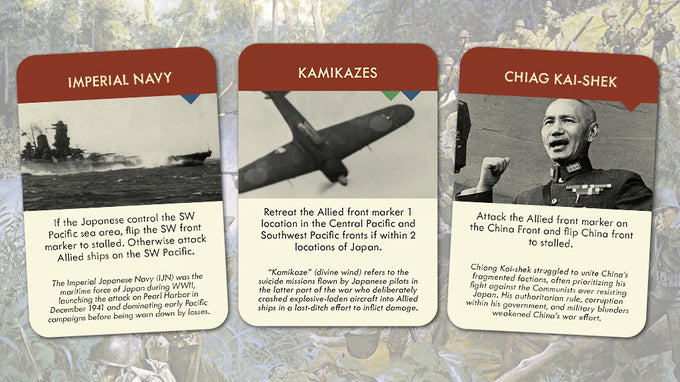
Japanese Action Cards + Dice
The action cards that, in the second edition, direct the Japanese BOT instead of the old Action Chart, plus dice to resolve battles. The BOT doesn't roll randomly: it pursues tactical objectives, but the order varies.
Rules Booklet and Scenarios
The single-sheet rules of the first edition become a proper rulebook, clearer and more convenient to consult during the game and during setup. Asymmetrical setups: sometimes you start under pressure, sometimes you have an advantage but awkward positions.
What's New in this Edition
The Novelties of the Second Edition
The first edition sold out quickly. This second edition refines the game without fundamentally changing it: same tactical core, with some noticeable updates on the table.
Action Cards instead of the chart
The Japanese BOT was guided by an Action Chart. Now its actions are drawn from a deck of Japanese Action Cards: more variety, less table consultation, a less predictable opponent.
Rules in booklet format
The single-sheet rules become a complete rules booklet, clearer and more convenient to consult during the game and during setup.
Revised Map and Box
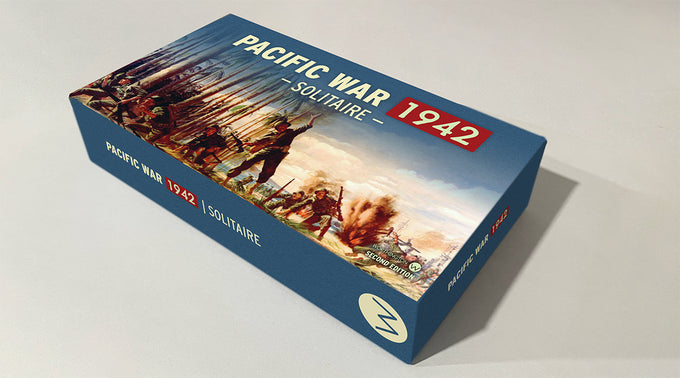
The board of the second edition uses the Australian flag over Australia, and the box is slightly redesigned compared to the first print run.
In half an hour, you will have won or lost the Pacific. And you'll immediately want to try again with a different scenario.
A game in five moments
What happens at the table
Not the rules. The experience.
Setup and first look at the map
Deploy units according to the chosen scenario. You look at the map and immediately understand where you are weak: too many islands to defend, too few fleets to cover them all. The Japanese BOT starts with the initiative; you must choose what to sacrifice in the first turns.
Japan expands
Japanese Action Cards direct the BOT's expansion: occupying undefended islands, concentrating fleets in key areas. You react by moving units with your action points, trying to block critical routes without leaving gaps elsewhere. Every move is a compromise.
First decisive naval battle
Two fleets meet in a contested sea area. You roll the dice: your aircraft carrier sinks. Suddenly three islands become unreachable, counterattack plans must be revised. The Pacific is larger than before.
Allied counter-offensive
You have accumulated enough forces to attempt a landing on a strategic island. You move the fleet, land the armies, fight. You win the land battle but the BOT responds with a naval counter-offensive: you must decide whether to hold the island or save the fleet.
End of scenario: victory or defeat
You check the objective areas required by the scenario, or if the BOT has reached its own. You count victory points or check defeat conditions. Even when winning, you rethink that move from turn 3: you could have saved that fleet, defended that island for one more turn. You prepare the setup for the next scenario.
How to play
The flow of each turn
A turn lasts a few minutes but each phase forces you to rethink your plans.
Draw the Japanese Action Cards: in the second edition, they direct the BOT's movement, attacks, and expansion, replacing the old Action Chart. This is not random: the BOT follows tactical priorities (expanding towards objectives, defending key bases, attacking isolated fleets). Resolve the orders.
You have a budget of action points to spend on moving land and naval units. Moving a fleet costs points, landing armies costs points, attacking costs points. You must choose: reinforce a defense, launch an attack, reposition for the next turn.
When enemy units occupy the same area, you fight. You roll dice modified by unit strength and naval control. Naval battles decide who controls the seas, land battles who holds the islands. A single result can overturn an entire area of the Pacific.
You check if you have met the victory objectives or if the BOT has met its own. Some scenarios require control of specific areas, others accumulated victory points, others to hold out for a fixed number of turns. If no conditions are met, you start the next turn.
Why it's different from others
Six mechanics that make the difference
Travel game format
It fits in a compact box, you can take it anywhere. Small map, essential components, quick setup. It's not a simplified wargame: it's a wargame designed to fit in a bag without losing tactical decisions. Play on the train, during lunch break, anywhere there's a small table.
Action Cards BOT (2nd edition)
The autonomous Japanese player is not a generic automaton. In the second edition, its actions are drawn from a deck of Japanese Action Cards that replaces the old Action Chart: it simulates imperial expansion, base defense, opportunistic attacks — consistent with historical 1942 strategy, but more unpredictable.
The sea commands the land
If you lose a fleet, connected islands become harder to reinforce or attack. The sea is not an empty space: it's supplies, mobility, options. A naval battle lost today means an impossible invasion tomorrow. You must protect the routes.
Asymmetrical scenarios
Each scenario has different setups and objectives. Sometimes you start under pressure with few units, sometimes you have numerical advantage but awkward positions. Objectives change: defend until turn X, conquer area Y, accumulate Z victory points. Same map, different tactical challenges.
Games lasting 30-45 minutes
A single scenario concludes in half an hour, enough to feel the tension of decisions but not enough to tire you out. You can play one scenario during lunch break, two in an evening. It doesn't require entire afternoons: it respects your time.
Accessible rules, tactical depth
You learn to play in 15-20 minutes, now with a clearer rules booklet. Action points, area-by-area movement, dice-based combat. No complex tables. But decisions are real: where to concentrate forces, when to attack, what to defend. Simplicity frees up space for tactics.
How it ends
How to win and how to lose
Each scenario defines precise victory and defeat conditions. It's not a generic point race.
Allied victory
- You control the objective areas required by the scenario within the turn limit
- You accumulate sufficient victory points by controlling strategic islands, sinking enemy fleets, and completing landings
- The Japanese BOT runs out of resources or loses too many units before reaching its objectives
Allied defeat
- The BOT reaches its expansion objectives before you stop it
- You lose control of key areas or naval routes imposed by the scenario
- You run out of turns without having met the victory conditions
Pacific War 1942 Solitaire is a wargame that respects your time but not your tactical certainties. Each scenario leaves you with one question: could you have done better?
Frequently asked questions
FAQ about Pacific War 1942 Solitaire
Is the second edition worth it if I already have the first?
The basic game is the same, so if you have the first edition and like it, it's not a mandatory purchase. The differences are significant if you found consulting the Action Chart annoying: the second edition replaces it with a deck of Japanese Action Cards, adds a rules booklet instead of a single rule sheet, and tweaks the map and box. For those starting from scratch, it is simply the better version to get.
Isn't it too simple to be a real wargame?
The rules are light and can be learned in 15-20 minutes, but the depth isn't in the rules: it's in the decisions. Where to concentrate fleets, which island to sacrifice, when to switch from defense to attack. The control of the sea influencing the land creates real dilemmas. It's an accessible wargame, not a trivial one — often recommended precisely as a first solo title of the genre.
Is the Japanese BOT predictable or does it really challenge you?
The Action Cards follow tactical logic (expand, defend bases, attack isolated fleets) but the order and priorities vary with each game. It doesn't play randomly, but it never repeats the same sequence. After a few scenarios, you recognize the patterns, but that's not enough: you have to adapt to the initial setup and the dice.
How many scenarios are included and how much do they vary?
The game includes several scenarios with asymmetrical setups and variable objectives. It's not just a map with different configurations: the victory conditions change (conquer area X, hold out for Y turns, accumulate Z points), the available forces, and the BOT's priorities. You can replay the same scenario with different outcomes.
Does it require a lot of space to play?
No. It's a travel game: compact map, few components, quick setup. It fits on a coffee table, a train table, a small desk. You don't have to clear the dining table for hours. You set up in a few minutes, play for 30-45 minutes, and put everything away quickly.
Is it available in Italian?
No, this edition is in English. Rules booklet, Action Cards, and textual components are in English. The language dependence is moderate: once the rules are learned, the gameplay relies heavily on the map and visual cues, but a good understanding of written English is needed for setup and the BOT cards.
Pacific War 1942 Solitaire (second edition) is a solo tactical wargame for 1 player, 30-45 minutes per scenario, recommended age 14+. Designed by Mike and Grant Wylie for Worthington Publishing, it puts you in command of Allied forces in the Pacific Theater during World War II against an autonomous Japanese player (the BOT). This edition replaces the Japanese Action Chart with a deck of Japanese Action Cards, includes a rule booklet, and an updated map with the Australian flag. Action points, area-by-area movement, and dice-based combat create real tactical decisions in a compact travel game format: control of the sea influences land battles. Each scenario offers asymmetrical setup and variable objectives. Available on FroGames.it.
Pacific War 1942: Solitaire - Travel Edition
Frequently Asked Questions
The answers you're looking for, no beating around the bush.
📸Do the images match the actual product?
The photos on the website often come from BoardGameGeek and are intended to give you an idea of the game. They may vary slightly from the version you receive. The content declared by the publisher is always binding.
📦Does the content of the box match what is indicated?
We always strive to provide the correct content, but minor variations are possible due to reprints or updates. The information comes directly from the publishers. If you have any questions, please contact us!
⏳How do pre-orders work?
Pre-order the game before release, payment is immediate, and the game is reserved for you. As soon as it arrives, we'll ship it right away! If there are any delays, we'll update you promptly.
🔒Can I trust buying here?
Absolutely! Secure payments, tracked shipments, and a team that loves board games as much as you do. If something goes wrong, we'll do our best to fix it.
🛠There's a problem with my order, what should I do?
Write to us now! Whether it's a missing part, damage, or an error, we'll help you resolve it as soon as possible. Your experience truly matters to us.