
Viking Route
🐸 Details from BoardGameGeek
Consiglio BGG sul numero di giocatori
Categorie
Meccaniche
Design & Art
Lingua
Si abbina bene con
FroGames — Moments You'll Remember
Someone counts resources, someone curses the ravens, someone wants to force the ship to turn. And in the end, you'll all talk about that time you narrowly avoided Ragnarok.
WHAT IT'S ABOUT
A cooperative saga where tabletop physics becomes gameplay
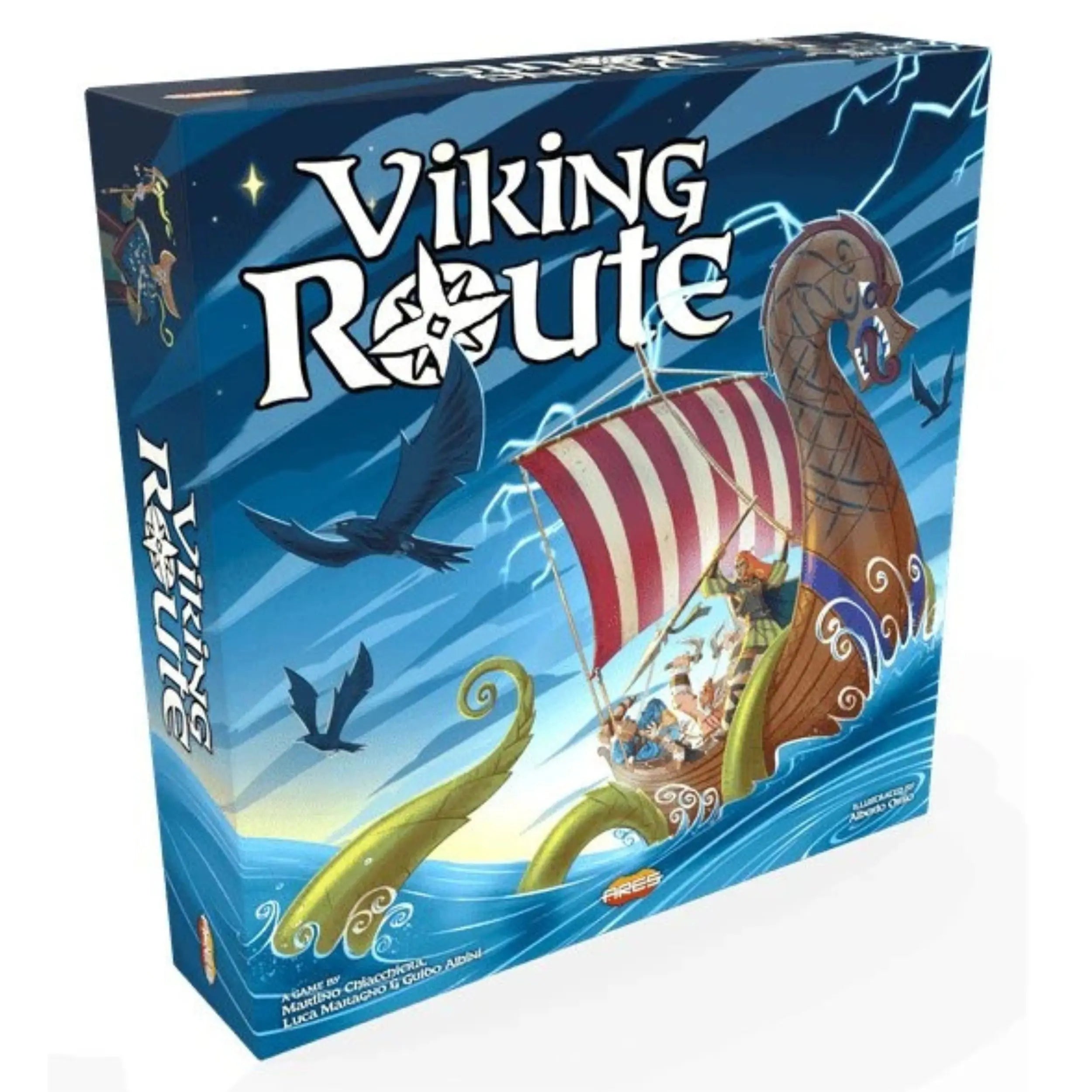
Viking Route is the latest chapter in the magnetic trilogy by Guido Albini, Martino Chiacchiera, and Luca Maragno (also authors of The Faceless). Art by Alberto Orso, published by Ares Games and DAM Things!, it brings Norse mythology into a mechanic you've never seen before: your Drakkar is a real compass, and Odin's ravens are magnets that players move to steer the ship. Tabletop physics, not abstract simulation.
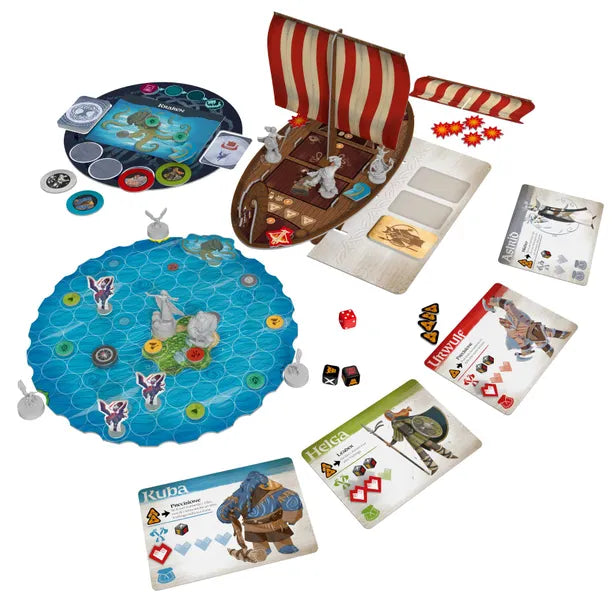
At the table, you manage ship resources, character cards, combat dice, and a modular campaign that takes you to the Edge of the World. Each quest has a different board, mythological creatures to face, and objectives to complete. And it all revolves around that magical moment: you place a magnet under the board, the compass-Drakkar self-aligns, and the route changes. If you misplace it, you go off course. If you calculate well, you avoid the monster and reach the sacred island.
What they're saying abroad
A cooperative game that truly makes you navigate. The compass spins, the ravens guide, and you hope not to end up in the Kraken's jaws. Physics is part of the game, not a gimmick.
— FroGames
When you place the magnet and the ship turns on its own, you understand that this is something else. It's not just another Euro-cooperative game disguised as an adventure. Here, you genuinely navigate.
— FroGames

Viking Route
The game supports solo play in the basic rules: you control multiple characters, and the difficulty is calibrated for 1-4 players. The experience is complete (campaign, objectives, enemies), but you lose the discussion about where to place the magnets: alone, it's you against geometry; at the table, it's continuous negotiation.
FrogScore · FroGames editorial rating · based on rules, international reviews, and play sessionsYour Crew
What you have inside the Drakkar
Magnetic Drakkar
A real compass representing your ship. When you place a raven-magnet under the board, the compass self-aligns. Table physics is part of the rules.
Odin's Ravens
Magnets that guide the route. You position them under the board to steer the Drakkar. Wrong calculation = wrong route = monster in your face.
Viking Heroes
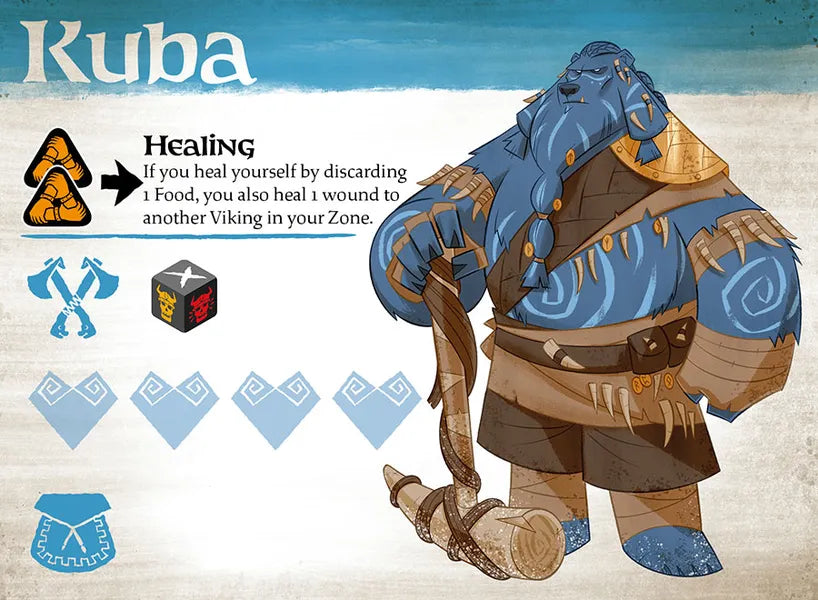
Characters with asymmetric powers and individual card decks. Each hero has a tactical role: warrior, shaman, navigator. Choose your crew before setting sail.
Combat Dice
Roll against mythological creatures (Jörmungandr, Fenrir, giants). Icons on the dice, quick resolution. But first, you have to get there: if the route is wrong, you don't even fight.
In a few hours, you'll know if Ragnarok was avoidable. Spoiler: it depended on that magnet you placed on the second turn.
Come si gioca
Video dimostrativo di gameplay.
A game in five moments
What happens at the table
Not the rules. The experience.
Quest Setup
Open the mission board, place monster tokens, choose heroes. Read the introductory text: Odin sends you to retrieve an artifact beyond the World's Edge. Someone asks "how does the compass work?". You show them: place the magnet, the ship turns by itself. Silence. Now they understand.
First Navigation
First turn: who places the raven? Everyone discusses angles and distances like naval engineers. One says "put it here", the other "no, too far right". Place the magnet. The compass steers, the Drakkar moves. It ends up exactly where you wanted. First objective reached, no damage. But that was easy.
The Monster Appears
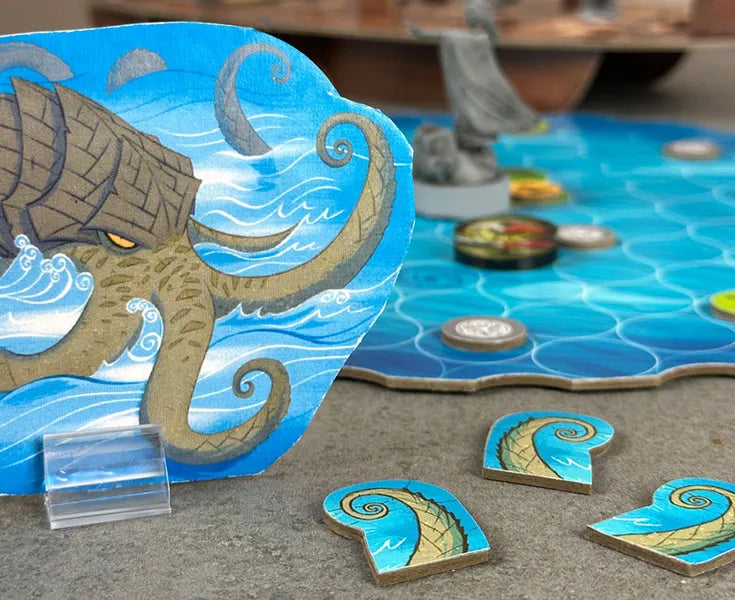
Third turn: you must navigate between two islands, avoid the Kraken, reach the temple. The magnet must be placed with millimeter precision. You miss by a little: the compass turns too much, you end up in front of the monster. Combat dice, damage to the ship, resources burned. Now the game is different: it's no longer a mythological stroll, it's survival.
Heroic Power
Mid-game: the ship is damaged, resources are scarce, the final boss is coming. One of the heroes plays their most powerful card: naval teleportation, ignore magnets for one turn. You place the Drakkar directly on the sacred island, retrieve the artifact. Table stands up. You'd been saving that card for this moment for half an hour.
Final Boss and Return
Final confrontation: the serpent Jörmungandr emerges. Dice, cards, heroic powers, limited resources. You win by a hair's breadth. Return to port, close the quest, mark campaign progress. Someone says "next mission when?". Answer: tomorrow night. Because now you need to figure out what's beyond the World's Edge.
How to play
The flow of each round
A round of Viking Route is resource management, magnetic movement, and tactical combat.
Players discuss the route, decide where to place the raven-magnets, play action cards from character decks. Manage Drakkar resources (wood, food, gold) and hero action points.
Place the magnets under the board. The Drakkar-compass orients itself and moves on the grid. If you land on an enemy token or obstacle, an event is triggered. Otherwise, you reach the objective without fighting.
If you encountered an enemy, roll combat dice. Icons on the dice, resolution with hero cards. Damage to the ship, resources consumed. If it was a positive event (allied island, temple), you get bonuses or equipment.
Draw new event cards, update enemy tokens on the map, check quest victory/defeat conditions. If the objective is complete, the mission ends. Otherwise, you start again from round 1.
Why it's different from others
Six mechanics that make a difference
Physical Magnetic Movement
The Drakkar is a real compass, the ravens are magnets. When you place a magnet under the board, the ship orients itself following the magnetic field. It's not a simulation: it's table physics. No other cooperative game works this way. The mechanic originated from The Faceless (same design team) and here evolves into a complete navigation system.
Modular Norse Campaign
Multiple quests playable stand-alone or in a campaign sequence. Each mission has a different board, unique objectives, specific mythological creatures. It's not a reskinned dungeon crawler: it's Viking exploration with variable setup, asymmetrical victory conditions, and final bosses that require different strategies.
Asymmetrical Heroes with Dedicated Decks
Each character has an individual deck and unique powers. The warrior fights hand-to-hand, the shaman invokes runes, the navigator manipulates magnets better than others. Crew composition radically changes tactics: some quests are easier with certain heroes, others require specific setups.
Fast Icon Combat
Custom dice with symbols (swords, shields, runes). Quick resolution: you roll, count the icons, apply damage. It's not Gloomhaven with 40 combat cards. It's immediate but tactical: hero cards modify results, special powers turn impossible fights around. It works because the game's focus is navigation, not combat grind.
Drakkar Resource Management
The ship has wood (repairs), food (crew), gold (trade), runes (magic). Each action consumes something. Poor navigation costs you more resources: if you go off course, you burn extra food; if you take damage, you spend wood. It's not Euro resource conversion, it's naval survival. Resources are always scarce at the wrong time.
Winds of Fate (Dynamic Events)
Event cards that change quest conditions: storms that move magnets, currents that change the grid, divine blessings that empower heroes. The map is never static: what worked on turn 3 won't work on turn 6. You have to adapt your route, recalibrate magnets, improvise. This is where the game becomes unpredictable.
How it ends
How to win and how to lose
Each quest has specific conditions, but the structure is this.
Victory
- Achieve all quest objectives (islands, artifacts, defeated bosses) before the time/round limit expires
- Complete the final campaign mission and prevent Ragnarok (boss fight against the supreme enemy of the gods)
- In some alternative quests: survive N rounds, save allies, exit the map with sufficient resources
Defeat
- The Drakkar is destroyed (structural damage at zero): the ship sinks, campaign interrupted
- Exhaust all critical resources (food at zero with crew alive, wood at zero with active storm)
- The quest round limit expires without completing objectives: mission fails, Ragnarok advances
Viking Route is a cooperative game that makes you truly navigate, where table physics matters as much as the cards you play. If you're looking for another dungeon crawler, look elsewhere.
Frequently Asked Questions
Viking Route FAQ
But does the magnetic compass really work? Isn't it just a gimmick?
It really works and is the heart of the game, not just a visual flourish. When you place a magnet under the board, the Drakkar-compass orients itself following the magnetic field and moves on the grid. The precision of placement determines where you end up: a millimeter wrong = wrong course = monster in your face. It's three-dimensional geometry, not abstraction. The system originated from The Faceless (same team) and here it has evolved into a complete navigation mechanic.
Is it playable solo or does it require a group to function?
It is playable solo (official rules 1-4 players), you control multiple heroes and the difficulty is calibrated. The experience is complete: campaign, bosses, objectives. But solo, you miss the collective discussion about where to place the magnets: at the table it's continuous negotiation ("no, put it further left!"), solo it's a pure geometric puzzle. It works both ways, but multiplayer adds a social layer that isn't there solo.
How long does a single quest last? And the full campaign?
A stand-alone quest lasts 60-90 minutes (setup included). The full campaign is 8-10 linked quests, so about 10-12 total hours. The first missions are quick tutorials (45 minutes), the final ones with complex bosses can reach 120 minutes. The game has campaign saving: you close the quest, mark progress, resume next time. You don't have to do everything in one marathon.
Is it suitable for those who have never played complex cooperative games?
It depends. The basic rules can be explained in 20-30 minutes and the first quest is guided. But the magnetic mechanic is counterintuitive at first: you need to understand how magnets influence the compass, calculate angles, predict the trajectory. Those accustomed to Eurogames or spatial puzzles adapt quickly. Those coming from party games or pure gateway games might find it challenging. It's not Pandemic, it's a step above. Recommended age 13+ is realistic.
Is it available in Italian?
The edition sold on FroGames is in English. Text on cards (events, heroic powers, quest descriptions), rulebook, and campaign materials are in the original language. The game has medium language dependence: you need to read the cards during play, but there are no walls of text. If the group has a basic level of English, it is playable without major problems.
Viking Route is a cooperative game for 1-4 players, lasting 60-120 minutes, ages 13+, designed by Guido Albini, Martino Chiacchiera, and Luca Maragno, published by Ares Games. The game uses a unique magnetic mechanic: the Drakkar is represented by a physical compass, and players place magnets under the board to guide the ship through Norse mythology. The structure is a modular campaign with stand-alone quests, mythological bosses, asymmetrical heroes, and naval resource management. Dice-based combat with icons, dynamic events, variable victory conditions. The magnetic movement system originated from The Faceless (same team) and here it has evolved into a complete navigation system. Available on FroGames.it.
Viking Route
Frequently Asked Questions
The answers you're looking for, no beating around the bush.
📸Do the images match the actual product?
The photos on the website often come from BoardGameGeek and are intended to give you an idea of the game. They may vary slightly from the version you receive. The content declared by the publisher is always binding.
📦Does the content of the box match what is indicated?
We always strive to provide the correct content, but minor variations are possible due to reprints or updates. The information comes directly from the publishers. If you have any questions, please contact us!
⏳How do pre-orders work?
Pre-order the game before release, payment is immediate, and the game is reserved for you. As soon as it arrives, we'll ship it right away! If there are any delays, we'll update you promptly.
🔒Can I trust buying here?
Absolutely! Secure payments, tracked shipments, and a team that loves board games as much as you do. If something goes wrong, we'll do our best to fix it.
🛠There's a problem with my order, what should I do?
Write to us now! Whether it's a missing part, damage, or an error, we'll help you resolve it as soon as possible. Your experience truly matters to us.