
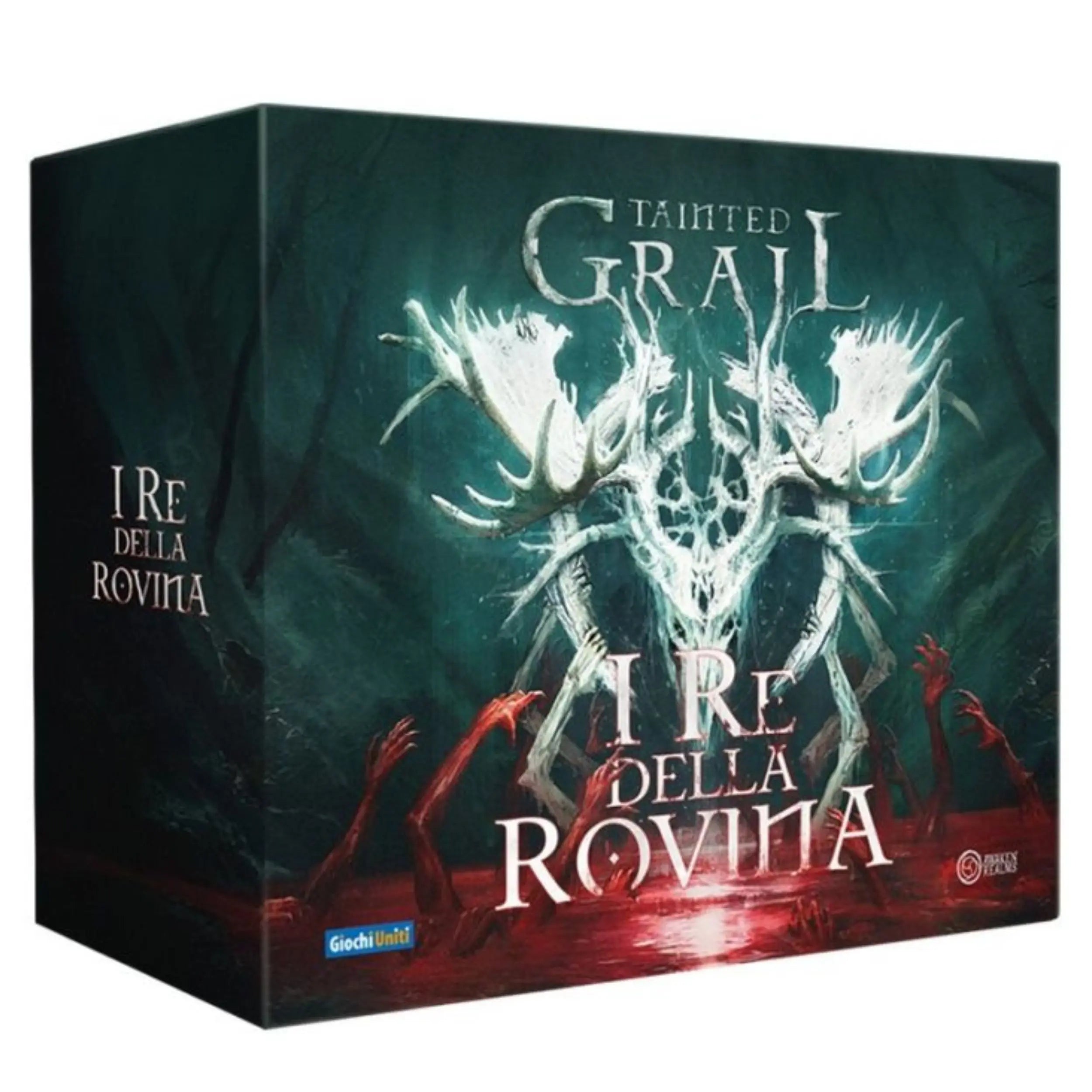
Tainted Grail: I Re della Rovina
🐸 Details from BoardGameGeek
Consiglio BGG sul numero di giocatori
Categorie
Meccaniche
Design & Art
Lingua



Si abbina bene con
FroGames — Moments You'll Remember
Someone tries to speak with the Bishop of the Deep. Someone attacks the Amber Queen. Someone explores the Darkness and doesn't return. And in the end, everyone remembers that choice in Chapter 7.
WHAT IT IS ABOUT
The dark side of Avalon has its kings
Andrzej Betkiewicz, Michał Lach, Krzysztof Piskorski, and Konrad Sulżycki (the team behind the original Tainted Grail) return with a standalone campaign that expands the universe without requiring other boxes. Here you don't explore Avalon: you explore the abandoned lands beyond it, where three legendary figures reign: Claudyne the Un-Knight, Veneda the Amber Queen, and Nonus, Bishop of the Deep. Art by Patryk Jędraszek and the Awaken Realms team: dark, layered, memorable.
Build decks of passive skills and action cards, face narrative encounters by solving card puzzles (strength or diplomacy), and explore modular territories through the completely revised Wyrdness system. Every choice matters, every chapter remembers you. The campaign can also be completed solo, but scales up to four heroes with intertwined stories.
What they say abroad
Kings of Ruin promises narrative depth that few board games dare to reach.
I Re della Rovina promette una profondità narrativa che pochi giochi da tavolo osano raggiungere.
— FroGames
The puzzle card system turns every encounter into a tangible choice.
Il sistema a puzzle di carte trasforma ogni incontro in una scelta tangibile.
— FroGames

Tainted Grail: Kings of Ruin
The game is explicitly designed for solo play: you control one or more heroes, the narrative experience is complete, the pace is in your hands. No automa, just you and the abandoned lands. Probably the most intense way to play this campaign.
FrogScore · FroGames editorial rating · based on rules, international reviews, and play sessionsWhat you'll find in the box
Components that build the dark campaign
Puzzle card system
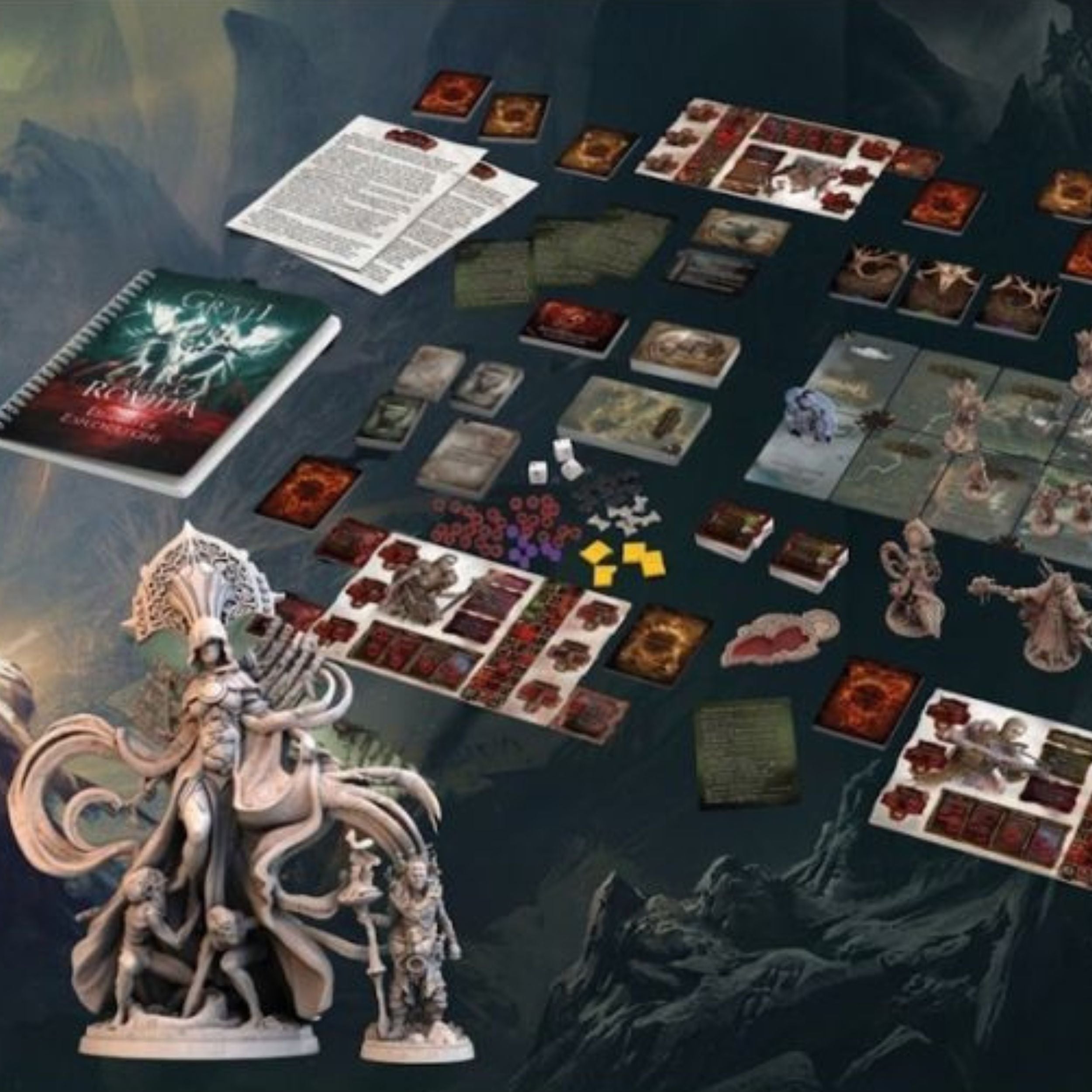
652 standard-sized cards that manage encounters, combat, and diplomatic choices. Each card has values for strength or dialogue: combine them to overcome challenges. It's like solving a tactical riddle every time.
Wyrdness exploration
158 large cards for territories, events, and the completely redesigned travel system in the Darkness. More streamlined, more lethal, more memorable than Fall of Avalon.
Skills and development
124 small cards for passive skills and hero progression. Build an engine that evolves chapter after chapter, never resetting.
Miniatures and tokens
Detailed miniatures for heroes, tokens for states, resources, and Wyrdness markers. The Awaken Realms production: visually dense, functionally clear.
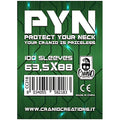
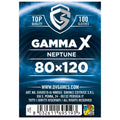
Recommended sleeves 934 cards in 3 sizes ▼
If you play often, we recommend protecting the cards with transparent sleeves to make them last longer.
| Size | Quantity |
|---|---|
| 63 × 88 mm | 652 |
| 80 × 120 mm | 158 |
| 45 × 68 mm | 124 |
| Total cards | 934 |
In a few weeks, you'll have finished the campaign. But Kings of Ruin won't easily leave your mind.
A game in five moments
What happens at the table during a session
Not the rules. The experience.
Choose where to go
Open the box, resume the campaign from the bookmark. Read the recap of the previous chapter. Someone suggests exploring north, someone wants to finish the bishop's quest. Every decision closes one door and opens another. Prepare your decks, check wounds and permanent statuses. Let's go.
The first encounter
Draw the exploration card. Narrative encounter or combat: the structure changes every time. If it's dialogue, choose the right cards to cross the thresholds. If it's a confrontation, prepare your action deck and play combos. Roll dice for passive abilities. Something goes wrong. Always.
The choice that splits the table
The text presents a moral or tactical dilemma. Someone wants to save the NPC, someone wants the loot, someone fears long-term consequences. Half-hour debate. You vote, or one person imposes the choice. The consequence card goes into the campaign deck. You won't know the effect until chapters later.
Card-based combat
The boss or key event. Puzzle system: you must score X strength or dialogue points in Y turns. You play deck cards, activate passives, modify with dice. A perfect combo saves you. An unlucky roll costs you permanent wounds or burned cards. Physical tension at the table.
End of session, new questions
Update the campaign log. Mark allies, enemies, discovered territories. Someone reads the final flavor text. Put the bookmark in the chapter. Close the box, but keep talking about it for another twenty minutes. See you next week, same time.
How to play
The flow of an exploratory turn
Each turn is a micro-structure: action, reaction, consequence. The game gives you choices, then makes you pay the price.
Move the hero on the modular map. Draw a territory or event card. Read the narrative text. Some cards trigger encounters, others modify the state of the world.
If it's a narrative puzzle: choose cards from your deck to reach the required threshold (strength or dialogue). If it's combat: play action cards in sequence, apply modifiers, roll dice for passive abilities.
Read the result on the encounter card. Gain rewards (new cards, items, allies) or suffer penalties (permanent wounds, removed cards, negative statuses). Some choices add cards to the campaign deck.
Check Wyrdness resources, update the log, apply persistent effects. If you've completed an objective, read the corresponding paragraph and advance in the campaign. Otherwise, next turn.
Why it's different from others
Six mechanics that make a difference
Card puzzle system
Each encounter is a tactical riddle: you must reach numerical thresholds using cards from your deck. But cards have different values for strength and dialogue. Choose your approach, then optimize the combo. No random dice: it's you who makes mistakes or excels.
Evolved Wyrdness
The exploration system in the Darkness has been completely redesigned compared to Fall of Avalon. More streamlined, more intuitive, more lethal. The Darkness is not a timer: it's a character that reacts to your choices.
Three Kings, three stories
Claudyne, Veneda and Nonus are not final bosses. They are recurring figures with parallel narrative arcs. You can ally, betray, ignore. Each has a hidden faction track. Consequences arrive chapters later, when you least expect them.
Permanent deck construction
You don't reset your deck every session. The cards you gain, the passive abilities you unlock, the items you find: they remain for the entire campaign. Your hero in chapter 10 is a complex engine built over 20 hours of gameplay.
Standalone campaign
No other Tainted Grail box is needed. Kings of Ruin is a complete story set in the same universe but with new characters, territories, and themes. Those who played Fall of Avalon will find connections. Those who start here have zero barriers.
Diplomacy vs. Strength
Each encounter has two paths: fight or talk. It's not a moral alignment: it's a tactical choice. Some heroes excel in strength, others in dialogue. Some quests unlock only with one approach. The game rewards you for variety, not purity.
How it ends
How to win and how to lose
Kings of Ruin doesn't have a single victory condition. You win when you complete the campaign according to your objectives. You lose when the heroes die or the world decays beyond recovery.
Victory
- Complete the main narrative campaign (approx. 15-20 chapters depending on choices)
- Resolve heroes' personal quests and survive the consequences of your alliances
- Reach one of the multiple endings (the game has narrative branches that diverge from chapter 8 onwards)
Defeat
- All heroes die in combat or from accumulated wounds (no easy resurrection)
- Fail a critical main story quest and the world irreversibly decays
- Accumulate too many negative consequences and the game traps you in an inescapable narrative loop
Few board games build worlds as reactive and unforgiving. Kings of Ruin doesn't pamper you: it challenges you on every page, punishes you for haste, rewards you for care. It's heavy, long, memorable.
Frequently Asked Questions
FAQ about Tainted Grail: Kings of Ruin
Do I need to have played Fall of Avalon or other Tainted Grail boxes?
No. Kings of Ruin is a complete standalone campaign. It shares the narrative universe (dark Avalon, revisited Celtic mythology, the Menhirs) but has new characters, territories, and plot. If you've played the other boxes, you'll find connections and easter eggs. If you start here, zero barriers: the manual explains everything.
How long does the complete campaign last?
The main campaign requires approximately 25-35 hours of total gameplay, spread over 15-20 chapters (depending on your choices: some forks lengthen, others shorten). Each session lasts 90-120 minutes. Count on 10-12 game nights. Some groups take months, others devour it in an intense month.
Does it work well solo or do I need a group?
Kings of Ruin is explicitly designed for solo play and scales perfectly. In solo play, you control one or more heroes (two are recommended for tactical variety) and the narrative experience is complete. In fact: many prefer solo because it avoids endless debates about narrative choices. Multiplayer adds confrontation and social immersion, but it's not necessary.
How complex is it compared to Gloomhaven or Arkham Horror LCG?
More complex than Arkham Horror LCG on the narrative front (longer texts, more intricate branches), less complex than Gloomhaven on the tactical front (no grid, card puzzle combat instead of tactical movement). Setup is lighter than both: you don't set up dungeons every time, but explore territory cards. Perceived weight: medium-high, but the manual is clear.
Is it available in Italian?
Yes. This Giochi Uniti edition includes all translated material in Italian: rulebook, cards, narrative texts, campaign log. Miniatures and tokens are language-independent. No English required.
Tainted Grail: Kings of Ruin is a cooperative narrative game with a standalone campaign for 1-4 players, lasting 90-120 minutes per session, recommended age 14+. Designed by Andrzej Betkiewicz, Michał Lach, Krzysztof Piskorski, and Konrad Sulżycki, published by Awaken Realms and localized by Giochi Uniti, the game uses a card puzzle system to resolve encounters with strength or diplomacy, modular exploration in the Darkness (Wyrdness), permanent deck construction, and a branching storyline set in the abandoned lands beyond Avalon. Complete campaign without the need for other Tainted Grail boxes. Available on FroGames.it.
Tainted Grail: I Re della Rovina
Frequently Asked Questions
The answers you're looking for, no beating around the bush.
📸Do the images match the actual product?
The photos on the website often come from BoardGameGeek and are intended to give you an idea of the game. They may vary slightly from the version you receive. The content declared by the publisher is always binding.
📦Does the content of the box match what is indicated?
We always strive to provide the correct content, but minor variations are possible due to reprints or updates. The information comes directly from the publishers. If you have any questions, please contact us!
⏳How do pre-orders work?
Pre-order the game before release, payment is immediate, and the game is reserved for you. As soon as it arrives, we'll ship it right away! If there are any delays, we'll update you promptly.
🔒Can I trust buying here?
Absolutely! Secure payments, tracked shipments, and a team that loves board games as much as you do. If something goes wrong, we'll do our best to fix it.
🛠There's a problem with my order, what should I do?
Write to us now! Whether it's a missing part, damage, or an error, we'll help you resolve it as soon as possible. Your experience truly matters to us.