
Onirim
🐸 Dettagli da BoardGameGeek
Consiglio BGG sul numero di giocatori
Categorie
Meccaniche
Design & Art
Lingua
Si abbina bene con
The FroGames Card
You draw a card. It's a Nightmare. You have to choose: lose a Door you just conquered, discard your entire hand, or look at five cards from the deck knowing you'll put them back on top. Whatever you choose, you'll regret it.
WHAT IT'S ABOUT
A labyrinth made of cards where every choice consumes your time
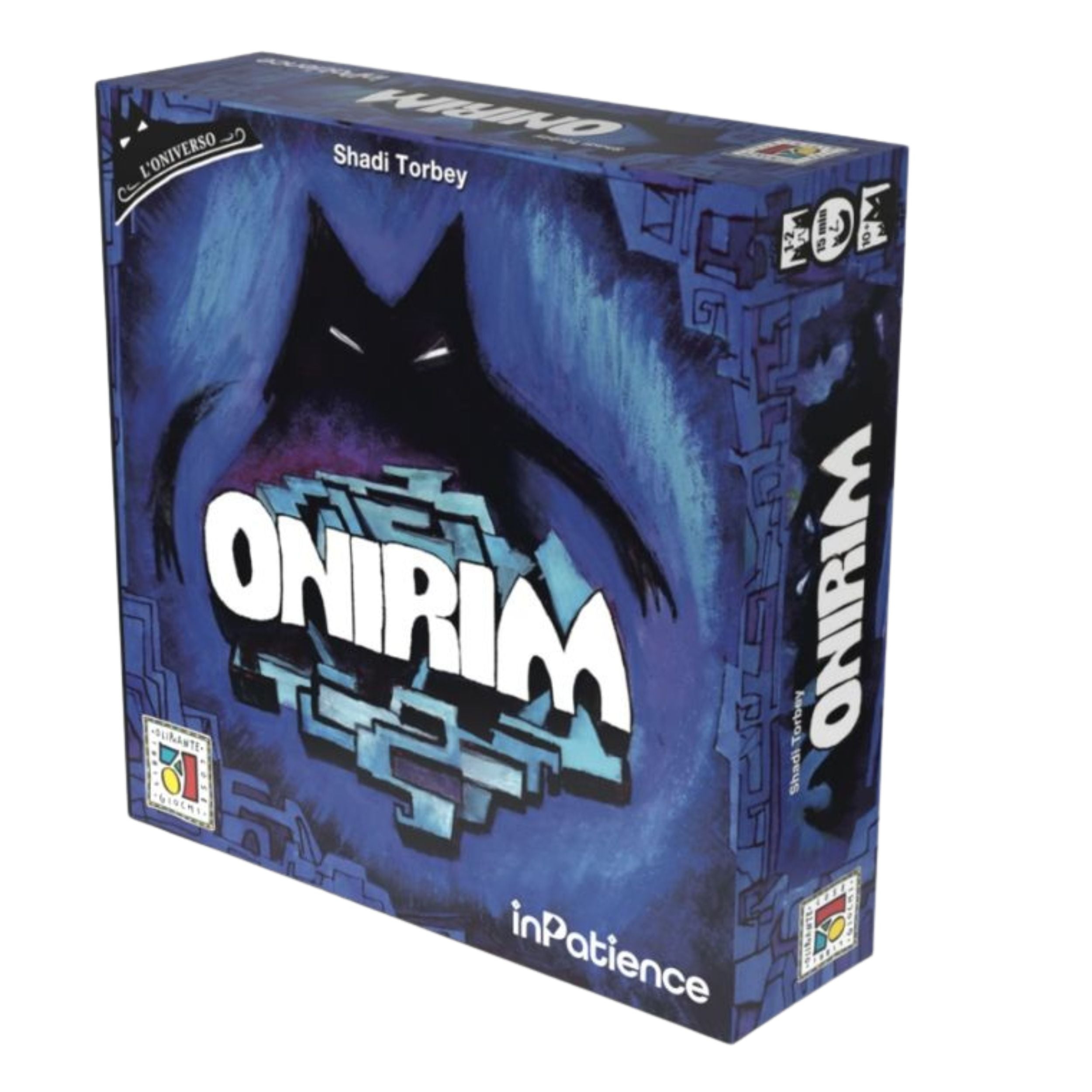
Onirim is a cooperative card game designed by Shadi Torbey and illustrated by Élise Plessis, the first chapter of the Oniverse saga. You are a Dreamwalker trapped in a shifting labyrinth: you must find the eight dream Doors before the deck runs out, otherwise you will remain imprisoned forever. The Second Edition includes seven modular expansions that are compatible with each other.
On your turn, you play a card from your hand (never more than five) or discard one to draw. If you align three cards of the same color with different symbols, you conquer a Door of that color. But the deck hides Nightmares: when you draw one, you must choose which piece of the puzzle to destroy. Fourteen minutes on average, constant tension, no downtime.
What they say abroad
"A tightly designed puzzle that fits in your pocket and punches above its weight."
A tightly designed puzzle that fits in your pocket and punches above its weight.
— Shut Up & Sit Down
Onirim is an unforgiving labyrinth: every card played is a step towards freedom or oblivion. The expansions don't just add variants, they change the type of nightmare you're facing.
— FroGames

Onirim (Second Edition)
Onirim is designed for solo play: the basic rules are identical for 1 or 2 players. In two, you share information and manage a separate hand, but the structure doesn't change. The solo experience is complete and, in fact, eliminates the risk of quarterbacking.
FrogScore · FroGames editorial rating · based on rules, international reviews and play sessionsThe cards that obsess you
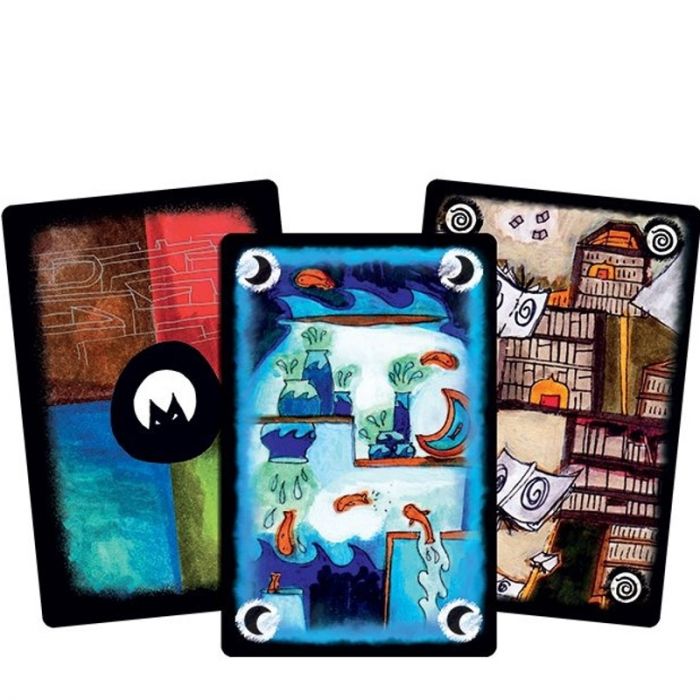
Four types of cards, one goal
Location Cards
Four colors (red, green, blue, brown), three symbols (Sun, Moon, Key). Align three cards of the same color with different symbols and you conquer a Door. They make up 90% of the deck and every game choice or discard either builds or destroys this chain.
Door Cards
Eight in total, two per color. They appear when drawing or completing sequences. Conquering them is the only win condition. Losing them to a Nightmare is the most painful way to fail.
Key Cards
Nine in the base deck. You can discard them to immediately conquer a Door of the same color if it appears when drawing. Or keep them to defend yourself from Nightmares. There are never enough for both.
Nightmare Cards
Ten traps hidden in the deck. When you draw one, choose: discard a Key, discard a conquered Door, discard your entire hand, or look at five cards (then put them back on top in order). Every option hurts.
🎲How to PlayThe rules in four steps▼
How to Play
The flow of each turn
Each turn is a binary choice: play or discard. But each choice opens or closes doors.
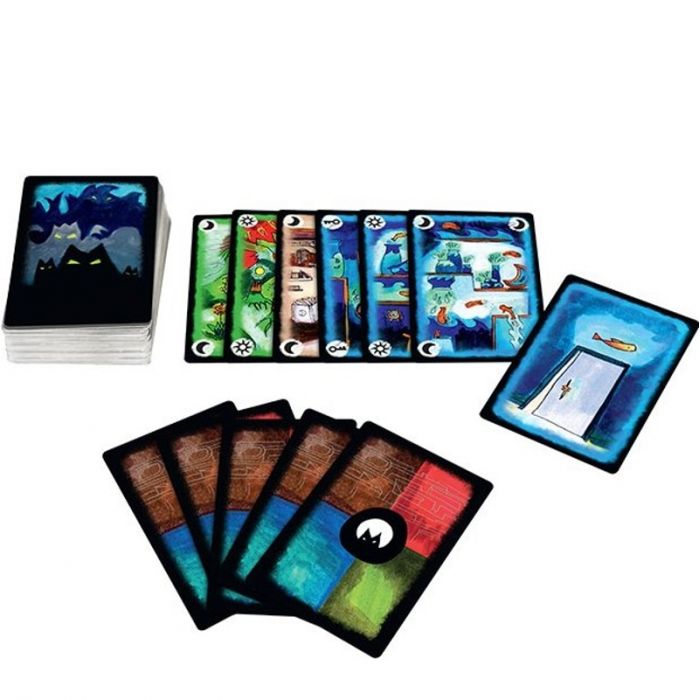
Play a Door card from your hand (if compatible with the last one played) or discard any card to draw. Playing builds sequences, discarding seeks better cards. Both consume the deck.
If you have aligned three Door cards of the same color with three different symbols, you immediately claim a Door of that color (if available). The sequence resets. This is the main path to victory.
After playing or discarding, draw to return to five cards in hand (or fewer, if the deck is running low). If you draw a Door and have the right Key, you can discard it to immediately claim that Door.
If you draw a Nightmare, stop everything and choose one of four punishments: discard a Key, return a claimed Door, discard your entire hand, or look at the next five cards (then put them back on top). Then draw again.
⏱️Your First GameThe chronicle, moment by moment▼
A game in five moments
What happens at the table
Not the rules. The experience.
Setup and false start
You shuffle, draw five cards, look at your hand. Three red, one green, one blue Key. You play a red hoping to build the sequence. You draw: another red, identical symbol. Useless. The chain is already broken. You start rethinking.
First Door and first Nightmare
You align three greens with different symbols. You claim the first Door. You smile. You draw the reward card: Nightmare. You must choose: lose the Door you just claimed, discard a Key you needed for blue, or empty your hand. You choose the Key. You'll regret it later.
The deck thins out
You've claimed four Doors. The deck is moving fast. You draw another blue Door but you don't have the Key to claim it: you discarded it during the previous Nightmare. The Door goes back into the deck. You mentally calculate how many cards are left. Too few.
The impossible choice
You have six Doors. Two red ones are missing. You have a red Key and two red Doors in hand. You play a Door: you draw Nightmare. If you discard the red Key, you lose the only sure way to get the seventh Door. If you discard your hand, you lose the sequence you were building. There is no right choice.
Last round of the deck
Seven cards remain. You have seven Doors. One brown is missing. You draw: brown Sun. You have brown Moon and Key in hand. You play the Sun, you draw: brown Key. You play the Moon, you draw: brown Door. Discard the Key, claim the Door. You win with zero cards in the deck. You breathe.
🐸What to Know BeforehandThree honest things, from friends▼
What to Know Beforehand
Three things you need to know before buying
Luck can kill you in the last turn
Even with the perfect strategy, an unlucky sequence of Nightmares or Doors that don't come out can make you lose when only three cards are left. This frustrates some players and obsesses others. If you can't stand losing due to pure bad luck, Onirim will make you swear.
The loop becomes hypnotic (and repetitive)
The first ten games are addictive. After twenty with the same setup, the game becomes predictable: you know which sequences work, which Nightmares to fear, how to optimize. Expansions rekindle interest but require learning new rules.
It works for two players, but it's not true cooperation
Everyone manages their own hand, you only share information. There's no mechanical synergy: it's more of a side-by-side solitaire than a team game. If you're looking for cooperation like Pandemic or Spirit Island, this is not the game.
🏆Victory and DefeatWhat the ending rewards▼
How it ends
How to win and how to lose
One victory condition, three ways to fail.
Victory
- Claim the eight dream Doors (two for each color) before the deck runs out
- Use sequences of three Door cards or discard Keys for drawn Doors
- If the last card in the deck is a Door and you have the right Key, you can claim it and win
Defeat
- The deck runs out and you haven't claimed all eight Doors
- You draw a Nightmare and cannot meet any of the four required conditions
- Some expansions add defeat conditions (e.g., full Dreamcatchers, blocking Dead Ends)
Onirim doesn't sell the fantasy of the labyrinth. It sells the obsession of wanting to solve it one more time, each time believing you've found the right pattern. And then you lose again.
💬Frequently Asked QuestionsQuick answers before checkout▼
Frequently Asked Questions
FAQ about Onirim (Second Edition)
How long does a game really last?
Fifteen minutes is the average after learning. The first games last twenty because you have to think about every choice. With more complex expansions (The Glyphs, The Book of Steps), you can reach twenty-five minutes. Setup is thirty seconds: shuffle and play.
Do all seven expansions play together?
They are modular and compatible, but playing them all together creates unmanageable chaos. The suggested rule is to combine two or three at most. Each expansion changes a part of the system: some add cards, others conditions, still others modify Nightmares.
What mechanics does Onirim use?
Set collection (aligning card sequences), hand management (deciding what to keep and what to discard), push your luck (when to play Keys), move through deck (the deck as a timer). There is no drafting or market: everything is resolved between hand, sequence, and drawing.
Is it suitable for someone who has never played a cooperative game?
Yes, with a caveat: Onirim is an atypical cooperative game because in two players there is no true synergy, only information sharing. It's perfect as a first structured solo game. Rules in five minutes, strategic depth that emerges after ten games. Ideal for those who want something immediate but not trivial.
Is this edition in Italian?
Yes, the Oliphante edition includes rules, cards, and references in Italian. The Door cards use symbols (Sun, Moon, Key) and colors, so there is no text to read during the game. Expansions are integrated into the base box.
The people behind the game
Who invented it, who designed it, who publishes it — and what else they've done.
Onirim Second Edition is a cooperative game for 1-2 players aged 10 and up, with an average duration of 15 minutes. Designed by Shadi Torbey and published by Oliphante in Italian edition, it uses set collection and hand management mechanics to create an obsessive solitaire where you draw cards from a deck that acts as a timer. You must claim eight dream Doors by aligning sequences of three Door cards or discarding Keys, while ten Nightmares hidden in the deck punish every mistake. Includes seven modular expansions (The Towers, Happy Dreams, The Book of Steps, The Glyphs, The Dreamcatchers, Crossroads and Dead Ends, The Door to the Oniverse) that rewrite parts of the system without distorting it. Available on FroGames.it.
Frequently Asked Questions
The answers you're looking for, no beating around the bush.
📸Do the images match the actual product?
The photos on the website often come from BoardGameGeek and are intended to give you an idea of the game. They may vary slightly from the version you receive. The content declared by the publisher is always binding.
📦Does the content of the box match what is indicated?
We always strive to provide the correct content, but minor variations are possible due to reprints or updates. The information comes directly from the publishers. If you have any questions, please contact us!
⏳How do pre-orders work?
Pre-order the game before release, payment is immediate, and the game is reserved for you. As soon as it arrives, we'll ship it right away! If there are any delays, we'll update you promptly.
🔒Can I trust buying here?
Absolutely! Secure payments, tracked shipments, and a team that loves board games as much as you do. If something goes wrong, we'll do our best to fix it.
🛠There's a problem with my order, what should I do?
Write to us now! Whether it's a missing part, damage, or an error, we'll help you resolve it as soon as possible. Your experience truly matters to us.