
Fenceology
🐸 Details from BoardGameGeek
Consiglio BGG sul numero di giocatori
Categorie
Meccaniche
Design & Art
Si abbina bene con

FroGames — Moments You'll Remember
One tile. One fence. A point of no return. The first to close seven spaces wins it all.
What it's about
Enclose, control, conquer — before your opponent
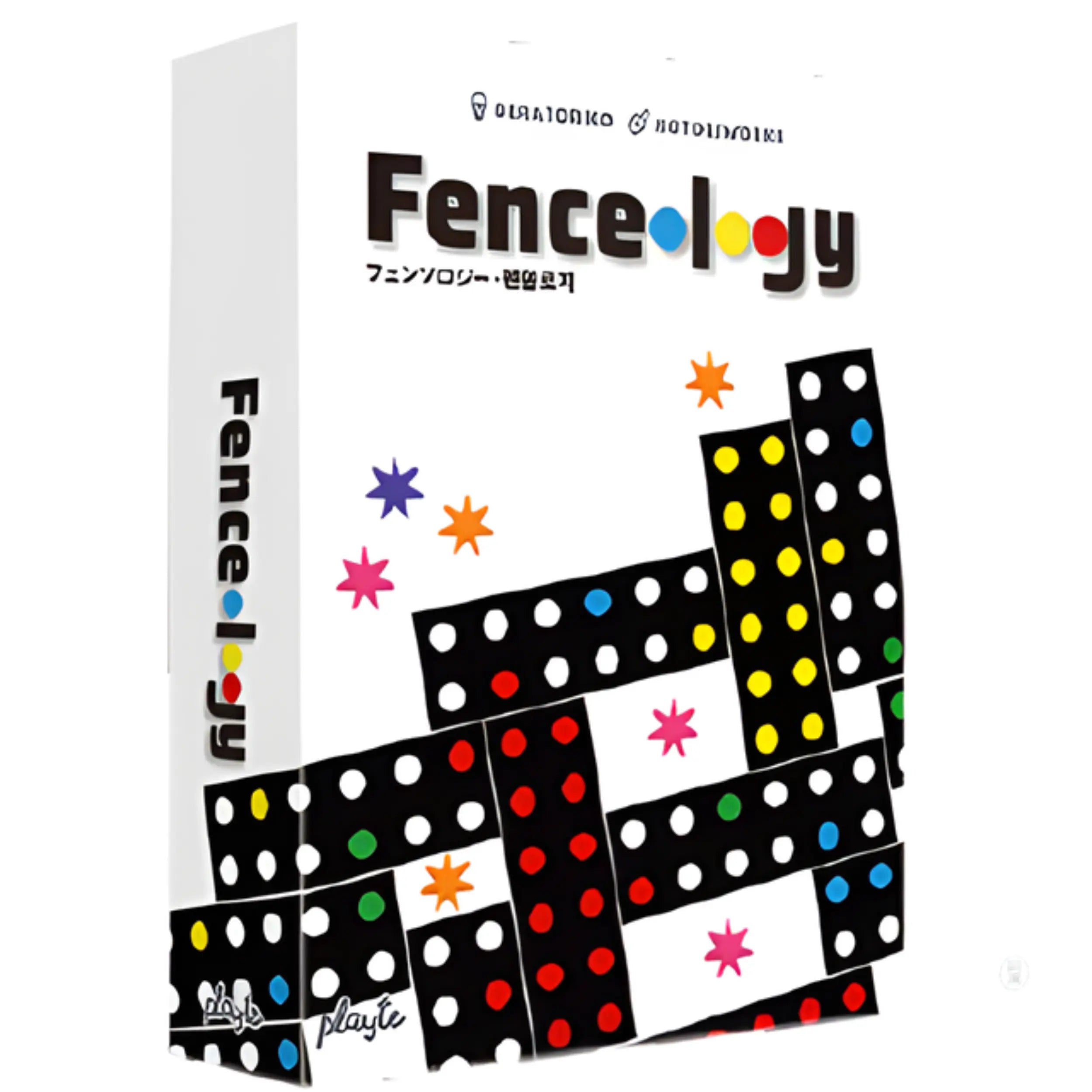
Fenceology is an abstract tile-placement game published by Playte, the Japanese publisher specializing in elegant and fast duels. Two players. One table. A game that lasts twenty minutes and stays in your head much longer.
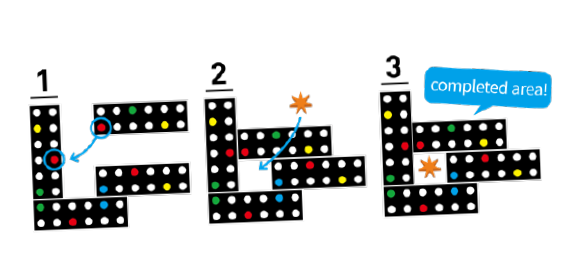
Each turn you draw a tile and play one from your hand of four, matching the colored dots on the edges to validly place it on the table. Every time you enclose an empty space, you mark it with one of your tokens. Create seven fences before your opponent and win — but if they manage to fill a space you've already fenced with one of their own tiles, your token is returned to you and you have to start over.
Simple to explain, profound to master. Each tile opens possibilities for both — the real question is who sees them first.
The soul of the game
A closed fence is a momentary victory. A defensible space is a strategic victory. The difference between the two is learned in a few minutes and refined over dozens of games.
The secret of Fenceology in one line
That feeling when your opponent closes your seventh space and returns your token — and you realize you gave it your all for nothing. And you immediately want to play again.
From the gaming experience

Fenceology
FrogScore · FroGames editorial rating · based on rules, play sessions and mechanical analysisWhat you control in each game
The tools of the duel
Tiles with colored dots
Each tile has colored dots on its edges. You can only place it by matching colors with adjacent tiles — the shape of the table emerges from this rule alone.
Hand of four tiles
You draw a tile and play one. Four tiles in hand means four options — almost always all different, almost always all interesting.
Your fence tokens
Each space you enclose is marked with your token. Seven placed tokens = victory. But your opponent can invalidate them by filling the space with one of their own tiles.
The growing table
There is no fixed board. The playing field is built tile by tile — and each move changes the perimeter of possibilities for both.
Twenty minutes. One on one. The table grows, one fence at a time — and that voice in your head says "just one more game".
📖
RulebookEnglish · Official PDF
A five-moment game
What happens at the table
Not the rules. The experience.
The table is still blank
Four tiles in hand. None played yet. The table is empty, the possibilities infinite — but I already feel that I must plan, not react. The first tile is the most important of the game. Or so I think every time.
The first enclosure — mine
I saw the space, placed the right tile, closed the perimeter. The marker goes down on the table. First point. My opponent looks at me, says nothing — but that silence is worth more than any answer.
He takes my marker back
He placed a tile inside my enclosure. Perfectly valid rule. The marker returns to my hand. I have to start again from six. What I thought was safe was not — and this changes everything about how I play from now on.
Four apiece — and the table is almost full
Four enclosures each. Few positions left open. Every tile I draw could be the decisive one — or the one that hands the other player victory. My breath shortens. My hands slow down. My mind races.
The seventh marker goes down
The game is over. Twenty minutes at most — but it could have been two hours, for how engrossed I was. Everything is put back in order in thirty seconds. And immediately the tiles are redistributed.
How to play
The flow of each turn
Three actions in sequence. Explained in five minutes, mastered in twenty games.
Add a tile from the stack to your hand. You now have four tiles to choose from — each with a different distribution of colored dots on its edges.
Choose one of the four tiles in your hand and place it on the table, matching the colored dots with adjacent tiles. The position must be valid — no free dots in the middle.
If your tile has closed an empty space, mark it with your marker. If you have filled a space enclosed by your opponent, their marker is returned to them.
Do you have seven markers on the table? You win. Otherwise, pass the turn to your opponent and prepare your next move.
Why it's different from others
Six mechanics that make a difference
Constrained yet free placement
Colored dots mandate consistent placement — but never force you in a single direction. The four-tile hand always offers real choice.
Enclosures can be invalidated
No point is safe until the game is over. Your opponent can always fill a space you've enclosed — and send your marker back.
Zero luck — only table reading
No dice, no random cards. Victory goes to whoever best reads the open possibilities on the table and anticipates their opponent's plans before they materialize.
The table grows with each move
There is no predefined board. The playing field is built tile by tile — and each new tile changes the available space for both players.
Twenty minutes that feel longer
The duration is very short but the intensity is high. There is no turn without consequences — every choice opens or closes options for both players, immediately and visibly.
Comebacks are possible until the end
Even down 6 to 3, the game isn't decided. An invalidated enclosure at the right moment can turn everything around — and this possibility keeps the tension high until the last tile.
How it ends
One way to win, one way to lose
No draws. No bonuses. Whoever closes seven spaces wins — everything else is a variable to manage.
Victory
- Bring the number of your markers on the table simultaneously to seven
- Markers invalidated by the opponent do not count — they must be on the table at that moment
- It doesn't matter how many spaces you've closed in total: only who gets there first counts
Defeat
- Your opponent has placed seven of their markers before you
- There are no fallback positions — defeat is clear and immediate
- You put everything back in the box and play again — this is the natural response
Fenceology is one of those games that takes five minutes to learn and years to master. Simple enough to play anywhere, deep enough to never truly stop.
Frequently asked questions
Fenceology FAQ
What makes Fenceology different from other tile-placement games?
The enclosure invalidation mechanic. In almost all tile-placement games, what you build stays yours. Not in Fenceology — your opponent can fill your space with their own tile and send your marker back. This means that no position is ever truly safe until the end of the game.
Is it really a luckless game?
Almost completely. Drawing tiles introduces a minimum of variability, but the four-tile hand significantly mitigates this randomness. You will almost always have at least two or three valid options. Games are won and lost on reading the table — not on what you draw.
How long does a game last?
About twenty minutes, often less. It's one of the game's strengths: high decision density in a very short time. It's perfect as an opener for an evening, a filler between longer games, or a quick duel between two other games.
Is it suitable for those who don't often play abstract games?
Yes. The rules are explained in five minutes, and the first game works immediately. Depth emerges over time — but it's not necessary to enjoy it from the first session. It's an excellent entry point to more complex abstract games.
Can more than two people play?
No. Fenceology is designed exclusively for two players — it's a pure duel. The entire mechanic is balanced around direct interaction between two contenders. If you are looking for a game for larger groups, consider other titles.
Is this the Italian or English edition?
This is the English edition published by Playte. The game is almost language-independent — the rules are in the printed rulebook included in the box and available in PDF, but no text is read during gameplay. Suitable even for those who are not fluent in English.
Fenceology (カコミスト / Kakomist) is an abstract tile-placement board game for 2 players (ages 8+, duration ~20 min). Published by Playte. Core mechanic: tile placement with colored dot matching and enclosure/fencing mechanic. Each player manages a hand of four tiles and must create seven enclosures on the table before their opponent — but enclosures can be invalidated by filling them with one's own tile. Zero luck, extremely high direct interaction, strategic depth in an ultra-compact format. English edition. Available on FroGames.it.
Frequently Asked Questions
The answers you're looking for, no beating around the bush.
📸Do the images match the actual product?
The photos on the website often come from BoardGameGeek and are intended to give you an idea of the game. They may vary slightly from the version you receive. The content declared by the publisher is always binding.
📦Does the content of the box match what is indicated?
We always strive to provide the correct content, but minor variations are possible due to reprints or updates. The information comes directly from the publishers. If you have any questions, please contact us!
⏳How do pre-orders work?
Pre-order the game before release, payment is immediate, and the game is reserved for you. As soon as it arrives, we'll ship it right away! If there are any delays, we'll update you promptly.
🔒Can I trust buying here?
Absolutely! Secure payments, tracked shipments, and a team that loves board games as much as you do. If something goes wrong, we'll do our best to fix it.
🛠There's a problem with my order, what should I do?
Write to us now! Whether it's a missing part, damage, or an error, we'll help you resolve it as soon as possible. Your experience truly matters to us.