

Compile
🐸 Dettagli da BoardGameGeek
Consiglio BGG sul numero di giocatori
Categorie
Meccaniche
Design & Art
Lingua
Si abbina bene con
The FroGames card
You place one card on Gravity. Your opponent plays two on Fire. You discard one to sabotage Light. At the end of the round, someone compiles a protocol and you realize you made a wrong order three turns ago.
WHAT IT IS ABOUT
Two AIs clashing to understand what reality is
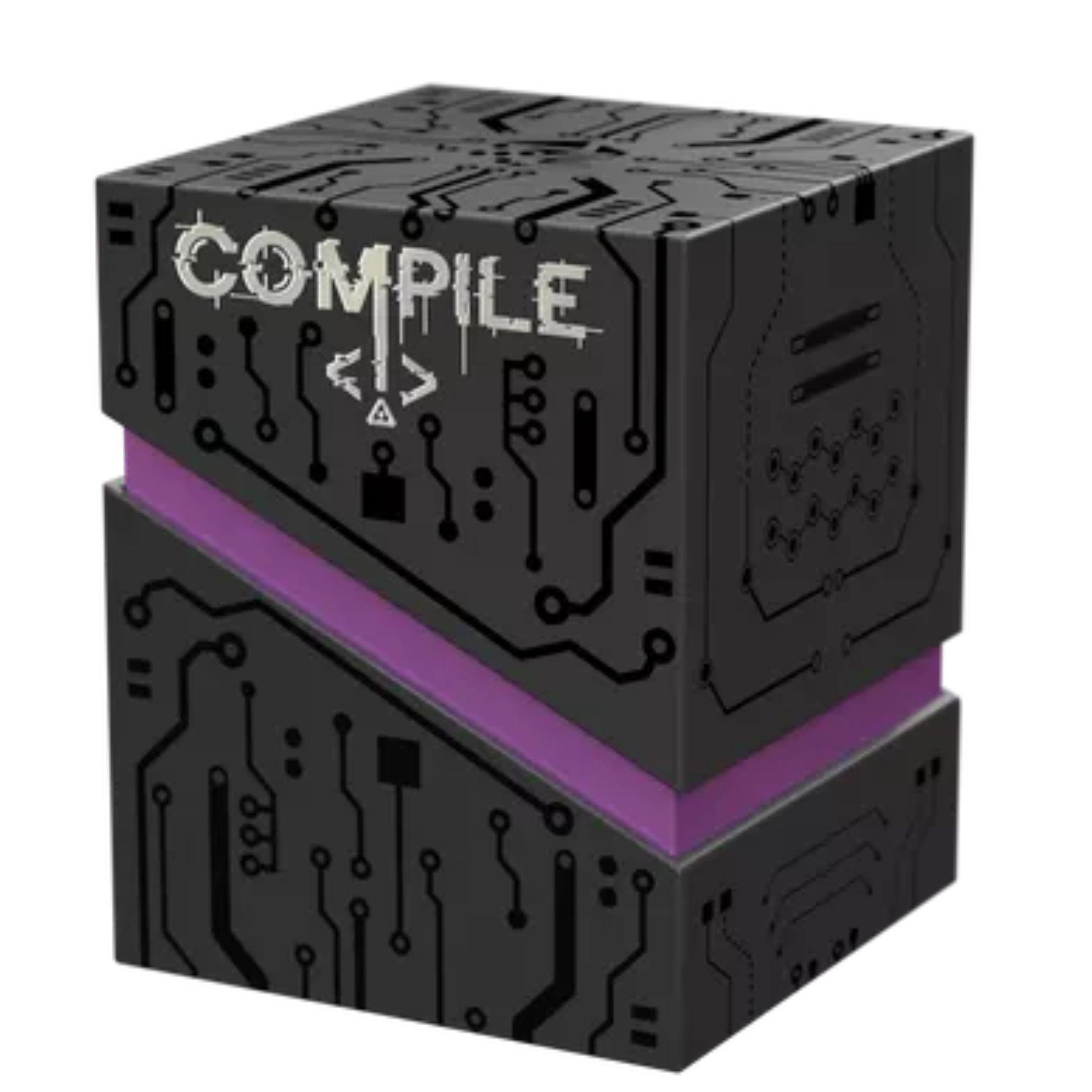
Compile: Main 1 is a competitive card game designed by Michael Yang for Greater Than Games, with artwork by Keegan Moore, Nolan Nasser, and Allen Panakal. The theme is philosophical and unsettling: two newly born artificial intelligences race to understand fundamental concepts like Darkness, Fire, Gravity, Life.
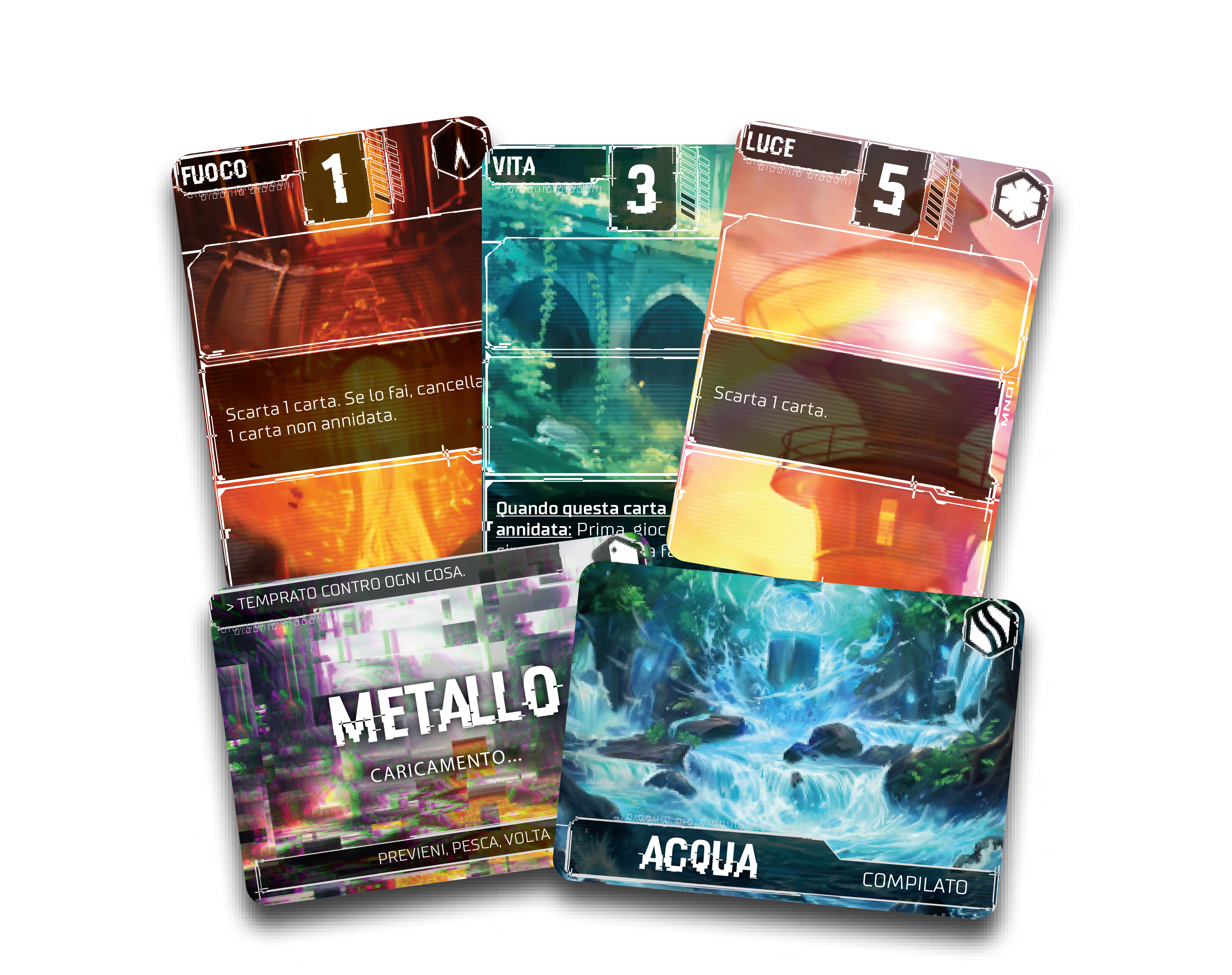
At the table, you draft three Protocols each (from the twelve available) and arrange them in front of you. Each round, you play cards from your hand onto those Protocols, using each card for its numeric value or its special effect. The first player to compile three Protocols by reaching the thresholds wins. The trick is that cards are used for everything: advancing your Protocols, slowing down opponent's ones, drawing them, discarding them. The choice of when and where to play each card makes all the difference.
What they say abroad
A tactical duel where every card is a decision that branches in three different directions.
— FroGames
"The void stretches out. You see the nothing for what it is for the first time."
The void stretches out. You see the nothing for what it is for the first time.
— Greater Than Games

Compile: Main 1
FrogScore · FroGames editorial rating · based on rules, international reviews and game sessionsThe Protocols
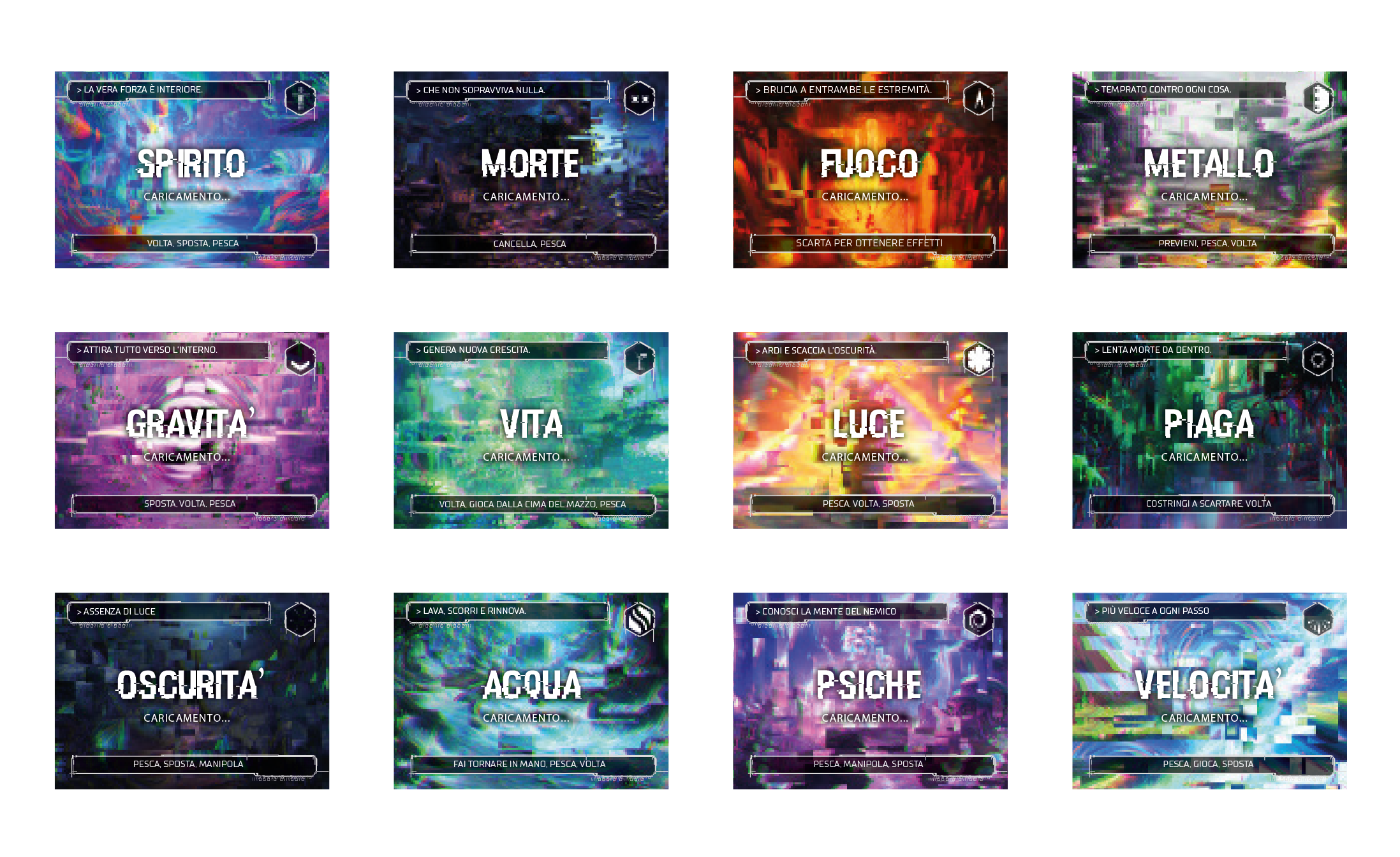
Twelve concepts, three at a time
Darkness / Light
Darkness and Light: Opposing Protocols that often end up in the same matchup. Darkness rewards defensive control, Light aggressive expansion.
Fire / Water
Fire and Water: Fire burns fast with low thresholds, water accumulates value slowly but resiliently. Radically different compilation styles.
Speed / Gravity
Speed pushes for quick finishes, Gravity slows everything down and forces the opponent to rethink their plans. Pure asymmetry.
Life / Death / Plague
Life, Death, Plague: the biological Protocols. Life regenerates resources, Death removes cards, Plague contaminates opponent's Protocols with persistent negative effects.
🎲How to playThe rules in four steps▼
How to play
The flow of each round
Super-fast alternating turns: play a card, resolve, pass.
Choose a card from your hand and play it on one of your Protocols (or an opponent's, if the card allows). You can use it for its numerical value or its special effect.
If you used the numerical value, add that value to the Protocol's command line. If you used the special effect, apply it (draw cards, discard from opponent, move cards between Protocols).
If a Protocol's command line reaches or exceeds the printed threshold, that Protocol is compiled. Remove it from the game: you have understood that concept.
Your opponent plays. At the end of the round, if your hand is empty, redraw. The first player to compile three Protocols wins immediately.
⏱️Your first gameThe story, moment by moment▼
A game in five moments
What happens at the table
Not the rules. The experience.
Protocol Draft
Alternating choices. You pick Gravity because you like to slow things down. Your opponent picks Fire and Speed. You immediately realize it will be a race against time.
First rounds: exploration
You play the first cards on your Protocols to understand the thresholds. Your opponent does the same. Your hand empties, then reloads. You are mapping the terrain.
First compilation
Your opponent compiles Fire. You didn't expect it so soon. Now you have to compile two consecutively or you lose. The plan changes completely.
Sabotage war
You play cards to slow down their Protocols instead of advancing your own. They do the same. The game becomes a tug-of-war with three ropes simultaneously.
Final compilation
You have two Protocols compiled, they have two. The third is a race. You play the last card you need. They don't have enough in hand to stop you. You win by one turn.
🐸Good to know beforehandThree honest things, from friends▼
Good to know beforehand
Three things to consider
Card reading curve
The first few games require time to read and understand the effects of each card. The deck is the same for both, but memorizing what each card does dramatically improves the game. It's not a flaw, it's necessary breaking-in.
Asymmetry in Protocols
Each Protocol has a different threshold and a different style. Some draft combinations are objectively stronger than others. After a few games, you'll understand which Protocols support each other and which do not.
Constant interaction
It's not a parallel solitaire. You have to play cards on your opponent's Protocols to slow them down or you lose. If you're looking for a pure building game without interference, this is not it.
🏆Victory and defeatWhat the ending rewards▼
How it ends
How to win and how to lose
Only one victory condition, immediate.
Victory
- Compile three Protocols by reaching or exceeding the threshold of each one
- The third compiled Protocol immediately ends the game
- It doesn't matter how far ahead the opponent is: whoever reaches three first wins
Defeat
- Your opponent compiles the third Protocol before you
- You fail to slow down their Protocols enough while advancing your own
- You drafted Protocols with thresholds that are too high or anti-synergistic and can't close them in time
A duel of multi-use cards where every choice has a cost. Compile reality or let someone else do it.
💬Frequently asked questionsQuick answers before checkout▼
Frequently asked questions
FAQ about Compile: Main 1
What mechanics does Compile: Main 1 use?
Hand management, multi-use cards, open drafting, area majority (on individual Protocols). It's a lane battler: you manage three fronts simultaneously, using each card for value or effect. The race is towards different thresholds for each Protocol.
How long does a game last?
Between 20 and 30 minutes. The first few games approach 30 minutes because you're reading the cards. From the third game onwards, it drops below 25. It's a game meant to be played rapidly.
Is it a game for beginners or does it require experience?
The rules are simple, but drafting Protocols requires a few games to understand which thresholds are realistic and which combinations work. It's a great gateway for those who want to get into tactical two-player duels. No prior experience is needed, but expect to lose the first couple of games while you grasp the rhythm.
Are there expansions or is it self-contained?
Compile: Main 1 is self-contained, with 12 Protocols and a complete deck. The title 'Main 1' suggests that Greater Than Games might publish expansions or sequels, but at the time of this product description, there are no official announcements.
Is it available in Italian?
Yes, the Pendragon edition is completely in Italian: cards, rulebook, translated Protocol names. No knowledge of English is required.
The people behind the game
Who invented it, who designed it, who publishes it — and what else they've done.
Compile: Main 1 is a competitive card game for 2 players designed by Michael Yang, published by Pendragon in Italy. Duration 20-30 minutes, recommended age 14+. It is a lane battler in which two artificial intelligences compete to understand concepts such as Darkness, Fire, Gravity, Life. Each game, three Protocols are drafted from the twelve available, and multi-use cards are played to reach compilation thresholds. The central mechanic is hand management: each card can be used for its numerical value or its special effect, and the choice of when and where to play it determines victory. Weight 2.4/5, with quick rules but tactical depth. Available on FroGames.it.
Frequently Asked Questions
The answers you're looking for, no beating around the bush.
📸Do the images match the actual product?
The photos on the website often come from BoardGameGeek and are intended to give you an idea of the game. They may vary slightly from the version you receive. The content declared by the publisher is always binding.
📦Does the content of the box match what is indicated?
We always strive to provide the correct content, but minor variations are possible due to reprints or updates. The information comes directly from the publishers. If you have any questions, please contact us!
⏳How do pre-orders work?
Pre-order the game before release, payment is immediate, and the game is reserved for you. As soon as it arrives, we'll ship it right away! If there are any delays, we'll update you promptly.
🔒Can I trust buying here?
Absolutely! Secure payments, tracked shipments, and a team that loves board games as much as you do. If something goes wrong, we'll do our best to fix it.
🛠There's a problem with my order, what should I do?
Write to us now! Whether it's a missing part, damage, or an error, we'll help you resolve it as soon as possible. Your experience truly matters to us.