

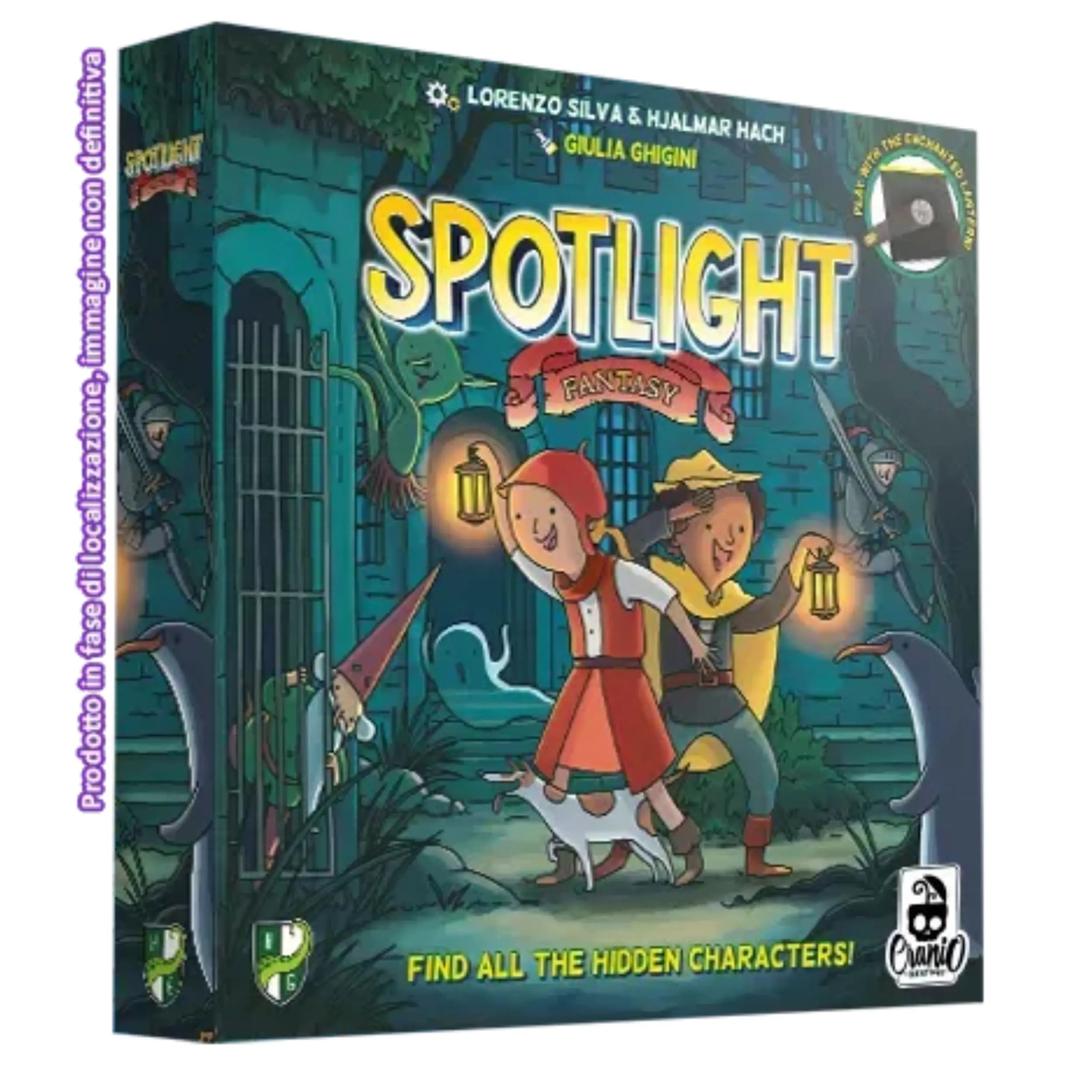
Luminus — Fantasy
🐸 Dettagli da BoardGameGeek
Consiglio BGG sul numero di giocatori
Categorie
Meccaniche
Design & Art
Lingua
Pre-order - leggi i dettagli
🐸 Una rana saggia sa quando dividere l’ordine… e quando aspettare il salto giusto.
Pairs well with
The FroGames Sheet
You shine your flashlight among the boards. The dragon appears out of nowhere. You find two, then three. Time is running out. Your daughter screams that she found five. In the end, no one knows how many there really were, but everyone wants to play again.
WHAT IT'S ABOUT
A frantic hunt for fantasy creatures hidden in the dark
Hjalmar Hach and Lorenzo Silva sign this real-time cooperative search game set in a fantasy kingdom. Illustrations by Giulia Ghigini populate five different boards, each depicting a portion of a world full of heroes, monsters, magical objects, and absurd details. Luminus — Fantasy is the new edition of the Spotlight series (originally Spotlight: Fantasy), brought to Italy by Cranio Creations.
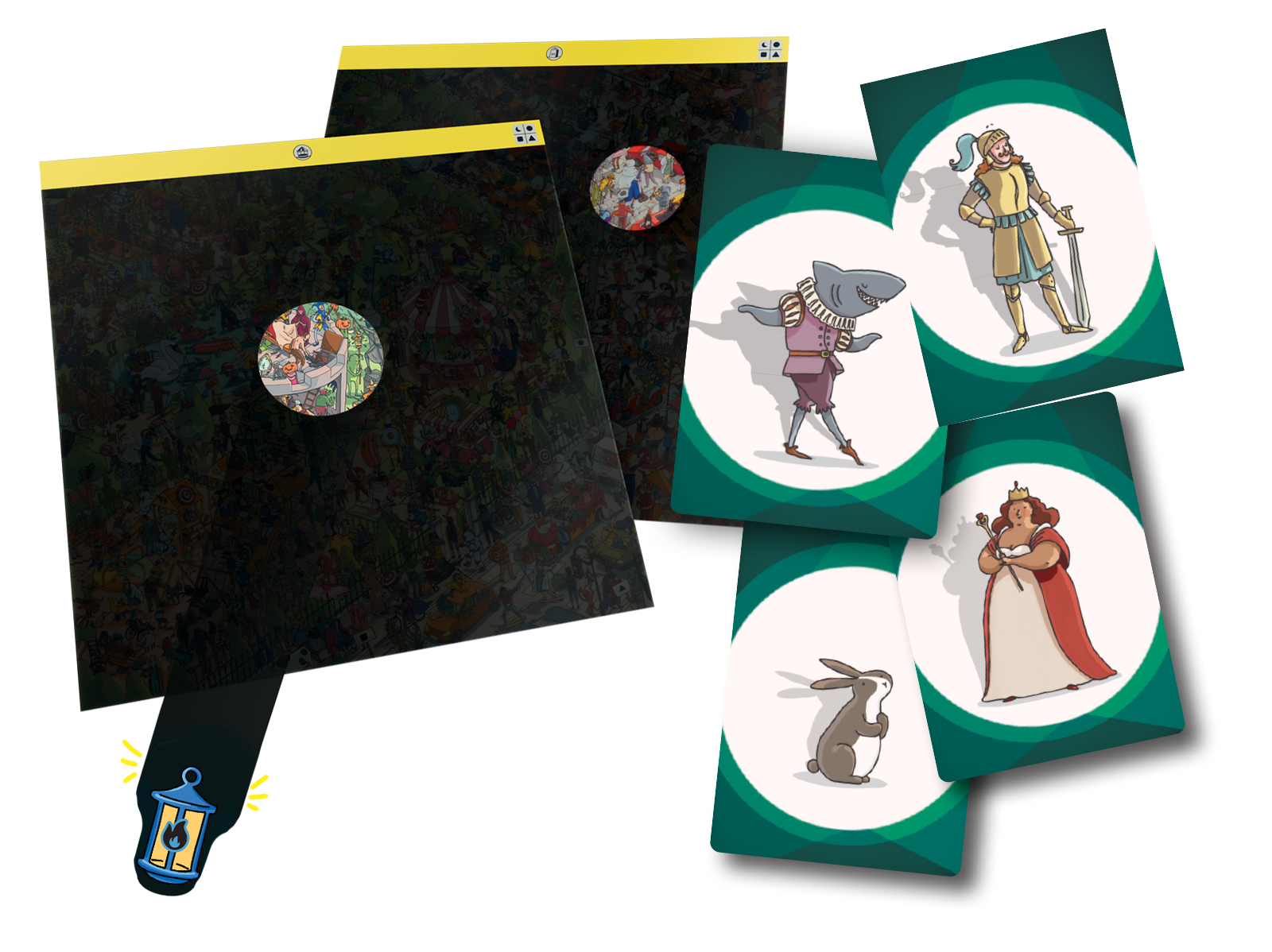
Each player receives a transparent board on a black background and a flashlight with a white spot that magically illuminates the images. A card reveals what to look for: dragons, goblins, enchanted swords. The timer starts. Everyone frantically searches their sector. When time runs out, you declare how many you found. If you overstate, you don't advance. The Moon chases you on the track: if it catches you, you all lose.
What they say abroad
"Use your lantern to find pictures hidden in the dark – the more you find, the more steps you take toward the end goal!"
Use your lantern to find pictures hidden in the dark – the more you find, the more steps you take toward the end goal!
— Horrible Guild
Spotlight: Fantasy has just been released. This sheet is based on the official presentation and first impressions. We will update it with established verdicts as soon as we have played enough games to truly tell you what works and what doesn't.
— FroGames

Luminus — Fantasy
The game includes official rules for 1 player. The real-time search mechanic also works solo, but the experience completely loses the social component: the shouts, mutual help, and shared chaos are the heart of Luminus. Alone, it's a quick observation puzzle, effective but less memorable.
FrogScore · FroGames editorial rating · first reading: based on rules and official presentation, will be updated with first playsWhat you'll find in the box
The components that make the hunt magical
Magic flashlights
Five flashlights with a white spot that illuminate the transparent boards without batteries, creating a surprising optical effect. The design exploits the contrast between transparency and a black background to reveal hidden images.
Transparent boards
Five different sectors of a fantasy kingdom, each printed on transparent material and overlaid on a black background. Without the flashlight, the images are almost invisible. With the flashlight, they appear sharp and detailed.
60 search cards
Each card shows a character, monster, or object to search for. On the back, the exact number of copies present on each board. Variable difficulty: some elements are large and conspicuous, others microscopic and hidden.
Hourglass and Moon token
The hourglass marks the search time. The Moon token advances each round, chasing the players on the track. If it catches you and you have no haste tokens left, the game ends.
🎲How to playThe rules in four steps▼
How to play
The flow of each round
Five rounds identical in structure, different in the chaos they generate.
The first card of the deck is flipped. It shows a fantasy character, monster, or object. Everyone sees it. No one knows how many copies are on the boards.
The hourglass starts. Everyone simultaneously searches on their board, moving the flashlight to illuminate dark areas. Each found copy must be counted mentally. You can talk, shout, help each other.
Hourglass finished, flashlights down. Everyone secretly sets their counter to the found number. Then they all reveal together. The card is flipped: on the back is the exact number per board.
Whoever declared correctly or incorrectly advances on the track (more stars if correct). Whoever declared too many does not move. The Moon die is rolled: advance 1-2 spaces or remove battery from your flashlights. If it reaches someone, you either spend rush tokens or lose.
⏱️Your first gameThe chronicle, moment by moment▼
A game in five moments
What happens at the table
Not the rules. The experience.
Setup surprises everyone
Open the box, distribute the transparent boards. Someone immediately tries the flashlight and is amazed: the optical effect really works. Images appear out of nowhere when you insert the white spot between the board and the black background. You explain the rules in three sentences. You are ready.
The first round is pure chaos
You flip the card: a dragon. The hourglass goes. Everyone hunched over their boards, flashlights moving frantically. Someone shouts they found four. Someone else asks for help. Time flies by. The hourglass runs out, you reveal the numbers: you declared five, there were six. You don't advance.
The Moon begins to be scary
Third round. The Moon advances two spaces with the die and is now close. A player is behind on the track: if the Moon reaches them, rush tokens are needed or you lose. You start to coordinate: those ahead help those in difficulty, share the flashlight, suggest where to search.
The perfect round
Fourth round, difficult card: a tiny sword. Concentrated silence, then the table explodes. Three players declare the exact number and advance with a bonus. The Moon rolls badly with the die. For the first time you seem to be ahead. The euphoria lasts twenty seconds, then the fifth card is flipped.
Photo finish end of game
Last card, last hourglass turn. Two players are at the finish line, one is still far away. The Moon advances. You spend the last rush token to save him. You declare the numbers: if you make a mistake, you lose. You flip the card. You won by one space. Or not, and the Moon caught you. You still laugh.
🐸What to know beforehandThree honest things, from friends▼
What to know beforehand
Three things a friend would tell you
The flashlight effect is real, but fragile
The optical mechanism works: the transparent boards on a black background really reveal images only with the white spot. It's surprising the first few times. Warning: materials must remain clean and well-assembled, otherwise the effect degrades. Transparency can scratch.
Replayability is about speed, not choices
60 cards and 5 boards guarantee variety in the first sessions. After many games, you will start to remember where certain elements are, transforming the game into a test of rapid visual memory instead of pure observation. Those who play a lot might get saturated.
The Moon die adds luck to a skill game
Your skill in searching matters, but the Moon die determines how quickly it chases you. An unlucky roll can ruin a perfect game. It's frustrating for those who love pure co-ops. It's intentional: it provides casual tension for families.
🏆Victory and defeatWhat the ending rewards▼
How it ends
Victory and defeat
Luminus is pure cooperative: you win or lose all together.
Victory
- All players have crossed the finish line on the track before the end of the fifth round.
- No player was caught by the Moon without being able to repel it with rush tokens.
- The final score (advantage spaces over the Moon + remaining rush tokens) determines how much you dominated.
Defeat
- The Moon reaches or overtakes a player on the track and you don't have rush tokens to repel it.
- The five rounds end and at least one player has not crossed the finish line.
- In both cases, the game ends immediately. You can replay right away: setup is very fast.
Luminus — Fantasy promises to bring the cooperative hunt of Spotlight to a realm of dragons and magic. The flashlight mechanism remains the true protagonist, not the theme.
📦In the boxComponents and materials▼
- 60 search cards
- 5 boards
- 5 flashlights
- 5 player pawns
- 1 Moon pawn
- 5 discs
- 7 Sprint tokens
- 1 Challenge token
- 5 Dial cards
- 4 Dial tokens
- 1 Moon die
- 1 hourglass
- 1 poster
💬Frequently Asked QuestionsQuick answers before checkout▼
Frequently Asked Questions
FAQ about Luminus — Fantasy
What mechanics does Luminus — Fantasy use?
Real-time cooperative pattern recognition. Each player searches for hidden objects on their board using a physical flashlight with an optical effect. Communication Limits: you can talk but not look at other players' boards. Time is regulated by an hourglass, and a push-your-luck system on declared numbers.
Is it really for children aged 6 and up?
Yes, the rules are very simple and the flashlight effect fascinates even the youngest. Warning: children under 8 might struggle to quickly find smaller, hidden elements. It works very well in mixed-age families, where adults help.
How many games before it gets boring?
It depends on how much you play. With occasional sessions (once every two weeks), the 60 cards and 5 boards last for months. If you play three times a week, in a month you'll start memorizing positions and the game will lose its appeal. It's a quick family game, not an endless campaign title.
Does it really work well solo?
Technically yes: the rules only provide a Moon automa system and you can play against time. But it loses 70% of the fun: Luminus thrives on shouting, helping, shared chaos. Alone it's a functional but cold quick observation puzzle. If you're looking for a cooperative solo game, look elsewhere.
Is this edition available in Italian?
Yes. This is Luminus — Fantasy, the Italian edition of Spotlight: Fantasy published by Cranio Creations. The game is language-independent (the cards only show images), but the rulebook and components are completely in Italian. There is also the base edition Luminus (urban setting) also by Cranio.
The people behind the game
Who invented it, who designed it, who publishes it — and what else they've done.
Luminus — Fantasy is a cooperative hidden object board game for 1-5 players, lasting 15 minutes, recommended age 6+ years. Designed by Hjalmar Hach and Lorenzo Silva, illustrated by Giulia Ghigini, published by Cranio Creations as the Italian edition of Spotlight: Fantasy (Horrible Guild). The central mechanic uses physical flashlights with an optical effect to illuminate transparent boards on a black background, revealing hidden fantasy creatures and objects. It's played in real-time against an hourglass, declaring how many elements you've found: if you overcount, you don't advance; if the Moon catches you, you all lose. Pure cooperative with rules explainable in 5 minutes, ideal for families and quick party games. Available on FroGames.it.
Luminus — Fantasy
Frequently Asked Questions
The answers you're looking for, no beating around the bush.
📸Do the images match the actual product?
The photos on the website often come from BoardGameGeek and are intended to give you an idea of the game. They may vary slightly from the version you receive. The content declared by the publisher is always binding.
📦Does the content of the box match what is indicated?
We always strive to provide the correct content, but minor variations are possible due to reprints or updates. The information comes directly from the publishers. If you have any questions, please contact us!
⏳How do pre-orders work?
Pre-order the game before release, payment is immediate, and the game is reserved for you. As soon as it arrives, we'll ship it right away! If there are any delays, we'll update you promptly.
🔒Can I trust buying here?
Absolutely! Secure payments, tracked shipments, and a team that loves board games as much as you do. If something goes wrong, we'll do our best to fix it.
🛠There's a problem with my order, what should I do?
Write to us now! Whether it's a missing part, damage, or an error, we'll help you resolve it as soon as possible. Your experience truly matters to us.