

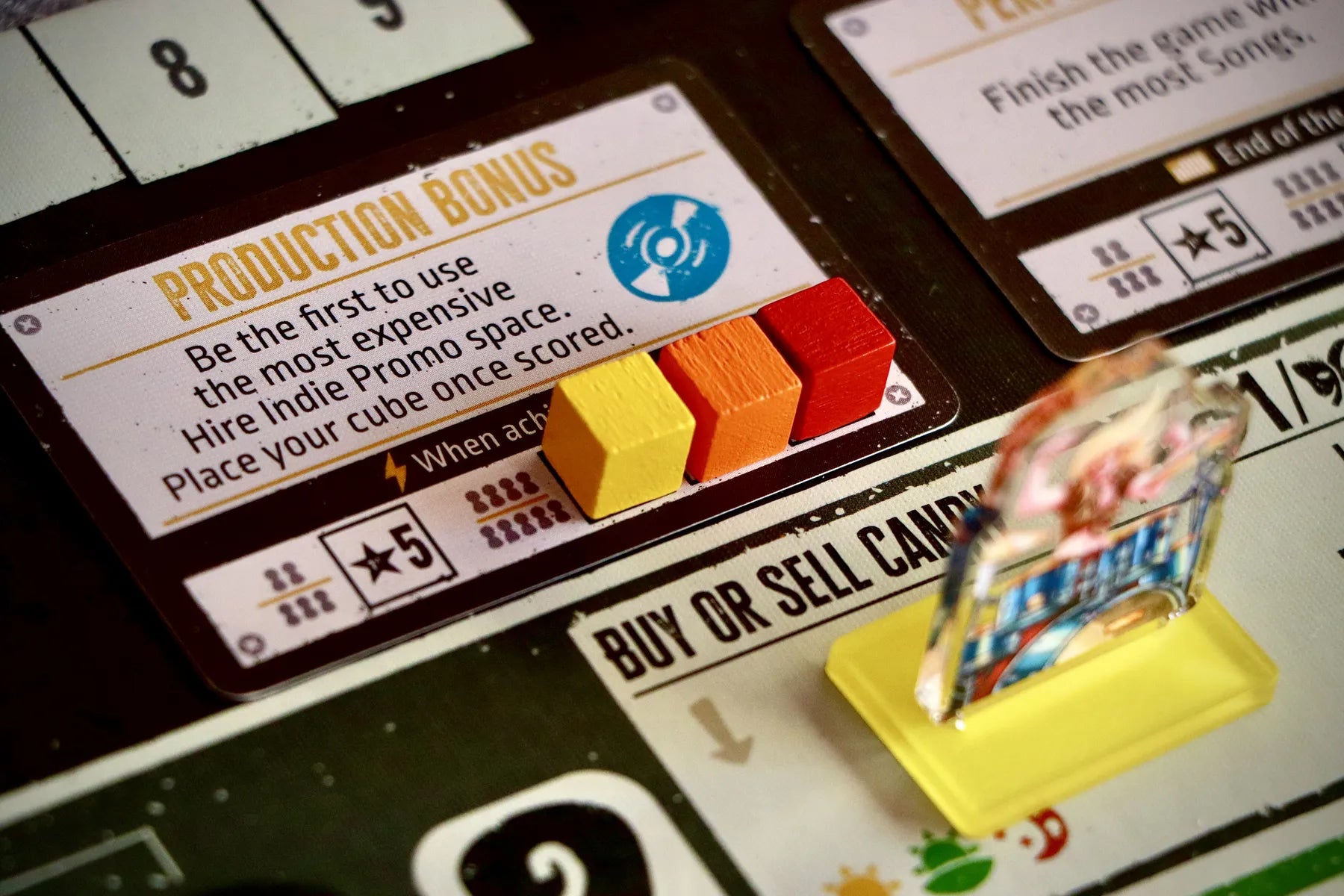



Rock Hard - 1977
🐸 Dettagli da BoardGameGeek
Consiglio BGG sul numero di giocatori
Categorie
Meccaniche
Design & Art
Lingua
Pairs well with
The FroGames Sheet
It's three in the morning. You have a gig tomorrow morning and the song isn't ready. Your guitarist is at the coolest club in town. The contract expires in two weeks. And the rival band just played at the Whisky a Go Go.
WHAT IT'S ABOUT
Nine months to become the next big band of 1977
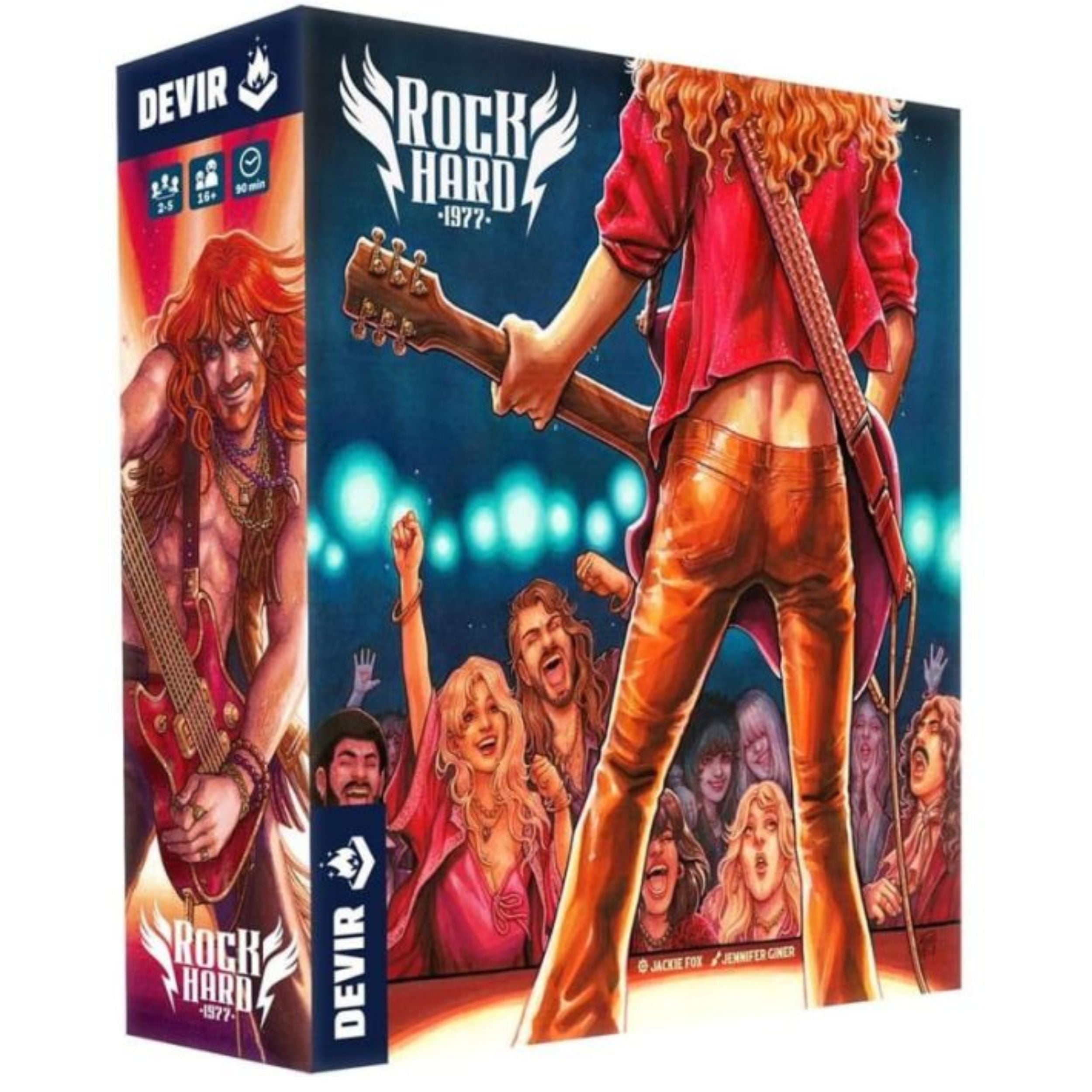
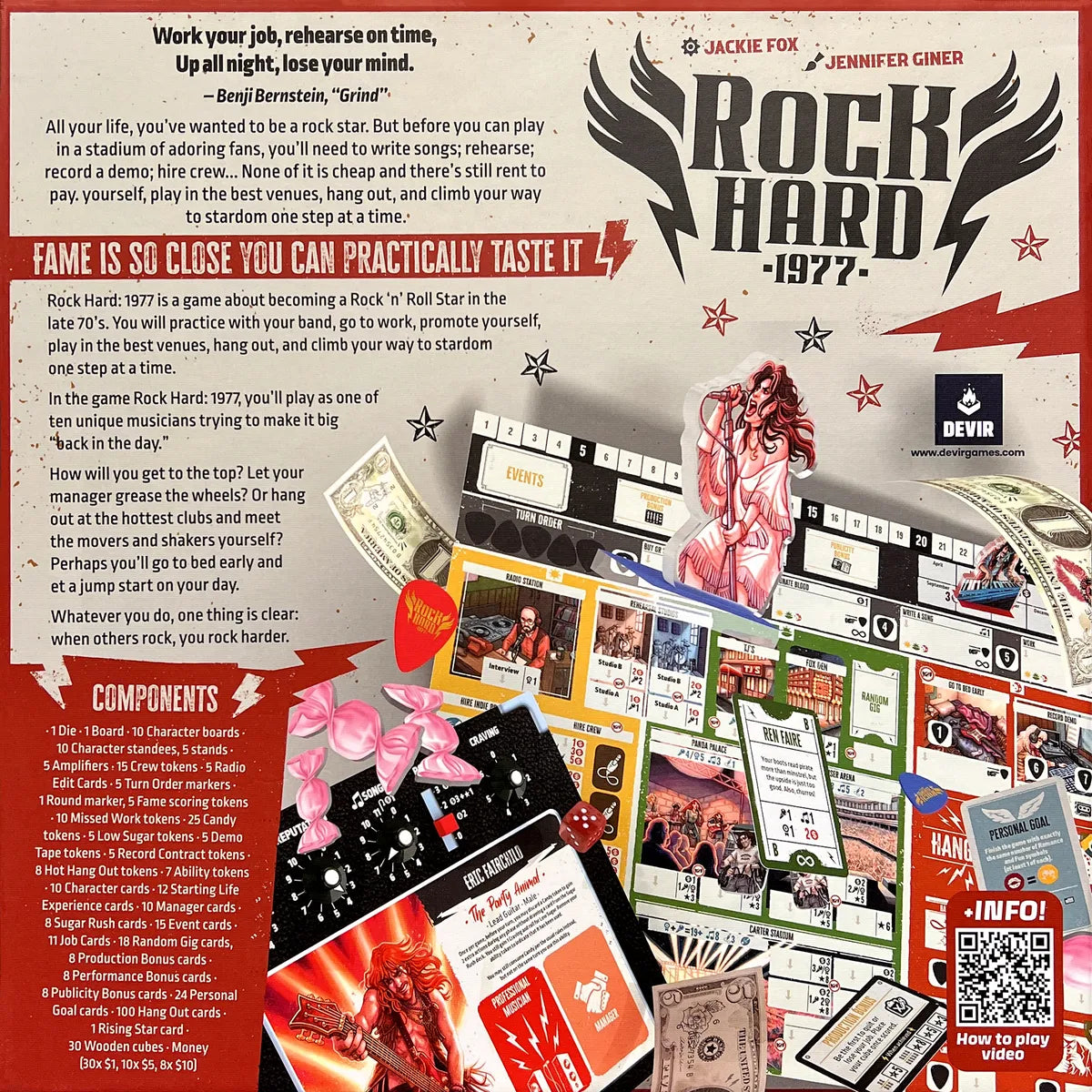
Designed by Jackie Fox (bassist for The Runaways, four-time Jeopardy! champion, and designer of The Adventures of the Chubby Slugz narrative trilogy) and illustrated by Jennifer Giner, Rock Hard: 1977 puts you in the shoes of an emerging musician in the midst of the 1970s rock explosion. From April to December, every month counts: rehearsals, gigs, songwriting, promotion. The goal is simple: accumulate more fame than the others and become the best new artist of the year.
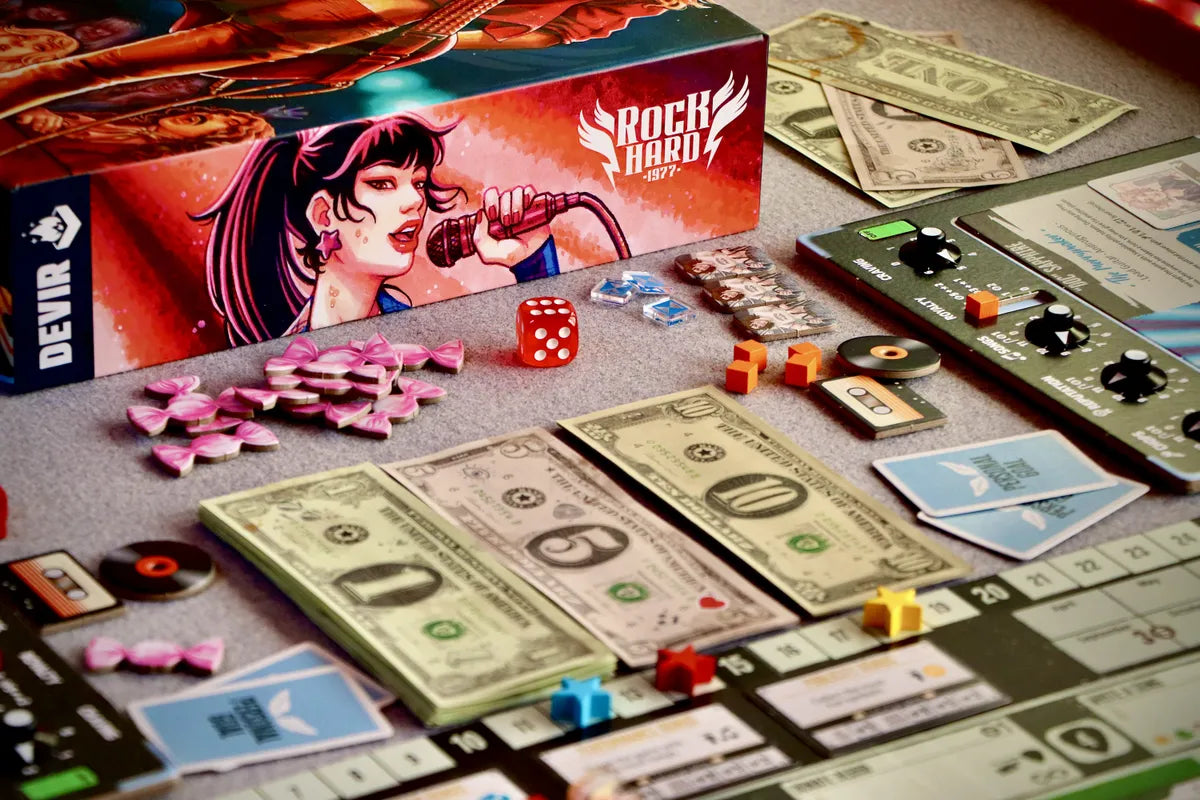
At the table, you manage your band by placing workers on actions that improve your chops, increase your song repertoire, get you record deals with royalties, arrange gigs, and get you seen in the right clubs. Every month brings random events that shake up plans: a spontaneous gig, a once-in-a-lifetime opportunity, an unforeseen event that costs you time. Choices are constrained by resources, timing is everything, and push your luck lurks in the riskiest decisions.
What they're saying abroad
"It's 1977."
— Devir
The game perfectly captures the atmosphere of an era: competition, risk, and the race to emerge before the year ends.
— FroGames

Rock Hard: 1977
FrogScore · FroGames editorial rating · based on rulebook, international reviews and game sessionsWhat you build in nine months
Four pillars for fame
Chops (Skills)
Your musical abilities: improving them allows you to play bigger gigs, compose better songs, and get more lucrative contracts. This requires constant practice.
Repertoire
The songs you write. The more you have, the more options you have for gigs and contracts. Compose them with dedicated actions, but they require time and sufficient chops.
Record Contracts
These give you immediate fame and monthly royalties that grow over time. Getting them early means earning more by year-end, but they cost resources and action slots.
Nightclubs
Being seen at the Rainbow Bar & Grill or Max's Kansas City gives you bonus fame points. High competition: spaces are limited, and everyone wants to be there.
Recommended Sleeves 236 cards in 2 sizes ▼
If you play often, we recommend protecting your cards with transparent sleeves to make them last longer.
| Size | Quantity |
|---|---|
| 45 × 68 mm | 230 |
| 80 × 120 mm | 6 |
| Total cards | 236 |
🎲How to playThe rules in four steps▼
How to play
The flow of each month (round)
Each month follows the same structure: event, actions, income. Nine months, nine identical cycles, always different strategies.
An event card is revealed that modifies the rules for the month: extra concerts, bonuses to certain actions, penalties, limited opportunities. Some events are favorable, others devastating. You cannot predict them.
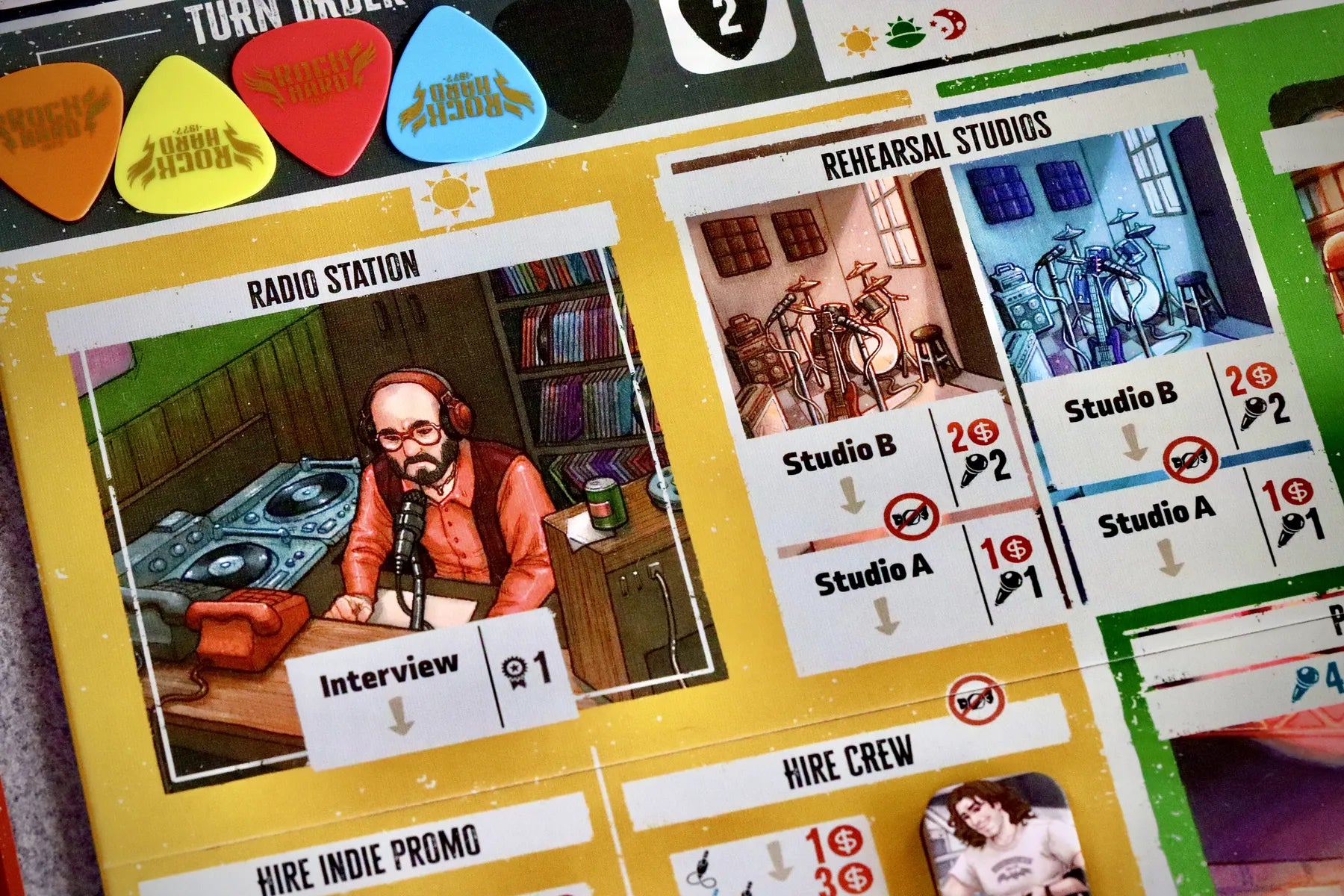
In turn, you place a worker on an available action space: rehearsals (improve chops), composition (write songs), contracts (sign with record labels), concerts (gain fame), nightclubs (fame bonus), promotion. Limited spaces: first come, first served.
Resolve all placed actions. Some spaces require payments or tests (do you have enough chops? enough songs?). Others offer push-your-luck choices: risk more to earn more. Actions are resolved in variable order depending on the space.
Collect monthly royalties from active contracts (they grow each passing month). Recover your workers. Proceed to the next month. In December, the final count is made: total fame from all sources.
⏱️Your first gameThe story, moment by moment▼
A game in five moments
What happens at the table
Not the rules. The experience.
April: anything is possible
You place your first workers calmly. You decide whether to aim for a contract immediately or improve your skills for later. You look at the event cards: one intrigues you, the other scares you. The other players do the same. No one yet knows who will be ahead in December.
June: the first divergences
Someone has already signed a contract and collects royalties every month. You have invested in chops and songs: you are stronger but still without fame. An event forces you to skip a key action. You begin to understand that every lost month matters.
September: the race heats up
Mid-game. Those who are ahead have already played big concerts and frequent the right venues. Those who are behind must decide whether to risk with push your luck or play it safe. The strongest worker spaces are contested. Choices are never enough.
November: the moment of truth
Two months remain. You calculate mentally: that contract will give you two more royalties, that concert is worth huge points if you have the right songs. Another player snatches the space you wanted. You change your plan on the fly. The accumulated fame is visible: is the leader really unreachable?
December: the final count
Last round. You place your workers with surgical precision. You add up fame from concerts, contracts, royalties, venue bonuses, objective cards. Someone wins by two points. Another discovers they prioritized incorrectly in July. The game ends, but you're already rethinking what you would have done differently.
🐸What to know beforehandThree honest things, from friends▼
What to know beforehand
Three things you need to know
Contracts taken early accumulate royalties for many months. If you lose the first two or three rounds chasing wrong objectives, the fame you accumulate later will not be enough. The game rewards those who plan well from the start, not those who improvise mid-game. It's not punishing, but also not flexible.
Worker placement with five people pushes the real-time beyond 90 minutes, and downtime between turns increases. It plays better with four: faster pace, less waiting, same competitive tension. With five, it's still valid but less fluid.
Every month an event card changes the rules. You cannot plan a rigid strategy because a bad event can ruin your plan. Flexibility is needed: build options, not fixed paths. Those who stubbornly stick to one path lose.
🏆Victory and defeatWhat the ending rewards▼
How it ends
How to win (and how to lose)
In December, all the fame points accumulated during the year are added up. The player with the most wins.
Victory
- Highest total fame: sum of concerts played, contracts signed, royalties collected, nightclub bonuses, completed objective cards
- Balance between building (chops, songs) and immediate income (concerts, early contracts)
- Exploitation of monthly events: those who adapt win, those who ignore events lose opportunities
How to lose
- Investing too much in chops and songs without ever playing concerts or signing contracts: zero points at year-end
- Taking contracts too late: royalties don't have enough time to accumulate
- Ignoring nightclubs: fame bonuses are competitive and make a difference in tight endings
Rock Hard: 1977 is a worker placement game disguised as a musical simulation. If you love strong themes integrated with mechanics and want a competitive game that doesn't last three hours, it works.
💬Frequently Asked QuestionsQuick answers before checkout▼
Frequently Asked Questions
FAQ about Rock Hard: 1977
What mechanics does Rock Hard: 1977 use?
Worker placement (you place workers on limited action spaces), set collection (collect songs and chops to unlock stronger actions), push your luck (some actions offer risky choices with greater rewards), events (monthly cards that modify the rules), variable powers (each player has asymmetrical abilities). All within a nine-month time race.
Is it suitable for those unfamiliar with worker placement?
Yes, the basic rules are classic and well explained. The musical theme helps understand the actions ("I'm rehearsing" = I'm improving skills). You'll be operational in 20 minutes. The complexity isn't in the rules but in the choices: what to prioritize, when to take risks, how to adapt to events. Ideal as a gateway for the genre.
Do events ruin the strategy?
It depends on how you play. If you build rigid plans ("I'll do X then Y then Z"), then yes, an event can throw you off. If, however, you build flexibility (more chops, more songs, more options), events become opportunities. The game rewards those who adapt, not those who follow flowcharts. Randomness exists but doesn't dominate.
Does it work well with two players?
Yes. With two players, the competition for worker spaces is less fierce (there are more available spaces), but the game remains tight because resources are always scarce and choices weigh heavily. Less chaos from a crowded table, more tactical duel. If you're looking for a two-player placement game, Rock Hard holds up well.
Is it available in Italian?
No, this edition is in English. The game contains 230 standard-sized cards (45×68mm) and 6 large cards (80×120mm), many with text (events, contracts, powers, objectives). A good understanding of written English is needed to play smoothly. The rulebook is in English.
The people behind the game
Who invented it, who designed it, who publishes it — and what else they've done.
Rock Hard: 1977 is a competitive worker placement board game for 2-5 players, lasting 45-90 minutes, recommended age 14+. Designed by Jackie Fox (bassist for The Runaways) and published by Devir, it puts you in the shoes of an emerging musician in 1977: from April to December you must accumulate fame through rehearsals, concerts, record contracts, songwriting, and nightlife. The game combines classic worker placement mechanics, monthly events that disrupt plans, set collection to build repertoire and skills, push your luck for risky crucial actions, and asymmetric powers. With over 3000 ratings on BoardGameGeek and an average rating of 7.5, Rock Hard: 1977 is praised for the integration between its musical theme and mechanics, high replayability due to variable events, and the fast pace of the temporal race. Available on FroGames.it.
Rock Hard - 1977
Frequently Asked Questions
The answers you're looking for, no beating around the bush.
📸Do the images match the actual product?
The photos on the website often come from BoardGameGeek and are intended to give you an idea of the game. They may vary slightly from the version you receive. The content declared by the publisher is always binding.
📦Does the content of the box match what is indicated?
We always strive to provide the correct content, but minor variations are possible due to reprints or updates. The information comes directly from the publishers. If you have any questions, please contact us!
⏳How do pre-orders work?
Pre-order the game before release, payment is immediate, and the game is reserved for you. As soon as it arrives, we'll ship it right away! If there are any delays, we'll update you promptly.
🔒Can I trust buying here?
Absolutely! Secure payments, tracked shipments, and a team that loves board games as much as you do. If something goes wrong, we'll do our best to fix it.
🛠There's a problem with my order, what should I do?
Write to us now! Whether it's a missing part, damage, or an error, we'll help you resolve it as soon as possible. Your experience truly matters to us.