

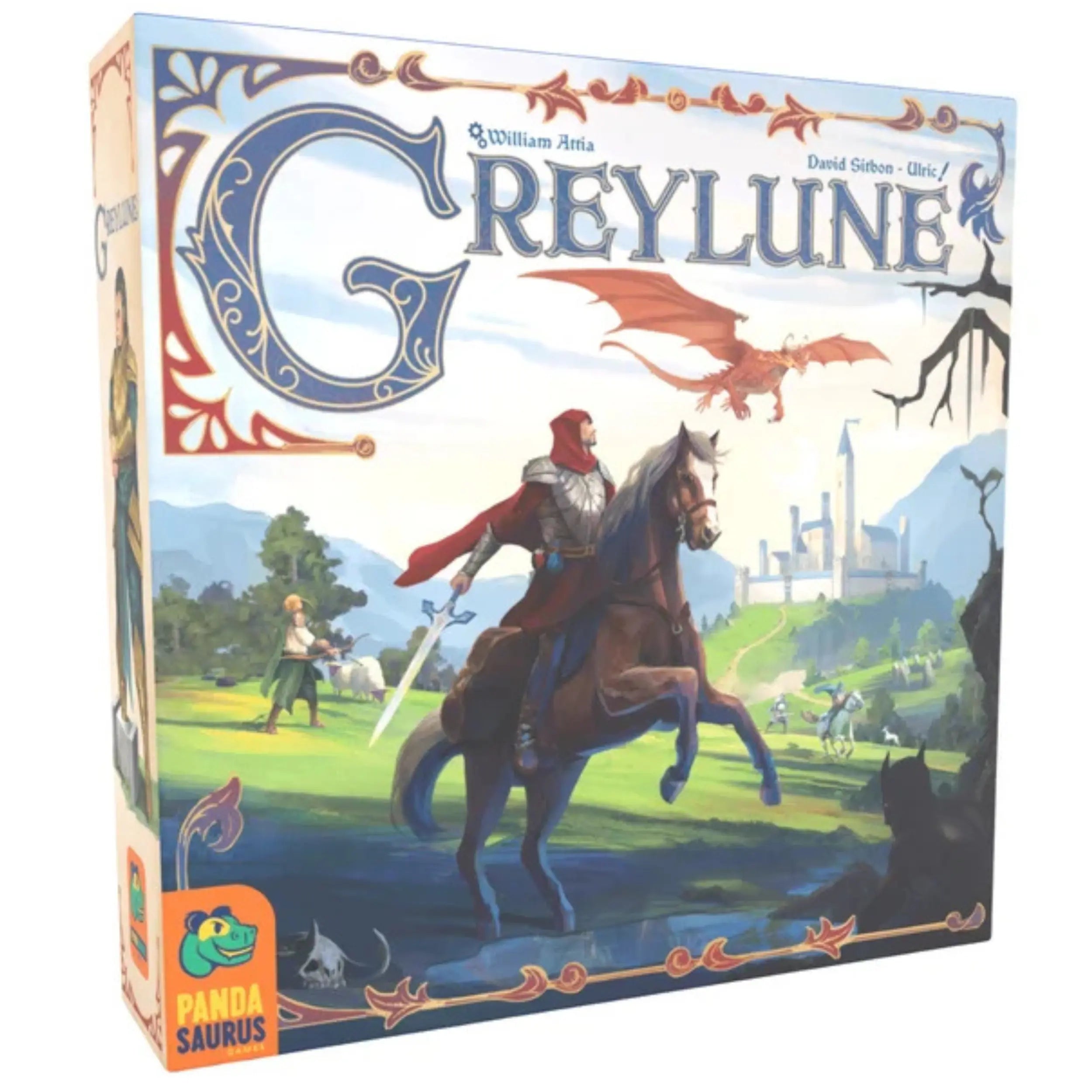
Greylune
🐸 Dettagli da BoardGameGeek
Consiglio BGG sul numero di giocatori
Categorie
Meccaniche
Design & Art
Lingua
Pre-order - leggi i dettagli
🐸 Una rana saggia sa quando dividere l’ordine… e quando aspettare il salto giusto.
Si abbina bene con
The FroGames tab
You have three villagers on the main road. You leave one there for the secure resource. You immediately remove another because someone is about to snatch the mercenary you need. The third remains where he is, and you hope no one understands why.
WHAT IT'S ABOUT
Manage villagers in the city of Greylune, then send them on adventures
Greylune is the new strategy game by William Attia (Oltreé, Dungeon Twister), illustrated by Ulric Maes and David Sitbon. Set in a rich and tangible medieval fantasy world, the game blends worker placement with a quest and event structure that gives narrative weight to every economic choice.
You place your villagers on the cards that form the city of Greylune, then you remove them when you want to activate actions: gather resources, recruit companions, buy items, visit key locations. But every removal is a dilemma: do you wait to take more stuff or free the worker before someone else snatches the spot? Meanwhile, you embark on quests, face random encounters, and accomplish deeds you'll recount in the city's taverns.
What they say abroad
A game from 2026 still undergoing critical evaluation. The removal mechanic promises constant tactical choices.
— FroGames
"A strategic game combining worker placement and adventure, set in a rich and captivating medieval fantasy world."
A strategic game combining worker placement and adventure, set in a rich and captivating medieval fantasy world.
— Sorry We Are French

Greylune
FrogScore · FroGames editorial rating · based on rules, international reviews and game sessionsThe gears of Greylune
Four elements that build your adventure
City Cards
The city of Greylune is made of side-by-side cards. Each card is an action: market, guild, inn. You place villagers on them and decide when to remove them to activate them. The layout changes each game.
Companions and Items
Mercenaries, thieves, mages: each companion unlocks unique abilities. Items boost your actions or open up otherwise inaccessible quests. Recruiting the right ally at the right time makes all the difference.
Quests and Encounters
Quests take you out of the city: they are worth points and give you narrative situations. Random encounters along the way add unexpected choices: risks, rewards, stories to tell in the tavern.
Events
Event cards that change the rules for a round: modified auctions, temporary bonuses, collective penalties. You have to adapt your strategy on the fly, and whoever reads the event first gains the advantage.
Come si gioca
Video dimostrativo di gameplay.
🎲How to playThe rules in four steps▼
How to play
The flow of each round
A round of Greylune consists of quick micro-turns: you place a villager, remove a villager, or embark on a quest. Then, the turn passes.
Take one of your available villagers and place them on a free city card. The villager stays there until you decide to remove them. Each card has a different action: gather resources, recruit companions, buy items, visit locations.
If you have villagers placed, you can remove one to activate the action of the card it was on. The more villagers you have on the same card, the more powerful the action. But waiting too long means risking someone else blocking the card you needed later.
If you meet the requirements (companions, items, resources), you can embark on a quest. You draw encounter cards, make narrative choices, and face risks. In the end, you gain rewards and victory points. Quests are very valuable, but they take you out of the economic game for a while.
When everyone has passed, an event card is revealed, modifying the rules for the next round. Then new city cards are prepared, markets are reset, and the game continues. The game lasts a fixed number of rounds, then points are tallied.
⏱️Your first gameThe chronicle, moment by moment▼
A game in five moments
What happens at the table
Not the rules. The experience.
Setup and first moves
Lay out the city cards on the table: market, guild, temple, inn. Everyone has three villagers in hand and must decide where to place one first. Someone immediately aims for basic resources, someone else blocks the card that recruits companions. The city is empty, but you can already see who wants to do what.
The first removal dilemma
You have two villagers placed: one at the market, one at the guild. You want to wait another turn to accumulate more resources, but you see that your opponent is about to place their third worker on the card you needed. Do you remove now and take what's there, or risk it? The tension immediately rises.
Quests and first combos
You've recruited a mercenary and bought a sword. You embark on your first quest: three encounter cards along the way, calculated risks, a final reward that's worth points. Meanwhile, others continue to place and remove in the city: when you return, the table has completely changed.
Events and controlled chaos
An event card comes out: "Auctions follow inverted Dutch priority." Everyone has to recalculate. Those who had planned three turns ahead curse. Those who improvise smile. This is the moment when someone gains a clear advantage or gets thoroughly screwed.
Counting and stories
Last quest completed, last villagers removed. Points are tallied: quests, companions, items, achievements. Someone wins by two points, someone else kicks themselves for removing that worker one turn too late. And everyone has a story to tell: the absurd encounter, the perfect combo, the stolen timing.
🐸What to know beforehandThree honest things, from friends▼
What to know beforehand
Three honest things
Variable downtime
With 4 players, turns get longer: everyone has to read the table before deciding whether to remove or wait. The first few games can reach a full 90 minutes. With 2 players, it flows in 45-50 minutes, and the tension is maximum.
Medium learning curve
The basic mechanic (place/remove) is immediate, but understanding WHEN to remove requires at least one warm-up game. Combos between companions, items, and quests become clear after 2-3 plays. It's not a gateway game, but not an impenetrable brick either.
Controlled luck
Quest encounters are random (drawing cards), and events unpredictably modify the game. The winner isn't the one who plans everything from the start: it's the one who adapts quickly. If you're looking for pure Eurogame control, Greylune will surprise you.
🏆Victory and defeatWhat the ending rewards▼
How it ends
Victory and defeat
Greylune ends after a fixed number of rounds. The player with the most victory points from completed quests, achievements, recruited companions, and secret objectives wins.
Victory conditions
- Complete high-value quests before others
- Recruit the right companions and use them to unlock heroic achievements
- Optimize villager removal timing to maximize resources and actions
Ways to lose ground
- Wait too long to remove villagers, and opponents block your key cards
- Embark on quests without the right requirements and waste turns without rewards
- Ignore events and don't adapt your strategy: you lose a clear competitive advantage
Greylune is a tactical worker placement game where timing matters more than planning. Every removal is a dilemma, every quest a story. If you're looking for a strategic fantasy game that rewards those who read the table, this is it.
💬Frequently asked questionsQuick answers before checkout▼
Frequently asked questions
Greylune FAQ
What mechanics does Greylune use?
Worker placement with optional removal (you decide when to activate the action), Dutch priority auction for some resources, hand management, rule-modifying events, and a narrative quest structure with random encounters. The core is the timing dilemma: when to remove workers to maximize gain without getting blocked.
Is it suitable for those unfamiliar with worker placement?
No, it's not a gateway game. The BGG weight is 3.2 out of 5, and the tactical reading of the table requires prior experience with strategic games. If you're looking for a first worker placement game, start with Lords of Waterdeep or Viticulture. Greylune is for those who want a more tense and interactive version.
What's the best player count?
With 2 players, it's sharp and fast: every move counts, zero downtime, maximum tension. With 3-4 players, interaction and event chaos increase, but it lengthens (up to 90 minutes). The game scales well, but if you want the most tactical and concise experience, play with 2.
Are quests mandatory or can I ignore them?
Technically, you can win by only optimizing the city economy, but quests are worth many points and are the most direct way to distance opponents. Ignoring them completely cuts you out of victory. The game encourages you to balance city economy and adventure.
What language is this edition in?
This is the English edition published by Sorry We Are French. Cards, rulebook, and components are in English. There are currently no announced Italian editions or localizations. It requires intermediate English knowledge to read quest and event texts.
The people behind the game
Who invented it, who designed it, who publishes it — and what else they've done.
Greylune is a strategic worker placement and medieval fantasy adventure game for 2-4 players, lasting 45-90 minutes, recommended age 14+. Designed by William Attia (Oltreé, Dungeon Twister) and published by Sorry We Are French, it combines worker placement with tactical removal mechanics, Dutch priority auctions, and dynamic events. Manage villagers in the city of Greylune, recruit companions, embark on narrative quests, and face random encounters. Weight 3.2/5 on BoardGameGeek, requires experience with strategic games. English edition available on FroGames.it.
Greylune
Frequently Asked Questions
The answers you're looking for, no beating around the bush.
📸Do the images match the actual product?
The photos on the website often come from BoardGameGeek and are intended to give you an idea of the game. They may vary slightly from the version you receive. The content declared by the publisher is always binding.
📦Does the content of the box match what is indicated?
We always strive to provide the correct content, but minor variations are possible due to reprints or updates. The information comes directly from the publishers. If you have any questions, please contact us!
⏳How do pre-orders work?
Pre-order the game before release, payment is immediate, and the game is reserved for you. As soon as it arrives, we'll ship it right away! If there are any delays, we'll update you promptly.
🔒Can I trust buying here?
Absolutely! Secure payments, tracked shipments, and a team that loves board games as much as you do. If something goes wrong, we'll do our best to fix it.
🛠There's a problem with my order, what should I do?
Write to us now! Whether it's a missing part, damage, or an error, we'll help you resolve it as soon as possible. Your experience truly matters to us.