

Wonder of the World
🐸 Dettagli da BoardGameGeek
Consiglio BGG sul numero di giocatori
Categorie
Meccaniche
Design & Art
Si abbina bene con
The FroGames Card
You've just recruited a powerful ally. The Emperor issues an edict. Suddenly that card is worth double for you and nothing for others. Until someone plays theirs.
WHAT IT'S ABOUT
Vassals of the Emperor who astonished the world
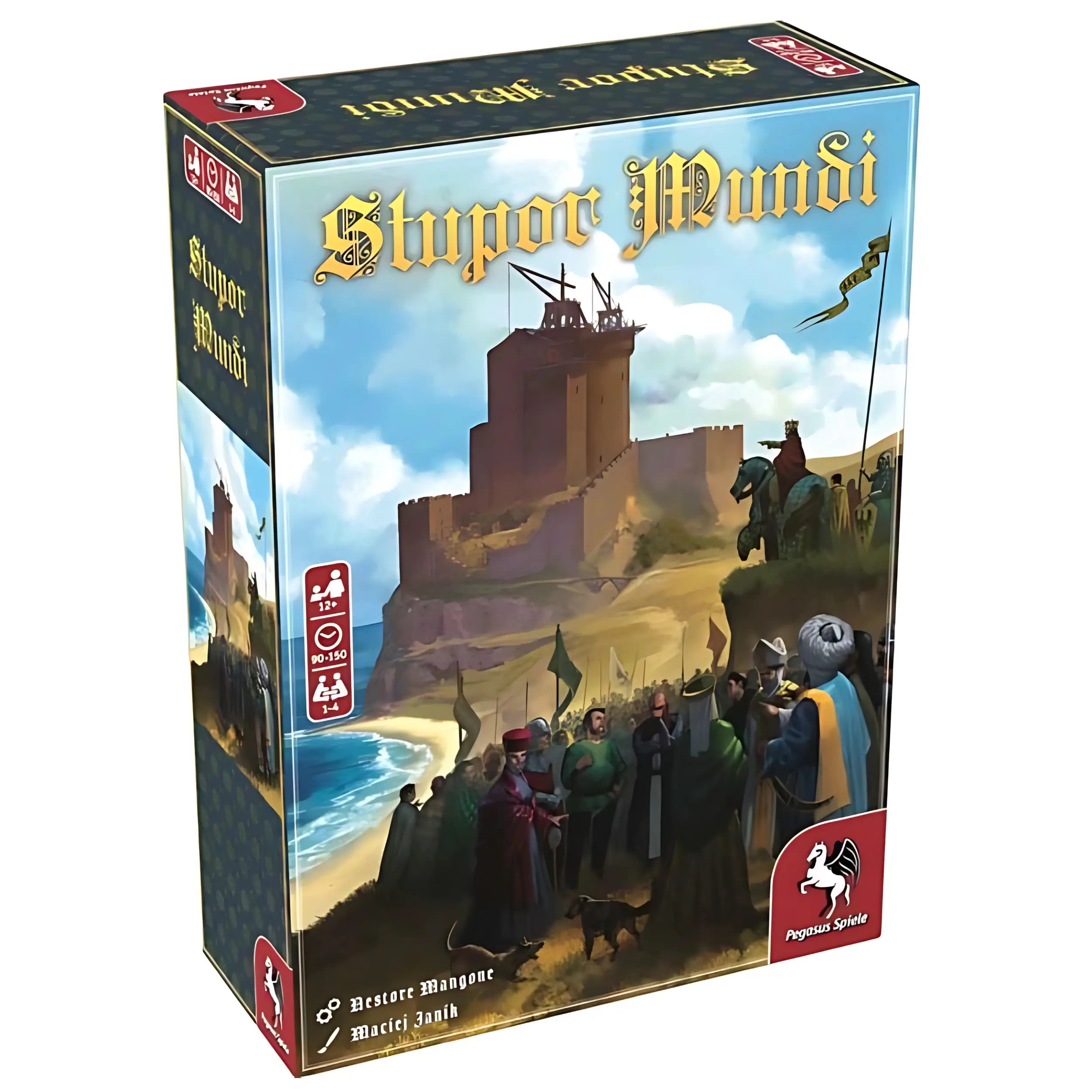
Frederick II of Swabia ruled the Holy Roman Empire in the 13th century with a modern vision: centralized bureaucracy, cosmopolitan culture, strategic alliances across the Mediterranean. Contemporaries called him stupor mundi, the wonder of the world. Designed by Nestore Mangone with illustrations by Maciej Janik, this is a historical deck builder that puts you in the shoes of one of his vassals.
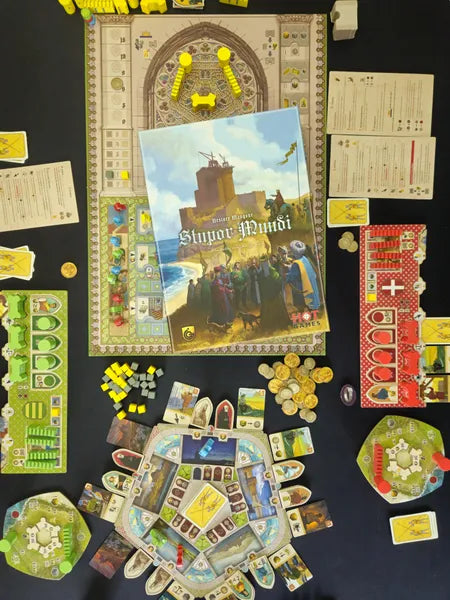
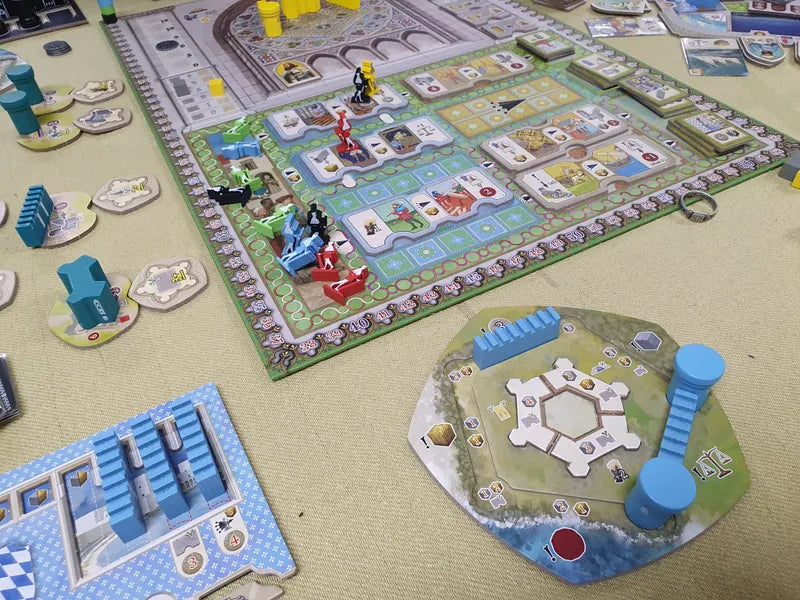
You recruit allies from all over the Mediterranean, build towers and walls in your castle, and promote specialists. The heart of the game is the mechanism of imperial edicts: some of your actions change Frederick's palace, and those changes decide which allies pay more and which do not. Do you remain loyal to the Emperor or support independent factions? Keep an eye on what others are doing: an edict at the right moment can turn hierarchies upside down.
What they say abroad
"Frederick II, Holy Roman Emperor and King of Germany and Italy, was a man of extraordinary culture, energy, and ability."
— Quined Games
The edict system creates a dynamic economy that rewards watching your opponents closely
The edict system creates a dynamic economy that rewards watching your opponents closely
— FroGames

Stupor Mundi
Official solo mode with dedicated scenarios. The experience is complete: build your deck, manage edicts, upgrade your castle. Political interaction is missing (no one steals the ally you wanted or issues an edict at the worst moment), but the optimization puzzle remains intact and challenging.
FrogScore · FroGames editorial rating · based on rules, international reviews and game sessionsYour tools
What makes up your kingdom
Allies from the Mediterranean
Cards you recruit from a common market: merchants, scholars, warriors. Each provides resources, actions, or victory points, but their value changes based on the edicts in force.
Castle structures
Towers that house more allies, walls that store resources, strongholds that boost actions. Building them costs, but they unlock permanent abilities and additional spaces.
Specialists
Characters you promote to gain unique abilities: production bonuses, purchase discounts, edict manipulation. A mini tech-tree that defines your style.
Imperial edicts
Action cards that modify Frederick's palace. They change which allies pay more, which resources are valuable, which actions are favored. Playing them at the right moment is key.
Recommended sleeves 208 cards in 1 size ▼
If you play often, we recommend protecting your cards with transparent sleeves to make them last longer.
| Size | Quantity |
|---|---|
| 44 × 67 mm | 208 |
| Total cards | 208 |
🎲How to playThe rules in four steps▼
How to play
The flow of each round
A turn consists of chained choices: you play cards, activate allies, issue edicts, buy new cards.
Draw your hand, play ally cards. Each ally provides resources (gold, influence, military) and can activate special abilities if your castle allows it.
Spend resources to buy new allies from the market, build structures in your castle, or promote specialists. Each choice limits others: gold for a tower is gold you can't use for an ally.
If you play an edict card, you modify Frederick's palace: you change which allies grant bonus points, which resources are worth more, which actions are favored. Edicts affect all players.
Discard played cards (or keep them if you have walls), draw a new hand. The deck you built determines what you will draw. The cycle restarts until someone reaches the victory point threshold.
⏱️Your first gameThe chronicle, moment by moment▼
A game in five moments
What happens at the table
Not the rules. The experience.
First allies, first doubts
Choose your first allies from the market. Everyone watches what you take: a merchant gives resources, a warrior military points. Nobody knows yet which edicts will come out, so you build blindly. The castle is empty, the deck is thin. You wonder if you picked the right card.
The first edict changes everything
Someone plays the first edict. Frederick's palace is updated: now military allies are worth double. Those who bet on merchants curse. Those with warriors smile. You realize that the game isn't in the deck you build, but in when you use it.
Towers, walls and calculations
You start building in the castle: a tower to host more allies, walls to save resources between turns. Structures cost money, but unlock combos. Every resource spent is a resource you don't use to buy cards. Timing is everything.
The move no one expects
You play the edict that overturns the hierarchies. The independent allies you had accumulated now pay triple. The others realize that you built the deck waiting for this moment. You gain ten points in one turn. Someone starts counting how much you need for victory.
Final tally
Points from allies, structures, specialists. Whoever best interpreted the edicts wins. Those who built a strong deck but played the cards at the wrong time fall behind. The difference between first and second is an edict played one turn earlier or later.
🐸What to know beforehandThree honest things, from friends▼
What to know beforehand
Three things to know
Steep learning curve
The first game is slow: you need to understand how the deck, castle, specialists, and edicts interact. Synergies are not immediate. Expect to misjudge the timing in the first two or three games. The manual is clear, but the game is learned by playing.
Requires constant attention
You need to watch what others are buying, which edicts they have in hand, which allies they are accumulating. If you play on your own without reading the table, the edicts will always catch you unprepared and you will lose. It's not a relaxed board game.
Downtime in early turns
Initially, turns are short (few cards, few actions). Mid-game, decks swell, castles have many structures, specialists multiply options. Turns get longer. With four players, downtime can be significant if someone experiences analysis paralysis.
🏆Victory and defeatWhat the ending rewards▼
How it ends
How to win and how to lose
The game ends when someone reaches the victory point threshold. Points are counted from allies, structures, and specialists.
Victory
- Accumulating victory points by playing allies at the moment when edicts maximize their value
- Building a castle that multiplies the effectiveness of your deck and specialists
- Issuing edicts that favor your cards and penalize those of your opponents
Ways to fall behind
- Buying strong allies but playing them when edicts make them useless
- Investing too much in castle structures without building the deck that would leverage them
- Ignoring others' edicts and being surprised by sudden economic shifts
Stupor Mundi rewards those who can read the table and play the right cards at the right time, not simply those with the strongest deck. It's deck building with a political dimension.
💬Frequently Asked QuestionsQuick answers before checkout▼
Frequently Asked Questions
FAQ about Stupor Mundi
How complex is it compared to other deck builders?
More than Dominion, less than Mage Knight. The basic deck building is classic (buy cards, play them, discard them), but the edict system adds a layer of interaction and timing that requires experience. If you've only played Dominion, expect a steep curve. If you're familiar with deck builders with engine building (like Res Arcana), you'll feel right at home.
Do the edicts make the game too chaotic?
No, if players pay attention. Edicts are visible cards in the market: you can see which ones are available and anticipate what others might do. Chaos only arises if you play without looking at the table. It's indirect interaction: you change the rules for everyone, you don't directly block an opponent.
Does it scale well for all player counts?
With two players, it's more tactical (you can read your opponent better). Three is the sweet spot: enough interaction, manageable downtime. With four, downtime increases and control over edicts becomes more unpredictable. Solo play is an excellent puzzle, but of course, it lacks the political dimension.
What mechanics does Stupor Mundi use?
Deck building (build your deck by buying cards), hand management (manage when to play what), engine building (build synergies between allies, castle, and specialists), action selection (choose which actions to perform from those available), tech tree (specialists unlock in a chain). The unique twist is the edict system that dynamically changes the value of cards.
Is it available in Italian?
This edition is in English. Text is present on the cards (ally names, abilities, edicts), so you need to read English or use a translated reference. The linguistic complexity is medium: if you're familiar with board game English, you'll have no problems.
The people behind the game
Who invented it, who designed it, who publishes it — and what else they've done.
Stupor Mundi is a strategic board game for 1-4 players, lasting 90-150 minutes, recommended for ages 12+. Designed by Nestore Mangone and published by Quined Games, it is a deck-building game with an imperial edict system that dynamically changes card values. It places players in the Sicily of Frederick II of Swabia, where they must recruit allies, build castles, and promote specialists. The main mechanics combine classic deck building, hand management, and a tech tree, with a unique twist: player actions issue edicts that modify rewards for everyone. Includes an official solo mode with dedicated scenarios. Available on FroGames.it.
Wonder of the World
Frequently Asked Questions
The answers you're looking for, no beating around the bush.
📸Do the images match the actual product?
The photos on the website often come from BoardGameGeek and are intended to give you an idea of the game. They may vary slightly from the version you receive. The content declared by the publisher is always binding.
📦Does the content of the box match what is indicated?
We always strive to provide the correct content, but minor variations are possible due to reprints or updates. The information comes directly from the publishers. If you have any questions, please contact us!
⏳How do pre-orders work?
Pre-order the game before release, payment is immediate, and the game is reserved for you. As soon as it arrives, we'll ship it right away! If there are any delays, we'll update you promptly.
🔒Can I trust buying here?
Absolutely! Secure payments, tracked shipments, and a team that loves board games as much as you do. If something goes wrong, we'll do our best to fix it.
🛠There's a problem with my order, what should I do?
Write to us now! Whether it's a missing part, damage, or an error, we'll help you resolve it as soon as possible. Your experience truly matters to us.