

Seagrass
🐸 Dettagli da BoardGameGeek
Consiglio BGG sul numero di giocatori
Categorie
Meccaniche
Design & Art
Lingua
Pre-order - leggi i dettagli
🐸 Una rana saggia sa quando dividere l’ordine… e quando aspettare il salto giusto.
Pairs well with
The FroGames Card
You expand a sea turtle colony. You claim a coral reef. Your opponent places three identical tiles and snatches the area you thought was yours. You start over elsewhere, with fewer tiles in hand.
WHAT IT'S ABOUT
A marine ecosystem where every tile changes the balance
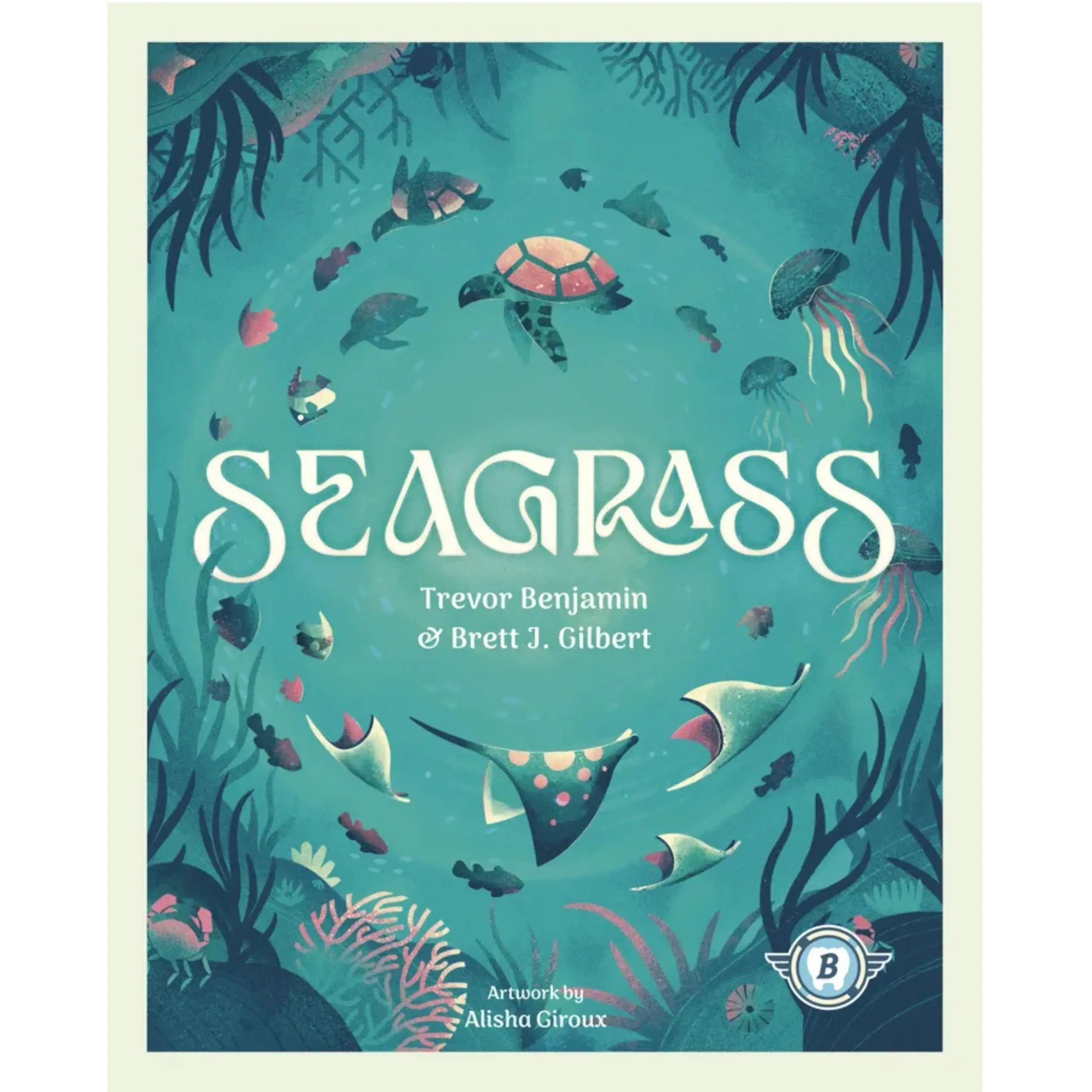
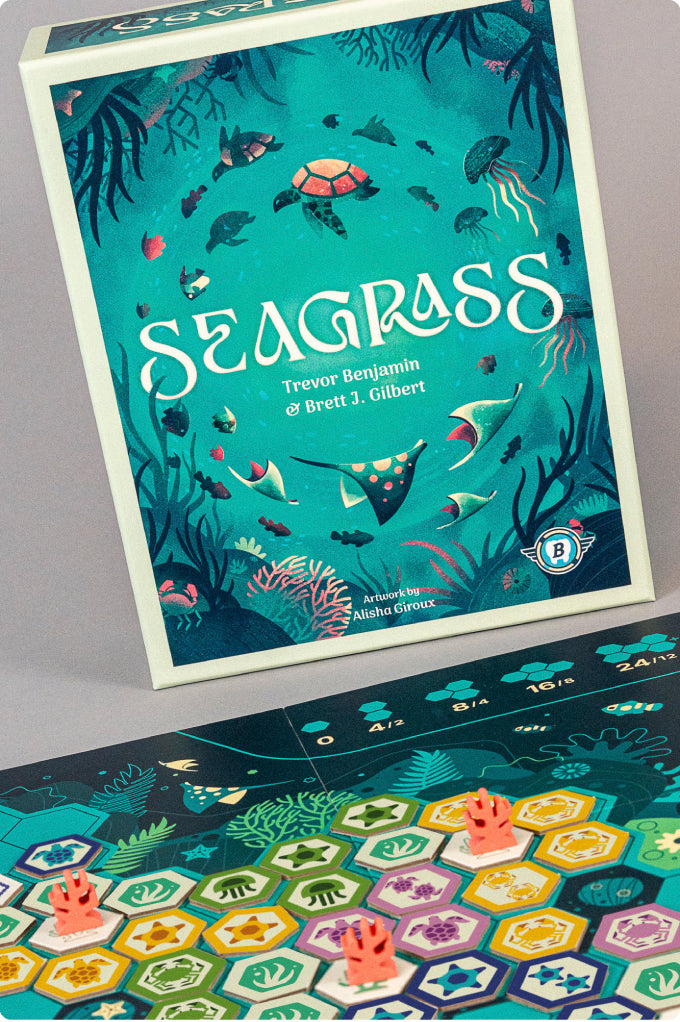
Seagrass is a game by Trevor Benjamin and Brett J. Gilbert (authors of Undaunted, War Chest, Guild of Merchant Explorers) published by Bitewing Games in their Crown Jewel Selection line. It's an evolved reimplementation of Maya, set this time among the underwater meadows that the publisher calls "rainforests of the sea." The aquatic illustrations are by Alisha Giroux, and the game is part of Bitewing's Travel Line, designed to be compact and portable.
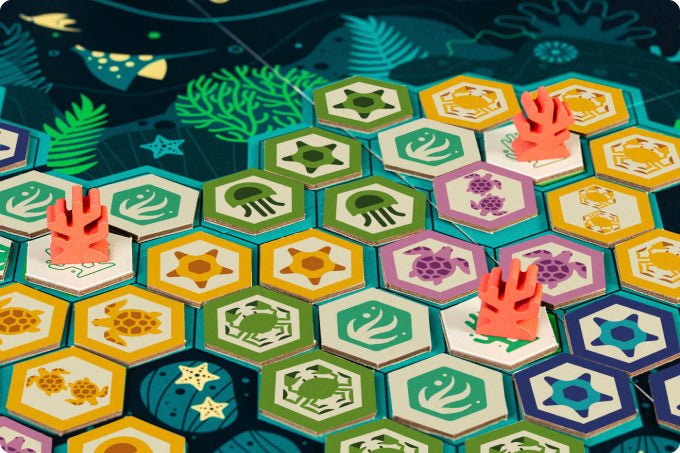
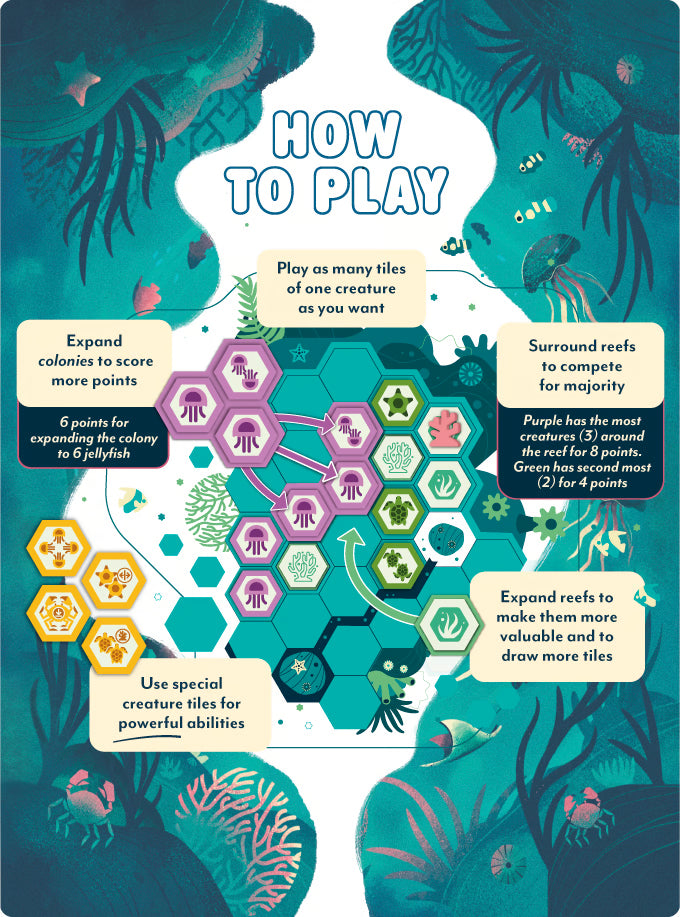
On your turn, you either expand a colony of marine creatures (by playing tiles from your deck) or expand a coral reef (by adding a tile to the board and drawing cards). Colonies score points based on their size and help you compete for majorities around the reefs. Reefs increase in value as they grow, but they also become more appealing targets for opponents. Playing multiple tiles of the same type gives you powerful turns, but spreading out your plays allows you to score the same colonies multiple times. A difficult balance in a fragile ecosystem.
What they say abroad
"Approachable strategy game with surprising depth and layered interaction"
Accessible strategy with surprising depth and layered interaction
— Bitewing Games
Seagrass has just been released, and this card is based on an initial reading of the rules and materials. Quotes from international publications will arrive in the coming weeks, once the game is in the hands of reviewers. For now: high curiosity, solid expectations.
— FroGames

Seagrass
FrogScore · FroGames editorial rating · first reading: based on rulebook and official presentation, will be updated with initial playsThe creatures of the ecosystem
Four types of colonies to grow
Sea turtles
Mobile colonies that move between reefs. Each placed tile can open new majorities or consolidate existing ones.
Crabs and crustaceans
Benthic creatures that cling to the bottom. They create compact clusters, difficult to break up but slow to expand.
Reef fish
Fast schools that surround coral areas. Perfect for contesting multiple reefs simultaneously with scattered tiles.
Special tiles
Creatures with unique abilities introduced in this edition. They change the pace of the turn and force new tactical decisions.
Come si gioca
Video dimostrativo di gameplay.
🎲How to playThe rules in four steps▼
How to play
The flow of each round
Lightning-fast turns: choose one of two actions, perform it, pass.
Play one or more identical tiles from your hand, place them adjacent to an existing colony (or create a new colony). The more tiles you play, the more the colony grows, but you consume valuable resources.
Take a tile from the common supply and add it to a barrier on the board. The barrier increases in value. Then all players (including you) draw cards from their deck, equal to the new value of the barrier.
If you have expanded a colony, you can choose to score it immediately: you gain points based on its size. After that, that colony is "closed" for you until the end of the game: you can no longer expand or score it.
Pass to the next player. The game ends when a player has exhausted all tiles from their deck. At that point, the final count is made: points from colonies + points from majorities around the barriers.
⏱️Your first gameThe chronicle, moment by moment▼
A game in five moments
What happens at the table
Not the rules. The experience.
Quiet setup
Choose the board (there are two), shuffle your creature tile deck, draw your starting hand. The sea is empty, the barriers are small, everything seems fair. For now.
First colonies, first conflicts
You place turtles near a barrier. Your opponent places crabs in the same area. No one has expanded that barrier yet, so it's worth zero points, but both of you are investing in a promise. Who will expand first?
The expansion dilemma
Expand a barrier: it increases in value, you draw cards, but others also draw cards. You've just given ammunition to your opponents. Now that barrier is worth 5 points and everyone is watching it. Tension rises.
Multiple turns and overtaking
You play three tiles of the same type in one go: a powerful turn, an exploding colony, shifting majorities. But now you can no longer score that colony until the end of the game. You've burned your best cards. Let's hope it's enough.
Counting and surprises
Someone has run out of tiles: game over. You count colonies (the larger they are, the more they are worth) and majorities around the barriers. The special tiles have flipped a couple of areas. The winner is whoever best read the timing, not whoever placed the most.
🐸What to know beforehandThree honest things, from friends▼
What to know beforehand
Three things to know before buying
It's not as immediate as it seems
The manual is short, but understanding when to score a colony and when to expand a barrier requires playing. The first two will be exploratory, don't expect to play perfectly right away.
Minimal downtime, but analysis paralysis possible
Turns are quick, but players prone to overthinking can get stuck on the choice "play one tile or three?". With 4 players, the pace slows down if someone thinks too much.
Weak theme, abstract core
The sea creatures are a nice costume, but underneath there's a pure abstract: tiles, majorities, optimization. If you're looking for narrative or immersion, this isn't the right game.
🏆Victory and defeatWhat the end rewards▼
How it ends
How to win and how to lose
The game ends when a player runs out of all tiles from their deck. Points are counted.
Victory
- Sum the points of the colonies you scored during the game (the larger they are, the more they are worth)
- Add the majority points: for each coral barrier, the player with the most adjacent tiles wins the points for that barrier
- The player with the most total points wins. In case of a tie, the player with the largest single colony wins
Defeat
- You scored colonies too early, when they were still small, and lost valuable points
- You expanded too many barriers, giving cards to opponents who used them to overtake you
- You played too many single tiles, never taking advantage of the power of multiple turns
Seagrass promises to be Maya 2.0: same DNA, but more tense, more beautiful, more vicious. If Benjamin and Gilbert have kept their promise, this is a little abstract gem disguised as a marine documentary.
💬Frequently Asked QuestionsQuick answers before checkout▼
Frequently Asked Questions
FAQ about Seagrass
Is it really different from Maya or just a reskin?
Bitewing declares six main innovations: two boards with closer interaction, special creature tiles with abilities, a more impactful end-game trigger, hidden and more tense scoring, included Discovery expansion, and completely new graphics. On paper, it's not just a reskin, but it will take games to understand the extent of the evolution.
Does it work well with 2 players or do you need 3-4?
The game is designed for 2-4 players. With 2, control is tighter and more tactical; with 3-4, chaos and surprises increase. There's no indication that one configuration is superior; it depends on what you're looking for: a duel or a brawl.
Do games really last 30-60 minutes?
BGG indicates 30-60 minutes, probably around 30-40 with 2 players, and up to 60 with 4. The duration depends heavily on the speed of the players: if someone overthinks every tile, it will lengthen. The pace is in your hands.
What mechanics does Seagrass use?
The game is based on tile placement, area majority, hand management, and enclosure (building delimited areas). It's a mix of abstract and territorial competition.
Is it available in Italian?
No, the edition sold on FroGames is in English. The game is language-independent (the tiles are iconic), but the rulebook and special cards require English knowledge for setup and the first game. There are no official Italian translations available at the moment.
The people behind the game
Who invented it, who designed it, who publishes it — and what else they've done.
Seagrass is a strategic board game for 2-4 players, lasting 30-60 minutes, ages 10+, designed by Trevor Benjamin and Brett J. Gilbert and published by Bitewing Games. An evolved reimplementation of Maya, the game introduces tile placement, area majority, and hand management mechanics in a marine setting where you expand colonies of aquatic creatures and compete for control of coral reefs. Part of Bitewing's Crown Jewel Selection, Seagrass combines accessibility and strategic depth in a compact box. Available on FroGames.it.
Seagrass
Frequently Asked Questions
The answers you're looking for, no beating around the bush.
📸Do the images match the actual product?
The photos on the website often come from BoardGameGeek and are intended to give you an idea of the game. They may vary slightly from the version you receive. The content declared by the publisher is always binding.
📦Does the content of the box match what is indicated?
We always strive to provide the correct content, but minor variations are possible due to reprints or updates. The information comes directly from the publishers. If you have any questions, please contact us!
⏳How do pre-orders work?
Pre-order the game before release, payment is immediate, and the game is reserved for you. As soon as it arrives, we'll ship it right away! If there are any delays, we'll update you promptly.
🔒Can I trust buying here?
Absolutely! Secure payments, tracked shipments, and a team that loves board games as much as you do. If something goes wrong, we'll do our best to fix it.
🛠There's a problem with my order, what should I do?
Write to us now! Whether it's a missing part, damage, or an error, we'll help you resolve it as soon as possible. Your experience truly matters to us.