
Timespan
🐸 Dettagli da BoardGameGeek
Consiglio BGG sul numero di giocatori
Categorie
Meccaniche
Design & Art
Lingua
Pre-order - leggi i dettagli
🐸 Una rana saggia sa quando dividere l’ordine… e quando aspettare il salto giusto.
Si abbina bene con
FroGames — Moments You'll Remember
Three ages at the table, each with its own civilization. In the end, someone will have sent a spaceship beyond the atmosphere, someone will have built the Pyramids at the wrong time, and everyone will look at their row of four cards wondering which one shouldn't have been let slip away.
WHAT IT'S ABOUT
A civilization from the Stone Age to the Space Age in 90 minutes
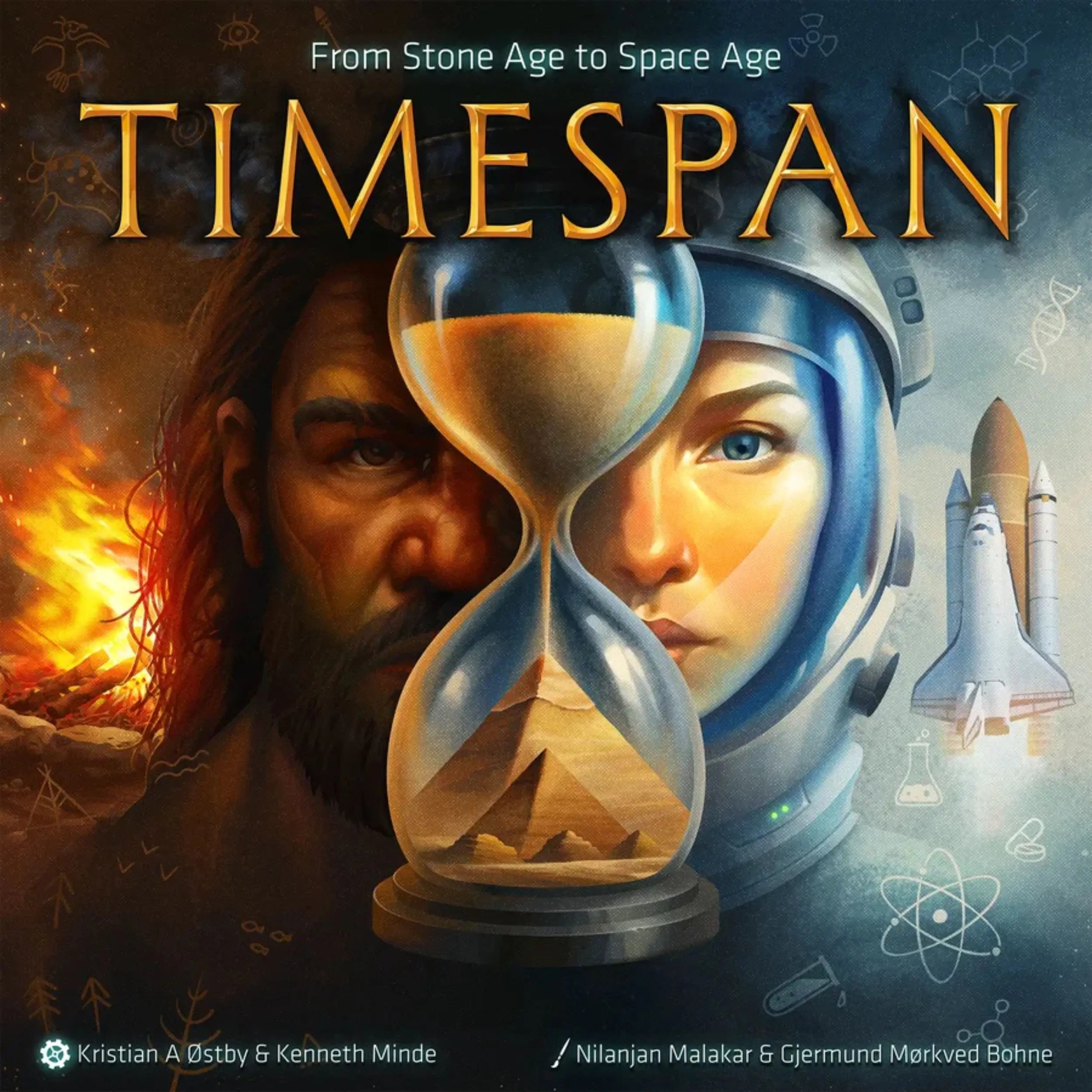
Timespan is the new civilization game by Kenneth Minde and Kristian Amundsen Østby, the authors of Automania and Bad Company. Published by Alion, it brings to the table a streamlined system combining deep asymmetry (6 civilization boards, 6 technology boards, 36 possible combinations) with 144 story cards divided into four decks, plus 16 wonders and 12 vision cards. Art by Nilanjan Malakar, graphics and iconography by Gjermund Bohne.
Build your civilization by choosing card offers that become increasingly modern, placing workers on the cards in your timeline to activate them, delivering luxury tiles that permanently boost them, and advancing on the culture, science, ship, hot air balloon, and spaceship tracks. Except for the bidding round, everyone plays simultaneously: no waiting, no war. Just peaceful exploration, economic engine, and the race to space.
What the authors say
It plays more like a Euro than a 4X, and there's no combat.
— Kristian Amundsen Østby, author, on the BGG forum
Cards only have text where the icon alone isn't enough, and those cases are explained in the summary sheet.
— Kristian Amundsen Østby, responding to a question about language independence

Timespan
The rulebook dedicates a whole page to the solo mode. There is no automa to move: you win by completing both vision cards, i.e. the secret objectives chosen at the beginning, and only then do you look at the points, which are used to score a medal from bronze to platinum between 100 and 175. You can start randomly or choose one of the nine scenarios, which fix starting civilization, technology, wonders, and objectives. Two things change: the offers you choose from are between two and five depending on how much peace you have in sight, and at the end of each action phase a new neutral wonder enters to be visited by paying a coin.
FroGames editorial profile · derived from the official rulebook, summary sheet, and public author responsesThe pieces of your civilization
What you truly build
Personal Timeline
Four cards in a row in front of you, and each is a space to send a worker. The fifth card you play pushes out the oldest, which goes to the graveyard: it still counts points at the end, but it no longer produces or activates.
Workers
You start with three and place them to activate the cards in your row, your civilization board, and the wonders you have built. You gain more with rewards from cards, discovery tiles, and some technologies.
Wonders
Wonder cards arrive by advancing on the culture track, and you build them by paying their cost. They stay outside the row, count for points, and every time another player's camel visits them, you collect two points.
Luxury Tiles
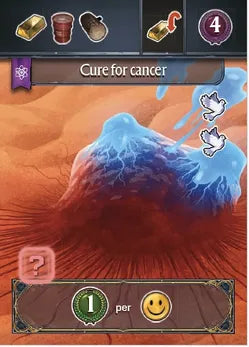
Fur, pottery, silk, gem, book, and umulium. They come from offers, exploration tracks, and the market. Delivered to a card that requires them, they permanently improve its action, and when that card ends up in the graveyard, the tile continues to generate income.
By the end of the third era, you will have built a civilization that no one else at the table will have ever seen. And you'll want to rebuild it immediately, differently.
A five-part game
What happens at the table
Not the rules. The experience.
Asymmetrical Civilizations
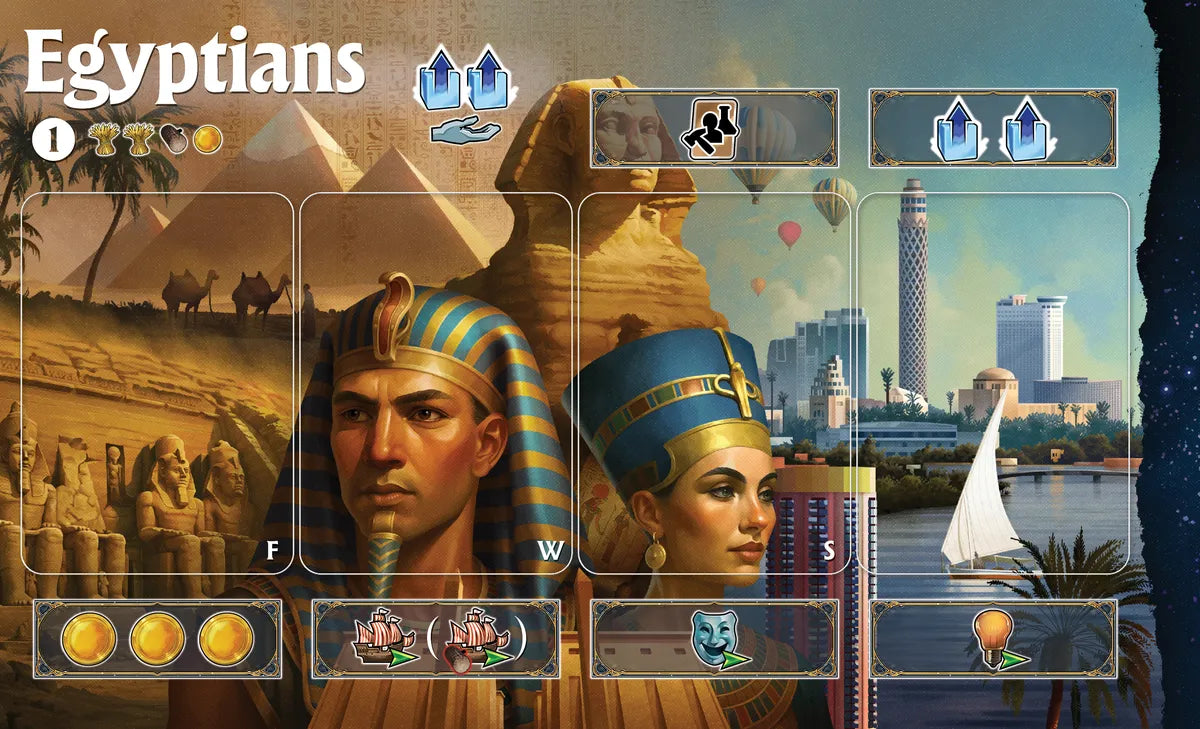
Each player takes a civilization board and a technology board, either chosen or drawn randomly from six of each. The Egyptians collect three coins where others take two, and the Vikings move their ship twice without paying wood. The differences do not vanish after the first round: they remain on the table until the end.
The First Choice
Offers appear in the middle of the table, one more than the number of players: two story cards and a tile that pays immediately. Whoever has more peace symbols chooses first, and one of the two cards is face down. The line in front of you begins to fill up and the first workers go to work.
Wonders Emerge
Those who have pursued culture build the Pyramids, the Acropolis, the Great Library. Camels travel from the beginning of the game, and each visit to another's wonder grants two points to the owner. Meanwhile, the ship gives way to the hot air balloon, and the race to space begins.
Luxuries in the Graveyard
You have collected fur, ceramics, silk, gems. You deliver them on cards that require them and improve their action forever. Then those cards slide into the graveyard and the tiles continue to generate income. The engine runs, the civilization also collects from what has stopped working.
The Space Age
Third era, fifth and final action phase: the hot air balloon has become a spaceship and someone has unlocked the final technologies. Peace, points printed on played cards, gold, delivered umulium, and the two vision cards of neighbors are counted. The winner is the one who built the most balanced engine. Or the one who went all-in on a crazy strategy.
How to play
The flow of each round
Three eras and five action phases, with income and action played simultaneously, and only one turn-based moment.
Everyone simultaneously collects what their cards, boards, and tiles produce. Then, as a separate count, visible peace symbols are counted: they are worth one point each up to a maximum of ten, and determine the order of the next turn.
In turns, from the most peaceful to the least, each player takes one of the offers on the table: two story cards, one revealed and one hidden, plus a revealed tile that immediately pays its reward. The cards go into hand, the tile returns under its deck.
Each player moves their camel, and must go to a different spot than the previous round. You cannot go to your own wonder, you pay one coin to visit a neutral one, and you enter another's for free but leave them two points. Multiple camels can visit the same wonder.
Everyone plays together. You play cards by paying their cost, and each enters from the left into the row of four, pushing the oldest one into the graveyard. You place workers on action spaces of cards, boards, and wonders, collect resources, and advance on culture, science, ship, hot air balloon, and spaceship tracks. At the end of the second action phase, the first era ends and the hot air balloon arrives; at the end of the fourth, the tile flips and becomes a spaceship.
Why it's different from others
Six mechanics that make a difference
Simultaneous action phase
Income and actions are all played simultaneously, and turns are only taken to choose offers. Everyone manages their civilization in parallel, which is how a 1-5 player game fits within the 90 minutes declared by the publisher.
4-slot Timeline
In front of you are four slots, and each card that fits there is a space where you can send a worker. The fifth card you play pushes out the oldest one. In the graveyard, the card still counts for points at the end, but it no longer produces or activates: only the luxury tiles delivered on top continue to do so.
Civilization x Technology
6 civilization boards and 6 technology boards, each with its own action and unlockable technologies. Thirty-six starting combinations, plus 144 story cards divided into four decks that become progressively more modern.
Visitable Wonders
Wonder cards are acquired by advancing on the culture track and built by paying their cost. They provide points and powers, and each time another player's camel visits them, you collect two points. This is the only interaction in the game, and it benefits both players.
Luxuries as an engine
Fur, ceramics, silk, gems, books, and umulium. They come from offers, exploration tracks, and the market, and when delivered to a card, they improve its action forever. When that card ends up in the graveyard, the tile continues to generate income.
No War
Timespan is a civilization game without military conflict. No attacks, no conquests, no eliminations, and no map to contend for: exploration is abstract on three tracks – sea, air, and space.
How it ends
How to Win
After the fifth action phase, points are tallied. The player with the most points wins.
Victory points from
- Visible peace symbols: one point each, up to a maximum of ten
- Points printed on played cards, including those in the graveyard and wonders
- Gold in storage (2 points each) and delivered umulium (3 points each)
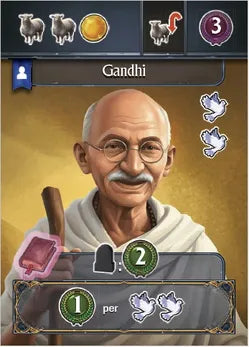
- The two vision cards of adjacent players, if you meet their requirements
You don't lose, but you can fall behind
- Too static a row: old cards remain active but modern ones, which are worth more, do not arrive.
- Too fast a row: every card pushed out takes its peace symbols with it, meaning turn order and points.
- Ignored tracks: the blue points at the end of the track are taken by whoever gets there first, and then they are gone.
Timespan gives you six asymmetrical civilizations, 144 story cards, and almost no waiting time. All in 90 minutes. It's here.
Frequently asked questions
Timespan FAQ
Is it a civilization game like Through the Ages or Nations?
It is a civilization game, but much leaner and without war. The author himself says: it plays more like a Eurogame than a 4X, there's no map to explore and expansion is abstract across three tracks: sea, air, and space. Income and action are all played simultaneously, so there's very little waiting. If you're looking for a peaceful, fast, and asymmetrical civilization game, Timespan is it. If you want military conflict, look elsewhere.
How long does it really take with 5 players?
The publisher states 90 minutes for 1 to 5 players, and the structure makes this plausible: the income and action phases are played simultaneously, so the only time you wait is during the offer selection. No one has played it publicly yet, so the data remains that of the publisher and not a time measured by us.
Are the 6 civilizations truly different?
Yes, and the difference lasts the entire game. Each civilization board has an exclusive action — Egyptians get three coins where others get two, Greeks pay one coin to advance twice on the science track, Vikings move their ship twice without paying wood — and two civilizations also start with an advantage: the Chinese with an extra card in hand and the Vikings with their ship already moved. Then there are the six technology boards, which determine which powers you can unlock: 36 combinations in total, across 144 story cards.
How does the solo mode work?
There's no automa to control. You win by completing both vision cards, which are the secret objectives chosen at the start, and your score doesn't determine victory: it's used afterwards to mark a bronze, silver, gold, or platinum medal at 100, 125, 150, and 175 points respectively. You can start randomly or use one of the nine scenarios, which set civilizations, technology, starting wonders, and objectives. Two things change compared to a full table: the offers you choose from range from two to five depending on how much peace you have in sight, and at the end of each action phase, a new neutral wonder becomes available to visit for one coin.
Is it suitable for those who have never played a civilization game?
It depends. The rules per phase are few, but you have to manage five tracks, a hand with no card limit, and a row that changes with each play. If you have experience with medium-heavy Eurogames (Wingspan, Viticulture, Ark Nova), you'll manage. If you're a beginner, a lighter gateway game might be better.
Is it available in Italian?
The edition sold on FroGames is in English and there are no announced Italian editions. However, very little translation is needed at the table: the author stated that text only appears on cards where the icon alone is not enough, and it is almost always functional (for, x position in the timeline), with all cases explained in the summary sheet. English needs to be read by those learning the rules, not by those playing.
Timespan is a strategic civilization game for 1-5 players, lasting 90 minutes, recommended for ages 12+. Designed by Kenneth Minde and Kristian Amundsen Østby (Automania, Bad Company), it combines worker placement, technology tree, and asymmetrical powers in a system that reduces downtime thanks to simultaneous action phases. Each player leads one of 6 civilizations from the Stone Age to the Space Age through three eras, building a row of four historical cards (144 cards in four decks, plus 16 wonders and 12 vision cards) and delivering luxury tiles that become permanent income. No war: only abstract exploration by sea, air, and space, wonders visitable by camels, and a race for technologies. Official solo mode with nine scenarios and no automa. Published by Alion – by Dr Ø. Available on FroGames.it.
Timespan
Frequently Asked Questions
The answers you're looking for, no beating around the bush.
📸Do the images match the actual product?
The photos on the website often come from BoardGameGeek and are intended to give you an idea of the game. They may vary slightly from the version you receive. The content declared by the publisher is always binding.
📦Does the content of the box match what is indicated?
We always strive to provide the correct content, but minor variations are possible due to reprints or updates. The information comes directly from the publishers. If you have any questions, please contact us!
⏳How do pre-orders work?
Pre-order the game before release, payment is immediate, and the game is reserved for you. As soon as it arrives, we'll ship it right away! If there are any delays, we'll update you promptly.
🔒Can I trust buying here?
Absolutely! Secure payments, tracked shipments, and a team that loves board games as much as you do. If something goes wrong, we'll do our best to fix it.
🛠There's a problem with my order, what should I do?
Write to us now! Whether it's a missing part, damage, or an error, we'll help you resolve it as soon as possible. Your experience truly matters to us.