

Planet Bee
🐸 Dettagli da BoardGameGeek
Consiglio BGG sul numero di giocatori
Categorie
Meccaniche
Design & Art
Lingua
Si abbina bene con
The FroGames Card
You're looking at your dome. Plants grow, animals move, water flows. Then you see a bee pollinating a flower, and you realize that single move is half your victory.
WHAT IT'S ABOUT
Space colonization with bees as queens of the ecosystem
Planet Bee is the new management game by Simone Luciani and Andrea Mainini for Cranio Creations. Luciani, author of Barrage and Tzolk'in, this time chooses a medium-light weight and a duration of 30 minutes. The setting is ecological sci-fi: you are a pioneer tasked with transforming a barren planet into a thriving ecosystem, all within a geodesic dome.
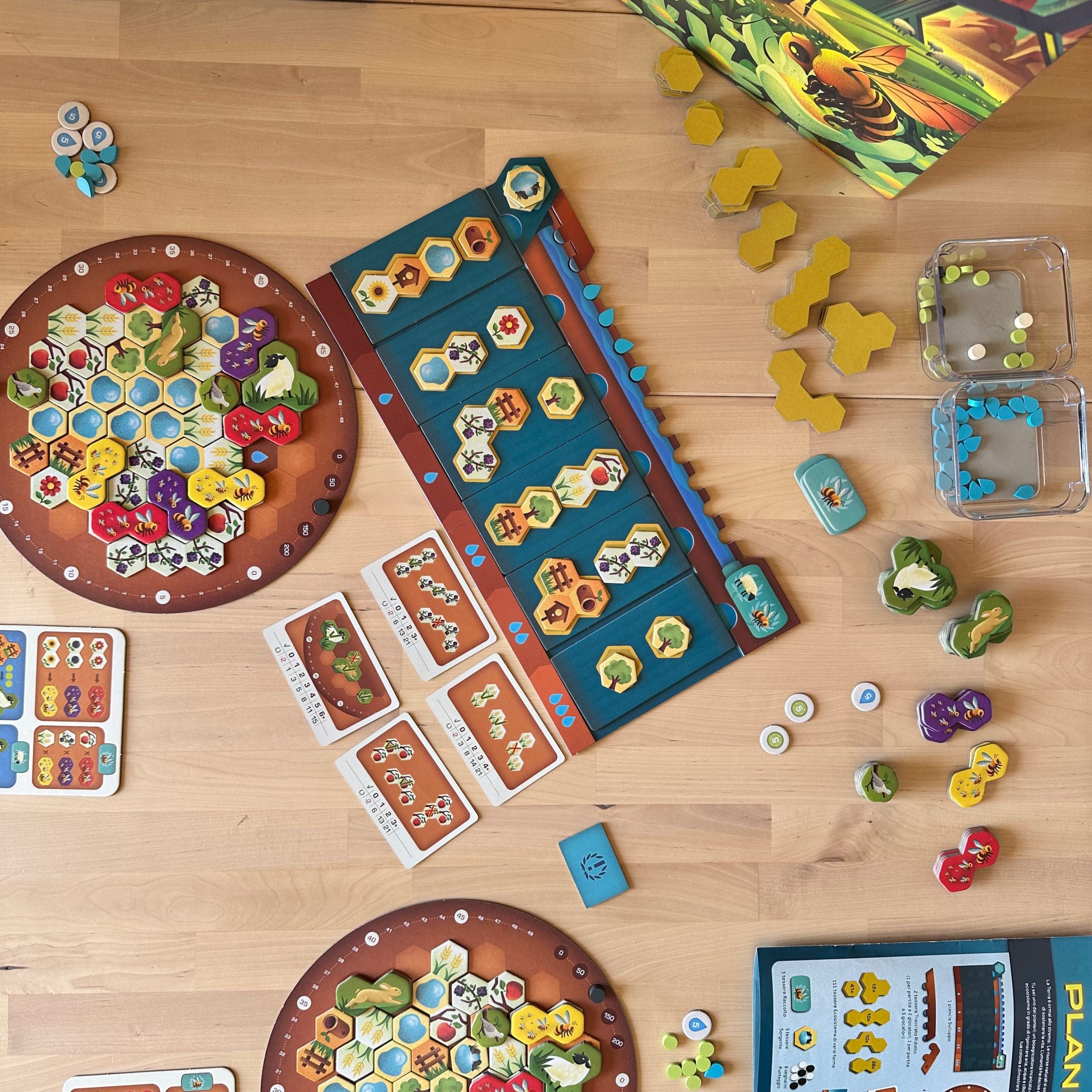
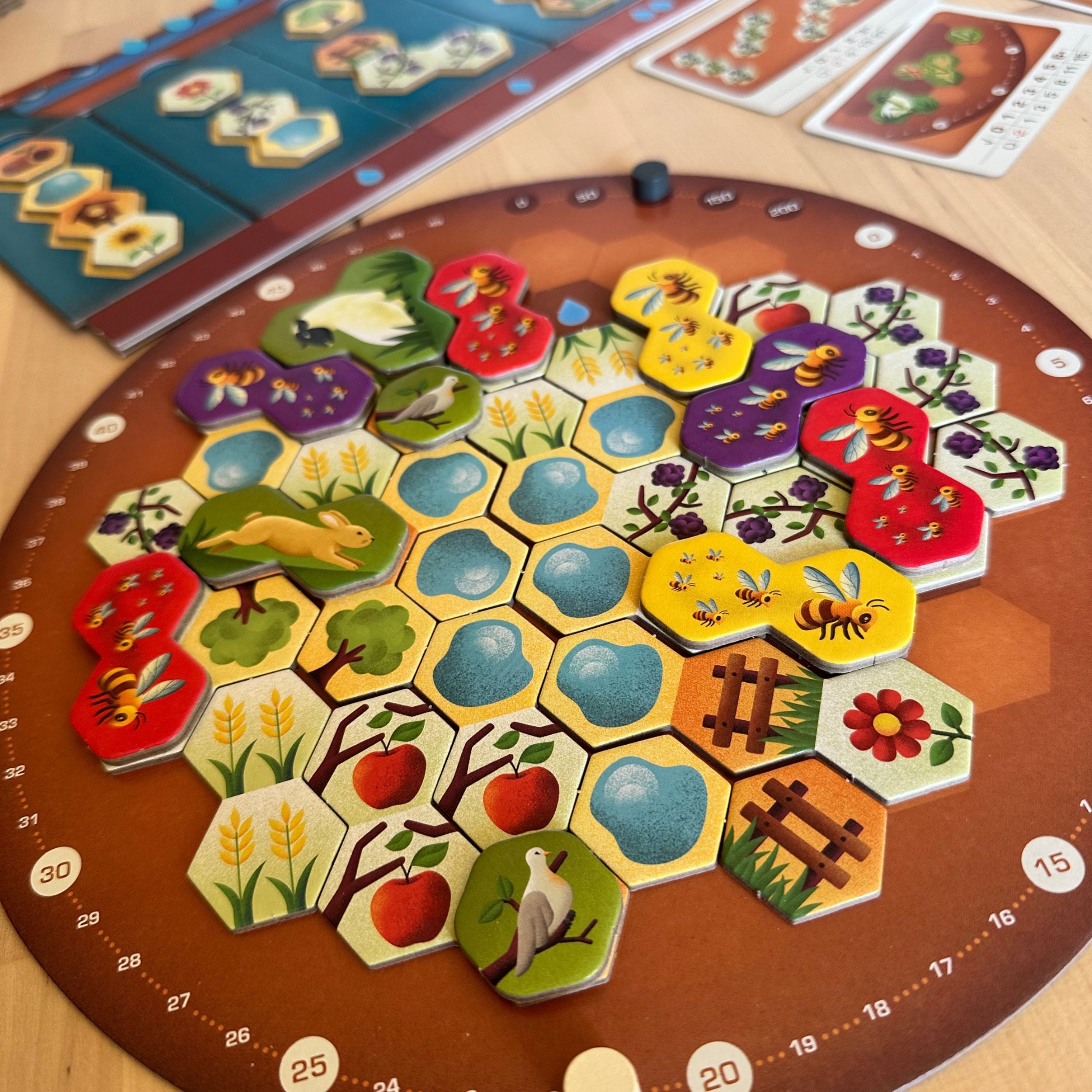
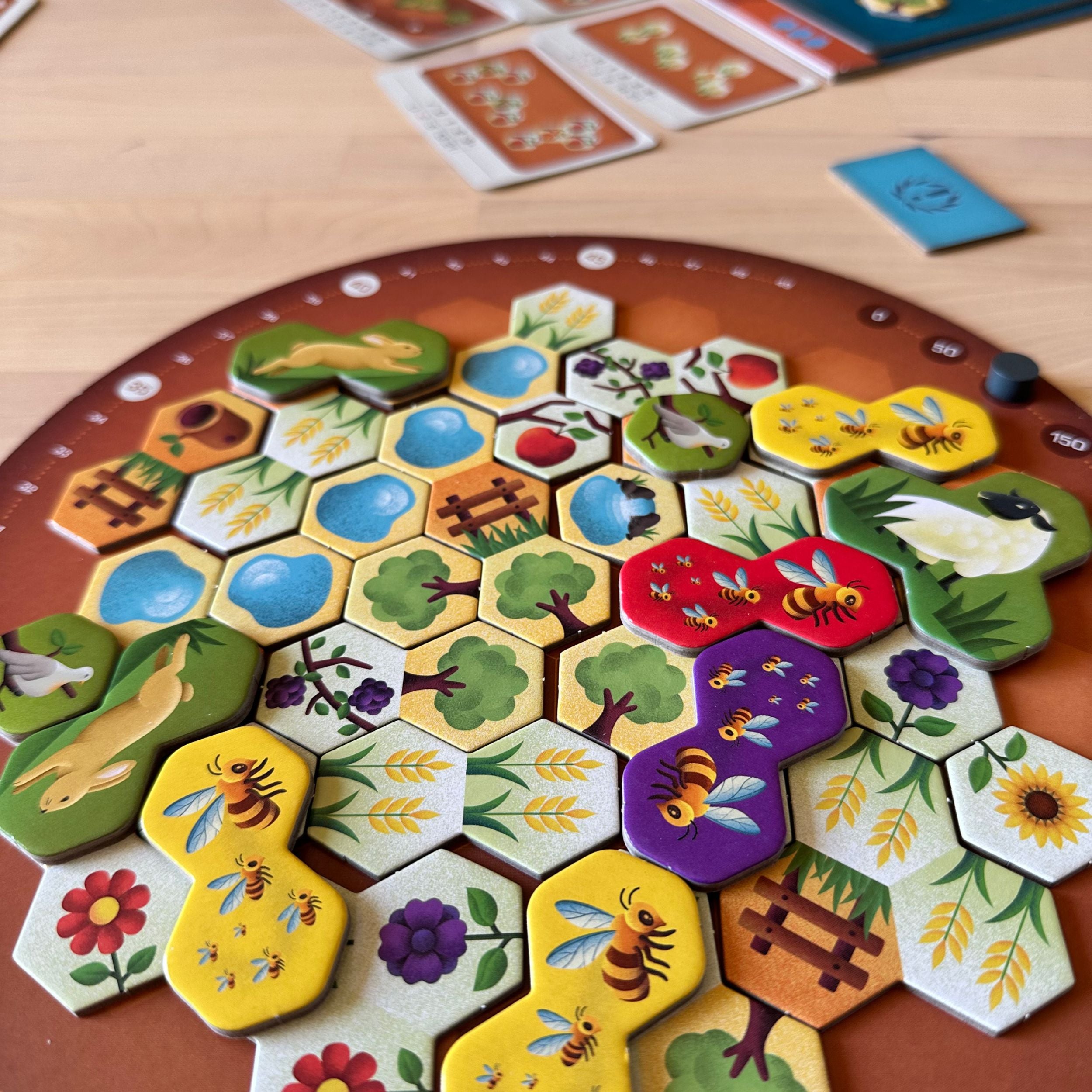
The game is tile-placement with resource management. You place Ecosystem tiles inside your dome to generate oxygen and water, host plants and animals, and collect points. The mechanical twist is the bees: satisfying their needs multiplies your points. Each game is a spatial puzzle where every tile counts and every bee can turn the tide.
What they say abroad
"Pioneers, you have been chosen for a mission of vital importance: to develop a prosperous and flourishing ecosystem on this new barren planet."
— Cranio Creations
Planet Bee presents itself as a compact management game in the Luciani tradition: few rules, many choices, zero downtime. It's too early to say if it compares to his major titles, but the idea of bees as a scoring engine is original. We will update this card as soon as we have more games on the table.
— FroGames

Planet Bee
FrogScore · FroGames editorial rating · first impression: based on rules and official presentation, updated with first playsWhat's in the dome
The four pillars of the ecosystem
Ecosystem Tiles
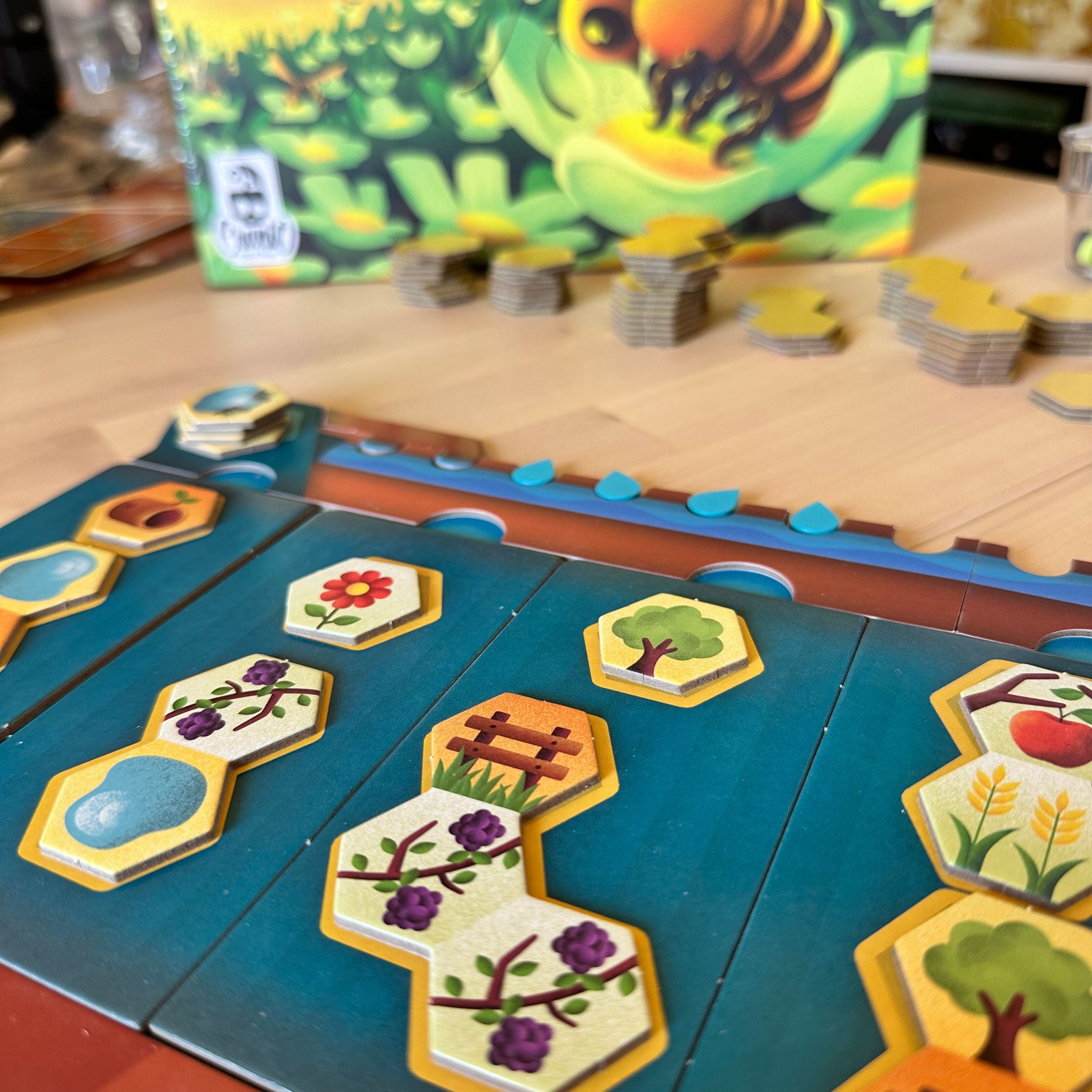
111 polyomino tiles in different shapes. You place them inside the dome to generate resources, host life, and activate combos. Each shape fits differently.
Oxygen and Water Resources
Two parallel economies to balance. Oxygen fuels plants, water fuels animals. If one runs out, your ecosystem collapses.
Bees
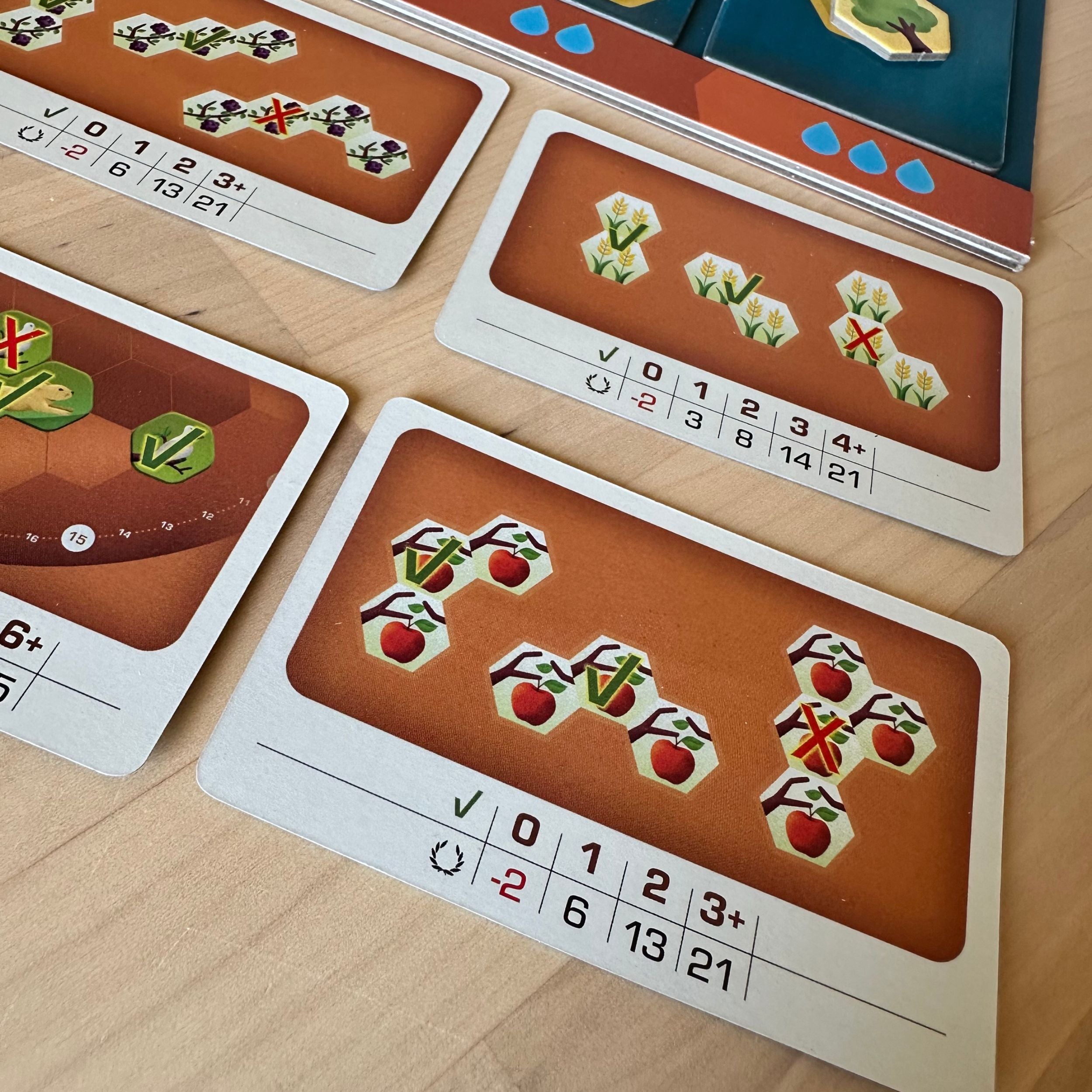
The guardians of the ecosystem. Each bee has specific needs (flowers, positions, adjacencies). Satisfy them and they reward you with multiplied points.
Geodesic Domes
4 double-sided boards. Each dome has a different grid with unique constraints and bonuses. The dome defines the space: when it's full, the game ends.
🎲How to playThe rules in four steps▼
How to play
The flow of each round
Each turn is choose a tile, place it, pay the cost, collect the benefits. Fast, clean, zero downtime.
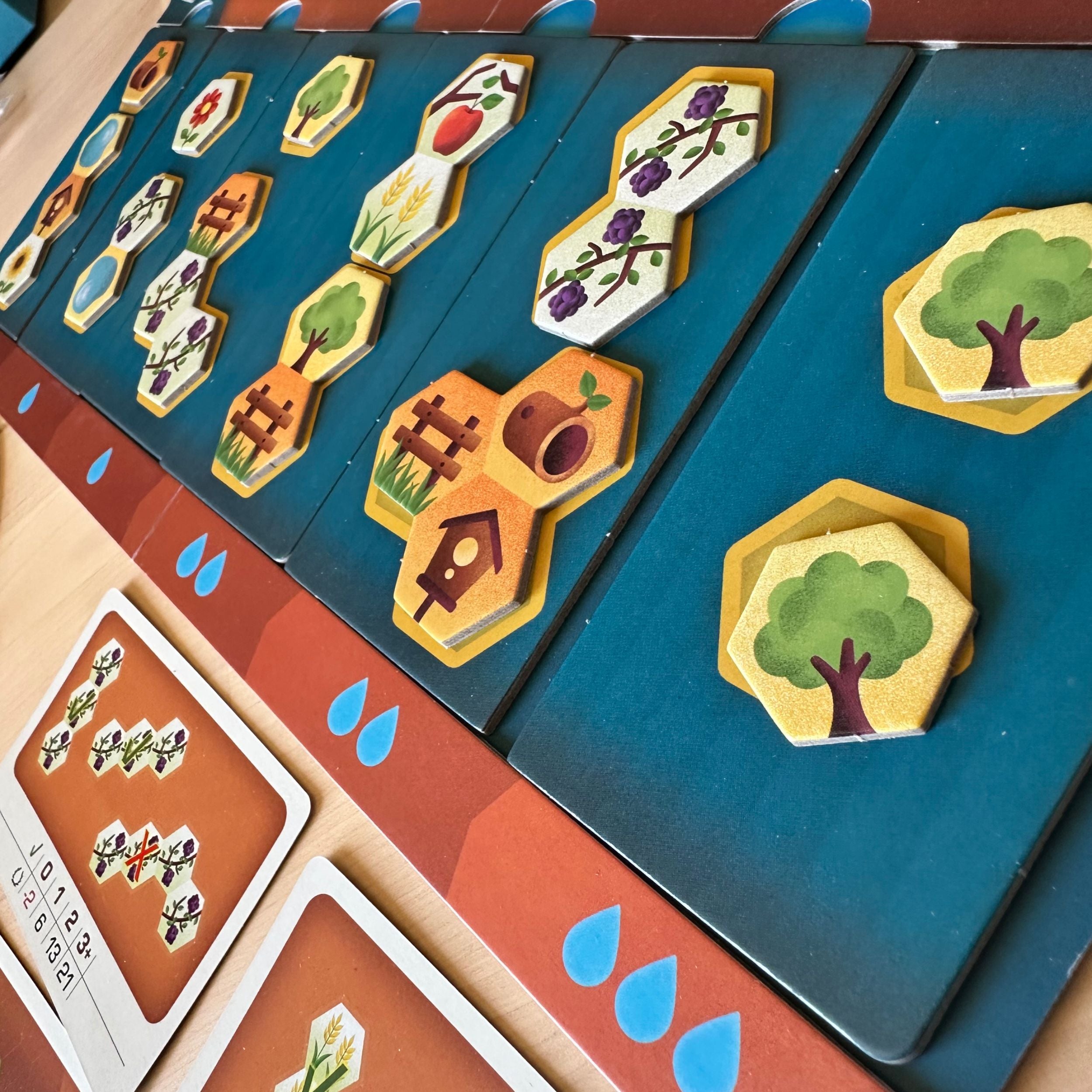
The central market has visible Ecosystem tiles. On your turn, you choose one. Tiles have oxygen or water costs and offer plants, animals, or bees.
The tile must fit into the grid of your geodesic dome. Every space counts: adjacencies activate bonuses, empty spaces waste opportunities.
Spend oxygen or water to place the tile. If you don't have enough resources, you can't place it. Managing the two economies is the core of the game.
The tile generates new resources, hosts life, or activates bee needs. If you satisfy a bee, you collect its multiplied points. Then restock the market and pass the turn.
⏱️Your first gameThe chronicle, moment by moment▼
A game in five moments
What happens at the table
Not the rules. The experience.
The empty dome
You receive your dome board and the first tiles. The grid is empty, resources are scarce. Everyone looks at the central tile market and calculates the first move. Who takes the one with three flowers? Who blocks the water?
The first ecosystem
The tiles start to fit together. Someone builds a forest, someone a lake. Bees appear on the market and everyone understands that the real points are there. The race for combinations begins.
Space runs out
The dome fills up. Each new tile must fit perfectly or you waste a turn. Resources dwindle, bees demand more and more. Someone sacrifices an animal to free up space. Tension rises.
The final bee
Last round. Someone draws the bee worth 15 points if satisfied. Does it have the right flowers? Does it have the space? Everyone stops looking at their own dome and stares at their opponent's. That single tile decides the game.
The counting
Points are counted: plants, animals, leftover resources, and then the bees. Someone discovers they forgot a requirement and loses 20 points. Someone else wins by a single water saved. The dome is full, the ecosystem is complete. Mission accomplished.
🐸Good to know beforehandThree honest things, from friends▼
Good to know beforehand
Three things to consider
The rules can be explained in ten minutes, but understanding which tiles to take and where to place them takes an entire game. The first time you'll end up with an inefficient dome and few satisfied bees. That's normal. The second game will be better.
If you ignore the bees and only build for plants and animals, you lose. The real points come from satisfied bees. This means you need to plan in advance which bees to take and build your ecosystem around them. It's not a sandbox: it's a puzzle with a specific goal.
The tile market changes size based on the number of players. With 2, it's more controllable; with 4, it's more chaotic. The duration remains 30 minutes, but the experience changes: evaluate your group before bringing it to the table with 4.
🏆Victory and defeatWhat the ending rewards▼
How it ends
How to win and how to lose
The game ends when everyone has filled their dome or the market runs out. Then points are counted.
Victory
- Plants and animals in the dome are worth fixed points
- Satisfied bees multiply the points of adjacent tiles
- Leftover resources (unused oxygen and water) are worth minor bonus points
Defeat
- Bees with unsatisfied needs are worth zero points or penalties
- Badly placed tiles without useful adjacencies waste space and resources
- Dome filled quickly without strategy leaves you behind in the score
Planet Bee is a compact management game that promises Luciani-level depth in a half-hour box. If the idea of building space ecosystems with bees as a multiplier intrigues you, this is your chance to test a solid designer in a new format.
💬Frequently Asked QuestionsQuick answers before checkout▼
Frequently Asked Questions
FAQ about Planet Bee
What mechanics does Planet Bee use?
Tile placement (polyomino tile placement), dual-economy resource management (oxygen and water), market selection (choose tiles from a central market), pattern building (build combinations to satisfy bees), and set collection for final points.
Is it suitable for those unfamiliar with Luciani?
Yes. Planet Bee is his lightest and fastest game, weight 2.5 out of 5. If Barrage and Tzolk'in scare you, this is a perfect gateway to his style: dense choices, zero downtime, compact rules. Ideal for families and casual gamers.
How much does luck matter?
Little. There are no dice. Variability comes from the tile market: you don't control which tiles appear, but you always choose from visible options. A better player almost always wins, but a key tile at the right moment can turn a game around.
Does it work well with 2 players?
Yes, the game scales from 2 to 4. With 2 players, the market is more controllable, and the game is more tactical. With 4, it's more chaotic, and tiles disappear quickly. Both experiences work, it depends on what you prefer.
Is it available in Italian?
Yes, this is the complete Italian edition published by Cranio Creations. Rulebook, components, and all texts are in Italian.
The people behind the game
Who invented it, who designed it, who publishes it — and what else they've done.
Planet Bee is a strategic tile-placement board game for 2-4 players, ages 10+, lasting 30 minutes. Designed by Simone Luciani and Andrea Mainini, published by Cranio Creations, the game puts you in the shoes of a space pioneer tasked with building thriving ecosystems inside geodesic domes on an alien planet. Manage oxygen and water, place Ecosystem tiles, host plants and animals, and satisfy bee needs to multiply your points. A compact management game with the author's signature from Luciani (Barrage, Tzolk'in) in a family-friendly format. Available on FroGames.it.
Planet Bee
Frequently Asked Questions
The answers you're looking for, no beating around the bush.
📸Do the images match the actual product?
The photos on the website often come from BoardGameGeek and are intended to give you an idea of the game. They may vary slightly from the version you receive. The content declared by the publisher is always binding.
📦Does the content of the box match what is indicated?
We always strive to provide the correct content, but minor variations are possible due to reprints or updates. The information comes directly from the publishers. If you have any questions, please contact us!
⏳How do pre-orders work?
Pre-order the game before release, payment is immediate, and the game is reserved for you. As soon as it arrives, we'll ship it right away! If there are any delays, we'll update you promptly.
🔒Can I trust buying here?
Absolutely! Secure payments, tracked shipments, and a team that loves board games as much as you do. If something goes wrong, we'll do our best to fix it.
🛠There's a problem with my order, what should I do?
Write to us now! Whether it's a missing part, damage, or an error, we'll help you resolve it as soon as possible. Your experience truly matters to us.