
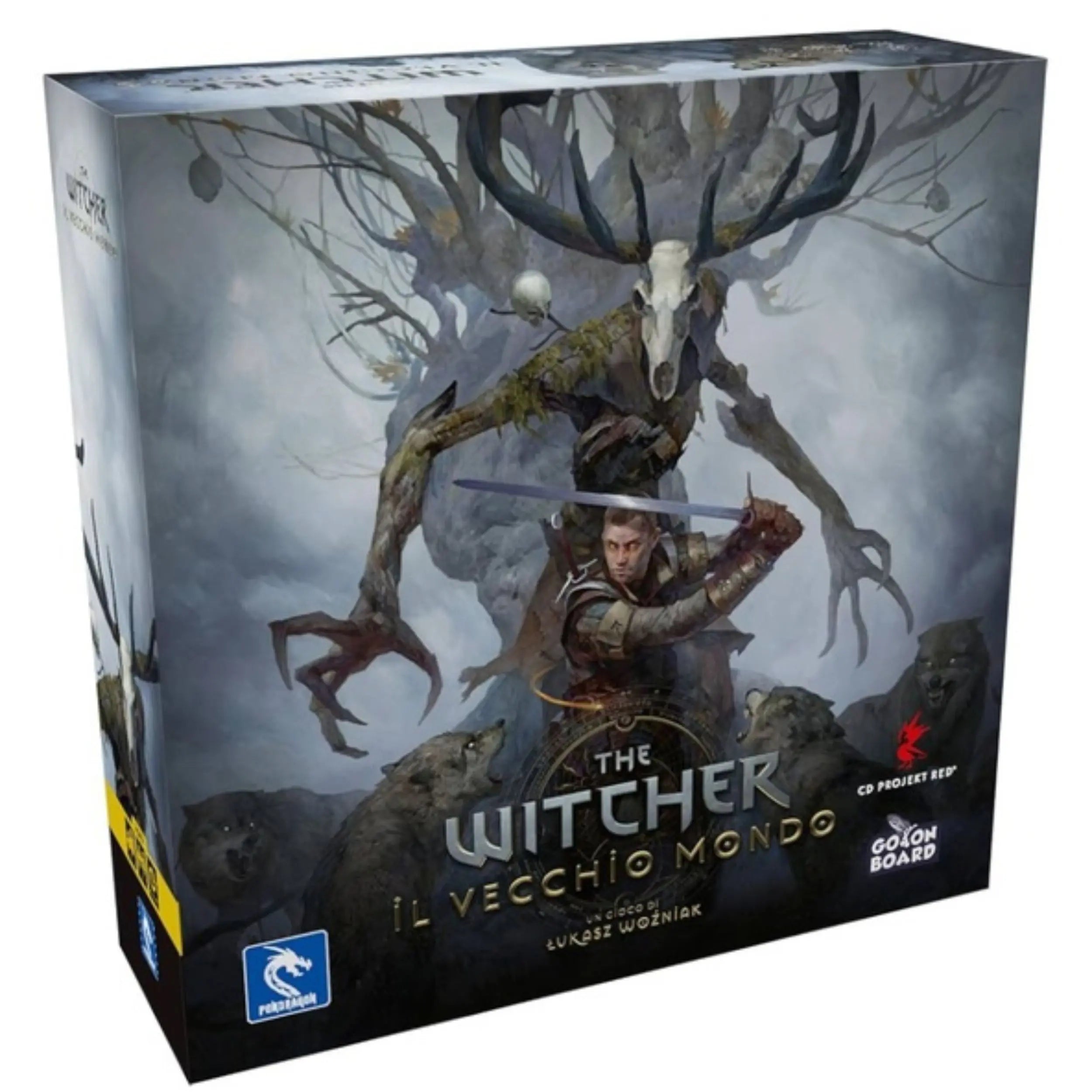
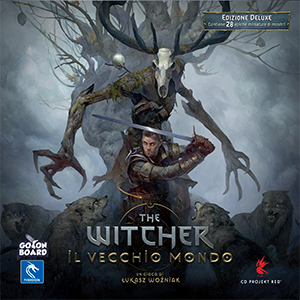
The Witcher: Il vecchio Mondo Edizione Deluxe
🐸 Dettagli da BoardGameGeek
Consiglio BGG sul numero di giocatori
Categorie
Meccaniche
Design & Art
Lingua
Pre-order - leggi i dettagli
🐸 Una rana saggia sa quando dividere l’ordine… e quando aspettare il salto giusto.
Si abbina bene con
FroGames — Moments You'll Remember
You accept the contract, follow the tracks, prepare the right combo. Then the griffin strikes, and you watch your deck thin out card after card — because here, your deck is your life.
What's in here that's not in the standard box
In the standard edition, monsters are cardboard tokens. Here they are 28 miniatures. It's the only difference that really matters — and it shows with the first monster that appears on the board.
What it's about
The Continent when monsters were everywhere and witchers were still five competing schools
After the Conjunction of the Spheres, the Continent ceased to be a safe place. The Witcher: Old World takes us decades before Geralt's saga, when Wolf, Cat, Bear, Griffin, and Viper trained their apprentices with brutal methods and sent them out to make a name for themselves. Designed by Łukasz Woźniak for CD Projekt RED and Go On Board, illustrated by Bogna Gawrońska and Damien Mammoliti, it arrives in English thanks to Pendragon Game Studio.
The turn is simple and brutal: you discard cards to move on the map — each card has a terrain, each location requires one — then you choose whether to fight, meditate, or explore, and finally buy a new card for your deck. The problem is that the same cards are used to move, attack, and defend. Every extra movement means one less hit when the monster arrives.
The heart of The Witcher: Old World Deluxe Edition is combat: no dice, just cards interlocked by color. You play an attack, chain it with a dodge, finish with a Sign, and the monster loses cards from its deck. When it's your turn to take damage, you lose cards — from the deck that is also your life. The first to collect the trophies established at the start of the game wins: by killing monsters, winning tavern brawls, maximizing an attribute, or completing certain quests.
The FroGames perspective
Your deck is your life: every hit you take thins it out. No wound tokens, no health bar — just cards disappearing while the monster is still standing.
The secret of the Old World in one line
It's not a game of luck disguised as an adventure. Preparing before the contract — holding the right cards, raising the shield, buying the missing Sign — is half the game.
From the gaming experience

The Witcher: Old World — Deluxe
The rulebook includes an official solo mode: you explore the Continent, hunt monsters, and build your deck with the same growth curve as in multiplayer. It remains an excellent tactical adventure experience, but it loses the tavern brawls and the tension of the race — that is, the part where other witchers give you dirty looks because you're about to snatch their trophy.
FrogScore · FroGames editorial rating · based on rules, international reviews, and play sessionsThe tools of the trade
What you really have in hand
Interlocking cards
Each action card has colors and symbols — hits, shields, draws. If the color matches, you chain it to the previous one and the damage increases. The best combos are born from mediocre cards played in the right order.
The shield
Raising your Defense level raises your shield, and the shield absorbs hits before they touch your deck. It's the least spectacular investment in the game and the one that gets you to the big monster alive.
The Signs
Igni, Aard, Quen, Yrden, Axii: witcher magic exists as cards to buy and put into your deck. They cost, take up space, and in the right turn can turn a losing fight around.
10 poker dice
Dice don't decide battles: they're for dice poker, the gambling game in taverns. You challenge another witcher for gold, and every now and then someone loses much more than the stakes.
In two hours you'll have a trophy, a scar, and a story to tell. The Old World doesn't give anything away for free.
📦ComponentsDeluxe Edition · 8 types · 33 miniatures
🃏How to PlayThe three-phase turn, explained clearly▼
How to Play
The Flow of Each Turn
Three phases, always in the same order. The tension comes from the fact that the cards in your hand are used for everything: moving, attacking, and staying alive.
Each action card has a terrain symbol (forest, mountain, water). You discard a card with the terrain of an adjacent location and move there, then you can use that location's action: gain gold, raise a shield, buy a potion, train an attribute, or challenge someone to dice poker. You can repeat this as long as you have cards — but each discarded card is a card you won't have in combat.
Fight (a monster in your location or another witcher), Meditate (if you have an attribute at max level, you gain a trophy) or Explore (draw an adventure card and face a narrative dilemma, often with a moral choice that has no clean answer). Only one action per turn.
No dice. You play a card: its symbols provide hits, shields, or draws. If the color matches the previous one, you chain it, and the damage increases. Each hit the monster takes removes cards from its deck — and that's exactly what happens to you when it's their turn. Shields absorb damage before your deck thins out.
Discard, draw until you refill your hand, and buy a new card from the common row: a heavier attack, a better dodge, a Sign. Your deck grows during the game — but so does the risk of drawing the wrong card at the wrong time. Discipline in purchases separates witchers from corpses.
⏱️Your First GameThe chronicle, moment by moment▼
A Game in Five Moments
What happens at the table
Not the rules. The experience.
Choose your school and open the miniatures
Wolf, Cat, Bear, Griffin or Viper: different starting deck, different style, a miniature on your home village. Then someone opens the tray of 28 monster miniatures and the table falls silent for a few seconds. Once the first creatures are placed, the map stops being a board and becomes a dangerous place.
The first contract is a lesson
You move too much, arrive at the monster with three cards in hand, and suddenly understand the whole game: traveling costs exactly what you need to fight. You play what you have, take the hit, watch your deck lose cards. The nekker escapes. You stay there counting the damage.
The combo that works
You bought the right Sign and finally the chain starts: dodge, chained attack, Igni to finish. Six hits in one turn. The monster loses half its deck and the others stop looking at their cards to look at yours. From now on, you play to build that moment every time.
Tavern Brawl
Two witchers in the same city, one too many jokes about the school's honor. You fight with the same card system, but on the other side is a person looking you in the eyes and knowing what you bought three turns ago. The winner takes home a trophy. The loser takes home a reason.
The fourth trophy ends it all
Someone has three trophies and everyone knows it. One rushes towards the legendary monster, one meditates for the maxed-out attribute, one tries to intercept the leader before they close. The fourth trophy ends the game instantly — no last round, no consolations. You look at the board and say: let's play again.
🐸Before You KnowThree honest things, from friends▼
Before You Know
Three things you need to consider
With five, it gets much longer
With 2–3 players, it finishes in 90–120 minutes at a good pace. With 4–5, it goes beyond two and a half hours, and downtime weighs: while one player resolves a long fight, the others wait. Phases can be played in parallel when not intersecting, which helps a lot — but it's a game that performs best with three players.
Those who fall behind struggle to catch up
It's a trophy race with instant victory: whoever reaches the quota first ends the game, full stop. If you have one trophy while others have three, catching up requires a risky hunt and a bit of luck in drawing. There's no automatic recovery, no consolation points.
Long setup and large table
383 cards, 87 tokens, 33 miniatures, five boards: the first setup takes 10–15 minutes and requires real space around the map. The Deluxe insert helps put everything back in place, but if you play on a coffee table, you'll struggle to keep decks, discards, and the purchase row organized.
🏆Victory and DefeatHow a game ends▼
How it Ends
Four roads to the trophy, no death
The number of trophies is decided at the start of the game: four for a standard evening, up to six if you have time and malice. No one is ever eliminated — you lose ground, not your seat at the table.
Instant Victory
- Kill a monster and claim its trophy — the most direct and riskiest path
- Win a tavern brawl against another witcher
- Bring an attribute to maximum level and meditate to collect it
- Resolve certain quests that award a trophy as a reward
- As soon as you reach the set quota, the game ends immediately: no last round
When things go wrong
- Each hit taken removes cards from your deck: your deck is your life reserve
- If you run out of cards, the fight is lost — your witcher doesn't die, but retreats bruised and empty-handed
- No elimination: you keep playing, you recover, you go hunting again
- The real risk isn't dying, it's finishing second while someone else wins
The Deluxe Edition of The Witcher: Old World brings all creatures to the table in miniature form and the complete Italian edition from Pendragon Game Studio. If the Continent is to be scary, it might as well look the part.
💬Frequently Asked QuestionsQuick answers before checkout▼
Frequently Asked Questions
FAQ about The Witcher: Old World Deluxe
What is the difference between the Deluxe Edition and the standard edition?
The game is identical: same rules, same 383 cards, same map. The Deluxe adds 28 monster miniatures instead of cardboard tokens, 5 plastic score medallions, and a miniature of the closed tavern. The box is taller and includes an insert. If you buy for the table presence and atmosphere, the difference is visible with every monster that enters play; if you only buy for the mechanics, the standard edition does the same job.
Is it only a game for fans of the saga?
No, and that's the biggest surprise. The color-chaining combat system stands on its own, without needing to know who Geralt is: it's a tactical deck-builder with exploration that would work just as well with another setting. Those who know the saga recognize Signs, schools, monsters, and jokes from the adventure cards and enjoy it twice as much — but it's not a requirement.
Do you roll dice in combat?
No. Combat is resolved only with cards: hits, shields, and color chaining. The 10 poker dice included are for dice poker, the tavern gambling game, used to gain (or lose) gold. Those expecting a dice-rolling adventure will be surprised: here, variance lies in the draw, not the roll.
Does it play well with two players?
Yes, very well. The race remains tense, monster combat is identical, and the duration drops to 90–120 minutes. You lose a bit of the indirect competition on the map — with two witchers, it's rarer to contend for the same creature — but tavern brawls become even more personal. Three players is still the ideal number.
How long does a game really last?
With 2–3 players and four trophies: 90–120 minutes. With 4–5 players, it easily reaches 2 and a half hours, longer if someone takes a long time thinking about combos. The first game adds 20–30 minutes for explanation and setup. Raising the trophy count to five or six extends it proportionally.
Is it hard to learn?
The basic rules can be explained in 15–20 minutes: three phases, move by discarding, fight by chaining. The depth comes later, when you understand how much to move and which cards to buy. It's a medium-weight game (2.9 on BoardGameGeek): it's not a gateway game, but you don't need to be a veteran. If you've played a deck-builder before, you'll feel right at home.
Can it be played solo?
Yes, the rulebook includes an official solo mode. You explore the Continent, hunt monsters, build your deck, and pursue trophies with the same curve as multiplayer. You miss the player vs. player brawls and the pressure of the race, but as a solo tactical adventure, it holds up very well for an hour and a half.
Is it cooperative or competitive?
Competitive. Everyone races for their own trophies and can directly clash with other witchers in taverns. Indirect interaction is constant: monsters are on the board for everyone, and whoever gets there first takes the trophy. The base box does not include a cooperative mode.
How much table space is needed?
Quite a lot. In addition to the central map, space is needed for five player boards, personal decks, discards, the line of cards for sale, and monster decks. With the Deluxe miniatures, the board is more crowded but also more readable. A normal dining table is enough; a coffee table is not.
Are there any expansions?
Yes, several — including Skellige, Mages, Legendary Hunt, Wild Hunt, and Monster Trail — which add regions, playable characters, monsters, and new mechanics. The base game is complete and self-sufficient: expansions broaden the Continent for those who enjoy it. Always check the availability of the Italian edition before purchasing.
Is it in Italian?
Yes. This is the Italian edition published by Pendragon Game Studio: cards, rulebook, and adventure card texts are translated. It's a game with a lot of in-game text — exploration cards tell entire scenes — so having everything in Italian significantly changes the table experience.
The people behind the game
Who invented it, who designed it, who publishes it in Italian — and what else they've done.
The Witcher: Old World Deluxe Edition is a competitive adventure and deck-building board game for 1–5 players (ages 14+, duration 90–150 minutes), set in the Continent decades before the saga of Geralt of Rivia. Designed by Łukasz Woźniak with illustrations by Bogna Gawrońska and Damien Mammoliti, produced by CD Projekt RED and Go On Board, and published in Italian by Pendragon Game Studio. Each player takes on the role of a witcher from one of five schools — Wolf, Cat, Bear, Griffin, Viper — explores the map by discarding action cards to move, accepts contracts, hunts monsters, and challenges other witchers in tavern brawls. Combat is resolved entirely with color-linked cards, without dice: strikes, shields, and Signs, with the personal deck acting as a life reserve. The first to collect the trophies established at the start of the game (4–6) wins, by killing monsters, winning duels, maximizing an attribute, or completing certain quests. The Deluxe Edition includes 28 monster miniatures, 5 plastic score medallions, and the miniature of the closed tavern, as well as 383 cards, 87 tokens, 30 wooden cubes, 10 poker dice, 5 player boards, and the 5 witcher miniatures. Official solo mode included. Italian edition. Available on FroGames.it.
The Witcher: Il vecchio Mondo Edizione Deluxe