
RA & Write
🐸 Dettagli da BoardGameGeek
Consiglio BGG sul numero di giocatori
Categorie
Meccaniche
Design & Art
Lingua




Si abbina bene con
The FroGames Board
You flip the card. You mark the box. Someone crosses their fingers for the third pyramid, someone else hopes to close the Nile before Ra. When the third Ra card arrives, everyone puts down their pencil together.
WHAT IT'S ABOUT
Ra becomes card and pencil, keeping the anxiety
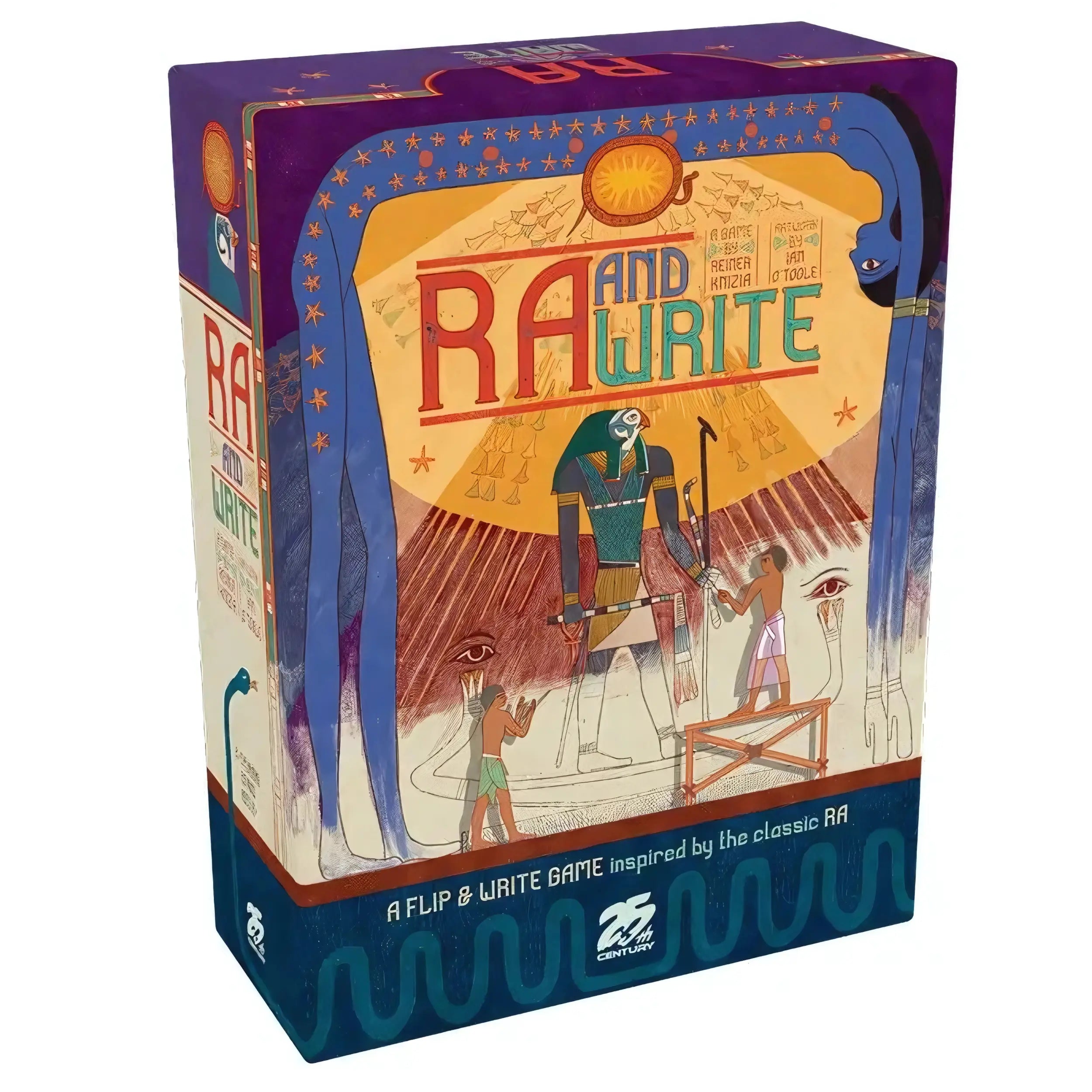
Reiner Knizia takes his 1999 game Ra — Nile auctions, deities, and catastrophes — and distills it into a simultaneous flip-and-write. Ian O'Toole brings back the iconography of the new 25th Century Games edition: hieratic, legible, warm. The game reproduces the same narrative arc as the original (three Kingdoms, limited cards per era, deferred scoring) but without the auction system: here everyone writes together, no one waits for another's turn.
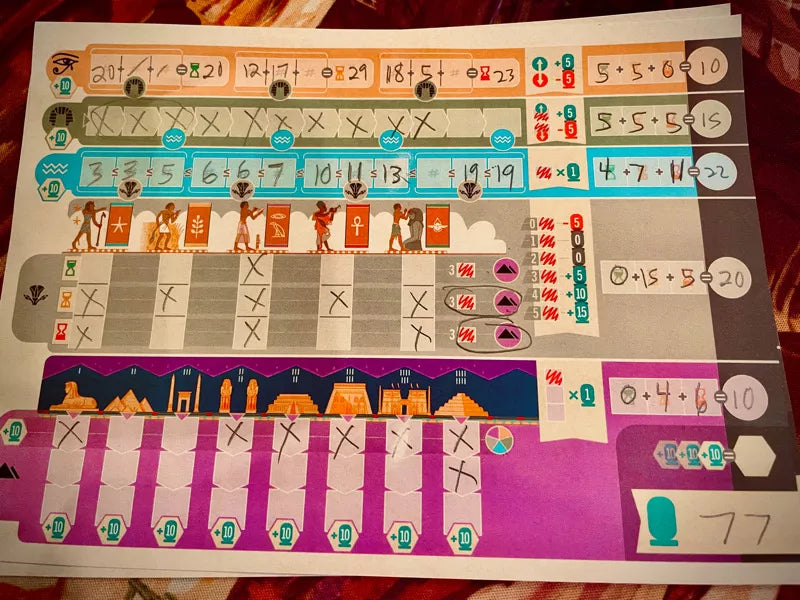
With each card flipped from the deck, you choose where to mark it on your sheet: you complete sets of deities, advance on the Nile, collect Pharaohs, or build monuments. Three Ra cards stop the current Kingdom and scoring occurs. The player with the best balance of completed collections, tracked progress, and unlocked bonuses at the end of the third Kingdom wins. Fixed duration, exactly 20 minutes.
What they say abroad
"Ra and Write keeps the tension of the original in a fraction of the time."
Ra and Write maintains the tension of the original in a fraction of the time.
— The Dice Tower
The game promises to bring Ra's timing anxiety to the table without the dead time of the auction. The first Kickstarter feedback confirms: it works, but negotiation is lost. This sheet will be updated with live impressions as soon as we've played the retail version.
— FroGames

Ra and Write
FrogScore · FroGames editorial rating · based on rules, international reviews, and play sessionsWhat you mark on your sheet
Four tracks competing for your attention
Nile
Each Nile card moves you one space forward on the river track. The further you advance, the more points you get, but if you fall behind, you risk negative points. It's the most linear track, the one that doesn't forgive gaps.
Deities
Eight different deities, you need to complete sets (three of the same, or one of each, etc.). Points come at the end of the game but only if you complete the combinations: an incomplete set is worth zero. Here you decide whether to specialize or diversify.
Pharaohs
Collect Pharaohs for majority: whoever has the most gets a bonus, whoever has the least pays a penalty. They are needed to unlock certain areas of the sheet and for final points. Ignoring them is risky.
Monuments
Pyramids, obelisks, sphinxes: you complete constructions for fixed points. Each monument has a cost in specific cards. If you only get halfway and the Kingdom ends, those marks are worth nothing.
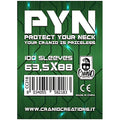
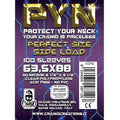
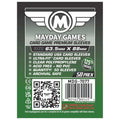
Recommended sleeves 110 cards in 1 size ▼
If you play often, we recommend protecting your cards with clear sleeves to make them last longer.
| Size | Quantity |
|---|---|
| 63.5 × 88 mm | 110 |
| Total cards | 110 |
Come si gioca
Video dimostrativo di gameplay.
🎲How to playThe rules in four steps▼
How to play
The flow of each Kingdom
Three Kingdoms identical in structure, different in card order.
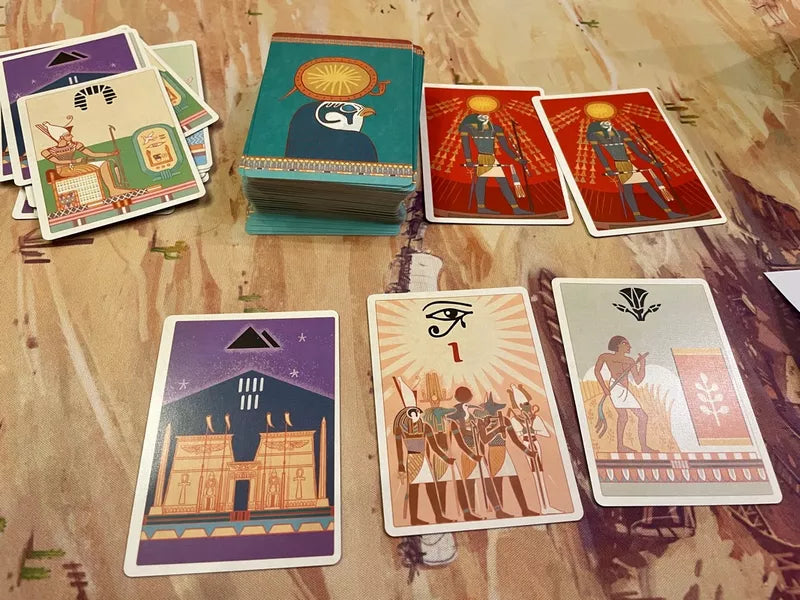
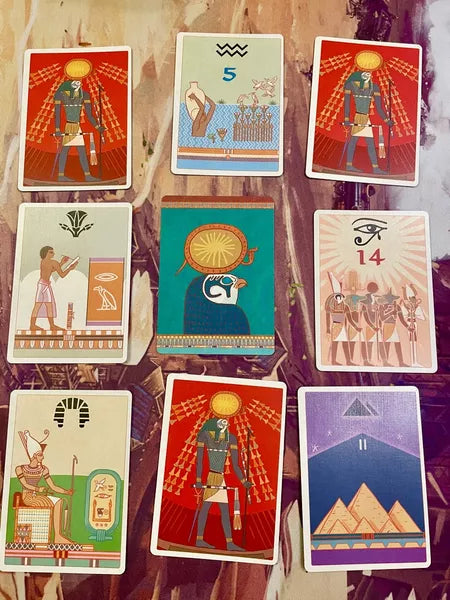
The active player (rotating) flips the first card of the deck and shows it to everyone. The card indicates a resource: Nile, Deity, Pharaoh, Monument, or Ra.
Simultaneously, everyone decides whether to mark that resource on their sheet (in the corresponding boxes) or to pass. There is no limit to markings per card, but some boxes have prerequisites.
If the card flipped is Ra, a Ra token is marked on the designated track. When three Ra cards are drawn, the current Kingdom ends immediately: scoring begins.
Points are scored for the Nile (advancement on the track, negative if behind), Pharaohs (majority/minority), and completed Monuments. Deities are kept for final scoring. Then, the next Kingdom begins.
⏱️Your first gameThe chronicle, moment by moment▼
A game in five moments
What happens at the table
Not the rules. The experience.
First cards, first choices
The deck is shuffled, everyone has their sheet. The first card is flipped: a Pharaoh. Everyone marks. The second is Nile, some advance immediately, some wait. No one speaks, only the sound of pencils. No anxiety yet, but strategies are already diverging.
First Ra
The first Ra card is drawn. Some sigh, some smile: two more Ra cards until scoring. But the timing has already begun: every card from now on could be the third. Those who have already completed a deity set breathe easily, those who haven't start calculating.
Second Ra, final sprint
Second Ra. Now it's time to count: how many cards are left in the deck? Those with half-built monuments speed up, those ahead on the Nile slow down to avoid wasting marks. Every flipped card is accompanied by sighs. Someone asks how many are left, no one answers with certainty.
Third Ra and first score
Third Ra. Everyone puts down their pencil. Pharaohs, Nile, deity sets, completed monuments are counted. Someone had a set two-thirds done: zero points. Someone completed three pyramids in the last round: jackpot. The Ancient Kingdom is over, the cards are shuffled for the Middle Kingdom.
End of the New Kingdom
Third Kingdom, third count. Now, the scores from all three Kingdoms are added, plus the final bonuses from accumulated deities and Pharaohs. The winner is whoever best balanced progression on the Nile, deity sets, Pharaoh majorities, and completed monuments. Final difference: often 5-10 points.
🐸What to know beforehandThree honest things, from friends▼
What to know beforehand
Three things you need to consider
Balancing is better than specializing
Ra and Write rewards those who keep an eye on all four tracks. If you only focus on deities and ignore the Nile, you're already behind at the end of the first Kingdom. Negative points from a lagging Nile hurt, and minority Pharaohs subtract points instead of giving them. There is no dominant strategy: balance is needed turn by turn.
Three Ras can come out quickly
The deck is shuffled: technically, the three Ra cards could come out one after another and end the Kingdom after three flips. It almost never happens, but the possibility exists and keeps everyone on edge. If you started building a monument and the Kingdom ends early, those marks are worth nothing. Timing is everything.
Zero direct interaction
Simultaneous flip-and-write means everyone plays on their own sheet without blocking others. There's no auction (unlike original Ra), no drafting, no take-that. You only compare at the end of the Kingdom for Pharaoh majorities and final ranking. If you're looking for tactical interaction, this doesn't offer it: it's a parallel race.
🏆Victory and defeatWhat the ending rewards▼
How it ends
How to win and how to lose
The game ends after the scoring of the third Kingdom (New Kingdom). The partial scores of the three Kingdoms plus the final deity bonuses are summed up.
Victory
- Highest sum among the scores of the three Kingdoms + final deity bonuses + accumulated Pharaohs
- Consistent completion of monuments in all three Kingdoms (guaranteed fixed points)
- Balance between Nile (to avoid negatives), Pharaohs (for majorities) and deity sets (for final bonuses)
Defeat (or score collapse)
- Falling behind on the Nile in two out of three Kingdoms: negative points accumulate
- Ignoring Pharaohs and ending up in the minority: you lose points instead of gaining them
- Starting too many monuments and not completing any: wasted marks, zero points
Ra and Write asks you to make choices under pressure knowing that the third Ra card can appear at any moment. That's the beauty of it.
💬Frequently asked questionsQuick answers before checkout▼
Frequently asked questions
FAQ about Ra and Write
What mechanics does Ra and Write use?
Simultaneous flip-and-write with set collection and implicit push-your-luck (the three Ra cards stop the Kingdom). Everyone writes together, no waiting turns. Mechanics: Paper-and-Pencil, Set Collection, End Game Bonuses (for deities).
Is it the same as original Ra?
No. Ra and Write eliminates the auction system (the heart of the original) and replaces it with simultaneous flipping. It retains the three Kingdoms, the thematic categories (Nile, deities, Pharaohs, monuments), and the timing tension, but direct interaction disappears. It's Ra distilled into 20 minutes, not complete Ra.
Can it be played solo?
No, the game does not have an official solo mode. Technically you could play against yourself trying to beat a target score, but there is no automa or dedicated rules. It is designed for 2-5 simultaneous players.
How long does a game really last?
A fixed 20 minutes (plus 2 minutes setup). The three Kingdoms last about 6-7 minutes each, intermediate scoring is quick. It never exceeds 25 minutes total, even with 5 players: simultaneous play keeps the pace constant.
What language is the edition for sale in?
English edition. The game uses clear iconography (Ian O'Toole design) so language dependence is low: you need to read the rules once, then you play by looking at the symbols. There are no official localized versions available at the moment.
The people behind the game
Who invented it, who designed it, who publishes it — and what else they've done.
Ra and Write is a flip-and-write game for 2-5 players by Reiner Knizia, published by 25th Century Games in 2025. Based on the classic Ra from 1999, it transforms the auction system into a simultaneous set-collection game set in ancient Egypt: you flip cards, mark resources (Nile, deities, Pharaohs, monuments), and race against the three Ra cards that end each Kingdom. Games last 20 minutes, recommended age 12+ years, artwork by Ian O'Toole. Mechanics: Paper-and-Pencil, Set Collection, End Game Bonuses. Available on FroGames.it.
RA & Write
Frequently Asked Questions
The answers you're looking for, no beating around the bush.
📸Do the images match the actual product?
The photos on the website often come from BoardGameGeek and are intended to give you an idea of the game. They may vary slightly from the version you receive. The content declared by the publisher is always binding.
📦Does the content of the box match what is indicated?
We always strive to provide the correct content, but minor variations are possible due to reprints or updates. The information comes directly from the publishers. If you have any questions, please contact us!
⏳How do pre-orders work?
Pre-order the game before release, payment is immediate, and the game is reserved for you. As soon as it arrives, we'll ship it right away! If there are any delays, we'll update you promptly.
🔒Can I trust buying here?
Absolutely! Secure payments, tracked shipments, and a team that loves board games as much as you do. If something goes wrong, we'll do our best to fix it.
🛠There's a problem with my order, what should I do?
Write to us now! Whether it's a missing part, damage, or an error, we'll help you resolve it as soon as possible. Your experience truly matters to us.