
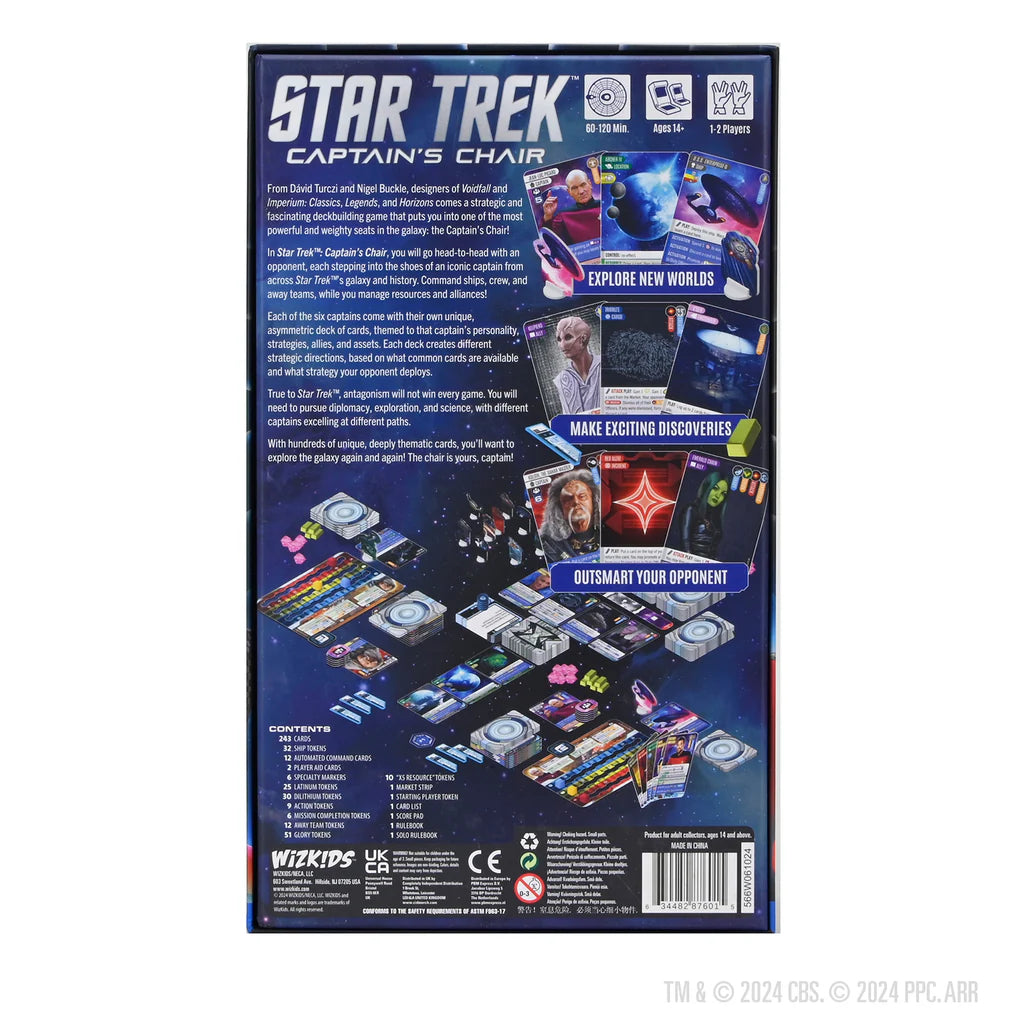
Star Trek: Captain's Chair
🐸 Dettagli da BoardGameGeek
Consiglio BGG sul numero di giocatori
Categorie
Meccaniche
Design & Art
Lingua


Si abbina bene con
The FroGames Card
The Klingons have just declared war. The Federation offers you an alliance that costs too much. You have three cards in hand and two ships on the verge of collapse. Decide now.
WHAT IT IS ABOUT
Six captains, six strategies, one winner
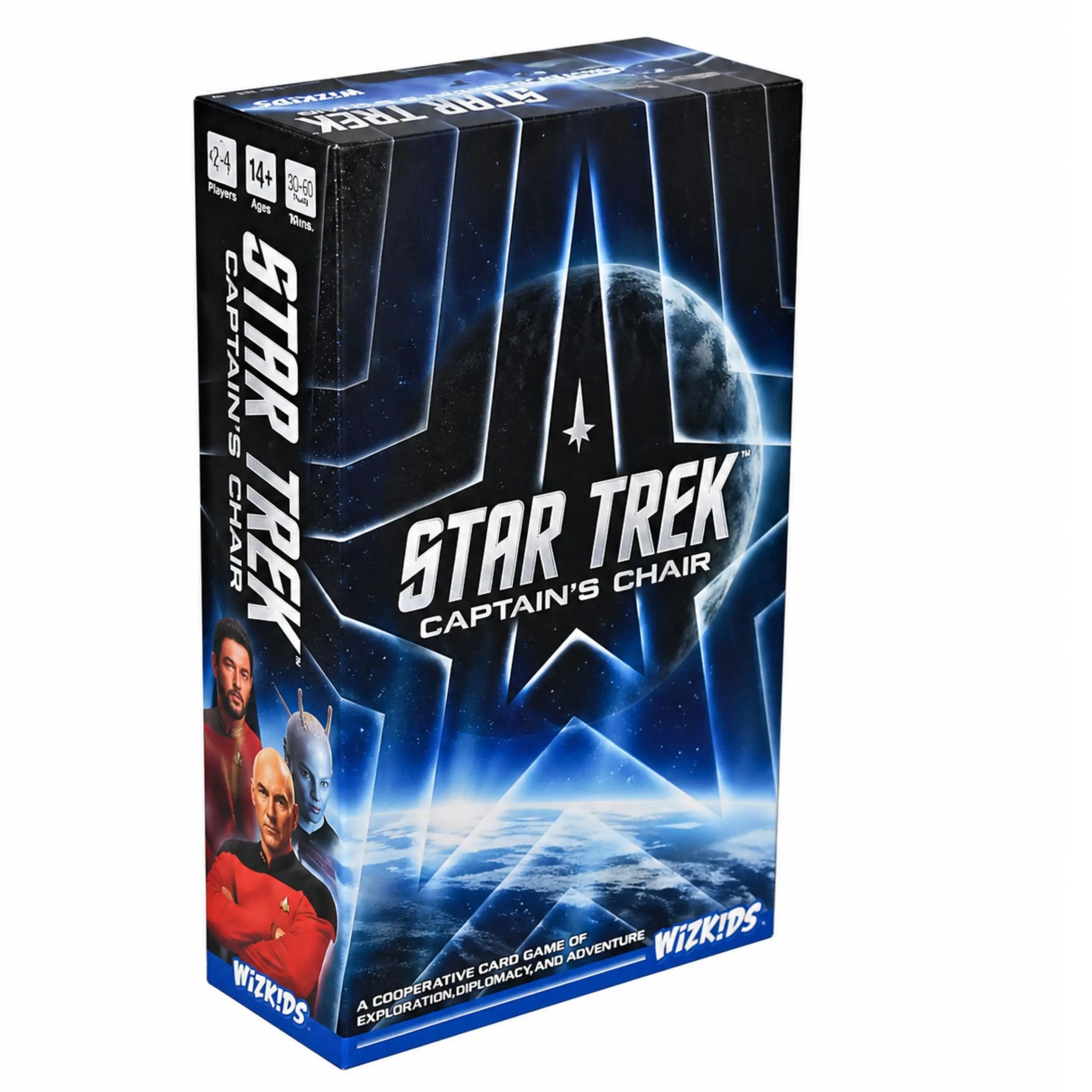
Star Trek: Captain's Chair is an asymmetric deckbuilder for 1-2 players by Nigel Buckle and Dávid Turczi (Imperium: Classics, Voidfall) and published by WizKids in 2025. Each captain has a unique deck of 40+ cards that reflects personality, allies, and tactics: Picard negotiates, Sisko builds stations, Burnham explores, Koloth conquers, Sela manipulates, Shran fights. No two games are ever the same.
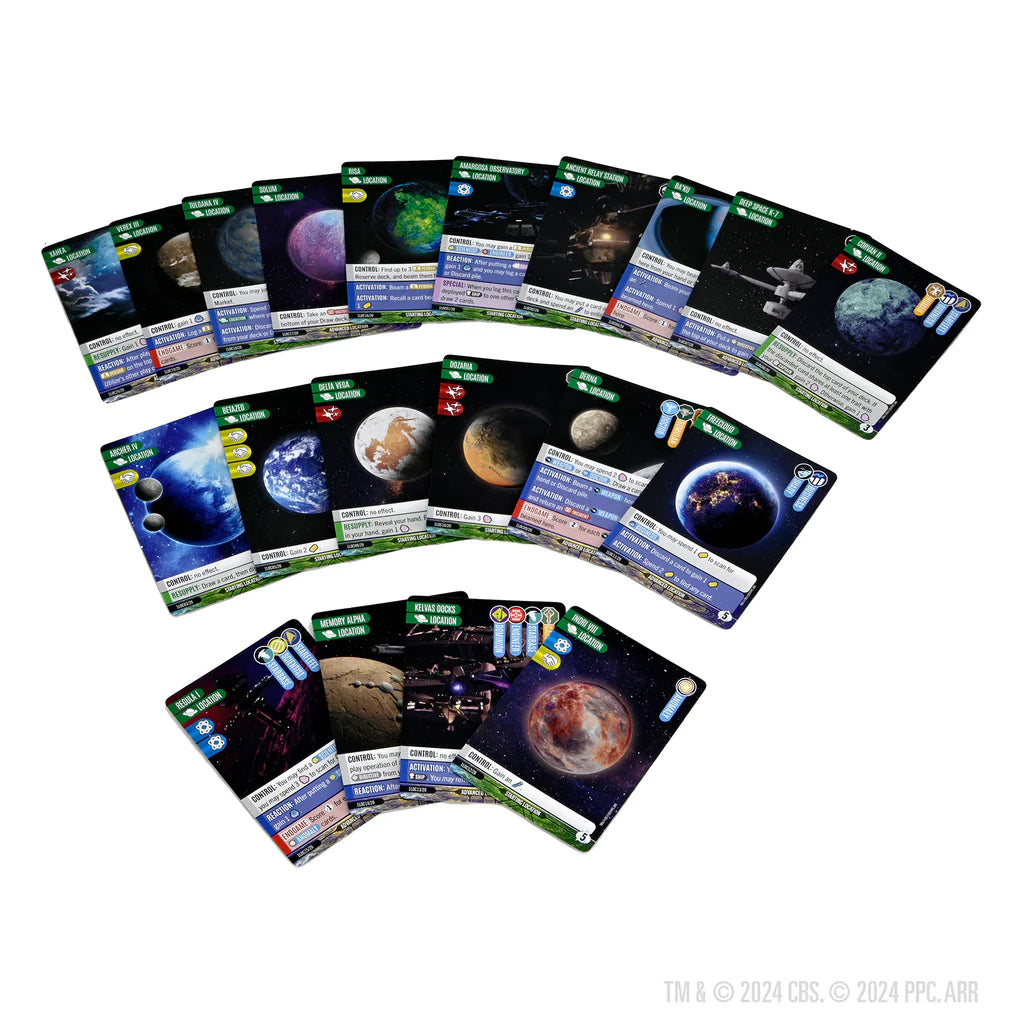
On your turn, you play cards to command ships, recruit crew, control space sectors, and complete missions. You win through diplomacy (alliances with factions), science (discoveries), or war (destroying the opposing fleet). The common market offers neutral cards that change every game, but winning choices depend on which captain you face: against Sisko you need to be fast, against Picard you need to block his alliances.
What they say abroad
"Six captains, six entirely different games. The asymmetry is staggering."
Six captains, six entirely different games. The asymmetry is staggering.
— Meeple Mountain
This is the first Star Trek game that truly makes me feel like a captain. The choices are weighty, the dilemmas are real, and when you win with diplomacy instead of firing photons, you get a satisfaction few games can provide. It's not a game for everyone: it's long, dense, and requires concentration. But if you love strategic deckbuilding and Star Trek, this is what you've been waiting for.
— FroGames

Star Trek: Captain's Chair
The game includes dedicated automa rules for each opposing captain. The automa plays with a simplified deck and draws guided by tables, simulating each character's priorities. The experience is complete and strategic, but it loses some of the psychological tension of a human duel (reading intentions, bluffing on the market). Excellent for practicing matchups.
FrogScore · FroGames editorial rating · based on rules, international reviews, and play sessionsYour arsenal
What you truly command
Ships and Away Teams
Each captain has signature units: the Enterprise-D for Picard, the Defiant for Sisko. Ships control space sectors, away teams complete planetary missions. Each unit has unique costs and abilities.
Alliance Cards
Federation, Klingon, Romulan, Cardassian. Building alliances gives you victory points and unlocks powerful cards, but each faction has specific demands. Picard excels here; other captains must choose carefully.
Scientific Missions
Discoveries, research, space anomalies. Completing them advances you on the science track. Burnham and Picard have decks optimized for this path, but any captain can try.
Space Combat
When two fleets meet, they fire. Koloth and Shran have decks built for war: cannons, shields, tactical maneuvers. Destroying all enemy ships is one of the three paths to victory.
Recommended Sleeves 296 cards in 2 sizes ▼
If you play often, we recommend protecting your cards with clear sleeves to make them last longer.
| Size | Quantity |
|---|---|
| 63.5 × 88 mm | 284 |
| 70 × 120 mm | 12 |
| Total cards | 296 |
Come si gioca
Video dimostrativo di gameplay.
🎲How to PlayThe rules in four steps▼
How to Play
The Flow of Each Turn
The game has no fixed rounds: turns alternate until someone wins. Each turn follows this structure.
Ready your exhausted cards (ships, alliances). You gain fixed credits plus any bonuses from cards in play. The more your engine grows, the more credits you generate.
Draw 5 cards from your personal deck. Play them to: deploy ships/crew, move units, attack, complete missions, build alliances. Each card has costs (credits, exhaust) and unique effects. Order matters.
Spend remaining credits to buy 1 card from the common market (6 visible slots). Add it to your discard pile. When your deck runs out, shuffle everything: new cards will enter rotation. Every purchase must serve your plan, don't just buy because a card is strong.
Some cards/alliances have end-of-turn triggers. Check victory conditions: 10 points via alliances/science, or enemy fleet destroyed. If no one has won, discard your hand, pass the turn.
⏱️Your First GameThe chronicle, moment by moment▼
A game in five moments
What happens at the table
Not the rules. The experience.
Setup: who you really are
Choose your captain. The other player chooses a different one. Shuffle the signature decks, reveal the common market of 6 neutral cards. Right away, you understand what you need: if you see Klingon alliance cards and you're playing Koloth, that game will play a certain way. If you play Picard and the market is full of weapons, you know you'll have to adapt.
First Turns: Exploration
Play your initial cards to place ships on sectors, recruit crew from the market, complete the first simple missions. Each captain starts with a different advantage: Sisko builds Deep Space Nine immediately, Burnham explores faster, Shran deploys aggressive ships. You're already understanding your opponent's plan by watching where they place their units.
Mid-game: The Race
The market empties and fills continuously. You and your opponent are building different engines: you focus on science, they focus on alliances. Or both of you are arming fleets for the final confrontation. Every turn you have to decide: do I buy this powerful card, or do I save credits to play more actions now? Timing is everything.
The Memorable Moment
Something happens that only this game can do: you win a battle by losing all your ships, because you completed the last scientific mission just as your defenses were collapsing. Or you seal the alliance with the Federation in the turn the Klingon was about to destroy you. Or you play a signature card of your captain that turns the game around in one fell swoop. Games are not won by accumulation: they are won by a perfect moment.
Endgame: Who best understood their deck
One of the two captains reaches 10 victory points (via alliances or science) or destroys the last enemy ship. The one with the strongest deck doesn't win: the one who best read the matchup, who understood when to switch strategy, who blocked the other's plan at the right moment wins. Once the cards are finished, shuffle again: you immediately want to play the rematch with inverted captains.
🐸Before You PlayThree honest things, from friends▼
Things to know beforehand
Three things to know before buying it
The first game is long
First games: 120+ minutes guaranteed. You need to learn your deck (40+ unique cards) and understand what your opponent is doing. After 3-4 games, you'll get down to 60-90 minutes, but it's still a game for a dedicated evening. If you want something under an hour, look elsewhere.
Asymmetry is real
The six captains are not symmetrically balanced: some matchups favor one side, others are tense. This is intentional: it reflects Star Trek. But it means you need to play each combination at least twice (reversing captains) to judge. Don't expect a perfectly balanced duel like in an abstract game.
The theme requires knowledge
If you don't know Star Trek, half the cards will mean nothing to you: Worf, Kira, Dukat, the USS Voyager are just names. The game still works mechanically, but you lose all the emotional layer. It's designed for fans of the series: if you're not, the game will feel colder.
🏆Victory and DefeatWhat the ending rewards▼
How it Ends
How to Win and How to Lose
Three paths to victory, all effective. The game ends as soon as one of the two captains completes one.
Victory
- Reach 10 alliance points by building relationships with factions (Federation, Klingon, Romulan, Cardassian)
- Reach 10 science points by completing research missions, discoveries, and spatial anomalies
- Destroy all of your opponent's ships (immediate military victory)
Defeat
- All your ships are destroyed (you lose immediately, even if you have alliance/science points)
- Your opponent reaches 10 points on one of the two peaceful paths before you do
- You fail to contain the other captain's plan: each deck has a preferred win condition, and if you don't block it, they win
It's the first asymmetric deckbuilder that truly makes you feel like a Star Trek captain. Your choices, not luck, determine who wins.
💬Frequently Asked QuestionsQuick answers before checkout▼
Frequently Asked Questions
FAQ about Star Trek: Captain's Chair
What mechanics does Star Trek: Captain's Chair use?
Deck-building (you build your deck during the game by buying cards from the market), hand management (optimizing your 5-card hand), area control (you place ships on spatial sectors), asymmetric powers (each captain has a unique deck), multiple paths to victory (alliances, science, or war). There are no dice.
Can I play it solo?
Yes. The game includes dedicated automa rules for each captain. The automa draws from a simplified deck and follows thematic priorities (Koloth attacks, Picard allies). The experience is strategic and complete, but it loses the tension of human bluffing on the market. Solo rating: 4/5.
How important is knowing Star Trek?
Mechanically: zero. The game works perfectly even if you've never seen an episode. But half the appeal lies in the theme: every card is a character, a ship, an event from the series. If Worf, Sisko, or the Enterprise mean nothing to you, the game will feel colder. It's designed for fans.
Are the six captains balanced?
Not symmetrically. Some matchups favor one captain, others are very tense. This is intentional thematic asymmetry: Picard excels in diplomacy, Koloth in war, Burnham in science. To judge a matchup, you need to play at least two games by switching sides. Don't expect abstract game balancing: it's a thematic game.
Is it available in Italian?
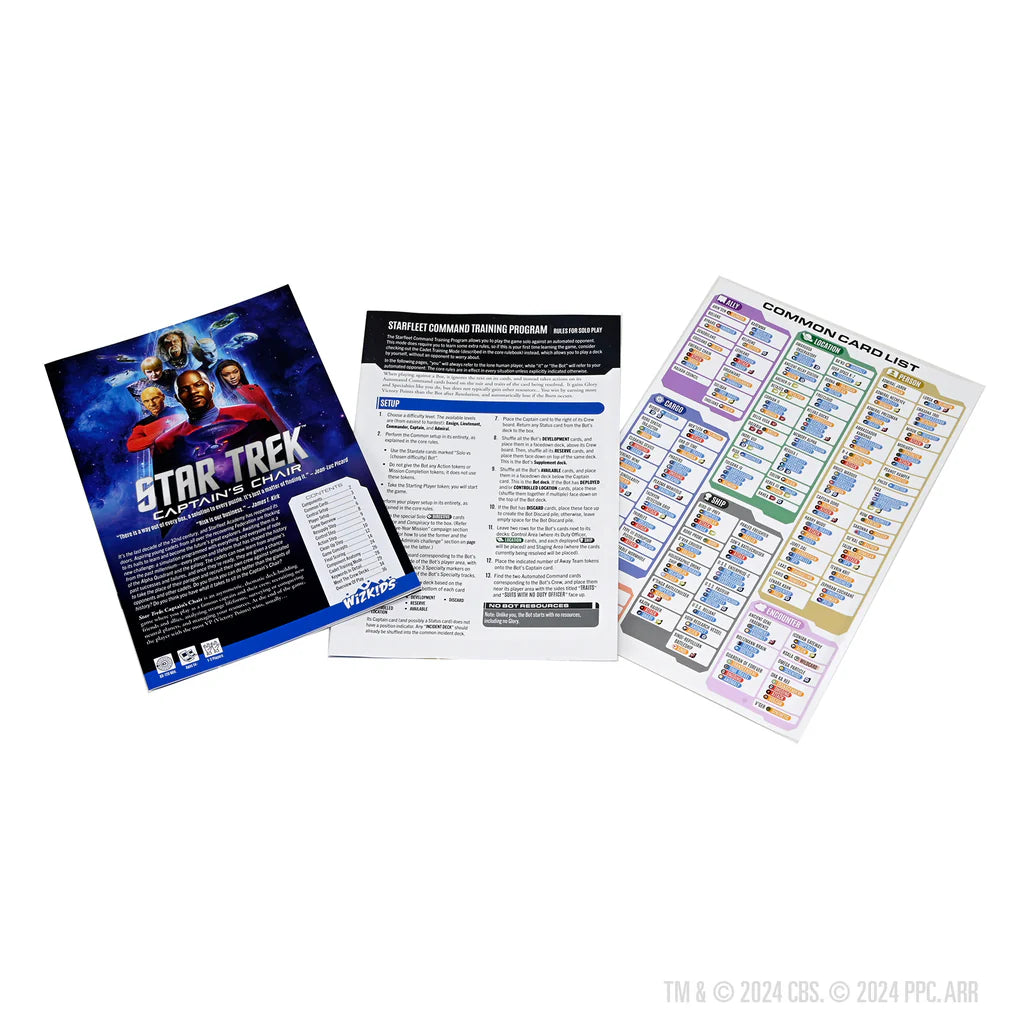
No. The edition for sale is in English. The game includes 284 standard cards (63.5×88mm) and 12 large cards (70×120mm), all with text. A good understanding of written English is required: each card has effects, conditions, and flavor text. There are currently no officially translated rules or cards.
The people behind the game
Who invented it, who designed it, who publishes it — and what else they've done.
Star Trek: Captain's Chair is an asymmetric deckbuilder for 1-2 players set in the Star Trek universe, designed by Nigel Buckle and Dávid Turczi and published by WizKids in 2025. Duration 60-120 minutes, recommended age 14+, weight 4.06/5 on BoardGameGeek. Each game puts you in the shoes of an iconic captain (Picard, Sisko, Burnham, Koloth, Sela, Shran), each with a unique deck of 40+ thematic cards. Win by building diplomatic alliances, completing scientific missions, or destroying the opposing fleet. The asymmetric deckbuilding system with a common market and area control makes each matchup a different tactical challenge. Official solo mode with dedicated automa. Available on FroGames.it.
Frequently Asked Questions
The answers you're looking for, no beating around the bush.
📸Do the images match the actual product?
The photos on the website often come from BoardGameGeek and are intended to give you an idea of the game. They may vary slightly from the version you receive. The content declared by the publisher is always binding.
📦Does the content of the box match what is indicated?
We always strive to provide the correct content, but minor variations are possible due to reprints or updates. The information comes directly from the publishers. If you have any questions, please contact us!
⏳How do pre-orders work?
Pre-order the game before release, payment is immediate, and the game is reserved for you. As soon as it arrives, we'll ship it right away! If there are any delays, we'll update you promptly.
🔒Can I trust buying here?
Absolutely! Secure payments, tracked shipments, and a team that loves board games as much as you do. If something goes wrong, we'll do our best to fix it.
🛠There's a problem with my order, what should I do?
Write to us now! Whether it's a missing part, damage, or an error, we'll help you resolve it as soon as possible. Your experience truly matters to us.