
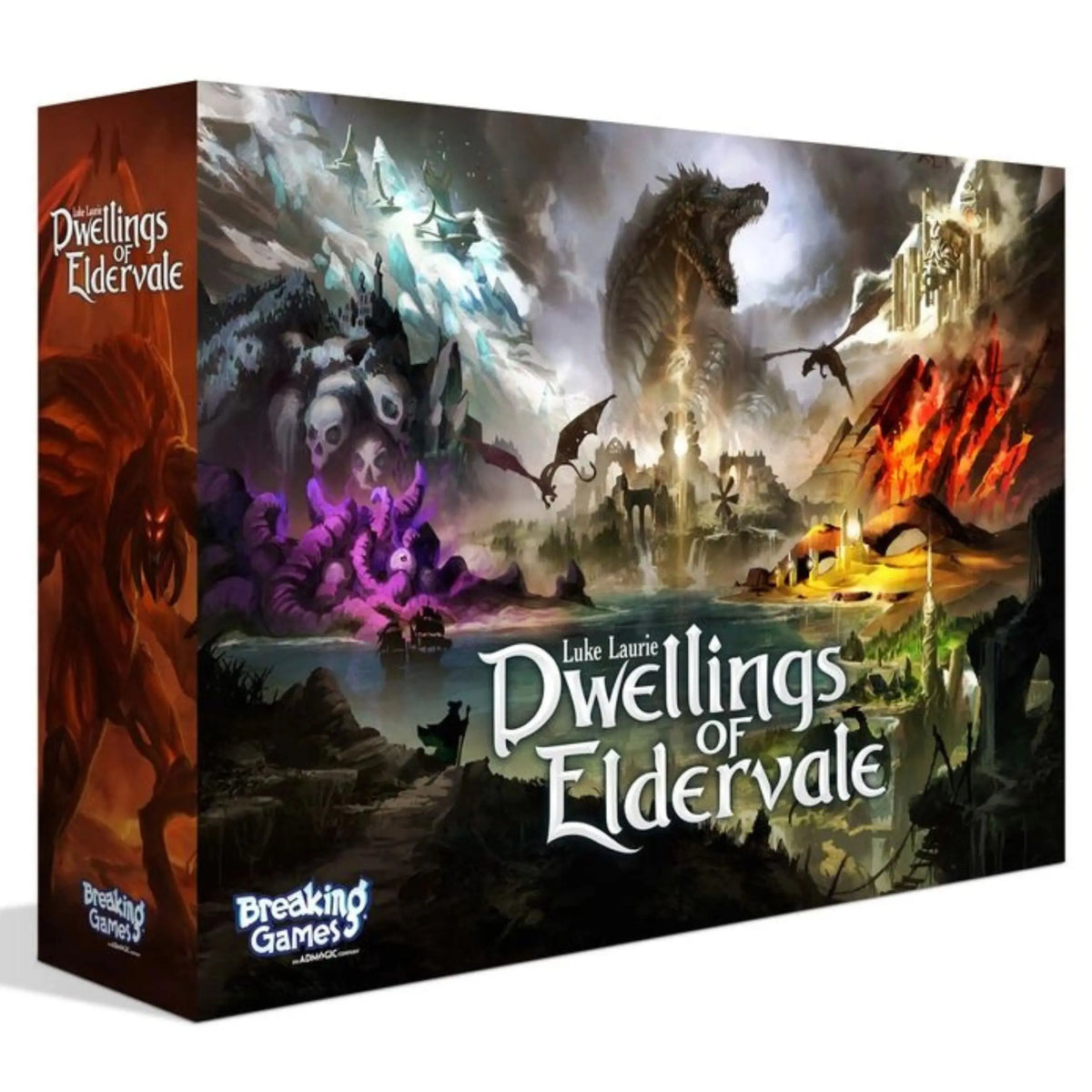
Dwellings of Eldervale - Second Edition
🐸 Dettagli da BoardGameGeek
Consiglio BGG sul numero di giocatori
Categorie
Meccaniche
Design & Art
Lingua






Si abbina bene con
La scheda FroGames
Piazzi il lavoratore al portale e pescano un mago. Tu ne avevi tre, ma loro ora evocano il drago. Al terzo turno capisci che devi conquistare quel dungeon o sei fuori dalla partita. E intanto qualcuno sta costruendo la quinta abitazione.
DI COSA SI TRATTA
Un mondo elementale da ricostruire, otto poteri da dominare
Luke Laurie (autore di Mystic Vale) costruisce un fantasy epico dove ogni fazione rinasce in Eldervale, mondo perduto dominato da otto elementi: Terra, Aria, Fuoco, Acqua, Luce, Oscurità, Ordine e Caos. Pubblicato da Breaking Games nel 2020, il gioco porta al tavolo miniature imponenti di draghi e mostri elementali, un tabellone modulare che cresce a ogni partita, e artwork di dieci artisti tra cui Anton Fadeev e Brian Valeza.
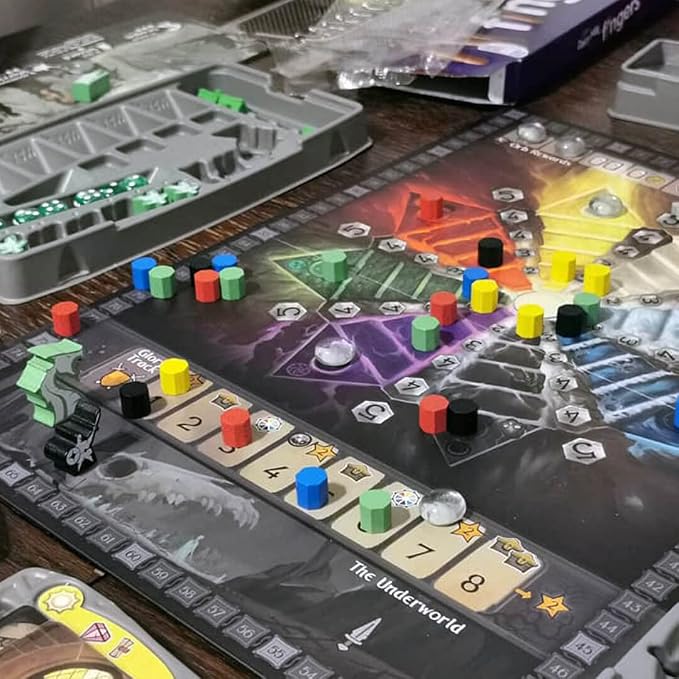
Ogni giocatore controlla una fazione asimmetrica con abilità uniche. Piazzi lavoratori di quattro tipi diversi su spazi azione (portale d'evocazione, mulino antico, fortezza perduta, dungeons, torre del mago, terre elementali), raccogli risorse, evochi creature, combatti per il controllo del territorio, costruisci abitazioni e sviluppi carte avventura che formano il tuo motore. Il gioco intreccia worker placement, controllo territorio ed engine building in una struttura dove ogni percorso verso la vittoria richiede dominanza elementale: chi controlla più elementi tra combattimento, costruzione, magie e conquiste plasma Eldervale a sua immagine.
Cosa dicono all'estero
Un'epopea fantasy da tavolo dove le miniature non sono decorazione ma incarnano davvero la scala del conflitto. Ogni partita racconta una guerra elementale diversa, e la tensione tra costruire il motore e bloccare gli avversari tiene il tavolo vivo fino all'ultimo turno.
— FroGames
"A fantastic spectacle of a game."
Uno spettacolo fantastico di gioco.
— Shut Up & Sit Down

Dwellings of Eldervale
Il gioco include regole ufficiali per il solitario con un avversario automa che pesca carte e simula le azioni di un giocatore rivale. L'esperienza strategica resta completa — costruisci il motore, combatti per i dungeons, domini gli elementi — ma ovviamente perde l'interazione politica e i blocchi tattici del multiplayer. Ottimo per testare fazioni e strategie.
FrogScore · valutazione editoriale FroGames · basata su regolamento, recensioni internazionali e sessioni di giocoGli strumenti della conquista
Cosa usi per dominare Eldervale
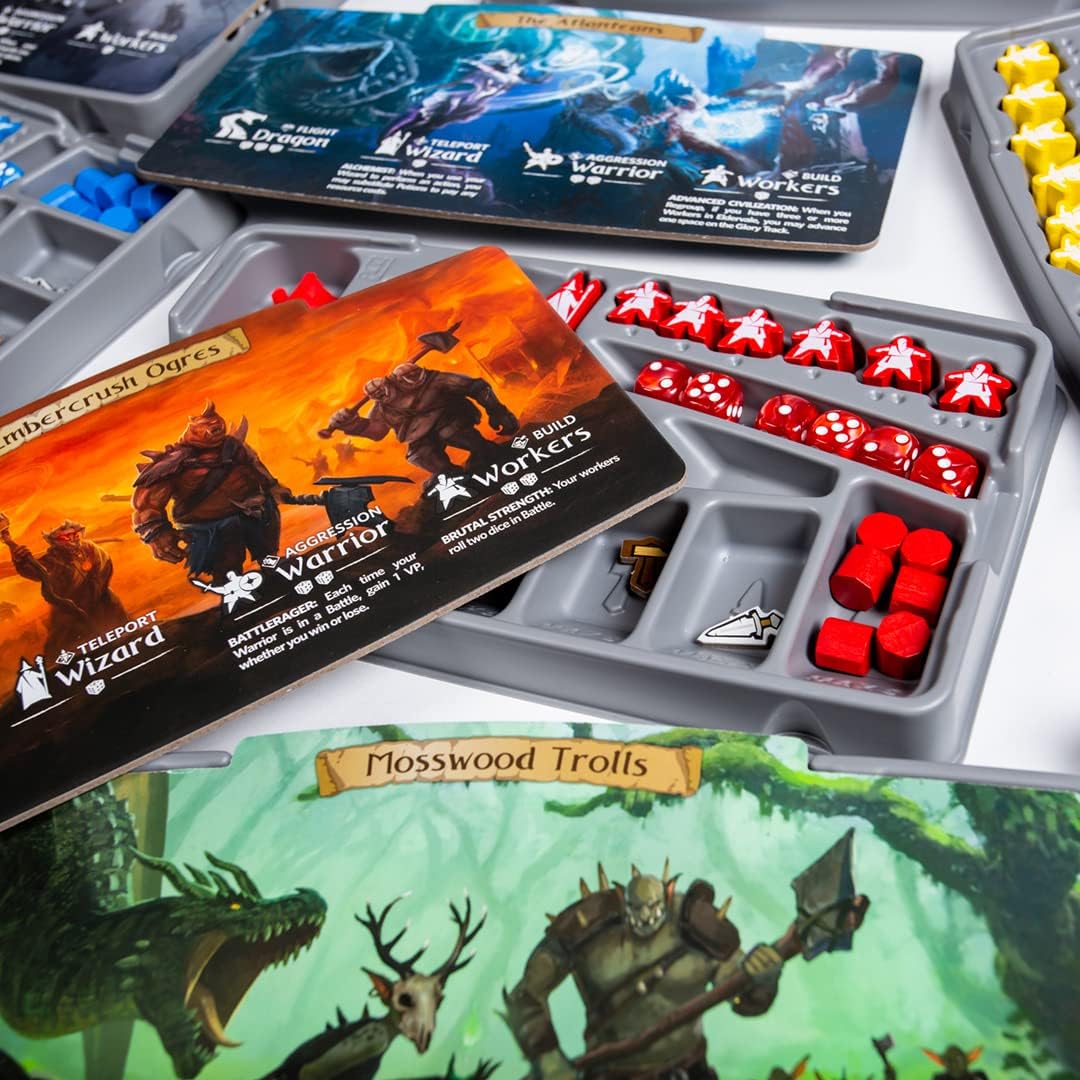
Lavoratori unici
Ogni fazione ha quattro tipi di lavoratori con forza e abilità diverse. Il mago sblocca magie potenti, il guerriero vince combattimenti, l'esploratore apre dungeons. Scegli chi mandare dove: un lavoratore debole in uno spazio forte è uno spreco.
Draghi e mostri elementali
Miniature giganti che occupano il tabellone e danno punti dominanza. Evocare un drago costa risorse ma ti garantisce controllo su un elemento. I mostri bloccano territori e costringono gli avversari a combattere o aggirare.
Abitazioni (Dwellings)
Costruisci su territori conquistati per segnare punti e sbloccare risorse. Ogni abitazione rafforza la tua presenza elementale. La quinta abitazione è spesso il turning point della partita.
Carte avventura
Formano il tuo motore: magie permanenti, quest da completare, profezie che cambiano le condizioni di vittoria. Ogni carta è multiuso (instant o sviluppo), e scegliere cosa tenere e cosa bruciare è metà del gioco.
Come si gioca
Video dimostrativo di gameplay.
🎲Come si giocaLe regole in quattro mosse▼
Come si gioca
Il flusso di ogni round
Dwellings alterna piazzamento lavoratori e attivazione tableau, finché tutti passano. Poi si risolve il round.
Nel tuo turno scegli: (A) piazza un lavoratore su uno spazio azione libero (portale, mulino, dungeons, terre elementali, torre del mago, fortezza), esegui l'azione, prendi risorse o combatti; (B) raggruppa tutti i tuoi lavoratori dal tabellone e attiva una volta tutte le carte avventura sviluppate nel tuo tableau. Raggruppare significa passare il round, ma ti dà un boost enorme di risorse/azioni.
Se piazzi un lavoratore in uno spazio già occupato o in un dungeon conteso, combatti. Tiri dadi pari alla forza del lavoratore, sommi modificatori da carte e poteri di fazione. Chi fa più totale vince: conquista il dungeon o sposta l'avversario. Il perdente ritira il lavoratore. Alcune carte permettono di ritirare dadi o forzare ritiri.
Con le risorse raccolte puoi: costruire un'abitazione su un territorio che controlli (ti dà punti dominanza elementale e sblocca risorse permanenti); sviluppare carte avventura dalla mano al tableau (costano risorse ma si attivano ogni volta che raggruppi); evocare creature (draghi, mostri) che occupano il tabellone e danno dominanza enorme.
Quando tutti hanno raggruppato, il round finisce. Si pesca una nuova ondata di carte avventura, si resettano alcuni spazi azione, si avanza il segnalino round. La partita dura un numero fisso di round (variabile per numero giocatori). Alla fine si contano gli otto elementi: dominanza maggiore in ogni elemento vale punti pieni, seconda dimezzati. Vince chi somma più punti.
⏱️La tua prima partitaLa cronaca, momento per momento▼
Una partita in cinque momenti
Cosa succede al tavolo
Non le regole. L'esperienza.
Scegli la fazione, costruisci il mondo
Ogni giocatore prende una fazione asimmetrica (Dragonkin, Elementalisti, Costruttori...) con plancia, lavoratori e abilità uniche. Il tabellone centrale si monta con tessere modulari: dungeons, terre elementali, spazi azione. Già al setup capisci quali elementi saranno contesi. Il primo turno è esplorativo: tutti piazzano lavoratori per raccogliere risorse base e capire chi punta dove.
Il primo scontro per un dungeon
Qualcuno manda un guerriero in un dungeon chiave, qualcun altro lo segue. Si combatte a dadi, modificati da carte e poteri. Chi vince conquista il dungeon, piazza un'abitazione, segna dominanza elementale. Chi perde ritira il lavoratore e ripensa la strategia. Da qui il tavolo si scalda: ogni spazio azione conta, ogni risorsa è una scelta.
Costruisci il motore, evoca il drago
A metà partita tutti hanno 3-4 carte avventura sviluppate che generano risorse, sbloccano azioni extra, potenziano combattimenti. Qualcuno evoca il drago (miniatura gigante) e domina un elemento. Gli altri devono rispondere: o costruiscono più abitazioni, o conquistano altri dungeons, o sviluppano magie per compensare. La tensione sale.
La corsa agli elementi finali
Mancano due round. I punteggi si fanno sulla dominanza elementale: chi controlla più elementi (Terra, Fuoco, Acqua...) vince punti enormi. Tutti contano: 'Se prendo quel dungeon domino Fuoco, ma lui domina già Luce e Ordine'. Ogni azione è un calcolo. Qualcuno sacrifica un lavoratore per bloccare uno spazio critico. Al tavolo nessuno parla, tutti pensano.
Conteggio finale, rivelazioni
Finiti i round si contano gli otto elementi uno per uno. Chi ha più potere in un elemento segna pieno, secondo dimezzato. Le profezie segrete si rivelano e ribaltano punteggi. Qualcuno aveva una quest nascosta completata e prende 15 punti. Vince chi ha dominato più elementi, non chi ha fatto più azioni. Il vincitore spesso si decide su un margine di 3-5 punti.
🐸Da sapere primaTre cose oneste, da amici▼
Da sapere prima
Tre cose che devi considerare
Setup e tempi lunghi
Montare il tabellone modulare, separare i token elementali, preparare i mazzi carte richiede 15-20 minuti anche quando conosci il gioco. Le partite sfiorano regolarmente le due ore piene, e con 5 giocatori si arriva a 2h30-3h. Non è un filler: serve tavolo grande e serata dedicata.
Curva d'apprendimento ripida
Il regolamento è denso: lavoratori diversi, otto elementi, combattimento a dadi, carte multiuso, profezie segrete. La prima partita è una lezione, la seconda capisci le strategie. Le fazioni asimmetriche aggiungono complessità: ogni abilità unica cambia il modo di giocare, e capire quale sfruttare richiede esperienza.
Scaling variabile per numero giocatori
Il gioco scala da 1 a 5, ma l'esperienza cambia. In 2-3 giocatori il tabellone è ampio, si combatte meno, si costruisce di più. In 4-5 gli spazi azione si intasano, i conflitti sono frequenti, il downtime sale (aspetti che gli altri finiscano il turno). Il conteggio finale degli elementi è sempre identico, ma le partite dense sono quelle a 3-4.
🏆Vittoria e sconfittaCosa premia il finale▼
Come finisce
Come si vince e come si perde
Dwellings of Eldervale finisce dopo un numero fisso di round. Si contano gli otto elementi, vince chi ha dominato di più.
Vittoria
- Dominare il maggior numero di elementi (Terra, Aria, Fuoco, Acqua, Luce, Oscurità, Ordine, Caos): ogni elemento controllato vale punti pieni, secondo posto dimezzati
- Completare profezie segrete rivelate a fine partita (danno bonus enormi se rispetti le condizioni)
- Costruire molte abitazioni e controllare dungeons chiave: ogni abitazione aumenta la dominanza dell'elemento del territorio
Errori comuni che costano la partita
- Concentrarsi su un solo elemento ignorando gli altri: il conteggio finale premia chi diversifica
- Combattere troppo presto con lavoratori deboli: ogni sconfitta è un turno perso e una risorsa sprecata
- Non sviluppare carte avventura: senza motore attivo resti indietro in risorse e azioni, e il gap diventa incolmabile negli ultimi round
Dwellings of Eldervale è un ibrido strategico che premia chi sa pianificare tre turni avanti, diversificare gli elementi e sfruttare i poteri asimmetrici della fazione. Non vince chi tira meglio i dadi, vince chi costruisce il motore giusto.
💬Domande frequentiRisposte rapide prima del carrello▼
Domande frequenti
FAQ su Dwellings of Eldervale
Quanto dura davvero una partita di Dwellings of Eldervale?
Nella pratica: 90-120 minuti in 2-3 giocatori, 120-150 minuti in 4, fino a 180 minuti in 5 giocatori. Il setup da solo richiede 15-20 minuti. La scatola dice 60-150, ma le partite sotto le due ore sono rare a meno che non siate tutti esperti. Considera una serata dedicata.
Quanto è difficile da imparare?
Il regolamento è complesso ma logico. Servono 30-40 minuti per spiegarlo: lavoratori diversi, otto elementi, combattimento, carte multiuso, profezie. La prima partita è una lezione (nessuno sa quale fazione sfruttare o quale elemento puntare), dalla seconda si gioca davvero. Non è un gateway: serve esperienza con worker placement e engine building.
Si gioca bene in solitario?
Sì, il gioco include regole ufficiali per il solo con automa che simula un avversario. L'esperienza strategica è completa (costruisci il motore, combatti per dungeons, domini elementi), ma perdi l'interazione politica e i blocchi tattici del multiplayer. Rating solitario: 4/5. Ottimo per testare fazioni.
Con quanti giocatori è meglio?
Il sweet spot è 3 giocatori: abbastanza conflitto per rendere interessanti i dungeons, downtime gestibile, partite sotto le due ore. In 2 il tabellone è troppo ampio e si combatte poco. In 4 scala bene ma si allunga. In 5 il downtime diventa pesante (aspetti che quattro persone finiscano i turni) e la partita sfiora le tre ore.
Quanta fortuna c'è? I dadi rovinano le strategie?
I dadi si usano solo nei combattimenti, e puoi mitigarli con carte, poteri di fazione, scelta dei lavoratori (guerriero tira più dadi del contadino). Un tiro sfortunato può farti perdere un combattimento, ma la vittoria finale si decide sulla dominanza elementale, che costruisci in 8-10 round. La strategia conta più della fortuna: vince chi pianifica, non chi tira bene.
Le fazioni sono davvero diverse o solo bonus diversi?
Sono asimmetriche vere: ogni fazione ha lavoratori con statistiche diverse, abilità uniche, percorsi preferenziali verso certi elementi. I Dragonkin evocano draghi facilmente, gli Elementalisti dominano le terre elementali, i Costruttori piazzano abitazioni a costo ridotto. Cambia il modo di giocare, non solo i numeri. La rigiocabilità è altissima.
Quanto spazio serve sul tavolo?
Molto. Il tabellone modulare occupa circa 90x90 cm, più le plance fazione individuali (ognuna 30x20 cm), più i mazzi carte comuni, più i token risorse. Serve un tavolo da 120x80 cm minimo, meglio 150x100. Non è un gioco da tavolino: il setup è scenografico ma ingombrante.
Che tipo di miniature ci sono nella scatola?
La scatola base include miniature di plastica: draghi elementali giganti (8 pezzi grandi), mostri elementali, lavoratori per ogni fazione, abitazioni (dwellings). Le miniature sono già colorate per elemento e fazione, non richiedono pittura. Sono funzionali e scenografiche, ma non al livello di dettaglio di un gioco CMON premium.
È un eurogame o un gioco tematico?
È un ibrido. Meccaniche euro (worker placement, engine building, controllo territorio) con elementi ameritrash (miniature, dadi, combattimento diretto, tema fantasy). Se cerchi un euro puro senza fortuna, non è questo. Se vuoi un gioco tematico tutto dadi, neanche. È nel mezzo: strategia profonda con conflitto diretto.
Ci sono espansioni? Servono per giocare?
Esiste l'espansione Legendary Edition (aggiunge fazioni, carte, componenti premium) e mini-espansioni come Elderkin. Il gioco base è completo: otto fazioni, otto elementi, rigiocabilità altissima. Le espansioni aggiungono varietà ma non sono necessarie per divertirsi. Parti dalla base, espandi solo se diventa il tuo gioco preferito.
Che meccaniche usa Dwellings of Eldervale?
Worker placement con lavoratori diversi (forza e abilità variabili), area control (dungeons e territori), engine building (carte avventura sviluppate), combattimento a dadi (con modificatori), drafting aperto (scegli carte da pool comune), gestione mano, poteri asimmetrici (fazioni), tabellone modulare, set-up variabile, contratti (quest da completare), bonus fine partita.
Che bustine servono per imbustarle?
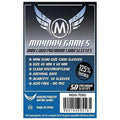
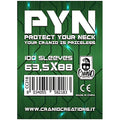
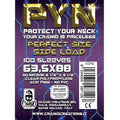
Il gioco ha circa 200 carte in formato standard (63.5x88 mm, tipo Magic). Servono bustine standard trasparenti, circa 3-4 pacchi da 100. Se vuoi imbustare anche le carte fazione (più piccole, circa 44x68 mm) aggiungi bustine mini europee. Non è obbligatorio: le carte si mischiano spesso ma non si rovinano facilmente.
È disponibile in italiano? Serve sapere l'inglese?
Questa è l'edizione in inglese. Tutte le carte avventura, magie, profezie, quest hanno testo in inglese (moderato: serve riferimento continuo, non basta un riassunto). Non esiste edizione italiana ufficiale. È giocabile con inglese scolastico e un reference sheet tradotto, ma la fluidità si perde: meglio un giocatore fluente al tavolo o prepararsi traduzioni delle carte prima.
Le persone dietro al gioco
Chi l'ha inventato, chi l'ha disegnato, chi lo pubblica — e cos'altro hanno fatto.
Dwellings of Eldervale è un gioco da tavolo di strategia e fantasy per 1-5 giocatori, durata 60-150 minuti, età 14+. Progettato da Luke Laurie e pubblicato da Breaking Games, intreccia worker placement, area control ed engine building in un mondo dove otto elementi (Terra, Aria, Fuoco, Acqua, Luce, Oscurità, Ordine, Caos) determinano la vittoria. Ogni fazione asimmetrica usa lavoratori unici, evoca draghi e mostri elementali, costruisce abitazioni e sviluppa carte avventura per dominare il territorio. Include miniature, tabellone modulare, combattimento a dadi e modalità solitario ufficiale. Disponibile su FroGames.it.
Dwellings of Eldervale - Second Edition
Frequently Asked Questions
The answers you're looking for, no beating around the bush.
📸Do the images match the actual product?
The photos on the website often come from BoardGameGeek and are intended to give you an idea of the game. They may vary slightly from the version you receive. The content declared by the publisher is always binding.
📦Does the content of the box match what is indicated?
We always strive to provide the correct content, but minor variations are possible due to reprints or updates. The information comes directly from the publishers. If you have any questions, please contact us!
⏳How do pre-orders work?
Pre-order the game before release, payment is immediate, and the game is reserved for you. As soon as it arrives, we'll ship it right away! If there are any delays, we'll update you promptly.
🔒Can I trust buying here?
Absolutely! Secure payments, tracked shipments, and a team that loves board games as much as you do. If something goes wrong, we'll do our best to fix it.
🛠There's a problem with my order, what should I do?
Write to us now! Whether it's a missing part, damage, or an error, we'll help you resolve it as soon as possible. Your experience truly matters to us.