

Polynesia
🐸 Dettagli da BoardGameGeek
Consiglio BGG sul numero di giocatori
Categorie
Meccaniche
Design & Art
Lingua
Pre-order - leggi i dettagli
🐸 Una rana saggia sa quando dividere l’ordine… e quando aspettare il salto giusto.



Si abbina bene con
The FroGames Card
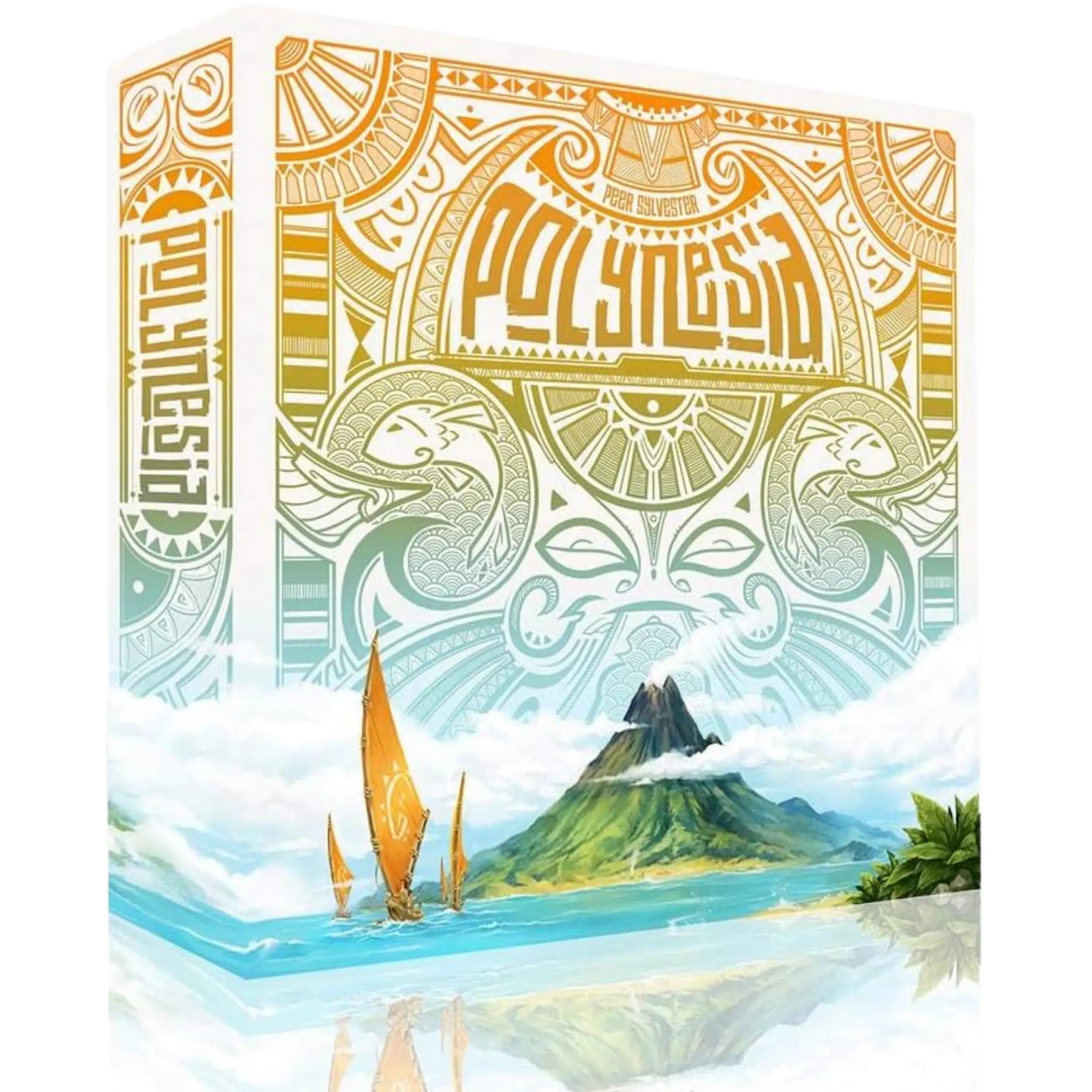
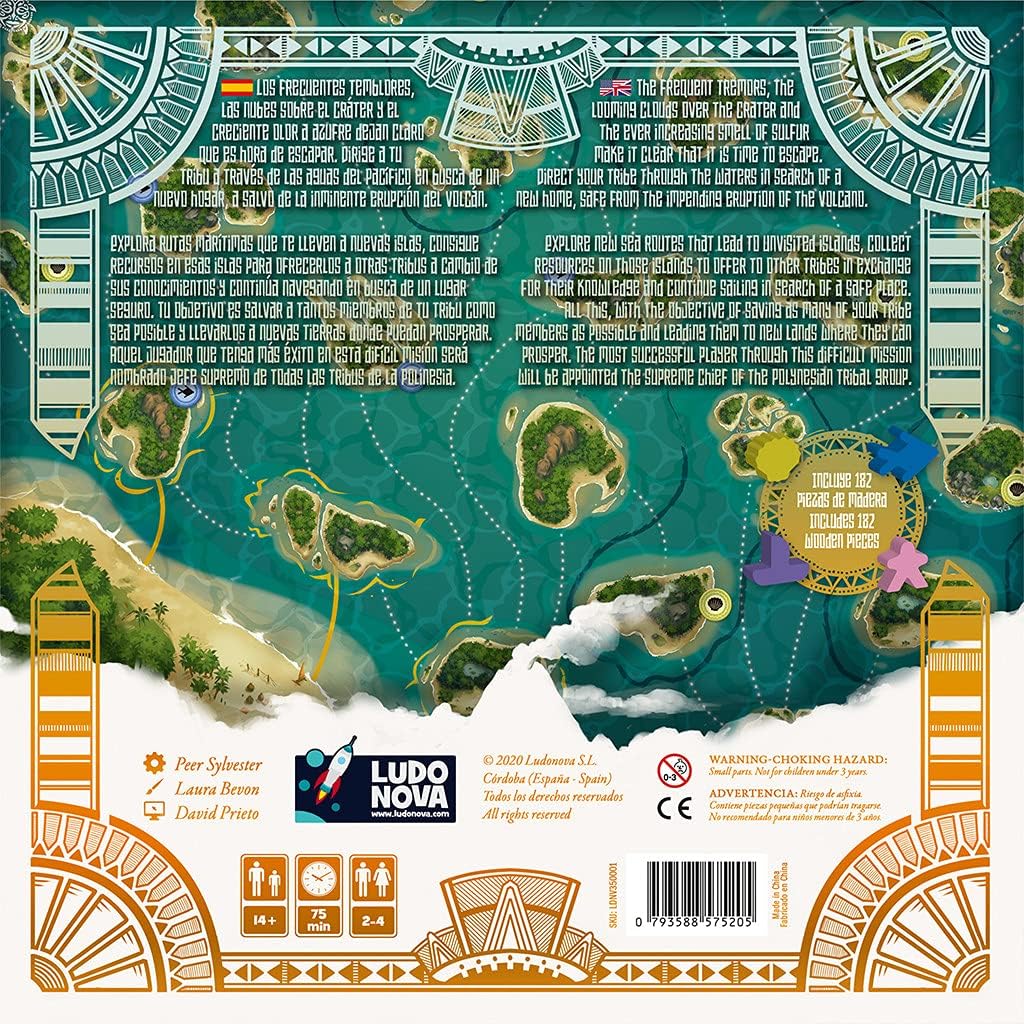
The volcano smokes. Gather your people, load the canoes, find an island to welcome you. Someone will arrive before you and you'll have to pay their passage. Someone else will get in the way. And meanwhile, the crater trembles.
WHAT IT IS ABOUT
Saving the tribe from the eruption, one island at a time
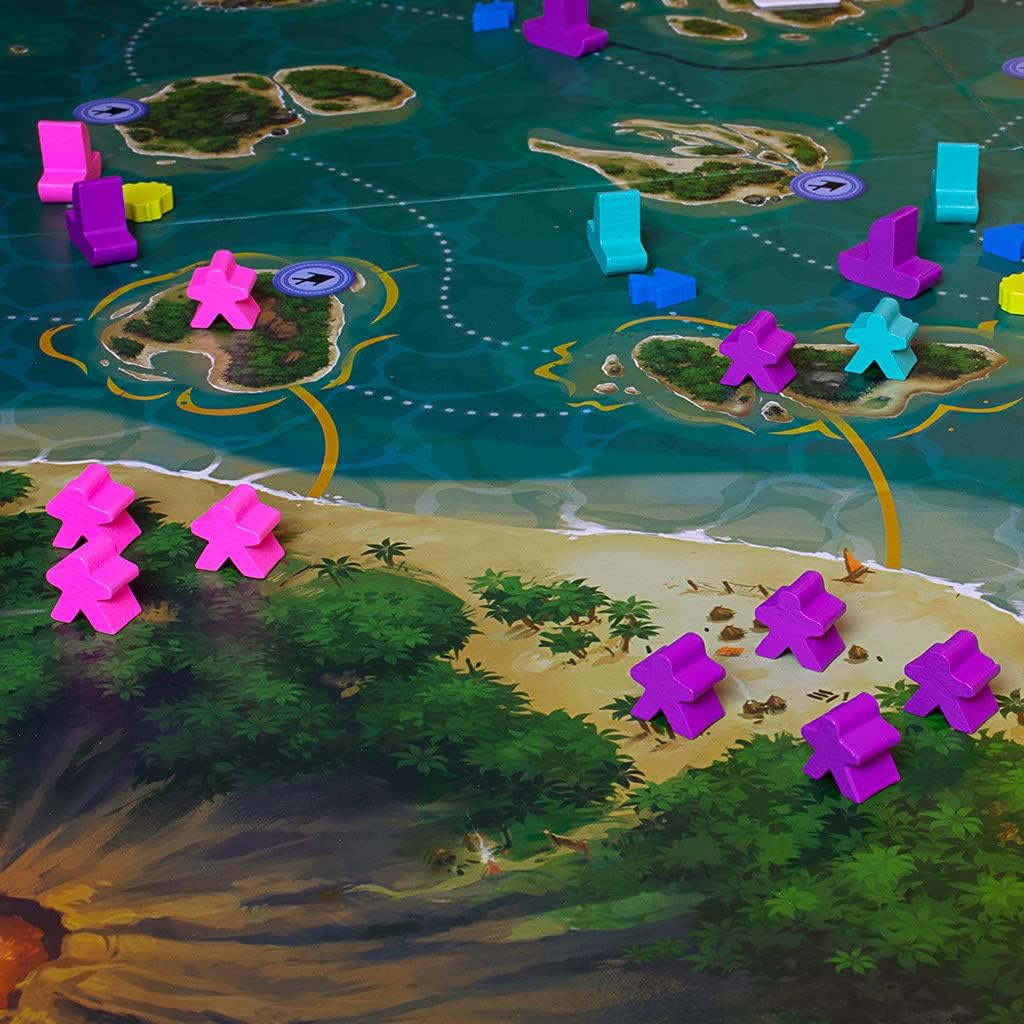
Polynesia is a nautical strategy game by Peer Sylvester (author of The King's Dilemma and Bärenpark), published by Ludonova in 2020. Set in the Polynesian Pacific, it tells the story of a tribe fleeing from an exploding volcano. The illustrations by Laura Bevon and David Prieto transform the board into an archipelago to explore route by route.
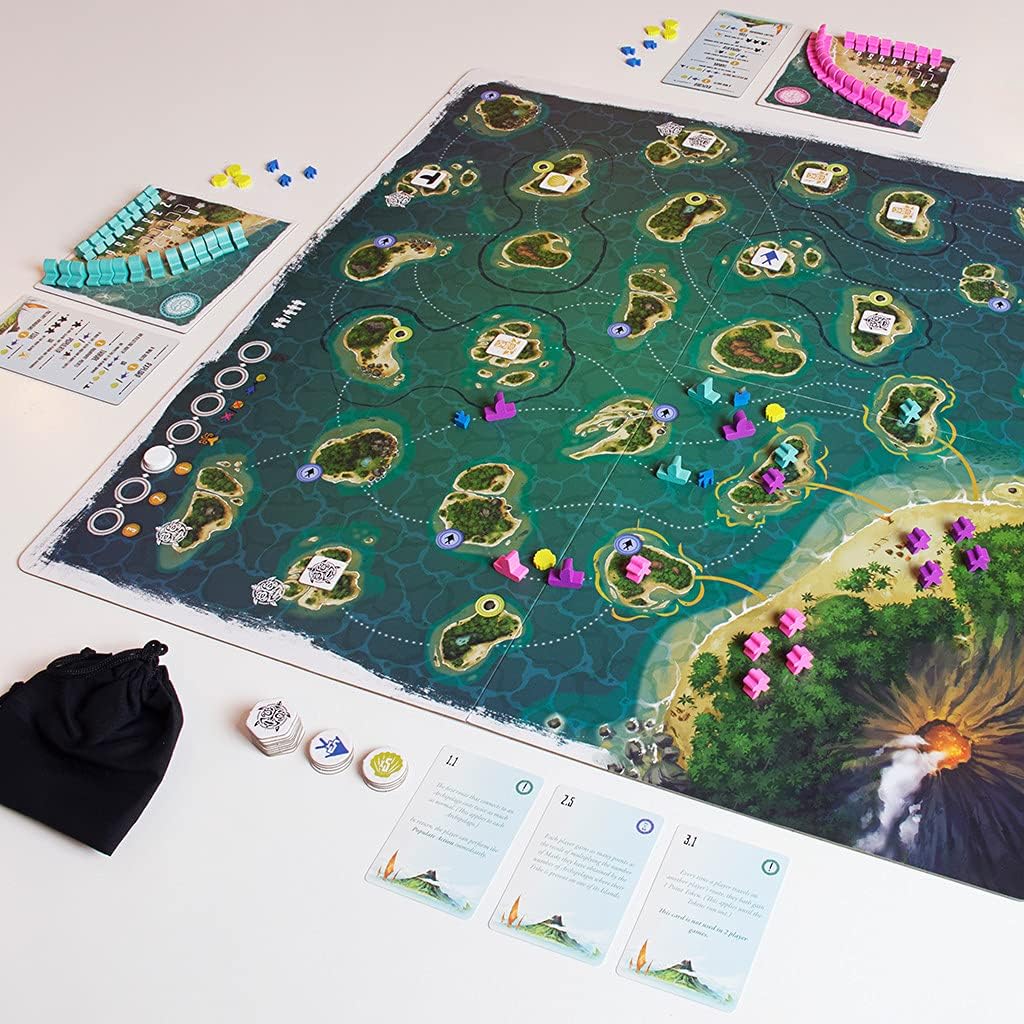
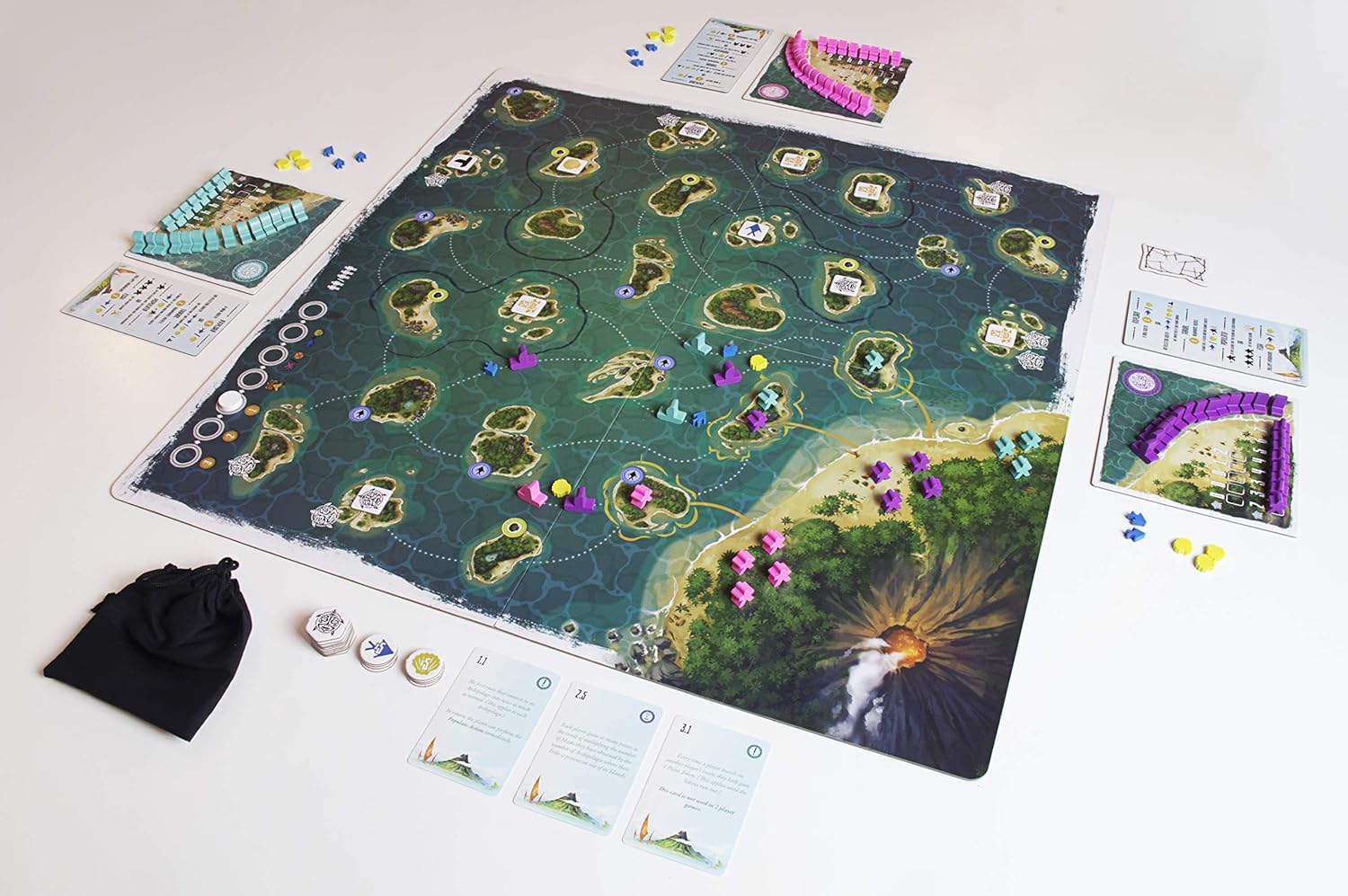
Each player has a tribe to save. Build sea routes between islands, collect fish and shells, trade resources with other tribes to use their routes, and populate the islands that give you the most points. Tide cards change the objectives each game: sometimes it's about who goes the furthest, other times it's about who controls the most different islands. The volcano controls the pace: each round can bring you closer to the end.
What they say abroad
"Polynesia is a game of hard choices wrapped in a beautiful theme."
Polynesia is a game of difficult choices wrapped in a beautiful theme.
— Meeple Mountain
It's a clean network building game, with a subtle tension that grows round after round. Every route you build, you'll pay for when others use it.
— FroGames

Polynesia
FrogScore · editorial rating FroGames · based on rules, international reviews and play sessionsYour arsenal
What you have to save the tribe
Tribe members
Each member you place on an island earns points and generates resources. The more you save, the stronger you are. But once placed, they don't return: choose wisely where to put them.
Sea routes
Build connections between islands using fish and shells. Your routes are yours, but others can use them by paying you. Every route you open is an investment and a risk.
Fish and shells
The two resources of the game. You use fish to explore and travel, and shells to exchange knowledge with other tribes. You collect them by populating the right islands.
Tide cards
They define the objectives of the game: sometimes it's about who reaches the furthest islands, other times it's about who controls the most. Visible from the start, they change the strategy from setup.
Recommended sleeves 18 cards in 1 size ▼
If you play often, we recommend protecting your cards with transparent sleeves to make them last longer.
| Size | Quantity |
|---|---|
| 54 × 80 mm | 18 |
| Total cards | 18 |
Come si gioca
Video dimostrativo di gameplay.
🎲How to playThe rules in four steps▼
How to play
The flow of each round
Each round is divided into an action phase (3 turns per player) and a maintenance phase (volcano and resource collection).
Each player takes 3 turns. In each turn, choose one of three actions: navigate (move tribe members along routes, paying those who own them), explore (build new routes by spending resources), or populate and fish (place members on an island and collect resources). The actions are simple, but order and timing matter.
After the turns, the volcano's activity is checked. Depending on the conditions (defined at the start of the game), the volcano can accelerate or remain dormant. If it activates, the countdown to the end of the game draws closer. The tension rises.
Each player collects fish and shells from the islands where they have tribe members. The more islands you control, the more resources you generate. This phase recharges your possibilities for the next round: those who populated well get rich, those who rushed too much run dry.
If the volcano has not yet erupted, a new round begins. Otherwise, it's time for the final count: points for populated islands, completed tide objectives, saved tribe members. The player with the most points becomes the supreme leader of the Polynesian group.
⏱️Your first gameThe chronicle, moment by moment▼
A game in five moments
What happens at the table
Not the rules. The experience.
Setup: who flees where
Tide cards revealed, archipelago arranged, tribes at the starting blocks. Some immediately aim for the far-off island worth the most, others want to control the center. Already here, it's clear who has read the objectives well and who is navigating by sight.
First routes, first resources
The first tribe members set off for the nearest islands. Collect fish, someone builds the first route. Someone else populates a key island and secures a flow of shells. The board starts to take shape, and others' routes become temptations.
Trades and blocks
Now you want to use someone else's route to go further, but you have to pay them shells. Someone slips onto an island you wanted and forces you to replan. Each turn is a calculation between expanding and consolidating. Meanwhile, the volcano advances.
Final race to objective islands
Tide cards reward those who have populated certain islands or gone further. The final sprints begin: those who planned well have the resources to finish, those who explored too early run short. A blocked route can cost the victory.
The volcano erupts
End of game. Points are counted for populated islands, saved members, completed tide objectives. Someone won by a fish difference. Someone else left half their tribe behind and pays the price. You look at the board and understand where you could have done better.
🐸Good to know beforehandThree honest things, from friends▼
Good to know beforehand
Three things to know
The volcano sets the pace
The game duration is not fixed: it depends on how the volcano behaves during checks. A game can end sooner than expected if the volcano accelerates, and this removes leeway for those who plan too far ahead. Those who adapt win.
Scales better with 3-4 players
With 2 players, the board is emptier and interaction decreases: there are fewer blocks, fewer trades, less tension on the routes. With 3-4 players, the game performs best, with real competition for key islands and more intertwined networks.
Requires medium-term planning
It's not a game where you improvise turn by turn. You need to look at the tide cards, understand which islands you need, build routes to get there, and manage resources to reach them. If you don't plan 2-3 turns ahead, you'll fall behind. It's not analysis paralysis, but it's not a filler either.
🏆Victory and defeatWhat the ending rewards▼
How it ends
How to win and how to lose
The game ends when the volcano erupts (condition defined at the start of the game). Points are counted.
Victory
- Points for each tribe member placed on an island (variable value based on the island)
- Bonus points for completing tide card objectives (distant islands, island diversity, etc.)
- Points for any remaining resources (smaller value, but can make a difference)
Costly mistakes
- Building inefficient routes that don't lead to tide objectives
- Leaving tribe members on the mainland (they give no points or resources)
- Spending too many resources to use others' routes without building your own
Polynesia is an elegant and tense network-building game, where every route you build benefits you and others. The tide cards keep variety high, the volcano keeps the pressure high. It works.
💬Frequently asked questionsQuick answers before checkout▼
Frequently asked questions
Polynesia FAQ
What mechanics does Polynesia use?
Network and route building (you build maritime routes between islands), resource management (fish and shells for actions and explorations), and variable objectives (tide cards change what's worth points each game). The flow is linear: actions, volcano check, resource collection.
Is it suitable as a gateway game for beginners?
Yes, with a caveat. The rules are simple and the duration manageable, but it requires medium-term planning and a minimum familiarity with resource management. It works well for those who have played some light eurogames (like Ticket to Ride or Splendor) and want to step up a notch.
How does it change with the number of players?
In 2 players, the board is less competitive: fewer blocks, fewer trades, less tension. With 3-4 players, the game performs best: more interaction on the routes, more competition for objective islands, more opportunities to use (and charge for) others' routes. The duration remains stable, downtime increases slightly with 4 players.
How long does a real game last?
60-75 minutes on average, but it depends on the volcano. If the volcano activates early, the game can end in 50 minutes. If it remains dormant for a long time, it can reach 90. The pace varies, and this is intentional: the tension comes precisely from the uncertainty of how much time you have.
Is it available in Italian?
This edition is in English. The text on the cards is minimal (mostly icons and numbers), but the rulebook and tide cards are in English. There are no official Italian translations at the moment.
The people behind the game
Who invented it, who designed it, who publishes it — and what else they've done.
Polynesia is a nautical strategy board game for 2-4 players, lasting 60-75 minutes, recommended age 12+. Designed by Peer Sylvester and published by Ludonova, it uses network and route building mechanics to simulate the exodus of Polynesian tribes fleeing a volcano. Build maritime routes between islands, gather resources, populate new lands, and complete variable objectives defined by tide cards. A medium-light eurogame with indirect interaction, planning, and a volcano-controlled timed ending. Available on FroGames.it.
Polynesia
Frequently Asked Questions
The answers you're looking for, no beating around the bush.
📸Do the images match the actual product?
The photos on the website often come from BoardGameGeek and are intended to give you an idea of the game. They may vary slightly from the version you receive. The content declared by the publisher is always binding.
📦Does the content of the box match what is indicated?
We always strive to provide the correct content, but minor variations are possible due to reprints or updates. The information comes directly from the publishers. If you have any questions, please contact us!
⏳How do pre-orders work?
Pre-order the game before release, payment is immediate, and the game is reserved for you. As soon as it arrives, we'll ship it right away! If there are any delays, we'll update you promptly.
🔒Can I trust buying here?
Absolutely! Secure payments, tracked shipments, and a team that loves board games as much as you do. If something goes wrong, we'll do our best to fix it.
🛠There's a problem with my order, what should I do?
Write to us now! Whether it's a missing part, damage, or an error, we'll help you resolve it as soon as possible. Your experience truly matters to us.