

Saltfjord
🐸 Dettagli da BoardGameGeek
Consiglio BGG sul numero di giocatori
Categorie
Meccaniche
Design & Art
Lingua
Pre-order - leggi i dettagli
🐸 Una rana saggia sa quando dividere l’ordine… e quando aspettare il salto giusto.
Si abbina bene con
FroGames — Moments You'll Remember
Some load fish, some unlock technologies, some wait for the right die. And when the third round comes, every column built in the first turns becomes the only chance left.
WHAT IT'S ABOUT
A Norwegian village at the sunset of the 19th century
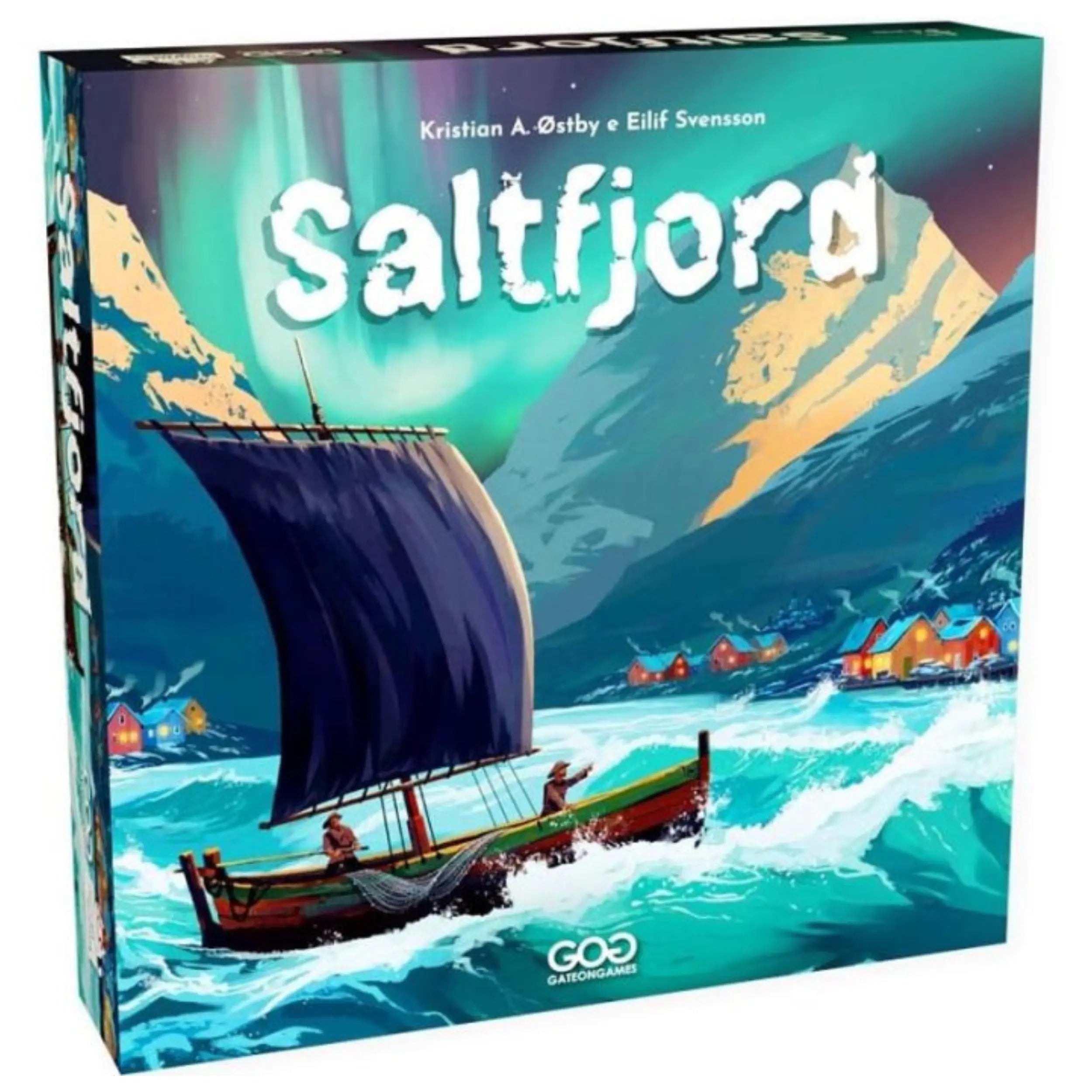
Designed by Kristian Amundsen Østby and Eilif Svensson (Bloodborne: The Card Game, Santa Maria), Saltfjord takes you to a fishing village in northern Norway. Late 19th century. Generations before you lived off the sea, but now new opportunities arrive: modern technologies, trade routes, constructions that change the pace of daily life. Art by Peter Bartels and Yan Moussu.
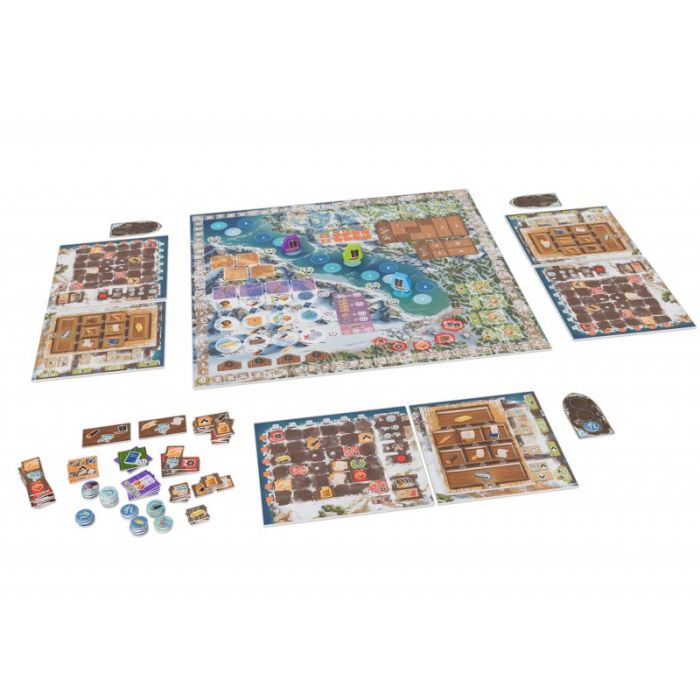
Build a grid of buildings, draft dice to activate them by rows and columns, send your boat fishing, advance on technology tracks, complete trade orders. Each die you choose activates an entire row or column: the more buildings you have built in that line, the more actions you take in one go. Three rounds to decide if your village will prosper or fall behind.
What they say abroad
Every die you choose is a choice of column or row. And every building built multiplies your options.
— FroGames
Variable setup, modular tech tracks, different end-game scoring tiles: no two games are ever the same.
— FroGames

Saltfjord
The game includes official solo rules with objectives to complete and a progressive scoring system. The experience is complete and retains all multiplayer mechanics, but it loses the competitive dice draft: you draw them from a pool and choose freely, which slightly reduces the tension.
FrogScore · FroGames editorial rating · based on rules, international reviews, and game sessionsThe village's tools
What you build, what you fish, what you unlock
Buildings
Build buildings in your grid. Each building activates when you draft a die from its row or column. The more buildings you build in a line, the more actions you take with a single die.
Worker dice
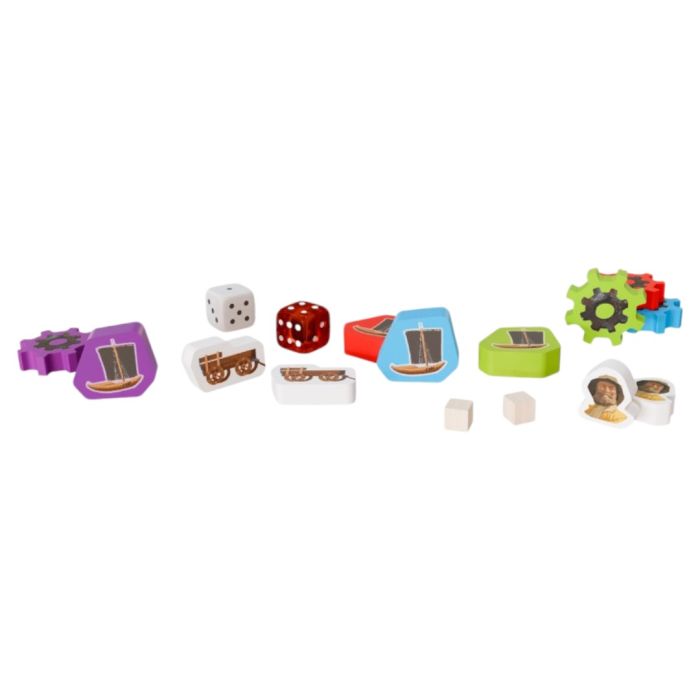
Classic draft: choose a die from the common pool, activate all buildings in the corresponding row or column. The chosen die becomes a worker placed on that building.
Technology tracks
Advance on tracks that unlock permanent abilities: improve your boat, gain extra resources, activate special powers. Each track is different every game.
Fishing boat
Send your boat to collect fish. The further you advance on the Fishing track, the more fish you collect. Fish are worth points and are used to complete trade orders.
In an hour you will have built a village that did not exist before. And every die you chose will have made the difference between a dead row and an unstoppable column.
A game in five moments
What happens at the table
Not the rules. The experience.
Empty grid, ambitious plans
Start of the game. Empty board, tech tracks to discover, final scoring tiles on the table. Everyone plans where to build their first buildings. The perfect grid only exists for the first 5 minutes, then the first die comes and you realize you haven't built anything in that column.
The first wrong building
Drafting the first dice. Someone builds two buildings in a vertical column and doubles the value of every future die. Someone builds isolated and wastes the turn. You immediately understand who understood the game and who is playing Tetris.
Tech race
Mid-game. The tech tracks begin to diverge: some upgrade their boat, some unlock bonus actions, some accumulate resources for trade orders. Dice are never enough. You want to do three things but you choose one, hoping to catch up in the next round.
The die that never comes
Final round. You've built a perfect column of four buildings, but the die that activates that column never comes out of the pool. You watch it come out for other players. You remain still. It's the most frustrating moment of the game, and it always happens to someone.
Silent counting
End of game. Fish points, completed trade orders, tech tracks, final objective tiles. Someone discovers they lost by two points because they forgot to advance on the boat. The winner is always the one who built the grid best, not the one who drew the most dice.
How to play
The flow of each round
Three identical rounds. Each round: draft dice, activate buildings, build, advance, fish.
Roll the dice into the common pool. In turn, each player chooses a die and places it on a building in the corresponding row or column. The die becomes a worker.
Activate ALL buildings in the row or column of the chosen die. Each activated building gives you resources, actions, advancements on the tracks. The more buildings you have built in a line, the more you get.
Use the collected resources to: build new buildings (expand the grid), send the boat fishing, advance on tech tracks, complete trade orders.
When all dice have been chosen, the round ends. Reset the pool, start the next round. After three rounds, final scoring.
Why it's different from others
Six mechanics that make a difference
Expanding grid
You don't have a fixed board. You build your grid of buildings from scratch. Each built building changes the value of every future die: a column of four buildings means four actions with a single die. The grid is your engine, and you build it yourself.
Smart dice drafting
Dice are not rolled randomly. They are drafted from a common pool, like in Santa Maria. But here, each die activates an entire row OR column, not a single building. Choosing the die is choosing which part of the grid to explode.
Modular tech tracks
The tracks you unlock are different in each game. Variable setup: special abilities, permanent powers, progressive bonuses. There is no optimal path, because the path changes every time.
Fishing as a resource
The boat is not decorative. You send it fishing, collect fish, use the fish to complete trade orders or convert it into final points. The further you advance on the Fishing track, the more fish you get. Those who ignore the sea fall behind.
Expiring trade orders
Available orders on the table: sets of required resources, points in exchange. You complete them when you want, but those who complete them first get the best points. Parallel race on public objectives.
Extreme variable setup
Different special abilities, different tech tracks, different final scoring tiles, different trade orders. Very high replayability: the game you learn in the first game is not the same as the one you play in the tenth.
How it ends
How to win
After three rounds, points are counted. The one who has best optimized their grid wins.
Victory points
- Fish collected and converted into final points
- Completed trade orders (who completes first gets more points)
- Advanced tech tracks and completed final objective tiles
- Built buildings and leftover resources (variable value according to objective tiles)
How you fall behind
- Building scattered buildings instead of in a line: each die activates little
- Ignoring tech tracks: others unlock permanent abilities, you fall behind
- Not completing trade orders: lost points and wasted opportunities
- Not sending the boat fishing: fish is points, and you have none
Saltfjord is a game of progressive optimization: every choice in the early rounds multiplies in the later ones. The one who builds the grid best always wins.
Frequently asked questions
FAQ about Saltfjord
Is it difficult to learn?
No. The basic mechanic (draft die, activate row/column) can be explained in 10 minutes. The depth emerges later: you understand that each built building changes the value of every future die. First game: 90 minutes with rules. From the second: 60 minutes.
How much does drafting luck matter?
Dice are drafted, not rolled blindly. But the common pool is random: if the die that activates your best column never comes out, you stay still. Strategy reduces variance but does not eliminate it. Those who build the grid well win even with mediocre dice.
Can it be played solo?
Yes, with official rules. You draw dice from a pool and choose freely (no competitive drafting), complete progressive objectives, try to beat your score. The experience is complete, but it loses the tension of drafting against other players.
Is it too similar to Santa Maria?
It shares dice drafting on a grid, but Saltfjord is completely different in the rest. Extreme variable setup, modular tech tracks, fishing boat, trade orders, no player trading. Santa Maria is drier, Saltfjord is more modular and deeper.
Is it available in Italian?
Yes. The GateOnGames edition is completely in Italian: rulebook, cards, tokens, boards. Everything localized.
Saltfjord is a strategy game with dice drafting and grid building for 1-4 players, lasting 45-90 minutes, recommended age 14+. Designed by Kristian Amundsen Østby and Eilif Svensson, published by GateOnGames in Italian edition. Each player builds a Norwegian fishing village through a grid of buildings activated by drafting dice. Mechanics: worker placement with dice workers, modular tech tracks, variable setup, trade orders, fishing as a resource. Very high replayability thanks to different special abilities and objective tiles in each game. Includes official solo mode. Available on FroGames.it.
Saltfjord
Frequently Asked Questions
The answers you're looking for, no beating around the bush.
📸Do the images match the actual product?
The photos on the website often come from BoardGameGeek and are intended to give you an idea of the game. They may vary slightly from the version you receive. The content declared by the publisher is always binding.
📦Does the content of the box match what is indicated?
We always strive to provide the correct content, but minor variations are possible due to reprints or updates. The information comes directly from the publishers. If you have any questions, please contact us!
⏳How do pre-orders work?
Pre-order the game before release, payment is immediate, and the game is reserved for you. As soon as it arrives, we'll ship it right away! If there are any delays, we'll update you promptly.
🔒Can I trust buying here?
Absolutely! Secure payments, tracked shipments, and a team that loves board games as much as you do. If something goes wrong, we'll do our best to fix it.
🛠There's a problem with my order, what should I do?
Write to us now! Whether it's a missing part, damage, or an error, we'll help you resolve it as soon as possible. Your experience truly matters to us.