
Mythical Dice
🐸 Dettagli da BoardGameGeek
Consiglio BGG sul numero di giocatori
Categorie
Meccaniche
Design & Art
Lingua
Si abbina bene con
FroGames — Moments You'll Remember
Someone swears they'll win all the tricks, someone aims for zero. The dice are rolled, someone curses. And in the end, everyone remembers that time the minotaur beat the griffon.
WHAT IT'S ABOUT
Predict chaos, then watch it blow up in someone's face
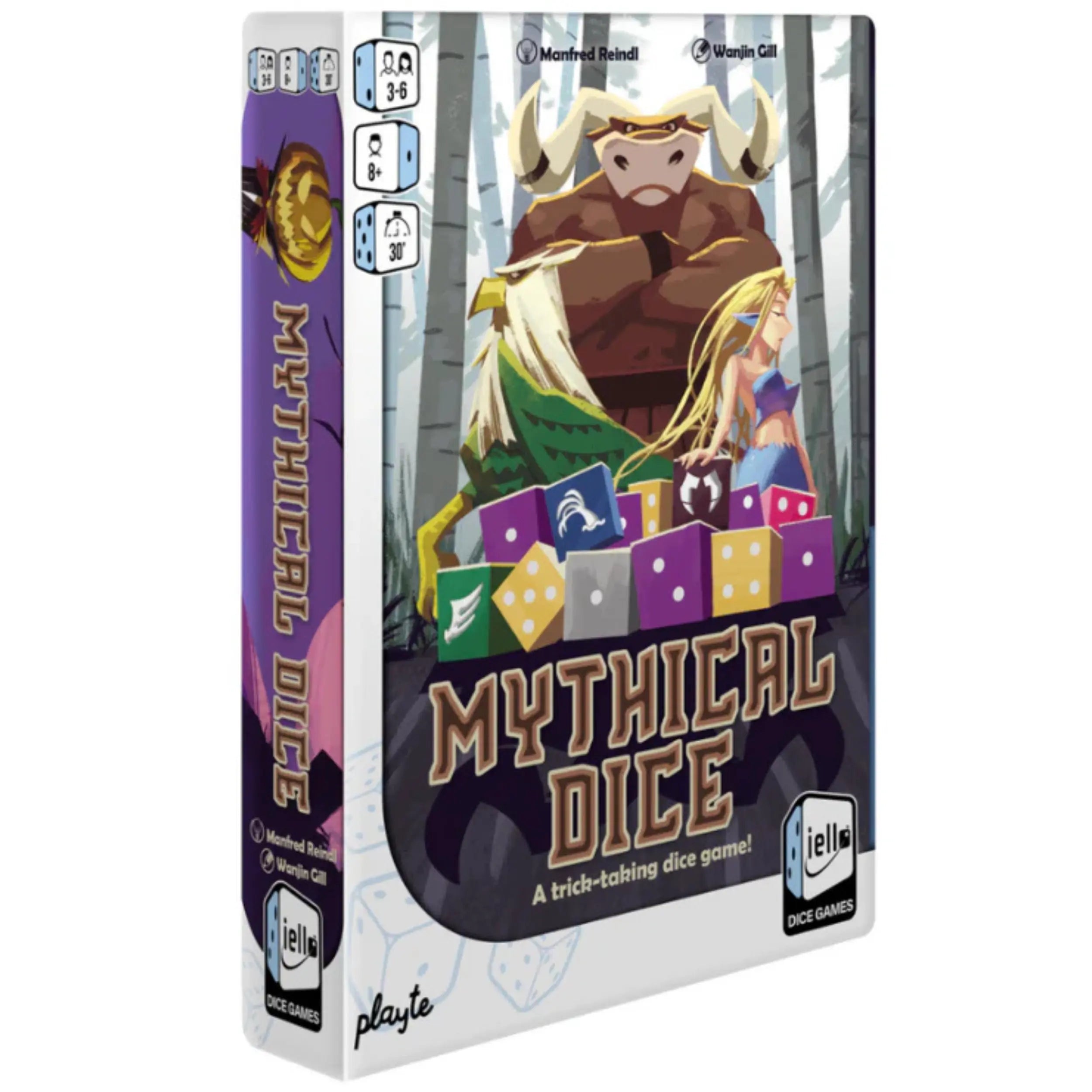
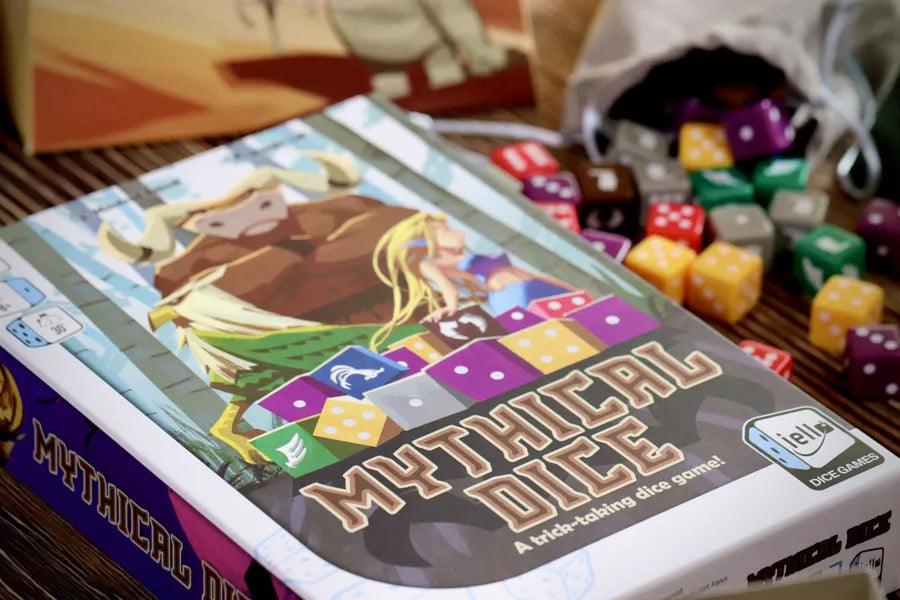
Mythical Dice (originally Skull King: Das Würfelspiel, later renamed Mino Dice) is the rebellious child of classic trick-taking. Manfred Reindl took the trick-taking mechanic, threw it into dice, and added minotaurs, griffons, and mermaids eating each other. Illustrated by Eckhard Freytag and Wanjin Gill, published by iello in 2016.
Each hand, you draw dice from the bag, keep them secret, and declare how many tricks you think you'll win. Then you roll: colored numbers, creatures beating other creatures according to rock-paper-scissors rules, flags worth zero. The twist is you don't control the dice before declaring: you predict blindfolded, then chaos decides if you were right or utterly wrong.
What they're saying abroad
It's the dice version of Skull King, but with mythological creatures devouring each other. The cool thing is you declare before you even know what you have.
— FroGames
Every hand is a gamble. Every roll is a prayer. Every trick won or lost makes you recalculate everything. Then you start over.
— FroGames

Mythical Dice
FrogScore · FroGames editorial rating · based on rules, international reviews, and gameplay sessionsThe dice of myth
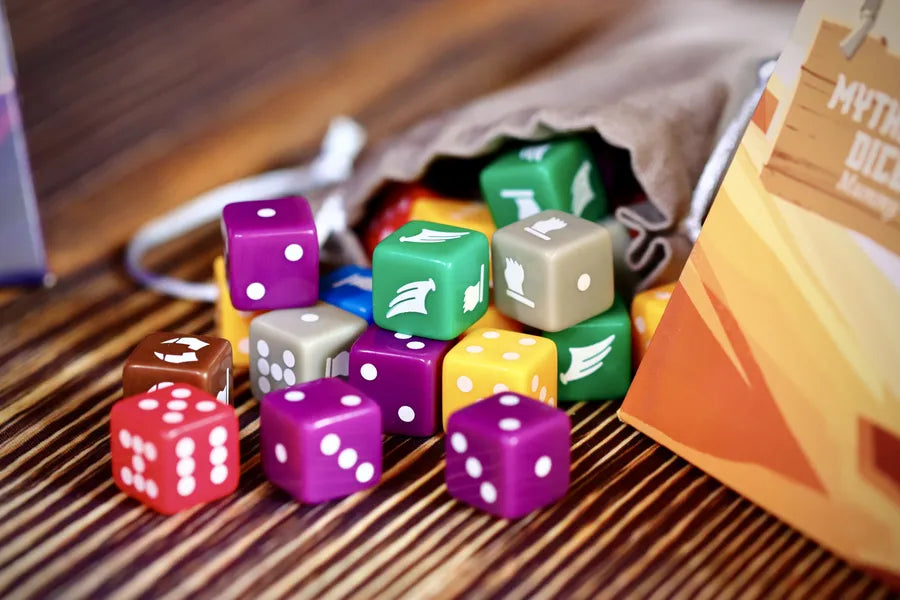
What comes out of the bag
Minotaur
Beats the griffon, loses to the mermaid. If you capture it with a mermaid without hitting flags, 50 bonus points. It's the riskiest and highest-paying die.
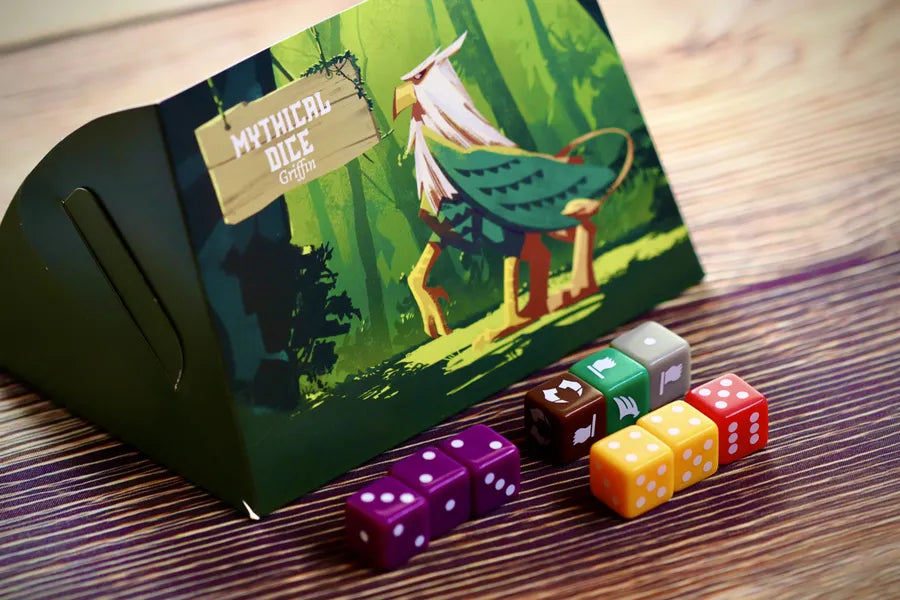
Griffon
Beats the mermaid, loses to the minotaur. Capturing it with a minotaur (no flags) is worth 30 points. Less explosive than the minotaur, but still tense.
Mermaid
Beats the minotaur, loses to the griffon. It's the most cunning creature: it can flip a trick when everyone thought the minotaur would win easily.
Numbered dice
Four colors, various values. You must follow the color of the first die rolled, if possible. If no one plays creatures, the highest number wins. Flags are worth zero and ruin everything.
In half an hour, someone will have declared zero tricks and won, someone else will have declared five and taken six. And everyone will remember that roll.
Come si gioca
Video dimostrativo di gameplay.
A game in five moments
What happens at the table
Not the rules. The experience.
The lying bag
You draw your dice, keeping them behind your screen. You look at what you have: three red numbers, a minotaur, a mermaid. Everyone declares how many tricks they think they'll win. Simultaneously. You say three. The player to your right says zero. Someone is already laughing.
The first trick is always a bluff
The first player rolls a red die, gets a 4. You must follow suit, rolling red: 2. Someone rolls a griffin. The griffin beats all numbers. The player who declared zero curses: they wanted to lose, but instead won. Chaos begins.
Someone only draws flags
Mid-game. Tricks accumulate. Someone declared five and has already won six: each extra trick costs 10 points. Another player rolls the flag: it's worth zero, always loses. A sigh of relief or despair, depending on what they declared.
The bonus that changes everything
A player captures a minotaur with a mermaid. No flags in tricks taken so far: this is worth a 50-point bonus. Suddenly, they're in the lead. Everyone recalculates: that bonus is worth more than three correctly predicted tricks. The game turns around in one roll.
The final count is a verdict
Last hand, six dice each. Everyone declares, everyone rolls. Someone finishes perfectly: six tricks declared, six won, 120 points. Someone else was off by two: minus 20. The one who played zero and held it, smiles. The winner isn't the one who won the most tricks: it's the one who predicted best.
How to play
The flow of each hand
A game lasts 6-8 hands (depending on the number of players). Each hand is a cycle: draw, declare, tricks, score.
Each player draws a number of dice from the bag equal to the hand number (hand 1 = 1 die, hand 5 = 5 dice). They keep them secret behind their screen.
Everyone simultaneously declares how many tricks they think they'll win, by showing fingers. It's written down: that declaration is binding.
The first player rolls a die. Others must follow suit (if they have numbered dice of that color), or roll creatures or whatever they have. The one who gets the highest result (or the dominant creature) wins the trick and leads the next.
If you declared correctly: 20 points per trick. If you were wrong: minus 10 points for each trick of difference (above or below). A correctly predicted zero is worth 10 points per trick in the hand. Bonuses for special captures without flags.
Why it's different from others
Six mechanics that make a difference
Blind bag
You don't build your deck: you draw randomly from the bag. You might get five strong dice or five flags. The luck of the draw changes the game before it even begins, and that's the point.
Declare before you know
You have the dice, yes, but you haven't rolled them yet. You declare how many tricks you want to win based on hazy probabilities. Then you start rolling and discover that minotaur was worth less than you thought.
Rock-paper-scissors creatures
Minotaur beats griffin, griffin beats mermaid, mermaid beats minotaur. All three beat numbers. It's rock-paper-scissors applied to tricks, and it changes the table hierarchy with every roll.
Flags ruin everything
A flag is worth zero. Always. If you roll it, you lose the trick. But most importantly: if you capture even one flag in your tricks, you lose all special capture bonuses. It's the cursed die.
Explosive bonuses
Capturing a minotaur with a mermaid (without flags) is worth 50 points. Capturing a griffin with a minotaur is worth 30. These bonuses are worth more than two correct hands. They change the game in one stroke.
Mistakes are costly
You declare three tricks, win five: minus 20 points. You declare zero, win one: minus 30 (10 points per trick in the hand, and you won one). The punishment is proportional to the hand: in long hands, making a mistake sinks you.
How it ends
How to win and how to lose
At the end of the last hand, whoever has the most points wins. But the score is volatile: a 50-point bonus in the last hand can turn everything around.
Victory
- Correctly predicting declarations: 20 points per trick, every hand. Those who make few mistakes climb the ranks.
- Capturing creatures with bonuses without flags: 50 points (mermaid on minotaur) or 30 (minotaur on griffin) change the game.
- Playing zero and holding it: in long hands (6-8 dice), a correctly predicted zero is worth 60-80 points. It's the riskiest and most rewarding move.
Elimination or defeat
- Slightly wrong declarations: minus 10 points for each trick off. Two errors per hand and you're always in the negative.
- Bad draw from the bag: five flags in one hand? Good luck winning zero tricks. The die is cruel.
- Capturing flags when aiming for bonuses: just one flag in your tricks and you lose the minotaur's 50 points. It's a blow to the heart.
It's trick-taking where the luck of the bag matters as much as your ability to read the chaos. For those who love to declare, roll, and discover they got everything wrong.
Frequently asked questions
Mythical Dice FAQ
Is it a game of luck or skill?
Both, but luck accounts for 70%. You draw random dice, roll them, something comes out. You can count the remaining colors in the bag and make conservative declarations, but a skewed die can still ruin you. Skill lies in calibrating declarations and managing the risk of bonuses.
Does it work well with 3 players or do you need a full table?
It works best with 4-6 players. With 3, you can play, but the chaos and cross-declarations lose some punch. With 5-6, hands become longer, mistakes cost more, and someone always declares zero out of despair. A full table is its habitat.
Are the creature rules hard to remember?
No. Minotaur beats griffin, griffin beats mermaid, mermaid beats minotaur. It's rock-paper-scissors. After the first hand, everyone knows it by heart. The real problem is remembering that flags cancel bonuses: that's what truly hurts.
How long does a game actually last?
Exactly 30 minutes. 6-8 hands, each hand lasting 3-4 minutes (declaration, trick, scoring). It's a fast filler, but with enough weight to leave scars. It's not a 10-minute party game, but not an evening-long commitment either.
Is it available in Italian?
No, this iello edition is in English. But language dependence is minimal: the dice have symbols (creatures, numbers, colors), you read the rulebook once and that's it. After the first game, you play without consulting anything.
Mythical Dice is a dice-based trick-taking party game for 3-6 players, lasting 30 minutes, ages 8+. Designed by Manfred Reindl, published by iello, it combines trick-taking mechanics with dice rolling and mythological creatures (minotaurs, griffins, mermaids) that battle according to rock-paper-scissors rules. Players draw dice from a bag, declare how many tricks they expect to win, then roll and discover if they were right. Correct declarations give 20 points per trick, errors cost 10 points per difference. Capturing a minotaur with a mermaid (without flags) is worth a 50-point bonus. It's chaotic, fast, and rewards intelligent risk-taking. Available on FroGames.it.
Mythical Dice
Frequently Asked Questions
The answers you're looking for, no beating around the bush.
📸Do the images match the actual product?
The photos on the website often come from BoardGameGeek and are intended to give you an idea of the game. They may vary slightly from the version you receive. The content declared by the publisher is always binding.
📦Does the content of the box match what is indicated?
We always strive to provide the correct content, but minor variations are possible due to reprints or updates. The information comes directly from the publishers. If you have any questions, please contact us!
⏳How do pre-orders work?
Pre-order the game before release, payment is immediate, and the game is reserved for you. As soon as it arrives, we'll ship it right away! If there are any delays, we'll update you promptly.
🔒Can I trust buying here?
Absolutely! Secure payments, tracked shipments, and a team that loves board games as much as you do. If something goes wrong, we'll do our best to fix it.
🛠There's a problem with my order, what should I do?
Write to us now! Whether it's a missing part, damage, or an error, we'll help you resolve it as soon as possible. Your experience truly matters to us.