

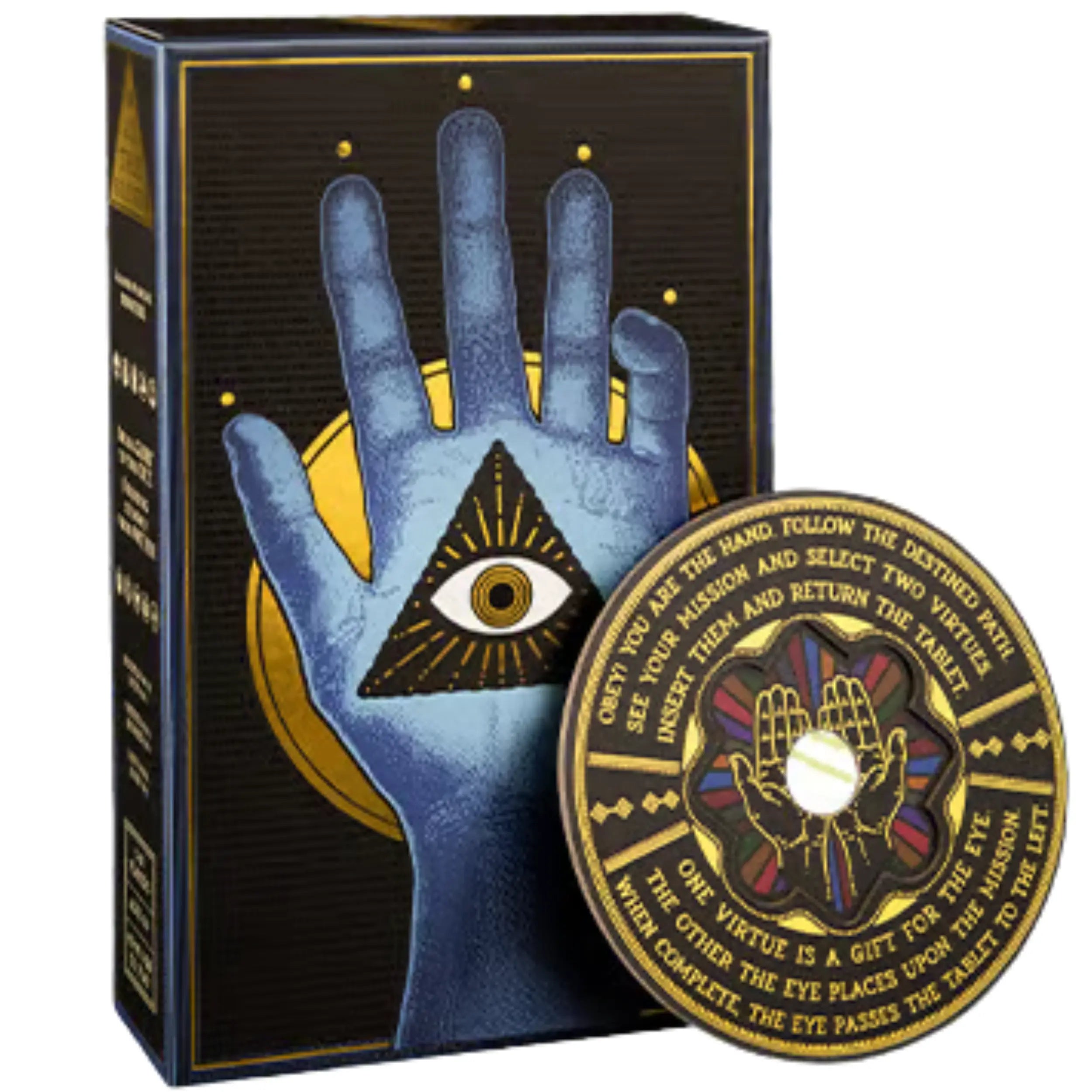

All True Believers
🐸 Dettagli da BoardGameGeek
Consiglio BGG sul numero di giocatori
Categorie
Meccaniche
Design & Art
Lingua
Pre-order - leggi i dettagli
🐸 Una rana saggia sa quando dividere l’ordine… e quando aspettare il salto giusto.
Pairs well with
FroGames — Moments You'll Remember
The hand passes the tablet. The Eye chooses. The mission fails. And someone at the table starts to doubt everyone.
WHAT IT'S ABOUT
A cult, a tax mission, and infiltrators among the faithful
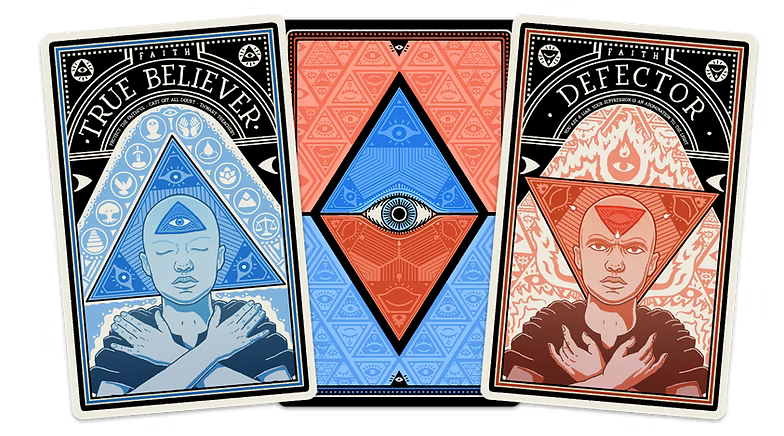
Designed by Ben Bronstein and Jade Shames for Pillbox Games, All True Believers puts you in the shoes of members of a mysterious organization called The Order. The goal? Complete enough missions to gain tax-exempt religious status. The problem? Some of you are Defectors who want to sabotage everything.
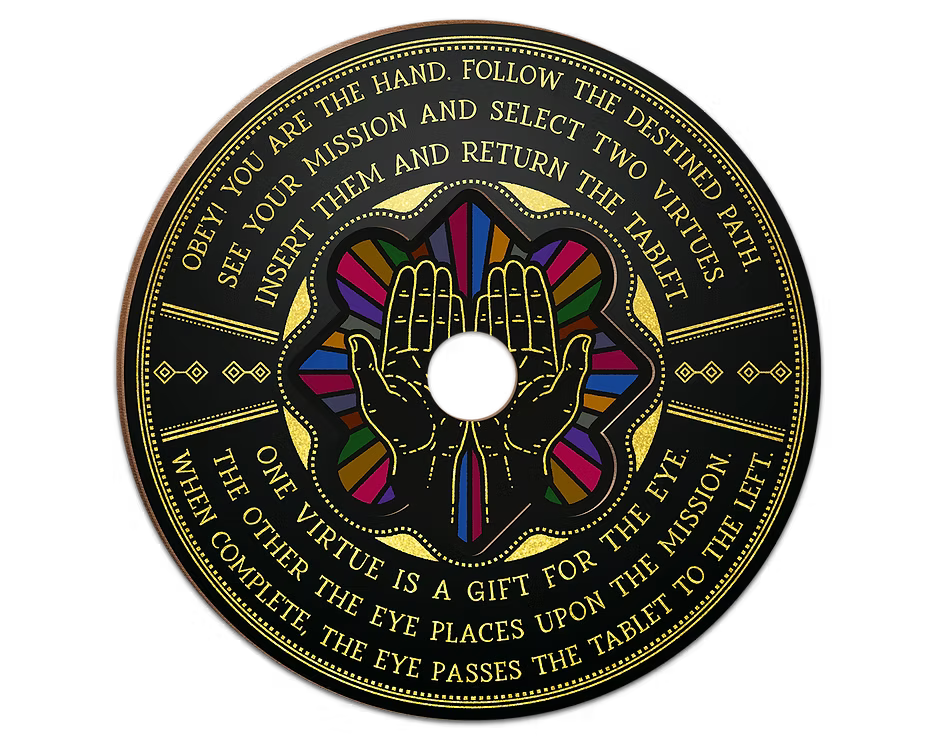
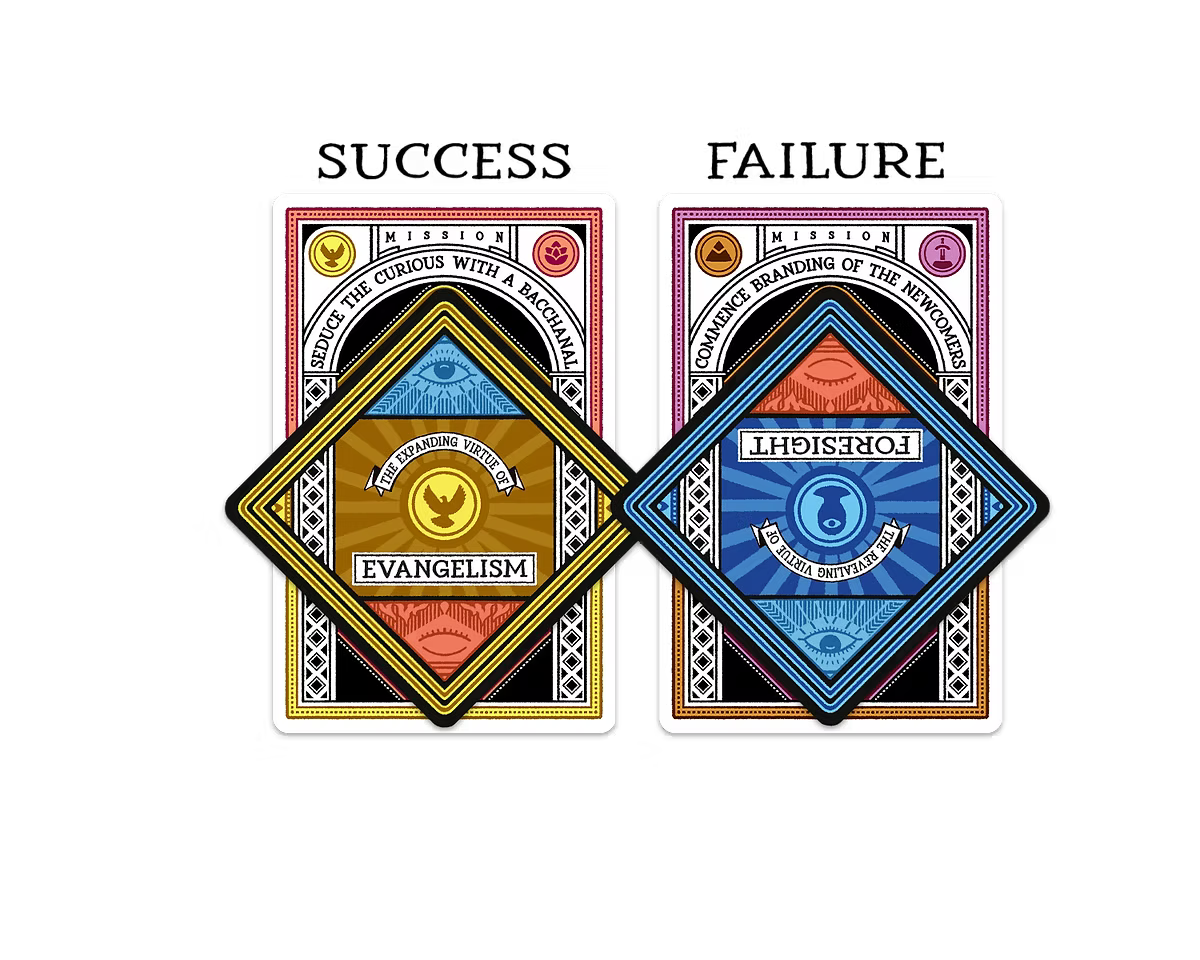
Each round, the cult's Eye chooses a Hand. The Hand places two Virtue cards in a tablet and passes it to the Eye. The Eye chooses one for the mission. If the virtue matches the requirements, the mission succeeds. Otherwise, it fails. Meanwhile, you can recruit Disciples with special powers, play Shame cards to eliminate suspects, and three times per game, awakened Defectors place Crises of Faith to sow chaos. Strategy, deception, trust and paranoia mix until the end.
What they say abroad
All True Believers blends trust and betrayal with a mechanical elegance rare in social deduction games.
— FroGames
The tension builds slowly, then explodes when you realize who sabotaged the critical mission.
— FroGames

All True Believers
FrogScore · FroGames editorial rating · based on rules, international reviews, and play sessionsThe cult's tools
Cards, tablet, and crises of faith
Virtue Cards
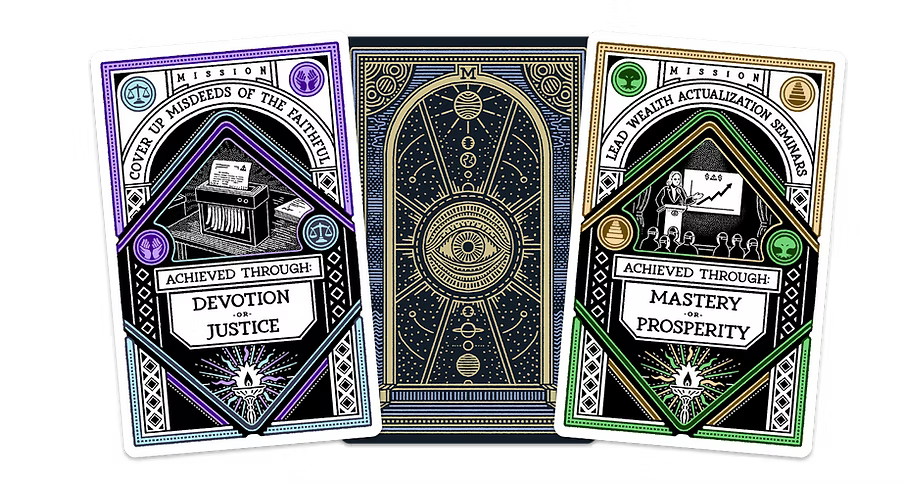
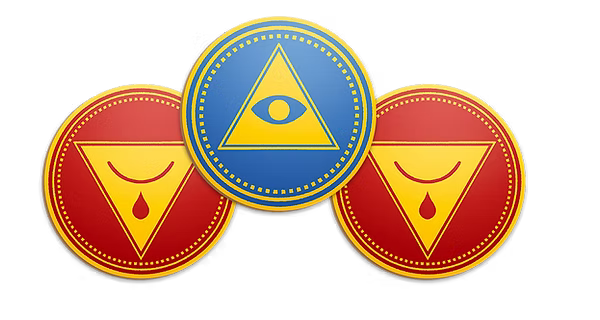
They are the currency of the game. You use them to complete missions, recruit Disciples, and demonstrate (or feign) your loyalty. Two cards in the tablet, one chosen by the Eye: everything starts here.
Mission Cards
Each mission requires a specific Virtue. If the Eye receives it, success. If not, failure. Three too many failures and the Defectors win. The tension rises with each revelation.
Disciple Cards
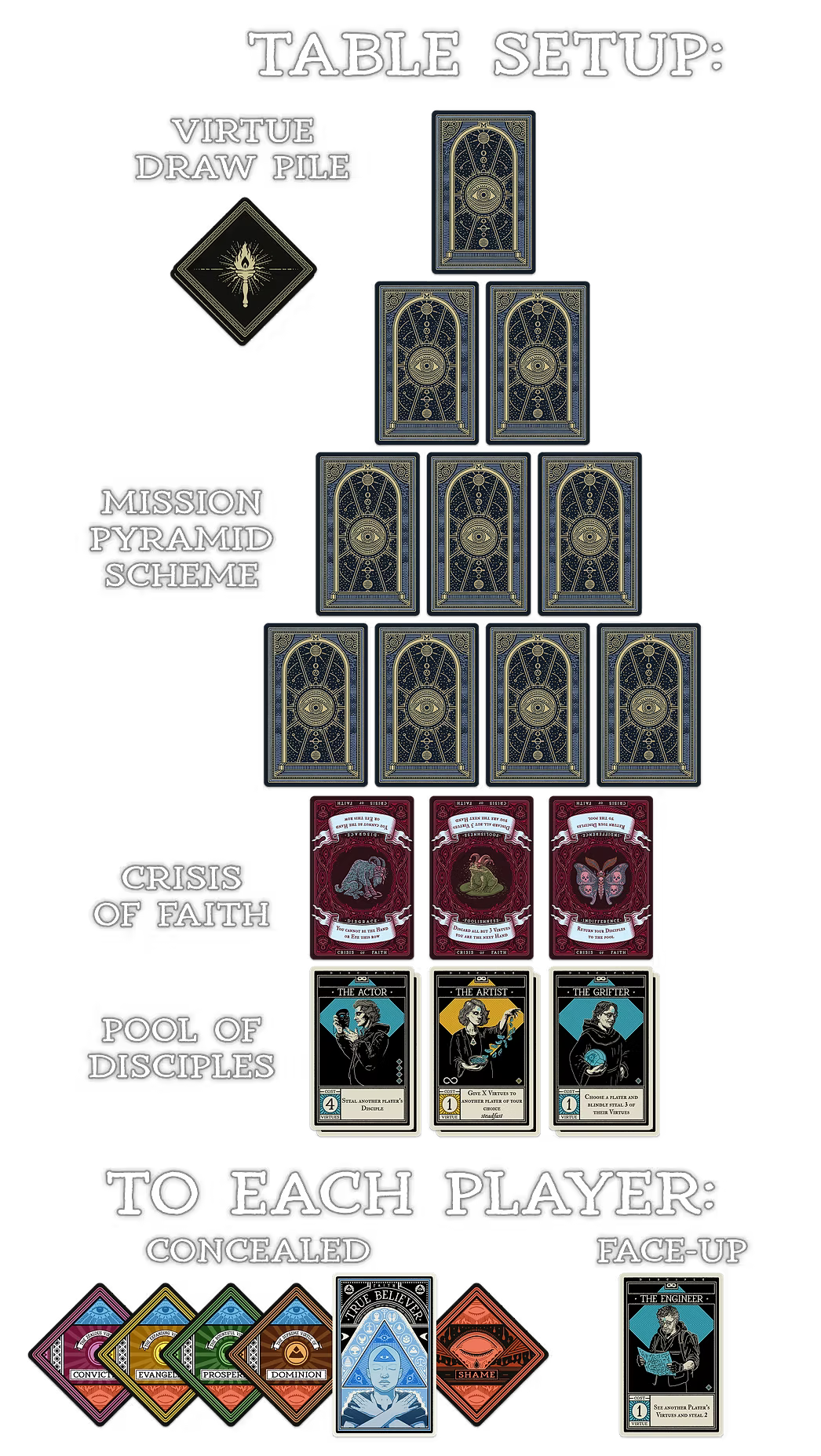
Special powers that break the rules: you look at hidden cards, force choices, protect allies. They are bought by discarding Virtues during the Call for Disciples. Whoever gets them first changes the game.
Shame and Crisis Cards
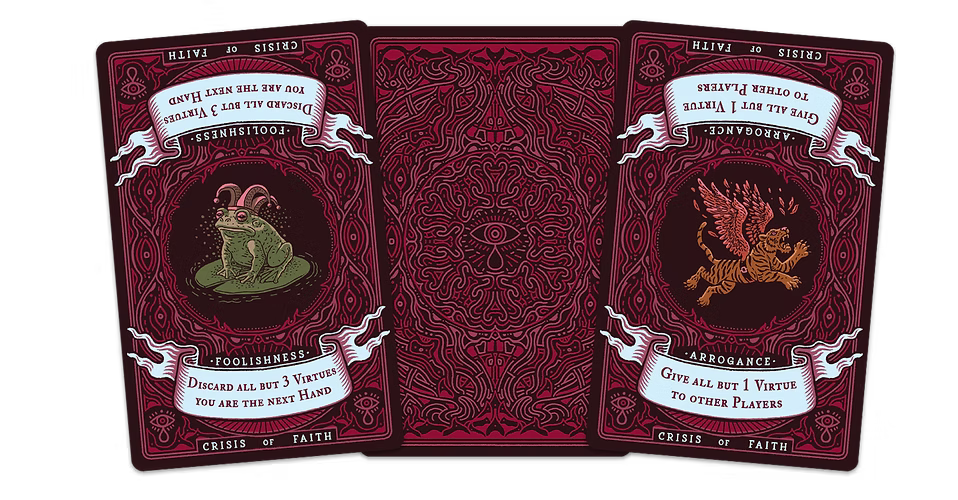
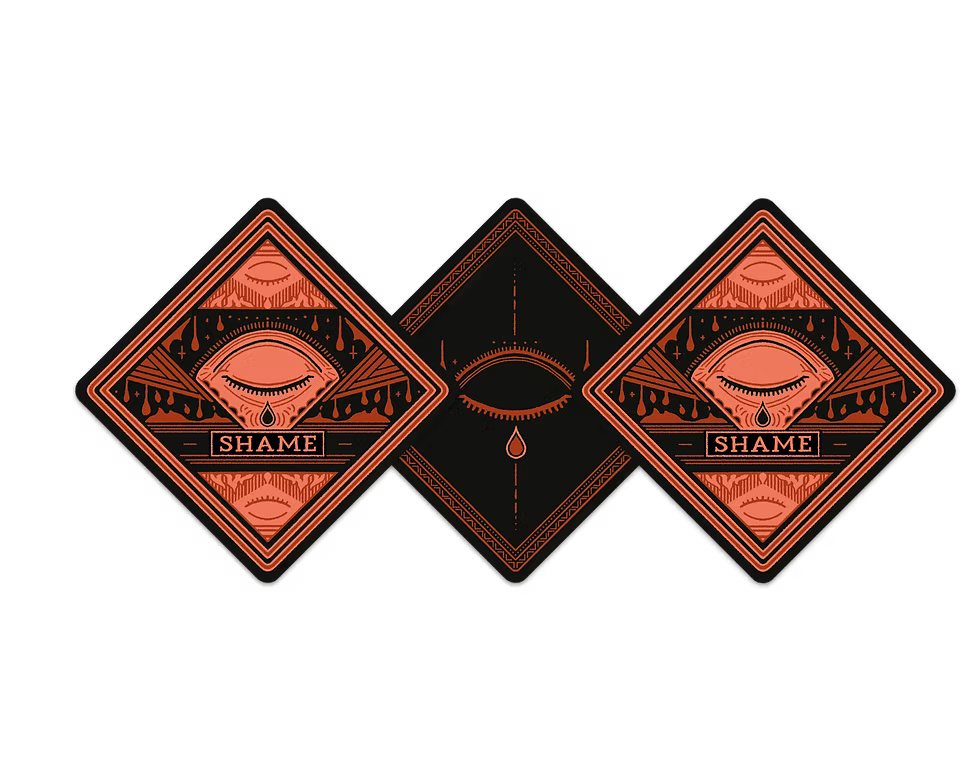
Three Shame cards on a player and they cannot be the Hand for a while. Crises of Faith are placed by Defectors with their eyes closed: they sabotage, accuse, sow chaos. No one knows who placed them.
In the end, you'll understand who lied, who protected, and who betrayed. Or maybe not.
Come si gioca
Video dimostrativo di gameplay.
A game in five moments
What happens at the table
Not the rules. The experience.
The Order Gathers
Receive your secret roles. Close your eyes. The Defectors silently identify each other. Open your eyes. Everyone smiles. No one trusts. The first mission is simple, but someone already plays the wrong card. By mistake?
The First Cracks
A mission fails. The Eye accuses the Hand. The Hand swears the cards received were wrong. Someone buys a powerful Disciple too early. Shame cards start circulating. Paranoia rises.
The First Crisis of Faith
Everyone closes their eyes except the Defectors. Silence. A Crisis card appears in front of someone. Eyes open. The victim reads aloud: devastating effect. No one knows who placed it. Accusations fly, but the Defectors seem innocent.
The Moment of Truth
Six missions completed, four failed. The next one decides everything. The Eye is a sure loyalist. The Hand... maybe. Cards rotate in the tablet. The Eye chooses. Everyone holds their breath. The card is revealed. Failure. The table explodes.
The Final Revelation
Successes and failures are counted. Roles are revealed. The Defectors triumph (or are unmasked). Someone shouts "I KNEW IT!". Someone else was loyal and seemed like a traitor. Start again immediately: you must have revenge.
How to play
The flow of each round
Each round follows a simple structure: selection of the Hand, revelation of the Mission, passing of the tablet, decision of the Eye.
The Eye of the cult (rotating role) nominates a player as its Hand for this round. The Hand will be responsible for selecting the cards to send.
Before the mission, players can discard Virtue cards to buy Disciples from the market. Disciples grant special powers: looking at cards, forcing choices, protecting allies. It's also the time to play Shame cards against other players.
The Mission card is revealed: it shows which Virtues are needed for success. The Hand chooses two Virtue cards from their hand, places them in the tablet, and passes it to the Eye without revealing them to others.
The Eye sees the two cards, chooses one to place on the Mission (the other returns to the Hand). The chosen card is revealed: if it matches the requirements, mission successful. Otherwise, failure. Accusations begin. The role of Eye passes to the next player.
Why it's different from others
Six mechanics that make a difference
Asymmetrical Eye-Hand System
It's not "vote who to send on a mission". The Eye chooses the Hand, but the Hand controls the cards. Double layer of trust: you must believe the Hand gives you good cards, and that the Eye chooses the right one. When it fails, who do you accuse?
The tablet hides choices
The two Virtue cards travel in the tablet (or opaque envelope) without anyone but the Eye and Hand seeing them. No one knows if the Hand sabotaged or if the Eye chose poorly. Ambiguity is part of the design, not a bug.
Crisis of Faith with eyes closed
Three times per game, everyone closes their eyes except the Defectors. They place Crisis cards in front of other players. Devastating effects: cards discarded, powers denied, suspicions amplified. And no one knows who placed them. The timing of Crises can destroy strategies.
Disciples with asymmetrical powers
They are not just passive bonuses. Some Disciples let you look at the cards in the tablet. Others protect you from Shame. Still others force the Eye to choose both cards. Who buys what reveals strategies (or deceives).
Shame system as social voting
Three Shame cards on a player and they cannot be Hand for three rounds. It's a temporary elimination mechanism: the group can silence those who seem suspicious. But the Defectors can use it to eliminate key loyalists and cast suspicion on others.
Mixed victory condition
It's not enough to complete missions: you must have more successes than failures. Every failure matters. And Defectors must not only sabotage: they must do it without being discovered enough to be excluded from the Hands. Tension rises linearly until the last mission.
How it ends
How to win and how to lose
The game ends after a predetermined number of missions. Successes and failures are counted, then secret roles are revealed.
Victory of the True Believers
- More successful missions than failed: the loyalists protected The Order and achieve tax status
- The Defectors were isolated or rendered ineffective by Shame cards at the critical moment
- The group identified and neutralized Crises of Faith without being sabotaged
Victory of the Defectors
- More failed missions than successful: the Defectors sabotaged enough to block The Order
- Crises of Faith were placed on key players at the right moments
- Loyalists accused each other enough to lose coordination and trust
All True Believers is not just about "who is the traitor". It's a game of trust built and destroyed round after round, where every choice leaves traces and every failure generates suspicion. For groups who enjoy well-dosed social paranoia.
Frequently asked questions
FAQ about All True Believers
Does it work well with fewer than 7 players?
The game starts at 5, but the optimal experience is with 6-8 players. With 5-6, the dynamics are more readable and Defectors have less room to hide. With 8-10, chaos and paranoia explode, but downtime can lengthen. If your regular group is 5-6, it works. If you occasionally have 8+, it shines.
Is it just a clone of The Resistance or Avalon?
No. The Resistance uses collective voting for missions: here there's the asymmetrical Eye-Hand system that creates double layers of trust. Crises of Faith add active sabotage with eyes closed. Disciples break symmetry. Shame cards are a direct social vote. Same family (social deduction with missions), different mechanics, different tension.
How much does bluffing count compared to pure deduction?
Both matter. Defectors must actively bluff: placing wrong cards in the tablet, setting Crises, accusing others. Loyalists must deduce from patterns: who buys which Disciples, who receives Crises, who fails missions as Hand. It's not poker (pure bluff) nor Sudoku (pure deduction): it's a balanced mix that rewards those who read people and patterns.
Can the Disciples' powers unbalance the game?
Some Disciples are very strong (looking at cards, forcing choices), but they cost Virtues: buying too many empties your hand for missions. And buying powerful Disciples too early marks you as suspicious. Defectors must balance: seem useful without revealing too much. The balance isn't perfect, but opportunity cost and social risk keep powers in check.
Is this edition available in Italian?
No, this is the English edition from Pillbox Games. The cards have text (Virtue names, Disciple effects, Crises of Faith), so understanding English is required. There is no official Italian edition at the moment. The rules are clear, but to play fluidly at least one player at the table must read and translate the cards during the first game.
All True Believers is a social deduction game for 5-10 players, designed by Ben Bronstein and Jade Shames for Pillbox Games, which blends hidden roles, secret missions, and bluffing mechanics in an unusual setting: a cult seeking tax status as a religion. Each game lasts 45-90 minutes and revolves around the asymmetrical Eye-Hand system: the Eye chooses the Hand, the Hand selects two Virtue cards to put in the tablet, the Eye chooses one for the mission. If it matches the requirements, success; otherwise, failure. But among the loyalists hide Defectors who sabotage, place Crises of Faith with eyes closed, and sow suspicion. With Shame cards to temporarily eliminate players and Disciples with asymmetrical powers, All True Believers offers escalating tension, measured paranoia, and deep social dynamics for groups who love to accuse, defend, and wonder who lied. Recommended age 14+, deduction and hidden roles mechanics, available on FroGames.it.
All True Believers
Frequently Asked Questions
The answers you're looking for, no beating around the bush.
📸Do the images match the actual product?
The photos on the website often come from BoardGameGeek and are intended to give you an idea of the game. They may vary slightly from the version you receive. The content declared by the publisher is always binding.
📦Does the content of the box match what is indicated?
We always strive to provide the correct content, but minor variations are possible due to reprints or updates. The information comes directly from the publishers. If you have any questions, please contact us!
⏳How do pre-orders work?
Pre-order the game before release, payment is immediate, and the game is reserved for you. As soon as it arrives, we'll ship it right away! If there are any delays, we'll update you promptly.
🔒Can I trust buying here?
Absolutely! Secure payments, tracked shipments, and a team that loves board games as much as you do. If something goes wrong, we'll do our best to fix it.
🛠There's a problem with my order, what should I do?
Write to us now! Whether it's a missing part, damage, or an error, we'll help you resolve it as soon as possible. Your experience truly matters to us.