
Road To Infamy Games (R2i Games)
Pop Art
🐸 Dettagli da BoardGameGeek
Consiglio BGG sul numero di giocatori
Categorie
Meccaniche
Design & Art
Lingua
Si abbina bene con
The FroGames Card
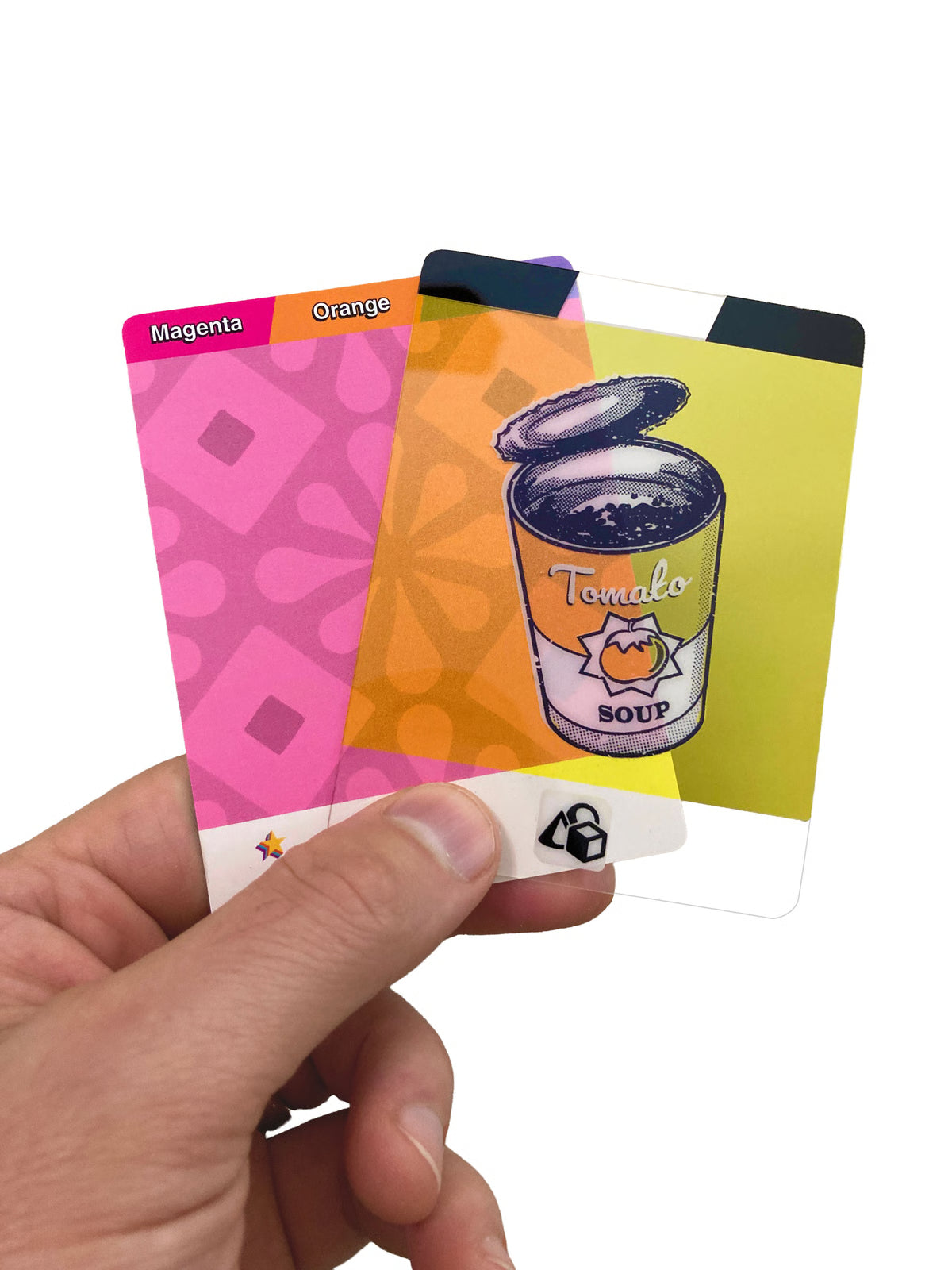
Overlay a foreground card onto a background. The colors blend, but it's the combination that generates your scoring objective. Choose poorly and you'll be chasing points you can't make.
WHAT IT'S ABOUT
Pop gallery, transparent silkscreens and objectives born from your mistakes
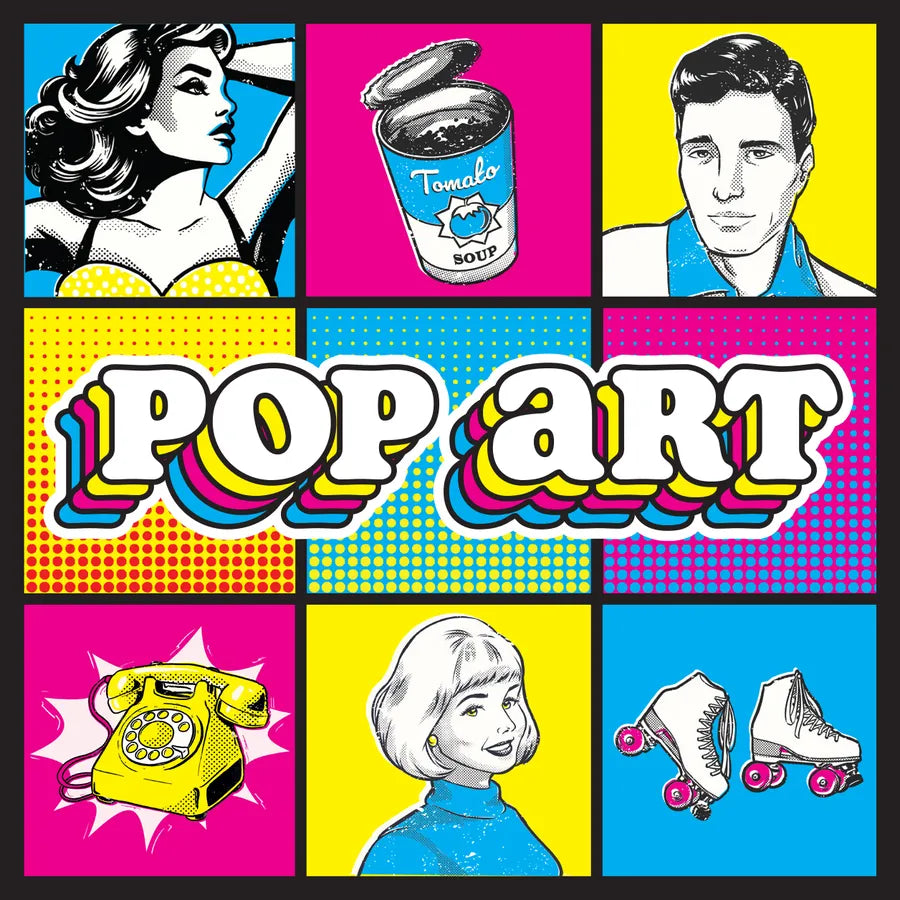
Jeff Chin and Andrew Nerger (old high school friends from Chicago, now at the helm of R2i Games) designed this small transparent card puzzle illustrated by Sarah Gabriela Farias. The theme is 60s pop art: build your silkscreen gallery by overlaying foreground and background to blend colors and shapes.
Each turn you choose two cards from your hand and overlay them in a 3×3 grid. The physical layering of the transparent cards changes the visible colors, but the real twist is that the combination you choose also generates the scoring objective for that cell. You pass the remaining cards to the left, draw, repeat. At the end of the grid, the player who has built the tableau that best meets their self-created objectives wins.
What they say abroad
"If you're looking for a really easy-to-learn, but thinky game with really cool artwork, definitely check out Pop Art."
If you're looking for a really easy-to-learn, but thinky game with really cool artwork, definitely check out Pop Art.
— R2i Games
First look at a small card crafter that promises simple mechanics and crunchy decisions. As soon as more games come out, we'll verify if the layering system maintains tension or becomes a dull calculation.
— FroGames

Pop Art
Solo mode is included in the basic rules (min 1 player). There is no automa: you build the 3×3 grid by drawing and discarding cards according to a modified draft system. It loses the social element of card passing, but the core puzzle (layering + objectives) remains intact.
FrogScore · FroGames editorial rating · first impression: based on rules and official presentation, updated with first playsYour tools
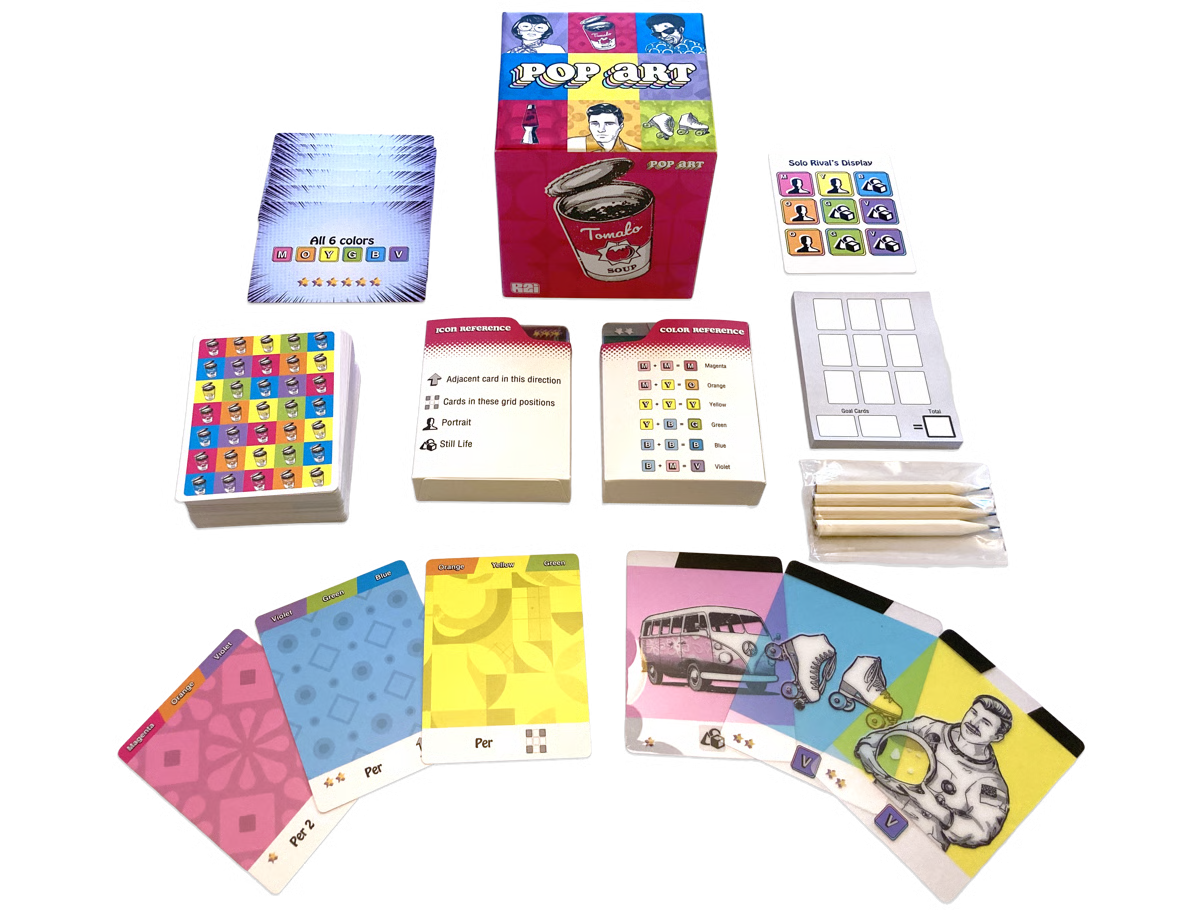
What's in the gallery
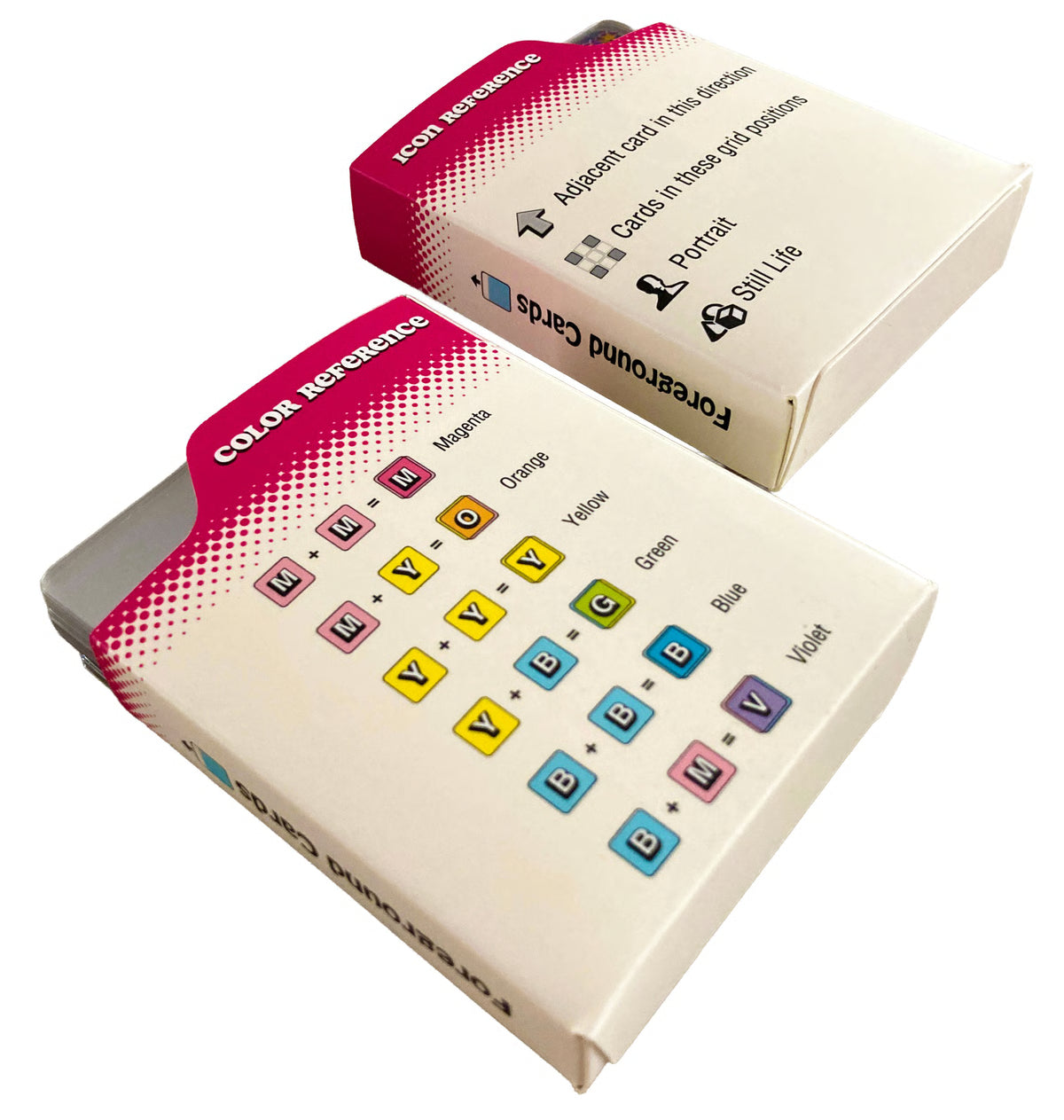
Foreground Cards
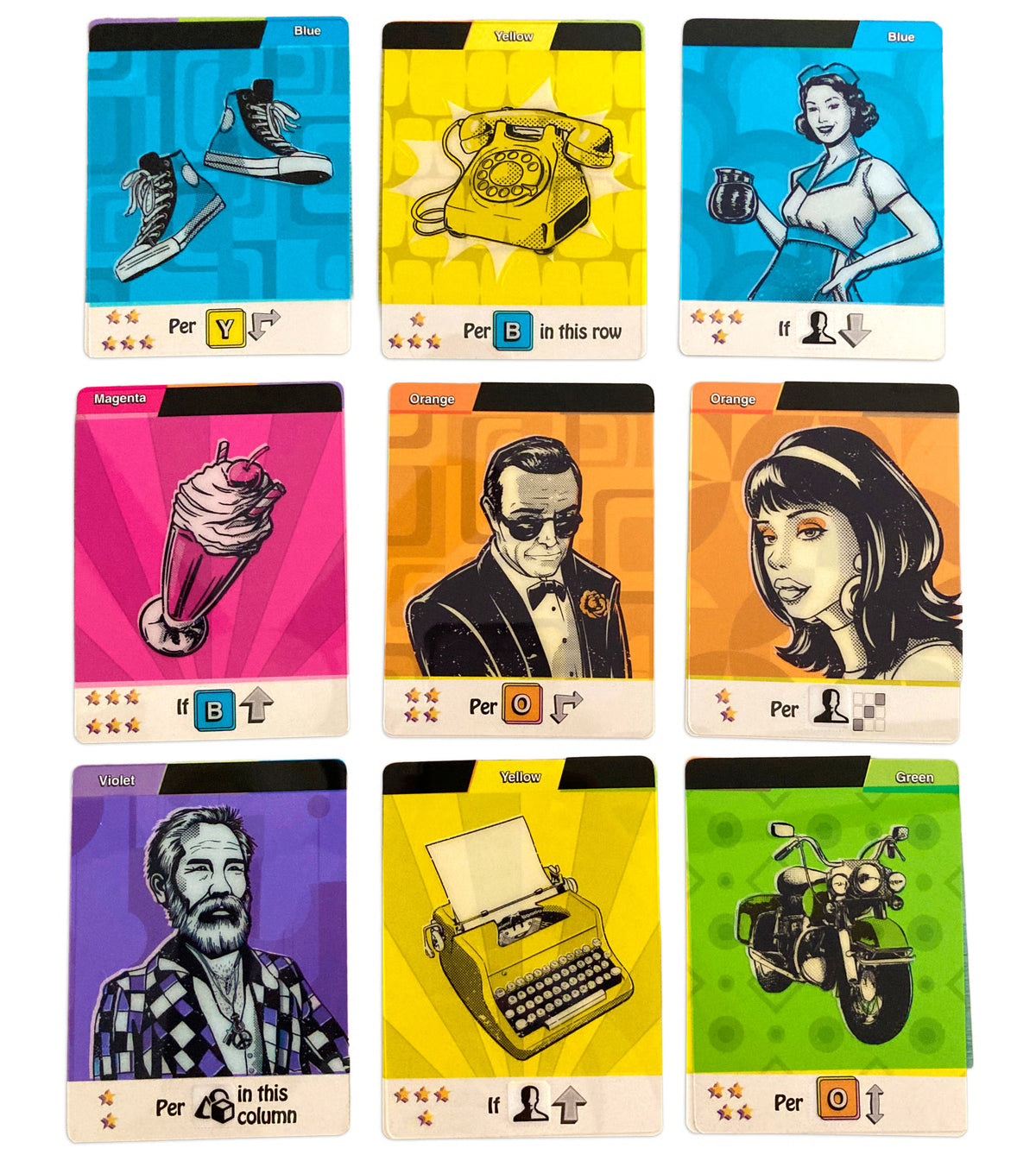
Transparent cards with subjects and shapes. When overlaid on a background, they change the visible colors and define which objective you must pursue in that cell.
Background Cards
The chromatic base. Each background brings colors and patterns that, combined with the foreground, create your final silkscreen and activate the scoring criteria.
Artist Tool Cards
Special cards that modify the draft or give you extra abilities during tableau building. Few, but they can turn a difficult turn around.
Paint Bucket Tokens
Tokens that track completed colors or serve as markers in advanced mode. Small, functional, keep scoring clear.
Come si gioca
Video dimostrativo di gameplay.
🎲How to playThe rules in four steps▼
How to play
The flow of each round
Pop Art is a loop of three actions repeated until the grid is complete. No complex phases, it's all about choosing-layering-passing.
From your hand, select one foreground and one background card. See which colors will be visible after layering and which scoring objective that combination will activate.
Physically place the foreground card over the background card in your 3×3 grid. The colors blend, the objective is set. That cell now counts towards the final score.
Pass the remaining cards to the player on your left. Receive cards from the player on your right. The draft tightens, choices become more constrained.
Draw new foreground and background cards from the deck. Repeat the process until all nine cells are filled. When everyone has completed their grid, scores are tallied.
⏱️Your first gameThe chronicle, moment by moment▼
A game in five moments
What happens at the table
Not the rules. The experience.
The starting hand
You draw foreground and background cards, looking at possible combinations. Each pair generates a different objective: you must already imagine the final grid as you choose the first cell. Someone smiles, someone recalculates.
The first layer
You physically layer the transparent cards. The colors blend before your eyes, the illustration changes. The objective you just created forces you to look for those colors in the next cells. The grid starts to speak.
The draft tightens
You pass cards to the left, receive them from the right. Options decrease, you must adapt. That perfect card you hoped to get back is gone. You change your plan, pursuing secondary objectives.
The desperate fit
Two cells remain. You have an objective that requires three reds, but the reds you've already placed don't match. You choose whether to force the maximum score or play it safe with a minor combo. Someone at the table curses softly.
The tally
The 3×3 grid is complete. You check which objectives you have met, color by color, pattern by pattern. Someone wins by one point. Someone else had the perfect combo but placed it poorly. You'll end up replaying it immediately.
🐸Good to know beforehandThree honest things, from friends▼
Good to know beforehand
Three honest things
Mental setup curve
The first two games will take you twice as long as stated. You need to learn to visualize the layering and understand which objective combos are truly valuable. It becomes automatic afterward, but the initial impact slows things down.
Draft dependent
If the draft denies you the colors you need, you might find yourself completing objectives halfway. Luck in drawing cards matters, especially with many players. It's not pure calculation: cards circulate, you have to adapt.
Indirect interaction
Everyone builds their own grid. There's no true competitive draft (like 7 Wonders): you pass cards, but you don't actively choose what to deny others. Those seeking direct confrontation will be disappointed.
🏆Victory and defeatWhat the ending rewards▼
How it ends
How to win and how to lose
The game ends when all players have completed their 3×3 grid. Points are counted based on the objectives generated by card combinations.
Victory
- Maximize the number of fulfilled objectives (colors, patterns, visible illustration types)
- Build card combos that activate multiple objectives across several cells
- Plan the draft to secure key colors for the final cells
Fatal errors
- Placing early game without considering compatibility with future objectives
- Chasing a single high-value objective while ignoring sure points in other cells
- Passively enduring the draft without adapting the plan when the right cards don't arrive
Pop Art thrives on the tension between the perfect plan in your head and the cards you actually receive. The winner is the one who adapts best, not the one who dreams biggest.
💬Frequently asked questionsQuick answers before checkout▼
Frequently asked questions
Pop Art FAQ
Do the transparent cards get damaged easily?
They are transparent plastic cards, so they are more durable than regular cards. That said, they can scratch if you layer them with too much force or store them poorly. Use transparent sleeves if you want to preserve them for a long time, but for normal use, they hold up well.
Does it really scale well up to 8 players?
Gameplay is simultaneous (everyone builds their own grid), so game time doesn't explode with more players. The issue is table space: with 8 people, you need room for eight 3×3 grids plus the central deck. If you have it, it works. Otherwise, the ideal configuration is 2-4.
What mechanics does Pop Art use?
Card drafting (closed drafting, like 7 Wonders), hand management, tableau building on a fixed 3×3 grid, set collection for colors, pattern building for objectives. The main twist is the physical transparent layering that changes the visible colors.
Is there an advanced mode or is it always the same puzzle?
Yes, the Critic's Choice cards add shared public objectives and the Artist Tool cards introduce asymmetric powers. The basic mode is more relaxed ("cozy mode"), the advanced one tightens decisions and requires more planning.
Is it available in Italian?
The edition sold on FroGames is in English. The text on the cards is minimal (mainly color and pattern icons), so the language barrier is low. The rulebook is in English, but once you understand the loop (choose-layer-pass), it's very intuitive.
The people behind the game
Who invented it, who designed it, who publishes it — and what else they've done.
Pop Art is a card game of tableau building and card crafting designed by Jeff Chin and Andrew Nerger for R2i Games. For 1 to 8 players, ages 8+, 20 minutes duration. The distinctive mechanism is the layering of transparent cards: overlay foreground and background to blend colors and generate unique scoring objectives. Each turn, you choose two cards, place them in the 3×3 grid, and pass the remaining cards to the player on your left. The chosen combination defines which colors and patterns you'll need to complete to score points. Illustrations by Sarah Gabriela Farias set in 60s pop art. Available on FroGames.it.
Pop Art
Frequently Asked Questions
The answers you're looking for, no beating around the bush.
📸Do the images match the actual product?
The photos on the website often come from BoardGameGeek and are intended to give you an idea of the game. They may vary slightly from the version you receive. The content declared by the publisher is always binding.
📦Does the content of the box match what is indicated?
We always strive to provide the correct content, but minor variations are possible due to reprints or updates. The information comes directly from the publishers. If you have any questions, please contact us!
⏳How do pre-orders work?
Pre-order the game before release, payment is immediate, and the game is reserved for you. As soon as it arrives, we'll ship it right away! If there are any delays, we'll update you promptly.
🔒Can I trust buying here?
Absolutely! Secure payments, tracked shipments, and a team that loves board games as much as you do. If something goes wrong, we'll do our best to fix it.
🛠There's a problem with my order, what should I do?
Write to us now! Whether it's a missing part, damage, or an error, we'll help you resolve it as soon as possible. Your experience truly matters to us.