

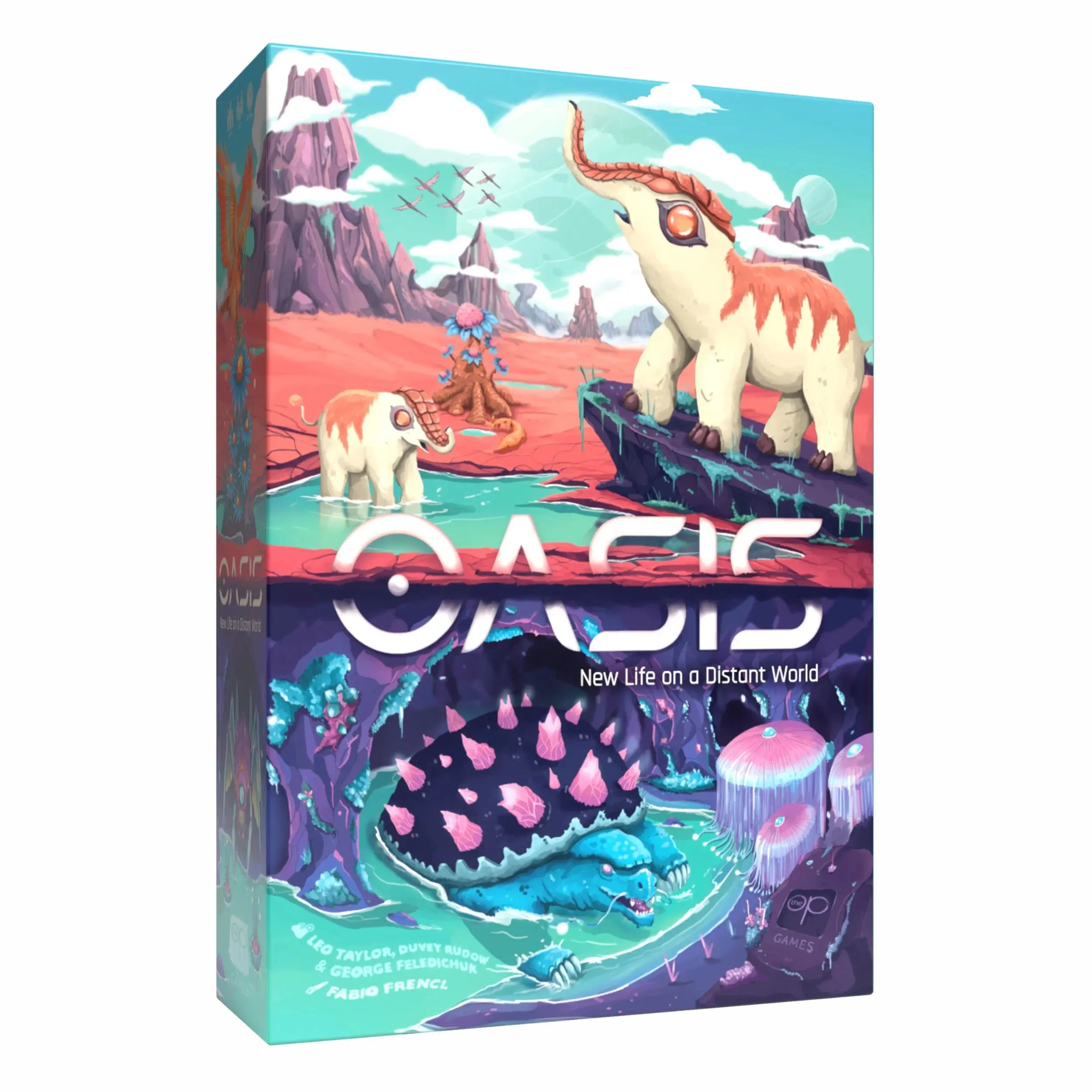
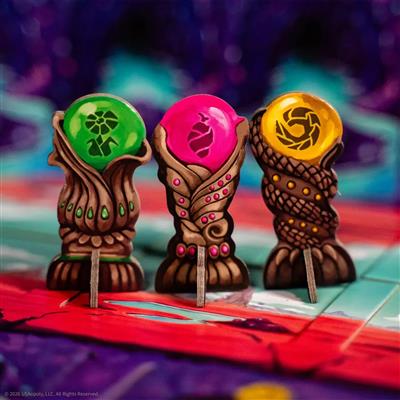
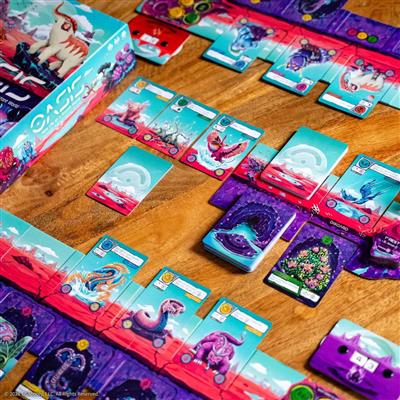
Oasis: New Life on a Distant World
🐸 Dettagli da BoardGameGeek
Consiglio BGG sul numero di giocatori
Categorie
Meccaniche
Design & Art
Lingua
Pre-order - leggi i dettagli
🐸 Una rana saggia sa quando dividere l’ordine… e quando aspettare il salto giusto.
Si abbina bene con
The FroGames Card
You're planting a surface creature when you realize the correct symbols are missing below. You rearrange three cards, sacrifice a Subterranean for the Decay symbol, play. Then the flood comes and washes away half the work. You start again.
WHAT IT'S ABOUT
Building an alien biome before the flood wipes it away
Oasis is a rainless exoplanet where superheated water annually emerges from underground, creating cyclical floods that have shaped life forms above and below a glassy crust. Designed by George Feledichuk, David "Duvey" Rudow and Leo Taylor, with alien creature illustrations by Fabio Frencl, it's a tableau builder published by The Op Games in 2026.
The game emulates a food chain: you play Subterranean cards (Flora, Shelled, Scaled, Decay) which provide the necessary symbols to place the more valuable Surface creatures. Each card has unique powers that activate during play or when discarded, and at the end of each of the three rounds, the flood wipes away all cards below the flood line. You must balance immediate scoring and long-term building, knowing that half of your work will disappear.
What they say abroad
"stunning art with challenging gameplay"
stunning art with challenging gameplay
— Blogcritics
Oasis brings alien ecosystems to the table with a three-round structure that rewards those who know how to sacrifice at the right time. The flood mechanic is as ruthless as it is elegant: you build knowing you'll lose half the tableau, and that changes everything.
— FroGames

Oasis: New Life on A Distant World
The game includes an official solo mode that works with a system of objectives and scores to beat. The experience is solid but loses the competition over symbol majorities that drives many tactical choices in multiplayer.
FrogScore · FroGames editorial rating · first read: based on rules and official presentation, updated with first playsYour ecosystem
The four elements of the biome
Subterranean Cards
Flora, Shelled, Scaled, and Decay: they provide the symbols needed to place Surface cards. Low value but indispensable. Each card has powers that activate when played, discarded, or swept away by the flood.
Surface Cards
High-value surface creatures. They require two specific symbols from the Subterranean cards below. Stronger powers but vulnerable to the flood if not protected by Rest tokens.
Migration Row
Seven Surface cards accessible to all. You can draw from here instead of your deck, creating indirect competition: the card you need, others also need.
Rest Tokens
At the end of the round, choose a Rest token that allows you to save one or two cards from the flood. The choice also determines bonus points and turn order in the next round.
Come si gioca
Video dimostrativo di gameplay.
🎲Come si giocaLe regole in quattro mosse▼
Come si gioca
Il flusso di ogni round
Tre round identici nella struttura, diversissimi nelle scelte. Ogni round si gioca così:
Peschi carte dal tuo mazzo o dalla Migration Row condivisa. Giochi Subterranean ovunque nel sottosuolo, Surface solo se hai i due simboli giusti sotto. Attivi i poteri delle carte.
Ogni carta ha poteri multipli: quando giocata, quando scartata, quando travolta dalla flood, quando messa a riposo. Devi capire quale attivare e quando.
A fine round si contano Flora, Shelled e Scaled visibili nel tuo bioma. Chi ne ha di più in ciascun tipo guadagna punti. Questo guida molte scelte tattiche.
Scegli un Rest token (salvi 0, 1 o 2 carte in cambio di punti/ordine di turno). Poi tutte le Subterranean non salvate vengono scartate. Le Surface restano, ma perdono supporto e non possono ospitarne di nuove finché non ricostruisci sotto.
⏱️La tua prima partitaLa cronaca, momento per momento▼
Una partita in cinque momenti
Cosa succede al tavolo
Non le regole. L'esperienza.
Primi passi su Oasis
Ricevi il tuo Biome board, carte Subterranean di partenza e tre Surface casuali. Qualcuno fa domande sui simboli, qualcun altro sistema le prime carte. La Migration Row mostra sette Surface disponibili a tutti: quella con il potere "riarrangia carte" fa già gola.
Il primo tableau prende forma
Inizi a piazzare Subterranean per creare i simboli giusti. Giochi una Surface che richiede Flora + Shelled, attivi il suo potere (pesca una carta extra), e ti accorgi che ogni carta fa almeno due cose. Il tavolo rallenta: tutti calcolano.
Arriva la prima alluvione
Fine primo round. C'è una majority sui tre tipi di simboli (Flora, Shelled, Scaled) che assegna punti. Poi scegli il Rest token: salvi una carta o due, oppure prendi più punti? L'alluvione cancella tutto il Subterranean non salvato. Ricominci quasi da zero.
Round due, calcoli serrati
Ora sai che devi costruire pensando alla flood. Qualcuno tiene carte deboli ma con poteri "on discard" potenti. Altri costruiscono torri di Surface alte, vulnerabili. La Migration Row si svuota e riempie continuamente: prendi quella carta prima che la prenda un avversario.
Terzo round e conteggio finale
Ultimo giro. Giochi tutto quello che hai, attivi ogni potere, competi sulle majority finali. L'alluvione arriva un'ultima volta. Punti da Rest token, da Imprint (righe e colonne completate), da carte salvate. Vince chi ha costruito il bioma più diversificato. Spesso per due punti.
🐸Da sapere primaTre cose oneste, da amici▼
Da sapere prima
Tre cose da sapere
Rallenta dopo il primo round
Le prime partite sembrano veloci finché non impari a usare la Migration Row e i cicli di carte: allora il gioco richiede tutti i 45-60 minuti dichiarati. Non è un filler: serve concentrazione per ottimizzare ogni turno.
Curva di apprendimento ripida
Le regole si imparano in 15 minuti, ma capire quali carte salvare e quali sacrificare alla flood richiede 2-3 partite. La prima volta perderai carte preziose per scelte sbagliate sul Rest token.
Interazione indiretta
Non attacchi gli avversari direttamente. L'interazione è tutta sulla Migration Row condivisa (quella carta serve anche a te) e sulle majority di simboli. Se cerchi confronto diretto, questo non è il gioco giusto.
🏆Vittoria e sconfittaCosa premia il finale▼
Come finisce
Come si vince e come si perde
Dopo tre round e tre alluvioni, si contano i punti da più fonti.
Vittoria
- Punti dai Rest token scelti nei tre round
- Punti dalle majority di simboli (Flora, Shelled, Scaled) in ogni round
- Punti dall'area Imprint: 1 punto per simbolo più bonus per righe/colonne completate
- Carte salvate con poteri "end game scoring"
Errori comuni
- Costruire troppo in alto senza salvare nulla: l'alluvione cancella tutto e riparti da zero
- Ignorare la Migration Row: le carte migliori sono lì, accessibili a tutti
- Non pianificare per le majority: i punti dai simboli sono cruciali e guidano molte scelte tattiche
Oasis premia chi sa costruire sapendo che distruggerà. È un gioco di tableau building dove il tableau si autodistrugge ogni round, e questa contraddizione è il suo cuore.
📦Nella scatolaComponenti e materiali▼
- 264 Tessere Pianta, 4 Tabelloni Giardino, 21 Carte Pianta, 4 Carte Seme, 30 Carte Pozione, 24 Gettoni Raccolto, 1 Tabellone Draft, 1 Blocchetto Segnapunti, 1 Regolamento.
💬Domande frequentiRisposte rapide prima del carrello▼
Domande frequenti
FAQ su Oasis: New Life on A Distant World
Che meccaniche usa Oasis?
Hand management, tableau building, set collection (majority sui simboli), card drafting (Migration Row condivisa). Il twist è il reset ciclico: ogni round l'alluvione cancella metà del tableau.
Si gioca bene in solitario?
Sì, c'è una modalità solo ufficiale con obiettivi e punteggi da battere. Funziona bene ma perde la competizione sulle majority che nel multiplayer guida molte scelte. Rating: 3/5.
Quanto è difficile da imparare?
Regole base in 15 minuti. La difficoltà è ottimizzare le scelte: capire quali carte salvare dall'alluvione, quando sacrificare per i poteri "on discard", come sfruttare la Migration Row. Serve esperienza.
Quanto dura davvero una partita?
45-60 minuti dichiarati sono accurati. Le prime partite possono essere più veloci (30-40 min) perché giochi subottimale. Quando impari a sfruttare tutti i poteri e la Migration Row, arrivi ai 60 minuti pieni.
Quanta fortuna c'è?
Media. La pescata influisce ma hai molti modi per mitigarla: Migration Row accessibile a tutti, poteri che pescano carte extra, scelte tattiche su cosa scartare. Non è un gioco di pura strategia ma la skill conta.
È adatto ai bambini?
Età consigliata 10+. La meccanica è accessibile ma richiede pianificazione a medio termine e gestione di poteri multipli su ogni carta. Non è un gioco per l'infanzia: è un family game/gateway per famiglie con ragazzi o adulti.
Scala bene con tutti i conteggi di giocatori?
1-5 giocatori. Con più giocatori la competizione sulla Migration Row si fa più serrata e i tempi si allungano. In 2-3 è più rapido e tattico. Il solo funziona con obiettivi dedicati.
Quanto spazio serve sul tavolo?
Ogni giocatore ha un Biome board personale (circa 20x30 cm) più il tableau di carte davanti. Al centro il tabellone con i mazzi e la Migration Row. In 4-5 giocatori serve un tavolo medio-grande.
Le carte vanno imbustate?
Ci sono due mazzi (Surface e Subterranean) più carte giocatore. Le carte si maneggiano molto (pesca, scarta, riarrangia). Bustine standard da 63.5x88 mm (tipo Magic) proteggono l'investimento.
Come funziona l'alluvione?
A fine round scegli un Rest token: salvi 0, 1 o 2 carte Subterranean in cambio di punti/ordine di turno. Poi tutte le altre Subterranean vengono scartate definitivamente. Le Surface restano ma perdono supporto.
Si può giocare cooperativo?
No, è competitivo puro. Non c'è modalità cooperativa. L'interazione è indiretta (Migration Row condivisa, majority sui simboli) ma l'obiettivo è avere il punteggio più alto.
È in italiano? Serve sapere l'inglese?
Questa edizione è in inglese. Le carte hanno simboli e poteri con testo in inglese. Serve una conoscenza base dell'inglese per leggere i poteri, oppure un reference tradotto (facilmente reperibile online).
Le persone dietro al gioco
Chi l'ha inventato, chi l'ha disegnato, chi lo pubblica — e cos'altro hanno fatto.
Oasis: New Life on a Distant World è un gioco da tavolo di tableau building e hand management per 1-5 giocatori, età 10+, durata 45-60 minuti. Progettato da George Feledichuk, David Rudow e Leo Taylor, pubblicato da The Op Games, Oasis sfida i giocatori a costruire ecosistemi alieni bilanciando creature di superficie e sottosuolo, sapendo che ogni round un'alluvione ciclica cancellerà metà del lavoro. Sistema di simboli, poteri unici su ogni carta, competizione su majority e Migration Row condivisa creano un puzzle tattico accessibile ma profondo. Disponibile su FroGames.it.
Oasis: New Life on a Distant World
Frequently Asked Questions
The answers you're looking for, no beating around the bush.
📸Do the images match the actual product?
The photos on the website often come from BoardGameGeek and are intended to give you an idea of the game. They may vary slightly from the version you receive. The content declared by the publisher is always binding.
📦Does the content of the box match what is indicated?
We always strive to provide the correct content, but minor variations are possible due to reprints or updates. The information comes directly from the publishers. If you have any questions, please contact us!
⏳How do pre-orders work?
Pre-order the game before release, payment is immediate, and the game is reserved for you. As soon as it arrives, we'll ship it right away! If there are any delays, we'll update you promptly.
🔒Can I trust buying here?
Absolutely! Secure payments, tracked shipments, and a team that loves board games as much as you do. If something goes wrong, we'll do our best to fix it.
🛠There's a problem with my order, what should I do?
Write to us now! Whether it's a missing part, damage, or an error, we'll help you resolve it as soon as possible. Your experience truly matters to us.